
Charro Quinceañera Dresses: Honoring Mexican Tradition
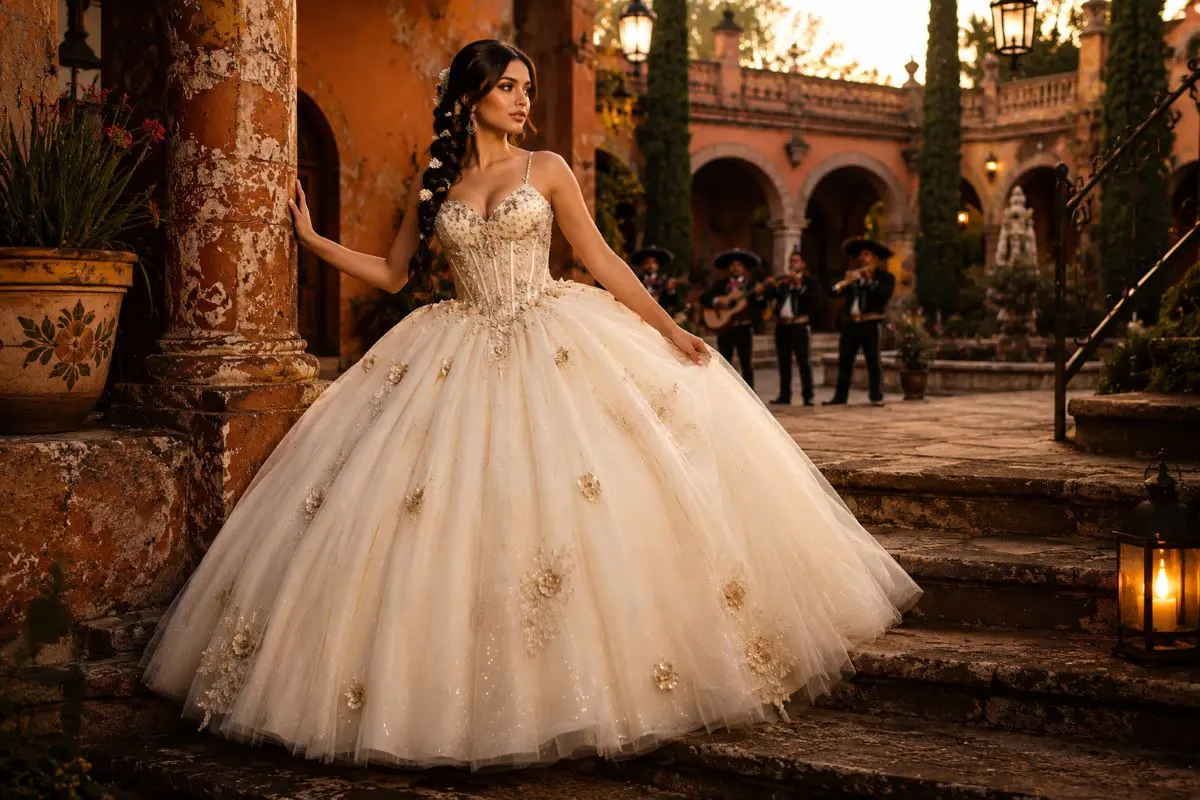
Not every quinceañera dress follows the same blueprint. While the full pastel ball gown is the image many people picture, a growing number of families are choosing a style rooted more deeply in Mexican heritage: the charro quinceañera dress. A charro quince is far more than a gown choice. It is a celebration of identity, family history, and the equestrian culture that has shaped Mexican tradition for generations. For a young woman who wants her fifteenth birthday to honor where she comes from, the charro theme turns the dress into a statement of cultural pride. This guide explains what a charro quinceañera dress actually is, where the tradition comes from, the elements and colors that define it, and how to choose one thoughtfully, so the gown feels authentic to the heritage it celebrates rather than simply decorative.
What a charro quinceañera dress is
A charro quinceañera gown draws on the world of the charro, the traditional Mexican horseman, and the ranching and equestrian culture associated with him. Rather than following the European-influenced ball gown that became the mainstream quinceañera standard, the charro gown roots the celebration firmly in Mexican regional heritage.
The style is particularly associated with states like Jalisco and Zacatecas, where charro culture runs deep, and it connects to the wider world of charreada, the traditional Mexican equestrian events, and to mariachi, whose performers wear the iconic traje de charro. Choosing this style is a deliberate cultural statement. It is a way of reclaiming and celebrating Mexican identity within a tradition that, in its broader form, had grown more universal over time. The charro quince says something specific about a family's roots, and that intention is part of what makes it meaningful. Understanding how this branch fits into the larger story is easier with context, and our look at the history of the quinceañera dress traces how the charro tradition sits alongside the European-influenced style.
The roots of the charro tradition
To choose a charro gown with real understanding, it helps to know what the charro represents. The charro is a Mexican horseman whose dress, the traje de charro, has become a national emblem and a way to express pride in Mexican heritage around the world. The outfit is associated with charreada participants, mariachi musicians, and Mexican celebration and festival culture.
The traje de charro can be worn by men and women and ranges in formality from working wear to highly elaborate formal attire. The women's equestrian tradition has its own expression as well, seen in escaramuza, the female precision riding teams who perform in ornate regional dress. When a quinceañera draws on this world, she is connecting her coming-of-age celebration to centuries of equestrian and ranching heritage. This is why the charro quince carries weight beyond fashion. The dress is a tribute to a living cultural tradition, and the families who choose it are placing their daughter's milestone within that lineage. Honoring that meaning is the heart of a charro celebration, and it is what separates an authentic tribute from a costume.
The elements that define a charro quinceañera dress
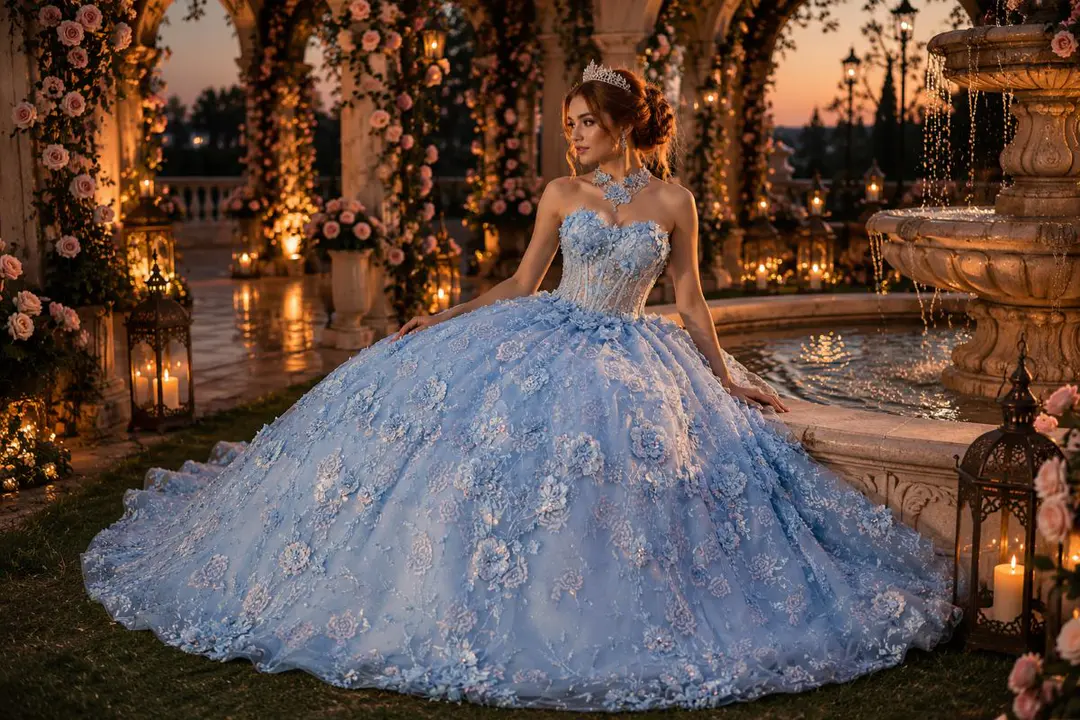
A charro gown is recognizable through several distinctive features. While the silhouette often stays close to the classic ball gown, the detailing is what carries the cultural meaning and sets it apart from a standard quince gown.
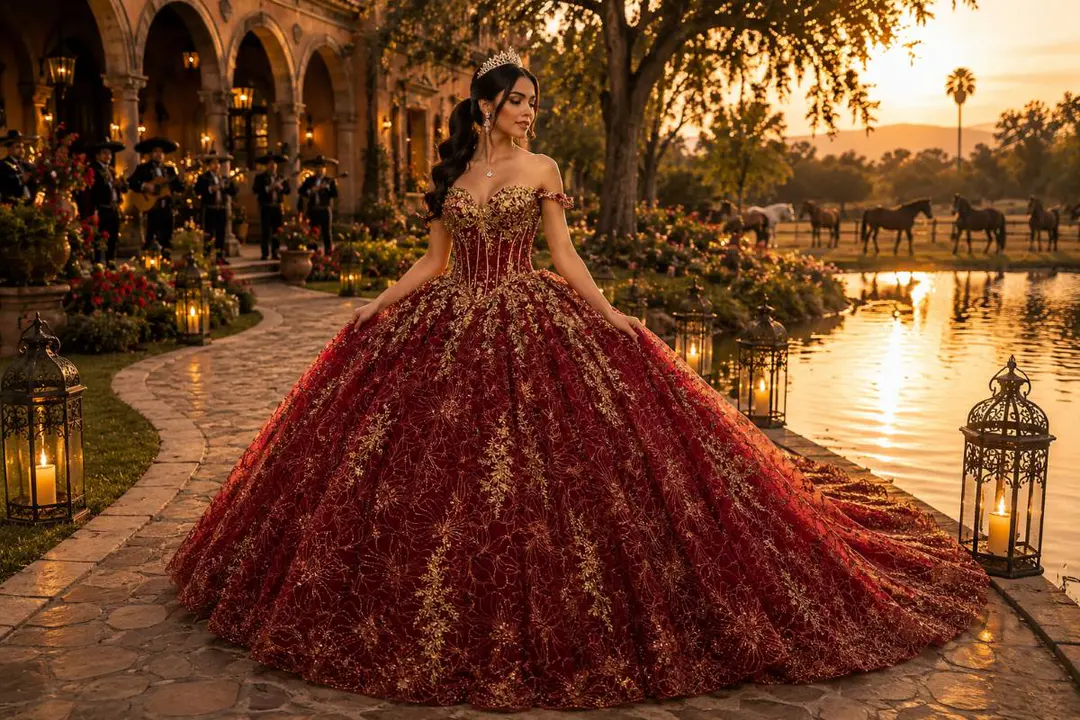
- Hand-worked embroidery. The signature element. A charro gown typically features intricate embroidery on the bodice and sometimes the skirt, often metallic stitching in gold or silver, echoing the elaborate needlework of the traje de charro.
- Regional colors and motifs. The embroidery and color choices frequently draw on the colors of the Mexican flag or on regional textile traditions, making the gown a personal expression of a family's specific heritage.
- A structured ball gown silhouette. The full skirt and structured bodice of the classic quince ball gown remain the foundation, giving the dress the drama the celebration calls for while the embroidery adds the cultural layer. The structure behind a ball gown prom dresses silhouette is the same engineering that supports a charro gown's full shape.
- A supportive, structured bodice. Because the embroidery sits on the bodice and the skirt is full, the top needs real internal support to hold everything cleanly. The boning and construction found in corset prom gowns is the kind of build that keeps an embroidered charro bodice smooth and secure through a long celebration.
- Traditional accessories. A charro look is often completed with elements drawn directly from the tradition, such as a sombrero, a rebozo, or boots worn in place of formal heels for portions of the celebration.
The combination of a grand silhouette and rich, meaningful detail is what gives the charro gown its presence. The embroidery and metallic work also catch the light beautifully, much like the detail on beaded prom dresses, so the gown reads as luminous on the dance floor and in photographs.
It is worth noting that the embroidery is not just decoration. In the charro tradition, the needlework often carries regional and family significance, with motifs and color combinations that can reflect a particular state, town, or family lineage. This is why two charro gowns can look quite different from one another while both being authentic. A gown honoring Jalisco roots may carry different detailing than one honoring Zacatecas, and a family may request specific colors or symbols that hold personal meaning. When choosing or commissioning the embroidery, a young woman has a genuine opportunity to make the gown a personal record of her heritage rather than a generic design.
Choosing colors for a charro quinceañera dress
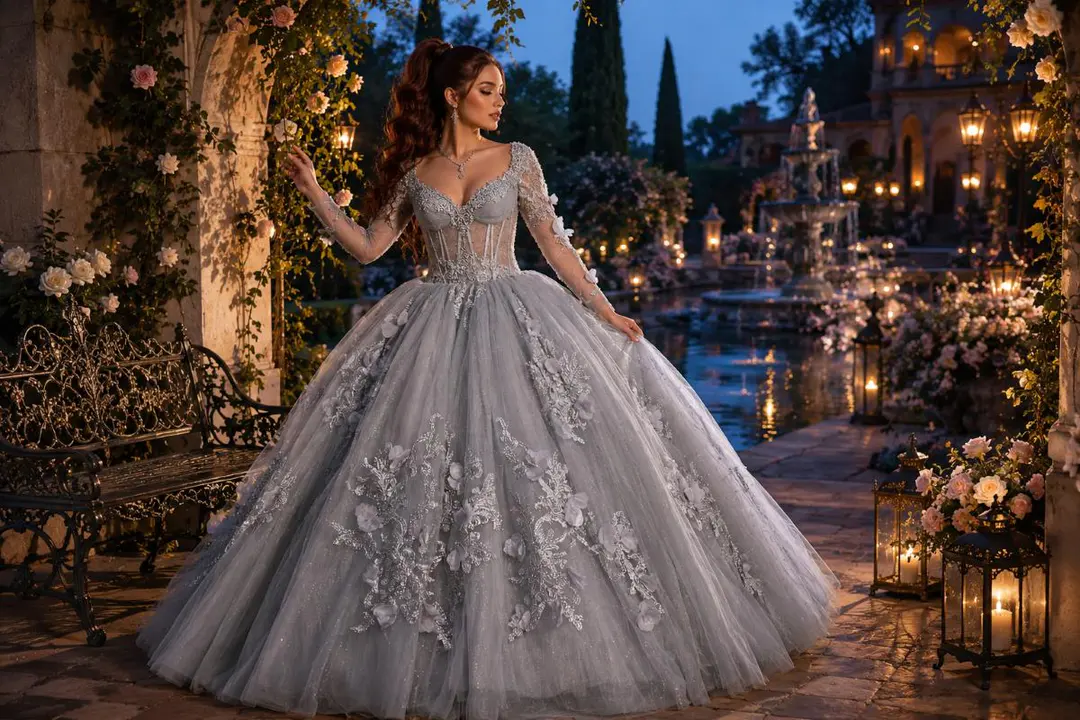
Color is one of the most expressive parts of a charro gown, and it tends to be bolder than the soft pastels associated with the mainstream quince. The palette is a direct link to regional heritage, so the choice carries meaning.
Charro and traditional Mexican quince gowns often embrace deep, vivid colors: rich reds, emerald greens, and vibrant golds and blues, frequently accompanied by metallic gold or silver embroidery that reflects regional textile traditions. Red in particular is a powerful and popular choice, carrying boldness and cultural resonance, and the depth of color seen in red prom dresses shows how striking a saturated tone reads against metallic embroidery. The colors of the Mexican flag, green, white, and red, also appear frequently, woven into the embroidery or expressed in the gown itself as a clear statement of pride.
This bolder palette is one of the clearest ways a charro gown distinguishes itself from a traditional pastel quince. For a fuller understanding of how color carries meaning across the whole quinceañera tradition, our guide to traditional quinceañera dress colors explores the symbolism in depth. When choosing, a young woman can let the color reflect both her personal taste and the regional heritage her family wants to honor.
Why families are choosing the charro theme today
The charro quince has grown in popularity in recent years, and understanding why helps a family decide whether it is right for them. The choice reflects something larger than a single party.
For many families living outside Mexico, a charro celebration is a way to keep a cultural connection alive and to pass it to the next generation. It turns the quinceañera into an act of remembering and honoring where the family comes from, not only a coming-of-age party. For the young woman herself, wearing regional embroidery and heritage colors on such a visible day can be a source of real pride and a public expression of identity. There is also a generational element. As the wider quinceañera tradition became more universal and more influenced by mainstream formalwear, some families have deliberately returned to the charro form as a way of reclaiming a distinctly Mexican expression. This is part of what makes the theme feel meaningful rather than nostalgic. It is a living choice, made fresh by each family that takes it up, and it shows that the tradition continues to be reshaped by the people who hold it.
Charro versus the traditional quinceañera dress
It helps to understand exactly how a charro gown differs from the mainstream quinceañera dress, since both are valid traditions and many families now choose between them based on cultural identity rather than geography.
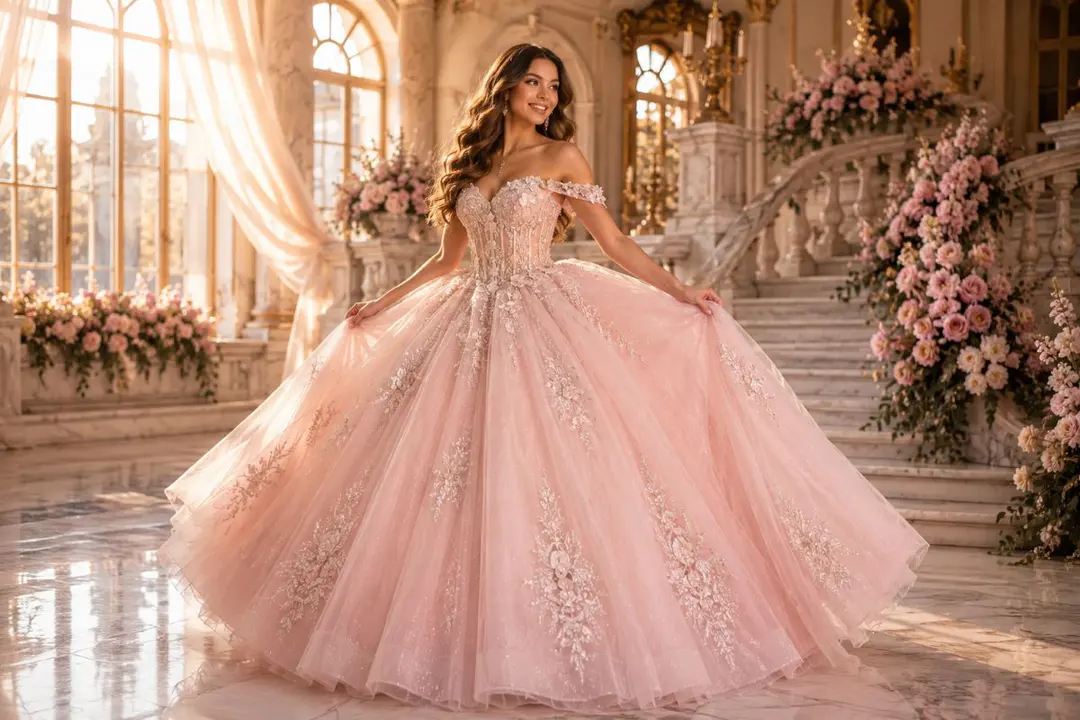
A traditional quinceañera dress follows the European-influenced ball gown silhouette, usually with less regional ornamentation and often in softer or pastel colors. A charro gown keeps a similar grand silhouette but layers on the hand-worked regional embroidery, bolder heritage colors, and the equestrian accessories that root it in Mexican culture. In this sense, a charro gown is one of the clearest forms of the Mexican quinceañera dress, expressing regional identity in a way the more universal pastel ball gown does not. Neither is more correct than the other. The traditional gown speaks to the celebration's broader, blended history, while the charro gown makes a specific statement about Mexican regional identity. For families weighing the two, our traditional quinceañera dress guide covers the classic side, and reading both helps a family decide which expression feels truest to them. Increasingly, the decision is made on the basis of heritage and meaning, which is exactly as it should be for a celebration this personal.
Planning a charro quince look thoughtfully
A charro quinceañera is most powerful when the dress is part of a coherent celebration rather than an isolated choice. Thinking about the whole event helps the gown feel authentic to the tradition it honors.
Consider how the gown fits the celebration's setting and elements. A charro quince often includes a mariachi band, a charro-themed reception, or a hacienda-style setting, and the gown should feel like it belongs there. The dress, the music, the venue, and the accessories work together to tell one story. Think also about the practical demands of the day, since the celebration includes the church ceremony, the vals, and hours of dancing. The full skirt should move beautifully through the waltz, and the bodice should be comfortable and supportive for a long night. Many families plan the traditional shoe moment, where a flat or a boot is exchanged for a first heel, and a charro look can incorporate boots in keeping with the equestrian theme. Above all, approach the choice with respect for its meaning. A charro gown is a tribute to heritage, and choosing it thoughtfully, with attention to the embroidery, the regional colors, and the family's own roots, is what makes it a genuine celebration of identity rather than a theme. The result is a vestido de quinceañera charro that honors where a young woman comes from as she steps into adulthood.
Practical points when ordering a charro gown
Because the embroidery is central to a charro gown and often carries personal or regional meaning, ordering one benefits from a little extra planning compared to a standard quince dress.
Allow more time than usual. Detailed embroidery, especially anything customized to reflect a family's region or chosen colors, takes longer to produce than a plain gown, so starting the search early gives room for that work and for alterations afterward. Discuss the colors and motifs you want clearly, since a charro gown is most meaningful when the detailing reflects a deliberate choice rather than a default. Think about the full ensemble at the same time, since the sombrero, the rebozo, the boots, and any escaramuza-inspired elements should coordinate with the gown rather than being added at the last moment. Consider comfort and weight as well, because heavy embroidery and metallic stitching add weight to a bodice, so the internal support and fit matter for a long day of ceremony, photos, and dancing. Finally, plan the fit around movement, since the vals and the dance floor ask a lot of a full skirt, and a gown that is both grand and wearable is the goal. Thinking through these details in advance is what lets the gown honor its tradition while still serving the practical demands of the celebration.
The charro gown in photographs and memory
A quinceañera is one of the most photographed days of a young woman's life, and the charro gown is built to shine in those images. Thinking about how it will read in pictures is part of choosing well, since these photographs become a lasting family record.
The rich embroidery and metallic stitching catch light beautifully, which gives the gown real depth and dimension in photos, especially during the reception when the lighting is warm and low. Bold heritage colors also photograph with strength and clarity, standing out against a hacienda backdrop, a mariachi band, or the dance floor in a way that softer pastels do not. The equestrian elements, whether a sombrero held for a portrait or boots glimpsed beneath the skirt, add a storytelling layer to the images that connects them clearly to the charro tradition. Many families treat the charro gown as a keepsake afterward, preserved as a record of the day a young woman stepped forward to honor her heritage. Because of that lasting role, investing in quality embroidery and solid construction is worthwhile, since the gown is meant to be looked at and remembered for many years. A well-made charro gown does not only serve the single celebration. It becomes a tangible piece of family history.
About charro quinceañera dresses FAQs
What is a charro quinceañera dress?
A charro quince gown is a dress rooted in Mexican equestrian and ranching heritage, particularly from states like Jalisco and Zacatecas. It keeps the grand ball gown silhouette but features hand-worked regional embroidery, bolder heritage colors, and traditional accessories, making the celebration a statement of Mexican cultural identity.
How is a charro quince different from a traditional quinceañera?
A traditional quinceañera dress follows the European-influenced ball gown, often in softer colors with less regional ornamentation. A charro quince keeps a similar silhouette but adds hand-worked embroidery, bolder heritage colors, and equestrian elements like a sombrero or rebozo. Both are valid, and families often choose based on cultural identity.
What colors are used in charro quinceañera dresses?
Charro gowns tend toward bold, vivid colors rather than pastels, including deep reds, emerald greens, and vibrant golds and blues, often paired with metallic gold or silver embroidery. The colors of the Mexican flag also appear frequently, woven into the design as a clear expression of heritage and pride.
What accessories complete a charro quinceañera look?
A charro look is often completed with elements drawn from the tradition, such as a sombrero, a rebozo, or boots worn in place of formal heels for portions of the celebration. These accessories connect the gown to the equestrian heritage at the heart of the charro theme.
What does the charro tradition represent?
The charro is the traditional Mexican horseman, and the traje de charro is a national emblem and a way to express pride in Mexican heritage. The style connects to charreada, mariachi, and festival culture. A charro quince places a young woman's coming-of-age celebration within this living equestrian and cultural tradition.
Is a charro gown suitable for the church ceremony?
A charro gown can work for the full day, including the church ceremony, since it keeps the structured ball gown silhouette. For a ceremony that calls for more coverage, the same approaches used for any quince gown apply, such as a coordinating layer worn during the service and removed for the reception.
When you are ready to find a gown that honors your heritage and your milestone, explore the full range of quinceanera gowns through an authorized Jovani retailer.