
Blog
Midi and Tea-Length Mother of the Bride Dresses: The Versatile In-Between

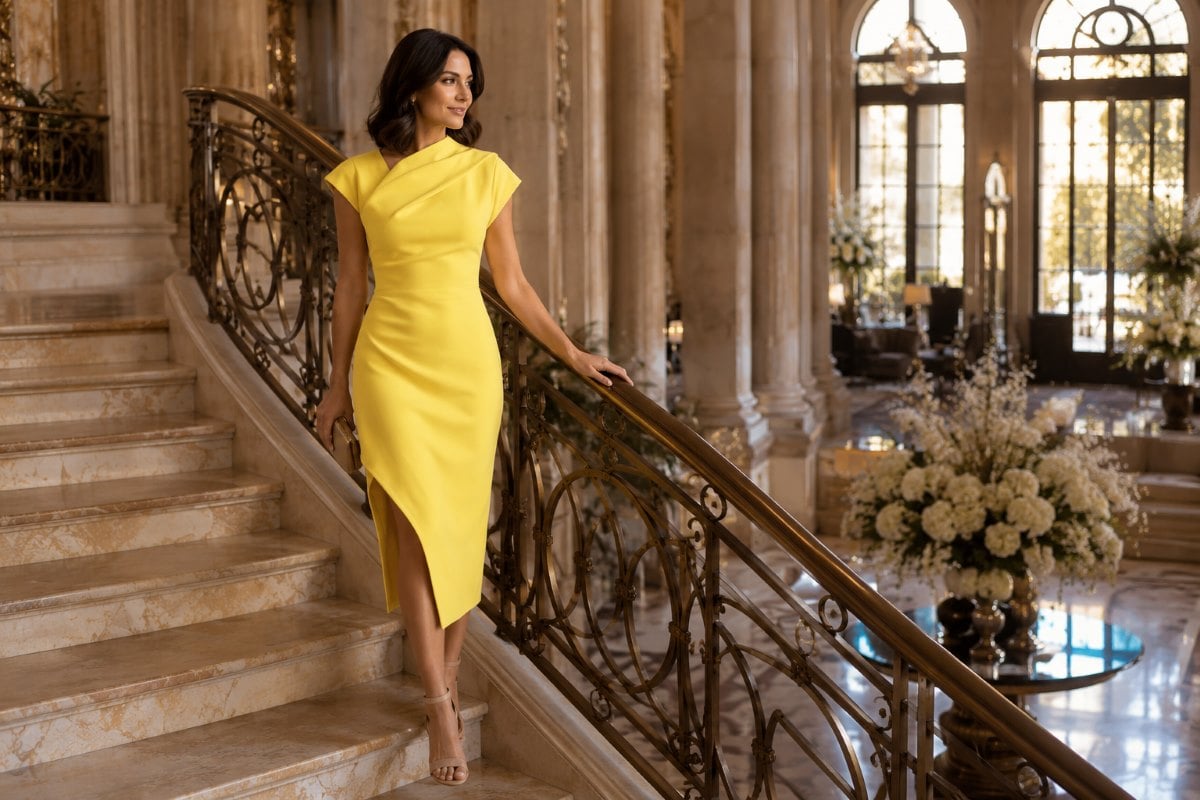
Between the floor-length formality of a traditional gown and the knee-length ease of a short dress sits a length that many mothers overlook and then fall in love with: the midi. A midi mother of the bride dress, hitting anywhere from below the knee to the ankle, offers a graceful middle ground that reads as polished and elegant while staying genuinely comfortable and easy to move in. It suits a remarkable range of weddings, from a garden ceremony to a semi-formal evening reception, and it photographs beautifully without the management a full-length gown requires. This guide explains exactly what the midi and tea-length range covers, who the length flatters, which weddings it suits, how it compares to long and short options, and how to choose and style a midi dress so it carries you elegantly through the entire celebration.
What counts as a midi or tea-length dress
The terms midi, tea-length, and ankle-length describe a family of hemlines that all sit between the knee and the floor, and the distinctions are worth knowing. A midi dress generally hits at the mid-calf, the most modern and versatile point in the range. A tea-length dress falls a little lower, between the mid-calf and the ankle, carrying a slightly more vintage, classic feeling. An ankle-length dress stops just at or above the ankle, the longest of the in-between hemlines before reaching true floor-length.
What unites all three is that they cover more than a short dress while stopping short of sweeping the floor, which gives them a distinctive balance of formality and ease. This length reads as intentional and elegant rather than simply long or short, and it has a refined, slightly editorial quality that many mothers appreciate. The full collection of mother of the groom gowns spans every length, and the midi range sits as a sophisticated option between the floor-length gowns and the shorter styles.
Who a midi length flatters
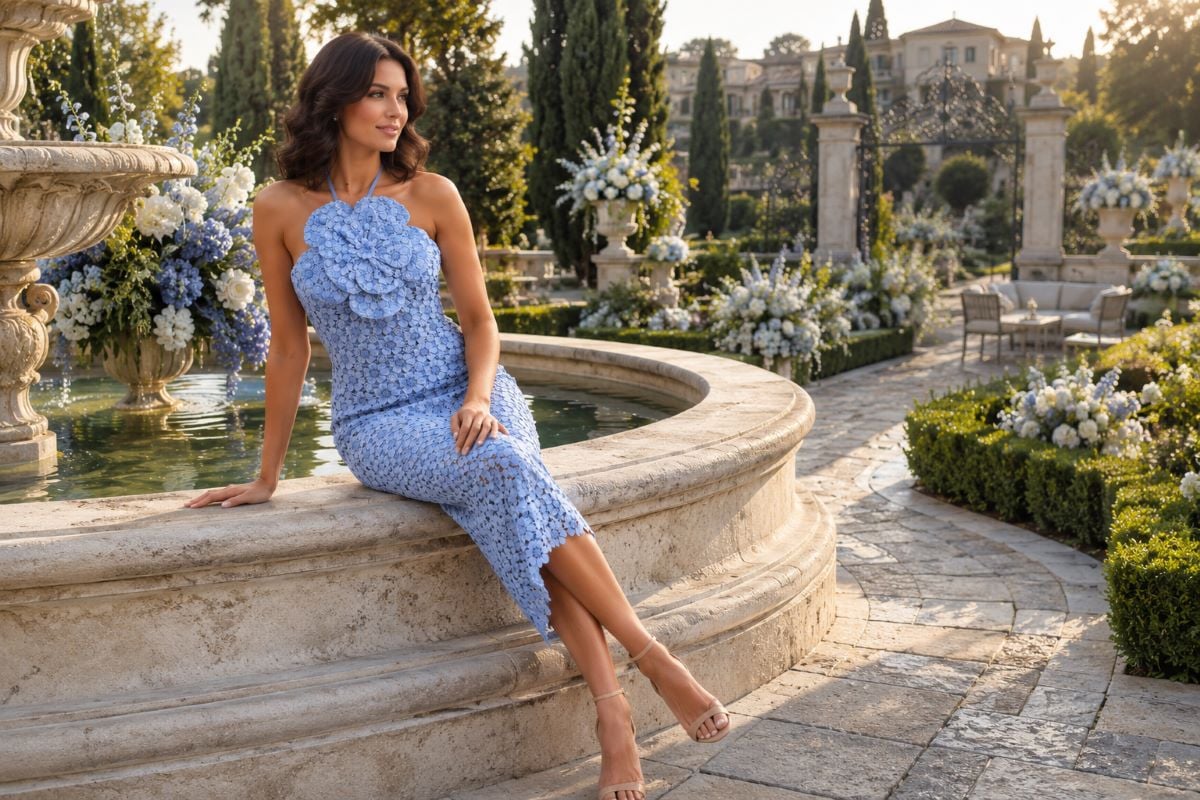
A midi length flatters in a particular way, and understanding it helps you choose well. By ending at the mid-calf or ankle, it shows the lower leg, which can elongate the figure when paired with a heel that continues the line. This makes it a flattering choice for many mothers, since the visible ankle and lower leg read as graceful and the length balances the proportions of the body. For a mother who finds a floor-length gown overwhelming or a short dress too casual, the midi often hits exactly the right note.
Height plays a role in choosing the right point in the range. A taller mother can carry the longer ankle-length and tea-length hemlines beautifully, while a petite mother is often most flattered by a midi that hits at the higher mid-calf, paired with a heel to keep the leg line long and avoid cutting the figure at its widest point. The fabric and cut matter too, since a fluid midi skims the body gracefully while a structured one holds a cleaner line. Across heights and figures, the key is choosing the hemline point that elongates rather than shortens, which a heel and the right cut help achieve.
Which weddings suit a midi dress
The midi length is genuinely versatile, suiting a wide range of weddings where a floor-length gown might feel like too much and a short dress too little. Semi-formal weddings are the natural home of the midi, since the length reads as polished and appropriately dressed without the full formality of a floor-length gown. Daytime ceremonies, garden weddings, and outdoor celebrations suit the midi especially well, since the shorter-than-floor hemline navigates grass, sand, and uneven ground far more easily than a sweeping gown.
The midi also suits a mother who wants a modern, slightly fashion-forward look, since the length has a contemporary, editorial quality. For a beach or destination wedding, a midi or tea-length dress keeps the fabric off the sand while still reading as elegant and host-appropriate. The guidance in the guide to a mother of the bride dress for a beach wedding reinforces why a midi or tea-length hemline is so often recommended for outdoor and coastal settings, where mobility and elegance both matter.
Midi versus long and short
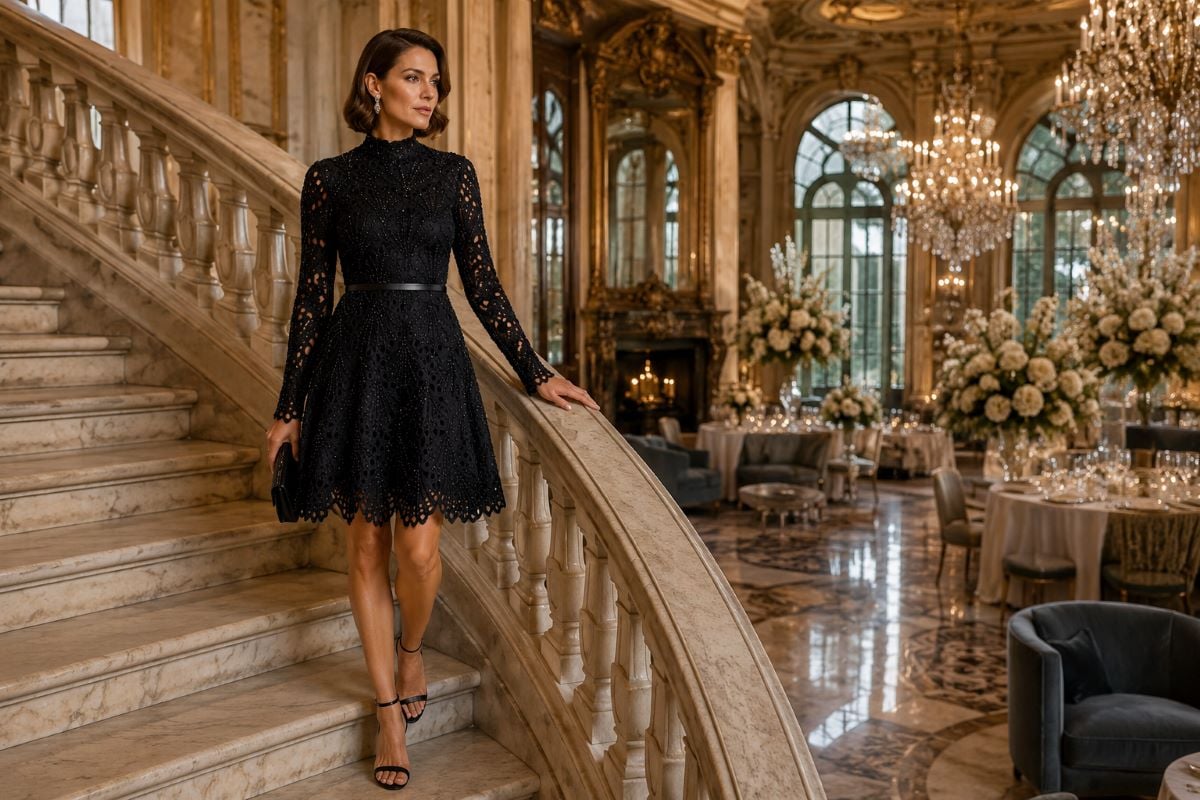
Choosing a midi means weighing it against the floor-length and short options, and each serves a different purpose. A floor-length gown is the most formal and traditional choice, carrying the gravitas suited to a black-tie or formal evening wedding, and it remains the right call when the celebration is grand and formal. A midi reads as a step less formal, polished and elegant but more relaxed and modern, which makes it ideal for the large middle ground of semi-formal and daytime weddings.
A short, knee-length dress reads as the most relaxed and casual of the three, suiting a daytime or garden wedding where ease is the priority. The midi sits between short and long, offering more coverage and formality than a short dress and more ease and modernity than a floor-length gown. For a mother choosing between the ends of the spectrum, the styles among long mother of the bride dresses show the formal end.
At the other end, the short and tea-length styles show the more relaxed knee-length options, with the midi occupying the elegant middle ground between them.
Silhouettes that work in a midi length
The midi length pairs beautifully with several silhouettes, and the shape changes the feeling of the dress. An A-line midi, fitted through the bodice and flaring gently to the mid-calf, flatters nearly every figure and moves comfortably, making it one of the most reliable choices. A sheath or column midi follows the body in a clean, streamlined line, reading as sleek and modern, especially in a structured fabric. A fit-and-flare midi defines the waist and flares to a graceful hem, creating an elegant, feminine shape.
A softly pleated or full-skirted midi adds movement and a romantic quality, which suits a garden or daytime celebration. The silhouette should suit the mother’s figure and the formality of the wedding, with cleaner lines reading as more modern and fuller skirts reading as more romantic. For a deeper look at one of the most flattering and comfortable shapes for the role, which works beautifully in a midi length, the guide to the fit-and-flare mother of the bride dress covers how the silhouette adapts across hemlines.
Fabrics and colors for a midi dress
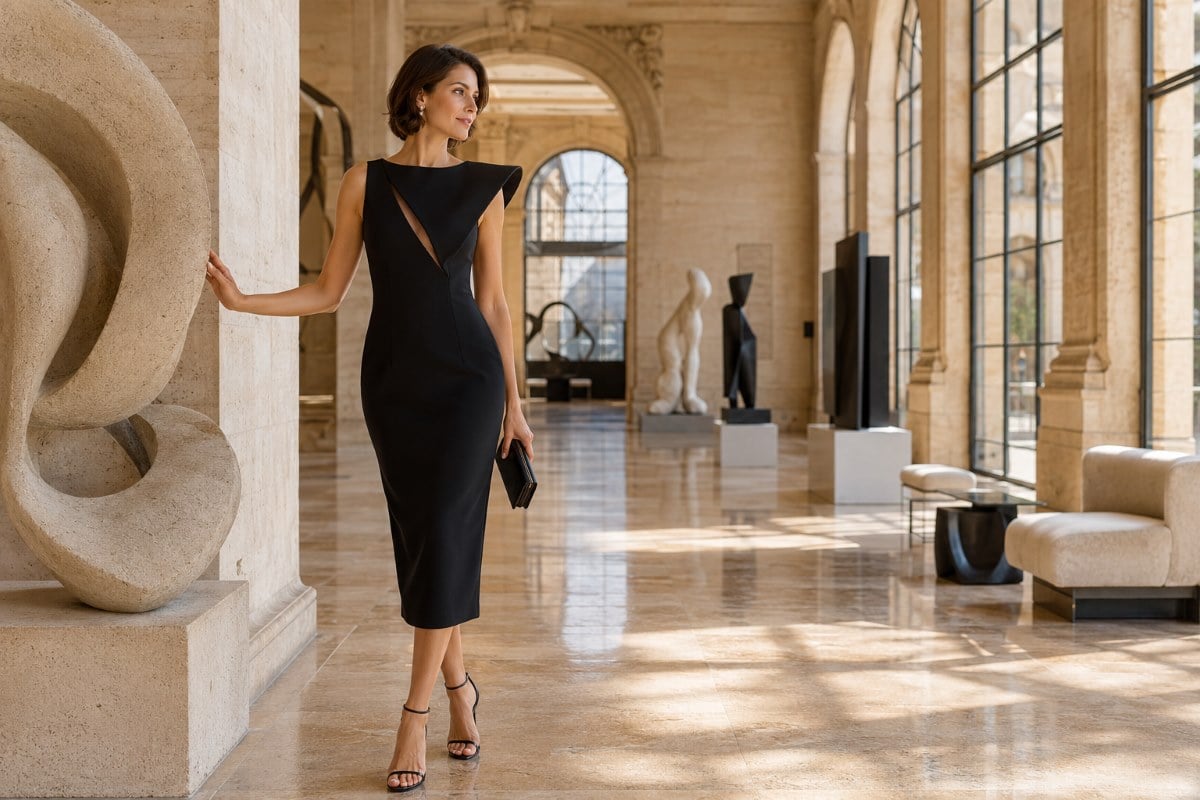
Fabric shapes how a midi dress reads and moves. Crepe gives a smooth, modern line that holds a clean shape and resists wrinkling through a long day, which suits a structured midi beautifully. Chiffon floats and moves gracefully, ideal for an outdoor or daytime wedding where lightness matters. Satin adds a richer, more formal finish, while lace brings romantic texture, and beaded fabrics add a touch of sparkle for a dressier celebration.
Color follows the same principles that guide any mother of the bride dress. Avoid white, ivory, and anything too bridal, and choose a shade that coordinates with the wedding palette and complements the bride’s choices. Flattering jewel tones, soft neutrals like navy, champagne, and taupe, and refined shades that suit the season all work beautifully. Checking with your daughter about her color preferences is a thoughtful step. The aim is to look elegant in the flattering midi length while keeping the focus on the bride and complementing the overall palette.
Styling a midi mother of the bride dress
Because the midi length shows the lower leg, footwear plays a larger styling role than it does with a floor-length gown. A heel continues the line of the leg and keeps the proportion long and elegant, which is especially helpful with the longer tea-length and ankle-length hemlines. A closed-toe pump reads as polished and formal, while a strappy sandal suits a warmer or more relaxed celebration. A comfortable heel height the mother can manage all day keeps her steady through the ceremony, photographs, and dancing.
Accessories should complement the dress without overwhelming it. If the dress carries beading or detail, minimal jewelry keeps the look balanced, while a simpler midi can support a bolder necklace or earrings. A refined clutch and an elegant wrap for cooler moments complete the look. The midi length has a naturally modern, put-together quality, so styling that keeps the line clean lets that elegance read clearly. For the broader etiquette and styling principles that guide a mother’s look, the guide to what the mother of the bride should wear covers color, formality, and coordination in detail.
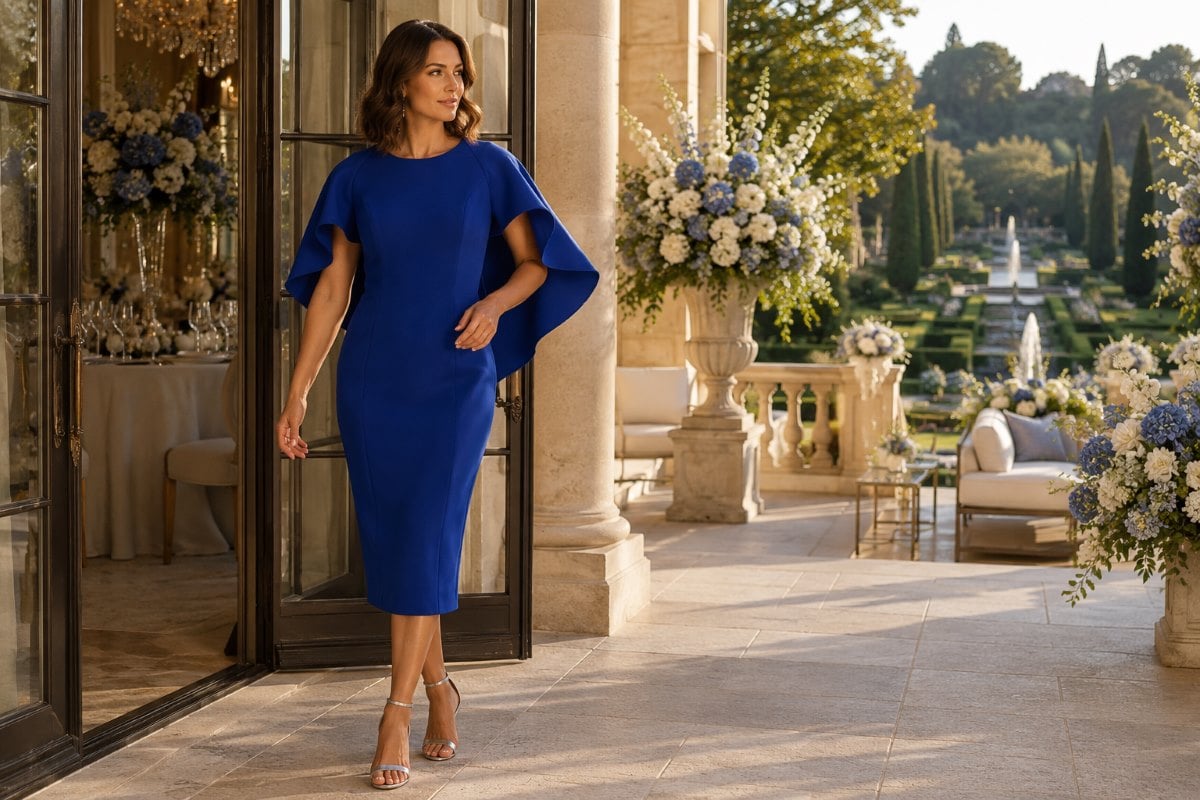
Choosing a quality midi dress
When choosing a midi mother of the bride dress, the construction and fit matter as much as the style, since this is a dress the mother will wear through a long, active day. A quality fabric that holds its shape and resists wrinkling keeps her looking fresh from ceremony to reception. A secure, well-built bodice with proper support means she is not adjusting the dress, which frees her to be present. The hemline should hit at a flattering point for her height, which a fitting can confirm.
It is worth trying the dress on in the shoes she plans to wear, since the midi length depends on the hem hitting the right point relative to the heel. Heritage formalwear designers like Jovani, designing from a New York studio since 1983, build these dresses with internal structure, considered linings, and reinforced seams that keep a mother comfortable and supported throughout the celebration. A well-chosen midi dress offers the elegance of a formal look with the ease of genuine comfort, which is exactly the balance the role calls for. For more on flattering options across the full range of mother of the bride silhouettes and lengths, the guide to the A-line mother of the bride dresses shows how the most versatile shape works in a midi cut.
The modern appeal of the midi length
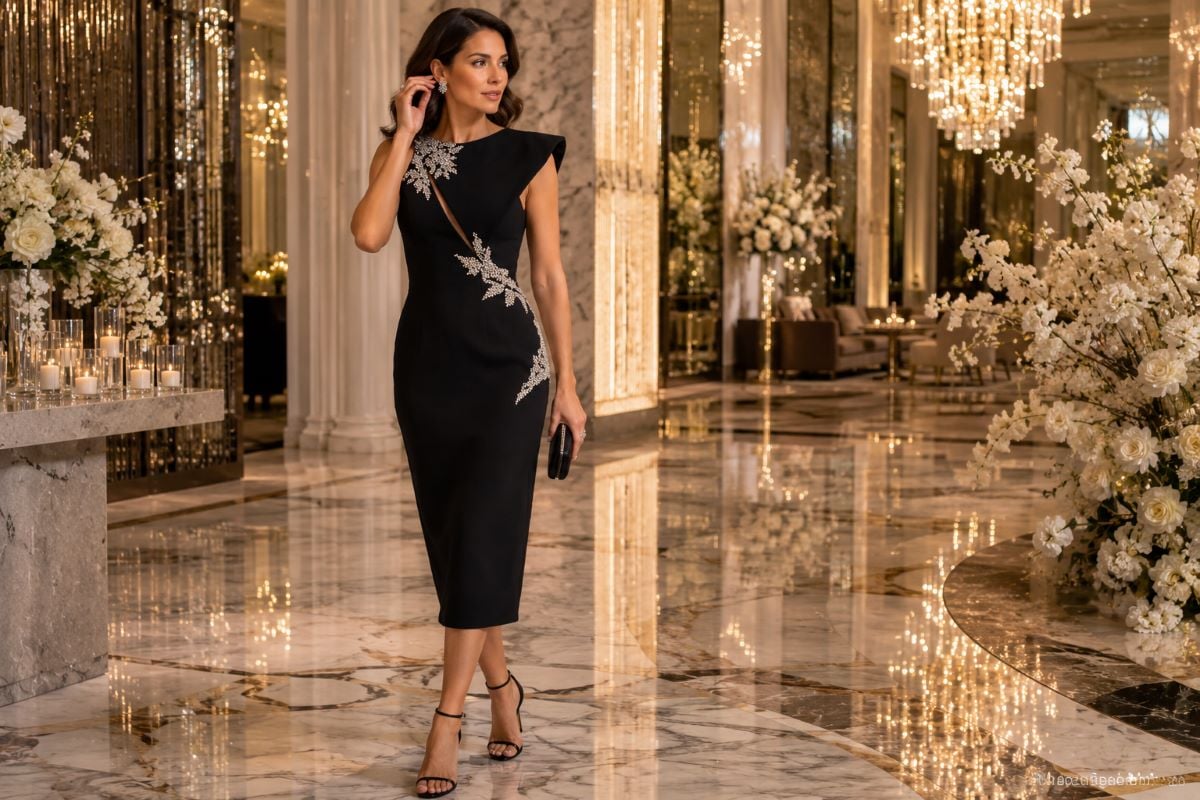
Part of why the midi has grown so popular for the mother of the bride is that it reads as current in a way the traditional floor-length gown sometimes does not. Fashion has embraced the midi across occasion wear, from cocktail dressing to formal events, and a mother who chooses one looks contemporary and intentional rather than simply formal. The length has an editorial, put-together quality that photographs beautifully and stands out gently among a sea of expected silhouettes. The range of midi evening dresses shows how the length translates across formal occasion wear, which is the same modern sensibility a mother brings to a wedding.
The midi also offers a practical advantage that matters across a long wedding day. Without a floor-length hem to manage, a mother can move freely through the ceremony, photographs, dinner, and dancing, never gathering a skirt to climb stairs or cross a lawn. This ease, combined with the length’s elegance, is exactly why so many mothers who try a midi end up choosing it. It delivers the formality the role calls for without the fuss a full gown can bring, which makes it a genuinely practical choice as well as a stylish one for a day spent on her feet.
For a mother weighing whether the midi suits her, the simplest approach is to try one alongside a long and a short option and see how each feels in person. Many are surprised to find the midi hits a balance the other two miss, polished enough for the occasion and comfortable enough for the day, which is what makes it such a quietly versatile choice for the role.
Frequently Asked Questions midi mother of the bride dress
What length is a midi mother of the bride dress?
A midi dress generally hits at the mid-calf, while related tea-length dresses fall a little lower between the mid-calf and ankle, and ankle-length dresses stop just at or above the ankle. All three sit between a knee-length short dress and a floor-length gown, covering more than a short dress while stopping short of sweeping the floor. This in-between range offers a balance of formality and ease that reads as polished and modern.
Is a midi dress appropriate for the mother of the bride?
Yes, a midi is entirely appropriate, especially for semi-formal, daytime, garden, and outdoor weddings. It reads as polished and elegant while offering more ease and modernity than a floor-length gown. For a grand, formal, or black-tie wedding, a floor-length gown carries more gravitas, so match the length to the formality of the celebration. For the large middle ground of weddings, a midi is a sophisticated, versatile choice.
Who looks best in a midi length?
A midi flatters many figures because showing the lower leg and ankle elongates the body, especially when paired with a heel. Taller mothers carry the longer ankle and tea lengths beautifully, while petite mothers are often most flattered by a midi hitting at the higher mid-calf with a heel to keep the leg line long. The right cut and a heel help ensure the hemline elongates rather than shortens the figure.
What shoes do you wear with a midi mother of the bride dress?
Because a midi shows the lower leg, a heel works best to continue the line and keep the proportion long and elegant, which matters most with the longer tea-length and ankle-length hemlines. A closed-toe pump reads as polished and formal, while a strappy sandal suits a warmer or more relaxed wedding. Choose a comfortable heel height you can manage through the ceremony, photographs, and dancing all day.
What is the difference between midi and tea-length?
The difference is the exact hemline. A midi generally hits at the mid-calf, the most modern and versatile point, while a tea-length falls a little lower, between the mid-calf and the ankle, carrying a slightly more vintage, classic feeling. Both sit in the same in-between family between knee and floor, and the choice comes down to the look you prefer and your height, with the midi reading as more contemporary.
Can you wear a midi dress to a formal wedding?
A midi can work for a semi-formal or moderately formal wedding, where it reads as polished and elegant. For a strict black-tie or grand formal evening wedding that calls for floor-length gowns, a midi may read as slightly under-formal, so a long gown is the safer choice there. Match the length to the stated dress code and the overall formality, and the midi shines across the wide range of semi-formal and daytime celebrations.