
The ball gown is the dress most people picture when they imagine a bride. It is the fitted bodice, the dramatic sweep of a full skirt, the silhouette that has defined fairytale weddings for generations. For many brides, trying one on is the moment the wedding becomes real. But a ball gown is also a big commitment in every sense, the volume, the presence, the way it moves, and choosing one well takes more than falling in love with the first full skirt you slip into. This guide covers everything that matters about ball gown wedding dresses: what the silhouette actually is, who it flatters, the fabrics that build it, how to choose the right one, and how to wear it with confidence on the day.
What Makes a Dress a Ball Gown
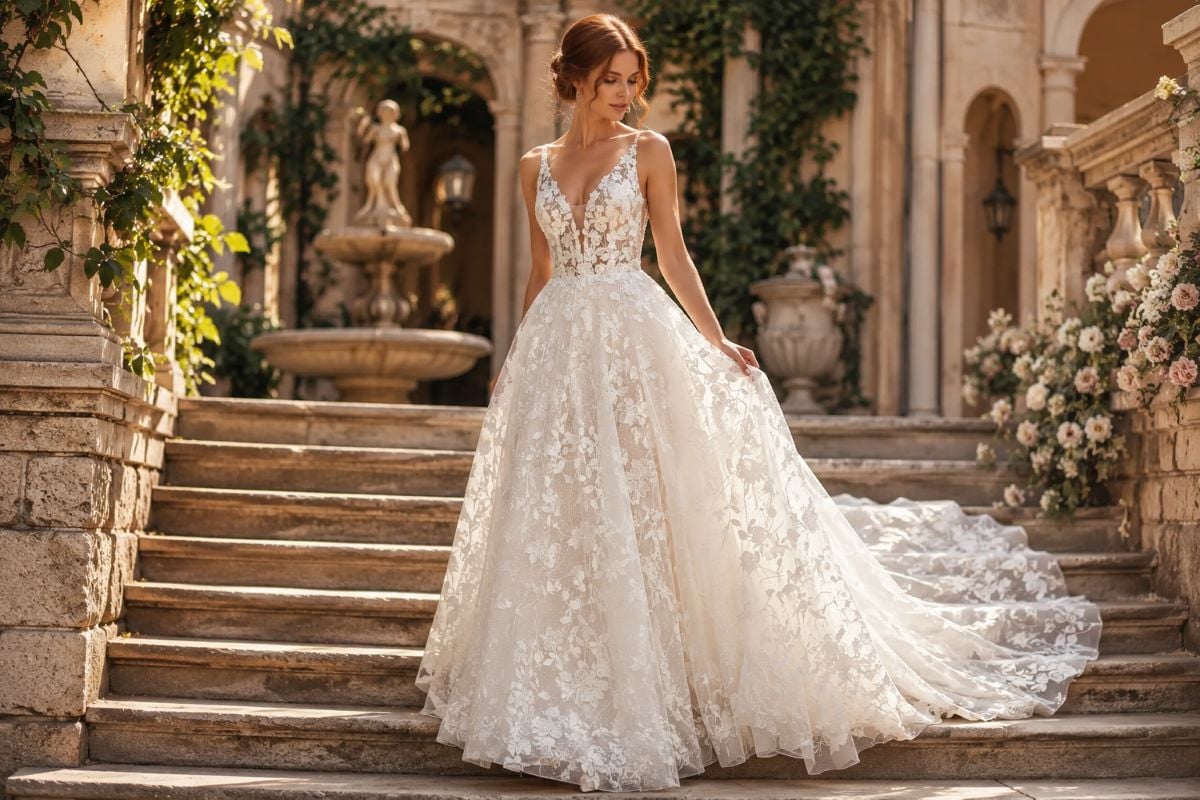
A ball gown is defined by a clear, recognizable structure: a fitted bodice that shapes the waist, paired with a full, voluminous skirt that flares dramatically from the natural waistline to the floor. It is the most theatrical of all the bridal silhouettes, and that volume is the entire point. Where other shapes skim or follow the body, a ball gown creates a grand, sweeping outline that announces itself the moment a bride enters the room.
The volume in a true ball gown is not accidental. It is built from layers of structured fabric, often tulle, organza, or stiffened satin, frequently supported underneath by netting or a crinoline to hold the shape throughout a long day. A well-made ball gown also relies on internal construction, boning through the bodice and a structured waist, so the dress holds its form rather than collapsing. This is why quality matters so much with this silhouette: the entire effect depends on the engineering you cannot see. Within the broad range of wedding gowns, the ball gown is the style that asks the most of its construction.
It is worth knowing how the ball gown differs from its close cousin, the A-line. An A-line also narrows at the waist, but it flares gently and gradually into a softer triangle, while a ball gown flares sharply into full, rounded volume. The two are often grouped together, and many brides cross-shop them, but the ball gown is always the more dramatic of the pair.
Who Ball Gown Wedding Dresses Flatter
One of the best things about the ball gown is how widely flattering it is, but the honest truth is that it works with some body types more effortlessly than others, and understanding that helps you decide if it is right for you.
The Body Types It Loves Most
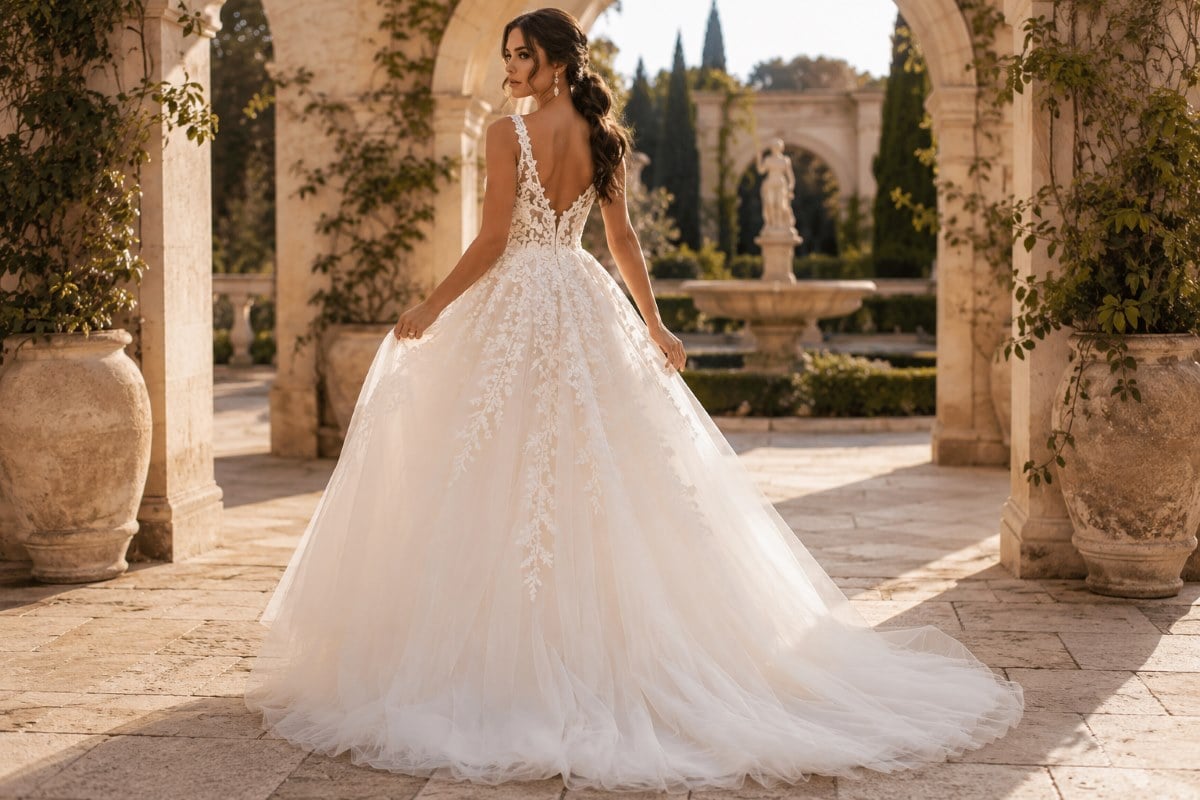
The ball gown is famously kind to pear-shaped figures, because the full skirt completely conceals the hips, thighs, and lower body while the fitted bodice highlights a narrow waist and the upper body. For anyone who wants to draw the eye upward and away from the lower half, no silhouette does it better. It is also wonderful for hourglass figures, since the structured waist showcases the natural curve, and for petite-busted brides, because the dramatic skirt creates balance and presence regardless of the bust.
Where to Be Thoughtful
Being honest matters here. A ball gown adds visual volume, so for very petite brides the sheer scale of the skirt can occasionally overwhelm a smaller frame. This does not mean petite brides cannot wear one, many look stunning in it, but the proportions of the bodice and the fullness of the skirt should be chosen carefully so the dress does not wear the bride. Similarly, brides who want to feel light, unencumbered, and able to move freely may find the weight and volume of a ball gown more than they want. There is no wrong answer, only what feels right for you. If you love the romance of the shape but want something a touch softer, the gentler flare of the styles among A-line wedding dresses offers a middle ground worth trying.
The Fabrics That Build a Ball Gown
The fabric of a ball gown determines its volume, its movement, and its entire personality. Because the silhouette depends on structure, the fabric choice matters more here than in almost any other style.
Tulle and Organza for Lightness
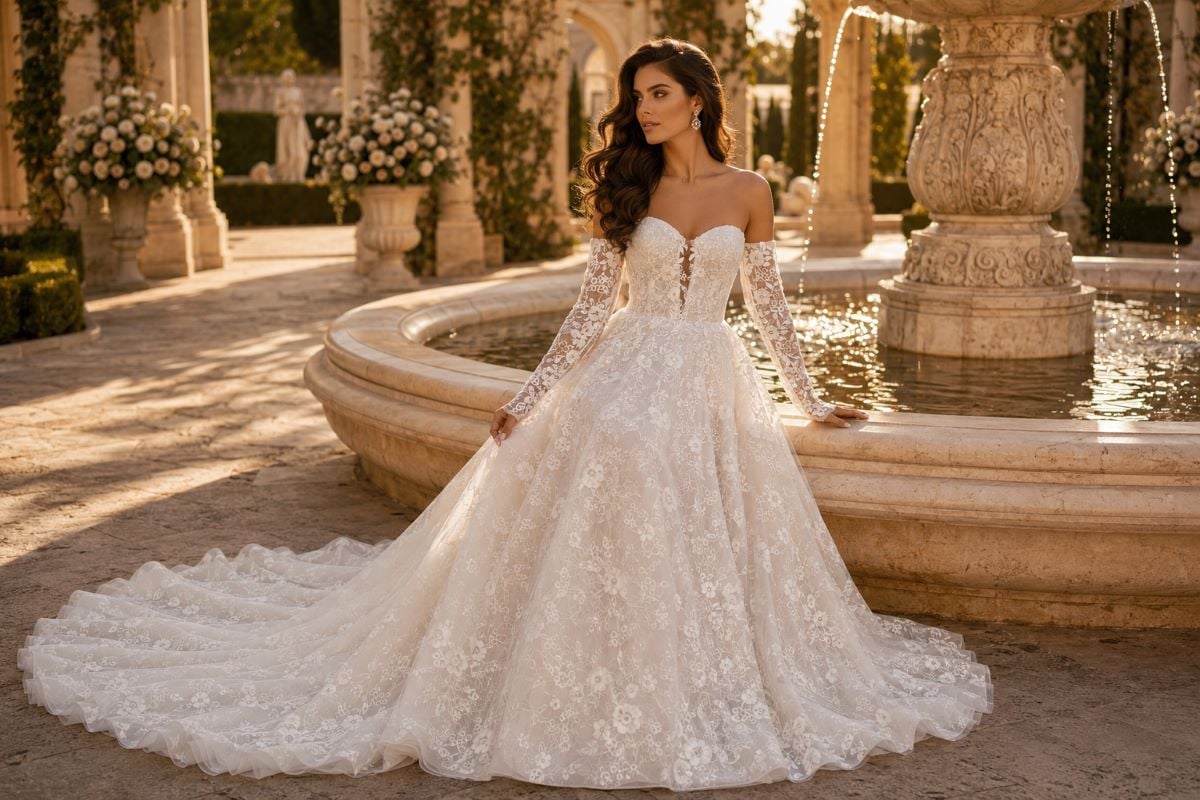
Tulle is the classic ball gown fabric, the fine netting that creates soft, romantic, cloud-like volume. A tulle ball gown feels ethereal and dreamy, with a skirt that can hold enormous fullness while staying surprisingly light. Organza is similar but slightly crisper, holding a more defined, sculptural shape. Both fabrics create the airy, princess-like volume most people associate with a fairytale gown.
Satin and Mikado for Drama
For a more structured, formal, and modern ball gown, satin and Mikado are the fabrics of choice. They are heavier and smoother, holding a sleek, architectural shape with a luxurious sheen. A satin ball gown reads as grander and more substantial than a tulle one, with clean lines and a polished surface that catches the light. This is the choice for a bride who wants the volume of a ball gown with a sophisticated, contemporary edge.
Lace and Embellishment for Detail
Many ball gowns layer lace, beading, or embroidery over the base fabric to add texture and romance. A lace overlay on the bodice or throughout the skirt brings intricate detail and a timeless feel, and the styles among lace wedding gowns show how delicate detailing transforms a simple silhouette into something richly textured.
For brides who want sparkle rather than soft texture, beadwork is the answer. The range of beaded wedding gowns demonstrates how hand-applied beading can turn a ball gown bodice into a true focal point that catches the light with every movement, drawing the eye upward toward the face.
Choosing the Right Ball Gown for Your Wedding
Falling in love with a ball gown is easy. Choosing the right one takes a little strategy, and a few honest considerations make the decision far clearer.
Match the Gown to the Venue
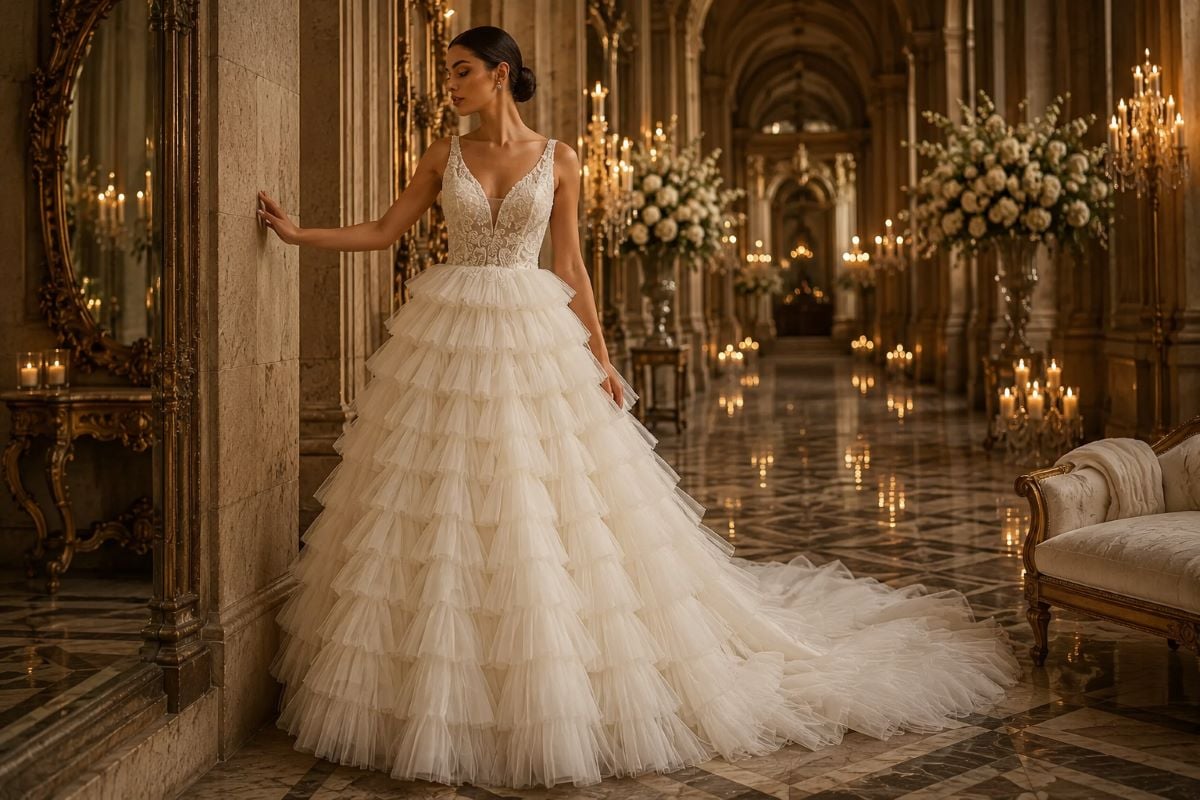
A ball gown is a formal silhouette, and it belongs at a formal setting. A grand ballroom, a historic estate, a cathedral, or a large, elegant venue gives a ball gown the room it needs to make its full impact, both physically and visually. The honest caution: a dramatic ball gown can be impractical at a small, intimate, or outdoor venue. On grass, a long structured skirt drags and collects dirt, and in a tight space the volume becomes hard to manage. If your wedding is a beach ceremony or a relaxed garden gathering, a lighter silhouette is usually the more comfortable choice. Match the grandeur of the gown to the grandeur of the setting.
Consider the Bodice and Neckline
The skirt may be the showstopper, but the bodice and neckline are what frame your face and define the gown’s character. A strapless sweetheart neckline is the classic, romantic ball gown pairing. A V-neck adds a more modern, elongating line. An off-the-shoulder style is soft and timeless. Long sleeves or a high neckline bring elegance and coverage for a more formal or modest look. Because the skirt is already doing so much, the neckline is where you fine-tune the overall feeling of the dress, from sweetly traditional to sleekly contemporary.
Plan for Comfort and Movement
A ball gown is heavier and more voluminous than other silhouettes, and you will wear it for many hours, through a ceremony, photographs, dinner, and dancing. Be realistic about this. Make sure you can sit comfortably, move through doorways, and dance without feeling trapped. Many ball gowns can be bustled for the reception, lifting the train off the floor so you can move more freely once the formal portion is over. A thoughtful bride tries walking, sitting, and turning in the gown during fittings, not just standing still in front of the mirror. For a broader sense of how the ball gown compares to every other shape before you commit, the breakdown of popular wedding dress silhouettes is a helpful companion to read alongside this guide.
How a Ball Gown Differs From Other Bridal Silhouettes
Understanding the ball gown in contrast to other shapes makes it easier to know whether it is truly the one for you.
Against a fitted or sheath silhouette, the contrast is total. A fitted gown follows the body’s natural line from top to bottom, creating a sleek, modern, body-conscious look, while a ball gown conceals the lower body entirely under volume. Brides who want to show their shape often prefer the styles among fitted wedding dresses, while those who want drama and concealment choose the ball gown. They sit at opposite ends of the bridal spectrum.
Against the mermaid silhouette, the difference is about where the drama lives. A mermaid hugs the body through the hips before flaring at the knee, emphasizing curves, while a ball gown releases all its volume from the waist. A mermaid is sultry and form-following; a ball gown is regal and concealing. Both are dramatic, but in completely different ways.
Against the A-line, as noted earlier, the ball gown is simply the fuller, more theatrical version of a similar idea. If you love the romance of a flared skirt but find a full ball gown too much, the A-line is the natural step down in volume. Knowing exactly where the ball gown sits among these options helps you walk into your appointments with a clear sense of what you are looking for.
Styling and Accessorizing a Ball Gown
A ball gown is a statement on its own, which shapes how you accessorize it. The guiding principle is balance: when the dress is this dramatic, the accessories should support rather than compete.
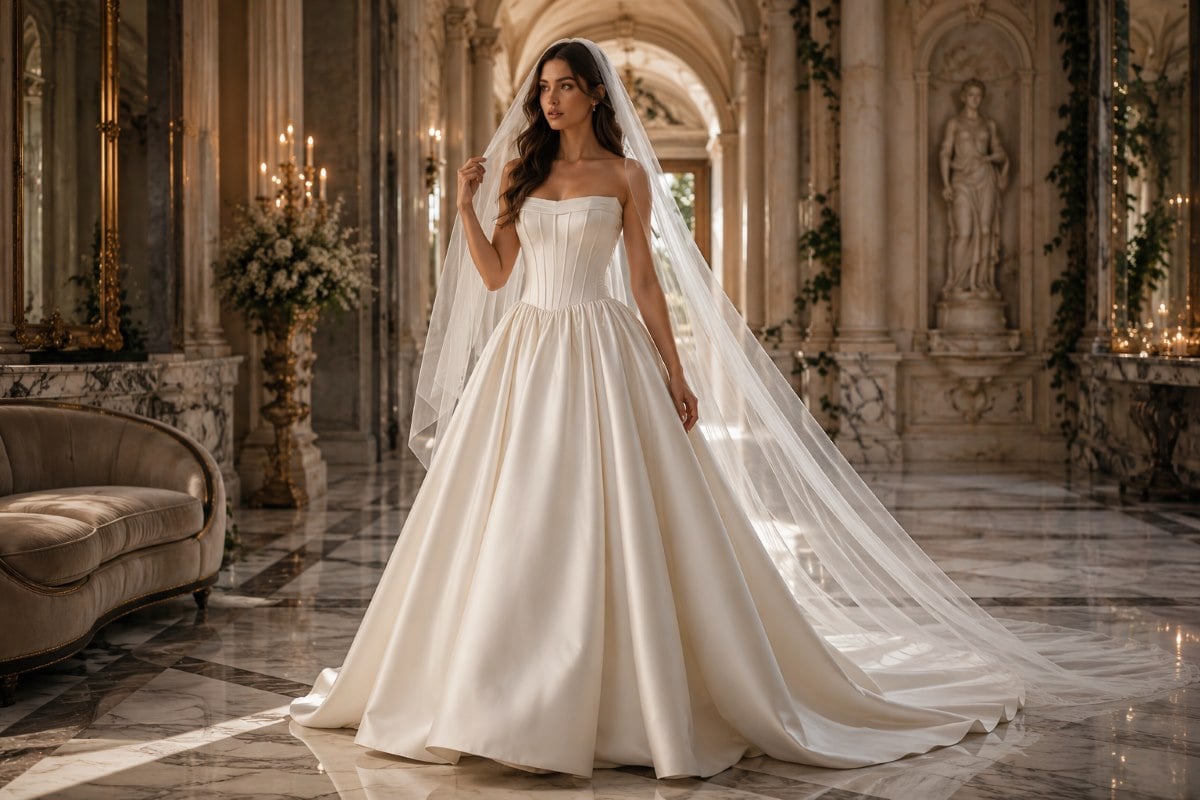
Because the skirt carries so much visual weight, jewelry generally stays refined and the focus moves to the neckline and face. A pair of elegant earrings, a delicate bracelet, and a thoughtfully chosen veil usually complete the look without crowding it. A long cathedral veil suits the grandeur of a ball gown beautifully, echoing its scale. Shoes matter less for visibility, since they are hidden under the skirt, so comfort can take priority, a blessing on a long day. The one place to lean into drama is a statement bodice detail or a beautiful neckline, since that is the part of the gown closest to the eye. For a complete approach to finishing the look, the guidance in how to accessorize your wedding dress applies especially well to a silhouette this commanding.
Shopping for a Ball Gown: Practical Advice
Buying a ball gown has a few practical realities worth planning for, since this silhouette asks more of the shopping process than a simpler dress.
- Start early. A structured ball gown takes time to order and often needs more alteration than a simpler dress. Begin shopping well in advance so there is room for fittings and adjustments without pressure.
- Try the full silhouette on. A ball gown looks very different on the body than on a hanger. Try it on, walk in it, sit in it, and turn in it before deciding. The way it moves is as important as how it looks standing still.
- Ask about the bustle. If the gown has a train, find out how it bustles for the reception. A good bustle lets you dance and move once the ceremony is over, and it is worth seeing how it works during a fitting.
- Factor in the foundations. Some ball gowns need specific undergarments or a crinoline to achieve their full shape. Confirm what the dress requires so the silhouette looks its best on the day.
- Budget for alterations. The fitted bodice of a ball gown usually needs precise tailoring to sit perfectly, so plan for alteration time and cost. The advice in wedding dress shopping tips covers the wider process worth knowing before you start.
With a little planning, the practical side of a ball gown becomes manageable, and you can focus on the joy of wearing a dress that has made brides feel like the center of their own story for generations.
About Ball Gown Wedding Dresses FAQs
What is a ball gown wedding dress?
A ball gown wedding dress has a fitted bodice that shapes the waist paired with a full, voluminous skirt that flares dramatically from the natural waistline to the floor. It is the most theatrical bridal silhouette, built from structured fabrics like tulle, organza, or satin and supported by internal construction that holds its shape.
Who looks best in a ball gown wedding dress?
Ball gowns are especially flattering on pear-shaped and hourglass figures, since the full skirt conceals the hips and lower body while the fitted bodice highlights the waist. They also balance a petite bust beautifully. Very petite brides can wear one too, but should choose the bodice and skirt proportions carefully so the volume does not overwhelm their frame.
What is the difference between a ball gown and an A-line wedding dress?
Both narrow at the waist, but a ball gown flares sharply into full, rounded volume, while an A-line flares gently and gradually into a softer triangle shape. The ball gown is always the more dramatic and voluminous of the two, and the A-line is the natural choice for a bride who wants a flared skirt with less fullness.
Are ball gowns good for outdoor or beach weddings?
Generally no. A ball gown is a formal silhouette best suited to grand indoor venues like ballrooms, estates, and cathedrals. On grass or sand a long structured skirt drags and is hard to manage, so a lighter silhouette is usually more comfortable and practical for outdoor or beach ceremonies.
Can you dance in a ball gown wedding dress?
Yes, with planning. Many ball gowns can be bustled for the reception, lifting the train off the floor so you can move more freely. Trying the gown on and practicing sitting, turning, and moving during fittings ensures you are comfortable for the full day, from ceremony through dancing.
What fabric is best for a ball gown wedding dress?
It depends on the look you want. Tulle and organza create soft, romantic, airy volume, while satin and Mikado give a more structured, modern, and substantial shape with a luxurious sheen. Lace and beading are often layered over the base fabric to add texture, detail, and sparkle.
The Timeless Romance of the Ball Gown
There is a reason ball gown wedding dresses have never gone out of style. The silhouette delivers a sense of occasion that no other shape can match, the fitted bodice, the sweeping skirt, the unmistakable feeling of a grand entrance. Choosing one well comes down to a few honest questions: does it suit your body and your comfort, does it match the grandeur of your venue, and does the fabric and neckline create the feeling you want. Get those right, and a ball gown becomes the dress that makes your wedding day feel exactly as significant as it is. Jovani has spent more than forty years crafting gowns with the steel boning, structured construction, and quality fabrics that a true ball gown silhouette depends on, so the romance you feel in the mirror lasts all the way through the celebration.