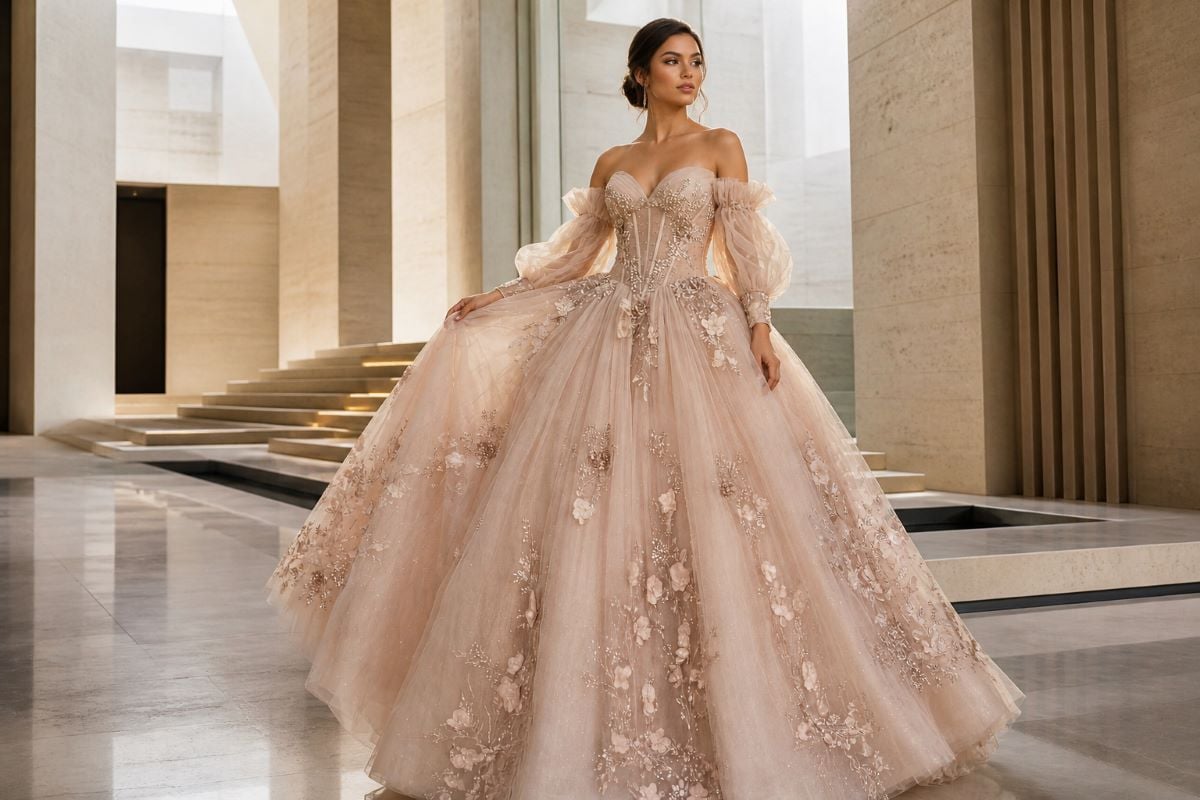

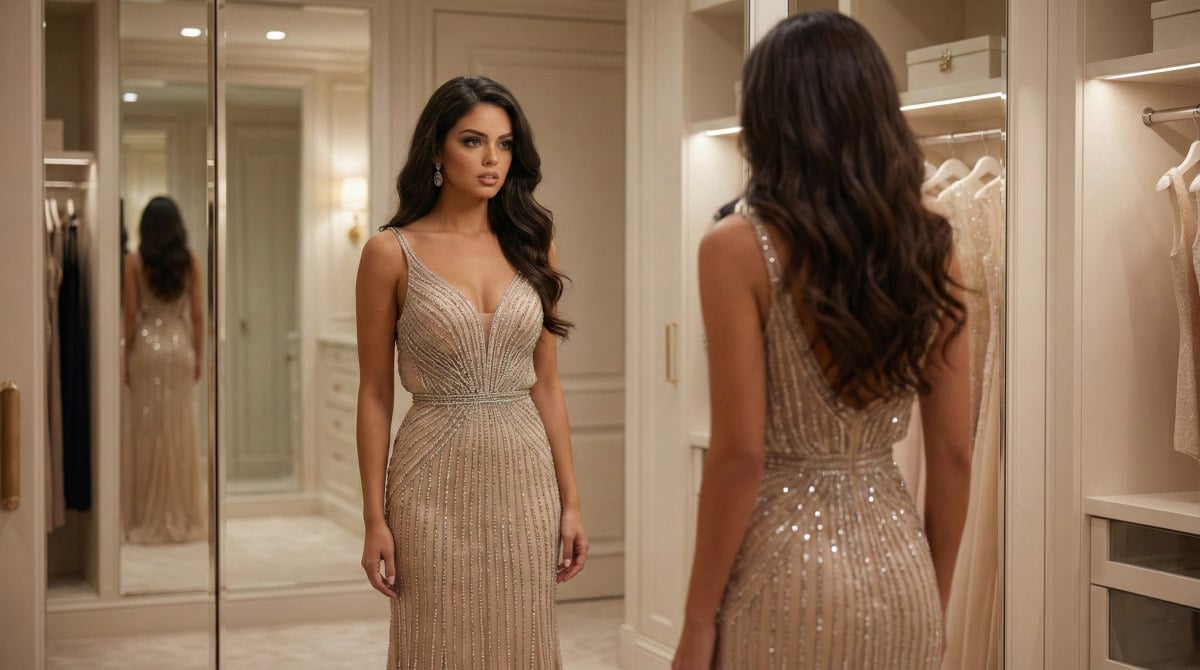
A prom dress too big is a far better problem than one that arrives tight. Taking a dress in is routine work, while letting one out depends on fabric that may not be there. So the first thing to know is that this is usually fixable, and often cheaply.
Altering a prom dress that runs large is standard work. This guide covers how to tell whether a dress is genuinely too big, what a tailor can take in, what is safe to try at home, and what to do when the event is days away rather than months.
What do you do if your prom dress is too big?
Can a dress that is too big be fixed? Almost always. A tailor can take in the side seams, the bodice and the straps, and on most gowns that covers two sizes comfortably. Before booking anything, put the dress on with the exact shoes, bra and shapewear you plan to wear, since the right undergarments close small gaps on their own. If the neckline gaps, the bodice slides down when you breathe, or you can pull several inches of fabric away at the waist, it needs altering. If it simply feels roomy but stays put, it may already be fine.
Work out where the extra fabric is
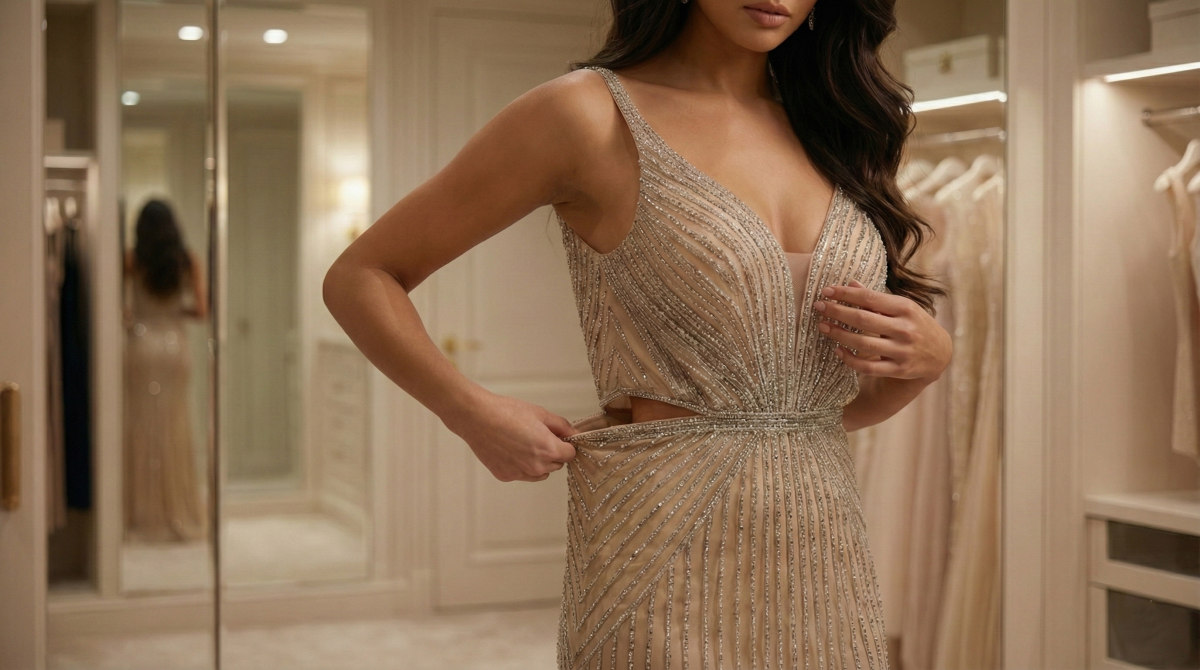
The location decides the cost and the timeline, so check each area separately rather than judging the dress as a whole.
Extra room at the waist and hips is the easiest and cheapest fix, since side seams are straightforward to take in. Extra room at the bust is next, and it is usually solved by taking in the bodice seams or adding cups. Straps that slide off are the simplest of all and often just need shortening.
A neckline that gaps when you lean forward is the one to point out specifically, because it is fixed differently depending on the cut. On a structured bodice it is a seam adjustment, and on a soft one it may need a hidden stay.
Length is separate from width and is almost always altered anyway, and a prom dress too short after hemming is the one mistake that cannot be undone. Bring the exact shoes, since the hem is set from them rather than from the floor.
What a tailor can take in
| Area | Typical fix | How much it can come in |
|---|---|---|
| Waist and hips | Take in the side seams | Comfortably two sizes on most gowns |
| Bust | Take in bodice seams, add cups | One to two sizes |
| Straps | Shorten or reposition | Any amount, very quick |
| Back or zip | Move the zip, or convert to a lace up | Several inches, and it adds adjustment |
| Neckline gap | Seam adjustment or a hidden stay | Small, but very visible once done |
| Hem | Shorten to your shoes | Any amount, do this last |
The row worth asking about is the zip. Converting a standard zip to a lace up corset back both takes the gown in and gives you several inches of adjustment on the night, which is useful if you are between sizes.
Safe short term fixes
Some of these are fine and some are worse than the problem, so it is worth separating them.
Fashion tape holds a neckline or a strap in place for an evening and leaves no mark on most fabrics. Test it on an inside seam first. Sew-in bra cups fill a loose bust and cost very little. A wide belt or a sash works on a gown with a natural waist seam and can look deliberate rather than corrective.
Shapewear helps only when the gap is small, and it should never be relied on to hold up a bodice that does not fit. Safety pins are an emergency measure rather than a plan, and they show on satin.
What does not work is trying to take in seams yourself on a lined or boned gown. Formal construction has several layers and internal structure, and unpicking the wrong one is far more expensive to repair than the original alteration would have cost.
When the event is close
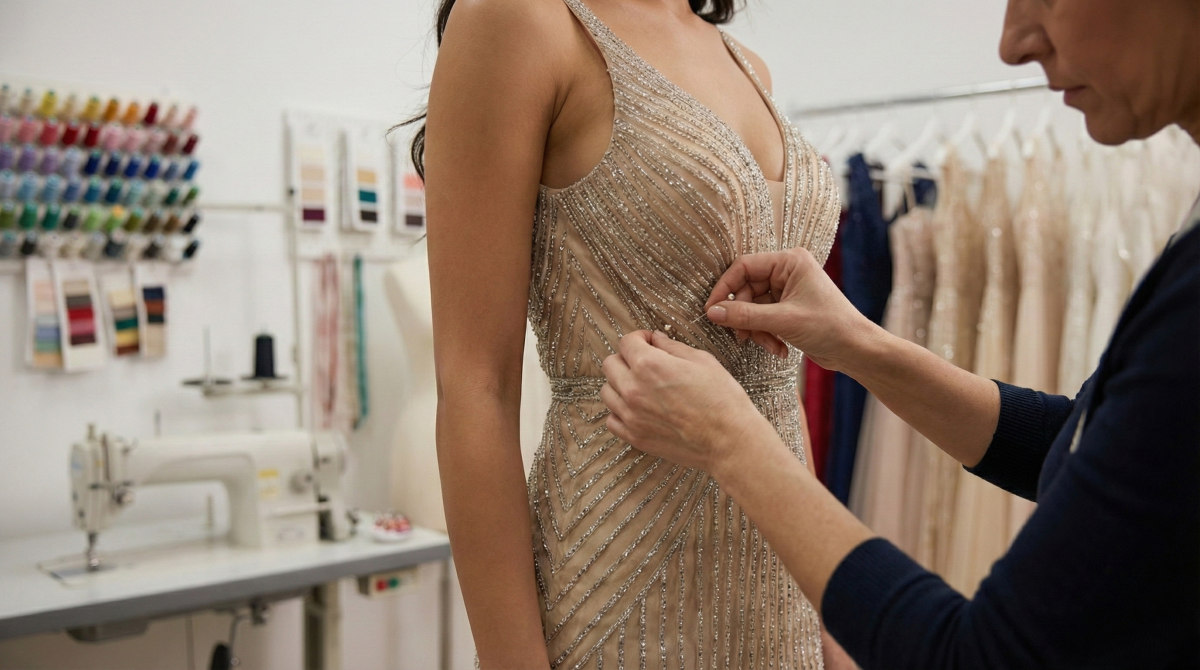
A simple take in at the sides can often be done in a few days, so call a tailor before assuming it is too late. Say clearly when the event is, since many will prioritize urgent work for a fee.
If nothing is available in time, focus on the areas that show. A secured neckline and shortened straps make a loose gown look intentional in photographs, even when the waist is still roomy. A belt does the rest.
The alteration to skip when time is short is anything involving beading, since the beads must be removed by hand along the seam and resewn afterwards. That is the work most likely to run over.
Choosing a better fit next time
Order to your largest measurement and have the rest taken in. That rule prevents the opposite problem, which is far worse, since a gown that is too small often cannot be let out at all.
Some silhouettes are more forgiving than others. An A line gown tolerates a little extra room through the skirt without looking loose.
A mermaid gown shows every fit issue, so it needs the most precise measurement of any silhouette.
Fabric matters too. Stretch crepe and jersey adapt to small changes, while structured satin and chiffon hold their cut exactly. If your measurements sit between sizes, a corset back removes most of the risk.
Loose Prom Dress Questions
How do you know if a prom dress is too big?
Put it on with the exact shoes, bra and shapewear you plan to wear. If the neckline gaps when you lean, the bodice slides down when you breathe, or you can pull several inches of fabric away at the waist, it needs altering. If it feels roomy but stays put, it may already be fine.
How much can a tailor take a dress in?
Comfortably two sizes at the side seams on most gowns, and one to two at the bust. Straps can be shortened by any amount quickly. Converting a zip to a lace up back takes the gown in further and adds several inches of adjustment for the night itself.
Can you fix a loose dress without a tailor?
Only temporarily. Fashion tape holds a neckline or strap for an evening, sew-in cups fill a loose bust, and a belt works on a gown with a natural waist seam. Do not attempt to take in seams yourself on a lined or boned gown, since repairing that costs more than the alteration would have.
What if prom is in a few days?
Call a tailor anyway, since a simple take in at the sides can often be done in a few days and many will prioritize urgent work. If nothing is available, focus on the areas that show, so secure the neckline and shorten the straps. Skip anything involving beading, which always runs over.
Is it better to order a dress too big or too small?
Too big, every time. Taking a gown in at the seams is routine, while letting one out depends on how much fabric was left in the seam allowance, which on a fitted dress is often very little. Order to your largest measurement and have the rest brought in.
Which silhouettes are most forgiving?
An A line tolerates extra room through the skirt without looking loose, and stretch crepe or jersey adapt to small changes. A mermaid shows every fit issue and needs the most precise measurement. If you sit between sizes, a corset back removes most of the risk.
Getting it quoted properly
A fitter can tell you in minutes what a gown needs and what it will cost, which is far more useful than guessing from a mirror at home.
Take the dress and the shoes you plan to wear to an authorized Jovani retailer, and ask for each area to be quoted separately so you can decide what is worth doing.