
Purple is the color people are drawn to and then hesitate over, usually because they have only ever seen one version of it. Lavender, lilac, orchid, plum, eggplant, and true violet all get called purple, and they behave so differently against skin and under lighting that trying one and disliking it tells you almost nothing about the others. Someone who decided purple was not her color after a lilac dress may look striking in plum. This guide covers what each purple shade actually does, how to match one to your coloring, the way purple behaves under the lighting of a prom venue, which fabrics change the shade most, and how to build the rest of the look around it.
Why purple works for prom
Purple occupies a useful middle position at a formal dance. It reads as rich and a little dramatic without the immediate attention that red pulls, and it stands apart from a room where black, pink, and blue dominate. For anyone who wants a dress that registers as distinctive without feeling like a costume, that balance is genuinely hard to find elsewhere on the color wheel.
There is also a practical reason purple suits the setting. Because purple is mixed from red and blue, shifting the balance between the two produces shades that lean warm and shades that lean cool, so nearly every complexion has a purple somewhere in the range that flatters it. Very few colors can claim that.
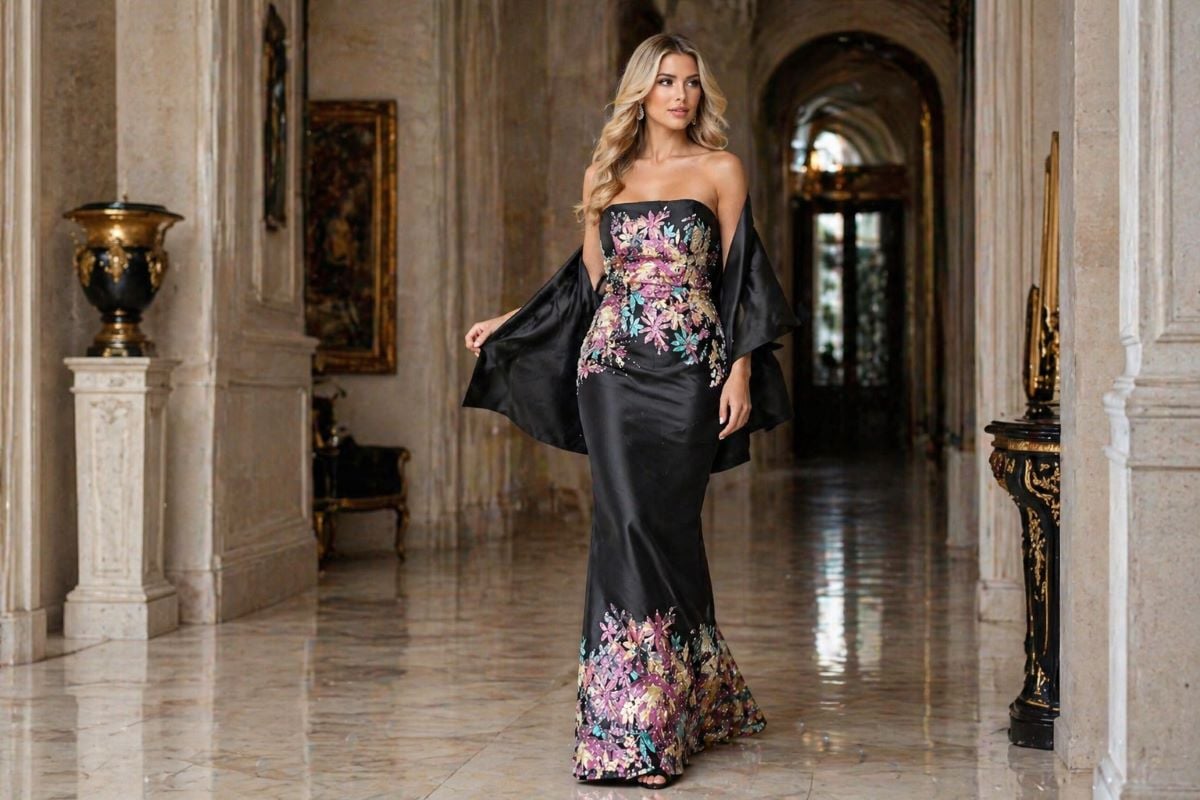
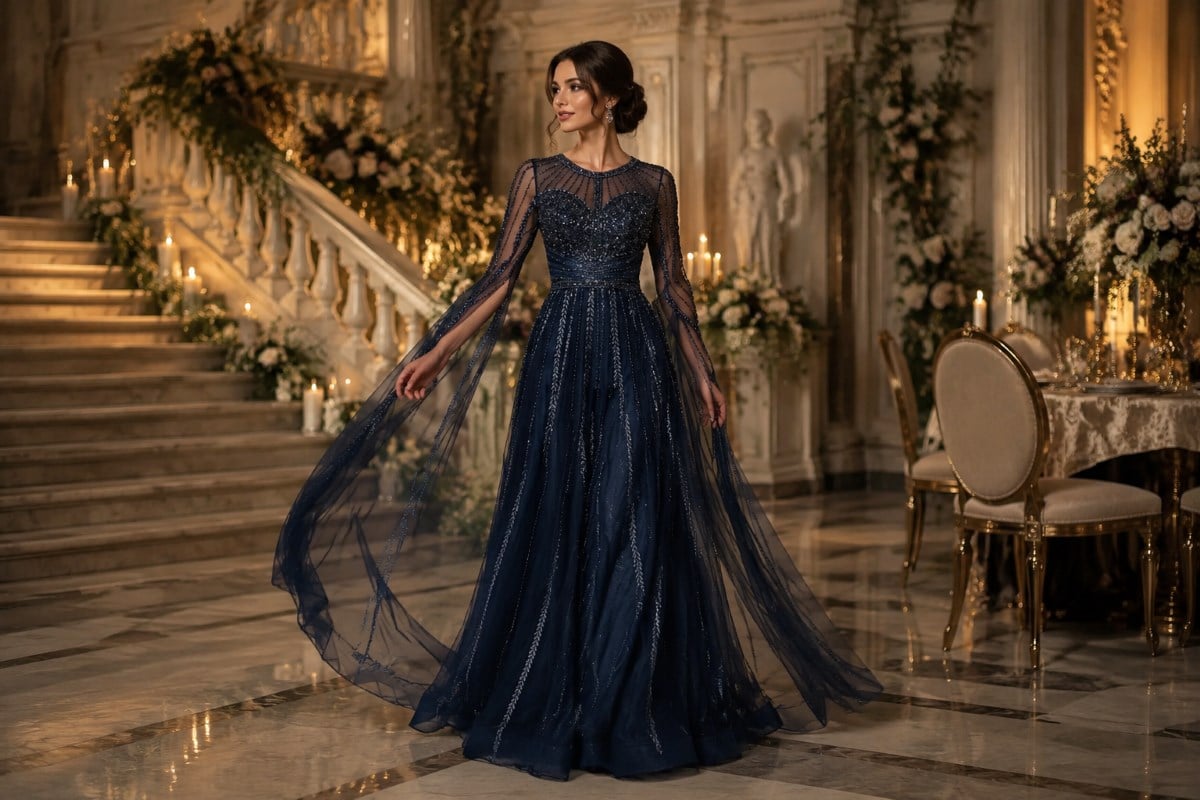
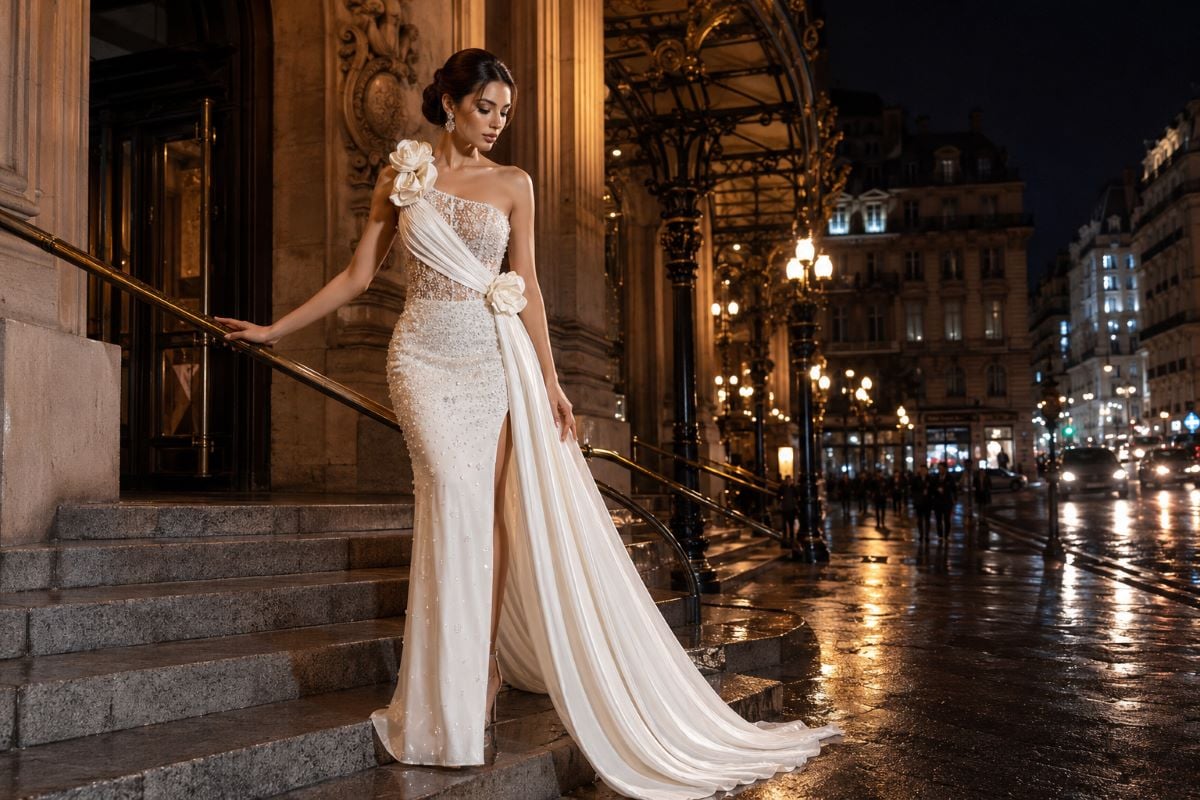
The deeper shades carry a long association with formality and ceremony, which gives a plum or eggplant gown a weight that a brighter color does not have. The lighter shades read as soft and romantic instead. The range of purple prom dresses shows how far apart the two ends of the family sit.
The purple shades and what each one does
Choosing purple well means choosing a specific purple, so it helps to know what separates them.
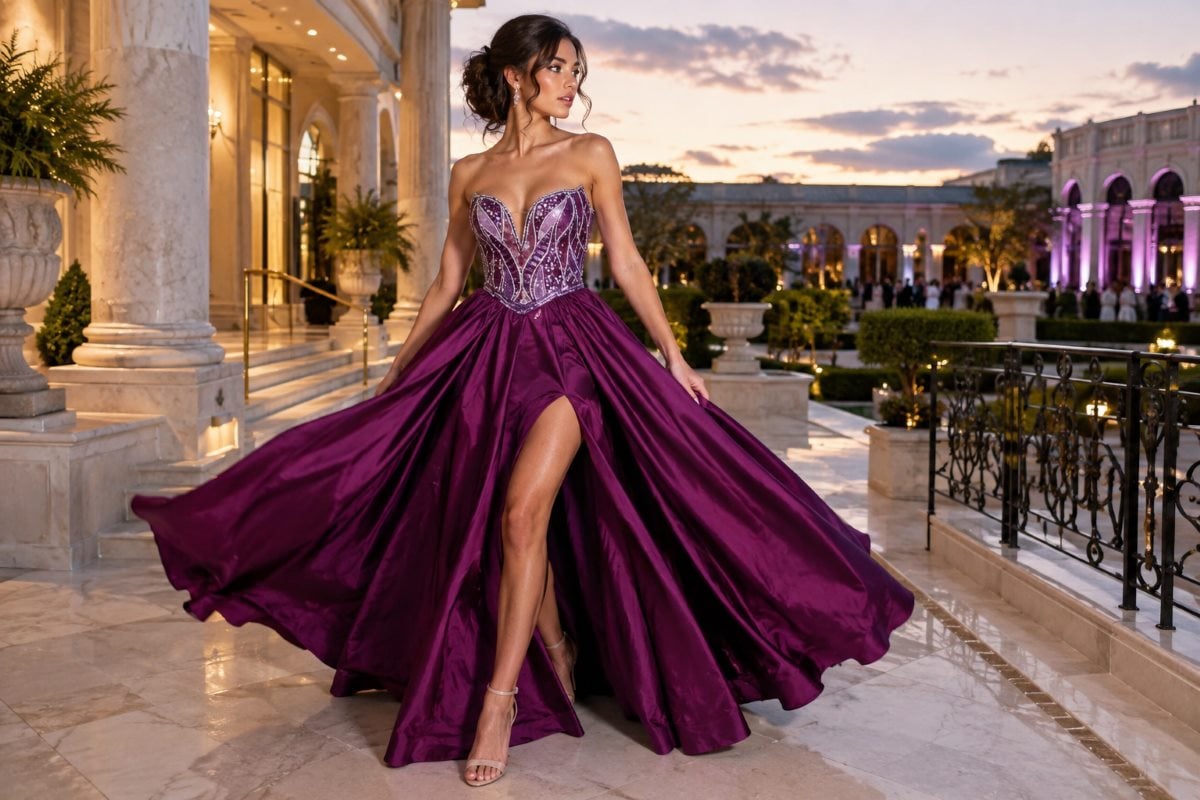
The light purples read soft and romantic
Lavender is pale and cool, with a gray softness that reads as gentle and modern. Lilac is slightly warmer and pinker than lavender, which makes it feel sweeter and more youthful. Both photograph as delicate rather than dramatic, both suit a lighter, airier fabric, and both are among the most popular choices for a spring formal. The thing to watch with the light purples is that they can wash out against very fair skin with cool undertones, since the value of the dress ends up close to the value of the skin. A slightly deeper lilac, or a fabric with texture and sparkle, solves that easily.
The deep purples read rich and formal
Plum is a deep, slightly red-leaning purple that reads as warm and luxurious. Eggplant is deeper still and more neutral, close enough to black in its formality to work at the most formal end of a dance. True violet and orchid sit between the extremes: saturated, clearly purple rather than pink or blue, and bold enough to be the statement of the outfit. These deeper shades hold their character under low lighting far better than the pale ones do, and they carry beading and sequins without the dress becoming visually crowded. If you want purple to read as sophisticated rather than sweet, this is the end of the range to look at.
Matching purple to your coloring
Because the purple family splits along warm and cool lines, working out which side you sit on removes most of the guesswork.
Cool undertones, showing as pink or blue beneath the skin, suit the blue-leaning purples: lavender, true violet, and a cooler eggplant. These sit in the same temperature family and read as harmonious rather than clashing.
Warm undertones, showing as golden or peach, suit the red-leaning purples: plum, orchid, and warmer lilac. A very cool lavender can look slightly gray or drained against warm coloring, while plum tends to bring warmth to the face.
Neutral undertones can wear almost the whole range, in which case the choice is about the effect you want rather than about what is permitted. Depth matters as well: deeper complexions carry saturated violet and bright orchid beautifully, and the contrast is striking. Medium and olive skin suits the middle of the range particularly well. Very fair skin usually looks best either in a deep plum for contrast or in a lilac with enough saturation to avoid disappearing. The guide to prom dress colors for different skin tones covers how to identify your undertone in the first place.
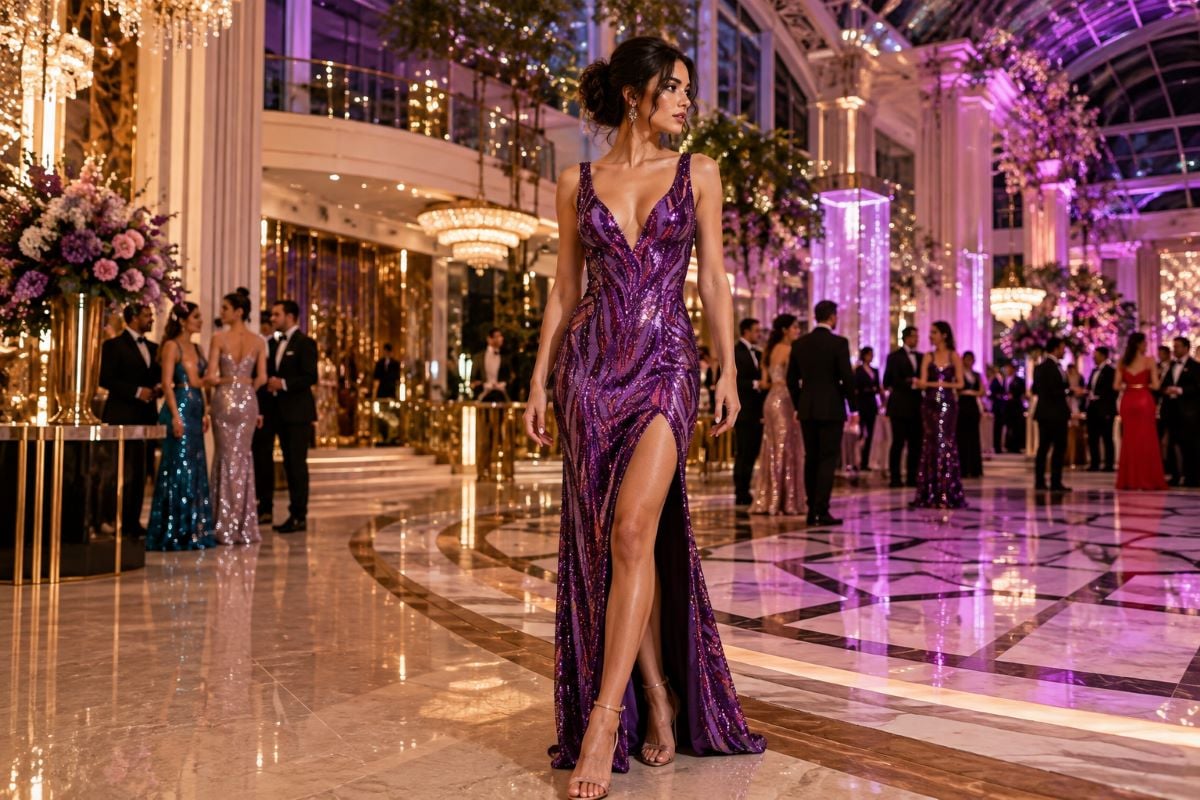
Neckline decides how much color touches your face
With a saturated color, the neckline controls how much of the shade sits directly against the skin of your neck and jaw, and that changes the effect more than most people expect. A higher neckline puts the purple right up against your complexion, which intensifies both the flattering effect and any mismatch in undertone. A lower or wider neckline creates a buffer of skin between the color and the face, which softens the relationship and makes a shade that is almost right far more forgiving. If a particular purple appeals but feels slightly off, changing the neckline is often a more effective fix than changing the shade.
Purple takes embellishment in more than one direction
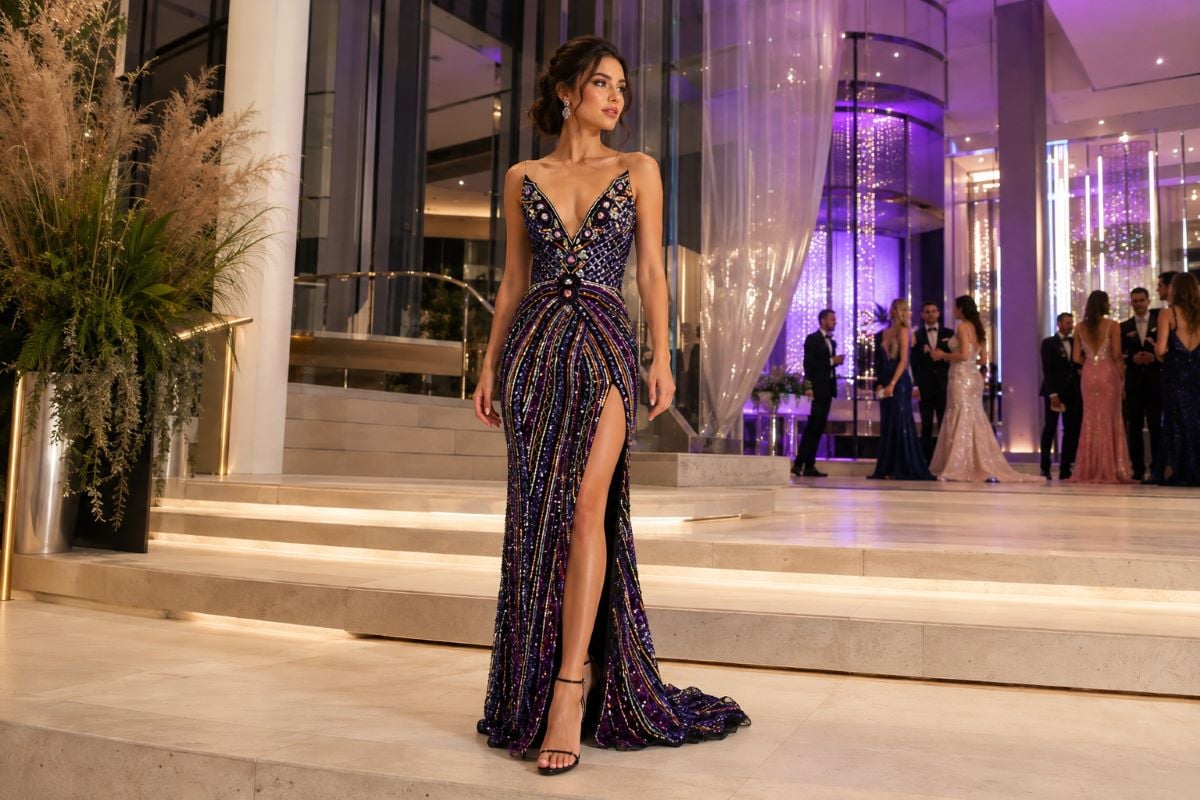
One practical advantage of purple is that it accepts detail in several ways without the dress becoming confused. Crystal and silver beading over lavender or violet keeps everything cool and crisp. Gold beading over plum or orchid warms the whole dress and pushes it toward richness. Black beading deepens an eggplant into something really dramatic. Tonal beading in the same purple adds texture and light without shifting the color at all. That flexibility means a purple dress can be steered toward whichever mood you want, which is not true of every strong shade.
Purple under prom lighting
This is the consideration most people skip and the one that causes the most disappointment, because purple is unusually sensitive to light.
Prom venues typically use low, warm, and often colored lighting, sometimes with colored spots or uplighting on the dance floor. Warm light pushes colors toward yellow and red, which affects purple more than most shades because purple already contains red. Under strongly warm light, a cool lavender can drift toward gray and a true violet can read closer to burgundy than it did in daylight.
The shades that hold up most reliably are the deeper, more saturated ones, since they have enough pigment to keep their identity when the light shifts. Plum, eggplant, and a strong violet all stay recognizably purple. The pale shades are the ones to check, and if the dress will be worn under colored lighting, a lavender or lilac with a shimmer, a sequin, or a metallic thread will hold its brightness better than a flat matte version.
If you can see the venue or a photograph of a previous dance there, that is the most reliable check available. If not, choosing a shade with real saturation is the safer route. The broader treatment in the prom dress colors guide covers how colors behave across the evening.
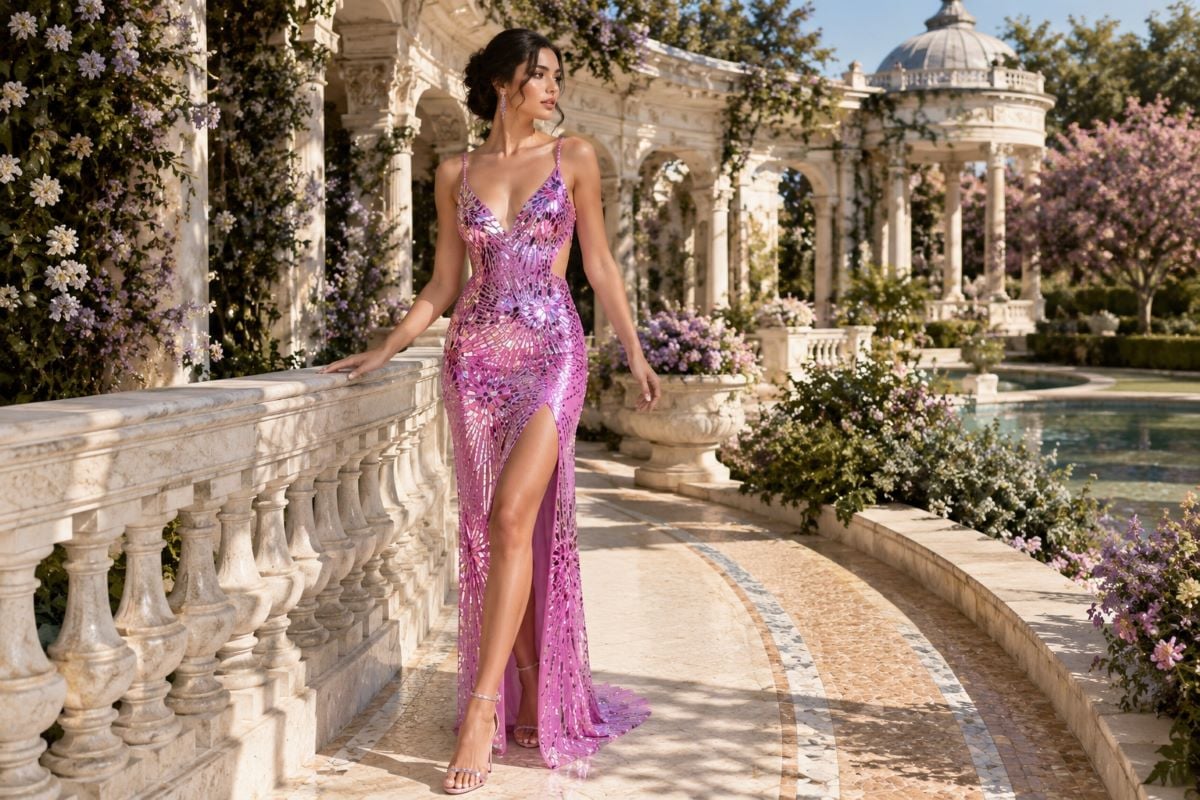
How fabric changes a purple dress
The same purple in different fabrics produces different dresses, and this is the easiest way to adjust a shade that appeals but does not feel right.
Satin deepens and saturates purple, giving it a glossy intensity, which is why plum satin reads as so rich. Sequins amplify it and throw purple light around the room, which suits a dance particularly well. Velvet takes purple to its most historic and formal, absorbing light and producing enormous depth, though it is warm to wear through an active evening. Tulle and chiffon lighten purple considerably, so a shade that looks strong on a swatch becomes soft and airy in layers. Crepe mutes the shine and gives a modern, tailored version of the color.
Beading changes the reading again. Silver or crystal beading over purple keeps it cool and crisp. Gold beading over plum or orchid warms the whole dress. Tonal beading in the same purple adds texture without shifting the color at all. The purple styles among purple evening dresses show how the family behaves across formal fabrics.
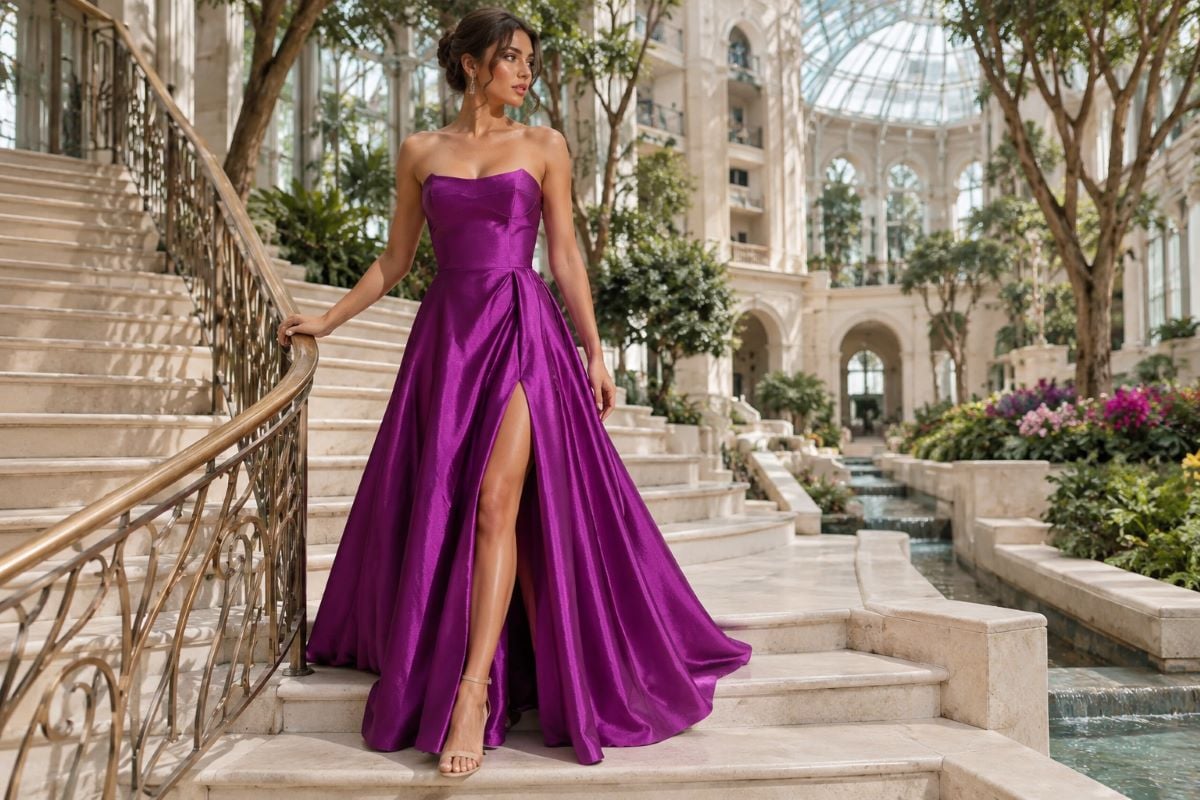
Keeping a purple prom dress age-appropriate
Prom is a high school dance, and the dress should suit that setting. Purple helps here, since the lighter shades read as youthful and romantic without any effort and the deeper ones read as formal rather than mature.
The things that actually determine whether a dress is right for the occasion are the practical ones: a neckline and length you feel comfortable in, a bodice that stays secure without needing adjustment, and a fit that lets you dance instead of standing still all evening. Most schools publish a dress code, and reading it before buying rather than after saves a difficult conversation.
A dress you feel confident in photographs better than one you spend the night managing, which is the practical case for choosing comfort alongside color. The purple styles among purple homecoming dresses show the color in a shorter, school-dance context.
Part of why deep purple still reads as ceremonial is historical rather than aesthetic. For centuries the dye was extraordinarily difficult to produce, which made purple cloth expensive enough that its use was restricted by law in several societies to rulers and senior officials. Synthetic dyes ended the scarcity in the nineteenth century, but the association with ceremony and status stayed attached to the color and never really left it. It is why a plum or eggplant gown carries a weight that an equally dark blue or green does not, and why purple appears so often in academic and ceremonial dress. For a prom, that inherited formality is useful: the color does some of the work of looking important without the dress having to be elaborate.
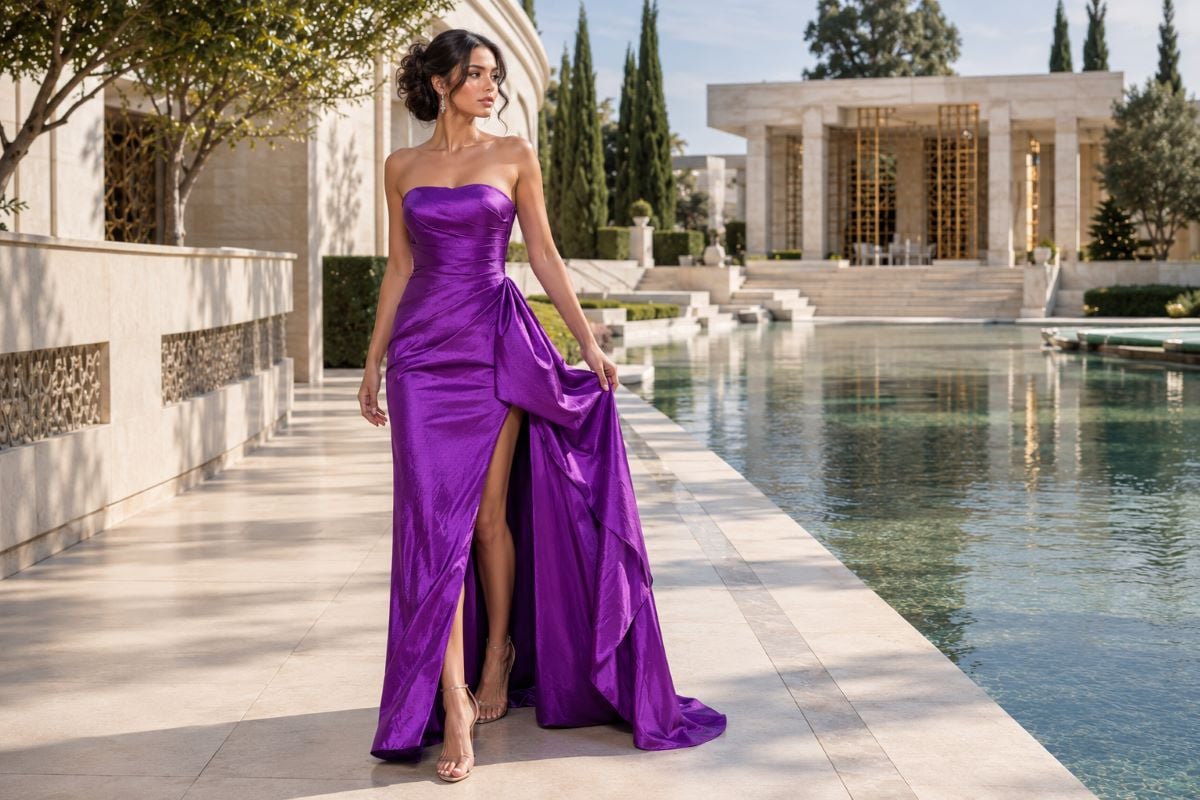
Accessorizing purple
Purple is a strong color, so accessories work best supporting it rather than competing.
Silver is the natural partner for the cool purples, especially lavender and true violet, and gives a crisp, clean result. Gold suits the warm purples, particularly plum and orchid, and creates a richer contrast that reads as more dramatic. Rose gold sits well with lilac and the pinker end of the range. Mixing metals tends to muddy the effect, so pick one and stay with it.
For shoes, silver and metallic options keep the look light, nude matched to your own skin depth lengthens the leg most effectively, and a shoe matched to the dress produces the most cohesive line. Black works with eggplant and deep plum but can read as heavy against lavender.
Keep jewelry to a single focal point. If the neckline carries detail, let earrings do the work. If the dress is beaded or sequinned, minimal jewelry is almost always better, since the dress is already reflecting light from every angle. For a sense of how color choice reads to other people, the piece on prom dress color psychology covers what different shades communicate.
How to shortlist without wasting an afternoon
The route through this is short once you know the landmarks. Work out whether you sit warm or cool, which immediately halves the field. Then try one light purple and one deep purple side by side against your face rather than one at a time, because comparing two shades together reveals far more than assessing either alone. The eye adapts quickly to a single color and tends to accept it; the difference becomes obvious the moment there is something to compare against.
Consider fabric as seriously as shade, since satin, sequins, tulle, and velvet will change how loud the same purple reads more than moving one step along the color range would. Check the dress under the warmest lighting you can find rather than only in daylight, since that is closer to the conditions it will actually be worn in. And move in it before deciding, because a dress that only works standing still is the wrong dress for a night of dancing.
Purple rewards this small amount of care more than most colors, because the gap between the right purple and the wrong purple on the same person is unusually wide. The wider range of prom gowns shows how the shade sits among the other options a room full of teenagers will have chosen from.
For a more formal register, where purple is used for depth rather than for drama, the purple mother of the bride dresses show the deeper end of the family. To find the purple that reads correctly against your own coloring, explore the current styles through an authorized Jovani retailer.
Purple, Shade by Shade
What is the difference between lavender, lilac, and plum?
They are different colors that share a name. Lavender is pale and cool with a gray softness, reading as gentle and modern. Lilac is slightly warmer and pinker than lavender, which makes it feel sweeter. Plum is deep and red-leaning, reading as warm and luxurious, and it sits at the formal end of the range. Trying one and disliking it says nothing about the others, since they flatter different colorings and suit different occasions.
Which purple suits my skin tone?
The family splits along warm and cool lines, so identifying your undertone resolves most of the choice. Cool undertones, showing as pink or blue beneath the skin, suit the blue-leaning purples: lavender, true violet, and cooler eggplant. Warm undertones, showing as golden or peach, suit the red-leaning purples: plum, orchid, and warmer lilac. Neutral undertones can wear nearly the whole range, so the choice becomes about effect rather than suitability.
Does purple look good under prom lighting?
The deeper shades do reliably; the pale ones need checking. Prom venues use low, warm, and often colored lighting, and warm light pushes colors toward yellow and red. This affects purple more than most shades because purple already contains red, so a cool lavender can drift toward gray and a true violet toward burgundy. Plum, eggplant, and a strong violet hold their identity, and a pale shade with shimmer or sequins keeps its brightness better than a flat matte one.
Should you wear silver or gold with a purple dress?
Silver suits the cool purples, especially lavender and true violet, and gives a crisp, clean result. Gold suits the warm purples, particularly plum and orchid, and creates a richer, more dramatic contrast. Rose gold works well with lilac and the pinker end of the range. Mixing metals tends to muddy the effect, so choose one. For shoes, metallic, a nude matched to your skin depth, or a shade matched to the dress all keep the line long.
Which fabric is best for a purple prom dress?
It depends how loud you want the color to read. Satin deepens and saturates purple with a glossy intensity. Sequins amplify it and throw light around a dance floor. Velvet gives the greatest depth and the most formal reading, though it is warm through an active evening. Tulle and chiffon lighten the shade considerably, so a strong swatch becomes soft in layers. Crepe mutes the shine for a modern, tailored version.
Is purple a good choice if I want to stand out at prom?
Yes, and it stands out in a particular way. Purple registers as distinctive because a prom crowd is usually dominated by black, pink, and blue, but it does not demand attention the way red does. A deep plum or violet reads as rich and a little dramatic while still looking considered rather than attention-seeking. If you want maximum impact, a saturated violet or orchid in satin or sequins is the strongest version of that effect.