
The best prom shoes get chosen last and cause the most regret, because prom dress and shoes are treated as two decisions instead of one. Almost every problem traces back to one of three things: a heel height that does not match the hem, a shoe nobody walked in before the night, and a color picked to match the dress exactly rather than to work with it. This guide covers which shoes for prom dresses actually work, what to skip, and how to test a pair before you commit.
What are the best shoes for prom?
What shoes should you wear to prom? Good prom shoes start with a block heel of around two to three inches, the best single answer for most people, because it gives real height, spreads the pressure across a wider base and stays comfortable through a full evening. A platform heel is the next best if you want more height, since the platform reduces the angle of the foot. For a floor length gown, the heel must match the height the hem was set for. For a short dress the whole shoe is visible, so this is where cool prom shoes earn their place. And a dressy flat is a perfectly good answer rather than a compromise, provided the material reads formal.
Start with your hem, not with the shoe
Choosing shoes with prom dress hems in mind is the whole trick, since the hem sets the heel height.
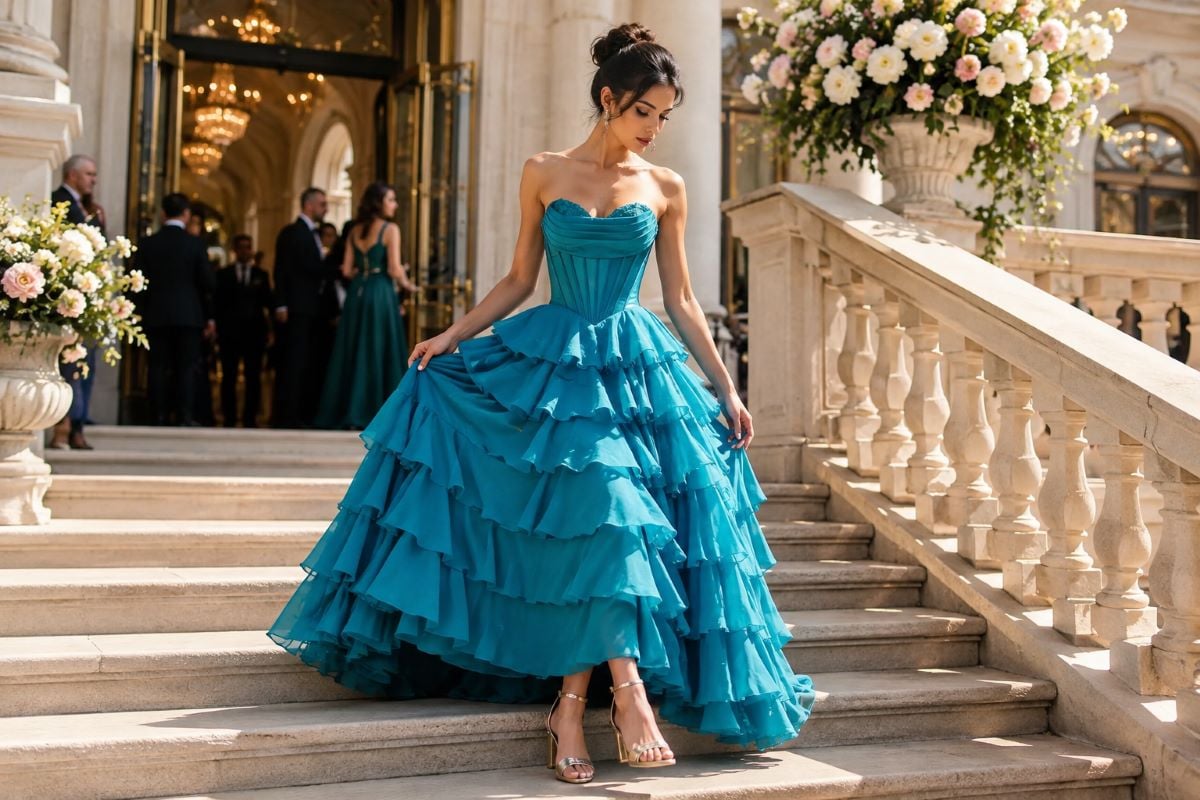
Everything else follows from there. A prom dress with heels only works when the two were measured together. With a floor length gown, the heel has to be tall enough to keep the hem clear of the ground. Too low and you are stepping on the front all night, which is both a tripping risk and the fastest way to ruin a fabric edge.
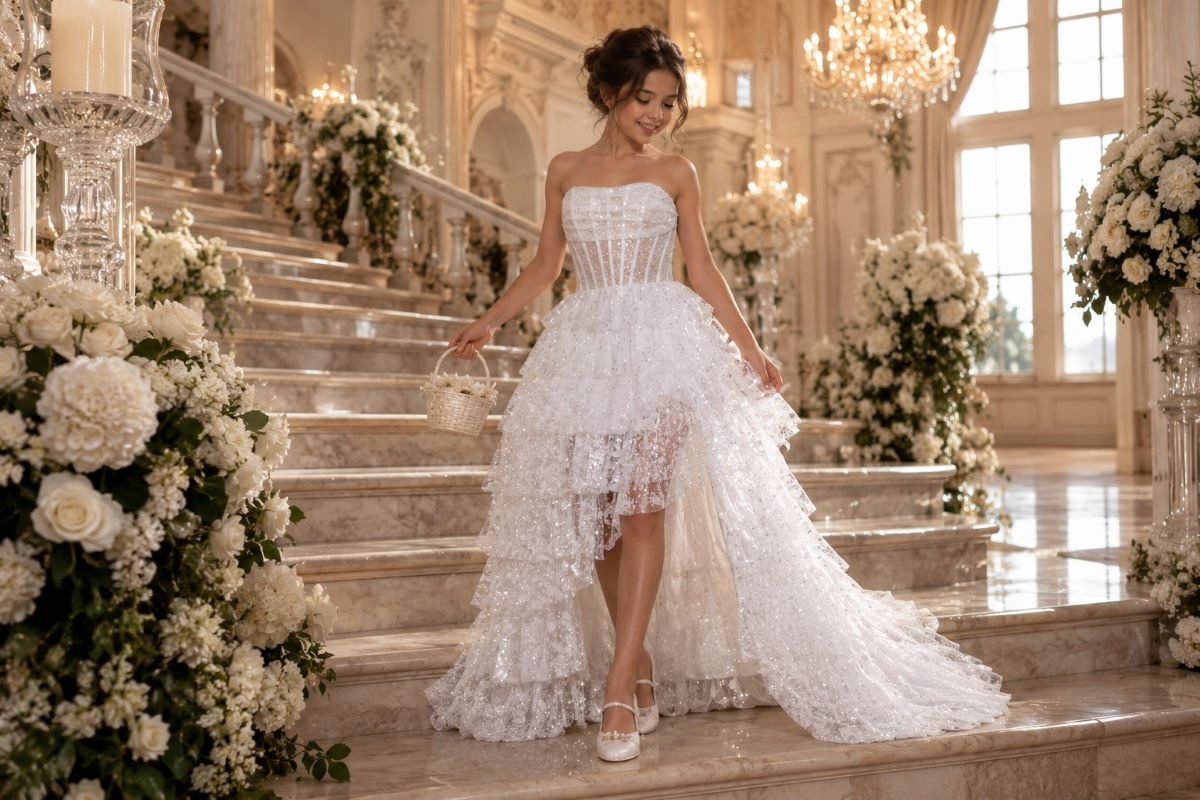
Picking shoes for a prom dress with a full skirt is easier than it looks, because almost nobody will see the shoe, so spend the budget on comfort rather than decoration. Stability matters more here too, because a ball gown carries weight and a narrow stiletto has to manage all of it.
Dress prom shoes to the silhouette as well as the hem, because a fitted gown changes the calculation. With a mermaid silhouette your stride is shorter, so a heel you can control matters more than height. A secure ankle strap and a supportive arch do more for how your walk looks than any extra inch.
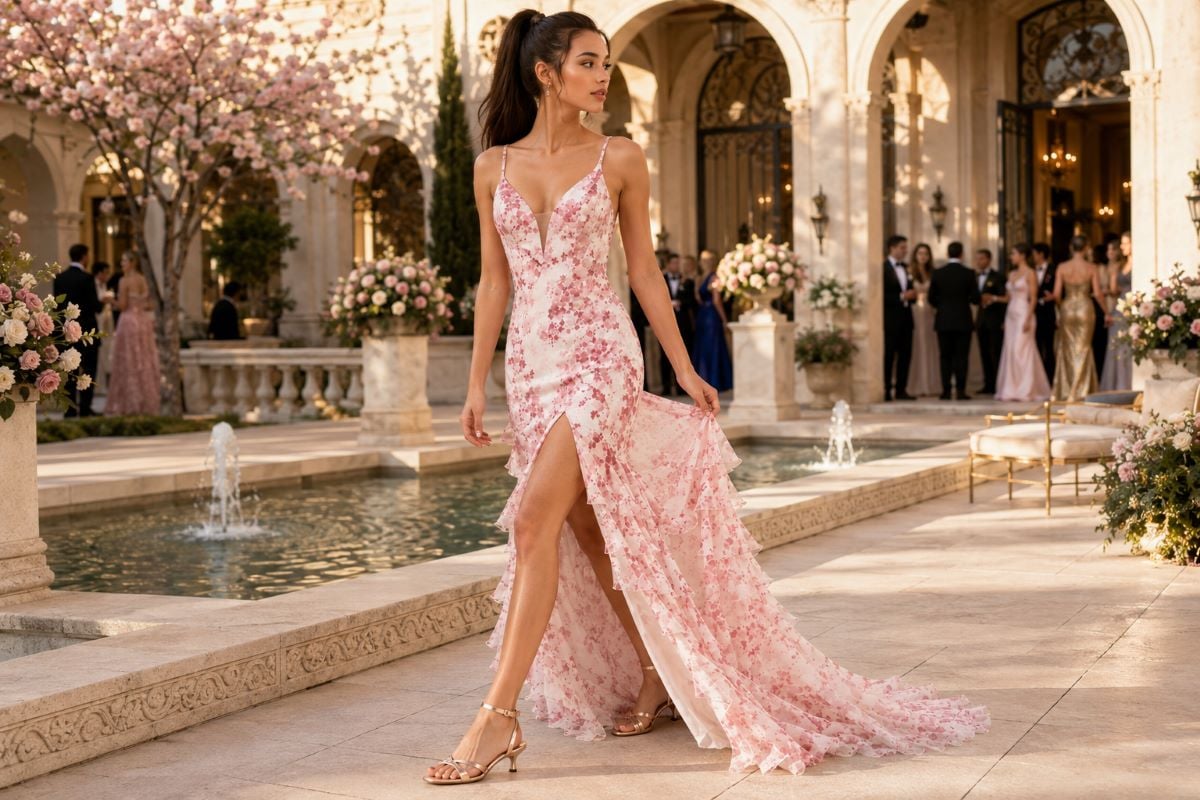
Pairing a prom dress with shoes that show reverses everything. With a short hem the whole shoe is visible, so it becomes a design element rather than a support. A short dress is where a metallic, a strappy sandal or a lace-up style earns its place.

Heel height, shape and what each one costs you
| Shoe type | Works best with | What you trade |
|---|---|---|
| Block heel, two to three inches | Almost anything, especially full skirts | Less delicate looking than a stiletto |
| Platform heel | Long gowns, anyone wanting real height | Bulkier, and less stable on stairs |
| Stiletto | Sleek column and slip gowns | Sinks into grass and carpet, tiring to stand in |
| Kitten heel | Short and midi dresses, long events | Adds little height |
| Wedge | Outdoor venues and garden proms | Reads more casual than a heel |
| Dressy flat | Any length, if the hem allows | Gown may need shortening first |
The honest rule on height is that prom is not the night to wear your first tall heel. You will stand through photographs, sit through dinner and dance on a hard floor, and a moderate heel you walk confidently in beats a taller one you spend the evening managing.
Flats and low heels that still look formal
Shoes for prom flats sit in their own category, and a prom dress with flats is a legitimate choice rather than a fallback.
Flats to wear with prom dresses work when the shoe is dressy rather than casual, and what separates the two is material and finish. Satin, metallic leather, velvet or an embellished toe reads formal. Canvas, rubber soles and visible stitching do not.
Sandals for prom follow the same test, and pointed-toe flats work best under a long gown because the point continues the line of the leg the way a heel does. Embellished ballet flats suit a short or midi dress where the shoe is on show. A satin mule or a dressy loafer with a very low heel bridges the gap if a true flat feels too casual.
One thing to plan: a gown hemmed for a three inch heel will drag with flats, so decide before the alteration rather than after. If you are unsure, the two-pair approach solves it. Wear a heel for the ceremony and photographs, then change into a foldable flat for dancing. That is planning rather than failure, and it beats leaving early because your feet gave out.
Choosing shoes with a prom dress by color
The shoes for a black prom dress question is really a color question, and matching exactly is harder than it looks, because dye lots differ and one shade off reads as a mistake rather than a match. Neutral almost always wins.
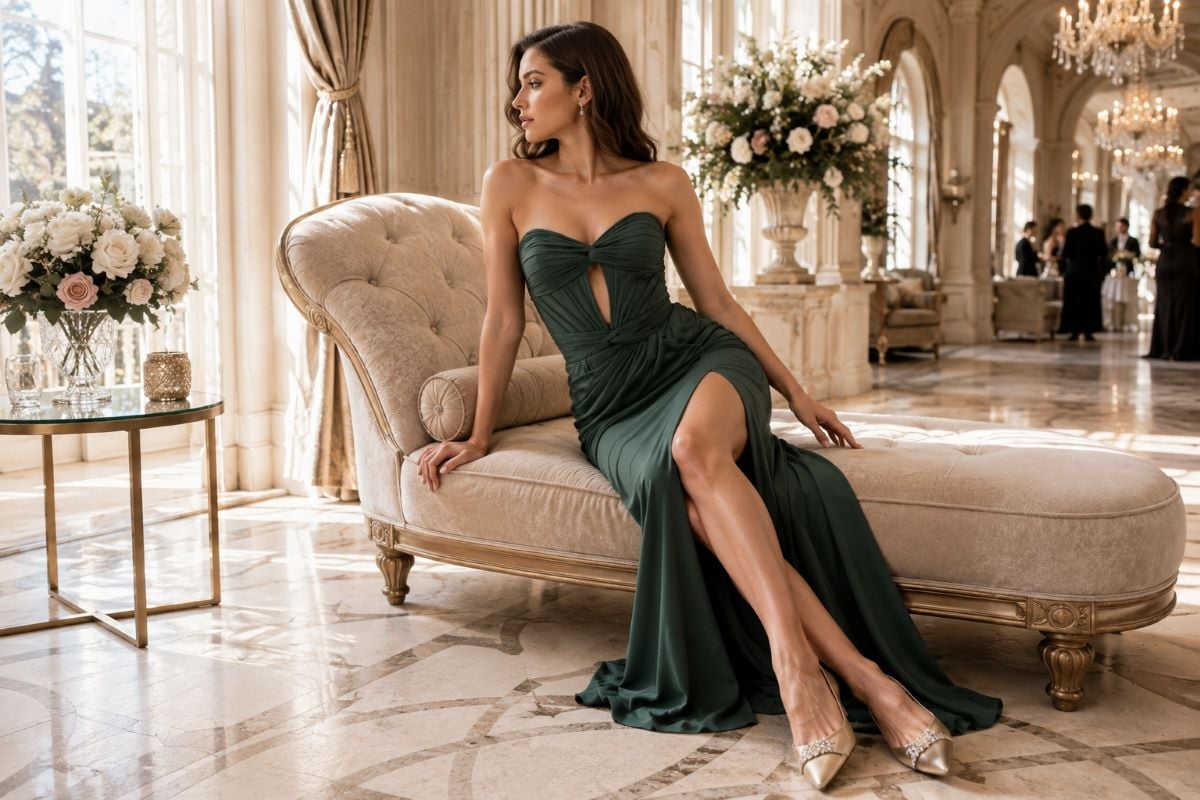
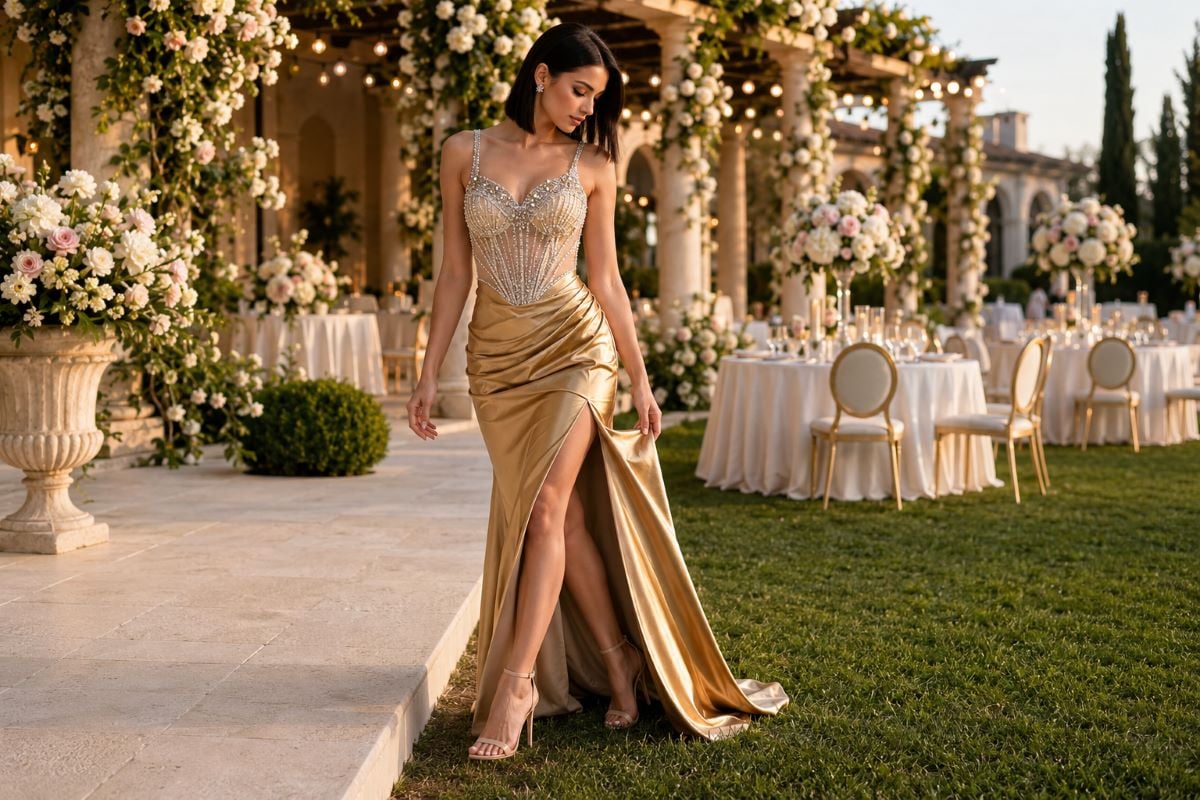
Shoes for a black prom dress are the most asked about, and three options do most of the work with a black gown. A heel close to your own skin tone lengthens the leg and keeps attention on the dress. Metallic gold or silver adds light without adding a color to coordinate. A black shoe in a different texture keeps it tonal without going flat, and all three beat trying to match exactly.
White dress shoes for prom carry one risk. With a white or ivory gown, avoid a white shoe unless it matches exactly, since two slightly different whites are more noticeable than a clear contrast. Metallic, a shade close to your skin tone, or a deliberate contrast all work better, and prom shoes for a white dress look best when they are clearly not trying to match.
A red gown is the case where matching almost never works, since reds vary enormously. Go neutral, metallic or black instead.
For a metallic gown, a shoe in the same metal family works, and so does a plain neutral if the dress is already carrying the shine.
Comfort tactics that actually work
Comfy prom shoes are made, not bought, and great prom shoes are simply the ones you broke in first. Wear the pair indoors for two or three short sessions before the night, which finds the pressure points while you can still do something about them. Try shoes on late in the day as well, since feet swell and a shoe that fits in the morning can be tight by evening.
Two small items solve most of what goes wrong. Adhesive gel pads under the ball of the foot handle the pressure that builds while standing, which is where most of the pain comes from rather than from walking. Stick-on sole grips handle a polished ballroom floor, which is more slippery than any surface you will have practiced on.
Take the actual shoes to your dress fitting, not a similar pair. Hem length is set from the shoe and half an inch shows on a floor length gown. Walk, sit and stand in both together before anything is cut.
What to skip
Brand new shoes worn straight out of the box are the main one, since a shoe that feels fine in a shop for two minutes behaves differently after four hours. Anything you cannot walk in confidently is the second, because a wobbly walk undoes an expensive gown in every photograph.
Thin stilettos are worth reconsidering for an outdoor venue or a garden reception, since a narrow heel sinks into grass. And a very high platform is harder on stairs than its height suggests, which matters if the venue has any.
Finally, avoid choosing a shoe purely because it matches the dress on a screen. Photograph the pair next to the gown in daylight and again with a flash, since that gap is where most color surprises live.
Prom Shoe Questions
What shoes to wear to prom, and at what height?
A block heel of around two to three inches suits most people, because it gives height while spreading pressure across a wider base. Platforms work if you want more height, since the platform reduces the angle of the foot. Dressy flats are equally valid provided the material reads formal and the hem was set for them.
What shoes to wear with a black prom dress or a dark gown?
Three shoes for black prom dress looks work best, and the same three answer what shoes to wear with black prom dress searches. The best shoes to wear to prom in this case are neutral, since a heel close to your own skin tone lengthens the leg and keeps the focus on the dress. Metallic gold or silver adds light without a color to coordinate, which is why prom shoes for a black dress rarely need to be black. A black shoe in a contrasting texture, such as satin against crepe, keeps the outfit tonal while stopping it looking flat.
Can you wear flats to prom?
Yes, provided the flat is dressy rather than casual. Satin, metallic leather, velvet or an embellished toe reads formal, while canvas and rubber soles do not. Pointed-toe flats work best under a long gown because they continue the leg line. Remember a gown hemmed for a heel will need shortening first.
How high should a prom heel be?
Around two to three inches suits most people and most dress lengths. With a floor length gown the deciding factor is the hem, since the heel must match the height the dress was hemmed for. Prom is not the night to wear your first very tall heel, because you will stand, sit and dance for hours.
How do you make prom shoes comfortable to dance in?
Wear them indoors for two or three short sessions beforehand to find the pressure points early. Try shoes on late in the day, since feet swell. Adhesive gel pads under the ball of the foot handle standing pressure, and stick-on sole grips handle a polished floor that is more slippery than anything you practiced on.
Should shoes match the prom dress exactly?
Usually not. Dye lots differ and a shade slightly off reads as a mistake rather than a match, which is why neutral or metallic almost always works better. If you want coordination, pull a secondary color from beading or an embroidered detail rather than trying to match the main fabric.
Trying the pairing on in person
Choosing shoes with a prom dress is one decision, not two, and the only place that becomes obvious is a fitting room. Heel height, hem length and how a shoe reads against a fabric are all judgements you make standing up.
What shoes for prom suit you is answered fastest by bringing two or three pairs at different heights to your fitting with an authorized Jovani retailer, so the hem can be set to the pair you actually choose rather than adjusted afterwards.