

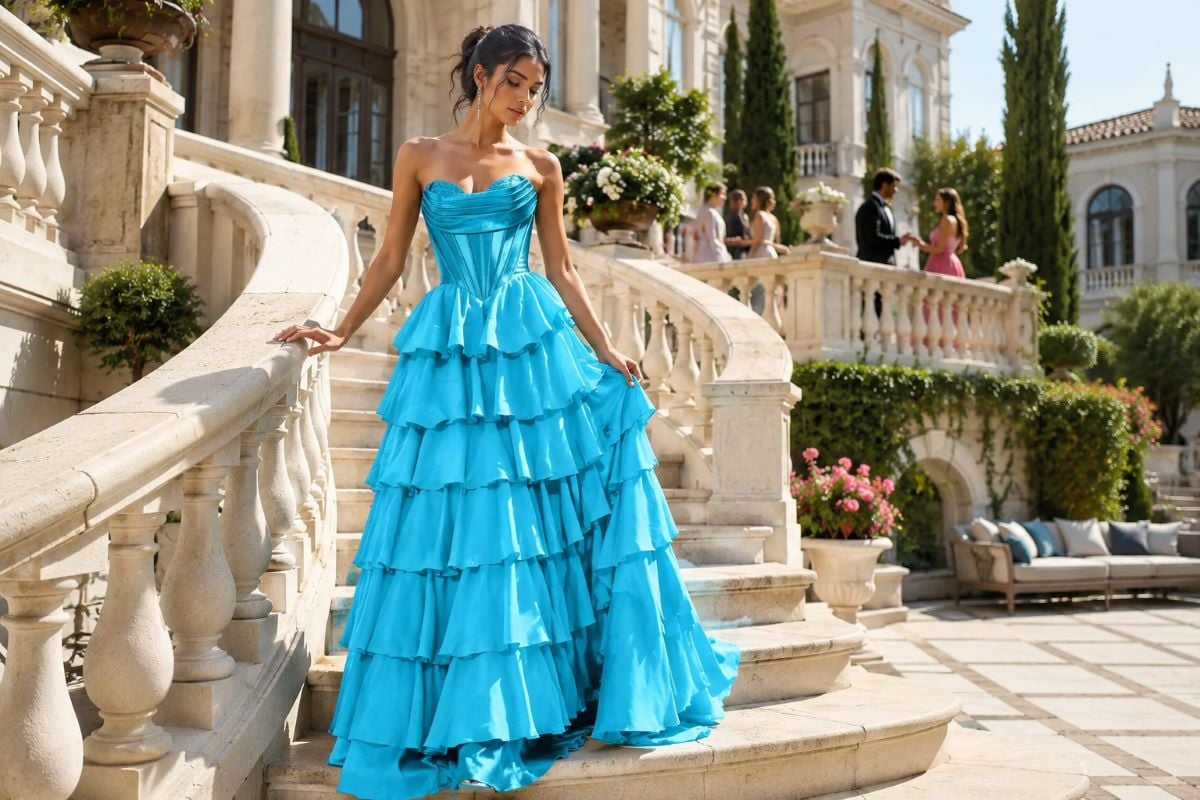
If you are looking at a $500 prom dress and wondering whether that is normal or absurd, the honest answer depends on numbers you probably have not seen yet. Some friends are spending under $200. Others are posting gowns at $800. Both can be reasonable, and neither tells you what your own number should be.
This guide gives you the current figures first, then a method for turning them into a decision that fits your household. Real numbers, sourced, with the trade-offs named.
What is the average prom dress cost?
How much does a prom dress cost on average? Most shoppers in the United States spend between $450 and $550 on the dress itself, according to national prom retailer Terry Costa, with figures reported by CNBC in spring of this year. Designer gowns start around $500 and can pass $700 before alterations. The full range runs from roughly $150 for a simple style up to $1,000 or more for a heavily embellished designer piece. So a $500 dress sits almost exactly at the national average, not above it.
The average cost for a prom dress has moved. Figures circulating from a few seasons ago put the average prom dress price nearer $250 to $350, and shoppers working from those older numbers often arrive at a store expecting prices that no longer exist. The gap between what people expect to pay and what dresses actually cost is where most of the sticker shock comes from.
Prom dress prices by tier
Price bands are more useful than a single average, because what you get changes sharply between them.
| Price band | What you typically get | Usual trade-off |
|---|---|---|
| Under $200 | Simple silhouettes, lighter polyester, minimal detail | Thinner lining, plastic zippers, less structure through the bodice |
| $200 to $350 | Stronger fabrics, some beading, wider size range | Embellishment is usually applied rather than hand-sewn |
| $350 to $550 | The national average band, structured construction, better fit | Still needs alterations budgeted on top |
| $550 to $800 | Designer gowns, hand-worked beading, boned bodices | Heavier dresses, and dry cleaning costs more |
| Over $800 | Couture-level detail, heavy crystal work, longer lead times | Order months ahead, and resale value drops fast |
Two costs sit outside these bands and catch families out. Alterations run roughly $75 to $200 depending on how much work the hem and bodice need, and almost every gown needs some. Dry cleaning a beaded dress afterwards is its own line item. Our guide to prom dress alterations sets out which changes are simple and which are not worth paying for.
What does prom really cost beyond the dress
The dress is the largest single item but rarely more than half the night. Current estimates put a full prom in the United States anywhere from about $150 at the frugal end to more than $2,100 for an all-out version, with most families landing somewhere between $950 and $1,100 once everything is counted.
The line items that add up are the ticket, which commonly runs $55 to $125 depending on whether dinner is included, then shoes, a bag, jewelry, hair, makeup, nails, flowers, photographs and transport. Personal care is the category that has risen fastest. Jay Zagorsky, an economist at Boston University who tracks prom costs, has found that hair, nails and makeup services have more than doubled in price since the year two thousand, while the price of women’s dresses has actually fallen slightly over the same period.
That last point is worth sitting with. The dress is not where prom inflation happened. The salon chair is.
Step one: set a total prom budget
The budget for prom works best as one total number for the whole night rather than a figure for the dress alone, so agree on it before falling in love with any gown. That number might be $300, $600 or $1,200. None of those is the right answer in general, only for your household.
Then decide what matters most. Some people want the dress to take the largest share and are happy doing hair at home. Others would rather split the budget more evenly and keep a professional appointment. Both work, but only if you choose deliberately rather than discovering the split after the fact.
Once the total is set, the dress slice usually falls out of it. A tight overall budget generally means keeping the dress under $250. A middle budget puts the dress somewhere around $350 to $500. A premium budget carries a dress above $500 without straining anything else. If you want the designer look inside a tighter band, our roundup of budget friendly prom dresses shows what is realistic at each level.

Is $500 too much for you
Stop asking whether $500 is too much in general and ask it about your own situation. Five questions settle it faster than any comparison with friends.
Does this number touch money you need for something else? If a $500 dress means a late bill, borrowed money or a credit card balance that lingers, then it is too much, regardless of how good the dress looks. That is the only question with a hard answer.
Are you paying for construction or for a name? A higher price should buy something you can see and feel: steel boning in a structured bodice, hand-sewn beading, a lining that hangs properly, a zipper that does not catch. If a dress at $500 has none of that, the price is doing no work. Our comparison of designer versus fast fashion prom dresses shows exactly where the difference shows up.
Will the dress get worn again? A clean satin column that works for a future gala or a graduation spreads the cost over several nights. A gown built around one specific theme almost never does, and it should sit lower in the range for that reason.
How does it compare locally? Mid to high end prom gowns commonly run between $350 and $700, so $500 sits in the middle of that band rather than at the top of it. Checking two or three shops near you turns an abstract worry into a specific comparison.
Would you be just as happy at a lower price? If a dress you genuinely love exists at $300, the calm is worth more than the extra $200. That is not a compromise, it is a better outcome.
Why are prom dresses so expensive
Three things drive the price of a formal gown, and none of them is the label on its own. Construction comes first: a structured bodice with steel boning, a proper lining and reinforced seams takes far more labour than a simple shift, and that labour is most of the cost. Fabric comes second, since heavy mikado, silk and good crepe cost several times what thin polyester does per metre.
Embellishment is third and it is the biggest single multiplier. Hand-sewn beading and crystal work is slow, skilled handwork, and a heavily beaded gown can carry many hours of it. That is why two dresses in the same silhouette can sit $400 apart.
Where price stops buying anything is exclusivity for its own sake. If the fabric is ordinary and the beading is machine-applied, a high price is a positioning decision rather than a reflection of what went into the dress. Our look at luxury prom dresses over $1,000 covers what genuinely changes at the top of the market and what does not.
How to get a designer look for less
Fabric is the first lever. Heavy beading and full sequin coverage are what push a price up, so a sleek satin or crepe gown with one strong design detail reads as expensive for considerably less money.
Volume is the second. More fabric means more cost, so a layered ball gown will almost always sit above a slim column in the same collection. A shorter skirt saves money too, and it is easier to dance in.
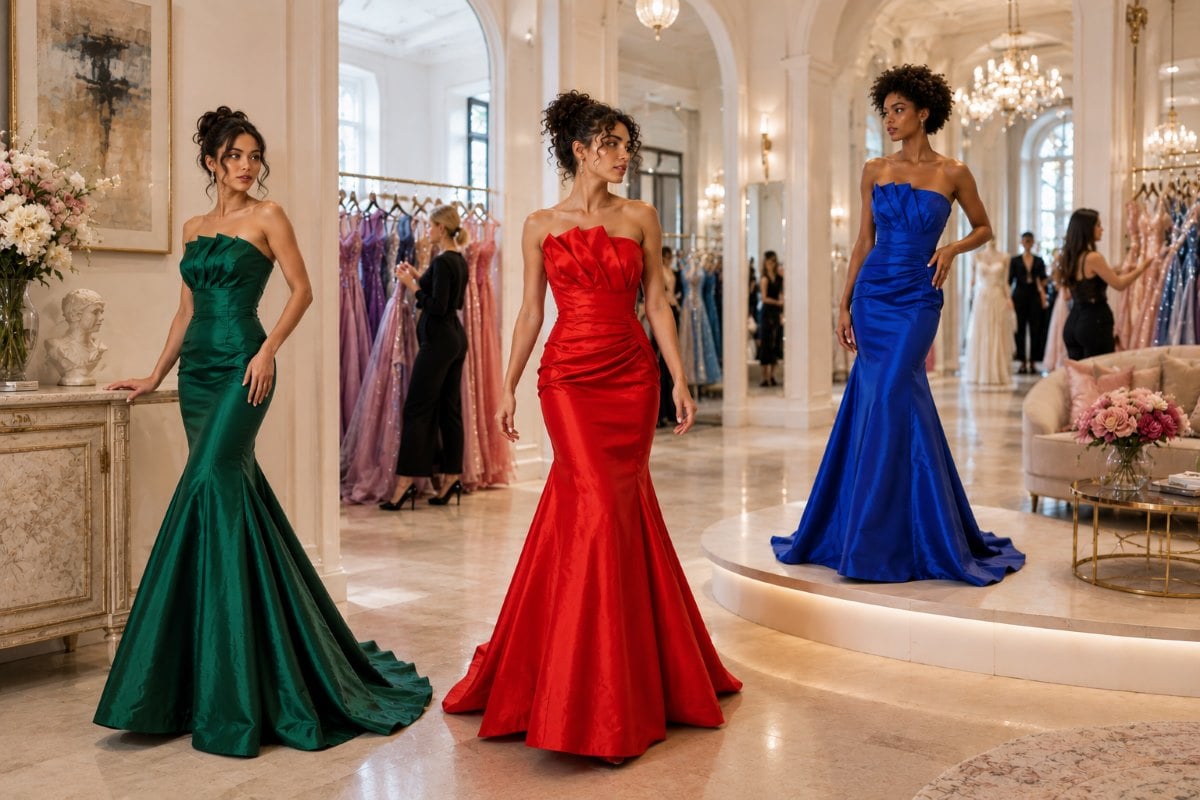
Color is the third and the most underrated. A clean silhouette in a strong, saturated shade photographs as expensive with almost no embellishment, because the eye reads the color and the line rather than the surface detail.
Then there is the option most families never price out. Renting sits well below buying for a single wear, and buying secondhand from a resale marketplace can put a designer gown inside a $250 budget. Neither suits everyone, and our comparison of renting versus buying a prom dress is honest about where each one falls short.

Sample budgets at three levels
These are illustrations rather than prescriptions, but they show how the pieces fit together at different totals.
| Item | Tight budget | Middle budget | Premium budget |
|---|---|---|---|
| Dress | $225 | $400 | $550 |
| Alterations | $75 | $100 | $150 |
| Shoes and bag | $60 | $100 | $150 |
| Hair and makeup | At home | $100 | $180 |
| Nails | $25 | $50 | $60 |
| Ticket and extras | $115 | $150 | $210 |
| Rough total | $500 | $900 | $1,300 |
The useful test is whether a $500 dress still leaves room for the rest of the column. If it does not, the dress number needs to come down rather than the other items being quietly dropped.
Prom Dress Cost Questions
How much does a prom dress cost on average?
Most shoppers in the United States spend between $450 and $550 on the dress, with designer gowns starting around $500 and rising past $700 before alterations. The full market runs from about $150 for a simple style to $1,000 or more for heavily embellished designer pieces. Older figures putting the average near $250 are no longer accurate.
How much does a prom cost in total?
The average cost of prom in the United States ranges from roughly $150 at the frugal end to more than $2,100 for an all-out version, and most families land between $950 and $1,100. Tickets commonly run $55 to $125. Beyond the dress and ticket, the main costs are shoes, accessories, hair, makeup, nails, flowers, photographs and transport.
Is $500 too much to spend on a prom dress?
No, if it fits your total budget without touching money needed elsewhere, since $500 sits at the national average rather than above it. Yes, if it means borrowing, a lingering credit card balance or cutting things you care about more. The number itself is neutral. What matters is where it sits inside your total.
Why are prom dresses so expensive?
Construction, fabric and embellishment, in that order. A structured bodice with boning, proper lining and reinforced seams takes significant skilled labour. Heavy mikado, silk and good crepe cost several times what thin polyester does. Hand-sewn beading is slow work and is the largest single multiplier, which is why two similar silhouettes can sit hundreds of dollars apart.
What hidden costs should be budgeted for?
Alterations are the main one, usually $75 to $200 depending on how much the hem and bodice need, and nearly every gown requires some. Dry cleaning a beaded dress afterwards is a separate cost. Shoes, a bag and undergarments are often forgotten at the planning stage, and together they can add $100 or more.
How far ahead should a prom dress be bought?
Aim for three to four months before the event for a gown with heavy beading or a boned bodice, since those alterations are slower and often need more than one fitting. A simpler satin or crepe style can be handled in eight to twelve weeks. Shopping later narrows you to whatever is already in stock in your size, which usually costs more, not less.
Trying dresses on within your range
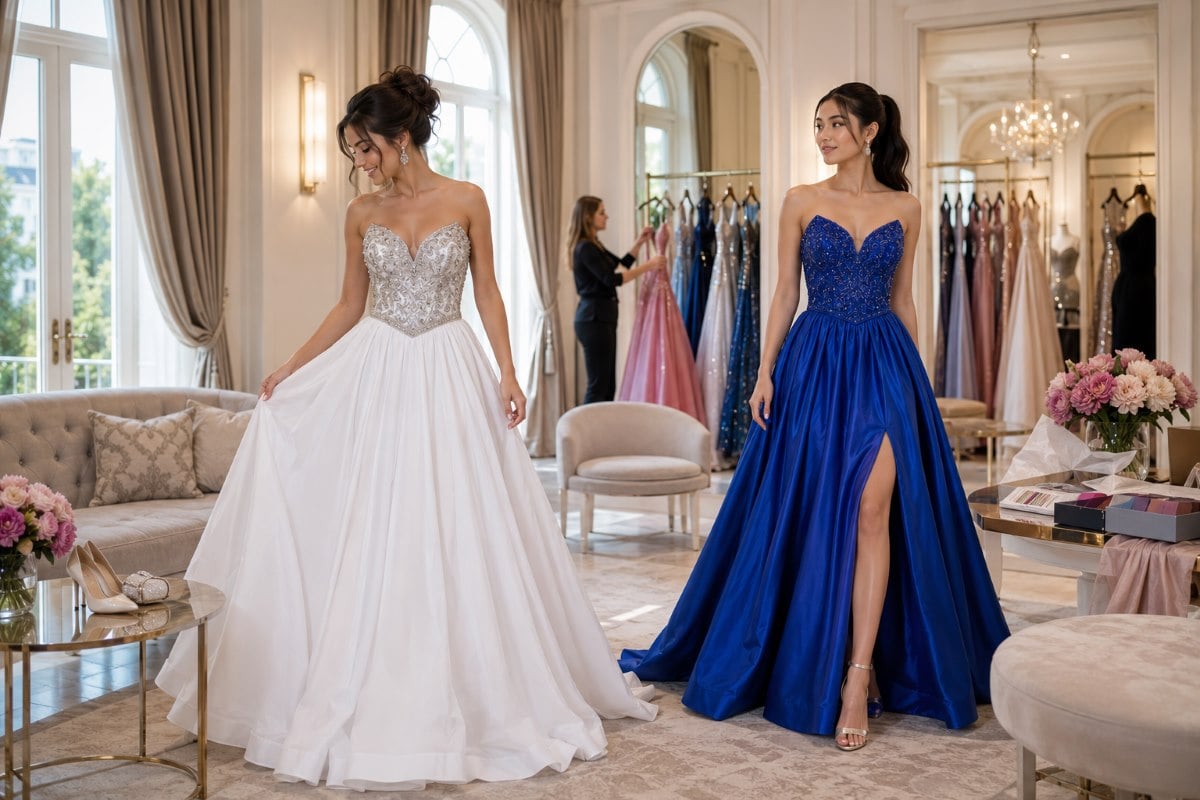
The fastest way to make a budget real is to try on one dress at each level, because the difference between a $250 gown and a $500 one is something you feel in the bodice and see in the hang of the skirt. Sometimes that difference justifies the price and sometimes it does not, and only trying both answers it.
Browse the prom dresses collection to shortlist by silhouette and price band before you go, which saves the most time in the fitting room.
Then take that shortlist to an authorized Jovani retailer, where you can compare two price tiers side by side and get the alterations quoted before you commit to anything.