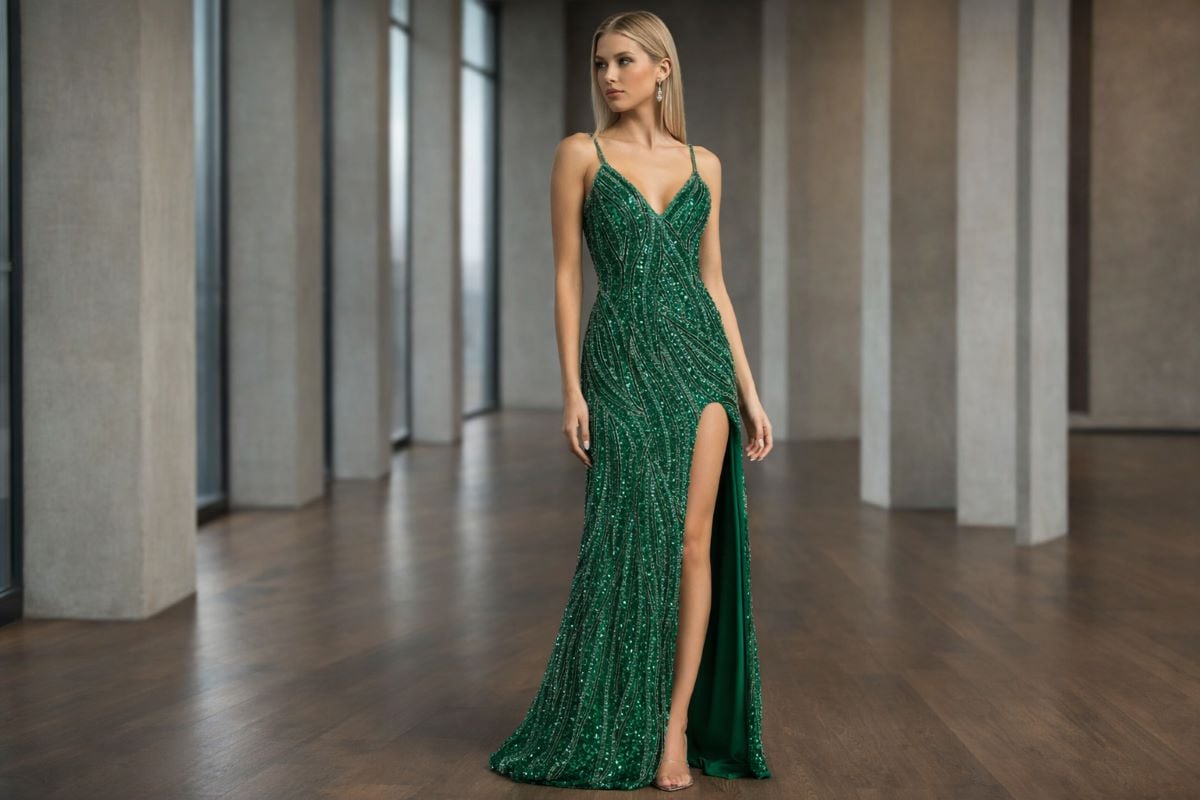


Buying your prom dress is a huge moment. You find the one, you look in the mirror, and for a second everything feels perfect. Then reality hits. The straps feel a little long. The hem drags on the floor. The cups feel slightly loose or too tight. That is where alterations come in.
If you have never tailored a formal gown before, the process can feel confusing or even intimidating. How much will it change? Will it ruin the dress? When should you go? How much does it cost?
This guide answers all of that in a simple, clear way so you walk into your alterations appointment feeling calm, confident, and fully prepared. If you are still browsing, you can explore current styles inside the main Jovani prom dress collection while you read.
How much do prom dress alterations cost and when should you book? A typical prom dress lands somewhere around 35 to 150 dollars for the whole job, based on published price lists from formalwear tailors across the United States. Heavily beaded or multi-layer gowns run higher. Book your first fitting four to six weeks before prom and plan on one or two fittings, with a third only if the gown is complex.
Jovani designs and manufactures the gowns and sells them through authorized retailers, so the figures below come from public price lists published by independent alteration shops rather than from Jovani itself. Treat them as a planning range and get a written quote from your own tailor before any work starts.
Why Prom Dress Alterations Are Normal
Almost no prom dress fits perfectly straight off the rack. Even luxury designer gowns are made using standard body measurements, while every individual body is unique. This is why alterations are not a sign of a bad fit. They are a normal part of owning formalwear.
Jovani has been designing formalwear since 1983 and builds its gowns with tailoring in mind, so small adjustments can make a dress look custom and built just for you. Whether you chose a flowing silhouette, a fitted style, or something dramatic like a voluminous skirt, alterations are what finalize the look.
What you need depends on the shape. A structured gown from the mermaid prom gown range usually needs waist or hip shaping, since the whole effect depends on where the flare sits on your body.
A full skirt style from the ball gown prom dresses range almost always needs hemming and bodice adjustments instead, because the length is cut for an average height and the bodice carries the weight of the skirt.

The Most Common Prom Dress Alterations
Five changes cover almost everything a tailor will do to a prom dress. Knowing the names before you walk in makes the appointment go much faster.

Hemming the Length
This is the most common alteration for long gowns. Because dresses are made for average height and heel measurements, the hem almost always needs shortening, and this matters most for floor-length designs like those in the long prom dresses section.
Bring the exact shoes you plan to wear to your first fitting. Heels and flats change the hem by inches, and a dress hemmed for one and worn with the other will either drag or sit awkwardly short. If you have not chosen shoes yet, our guide to matching shoes to your prom dress is worth reading before you book the appointment rather than after.
Taking In the Waist or Bust
Many girls find the dress fits their hips but feels loose at the waist or chest. A tailor can tighten the bodice slightly, shape the waist, and adjust the side seams for a more sculpted line, all without changing the design of the gown.
This is one of the most common requests for body-contouring styles like those in the figure-hugging prom collection, where even half an inch at the waist changes how the whole dress reads.
Strap and Shoulder Adjustments
If the straps slide or the neckline sits too low or too high, this is usually an easy fix. A tailor can shorten or tighten the straps, adjust the shoulder seams, and shift the neckline position slightly. Some shops can also add straps to a strapless gown if you want more security.
These small changes matter most on styles with open backs, halters, or detailed bodices, where a strap that is half an inch too long pulls the whole neckline out of place.
Bust Cup and Support Modifications
Sometimes the built-in cups do not sit quite right. A tailor can resize them, add or remove padding, and build in hidden support so the bodice stays where you put it all night.
This is especially helpful for structured gowns and for dresses with a deep V or an illusion neckline. If support is your main concern, our guide to prom dresses for a big bust covers which built-in features to look for before you even reach the tailor.
Zipper or Closure Tweaks
If the zipper feels tight or bunches at the lower back, it is often not a size issue at all. It usually just needs reshaping around that area. In rare cases the zipper is replaced entirely to create a smoother closure without stressing the fabric.
When Should You Schedule Your Prom Alterations?
Timing is straightforward. Buy your dress eight to ten weeks before prom, book your first fitting four to six weeks out, and collect the finished gown about two weeks before the night.
Most prom dresses need one or two fittings rather than the two or three a bridal gown requires. The first is where the tailor pins and you approve the plan, and the second confirms the finished work. A third only becomes necessary on heavily embellished gowns or when several changes stack together.
Season matters more than most people expect. Alteration shops report two peak periods each year, mid-April through mid-May for prom and mid-August through mid-September for homecoming, and turnaround stretches well beyond the usual one to two weeks during both. Rush work is normally available but carries either a flat fee or a percentage surcharge, commonly around 20 percent and rising for same-day service. Booking early is the simplest way to avoid paying it.

How Much Do Prom Dress Alterations Usually Cost?
Published price lists from formalwear alteration shops put a full prom dress job in the range of roughly 35 to 150 dollars, with one shop listing a standard hem, take-in, and cups package at 125 dollars. Simple single adjustments such as a strap shortening or a basic hem often sit at the lower end.
Hemming is priced by the number of skirt layers, which is the detail most people do not expect. A single-layer hem commonly runs around 40 to 50 dollars, two layers around 65 to 75, three layers around 80 to 100, and four or more layers upward of 100. A horsehair-trimmed or scalloped lace hem costs more again, because the trim has to be removed and reapplied by hand, which is worth knowing before you fall for a gown from the beaded prom collection.
The other changes are cheaper. Taking in the side seams typically runs around 30 to 55 dollars, adjusting shoulders or straps around 20 to 50, and adding bra cups around 20 to 30 plus the price of the cups themselves. Working through a beaded seam usually adds a surcharge, because the beading has to be removed and restitched by hand.
Rates vary a lot by city, by shop, and by fabric, so always ask for a written quote at your first fitting before any work starts. A tailor who will not quote before cutting is a tailor to walk away from. Build alterations into your budget from the beginning rather than treating them as a surprise at the end, and our prom dress budgeting guide covers where the rest of the money usually goes.
Two choices genuinely lower the bill. Choose your shoes before the first fitting so the hem is cut once rather than twice, and consider a lace-up or corset back, since an adjustable back reduces or removes the need for side seam work altogether.
How to Find a Tailor Who Works With Formalwear
Not every tailor works on formal gowns, and this is the step most people skip. Hemming a pair of trousers and hemming a beaded tulle skirt are different jobs, and a shop that does one well does not automatically do the other.
Ask two questions when you call: do you regularly alter prom or bridal gowns, and can I see examples. A shop that works in formalwear will answer both immediately and will usually want to see the dress before quoting. If the answers are vague, keep calling.
The boutique that sold you the dress is the fastest shortcut here. Authorized Jovani retailers work with the same tailors every prom season and can point you to someone who already knows how these gowns are constructed.
What Cannot Be Altered
Alterations can do a lot, but not everything, and knowing the limits before you buy saves disappointment later. The general rule is that a tailor can remove fabric but usually cannot add it, so taking a dress in is straightforward while letting one out depends entirely on how much seam allowance was left inside.
In practice, most gowns can be taken in about two sizes before the proportions start to look wrong. Beyond that the seams, the boning, and the placement of any beading no longer line up with your body, and the dress stops looking like the one you fell in love with.
Some changes are technically possible but rarely worth the cost. Reshaping a neckline, moving a slit, or shortening a heavily beaded hem all mean taking the garment apart and rebuilding it. If your dress is significantly too large, our guide on what to do when a prom dress is too big covers the realistic options.
If you want something built to your measurements from the beginning rather than adjusted afterwards, that is a different decision entirely, and our look at whether custom prom dresses are worth it weighs the trade-offs.
Should You Size Down Instead of Altering?
No. Never buy a prom dress on the assumption that you will squeeze into it or that your body will change before the night. That approach creates stress you do not need and leaves the tailor with no options.
Choose the size that fits your largest measurement and have the rest taken in. Tailors can remove fabric and they usually cannot add more, which makes sizing up the safer mistake in every case. This matters most with slim silhouettes, column dresses, and body-hugging looks, where there is very little give built into the seams. Our prom dress size guide walks through how to measure properly before you order.

What To Bring To Your Alterations Appointment
Arrive prepared and the first fitting will take half the time. Bring your prom shoes, any shapewear you plan to wear, and the exact bra you will have on, or nothing at all if the dress is backless or fully structured.
Inspiration photos help too, particularly if you have a specific fit in mind that is hard to describe out loud. Leave accessories for later, since jewelry and bags are much easier to choose once the neckline and hem are final, and our guide to choosing prom dress accessories is the right next step after your last fitting.
Nervous About Alterations? That’s Normal
A lot of girls get nervous before a first fitting, usually worried that the dress will change too much or lose the look they fell for. That is a reasonable worry and a good tailor will address it directly.
The process is designed to protect you. A tailor pins first, shows you how the change will look, and asks for your approval before anything is cut or sewn. Nothing permanent happens until you say yes, which means you stay in control the whole way through. Done properly, alterations do not change the design. They finish it.
How Jovani Dresses Support Alterations
Jovani designs its gowns with real-world tailoring in mind. Seam structures allow for shaping, fabrics are selected to hold an alteration rather than pucker at the new seam, and the proportions stay balanced after the dress has been taken in. Corset styles are built with steel boning through fabric-wrapped channels rather than plastic, which is part of why an adjustable back holds its shape after the fit is changed.
That holds whether you choose a minimal look from the clean simple prom dress styles or something far more dramatic. The goal is the same either way: a gown that feels like yours rather than borrowed.

Getting the Fit Right
Alterations are not just a technical step. They are the final touch that makes your dress feel personal, secure, and built for your body rather than for a size chart.
When a dress fits correctly you move more confidently, you photograph better, and you stop thinking about the dress at all, which is the whole point. Once it comes back from the tailor, hang it properly and check it a few days before prom, and our guide to getting wrinkles out of a prom dress covers the safest method for each fabric.
When you are ready to start the process, visit an authorized Jovani retailer to find your gown and ask them which tailor they trust for prom season. Booking both in the same visit is the easiest way to stay ahead of the calendar.
Prom Dress Alteration Questions
How much do prom dress alterations cost?
Published price lists from formalwear tailors put a typical prom dress in the range of roughly 35 to 150 dollars for the full job, with one common package covering a hem, a take-in, and cups at around 125 dollars. Heavily beaded gowns and multi-layer skirts cost more because the trim has to be removed and reapplied by hand. Always ask for a written quote before work begins.
How much does it cost to hem a prom dress?
Hemming is priced by the number of skirt layers. A single layer commonly runs around 40 to 50 dollars, two layers around 65 to 75, three layers around 80 to 100, and four or more upward of 100. Horsehair-trimmed and scalloped lace hems carry an additional charge.
When should I book prom dress alterations?
Buy the dress eight to ten weeks before prom, book the first fitting four to six weeks out, and collect it about two weeks before the night. Mid-April through mid-May is peak season for prom, so booking early is also the easiest way to avoid a rush surcharge.
How many fittings do prom alterations need?
Most prom dresses need one or two. The first is for pinning and approving the plan, and the second confirms the finished work. A third is usually only necessary on heavily embellished gowns or when several changes are being made at once.
What cannot be altered on a prom dress?
A tailor can remove fabric but usually cannot add it, so a dress that is too small has very few options. Most gowns can be taken in about two sizes before the proportions stop working. Reshaping a neckline or moving a slit is possible but often costs more than it is worth.
How can I reduce the cost of prom dress alterations?
Choose your shoes before the first fitting so the hem is cut once rather than twice, book outside the mid-April to mid-May rush to avoid surcharges, and consider a lace-up or corset back, since an adjustable back can remove the need for side seam work entirely.