


Finding out a prom dress is too tight close to the event feels worse than it usually is, and a dress too tight to zip is rarely the disaster it looks like. Most fit problems come from one of four places, and three of them have straightforward fixes that do not touch the design. The fourth needs a tailor, and knowing which one you are dealing with saves both time and money.
A too tight dress has one of four causes. This guide covers how to work out where the pressure is coming from, what is safe to try at home, what a tailor can realistically add, and how each fabric responds.
What to do if your prom dress is too tight
How do you fix a dress that is too tight? Start by locating the pressure rather than assuming the whole dress is wrong. If the zipper is catching, the track is often the problem rather than the fit, and a bar of soap along the teeth solves it. If the tightness is at the bust, removing thick padding or adjusting the straps frees up more room than most people expect. If it is at the waist or hip, that is a tailor job, and a fitted gown can usually gain one to two inches from the seam allowance. And if the fabric simply feels stiff, wearing the dress for short spells at home eases it without any intervention at all.

Find the pressure point first
A tight dress prom night is usually tight in one specific place, so put it on and work out exactly where it pulls, because the answer changes completely depending on the location. Pressure at the bust is the most common and the most fixable. Pressure at the waist or hip usually needs seam work. Pressure across the back or shoulders is the one genuine problem, since there is rarely fabric to release there.
Then apply the practical test rather than the mirror test, because a prom dress tight through the torso is not the same as one that genuinely does not fit. A fitted gown should let you breathe normally, sit down properly and raise your arms without the hem riding up. If any of those three fail, the dress needs adjusting. If all three pass and it simply feels snug, that is how a fitted silhouette is meant to sit.
Silhouette matters here too. A mermaid gown holds close through the torso and hip by design, so it will always feel more contained.
That is different from an A line skirt that releases from the waist. Knowing which you have tells you whether the fit is wrong or simply unfamiliar.
What is safe to try at home
Prom dresses tight in satin or jersey often ease on their own, and wearing the dress around the house for short spells is the safest method and works better than people expect, particularly with satin and jersey. Fabric relaxes with body heat and movement. Do this in short sessions rather than one long one, and never pull at the seams, since stress on a seam is what causes a split rather than a stretch.
The bust is where the quickest gains are. Many gowns have removable cups or thick padding sewn into the lining, and taking those out frees noticeable room without changing the outside of the dress at all. Adjusting or loosening the straps does the same thing higher up.
The inner lining is the other place to look. On some gowns the lining is cut tighter than the outer fabric, so the pressure you feel is coming from a layer nobody can see. A tailor can release or replace that lining, and it is one of the cheapest alterations available.
What not to do is force a zipper, pull hard on any seam, or attempt to stretch a beaded or lace panel. All three cause damage that costs far more to repair than the alteration would have cost in the first place.
The zipper is often the real problem
A zipper that catches or refuses to close is frequently a track issue rather than a size issue, and it is worth ruling out before anything else. Run a bar of dry soap, a candle stub or a graphite pencil along the teeth, then work the zipper slowly with the fabric held flat rather than pulled.
Check for fabric or lining caught in the teeth as well, since a single thread will stop a zipper completely and feel exactly like the dress being too small. If the zipper closes easily on its own but strains when the dress is on, then the fit is the issue and a tailor is the next step.
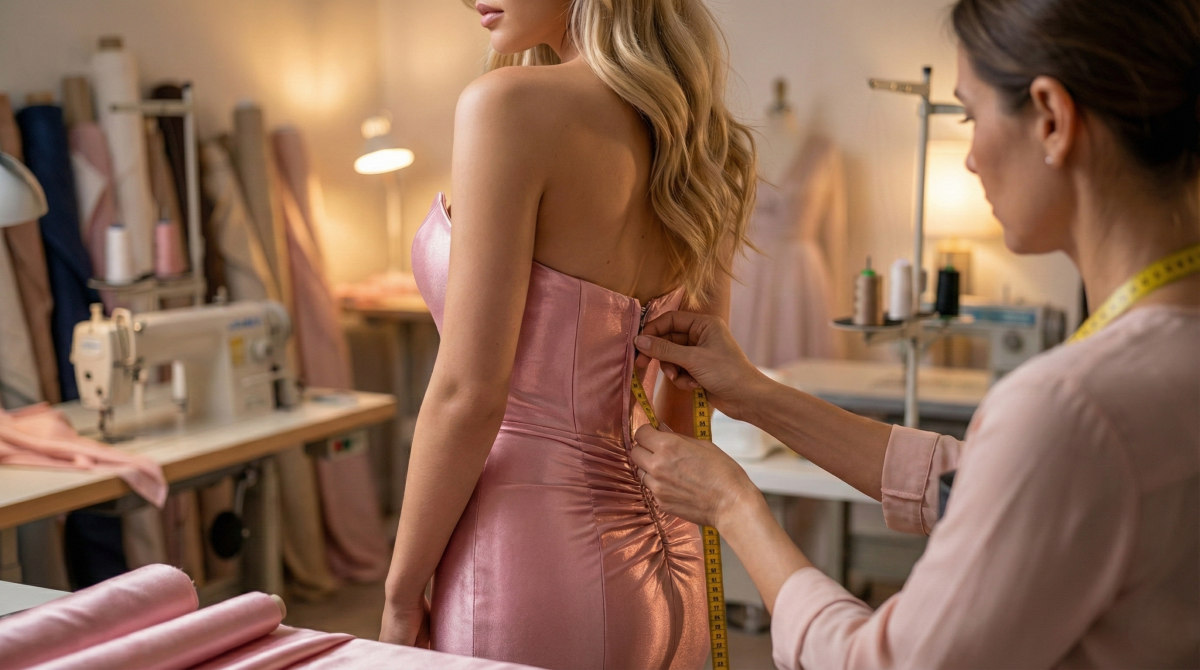
What a tailor can realistically add
Most fitted gowns can gain one to two inches through the side seams, and how much depends entirely on the seam allowance left inside. Turn the dress inside out and look at the seams: a wide allowance means real room, a narrow one means very little.
Beyond letting seams out, a tailor has three other options. A hidden panel can be inserted at the side or back, which adds more than a seam release and is invisible when the dress is on. A zipper can be replaced with a corset back or lace-up panel, which both adds room and gives several inches of adjustment for the night itself. And boning can be softened or repositioned in a structured bodice, which changes how the dress sits without changing its size.
Timing is the constraint. A simple seam release takes days, while a panel or a corset conversion needs a week or more, and beaded gowns take longer because the beading has to be removed by hand and resewn afterwards. Our guide to prom dress alterations covers what each change involves.
How each fabric responds
| Fabric | Natural give | Safe at home | Leave to a tailor |
|---|---|---|---|
| Stretch jersey | High | Short wearing sessions, gentle steam | Seam work only |
| Satin | Low but relaxes | Short wearing sessions, steam from a distance | Any seam or panel work |
| Chiffon | Moderate, light and forgiving | Wearing sessions, lining checks | Anything structural |
| Lace | Very low, tears easily | Nothing, handle gently only | All adjustments |
| Sequin and beaded | None | Nothing at all | All adjustments, allow extra time |
| Crepe | Low, holds its shape | Short wearing sessions | Seam and panel work |
The two rows to take seriously are lace and beading. A lace gown tears rather than stretches, and once a lace panel splits it cannot be invisibly repaired.
A sequin gown has effectively no give at all, since the sequins sit on a base that does not move. Both belong with a professional from the start.
At the other end, chiffon and jersey are the most forgiving and the most likely to sort themselves out with wear alone.
If the prom dress is too short or too revealing
A prom dress too revealing at the neckline and a prom dress too short at the hem are the same category of problem, and both have quiet fixes. A hem that sits shorter than you expected can sometimes be let down if there is fabric turned under, though a visible crease line is a risk on satin and crepe. Adding a matching band or a horsehair trim at the hem is the alternative and often looks deliberate.
For coverage at the top, a modesty panel sewn into a neckline is a fast, cheap alteration that no one sees. A sheer illusion insert does the same while keeping the original shape. A matched shawl, a bolero or a cape gives coverage you can remove later in the evening without touching the dress at all.
For a slit that opens higher than you want, a tailor can raise it by a few inches with a single seam, which is one of the quickest alterations there is.
Getting the size right next time
The rule that prevents all of this is to order to your largest measurement and have the rest taken in. Taking a gown in is straightforward, while letting one out depends on fabric that may not be there.
Formal sizing also runs differently from everyday clothing, so it is normal to take a number or two above your usual size. That reflects the pattern the gown was cut to, nothing else. Measure bust, waist and hips, compare all three to the brand chart, and start from the largest.
Fitted tight prom dresses depend most on getting this right, and if your measurements sit far apart a corset or lace-up back is the practical choice, since it builds several inches of adjustment into the design. Tight fitted dresses for prom have the least room built in, which is why prom dresses tight fitted through the hip are the ones most often altered, and why the tight prom dresses selection is worth trying on before ordering.

Prom Dress Fit Questions
What do you do if a dress is too tight?
Locate the pressure first. A catching zipper is often a track problem, solved with soap along the teeth. Tightness at the bust usually eases by removing padding or adjusting straps. Tightness at the waist or hip needs a tailor, who can typically add one to two inches from the seam allowance.
Can you stretch a prom dress at home?
Only gently, and only with the right fabric. Satin and jersey relax with body heat, so wearing the dress for short spells around the house helps. Never pull at seams, since stress on a seam causes a split rather than a stretch. Lace and beaded gowns should not be stretched at all.
How much can a tailor let a dress out?
Usually one to two inches, depending on how much seam allowance was left inside. Turn the dress inside out to check, since a wide allowance means real room and a narrow one means very little. Beyond that, a hidden side panel or a corset back conversion adds more.
Why does a fitted prom dress feel tight even in the right size?
Fitted silhouettes are built to hold close. A mermaid or column gown will always feel more contained than an A line. The practical test is whether you can breathe normally, sit down properly and raise your arms without the hem riding up. If all three work, the fit is correct.
What can be done if a prom dress is too revealing?
A modesty panel sewn into the neckline is fast, inexpensive and invisible once the dress is on. A sheer illusion insert does the same while keeping the original neckline shape. A slit can be raised by a few inches with a single seam, and a matched shawl or bolero gives removable coverage.
How long before prom should alterations be booked?
A simple seam release can be done in days, but a hidden panel or a corset back conversion needs a week or more. Beaded and lace gowns take longest, since the beading must be removed by hand and resewn. Book as soon as you notice the problem rather than waiting.
Getting it checked properly
A fitting answers in minutes what guessing takes days to work out, because someone can see whether the seam allowance is there and whether the pressure is coming from the lining or the outer fabric.
Take the dress and the shoes you plan to wear to an authorized Jovani retailer, and ask for the alteration to be quoted before any work starts.