
From Soft Peach to Living Coral

If you have spent any time browsing prom collections, you have probably noticed that coral keeps catching your eye when other colors slip past. There is a reason for that. Coral sits in a category of its own, warm enough to feel joyful, soft enough to flatter nearly any skin tone, and confident enough to stand out in a sea of red, pink, and pastel without trying. The coral prom dress has earned its place as a quietly popular prom color, not because it follows a trend but because it photographs well, suits a wide range of complexions, and reads as fresh without dating. This guide walks through everything: the different shades of coral and what each one does, how to find the right shade for your skin tone, the fabrics that make coral come alive, which silhouettes carry the color best, and how to style a coral gown so the color stays the focus. You can compare coral with the other shades boutiques are ordering in our designer prom dresses collection.
Choosing a coral prom dress
What should you know before choosing a coral prom dress? Coral is a family rather than one color, running from soft peach and blush through true coral to sunset, deep coral, salmon and a vivid living coral, and the right one depends mostly on your skin. Cool fair skin suits the softer peach and blush shades, warm fair skin suits true and sunset coral, medium skin suits almost every shade, and olive and deep skin tones suit the saturated end. Satin and sequins give coral the most depth, while stiff synthetic satin can make it look plastic. Gold and rose gold are the natural metals, a heel close to your skin tone lengthens the line, and the one thing to avoid is matching everything to the dress.
What makes coral such a strong prom color
Coral occupies a sweet spot in the color wheel that explains why it works so well for prom. It is a blend of pink and orange, which means it carries the gentleness of pink and the warmth of orange without committing fully to either. The result is a color that feels joyful and modern without being loud, and confident without being overpowering.
Coral also has a real advantage in prom photography. Under both natural daylight and indoor venue lighting, coral retains its warmth and brightness, picking up beautifully against most backdrops and complementing skin tones rather than fighting them. Many bright colors look harsh under flash photography, while many soft colors disappear under low light. Coral holds up in both, which is part of why it has become a quiet favorite for anyone who wants a color that photographs as well as it looks in person. The shade also works particularly well for group photographs with friends, since coral stands apart from the more common black, navy, red, and pink choices without clashing against them. The coral prom dresses collection shows how the shade adapts across silhouettes, from the softest peachy versions to the boldest sunset tones.
The different shades of coral and what each one does
Coral is not one color but a family of related shades, and the right shade for one person is different from the right shade for another. Knowing the differences helps you describe what you actually want when shopping.
Peach coral is the softest and lightest end of the family, with more pink than orange, and it reads as romantic and gentle, which suits spring themes and softer looks. Blush coral is slightly warmer, a barely-there pink-orange that feels delicate and suits a vintage feel. True coral is the classic balanced pink-orange, the shade most people picture, and the most widely flattering of the family.
Moving warmer, sunset coral carries more orange and more saturation, and it photographs especially well outdoors and under warm venue lighting. Deep coral is richer and more pigmented, leaning toward salmon or warm rose, for anyone who wants the warmth of coral with more drama. Salmon itself sits close by, with a little more pink and a touch of beige that makes it more muted. And living coral is the vivid end, a bright version that stands out against almost any backdrop.
The first question when shopping for a coral gown is which shade family suits your skin and your prom theme. The same silhouette in peach versus sunset coral creates entirely different moods, so trying multiple shades in person makes the choice clearer fast.
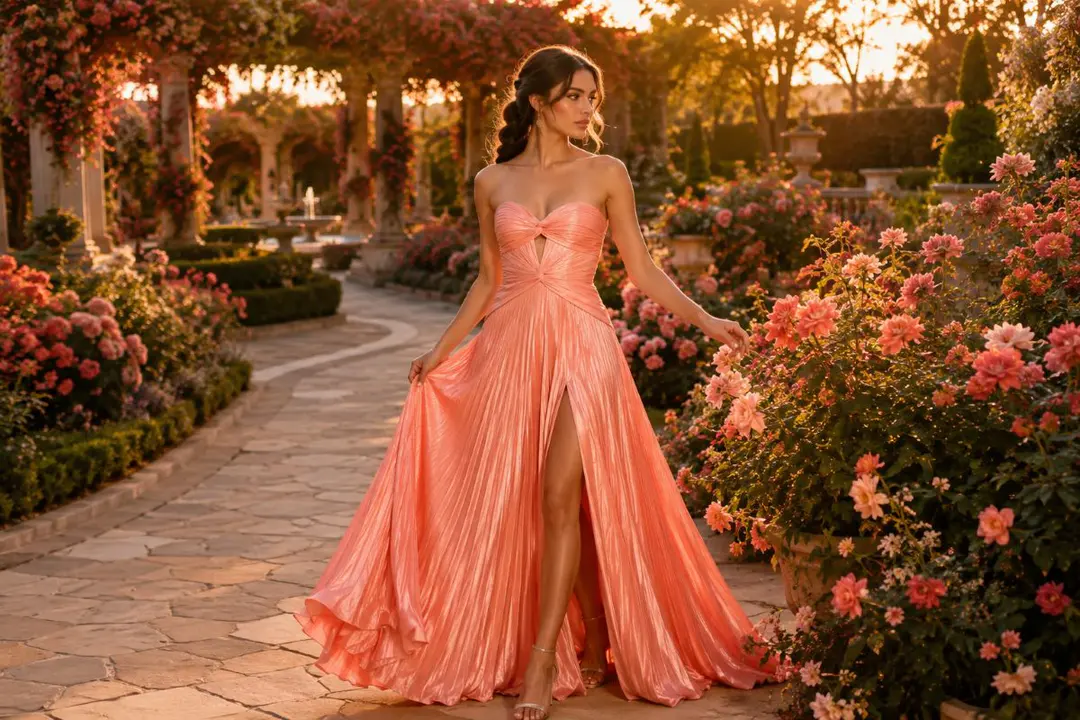
Matching coral to your skin tone
One of the genuine reasons coral is so popular at prom is that it flatters a wide range of skin tones. The warmth in coral works with skin rather than against it, but the right shade for one tone is different from the right shade for another.
For fair skin with cool undertones, soft peach and blush coral flatter best, since they harmonize with the skin's natural coolness without overwhelming. Brighter sunset coral can sometimes feel too warm on very pale cool skin unless balanced with strong makeup. For fair skin with warm undertones, true coral and sunset coral work beautifully, since the warmth in the shade aligns with the warmth in the skin. Medium skin suits almost every coral. True coral, deep coral, and salmon all glow against medium tones, and the choice becomes more about the event and the silhouette.
For olive skin, sunset coral, deep coral and salmon create a warm contrast that brings out the depth of the complexion. For deep skin tones, the most saturated corals work best, with living coral, sunset coral and deep coral all photographing especially well under venue lighting.
The broader logic of skin tone matching is covered in our guide on prom colors for different skin tones, and the principles apply directly to choosing the right coral.

Fabrics that make coral look richest
The fabric of a coral gown matters as much as the shade. Coral is a color that genuinely rewards quality fabric and punishes cheap finishes, since the warm tones can read flat or plastic in synthetic materials.
Satin is one of the most reliable fabrics for coral, since the smooth finish reflects light and gives the color depth and luminosity. The styles among satin prom dresses in coral show how the fabric carries the color particularly well in floor-length silhouettes. Chiffon in coral creates soft, flowing movement that suits spring prom and outdoor venues, with the lightness of the fabric matching the gentleness of the shade. Sequin coral dresses catch light dramatically, making them ideal for prom photographs where the color and the shine play off each other. Beaded coral gowns add texture and carry the color to the most formal occasions. Crepe in coral gives a matte, modern finish that suits more contemporary versions of the color.
The fabrics that handle coral less well are stiff synthetic satins, which often read as too shiny or plastic in this color family, and very heavy embellished pieces in pale peach, which can overwhelm the gentleness of the lighter shade. Quality fabric matters disproportionately with coral because the eye can detect a cheap finish in this color faster than in darker shades.

Silhouettes that flatter a coral gown
Coral interacts with silhouette in ways worth understanding, since the color itself is already a soft statement and the shape of the gown either supports the warmth or works against it.
A flowing A-line in soft peach or blush coral reads as romantic and seasonal, suiting outdoor proms and spring themes particularly well. A mermaid silhouette in deeper coral creates dramatic, sculpted presence, and a fitted mermaid prom silhouette lets a saturated coral command attention. A ball gown in true coral or sunset coral makes the most ceremonial statement, suited to traditional proms where the volume of the skirt and the warmth of the color combine into an unmissable entrance. A fitted column or sheath in deep coral reads as modern and editorial, suiting a more sophisticated aesthetic. A two-piece or cut-out style in coral suits anyone who wants color and design detail working together.
What works less well is heavy embellishment on top of a soft peach or blush, since the combination can overwhelm the delicacy of the lighter shade. The cleanest application of pale coral lets the color breathe, with construction supporting rather than competing. For saturated corals, embellishment works beautifully because the color can hold its own against added detail.

Coral compared to other warm prom colors
Anyone considering coral usually also looks at pink, peach, orange and red, since all of these sit in the warm side of the color wheel. Knowing how coral differs helps you choose between them.
Compared to pink, coral has more warmth and energy, reading as joyful where pink reads as romantic. The styles among pink prom dresses are softer and cooler than their coral counterparts.
Compared to orange, coral has more softness and sweetness, reading as flattering where bright orange can feel bold or vivid. The orange prom dress range shows how the same warm family shifts from softer coral into more confident orange territory.
Compared to red, coral is significantly softer and more youthful, suited to anyone who wants warmth without the drama and weight of red. For a fuller picture of how all prom colors compare, our prom dress colors guide walks through the wider palette.
The principle is that coral is the friendliest of the warm colors. It carries warmth without intensity, brightness without harshness, and softness without committing fully to pink. That balance is what makes it such a versatile choice.
Styling a coral prom dress
Once you have the gown, the styling around it should support the color rather than compete with it. This is where coral looks most often go wrong, in either direction.
For accessories, metallic tones work beautifully with coral. Gold is the most natural pairing, since it shares the warm undertone, while rose gold creates an even softer, more romantic match for blush and peach corals. Silver can work for deeper corals as a modern contrast, though it feels less natural with the lightest shades. Avoid heavy colored jewelry that competes with the coral itself. Shoes close to your own skin tone are the most lengthening choice, since they create an uninterrupted line. Gold metallic shoes also pair well, and a soft tan or champagne shoe works particularly well with peach and blush corals.
For hair, soft waves and relaxed updos both work beautifully with coral, since the color already reads as soft and elaborate styling can compete. For makeup, warm tones suit coral, but not all of them at once. A peachy blush and a bronze or soft brown eye sit well against the dress. For the lip, choose a nude close to your own color or a warm rose, rather than coral itself, since a coral lip on a coral dress reads as one flat block of color. Very cool, icy makeup is the other extreme to avoid. The overall principle is that coral is the statement, and styling should let it stay the statement.

When coral works best
Coral is more versatile than most people expect, but there are settings where it particularly shines. Knowing them helps you decide if coral is the right call for your prom.
Spring proms welcome coral beautifully, since the color matches the season's lighter palette and the natural daylight common in spring venue lighting. Outdoor and garden venues are similarly flattering for coral, with the color glowing under natural light and against natural backdrops. Beach-themed or destination proms suit coral effortlessly, since the color reads as both tropical and refined. Indoor proms with warm lighting also work well, since warm bulbs deepen coral into richer territory. Where coral works slightly less well is at proms with a very dark, dramatic, or formal aesthetic, where the warmth of coral can feel out of step with the room. In those settings, deeper coral or salmon may suit better than peachy lighter shades.
Common mistakes to avoid
A few recurring errors can undermine an otherwise beautiful coral gown. Knowing them helps you avoid them.
The most common is choosing the wrong shade for your undertone. A bright sunset coral on very cool fair skin can wash the wearer out, and a pale peach on deep skin can read flat, so try more than one shade before committing.
The second is cheap fabric in a bright shade. Synthetic satin in living coral or sunset coral can look plastic, so either choose better fabric or a softer shade that is more forgiving of the finish.
Third is over-matching. Coral with heavy bronzer, a coral lip, gold jewelry everywhere and a peach clutch reads as one overwhelming block of warmth, so include at least one cooler or neutral element.
Fourth is skipping a test under the venue lighting, since coral shifts noticeably between daylight, warm bulbs and flash. And last is a clashing accent. Bright red, hot pink or a cool blue fights a coral gown, while neutrals, gold and neighboring warm shades support it.
Coral Prom Dress Questions
What is the difference between coral and peach?
Peach on its own is lighter and softer than coral, with more cream and less saturation, while coral has more pink-orange depth and reads as warmer and more vivid. Peach coral is the shade where the two meet, which is why it sits at the soft end of the coral family rather than being a separate color.
What color shoes go with a coral prom dress?
A heel close to your own skin tone is the safest, because it disappears against the hem and lengthens the leg line. Gold metallic suits the warmth of coral and pairs with gold jewelry, and tan or champagne works especially well on the paler peach and blush shades. Black can look heavy against the lighter corals, so keep it for the deepest shades if at all.
What colors go with coral?
Neutrals and warm metals first: ivory, champagne, tan and gold all support coral without competing. Rose gold suits the pinker shades. If you want one contrast piece, a deep navy clutch works where a bright cool blue fights the dress. Avoid a second bright warm color such as red or hot pink, since two strong warm shades together read as a clash rather than a choice.
Is coral still in style for prom?
Coral is not tied to a single season's trend, which is part of its appeal, since photographs of a coral gown do not date the way a trend color can. What changes from year to year is the shade and the fabric that feel current, so look at the range in person rather than relying on last season's images.
Is coral appropriate for a formal or traditional prom?
Yes. Deeper corals like sunset coral, deep coral, and salmon suit formal traditional proms, particularly in satin or beaded fabrics. Pale peach and blush coral suit more casual or spring-themed proms. The shade you choose can shift coral from soft and romantic to confident and formal, which is one of the color's strengths.
Can coral compete with a popular color like red or pink?
Coral has the advantage of being less expected than red or pink while still feeling warm and familiar. It stands out in a sea of those more common colors precisely because fewer people choose it, which can make a coral gown more memorable in prom photographs and on the dance floor.
Seeing the shade in person
Which coral suits you is the one thing a screen cannot settle, since the shade shifts with the light and with your own skin beside it.
Hold two or three corals against your skin in daylight at an authorized Jovani retailer before deciding on a silhouette.