
Your daughter’s wedding day is one of the most profound and memorable milestones you will ever experience. It is a day of deep emotional significance, joyful celebration, and, inevitably, countless photographs that will become cherished family heirlooms. Naturally, you want a look that reflects the elegance of the occasion, honors your personal style, and makes you feel exceptionally confident.
In modern bridal fashion, the outdated “matronly” aesthetic has been entirely replaced by glamorous, fashion-forward evening wear. Today’s mothers are vibrant, stylish, and looking to express their individuality. Yet, when beginning the search for the perfect gown, women are often met with a foundational style decision that will dictate the entire trajectory of their look: choosing between structured vs flowing mother of the bride dresses.
Understanding the differences between these two primary design categories is essential. The right choice involves a sophisticated understanding of how different fabrics, tailoring techniques, cuts, and architectural details interact with your unique body shape. Finding the perfect balance ensures that your gown will flatter your figure, offer all-day comfort, and photograph beautifully from every angle.
Understanding Core Dress Construction and Fabric Engineering
The distinction between structured and flowing dresses comes down to the literal foundation of the garment. It is a choice between architectural engineering and the artistry of drape.
The Anatomy of Structured Gowns
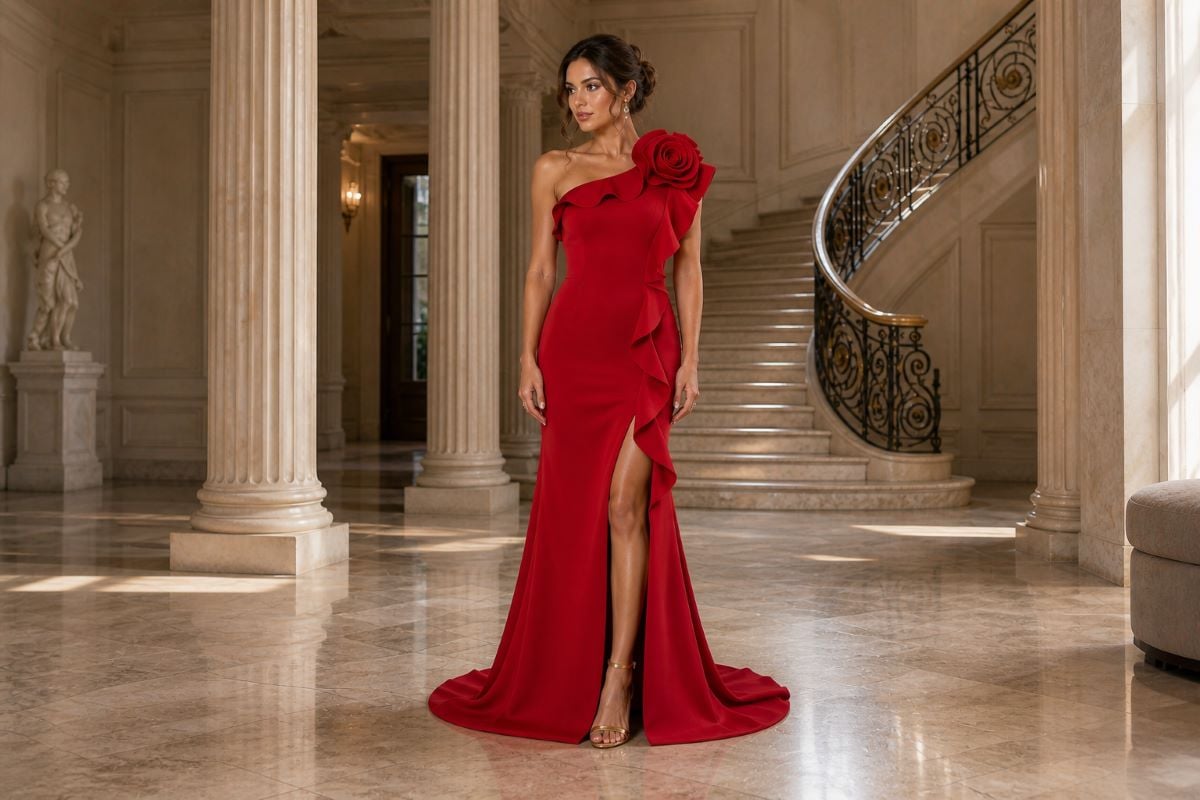
Structured dresses are built with an architectural mindset. These garments rely on substantial, tightly woven fabrics that hold their shape independently of the body. They are heavily engineered from the inside out, often incorporating internal boning, horsehair braid at the hemline to maintain volume, and strategic darting that smooths the silhouette. When you are looking for the best dress fabrics for your body shape that provide support and firmness, mid-weight to heavy materials like Mikado, faille, heavy satin, and brocade are the standard. For example, crepe mother of the bride gowns offer a clean, sophisticated matte finish that creates a beautifully sculpted look without feeling overly stiff.
The Artistry of Flowing Gowns
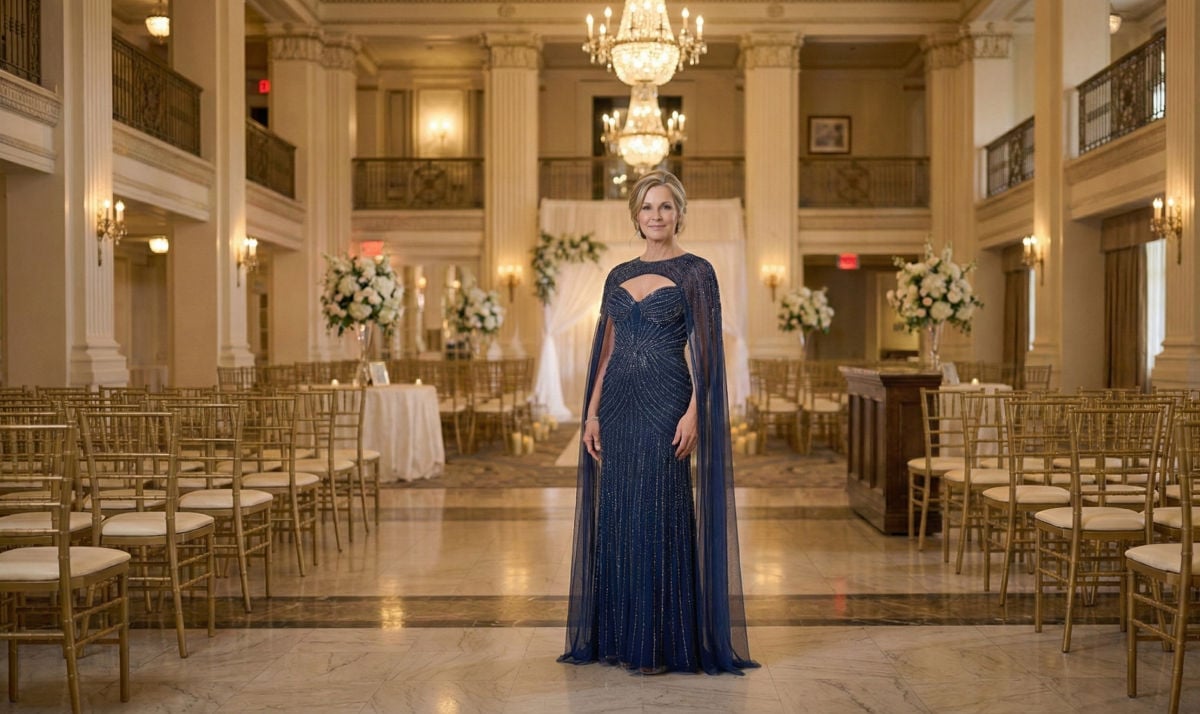
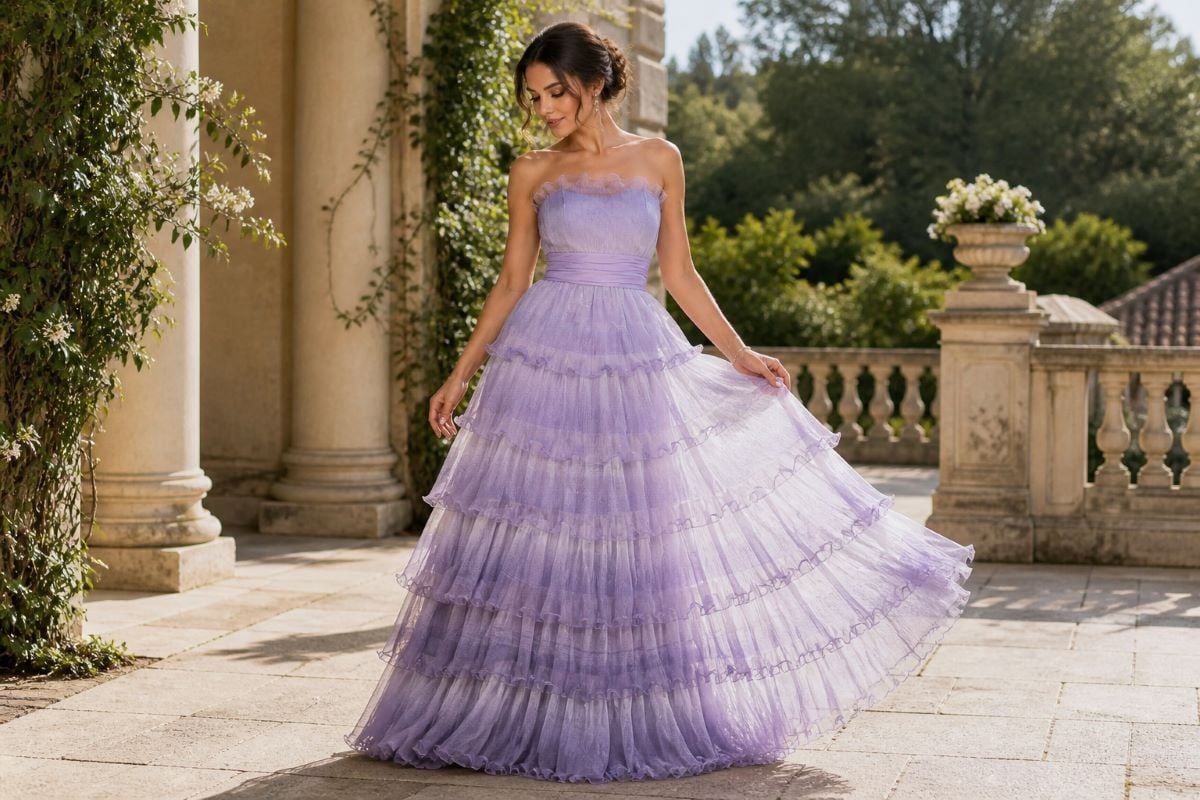
Flowing dresses, conversely, prioritize movement, breathability, and ethereal romance. These designs drape softly over the body, catching the air as you walk and creating a mesmerizing, cinematic aesthetic. Instead of molding the figure, they skim lightly over the skin. To achieve this graceful effect, designers utilize sheer, delicate layers cut on the bias to allow the fabric to stretch and move dynamically. Choosing lightweight chiffon gowns, delicate silk georgette, or layered tulle guarantees an elegant, sweeping motion. These fabrics respond to your every step, creating an aura of soft, approachable elegance.
Aligning Silhouette with Your Personal Style
Identifying whether you prefer a tailored fit or a relaxed drape is a major step in narrowing down your options when comparing structured vs flowing mother of the bride dresses.
The Power of Tailored Evening Wear for Mothers
There is an undeniable sophistication inherent in a tailored garment. Structured evening wear is universally celebrated by fashion experts because of its transformative ability to define the waist, lift the bust, and create a sleek, uninterrupted visual line from the shoulder down to the hem.
A structured gown acts almost like luxury shapewear built directly into the dress itself. It guides curves into a refined, statuesque shape, making structured fabrics ideal for women who want to emphasize an hourglass figure. If you have an apple-shaped body and carry weight in your midsection, a structured bodice is a revelation. It can provide the firmness needed to smooth the torso completely, while an expertly placed asymmetrical seam can define a higher, narrower waistline. Sheath dresses are a masterclass in this kind of structural elegance, commanding attention through pristine tailoring rather than excessive volume.
The Romance and Comfort of Draped Designs
If your personal style leans toward the romantic, bohemian, or softly feminine, flowing dresses provide an unmatched level of grace. These gowns are forgiving, comfortable for long durations, and visually captivating in motion.
Flowing styles are exceptionally flattering for women with pear-shaped bodies. Because the fabric glides gently over the hips and thighs rather than hugging them closely, it creates a beautifully balanced, proportionate silhouette that draws the eye upward to the face and shoulders. Flowing A-line mob silhouettes are universally beloved across all age groups precisely because of this draped, skimming effect. The bodice typically remains fitted to highlight the slimmest part of the upper body, while the skirt blooms softly from the natural waist. When analyzing mother of the bride dresses for different body types, flowing fabrics also prove to be an excellent choice for women with athletic or rectangular figures, as the delicate pleating can create the illusion of voluptuous curves.
External Factors: Venue and Season
The debate between structured vs flowing mother of the bride dresses is not dictated solely by body type; the setting of the wedding plays a crucial role in your decision-making process.
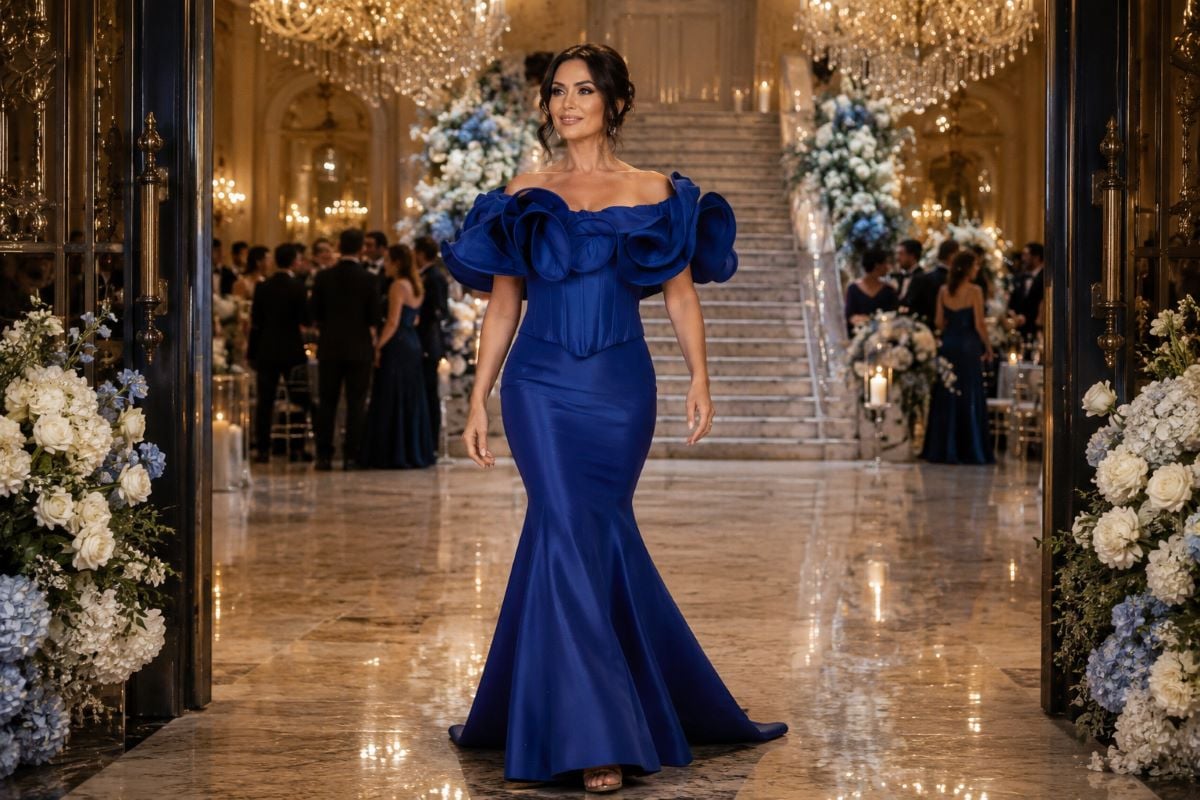
For a grand, black-tie evening wedding held in a ballroom, a historic mansion, or an upscale hotel, structured gowns feel incredibly appropriate. The rigid, opulent fabrics reflect the formal atmosphere of the venue. A sculptural Mikado gown under the glow of crystal chandeliers exudes a level of formality that perfectly matches an indoor, high-end environment.
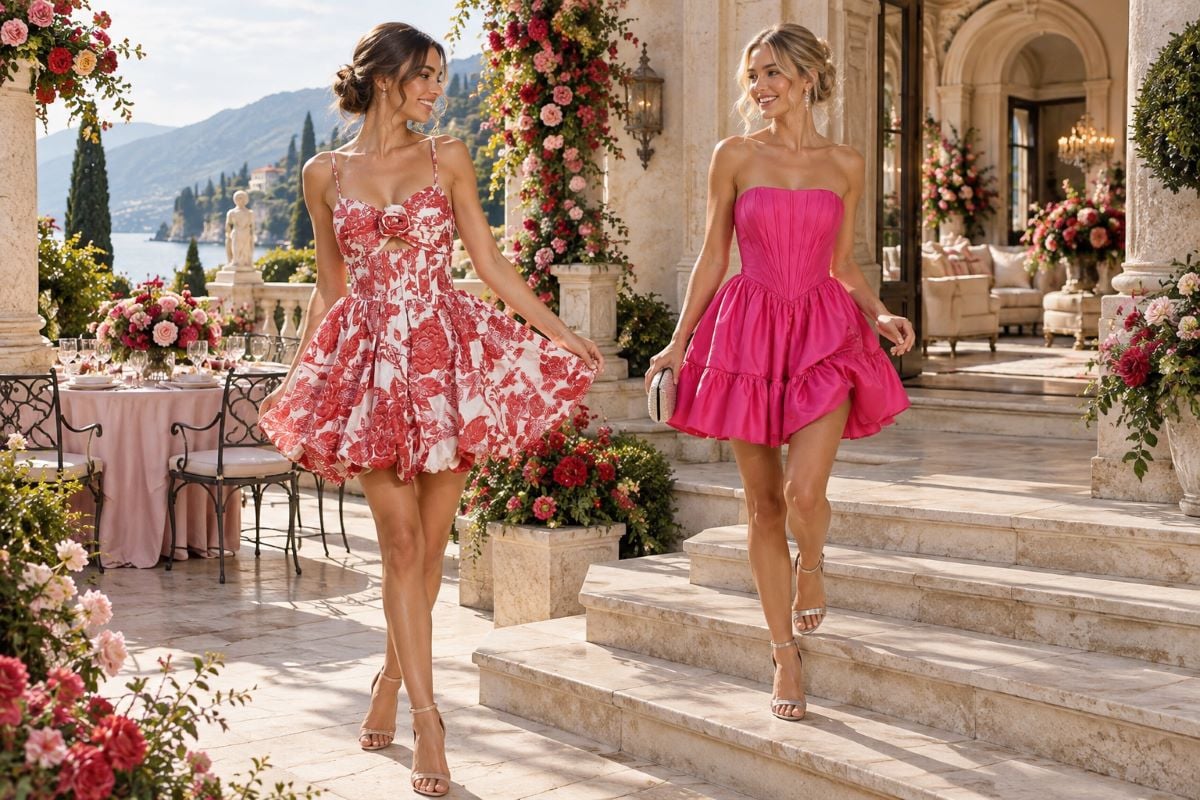
Conversely, if the wedding is a destination event on a tropical beach, an afternoon garden party, or a rustic vineyard celebration, heavy fabrics may look overly severe and feel uncomfortably warm. Here, flowing dresses reign supreme. A chiffon gown that catches the breeze or a tulle skirt that brushes over a manicured lawn feels effortless and harmonious with an outdoor or warm-weather setting.
How Body Type Dictates the Best Choice
Navigating the choice between structured vs flowing mother of the bride dresses ultimately requires an honest look at your proportions and identifying what makes you feel the most secure and radiant. The ultimate goal of finding flattering mother of the bride gowns is always to highlight your favorite features.
Women who want to minimize their lower half often find immense success with flowing, voluminous skirts. On the other hand, petite women must be cautious with flowing fabrics; too much volume or excessive layers of tulle can overwhelm a smaller frame. For petite mothers, a structured column dress or a closely tailored sheath will elongate the frame and create the illusion of height.
Maximizing Support and Visual Harmony
For curvier figures, the debate between structure and flow is often resolved by focusing on premium construction. The best plus size mum of the groom dresses expertly incorporate elements of both to provide maximum support and visual harmony. A beautifully designed dress might feature a highly structured, heavily beaded bodice with supportive boning, cascading down into a flowing, multi-layered chiffon skirt that glides beautifully across the floor.
Ultimately, knowing how to utilize slimming mother of the bride dress styles is about identifying where your specific body needs architectural support and where it benefits from a soft release.
Finding the Middle Ground: Hybrid Styles and Detachable Details
You do not always have to choose exclusively between a rigid structure or a completely loose drape. Many of the most captivating and highly sought-after dresses blend both design philosophies.
A popular hybrid design involves a tailored, structured corset top paired with a soft, flowing bottom. This combination offers the posture support and waist-cinching properties of a tailored gown alongside the breathable nature of a chiffon or tulle skirt.
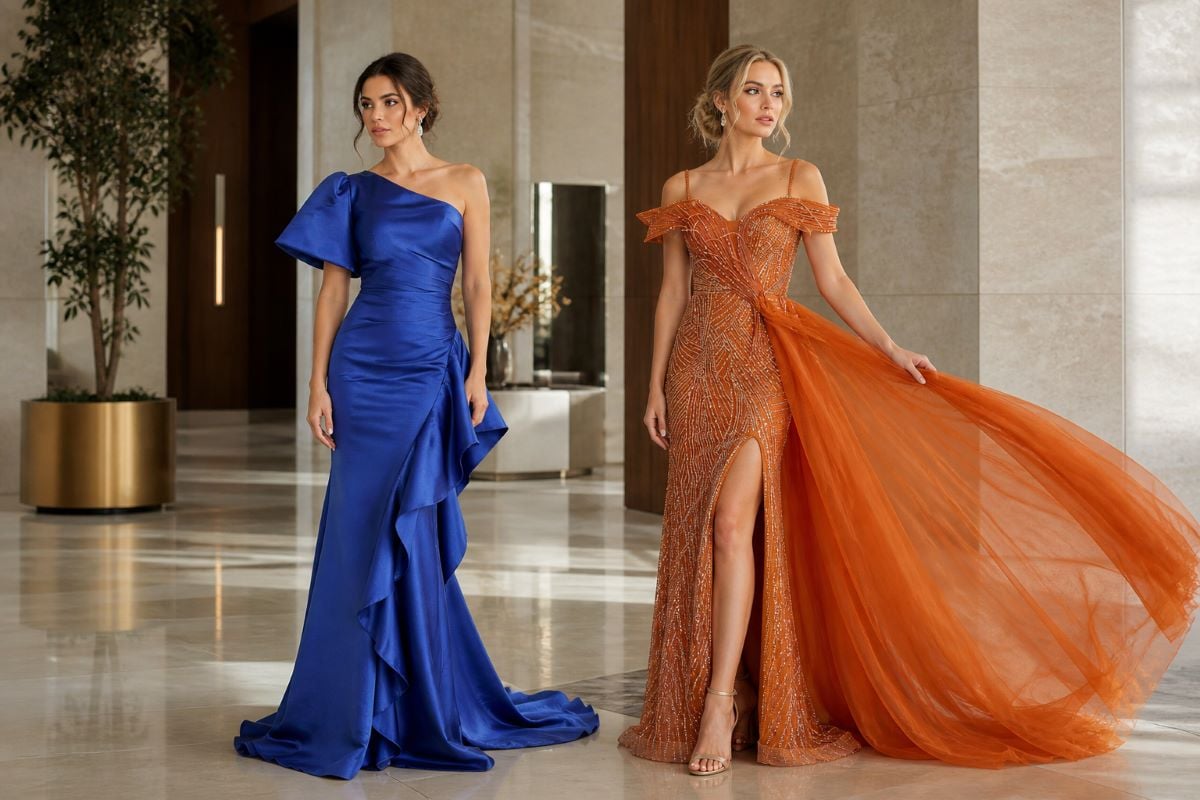
Another modern hybrid option is the use of the overskirt. This allows a mother to wear a stunning, structured, fitted silhouette for dancing and the reception, layered underneath a voluminous, flowing overskirt that provides dramatic flair for the ceremony and formal portraits. Necklines also play a crucial role in breaking up the structure; incorporating elegant V-neck designs into either silhouette helps to elongate the torso and draw the eye upward to the face.
The Jovani Standard in Evening Wear
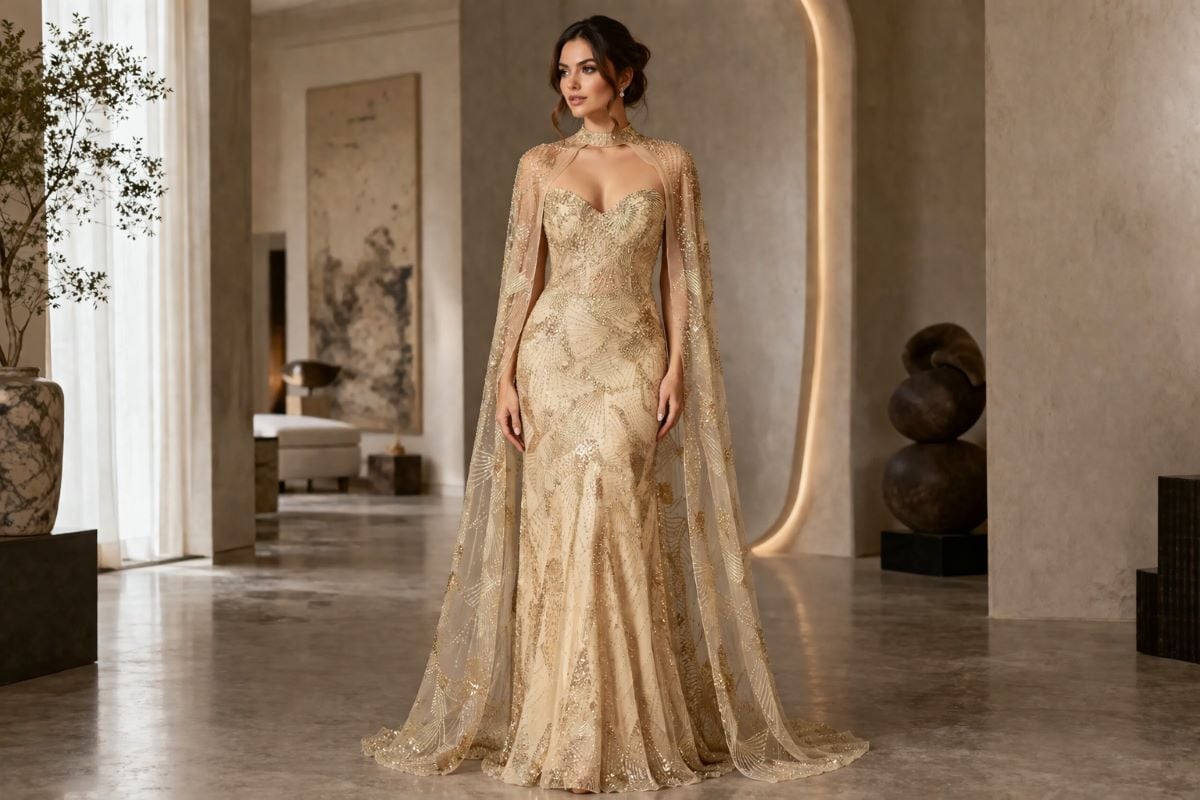
Jovani has spent decades perfecting the intricate art of evening wear, ensuring that every mother of the bride feels like royalty. Whether you are drawn to the crisp, architectural precision of a structured gown or the delicate sweep of a flowing dress, Jovani’s commitment to high-quality fabrics, innovative design, and expert tailoring remains consistent across every collection.
The brand deeply understands that tailored evening wear for mothers must offer both a flawless aesthetic and practical, all-day wearability. By utilizing advanced construction techniques—from the placement of internal corsetry to the selection of the finest, most resilient fabrics—Jovani ensures that structured dresses never feel restrictive, and flowing dresses never look shapeless.
About Mother of the Bride Dress Styles FAQs
1. Can I wear a flowing dress if I want to look slimmer, or will the extra fabric add volume?
Yes, a flowing dress can be incredibly slimming if it is designed correctly. The secret is ensuring the gown has a well-fitted bodice that clearly establishes your waistline before the fabric drapes outward. To find slimming mother of the bride dress styles in flowing fabrics, avoid excess pleating, heavy gathering, or ruffles directly at the waistline, which can add unwanted bulk. Instead, look for skirts that lie flat against the stomach and begin their gentle flare slightly lower down, skimming over the hips.
2. What is the most supportive fabric for a structured mother of the bride dress?
Fabrics like crepe, Mikado, taffeta, and heavyweight duchess satin are excellent for providing rigid structure. These materials have the inherent tensile strength to hold their shape and smooth the body’s natural contours. When evaluating the best dress fabrics for your body shape—specifically for support and shaping—always prioritize tightly woven materials over knits or jerseys. Wovens will not stretch out, bag, or lose their tailored shape throughout a long, active wedding day.
3. Is a structured dress comfortable enough for a long wedding day, sitting through dinner, and dancing?
A well-constructed structured dress should be very comfortable. Premium designers build “ease” into their garments. While the exterior fabric may be firm, expert tailoring ensures you have the necessary room in the hips and shoulders to breathe, sit comfortably, and dance. If you are particularly concerned about mobility in a structured gown, look for designs that feature a tasteful back or side slit in the skirt, or utilize modern crepe fabrics, which feature a very slight, forgiving stretch blended into the weave.
4. How do I know which silhouette matches my body type best before trying them on?
The most effective way to identify flattering mother of the bride gowns is to look at your body’s natural proportions. If your shoulders and hips are roughly balanced with a well-defined waist, an hourglass shape shines brilliantly in structured mermaid or sheath dresses that highlight those curves. If you carry weight primarily in your hips and thighs (pear shape), a flowing A-line is incredibly balancing. If you carry weight in your midsection (apple shape), an empire waist or a structured bodice with a slightly flared skirt provides a beautiful, comfortable fit that draws attention upward.
5. Are there rules regarding the mother of the bride and the mother of the groom coordinating dress styles?
While there are no strict rules that dictate one must wear structure and the other must wear flow, it is a beautiful gesture to coordinate levels of formality. If the mother of the bride chooses a highly structured, heavily beaded ballgown, the mother of the groom should ideally select a gown of a similar formality level, even if she opts for a flowing silhouette. Open communication about colors, fabric weights, and dress lengths ensures both mothers look cohesive and elegant in family photographs.
Find the silhouette that makes you feel spectacular and explore Jovani’s complete collection of mum of the bride gowns to discover your perfect match.yle