
A blazer dress takes the sharp, recognizable language of a tailored jacket and builds it into a dress, so the structured shoulder, the lapel, and the button placket all sit on one piece you simply step into. The result reads as polished and intentional the moment you put it on, which is exactly why the style has moved from a fashion-week novelty into a genuine wardrobe staple. It gives you the authority of a suit with the ease of a dress, and it works across a surprising range of occasions, from a daytime meeting to a city evening event. This guide explains what actually defines the look, how it is constructed, which silhouettes exist within the category, and how to choose and wear one so it appears deliberate rather than borrowed from menswear.
What a blazer dress actually is
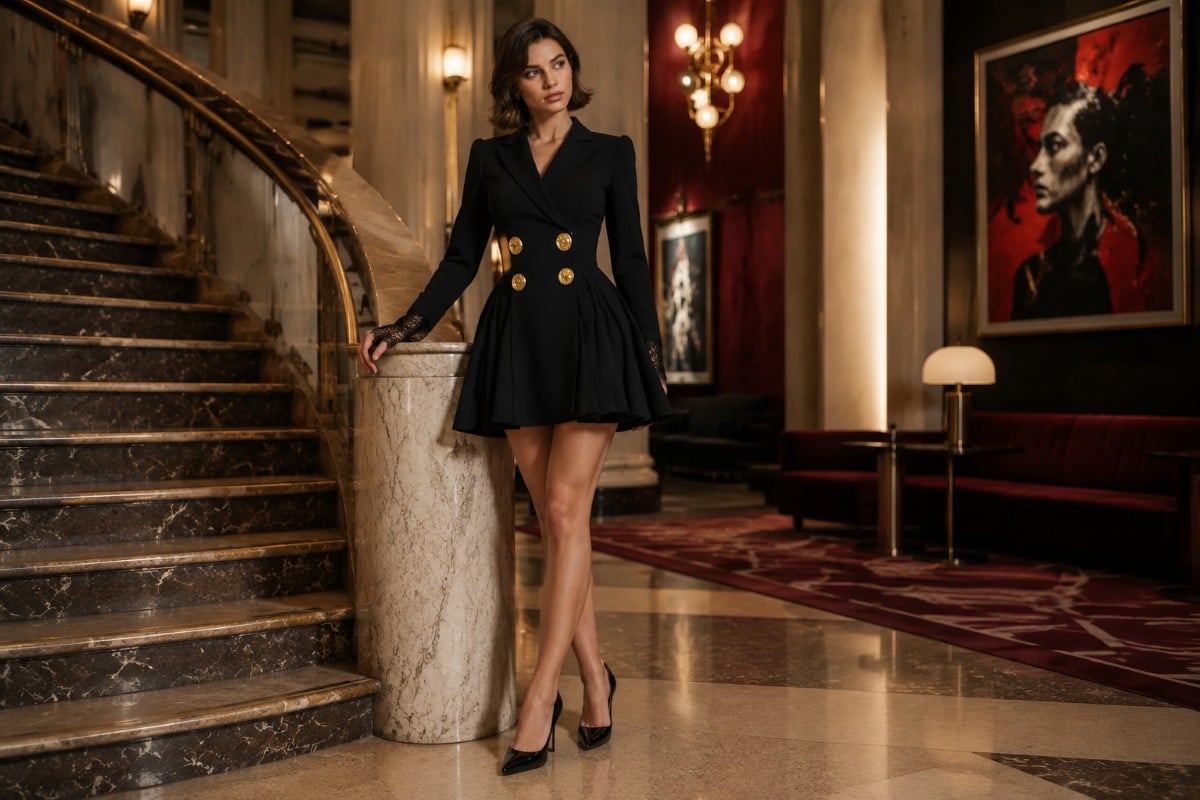
A blazer dress is a dress cut and tailored to look like a lengthened blazer. It carries the defining details of a jacket, a structured shoulder line, a lapel or collar, and a front closure of buttons, then continues past the hip into a hem rather than stopping at the waist. The garment is a single piece, so there is no separate top and skirt to coordinate, and no waistband to sit across the stomach. That single-piece construction is the whole appeal. You get the crisp, assembled look of tailoring without the effort of building an outfit, and the lines stay clean because the shoulder, the closure, and the hem were designed to work together from the start.
The style sits naturally within the world of modern, fashion-forward occasion wear, the same family as sharp sheaths and architectural cocktail dresses. Jovani places its versions inside the contemporary line, where the focus is on current silhouettes rather than traditional gowns. You can see the broader category in the house collection of contemporary gowns, which gives a sense of how a tailored dress fits alongside other modern shapes built for the same kind of events.
The construction that separates real tailoring from a costume
The difference between a version that looks expensive and one that looks like a Halloween jacket comes down to internal construction. A well-made garment is built like real tailoring on the inside. The shoulders carry light padding or a structured canvas so the line stays sharp rather than collapsing, the lapels are rolled and pressed so they hold their shape, and the buttons sit on a reinforced placket so the front does not gap or pull when you move. A cheaper one skips all of this. The shoulders sag, the lapels curl, and the closure strains, and the whole piece reads as flimsy the moment you sit down.
Jovani has built structured occasion wear from its New York design studio since 1983, and that experience shows most in exactly this kind of detail, where the tailoring has to look effortless but is actually doing a lot of quiet work. Under design director Julie DuRocher, the contemporary pieces use the same internal logic as the brand’s gowns, reinforced seams, considered linings, and shaping that holds through a long evening. The lining matters more than most shoppers realize. A proper lining lets the dress glide over what you wear underneath, keeps the outer fabric from clinging, and gives the garment the weight that makes tailoring hang correctly.
Silhouettes within the blazer dress category
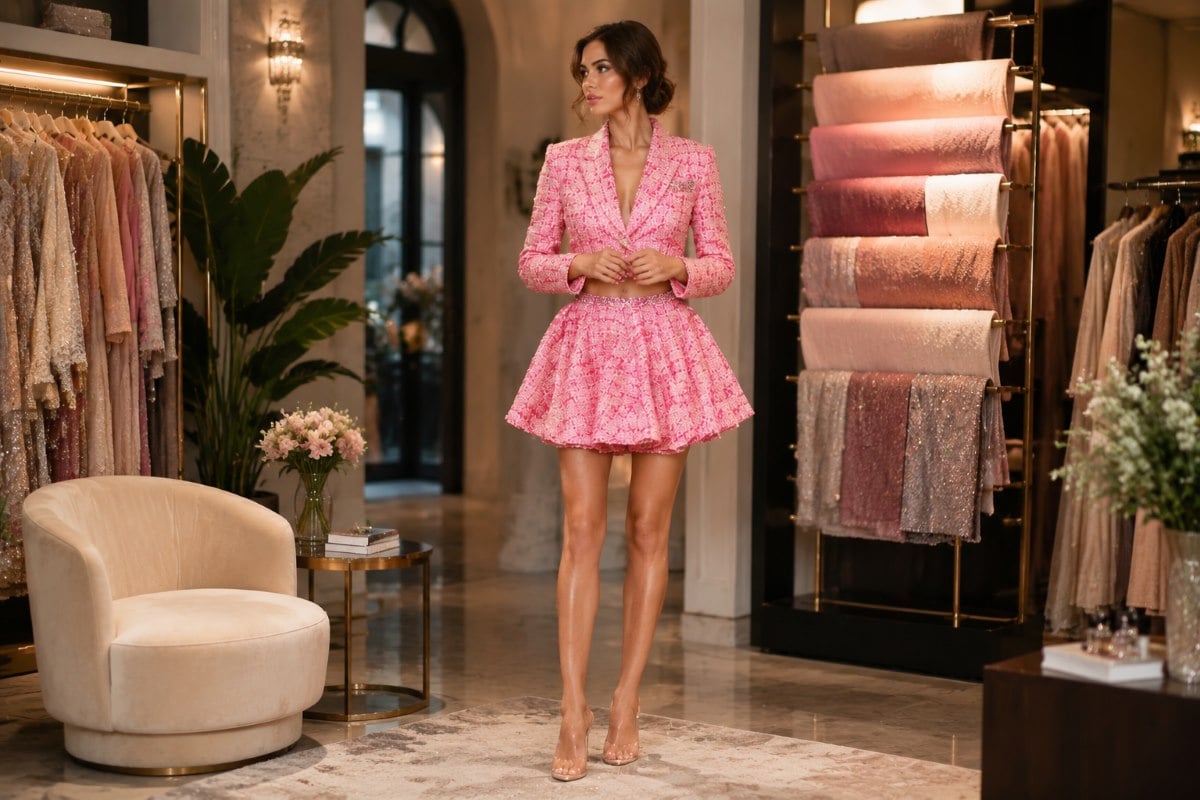
The blazer dress is not a single look, and the silhouette changes the feeling of the garment completely. A sheath version follows the body in a clean, straight line from shoulder to hem and reads as the sharpest and most minimal of the group, ideal for someone who wants a streamlined, modern profile. A fit-and-flare version nips in at the waist, often with a self-belt drawn from the same fabric, then releases into a slight flare, which softens the tailoring and adds a touch of movement. A relaxed or oversized cut borrows from the boyfriend-blazer idea, sitting away from the body with a longer line and a more casual, fashion-led attitude.
Length is the other variable that shifts the whole look. A mini version, which most designer pieces are, keeps the hem short so the proportion stays leggy and modern. A midi length reads as more covered and more formal, suiting events where a very short hem would feel out of place. Sleeves vary too, from a crisp long sleeve that completes the tailored statement to a three-quarter sleeve that feels lighter and a little softer. None of these is better in the abstract. The right combination depends on your proportions and where you plan to wear it.

Fabrics that hold the tailored shape
A blazer dress lives or dies on fabric, because the entire point of the style is structure, and only certain fabrics hold a crisp tailored line. Crepe is the most reliable choice. It has a smooth matte surface, a substantial weight, and enough natural stiffness to keep the shoulders and lapels sharp while still draping cleanly over the body. A structured woven, sometimes a brocade or a textured jacquard, adds visual interest and holds an even crisper shape, which suits a more formal or statement version. Scuba and ponte knits give a smooth, sculpted look with a slight stretch, which is comfortable and forgiving while still reading as tailored.
The fabrics to approach with caution are the very fluid ones. A thin, drapey material will not support a structured shoulder or a rolled lapel, so a dress cut from flimsy fabric loses the architectural quality that makes the style work in the first place. When you are choosing, press the lapel gently between your fingers. A fabric with body springs back and holds a fold. A fabric without it stays limp, and that limpness will show on the body within the first hour of wear.
Which events a blazer dress suits
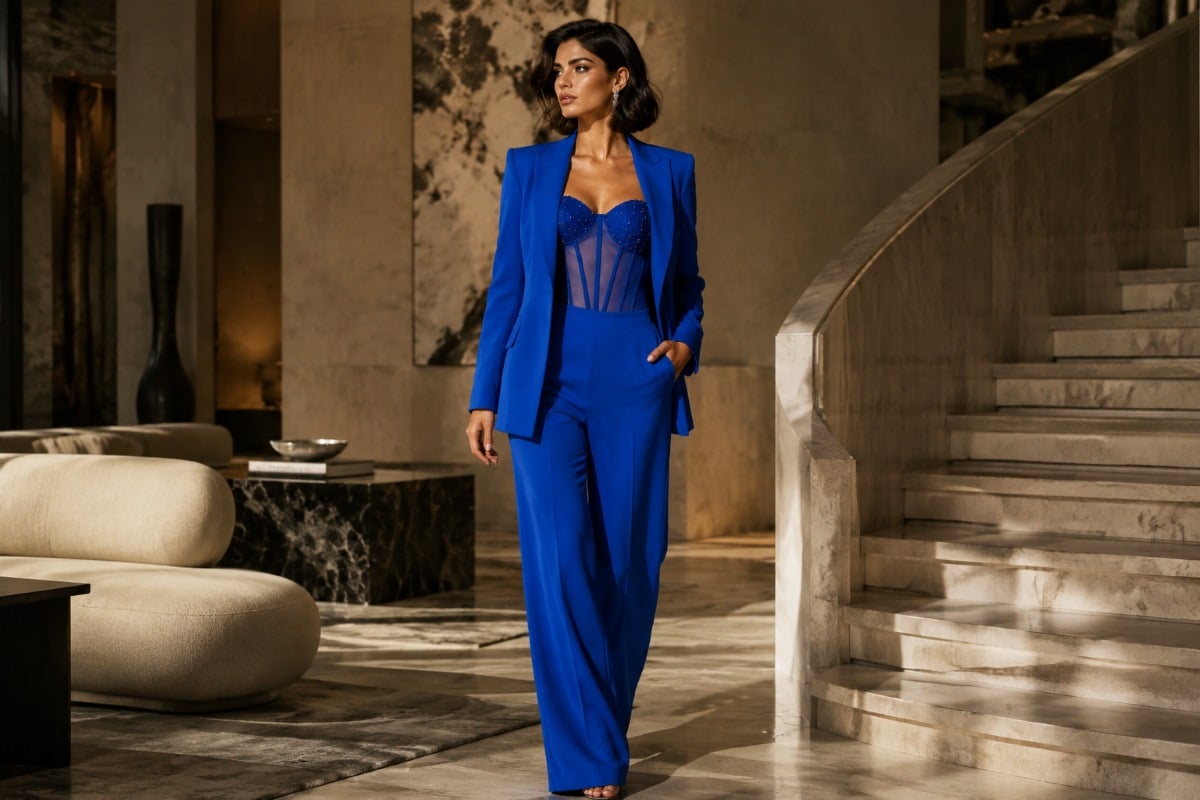
The genuine strength of the style is range, since few single garments cross so many occasions without looking out of place. For a daytime professional setting, a tailored sheath in a solid neutral reads as composed and authoritative, a clear step above standard office wear. For an evening event, the same look in black or a deep jewel tone with a sharper heel and bolder jewelry shifts into night mode without any change of clothes. It works beautifully for a cocktail party, a gallery opening, an upscale dinner, or a modern city wedding where you want to look current rather than traditional.
For a wedding specifically, a blazer dress can be a smart guest choice when the celebration leans contemporary or urban, since it photographs as polished and considered. The usual guest rules still apply, so avoid white, ivory, and anything too close to bridal, and read the dress code before committing to a short hem. For ideas on how a tailored dress sits among other guest options, the house edit of wedding guest gowns shows the range of formality a modern guest can choose from.

How to style the look
Because the garment is already doing the structural work, the styling job is restraint rather than addition. The piece is the statement, so the rest of the look should support it. Footwear sets the register more than anything else. A pointed pump or a sleek heeled sandal lengthens the leg and keeps the look sharp and modern, while a knee boot reads as edgier and more fashion-led, and a refined flat takes the dress in a more relaxed, daytime direction. The shoe is where you decide how formal the whole outfit feels.
Jewelry should stay deliberate. A lapel and a button front already create detail at the neckline and the center front, so heavy necklaces tend to clutter it. A pair of sculptural earrings, a single cuff, or a fine pendant that sits inside the lapel line is usually enough. A belt, when the dress does not already include one, can define the waist and shift a relaxed cut into a sharper hourglass shape. For a fuller breakdown of how to take a tailored look from morning to night with small swaps, the guide to a day to evening formal look covers the toolkit in detail.
Choosing a blazer dress for your body
The blazer dress flatters in a particular way, and understanding that helps you choose the right cut. The vertical line of the button placket draws the eye down the center of the body, which lengthens and slims the torso, and the structured shoulder creates a defined upper line that balances fuller hips. For an apple shape, a version that skims rather than clings through the middle, ideally one with a self-belt to mark the waist, gives shape without pressure across the stomach. For a pear shape, the structured shoulder is the asset, since it broadens the upper body to balance the lower half.
For a petite frame, a mini length and a fitted cut keep the proportion long rather than swamped, and a relaxed or oversized version usually overwhelms a smaller body unless it is carefully tailored. For a taller or longer-torso figure, almost every length works, and a midi length can be a particularly sophisticated choice. The honest rule is to judge the shoulder seam first. If the shoulder of the dress sits exactly on the edge of your own shoulder, the tailoring will look sharp. If it droops past it, the whole garment will read as ill-fitting no matter how good the fabric is.
Blazer dress versus a traditional cocktail dress
Shoppers often weigh this style against a more conventional cocktail dress, and the two serve genuinely different moods. A traditional cocktail dress, whether a fitted sheath, a flared party dress, or a beaded mini, leans feminine, soft, and celebratory, and it suits occasions where you want to look pretty and event-ready in a familiar way. A tailored dress leans sharp, modern, and a little powerful, and it suits occasions where you want to look assembled and fashion-led rather than traditionally dressed up. Neither is more correct. The choice depends on the impression you want to make.
There is also a practical difference in coverage and comfort. A version with a long sleeve and a structured shoulder offers more coverage on the arms and upper body than a typical strapless or thin-strap cocktail dress, which makes it a comfortable choice for cooler weather or for anyone who prefers a more covered look without sacrificing a modern edge. For a sense of the more conventional party end of the spectrum, the range of short cocktail styles shows what this look is quietly competing against.
Caring for a tailored dress
A blazer dress holds its value when the structure is protected, and the care is closer to caring for a jacket than for a soft dress. Hang it on a broad, padded hanger so the shoulders keep their shape, since a thin wire hanger will distort the very line that defines the garment. Store it with room around it rather than crushed between other pieces, because pressure creases in a structured fabric are stubborn and can flatten a rolled lapel permanently. For most versions, steaming rather than ironing is the safer way to refresh the fabric, since direct heat on a crisp lapel can leave a shine mark.
If the dress carries any embellishment, such as beaded buttons or detail at the collar, treat those areas gently and ask a cleaner who handles formal wear to use a steam-only finish rather than a heavy mechanical press. This is an investment piece precisely because it works across so many settings, so a little care keeps it looking sharp across many wears. When the tailoring is right and the fabric is good, this is a garment that earns its place in a wardrobe season after season.
Where the style fits in a modern wardrobe
What makes the blazer dress worth owning is efficiency. It collapses the work of assembling a tailored outfit into one decision, and it carries a confident, current attitude that few other single garments match. It is the piece you reach for when you want to look pulled together quickly, when the dress code is ambiguous and you want to land on the sharper side of it, or when you want the authority of tailoring without the formality of a full gown.
- For anyone building a versatile occasion wardrobe, it sits comfortably alongside the most useful staples and the broader family of best contemporary dress styles that define modern occasion dressing.
- If you are drawn to sharp tailoring more generally, this is one expression of a wider move toward suiting in women’s formal wear, and the full guide to women’s formal suits places it in that context.
- For the dedicated tailored pieces themselves, the house edit of jackets and blazers is where the structured options live.
- And when only a classic will do, this look competes most directly with a little black dress for the title of the most reliable thing in your closet.
Frequently Asked Questions blazer dress
Is a blazer dress appropriate for a formal event?
It can be, depending on the formality and the dress itself. A structured version in a rich fabric like crepe or brocade, in a dark or jewel tone, with a sharp heel and refined jewelry, reads as appropriate for a cocktail dress code, a modern city wedding, or an evening party. For a strict black-tie event that calls for floor-length gowns, a short tailored dress is usually too informal, so match the garment to the stated code before you commit.
What should I wear underneath a blazer dress?
Smooth, fitted underwear is the foundation, since a tailored fabric shows lines. A well-made piece is fully lined and the button front is reinforced so it stays closed, but if you want extra security at the closure, a small piece of fashion tape between two buttons keeps the placket flat. For a fitted version, light smoothing shapewear that ends above the hem gives a clean line, and a strapless or adhesive bra works best under a deeper lapel.
What body type does a blazer dress suit?
The style is broadly flattering because the vertical button line lengthens the torso and the structured shoulder balances the hips. Apple shapes do well with a skimming cut and a defined waist, pear shapes benefit from the strong shoulder line, and petite frames look longest in a fitted mini. The key is the shoulder seam sitting exactly on your shoulder edge, since correct shoulder placement is what makes the tailoring read as sharp rather than borrowed.
Can you wear a blazer dress to the office and then out in the evening?
Yes, and that versatility is one of its strongest selling points. During the day, pair it with a refined flat or a low heel and minimal jewelry for a composed, professional look. For the evening, switch to a sharper heel, add bolder earrings or a cuff, and refresh your lip. The dress itself does not change, only the signals around it, which makes it a genuinely practical single garment for a long day that runs into a night out.
How is a blazer dress different from wearing a blazer over a dress?
A blazer dress is a single tailored garment cut to look like a lengthened blazer, with the shoulder, lapel, and button front built into one piece. Wearing a separate blazer over a dress is a layered look using two garments. The single-piece version gives a cleaner, uninterrupted line because there is no second hem cutting across the body, and it removes the work of coordinating two pieces, while a layered blazer offers more flexibility to remove the jacket later in the evening.
What length is most flattering?
Most designer versions sit at a mini length, which keeps the proportion long and modern and suits cocktail and contemporary settings. A midi length reads as more covered and more formal and works well for events where a very short hem would feel out of place or for anyone who prefers more coverage. The most flattering choice depends on your height and comfort, so judge the hem in the shoes you plan to wear rather than deciding in the abstract.
To see how the blazer dress translates across fabrics, colors, and silhouettes for your own next event, explore the current designs through an authorized Jovani retailer.