
The Peplum Dress: A Defined Waist and a Flattering Flare

A peplum dress carries one of the most quietly clever details in formal wear, a short flared ruffle of fabric attached at the waist that flares out over the hips. That small strip of fabric does a great deal of work. It marks the narrowest part of the waist, adds a soft burst of structure exactly where the body curves, and skims over the hip and stomach in a way that flatters a wide range of shapes. The peplum has moved in and out of fashion for more than a century, but in formal dressing it has never really left, because it solves a real problem, how to define the waist and create shape without clinging. This guide explains where the peplum sits and why placement matters, the silhouettes it suits, the fabrics that hold it, and how to choose and wear a peplum dress so the flare reads as deliberate and refined.
What a peplum dress is
A peplum dress is a dress with a short, flared piece of fabric attached at the waistline that extends out over the hips, creating a localized flare between the bodice and the skirt. The peplum can be gathered, pleated, ruffled, or smoothly flared, and it can be subtle, a soft suggestion of shape, or dramatic, a sculptural statement that stands away from the body. The defining feature is that the flare is concentrated at the waist rather than running the length of the skirt, which is what gives the peplum its particular effect of cinching the middle while adding dimension at the hip.
Because the peplum is a waist detail rather than a single silhouette, it appears across many dress shapes, from a fitted pencil sheath to a dramatic mermaid gown. It reads as polished and a little architectural, which suits formal occasions where you want structure and shape. You will find peplum detailing throughout formal collections, and the range of mermaid formal dresses shows how a waist flare pairs with a fitted, curve-defining silhouette.
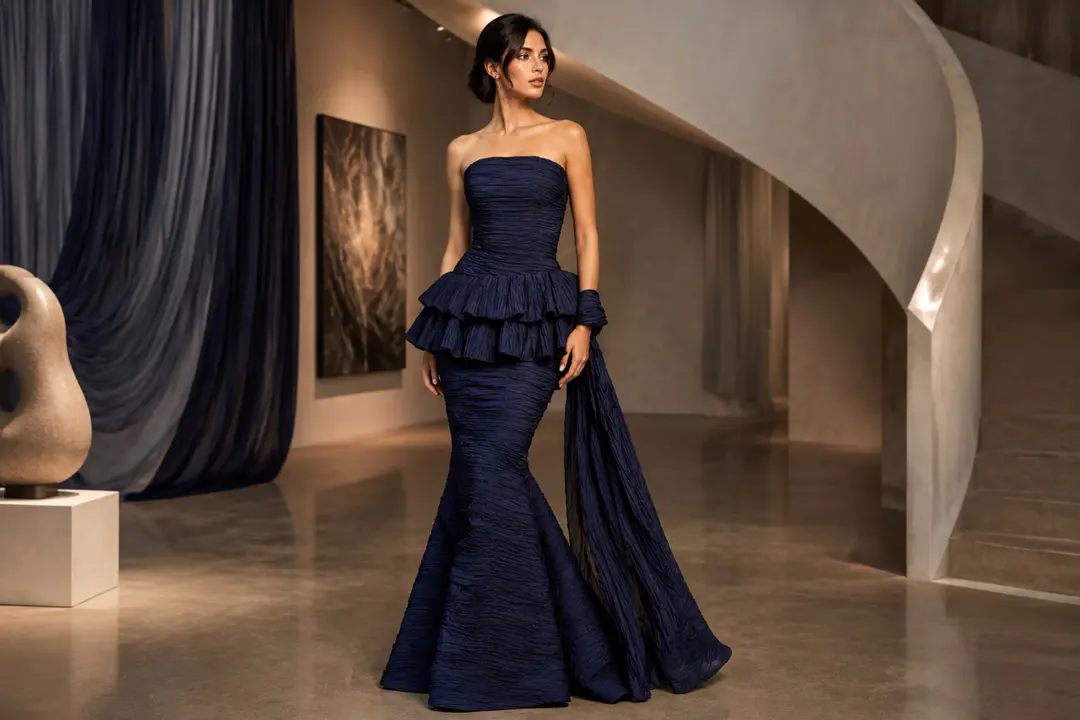
Where the peplum sits and why placement matters
The single most important thing about a peplum is where it sits on the body, because the waist seam that anchors it determines the entire effect. A peplum placed at the true natural waist, the narrowest part of the torso, creates the most flattering result, cinching the smallest point and flaring out cleanly over the hips. A peplum that sits even slightly too high or too low loses that effect, since it no longer marks the narrowest point and the flare lands in the wrong place, widening the body rather than shaping it.
The length and fullness of the peplum also shape the outcome. A short, controlled peplum adds subtle definition and reads as refined, while a longer or fuller peplum makes a bolder statement and adds more visual volume at the hip. An asymmetric peplum, longer on one side or angled across the body, introduces movement and a more contemporary line. The placement and proportion together decide whether a peplum flatters or overwhelms, which is why fit at the waist is the detail to scrutinize most carefully when you try one on.
Peplum silhouettes
The peplum appears on several base silhouettes, and each combination produces a different effect. On a sheath or pencil silhouette, the peplum is at its most useful, since it lets you wear a fitted, body-skimming skirt while the flare conceals the stomach and hip and defines the waist, a genuinely flattering combination for anyone who wants a fitted look with built-in shaping. On a mermaid silhouette, the peplum adds a sculptural layer of structure at the waist and hip, amplifying the dramatic, curve-hugging line of the gown.
On an A-line or fuller skirt, a peplum adds an extra tier of volume and a more romantic, layered feeling, though the effect is softer and less defining than on a fitted base. The peplum also pairs beautifully with a strapless or off-the-shoulder bodice, since the bare upper body balances the structured waist detail. Each silhouette serves a different mood, from the sharp, modern line of a sheath peplum to the grand, formal presence of a mermaid peplum gown, so the right choice depends on the event and the impression you want. Across the broader range of formal gowns, the same waist detail appears on everything from sleek columns to dramatic mermaids.

Fabrics that hold a structured peplum
A peplum needs the right fabric, because the flare has to hold its shape to read as intentional rather than droopy. Structured fabrics work best. A heavyweight crepe, a crisp mikado, a textured brocade, or a firm taffeta all hold a clean, sculptural peplum that stands away from the body exactly as designed. These fabrics have the body and memory to keep the flare crisp through a long evening, which is essential, since a peplum that collapses looks like a wrinkle rather than a design feature. The weight of the fabric matters as much as its stiffness, since a peplum cut from a substantial cloth holds a cleaner, more sculptural curve and resists the soft collapse that makes a flare look tired by the end of an evening.
Softer fabrics can be used for a peplum, but the result is different. A chiffon or lightweight peplum creates a soft, fluttering flare rather than a structured one, which suits a more romantic, fluid gown but will not give the sharp, architectural effect of a structured version. The fabrics to avoid are the very heavy ones that drag the flare down, and the very stretchy jerseys that fight the structure a peplum tries to create. When you assess a peplum dress, check that the flare holds its shape on the hanger and on the body, since a fabric that supports the peplum keeps the whole look polished. A structured peplum also reads as a refined, considered option among other wedding guest outfits when the celebration calls for shape and polish.

Who the peplum flatters
The peplum is one of the most genuinely flattering details in formal wear, and it suits several figures particularly well. For an apple shape or anyone who wants to skim the midsection, the peplum is ideal, since it flares over the stomach and hip while the waist seam marks the narrowest point, creating shape without clinging. For a rectangle or straighter figure, the peplum builds the impression of an hourglass by adding volume at the hip and defining the waist, introducing curves where the natural line is straighter.
For a pear shape, the peplum can work but the proportion matters, since adding too much volume at the hip can emphasize the lower half, so a shorter, more controlled peplum balanced with detail at the neckline or shoulder usually flatters most. For an hourglass figure, a peplum simply amplifies the existing waist definition, which can be a confident, dramatic choice. The honest rule across all shapes is that the peplum flatters when it sits at your true waist and flares cleanly, and it works against you when it sits wrong or adds bulk where you do not want it. For more on shaping the midsection through formal dressing, the guide to the best dresses to hide a tummy covers the broader approach.
Styling a peplum dress
A peplum dress already carries structure and detail at the waist, so styling should keep the focus balanced rather than adding clutter at the middle. A belt is unnecessary and usually counterproductive, since the peplum already defines the waist, and a belt over it competes with the flare. Jewelry should draw attention up to the face and neckline, which keeps the proportion balanced and stops the eye from settling only on the hip. Drop earrings or a refined necklace that sits at the collarbone work well for this.
Footwear should lengthen the leg to balance the volume the peplum adds at the hip, so a heel that creates a long line keeps the silhouette in proportion. Avoid anything that adds bulk low on the body, since the peplum is already providing visual weight at the hip. For a mermaid or fitted peplum gown, posture and movement matter, and knowing how to carry a structured gown gracefully completes the look, which the guide on how to pose in an evening gown covers in practical detail.
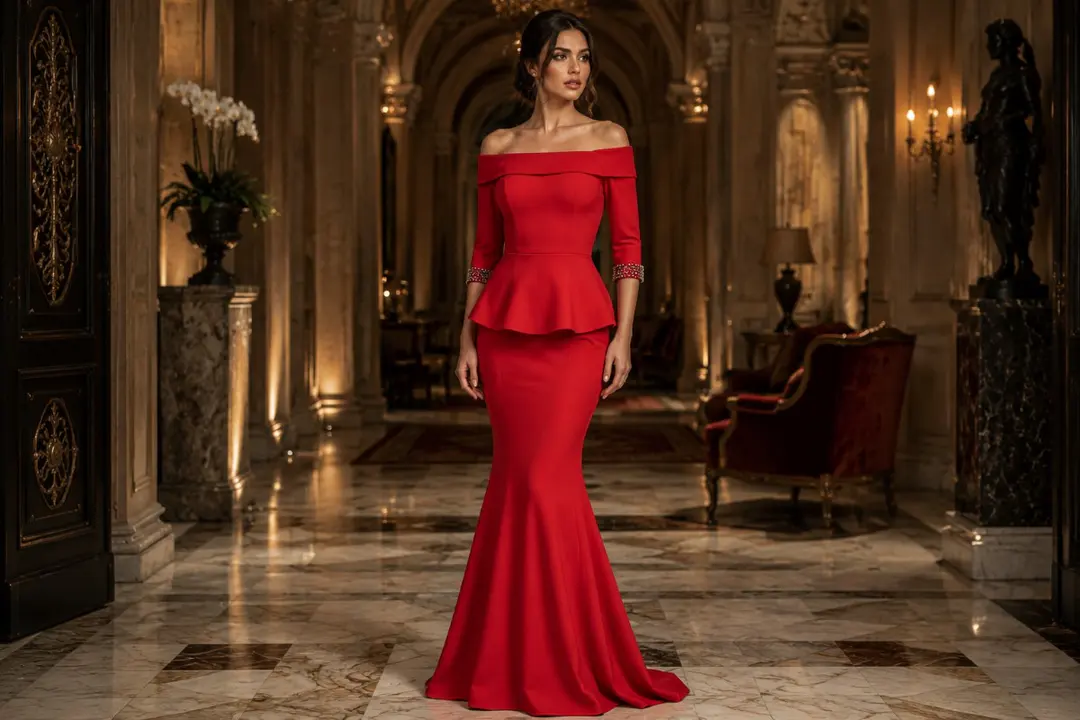
The peplum across occasions
The peplum suits a particularly wide spread of formal events because it reads as polished, structured, and dignified. For a mother of the bride or groom, a peplum gown is a flattering and sophisticated choice, since it defines the waist, skims the midsection, and offers the kind of refined structure that photographs beautifully through a long wedding day. The detail manages to look formal and current at once, which suits a role where you want to look both elegant and contemporary. The range of mermaid mother of the bride dresses shows how a structured waist works for that occasion.
For a black-tie event, a peplum on a floor-length gown adds architectural interest and a sense of occasion, while for a wedding guest, a shorter peplum dress reads as polished and considered without competing with the bride. The peplum also suits galas, formal dinners, and evening celebrations where structure and shape are welcome. For ideas across the full range of formal occasions, the edit of black tie dresses shows where a structured peplum gown belongs.
Choosing a well-made peplum
When you are choosing a peplum dress, the quality of the peplum construction makes or breaks the garment. First, check that the waist seam sits at your true natural waist when you try it on, since the peplum only flatters when it is anchored at the narrowest point of your torso. Second, look at how the flare holds, which should stand away cleanly and hold its shape rather than drooping or collapsing, a sign of both good fabric and good construction. Third, examine how the peplum is attached, since a well-made dress integrates it smoothly into the waist seam without bulk or puckering.
Jovani has built structured formal wear from its New York studio since 1983, and a peplum is exactly the kind of detail that rewards that construction experience. Under design director Julie DuRocher, the house pairs a sculptural outer detail like a peplum with the internal shaping, reinforced seams, and considered lining that keep a gown comfortable and secure through a full evening. A peplum built this way holds its crisp flare from the first photograph to the last dance, which is the difference between a detail that looks designed and one that looks like an accident of fabric. For a broader sense of flattering formal options, the guide to flattering mother of the bride dresses places the peplum among other shaping silhouettes.

Common fit considerations with a peplum
A few fit issues come up specifically with peplum dresses, and knowing them helps you choose well. The most common is the waist seam landing in the wrong place, since a peplum that sits even an inch above or below your natural waist loses its shaping effect and can widen the body, so this is the first thing a tailor checks and adjusts. The second is volume, since a peplum that is too full for your frame adds bulk at the hip rather than balance, while one that is too flat fails to create the shape that makes the detail worthwhile.
Fabric behavior is the third consideration, since the same peplum reads very differently in a structured fabric versus a soft one, and matching the fabric to the effect you want matters. If you want sharp, architectural shaping, choose a structured peplum, and if you want soft, romantic movement, a lighter peplum suits better. As with any fitted formal dress, try it on with the undergarments and shoes you plan to wear, move and sit in it, and confirm that the peplum stays in place and the waist sits correctly before the event rather than after.
Frequently Asked Questions peplum dress
What is a peplum on a dress?
A peplum is a short, flared piece of fabric attached at the waistline of a dress that extends out over the hips, creating a localized flare between the bodice and the skirt. It can be gathered, pleated, ruffled, or smoothly flared, and it works to define the waist while adding structure and dimension at the hip. Because the flare is concentrated at the waist rather than running down the skirt, it cinches the middle and skims over the stomach and hip.
Is a peplum dress flattering?
Yes, the peplum is one of the most flattering details in formal wear for many figures. It marks the narrowest part of the waist and flares over the stomach and hip, so it creates shape without clinging, which suits apple shapes and anyone wanting to skim the midsection. It also builds the impression of an hourglass on straighter figures by adding volume at the hip. The key is that it sits at your true waist and flares cleanly.
What body type suits a peplum dress?
The peplum suits several shapes. Apple shapes benefit because it skims the midsection while defining the waist, rectangle or straight figures gain the impression of curves through added hip volume and waist definition, and hourglass figures find it amplifies their existing shape. Pear shapes can wear a peplum too, but a shorter, more controlled flare balanced with detail at the neckline usually flatters most, since too much volume low on the body can emphasize the hips.
What should you wear under a peplum dress?
Smooth, low-profile underwear is the foundation, since a fitted peplum base can show lines. For a sheath or mermaid peplum, light smoothing shapewear that ends above the hem gives a clean line under the fitted skirt, while the peplum itself helps conceal the waist and hip area. A well-constructed peplum gown often has internal boning and cups built in, so check whether the dress supports you on its own before adding a separate bra.
Can you wear a peplum dress to a wedding?
Yes. A peplum dress is a polished, structured choice for a wedding guest, since it defines the waist and reads as considered without competing with the bride, as long as you avoid white, ivory, and bridal tones. For a mother of the bride or groom, a peplum gown is especially flattering and dignified. Match the formality to the event, a floor-length peplum gown for black-tie, a shorter peplum dress for a less formal celebration.
What fabric is best for a peplum dress?
Structured fabrics hold the best peplum, since the flare needs to keep its shape to read as intentional. Heavyweight crepe, crisp mikado, textured brocade, and firm taffeta all hold a clean, sculptural flare through a long evening. Softer fabrics like chiffon create a fluttering, romantic peplum rather than a structured one, which suits a different mood. Very heavy fabrics that drag the flare down and very stretchy jerseys that fight the structure are best avoided.
To see how a structured peplum shapes the waist across sheath, mermaid, and floor-length silhouettes for your own next occasion, explore the current designs through an authorized Jovani retailer.