
Winter Black Tie Dresses: Elegant Cold-Weather Looks
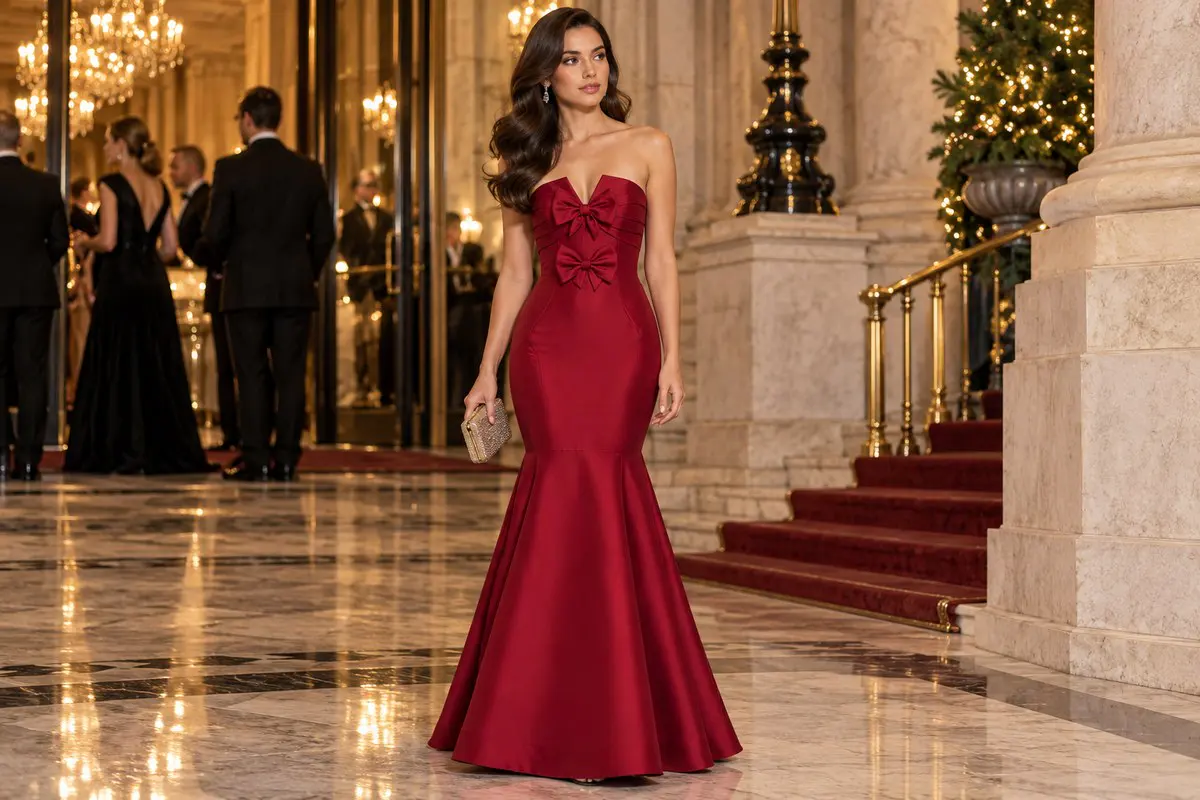
Winter black tie dresses need to solve two different problems at once. The gown must meet a formal evening dress code indoors, while the full outfit also needs to handle cold arrivals, outdoor photographs, wet ground, and temperature changes between spaces.
The most reliable approach is to choose the black tie gown first, then build the winter plan around it. Cold weather should affect sleeves, outerwear, shoes, and transitions without lowering the formality of the event.
What should you wear to a winter black tie event?
A floor-length evening gown is the safest starting point for winter black tie. Choose the gown for the dress code first, then plan sleeves, outerwear, shoes, and fabric weight around the venue and expected weather.
Winter does not require velvet, long sleeves, or dark colors. Those can all work, but they are styling options rather than rules.
If you need the full dress-code foundation first, Jovani's Ultimate Guide to Black Tie Dresses for Women explains the broader black tie standard.
Winter changes the logistics more than the dress code
Black tie remains black tie in January.
A cold evening does not turn a floor-length formal event into cocktail attire. The useful winter questions are more practical: how you will arrive, what you will wear over the gown, whether the venue has outdoor sections, and how the hem and shoes handle winter conditions.
Arrival and departure
The coldest part of the evening may be the few minutes between the car and the venue.
That short transition still matters because a thin evening gown and formal shoes can feel very different outside than they do in a heated ballroom.
Plan the coat or wrap before the event rather than treating it as an afterthought.
Indoor heating
Winter venues can be surprisingly warm once the room fills.
A heavy gown, long sleeves, dense embellishment, and a crowded ballroom can feel warmer than expected indoors.
Check the total weight and layer count of the actual gown instead of choosing only by the outdoor temperature.
Outdoor photographs
Winter weddings and galas sometimes include outdoor entrances, terraces, snow-covered grounds, or short photo sessions.
If that applies, think about how long the gown can realistically stay outside and how the hem will interact with moisture.
Long sleeves can work well, but they are not mandatory
Long sleeves are one of the most obvious winter formalwear choices, but they should still suit the dress.
A sleeve can add coverage and change the upper silhouette without automatically making the gown warmer enough for outdoor conditions.
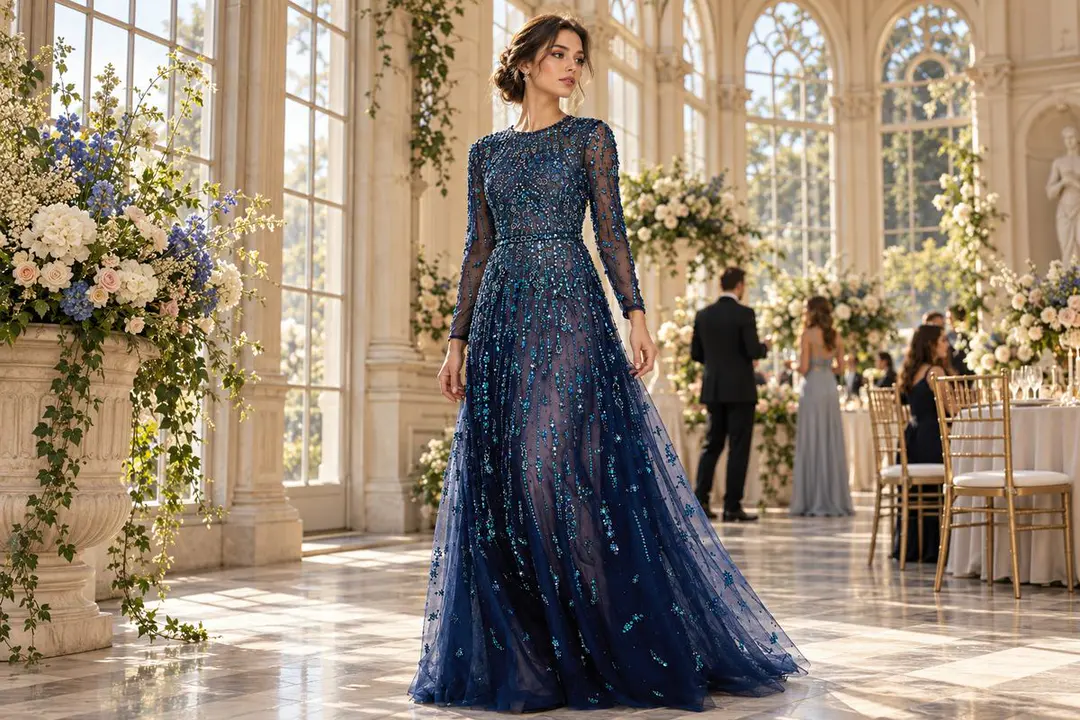
Fitted long sleeves
A fitted sleeve creates a cleaner outline and keeps more attention on the neckline, skirt, or surface detail.
Check that the sleeve allows comfortable arm movement and does not pull across the shoulder when you sit or reach forward.
Sheer sleeves
Sheer sleeves add visual coverage without the same appearance as an opaque sleeve.
They can work well with beading, lace, or crystal detail, but the amount of warmth they provide may be limited.
Treat them as a design choice rather than winter outerwear.
Sleeveless and strapless gowns
Sleeveless and strapless evening gowns remain appropriate for winter black tie events.
The practical solution is a formal outer layer for arrival and departure.
The season does not change the dress code requirement for shoulders or sleeves unless the event itself adds a specific coverage expectation.
Velvet is one winter option, not the default answer
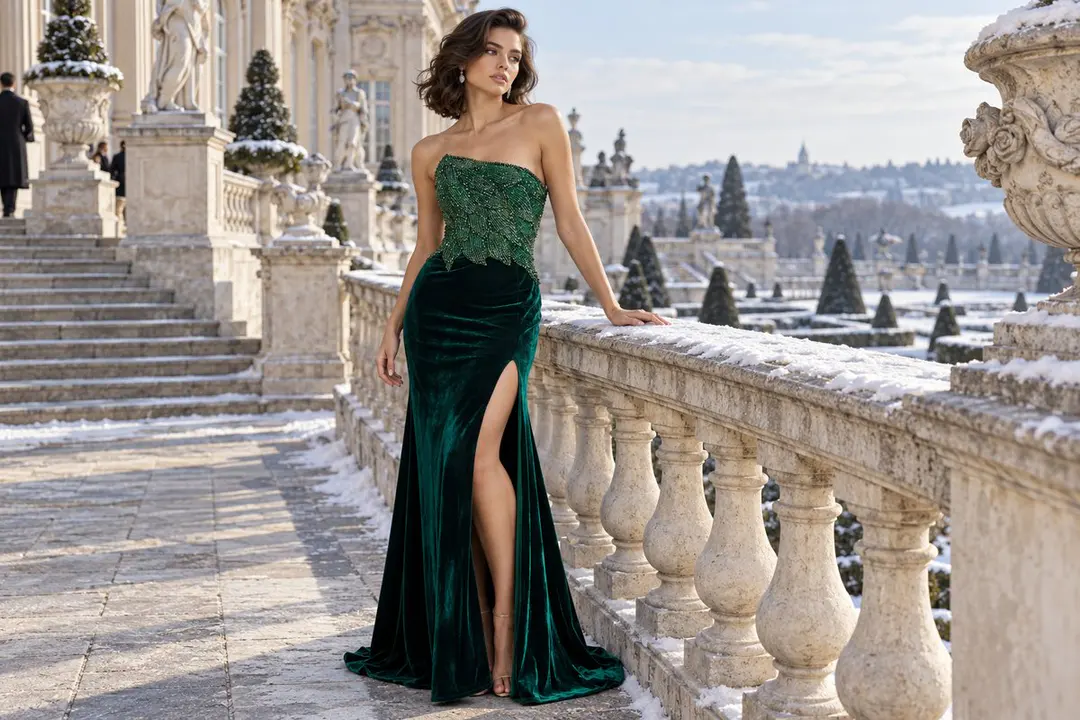
Velvet is strongly associated with winter because its raised surface creates depth and changes with light.
That makes it useful for formal eveningwear, especially in black, navy, burgundy, green, or other deep colors.
Do not assume every velvet gown is heavy.
The lining, sleeve coverage, skirt volume, and construction of the exact dress determine how it actually feels.
Satin works across winter black tie events
Satin gives you a smoother reflective finish than velvet and can work in both minimalist and highly formal gowns.
It does not need additional sparkle to read as eveningwear.
A satin gown can also work well when you want the winter effect to come from outerwear, color, or jewelry rather than the dress surface.
Because satin responds strongly to light, check how the gown looks under warm ballroom lighting and camera flash before the event.
Matte fabrics can make silhouette the focal point
Crepe and other lower-shine surfaces reduce visible reflection.
That shifts more attention toward the neckline, waist placement, and overall shape of the gown.
A matte winter gown does not need heavy embellishment to feel appropriate for black tie.
This can be especially useful if the outer layer or jewelry already adds texture or shine.
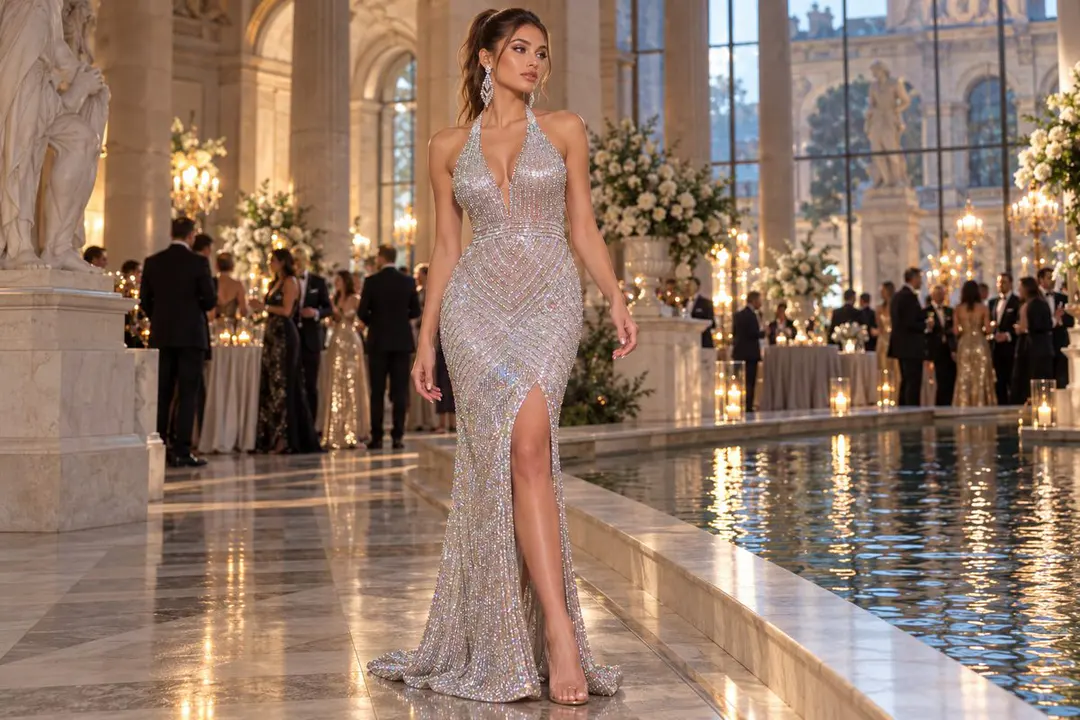
Sequins and beading can work well under winter evening lighting
Winter black tie events often happen in lower natural light with stronger artificial lighting indoors.
Sequins, crystals, and beading may appear more reflective in those conditions.
If the gown already has dense surface detail, accessories do not need to repeat the same level of shine.
Also check the total weight of heavily embellished dresses, especially if you expect a long seated dinner followed by dancing.
Outerwear is part of the winter black tie outfit
A formal coat, wrap, cape, or other polished layer should be planned alongside the gown.
Jovani's Evening Dress Layering Guide covers layering in more depth, but the main winter rule is simple: test the outer layer over the actual dress.
Formal coat
A longer formal coat can provide more practical coverage during cold arrivals.
Make sure the coat has enough room for the gown's sleeves, shoulders, and surface details.
A tight armhole or narrow sleeve can crush embellishment or distort a structured shoulder.
Wrap or stole
A wrap is easier to remove once you reach the venue and works well with sleeveless or strapless gowns.
It provides less coverage than a full coat, so consider how much time you will actually spend outside.
Cape
A cape can work particularly well when the gown has sleeves or shoulder details that do not fit easily inside a standard coat.
The shape of the cape should still work with the skirt volume and train.
Covered evening gowns can solve both style and coverage preferences
Some winter black tie events involve guests who prefer more coverage for personal, cultural, religious, or practical reasons.
Coverage does not require one silhouette.
Higher necklines, long sleeves, covered backs, and floor-length skirts can appear across A-line, fitted, column, and fuller gowns.
Jovani's covered evening dress guide covers those options in greater depth.
Winter colors can go beyond black and jewel tones
Black, navy, burgundy, emerald, plum, and deep red are common winter choices.
They are not the only options.
Silver, gold, pale blue, champagne, ivory-toned neutrals, and brighter colors can also work at a winter black tie event when the invitation and event context allow them.
The useful distinction is not winter color versus non-winter color.
It is how the color behaves with the fabric finish, venue lighting, and event formality.
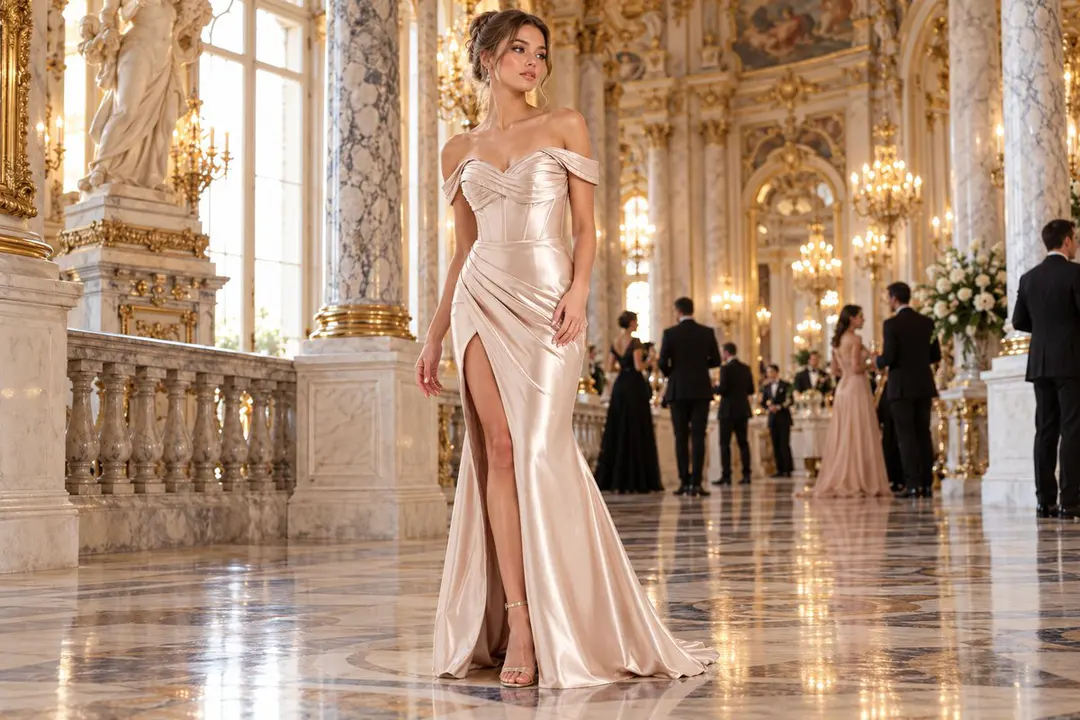
Black works especially well when texture carries the detail
A black winter gown can shift significantly depending on finish.
Black velvet creates depth. Black satin adds smoother reflection. Black sequins produce multiple points of light. Black crepe keeps the focus on line and silhouette.
If the color stays simple, texture can do more of the visual work.
That gives you flexibility with jewelry, shoes, and outerwear.
Winter weddings need both black tie and wedding etiquette
A winter black tie wedding has two separate requirements.
The gown should meet the stated black tie dress code, and the color or styling should also respect any wedding-specific instructions.
Winter does not automatically make white, ivory, or bridal-adjacent shades appropriate for a guest.
Use the invitation and couple's guidance before relying on seasonal fashion advice.
Embassy and diplomatic receptions require a different filter
Some winter black tie invitations come from formal institutional settings rather than social events.
Embassy and diplomatic receptions may place more emphasis on protocol, cultural awareness, and conservative polish than a standard gala.
Jovani's Embassy & Diplomatic Reception Dress Guide covers that context separately.
For those events, the winter question comes after the protocol question.
Gala dressing gives you more room for visual impact
A black tie gala may support stronger color, embellishment, skirt volume, or statement details than a diplomatic reception.
The dress should still work through the actual evening.
A gala may involve cocktails, seated dinner, stairs, photographs, and several hours of sitting and standing.
Jovani's gala dress guide covers that event type in more detail.
A-line and ball gown silhouettes solve different winter problems
A-line and ball gown silhouettes can both work for winter black tie, but they create different amounts of volume.
An A-line opens gradually from the waist and usually takes up less space around the wearer.
A ball gown creates more skirt volume and may require more room in cars, coat checks, stairways, and seated areas.
The winter issue is not which one is warmer.
It is how much fabric and volume you want to manage alongside outerwear.
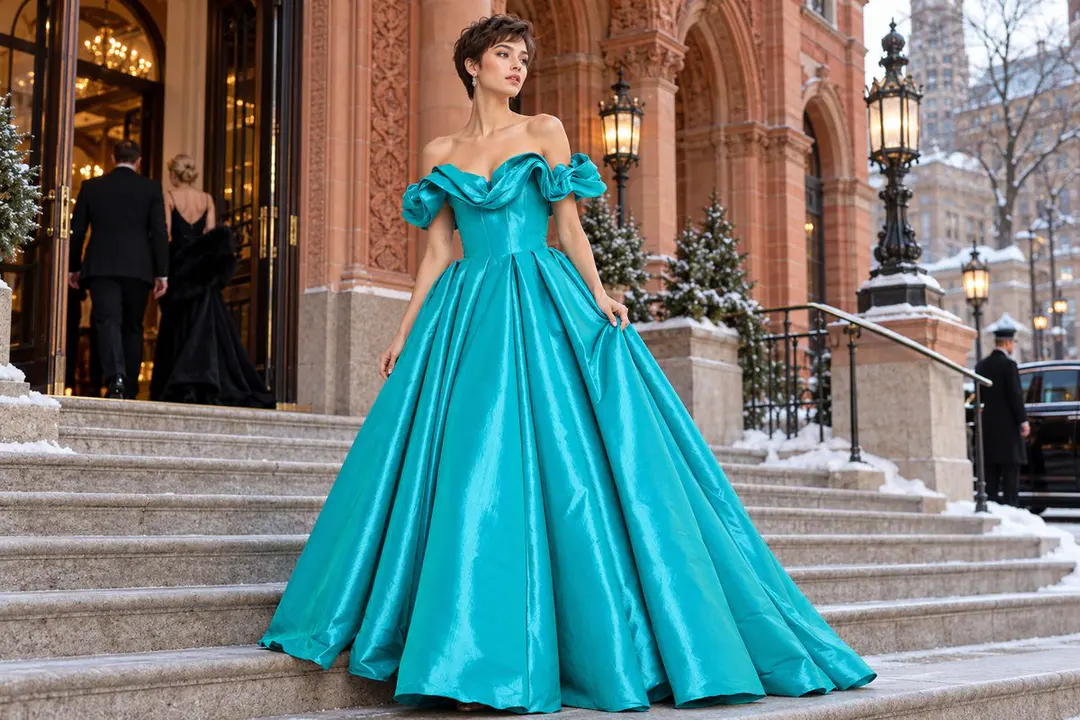
Large skirts need more planning with coats and transportation
A full skirt can be easy inside a ballroom and less convenient inside a narrow car or crowded coat-check area.
If the gown has substantial volume, test the full outfit with the coat before the event.
Sit while wearing both pieces if possible.
A coat that works while standing may pull differently once the skirt and bodice shift into a seated position.
Trains require extra attention in wet or snowy conditions
A train adds floor contact, which matters more during winter arrivals.
Snow, slush, wet pavement, and salted sidewalks can affect the fabric before you even reach the venue.
If the gown has a train, plan how you will lift or control it between the car and entrance.
Do not assume the venue has a completely covered drop-off area.
Shoes should work with both the gown and winter surfaces
Formal heels may be easy on ballroom floors and difficult on wet stone, snow, or icy pavement.
Think about the full route from transportation to the venue.
If you change shoes after arriving, check the gown hem at both heel heights.
A dress hemmed for a taller shoe can drag once you switch to a lower one.
Do not choose the indoor outfit for the sidewalk
One of the biggest winter formalwear mistakes is dressing the entire evening for the few minutes spent outside.
A very heavy gown may solve the cold arrival and become uncomfortable in a warm ballroom.
A better solution is often a formal indoor gown plus appropriate outerwear.
This keeps the black tie look focused on the event while the coat or wrap handles the weather.
Test the complete winter black tie outfit together
Try the gown with the shoes, coat, wrap, and main accessories.
Walk, sit, raise your arms, and check the neckline and closures while moving.
Then put on the outer layer.
Make sure it does not pull the bodice, compress embellishment, catch on sleeves, or interfere with the train.
The full outfit should work as one system from arrival through departure.
What shoppers ask about winter black tie dresses
These questions cover the decisions that come up most often when formal dress codes meet cold weather.
What should a woman wear to a winter black tie event?
A floor-length evening gown is the safest standard. Add a formal coat, wrap, or cape for cold arrivals, then choose sleeves and fabric based on the actual venue and your comfort.
Do winter black tie dresses need long sleeves?
No. Long sleeves are an option, not a requirement. Sleeveless and strapless gowns remain appropriate when you plan suitable formal outerwear for cold outdoor transitions.
Is velvet appropriate for winter black tie?
Yes. Velvet can work well because its surface creates depth in evening lighting. Check the exact gown's lining, weight, and construction rather than assuming all velvet dresses feel the same.
Can I wear a light color to a winter black tie event?
Yes. Winter black tie does not require dark colors. Pale blue, metallics, champagne, and other lighter shades can work when the event context allows them.
What shoes should I wear to a winter black tie event?
Choose formal shoes that work with the gown and the venue. If snow, rain, or wet pavement is likely, plan the route carefully or change shoes after arriving without changing the effective hem length.
What should I wear over a winter black tie gown?
A formal coat, wrap, or cape can all work. Choose the layer based on the gown's neckline, sleeves, embellishment, and how much time you expect to spend outdoors.
Start with the black tie dress code, then plan the winter layer, shoes, and transitions around the actual venue before trying the full look through an authorized Jovani retailer.