
Fall & Autumn Black Tie Dress Ideas
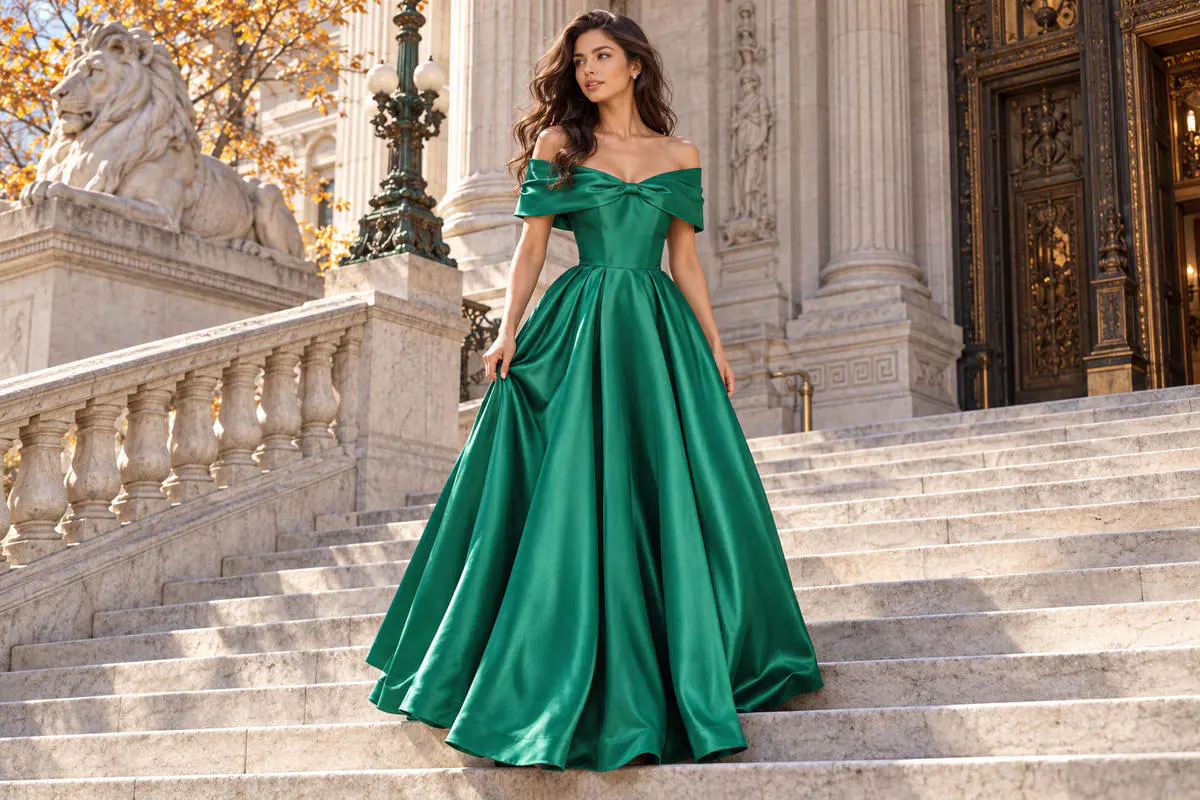
Fall black tie dresses need to meet a formal dress code while also working with cooler evenings, changing weather, and the deeper colors and textures associated with the season. The best choice starts with black tie requirements, then uses fabric, color, coverage, and styling to adapt the look for autumn.
A fall event does not require dark colors, velvet, or long sleeves. Those are options rather than rules. The invitation and venue still matter more than the season alone.
What should you wear to a fall black tie event?
A floor-length evening gown is the most reliable choice for a fall black tie event. After meeting the dress code, choose the color, fabric weight, sleeve coverage, and outer layer based on the venue and expected temperature.
Black tie is more formal than standard cocktail or semi-formal attire, so the seasonal part of the outfit should refine the gown rather than reduce its level of formality.
If you need the full dress-code explanation first, Jovani's Ultimate Guide to Black Tie Dresses for Women covers the broader rules and variations.
Start with the dress code before the season
Autumn can influence the look, but it should not override the invitation.
A black tie wedding in October still calls for formal evening attire. A gala in November does not become semi-formal because the weather is colder. Treat the season as the second filter after you understand the dress code.
Traditional black tie
A floor-length evening gown remains the safest standard for traditional black tie.
The gown can be simple or heavily detailed, but the overall look should read as evening formalwear rather than cocktail attire.
Black tie optional
Black tie optional gives guests slightly more flexibility, but a long evening gown is still a reliable choice.
If you prefer a simpler dress, let the fabric, length, and overall finish maintain the formal level rather than depending on heavy embellishment.
Creative black tie
Creative black tie allows more interpretation through color, neckline, texture, or unusual detail.
Fall can be useful here because deeper tones, velvet textures, metallic accents, sleeves, and sculptural shapes give you several ways to make the look seasonal without changing the underlying formality.
Fall color does not have to mean dark color
Burgundy, forest green, plum, navy, chocolate, and black are common autumn choices because they connect easily with the season.
They are not mandatory.
Red, metallic gold, silver, pale blue, ivory-toned neutrals, and other colors can also work when the event context allows them.
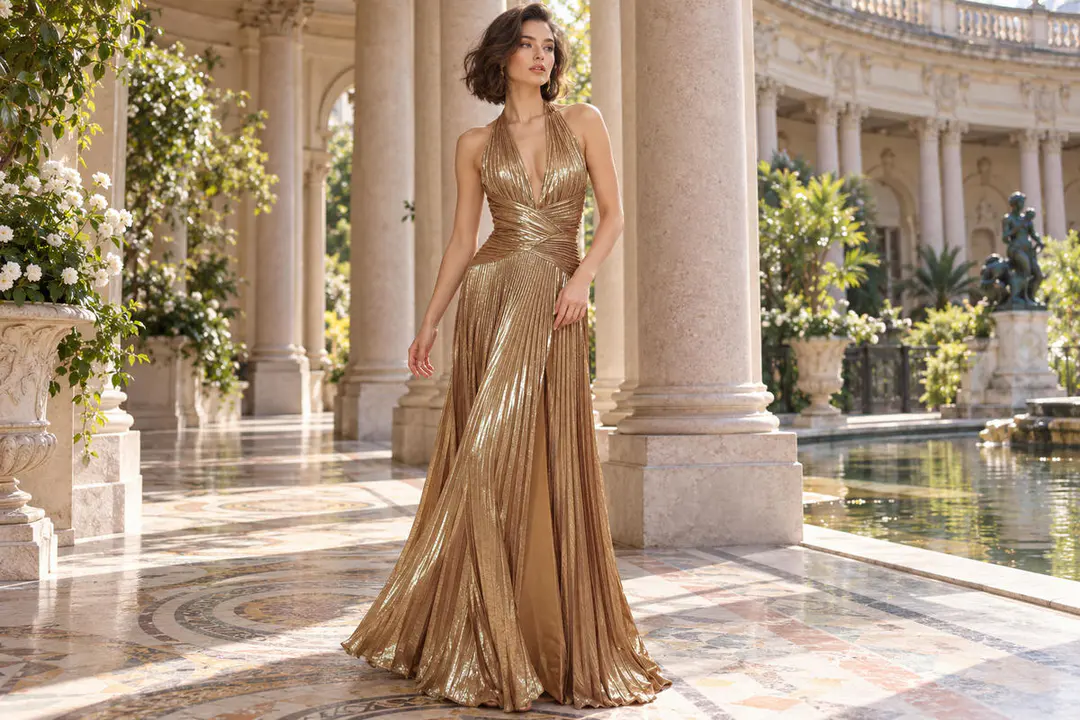
Burgundy and deep red
Burgundy creates a strong autumn reference without relying on pattern or heavy embellishment.
It works across satin, velvet, crepe, and reflective finishes, so the surface of the fabric can change the effect significantly.
Emerald and deep green
Green can create a seasonal look without feeling tied to one specific holiday.
A matte green gown emphasizes silhouette and texture, while a satin or embellished version creates more visible light response.
Navy and deep blue
Navy gives you many of the same formal advantages as black while creating slightly more color contrast.
It also works well when you want a darker evening gown but do not want the entire look to be black.
Black
Black remains appropriate throughout the year, including fall.
For autumn, texture can make the biggest difference. Velvet, satin, crepe, sequins, and dimensional details all create different effects even when the color stays the same.
Fabric finish matters as much as fabric name
Choosing a fall evening gown should not become a list of fabrics that are supposedly warm or cold.
Lining, layer count, sleeve coverage, embellishment, and construction all affect how the actual dress feels.
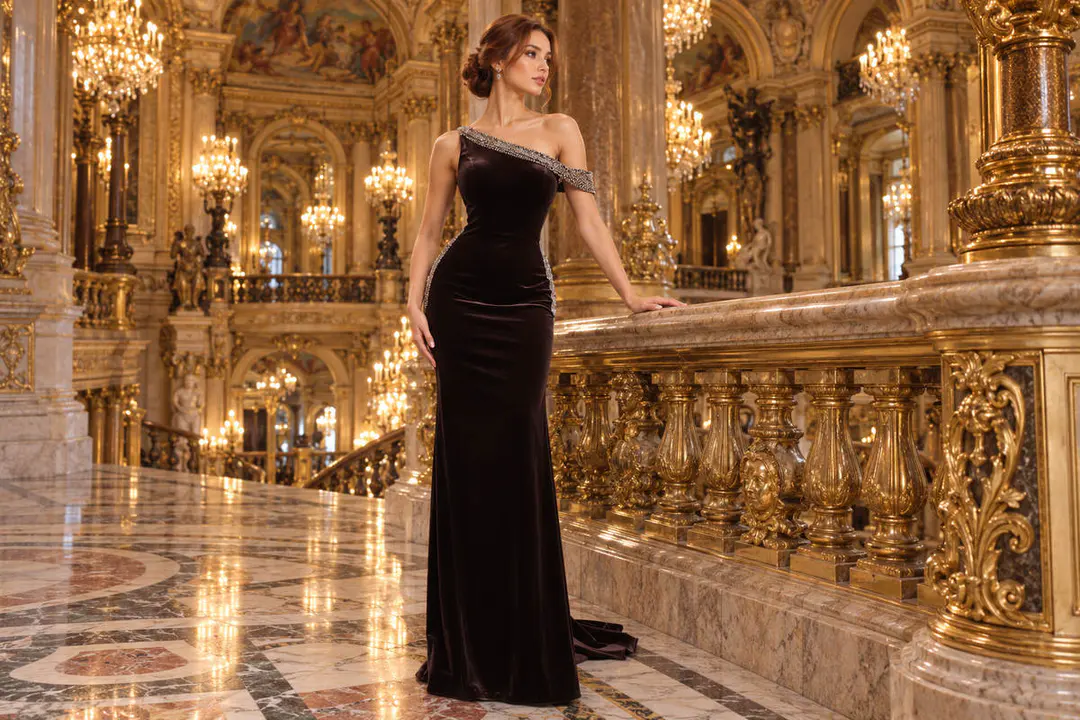
Velvet
Velvet is strongly associated with cooler-season formalwear because its raised surface creates depth and directional sheen.
It can work especially well for evening galas and black tie weddings, but do not assume every velvet gown will feel heavy. Check the lining and full construction of the specific dress.
Satin
Satin provides a smoother reflective surface and can work across early or late fall.
Because it responds strongly to light, a relatively simple satin gown can still have substantial visual impact without dense embellishment.
Crepe and matte fabrics
Matte and lower-shine fabrics put more emphasis on silhouette, neckline, and drape.
They can be especially useful if you prefer a cleaner formal look without sequins or reflective detail.
Sequins and embellishment
A black tie event can support more surface detail than most cocktail settings.
For fall, deeper colors combined with beading or sequins can create strong evening contrast. Check the total weight of the gown if the embellishment is dense.
Long sleeves are an option, not a requirement
Fall often leads shoppers directly to long-sleeve gowns, but sleeve length should be a design choice rather than an automatic seasonal rule.
An indoor ballroom can remain warm even on a cold evening. A sleeveless gown may still be practical if you have appropriate outerwear for arrival and departure.
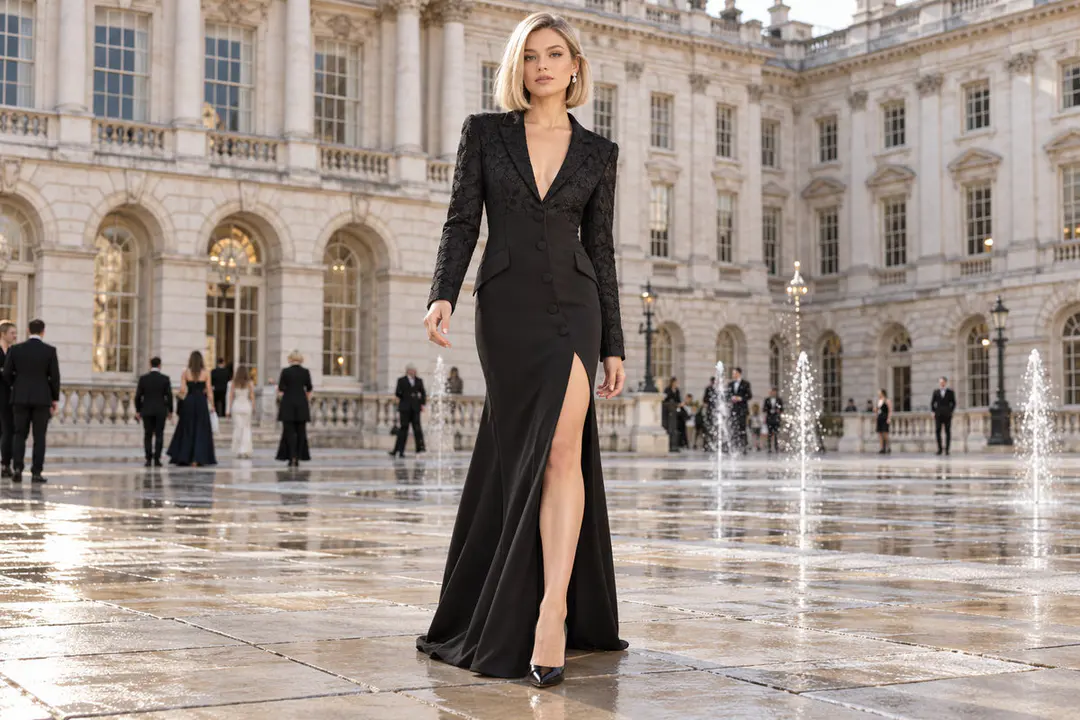
Long sleeves
Long sleeves can add coverage and create a strong formal outline.
Sheer sleeves, fitted sleeves, and wider sleeve shapes can all change the effect, so choose based on the dress rather than treating coverage as the only goal.
Short sleeves and cap sleeves
Short sleeves can provide some upper-arm coverage while keeping the gown lighter.
They also work well when you want the neckline or jewelry to remain a stronger visual feature.
Sleeveless and strapless gowns
Sleeveless and strapless evening gowns remain appropriate for fall black tie events.
The practical issue is not whether the season permits them. It is whether you have a suitable layer for colder transitions between the car, venue entrance, terrace, or outdoor photo area.
Outerwear should be planned with the gown
Outerwear becomes more important at fall black tie events because arrival and departure may happen in much cooler conditions than the reception itself.
A coat or wrap should work with the gown's neckline, sleeves, and surface details.
If the dress has beading, sequins, fringe, or dimensional appliques, test the outer layer over it before the event. A rough lining or tight sleeve can catch on surface detail.
The goal is to protect the gown and stay comfortable without forcing a layer that changes how the dress sits.
Minimalist gowns work especially well in fall
Fall formalwear does not need embroidery, sequins, or dramatic decoration.
A simple long gown in a deep seasonal color can create a strong black tie look through proportion, neckline, and fabric finish alone.
Minimalist eveningwear also gives you more freedom with jewelry, shoes, and outerwear.
If you prefer that direction, use Jovani's minimalist eveningwear coverage as a deeper reference rather than adding unnecessary decoration just to make the outfit feel seasonal.
Statement details can replace heavy embellishment
One strong design feature can carry the entire gown.
An asymmetric neckline, sculptural sleeve, cape detail, open back, controlled train, or oversized bow can provide visual focus without covering the dress in surface decoration.
This approach works especially well when the color and fabric are already rich.
Choose the feature you want people to notice first, then let the rest of the gown support it.
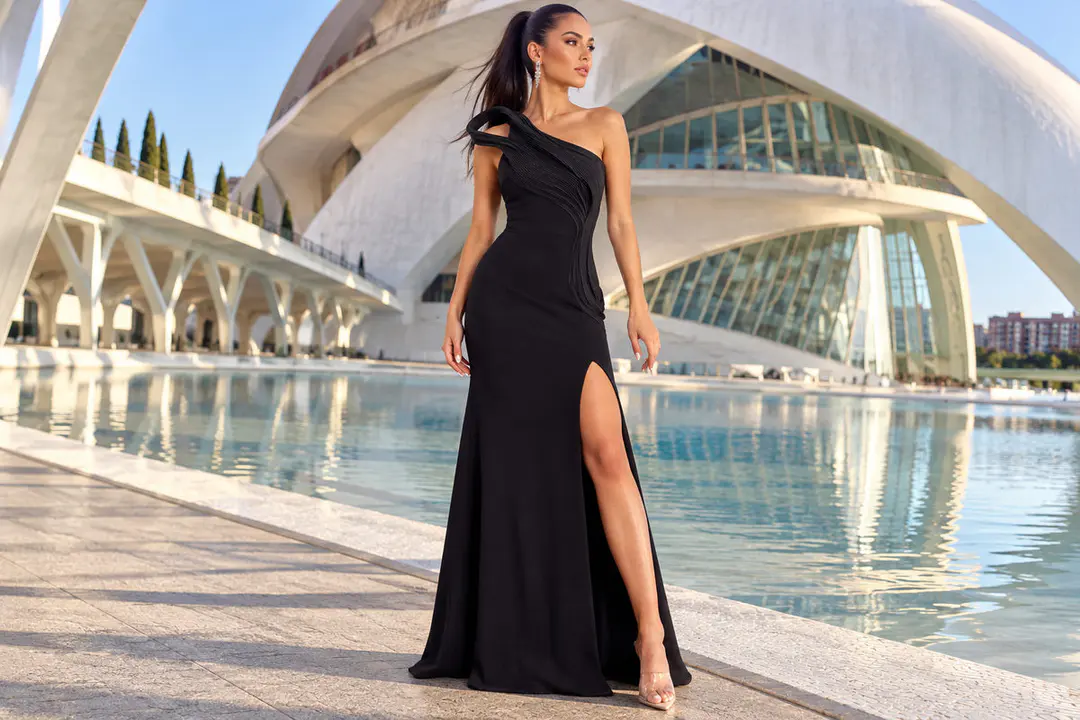
Fall black tie wedding attire needs one extra etiquette check
If the black tie event is a wedding, the dress code and wedding etiquette both apply.
Fall color alone does not determine whether a shade is appropriate. Consider any instructions from the couple, cultural traditions, and colors that may be reserved for the wedding party.
The gown should still meet the requested black tie level even if the ceremony takes place outdoors or earlier in the day.
For a fall wedding with outdoor portions, plan for temperature changes without turning the gown into casual daytime attire.
Gala and charity event dressing
A fall gala may give you more freedom with color, embellishment, and dramatic details than some weddings.
Floor-length gowns remain a reliable choice when the event is explicitly black tie.
The venue can help refine the decision. A hotel ballroom can accommodate larger skirt volume and longer hems more easily than a smaller restaurant or historic venue with narrow stairs.
Consider the venue before choosing skirt volume
Fall black tie events often take place in hotels, historic venues, museums, estates, and formal indoor spaces.
The gown needs to move through the actual location.
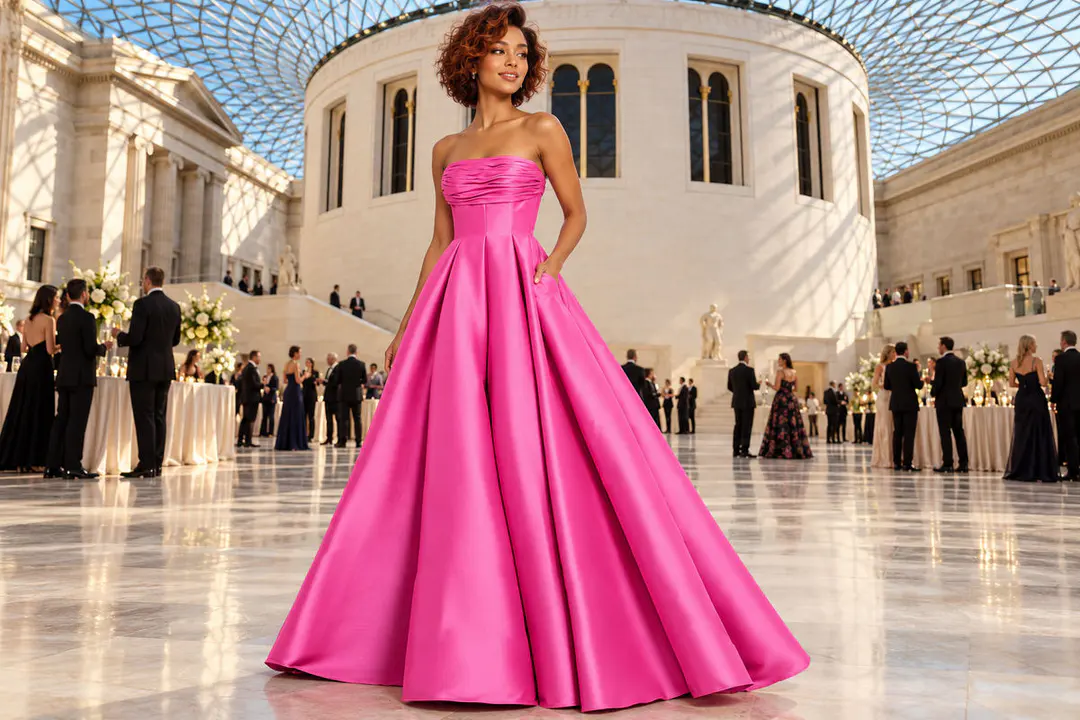
Ballroom
A large ballroom usually gives you more room for fuller skirts and trains.
That does not mean a ball gown is required. It simply means the venue places fewer limits on dress volume.
Historic venue
Older venues may include narrow staircases, smaller doorways, rugs, or uneven transitions between rooms.
Check whether a very wide skirt or long train will require constant handling.
Indoor and outdoor combination
Some fall weddings and galas include an outdoor ceremony, terrace, courtyard, or photo area before moving inside.
In that situation, hem length, shoes, outerwear, and ground conditions should be considered before the event rather than after you arrive.
Shoes should work with the venue and hem
Fall weather can make shoe choice more practical than decorative.
If the event includes grass, stone paths, or damp outdoor areas, very narrow heels may be harder to manage.
For indoor black tie events, shoe height still affects the gown hem. Bring your intended shoes when checking length so the dress does not drag or sit too high.
The shoe does not need to match the dress color exactly. It needs to support the full look and let you move through the venue comfortably.
How to style jewelry with fall evening gowns
Jewelry should respond to the neckline and surface detail of the gown.
A heavily embellished bodice may need less additional reflection near the face. A minimalist dress gives you more room for stronger earrings, a necklace, or a bracelet.
Deep seasonal colors can work with both warm and cool metals.
Instead of choosing jewelry because gold feels autumnal or silver feels wintery, compare how the metal looks with the actual fabric color and finish.
Do not let seasonal styling compete with black tie formality
Fall themes can become too literal.
You do not need leaf motifs, rust-colored accessories, dark lipstick, velvet shoes, and a burgundy gown all in the same outfit to make the look feel seasonal.
One or two autumn references are enough.
The black tie dress code should remain more visible than the seasonal theme.
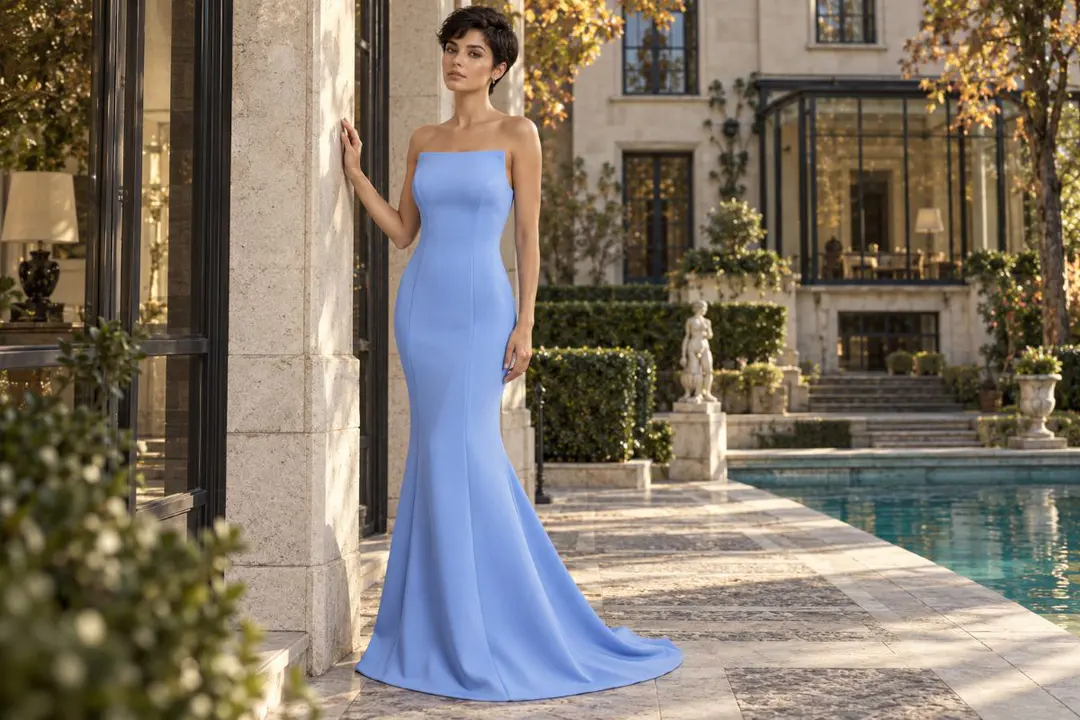
Use current evening trends selectively
Trend reports can help identify current colors, finishes, and silhouettes, but they should not replace the dress-code decision.
If you like a current eveningwear detail, use it only when it works with the event and the actual gown.
Jovani's Evening Dress Trends page provides a broader look at current formalwear directions, while this fall guide should remain focused on seasonal black tie choices.
For a more complete look at silhouette and occasion, the Evening Dress Style Guide provides a wider framework for choosing formal eveningwear.
Test the complete fall black tie look before the event
Try the gown with the shoes, outerwear, and main accessories you plan to wear.
Walk, sit, use stairs, and turn in the dress. Check the neckline and closures while moving, especially if the gown is strapless or heavily structured.
Then test the outer layer.
Make sure it does not pull the neckline, crush dimensional details, or catch on embellishment.
A black tie outfit is easier to manage when every part has been tested together rather than styled separately.
What shoppers ask about fall black tie dresses
These questions cover the most common decisions when dressing for a black tie event during autumn.
What colors work for a fall black tie event?
Burgundy, emerald, navy, black, plum, brown, red, and metallic shades can all work. Choose the color based on the event context and the gown's level of formality rather than relying on one seasonal palette.
Can I wear a sleeveless gown to a fall black tie event?
Yes. Sleeveless and strapless gowns remain appropriate for fall black tie events. Plan a formal outer layer if the event includes cold outdoor transitions.
Is velvet appropriate for a black tie event?
Yes. Velvet can work well for black tie because its texture creates depth and a formal evening effect. Check the specific gown's lining, weight, and construction rather than assuming all velvet dresses feel the same.
Do I have to wear dark colors to an autumn black tie event?
No. Dark colors are common in fall, but lighter shades, metallics, red, and other formal colors can also work when the invitation and event context allow them.
Can I wear a midi dress to a fall black tie wedding?
A floor-length gown is the safest standard for traditional black tie. If the invitation uses a variation such as black tie optional, a highly formal midi may be possible, but the specific event instructions should guide the choice.
What should I wear over a black tie dress in cold weather?
Choose a formal coat, wrap, cape, or other polished outer layer that works with the gown's neckline and surface details. Test it over the dress before the event to make sure it does not catch or compress the fabric.
Start with the black tie dress code, then refine the gown for the season, venue, and weather before trying the complete look through an authorized Jovani retailer.