
The single most overlooked element of formal dressing is the layer you add on top. A beautifully chosen evening gown can be undermined by the wrong jacket thrown over it at the door, or quietly elevated by a thoughtfully chosen wrap that warms you against the evening chill and looks intentional rather than improvised. The truth is that climate, venue, and timing all influence what you wear over your dress, and the right outer layer is part of the outfit rather than an afterthought. This guide to evening dress layering covers what each piece is, when to wear which, and how to match outer layers to your gown and the climate, so you arrive composed and stay comfortable from the entrance through the last dance.
Why the Outer Layer Deserves Real Thought
Most outfit planning stops at the dress. The hours before and after the event, the walk from the car, the cocktail hour on a terrace, the cooling-down moment after dinner, all happen with something on top of your gown, and that something is in every photograph of you arriving and leaving. When the outer layer is poorly chosen, it dominates those photos for the wrong reasons. When it is well chosen, it completes the look and makes the whole outfit feel finished.
There is also a comfort reality almost no one plans for. A formal event in autumn or winter often means leaving home in cold air, sitting in a chilly venue, or stepping outside for the after-party. Even summer evenings cool down after sunset, and an air-conditioned ballroom can feel surprisingly cold once you have been seated through dinner. Choosing the right layer is the difference between enjoying your night and wishing you had brought something. The broad range of formal gowns includes styles for every climate, but the outer layer is what makes any gown work in any weather.
One more honest truth: a thoughtful outer layer should never look like emergency outerwear pulled from a closet. It should look like part of the outfit, chosen alongside the dress rather than against it. Once you start thinking of layers that way, the choice becomes natural rather than stressful.
Knowing What Each Outer Layer Actually Is
Most women use the words wrap, shawl, stole, and cape interchangeably. They are not the same, and knowing the difference helps you pick the right one for your gown and the weather.
The Shawl and the Wrap
A shawl is a rectangular piece of fabric, usually lightweight, that drapes loosely over the shoulders. A wrap is essentially the same thing under a slightly different name, sometimes wider, sometimes used to mean a piece with a little more shape. Both are the most casual of the formal layers, easy to put on and take off, and they suit warm to mild climates where you need only a hint of coverage rather than real warmth.
The Stole
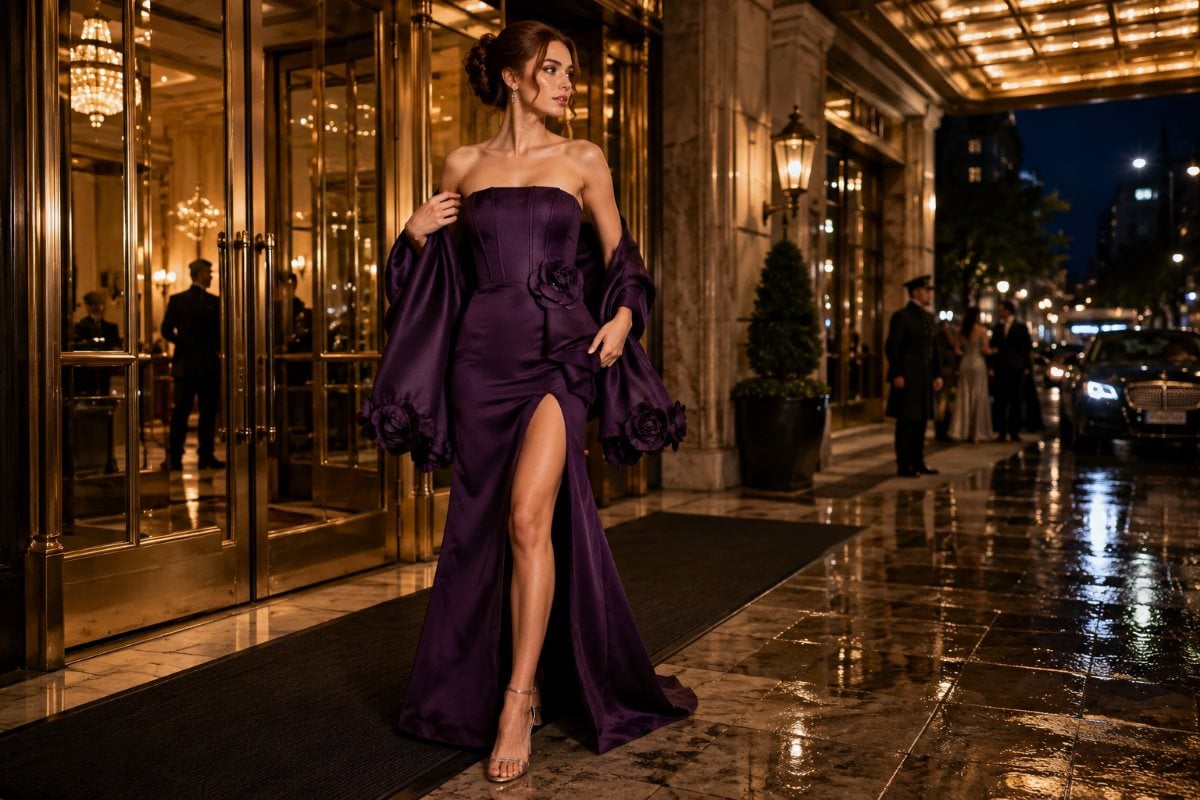
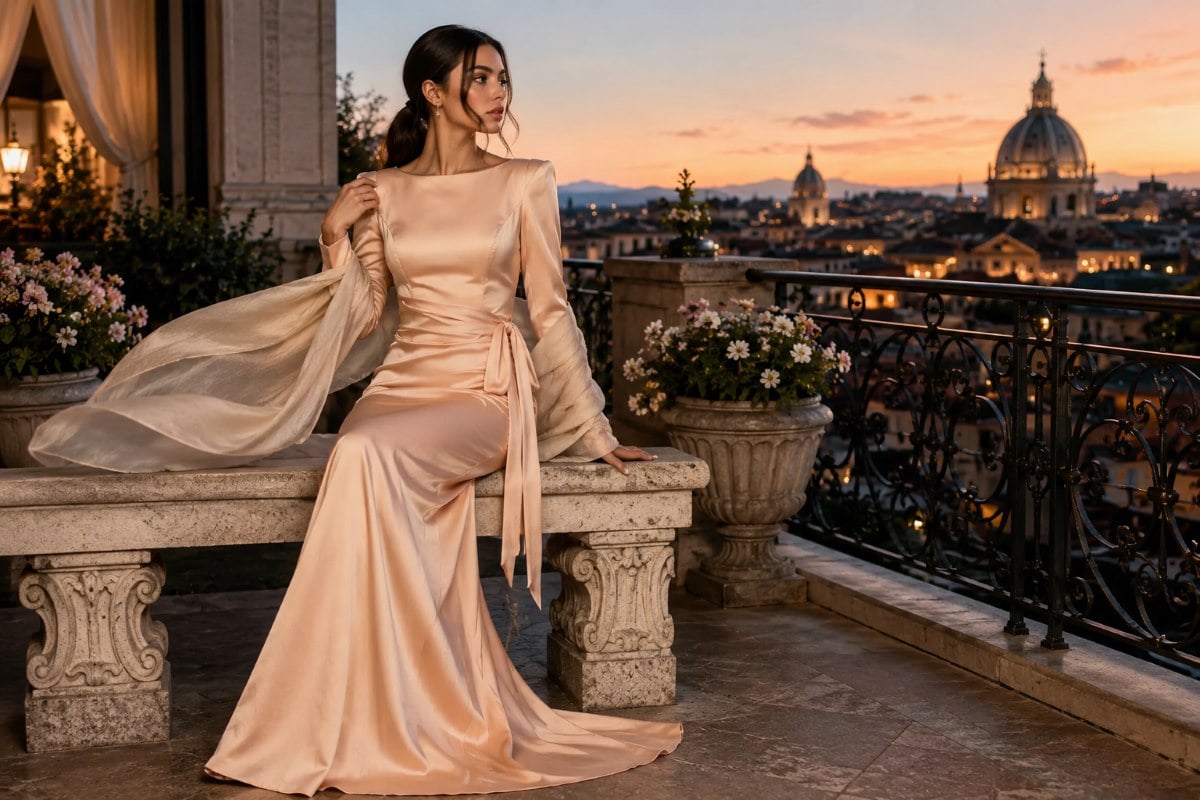
A stole is longer and narrower than a shawl, typically draped across the back of the shoulders with the long ends falling down each arm. It is the most classic, old-Hollywood layer for formal wear, especially in a luxurious fabric like silk, faux fur, or velvet. A stole reads as more elevated and intentional than a casual wrap, even though it offers similar warmth.
The Bolero and the Capelet
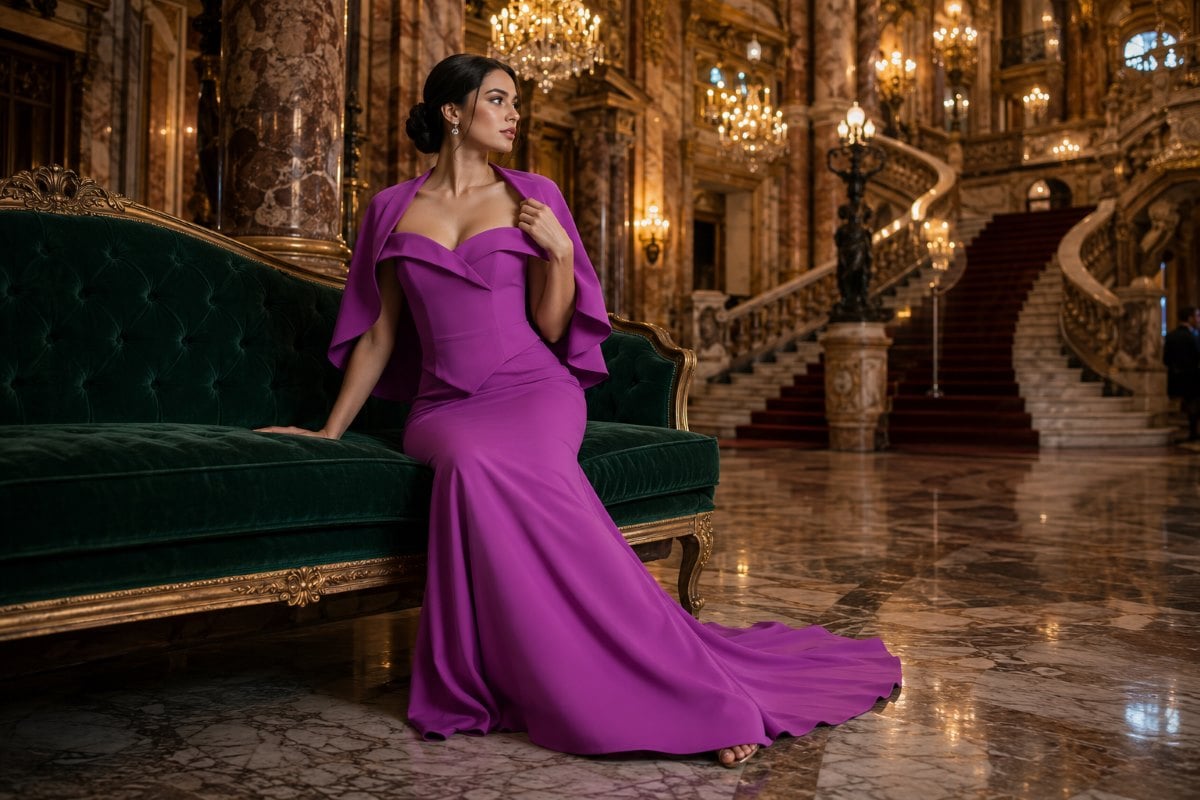
A bolero is a short, fitted jacket that ends at or just above the waist, often cropped and structured. A capelet is a short cape that covers the shoulders and upper arms without extending into a full cape. Both are designed specifically to layer over formal wear, finishing the upper body without adding bulk or covering the dress’s full silhouette. They suit moderately cool weather and look polished from every angle.
The Cape
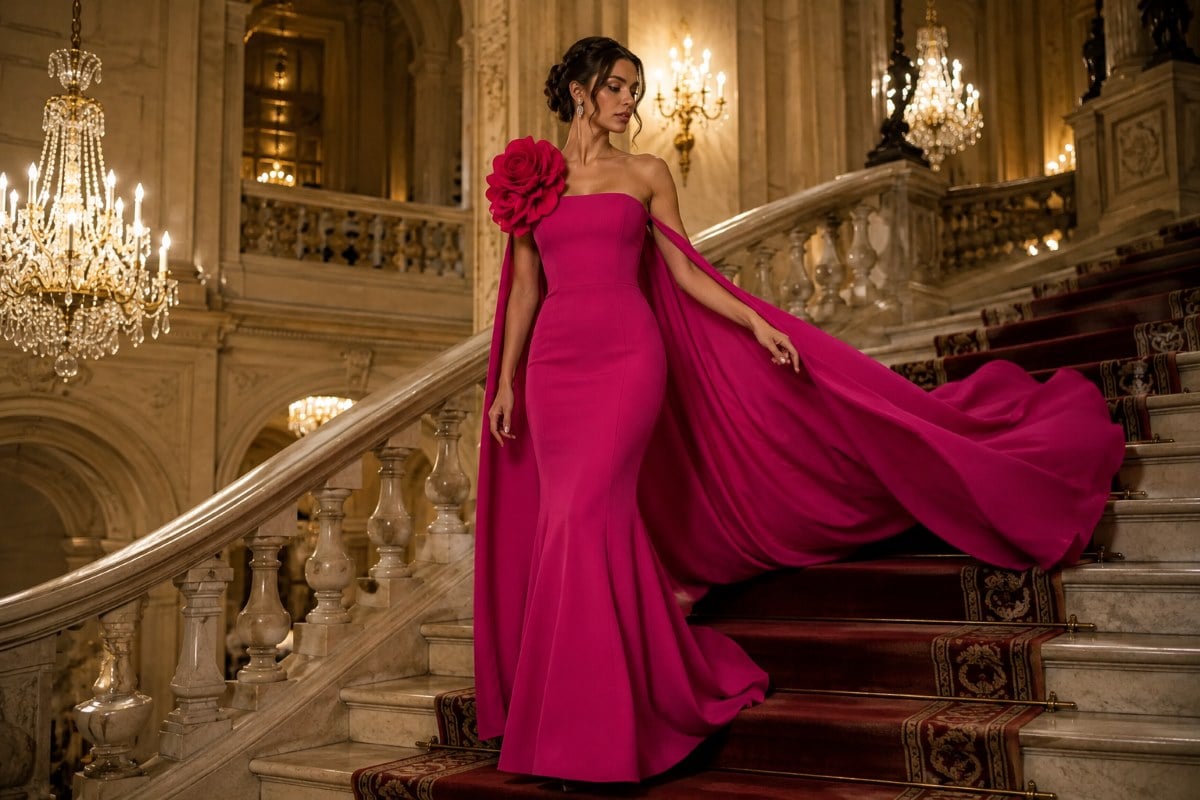
A cape is longer and more dramatic, draping from the shoulders down the back, sometimes to the floor. A full cape is a true statement layer and can be as much a part of the look as the gown itself. The styles among cape evening dresses show how a cape can be built directly into a gown, but a separate cape worn over a dress works the same way visually, creating drama and providing real coverage at the same time.
The Tailored Jacket and Blazer
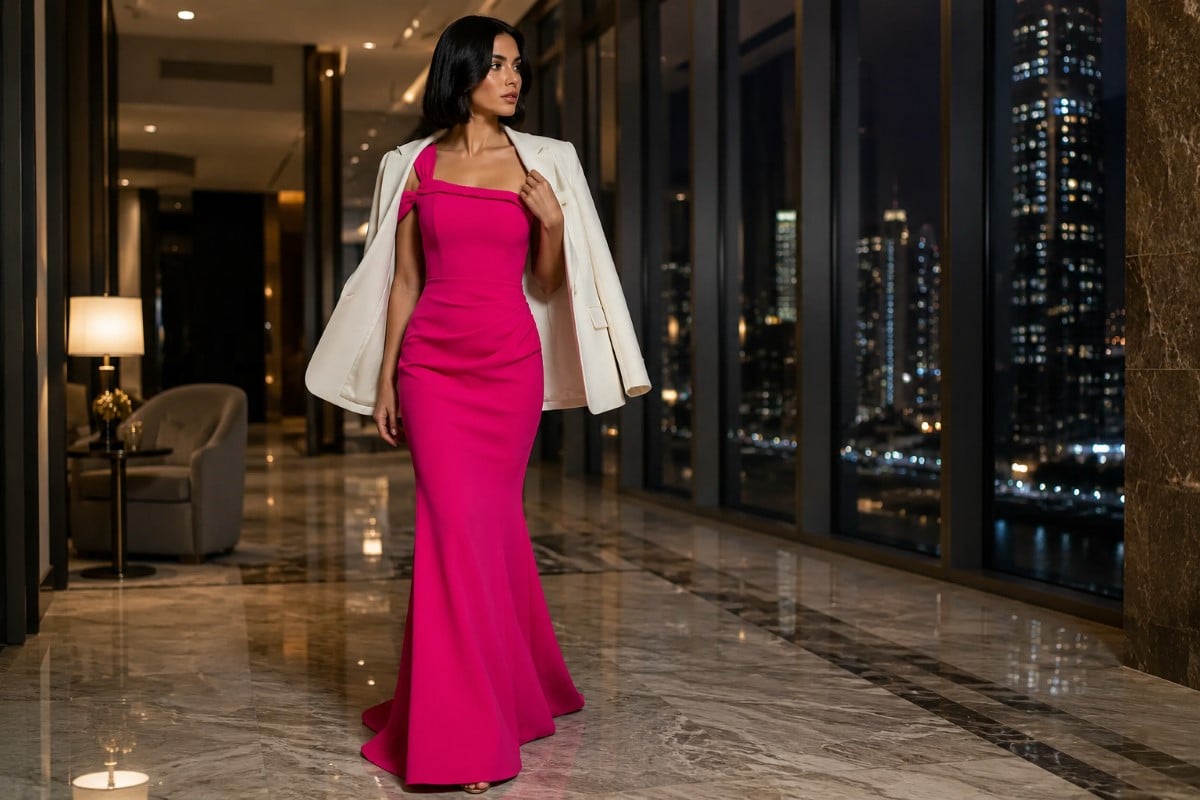
A tailored jacket or blazer over an evening gown is the most modern, fashion-forward layer of all. It creates an unexpected high-low contrast that reads as confidently styled rather than dressed up. A sharp blazer in a refined fabric, the kind of piece found among contemporary jackets, transforms an evening gown into something contemporary and editorial. This is the layer to reach for when you want your outfit to feel current rather than purely classic.
Evening Dress Layering by Climate
The climate of the night decides which of these layers actually makes sense. Below is the honest guidance for each.
Warm Evenings and Summer Events
In genuine warmth, your layer should be barely there, present for elegance rather than warmth. A delicate lightweight wrap or a sheer stole in chiffon or silk is the right choice. It adds a finished look in photographs and gives you something to drape over your shoulders in an over-air-conditioned room, but it does not trap heat or weigh you down. For a sleeveless summer gown, the styles among sleeveless evening gowns often pair best with the lightest possible wrap so the bare-shoulder line of the dress stays visible when you want it. Avoid anything heavy or fully covering in summer; even a thin bolero can feel like too much in real heat.
Mild Spring and Autumn Evenings
This is the most common climate for formal events, and it is the one with the most options. A stole, a capelet, a bolero, or a light cape all work in mild weather, depending on your gown and the look you want. A stole feels classic and elegant, a capelet finishes the shoulders neatly, a bolero adds polished structure, and a light cape brings drama without weight. Match the layer to the formality of the event and the silhouette of your dress, and you will be perfectly served. This is also the climate where a tailored blazer over a gown looks freshest, since the air is cool enough to justify it without overheating.
Cold Weather and Winter Events
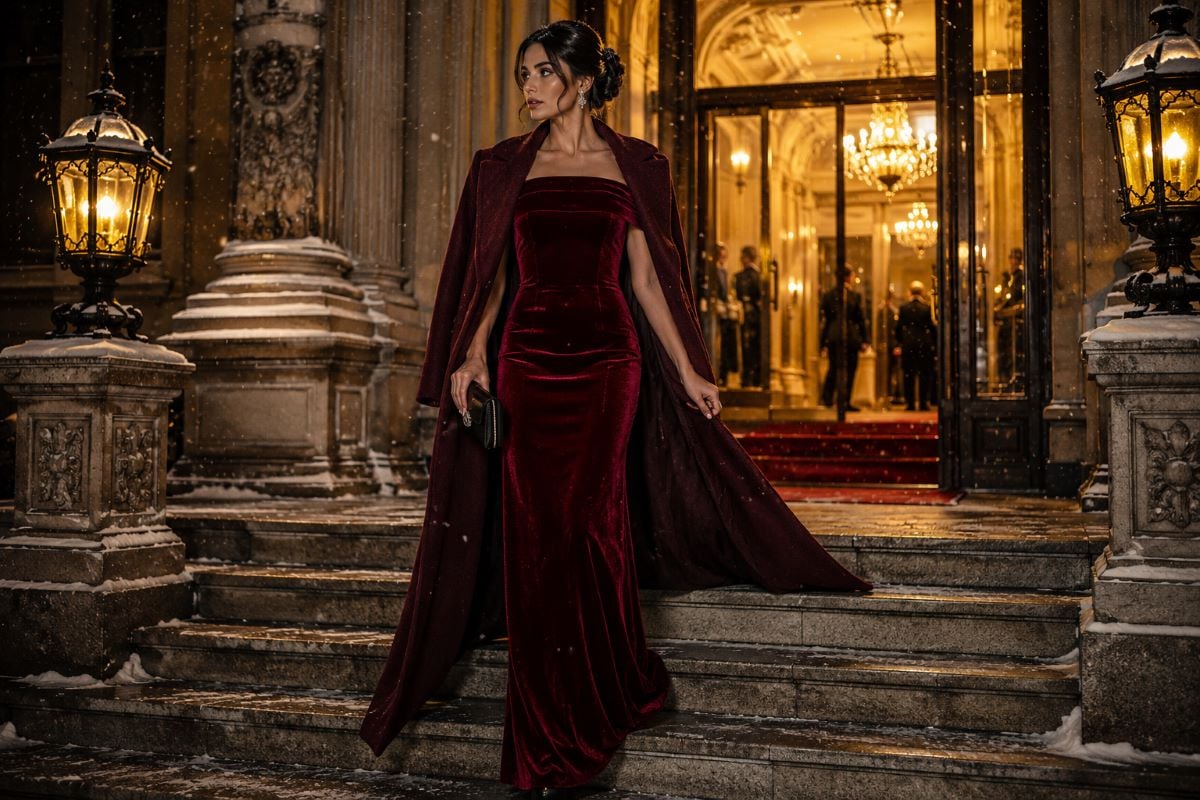
Cold weather demands a layer with real warmth, and there is no point pretending otherwise. A full-length cape in a heavier fabric, a faux fur stole, a velvet wrap, or a structured wool coat designed for evening wear all work. The trick is choosing something built for formal wear rather than reaching for a regular winter coat that will not match the gown. A long, elegant coat or cape in a refined fabric is part of the outfit; a puffer jacket over a gown is not. Cold weather is also the climate for genuine fur (real or faux) and for richer fabrics like velvet, which feel as warm as they look.
Rain and Damp Conditions
Rain is the underprepared-for scenario most often, and it deserves real planning rather than improvisation. A water-resistant trench in a refined cut, designed to layer over formal wear, is the right tool. If the forecast looks uncertain, plan for it before the day. A regular raincoat thrown over a gown ruins photographs of your arrival; a thoughtful trench keeps the outfit intact. A large clear or elegant black umbrella is also part of the kit. None of this is glamorous to think about, but the alternative is a soaked hem and a stressed evening.
Matching the Layer to the Dress
The right layer for the climate is one consideration; the right layer for the specific gown is another. A layer that suits the weather can still be wrong for the dress if you do not match them thoughtfully.
Match the Formality
A black-tie gown calls for a black-tie layer, a luxurious stole, a velvet cape, a tailored coat in a rich fabric. A more relaxed cocktail-formal dress can take a casual chic blazer or a simple wrap. The layer’s formality should match or sit just below the gown’s, never above and never several steps below. A casual bolero over a true black-tie gown looks like you forgot the right piece at home.
Match the Color and Fabric Smartly
The safest approach with color is a neutral that complements the gown: black, deep grey, ivory, or a soft metallic. A tonal layer in the same family as the dress is also elegant. Avoid a contrasting color that fights the dress for attention. Fabric should also harmonize: a velvet wrap with a velvet-trimmed gown reads as intentional, a satin stole with a satin gown is luxurious, while a heavy structured coat over a flowy chiffon gown can feel mismatched in scale. Let the materials speak the same language.
Mind What the Dress Already Covers
This is where many outer layer choices go wrong. A gown that already covers the shoulders, like the styles among long sleeve formal dresses, does not need a layer that covers the same area. A heavy shawl over an already-sleeved gown crowds the upper body and adds unnecessary bulk. In that case, a lighter open piece or even no extra layer (depending on climate) is the better choice.
The principle is simple: the outer layer should add what the dress lacks, not duplicate what it already provides. For more on coverage built directly into the dress itself, the breakdown of sleeve choices for formal dresses covers how to read what your gown is already doing for you before you choose anything to wear on top.
Built-in Coverage vs Outer Layers: Choosing Your Strategy
Before you choose any outer layer, it is worth asking whether you should solve the warmth problem differently, by choosing a gown that has the coverage built in. Both strategies are valid, and one may serve you better than the other depending on the event.
Built-in coverage, sleeves, a higher neckline, or a designed-in cape, keeps everything unified. There is nothing to remove, nothing to manage, nothing that might slip off. For a cold-weather event where you will be in the formal wear most of the night, a gown with sleeves or a built-in cape is often the cleaner choice. The trade-off is that you cannot adjust if the room turns warm, since the coverage is sewn into the dress.
A separate outer layer gives you flexibility. You can take it off when seated for dinner and put it back on when the air cools. You can change the look between ceremony and reception by removing the cape or wrap. The trade-off is that there is one more thing to think about, to carry, and to keep track of. Neither approach is universally better. It depends on the night, the venue, and how much you want to manage during the event.
Practical Notes on Wearing a Layer Through a Long Night
A few small, honest details make the difference between an outer layer that helps and one that becomes a nuisance.
- Plan where it goes when you take it off. Will you check it, drape it on the back of your chair, or hand it to a partner? Knowing in advance prevents the awkward moment of holding it through dinner.
- Choose closures that work with one hand. A wrap that requires constant retying is exhausting. A capelet, a bolero, or a piece with a single discreet closure stays put without effort.
- Check how it photographs. Try the full look on at home and see how the layer reads in photos. A piece that looks lovely in person can read oddly on camera if it bunches at the shoulders or covers too much of the gown.
- Consider weight on a long evening. Even a beautiful heavy cape can become tiring across many hours. If you will wear the layer continuously, choose something you can carry comfortably.
- Bring the right bag. A small clutch becomes essential when your hands are managing a wrap. Plan the bag and the layer together.
These practical points are the kind of details that separate a polished evening from a stressful one. For the broader picture of how to put a complete formal outfit together, the guide on how to accessorize an evening dress covers the rest of the accessories that complete the look alongside the outer layer.
Special Cases: Outdoor and Multi-Venue Events
Some formal events have additional complications that single-venue evening dress layering does not. An outdoor ceremony followed by an indoor reception means going from cooler open air to warm interior, and back outside for the departure. A multi-venue event means leaving one space and entering another. In these cases, the outer layer should be one you can put on and take off easily multiple times through the night.
For a destination wedding or a black-tie event held outdoors in evening, plan specifically for the temperature drop after sunset and the open-air walk to your transportation at the end. A versatile stole or a light cape that slips on and off without effort is invaluable. For a black-tie event with a tighter dress code, the guidance in what to wear to a black-tie wedding covers the formality expectations that shape both the gown and the appropriate layer.
Frequently Asked Questions About Evening Dress Layering
What is the difference between a wrap, a stole, and a shawl?
A shawl and a wrap are essentially the same: a rectangular piece of fabric draped loosely over the shoulders for light coverage. A stole is longer and narrower, draped across the back of the shoulders with the long ends falling down each arm, and it reads as more classic and elevated than a casual wrap.
Can I wear a regular blazer over an evening gown?
Yes, and a tailored blazer over an evening gown is one of the most modern, fashion-forward looks. The blazer should be refined and well-cut, not a casual office jacket. This combination creates a high-low contrast that reads as confidently styled and works especially well in mild spring or autumn weather.
What should I wear over an evening gown in winter?
Choose a layer with real warmth that is built for formal wear: a full-length cape in heavier fabric, a faux fur stole, a velvet wrap, or a structured evening coat. Avoid casual winter coats, which never photograph well over a gown. A formal layer in a refined fabric is part of the outfit rather than an afterthought.
Do I need an outer layer if my dress has long sleeves?
Usually not, unless the climate is genuinely cold or the venue is highly air-conditioned. A gown that already covers the shoulders and arms is doing most of the work, so a heavy shawl on top crowds the upper body. If you need any extra layer, choose something light and open, or skip it entirely.
How do I choose the color of my outer layer?
A neutral that complements the gown is always safe: black, deep grey, ivory, or a soft metallic. A tonal layer in the same color family as the dress is also elegant. Avoid a strong contrasting color that competes with the gown, since the dress should remain the focal point.
Is a built-in cape better than a separate one?
Each has trade-offs. A built-in cape keeps the look unified and removes the worry of slipping or losing the piece, but you cannot adjust it if the room turns warm. A separate cape gives flexibility, you can take it off for dinner or remove it between ceremony and reception, but it is one more thing to manage. Choose based on the event and how much you want to adjust during the night.
The Layer That Finishes the Look
Thinking of the outer layer as part of the outfit, not a fix for the cold, is the change that makes evening dress layering feel intuitive rather than fussy. The approach is straightforward: know what each piece is, choose by climate first and gown second, match the formality and harmonize the fabric, and plan the practical realities of carrying it through a long night. Do that, and the layer becomes one of the most polished parts of the whole look, photographed as part of your entrance and ready to support you through every hour after. Jovani has spent more than forty years designing evening collections where dramatic outer details, built-in capes, sleeves, and refined coverage, are considered alongside the rest of the gown, so the silhouette is always complete from the first layer to the last.