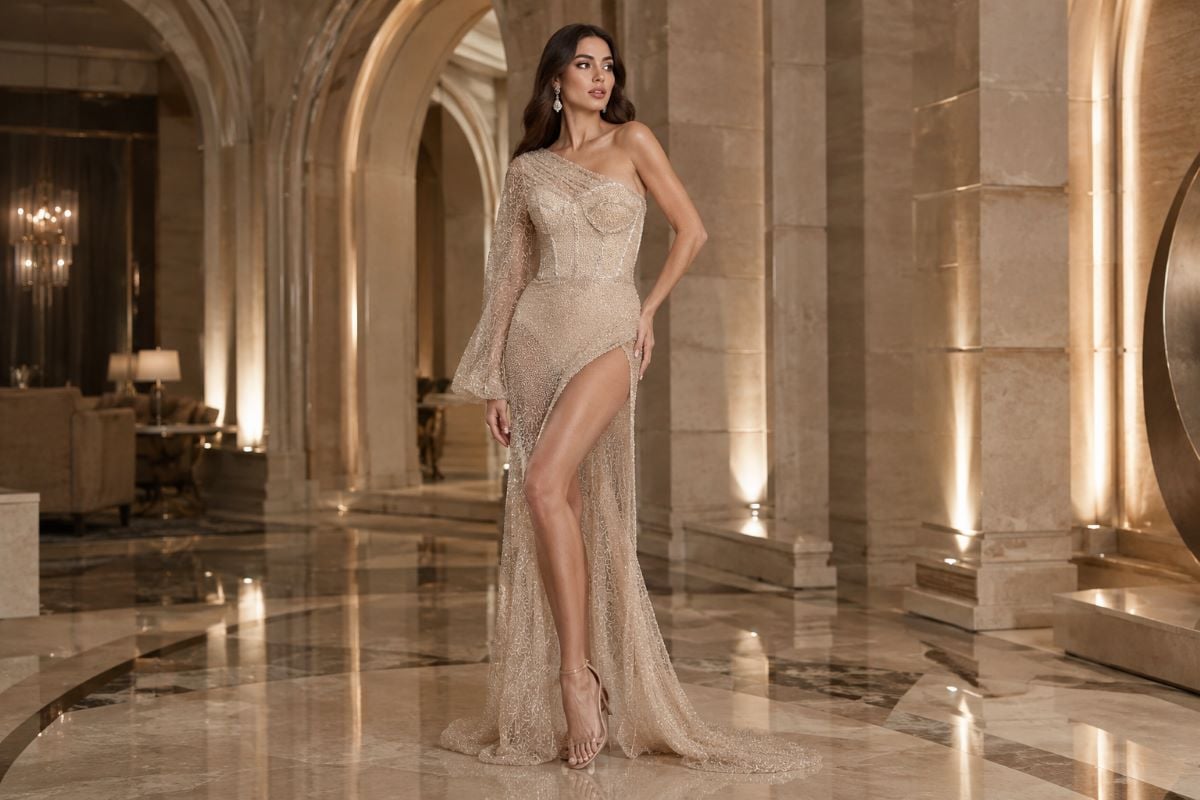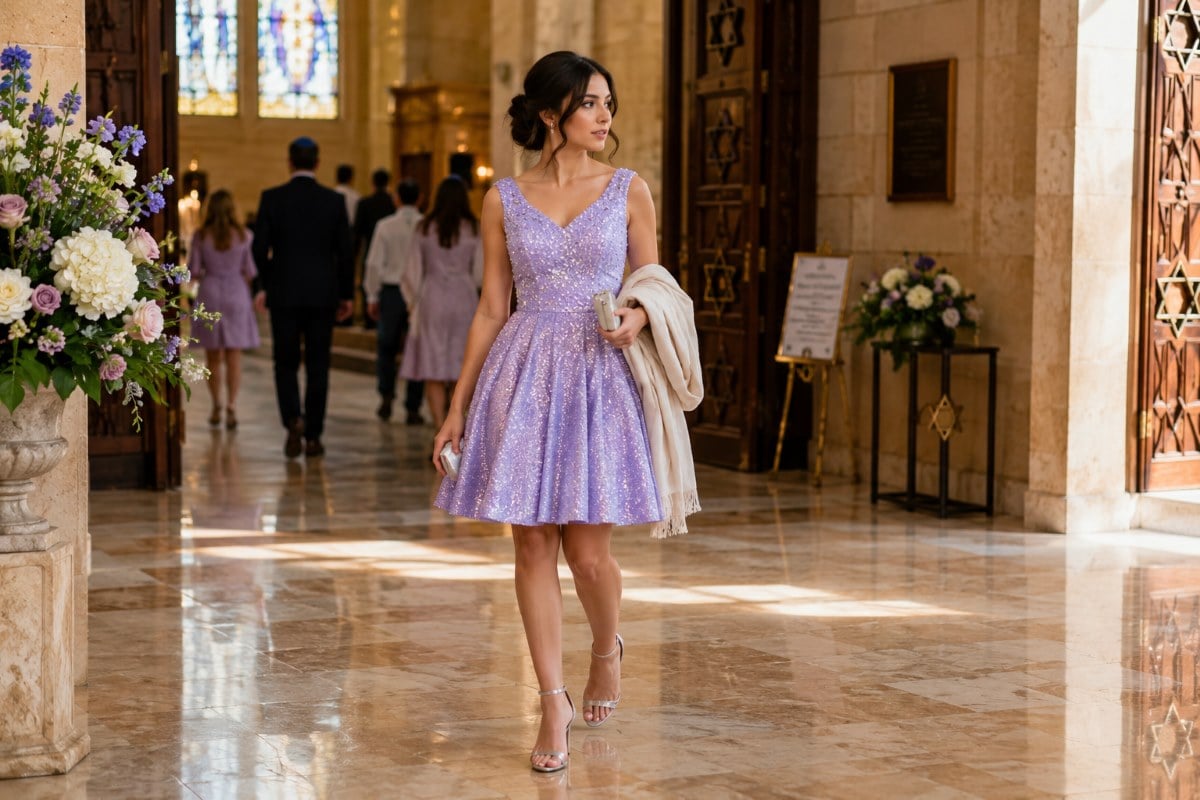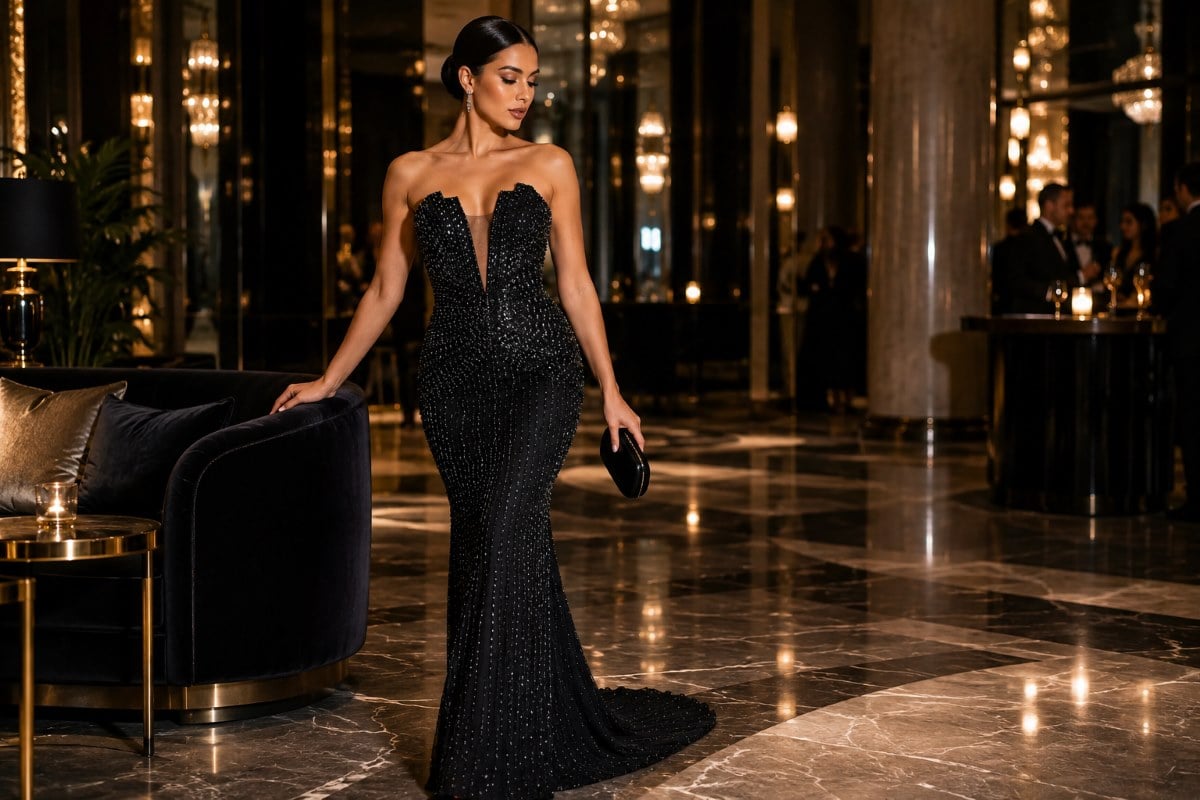

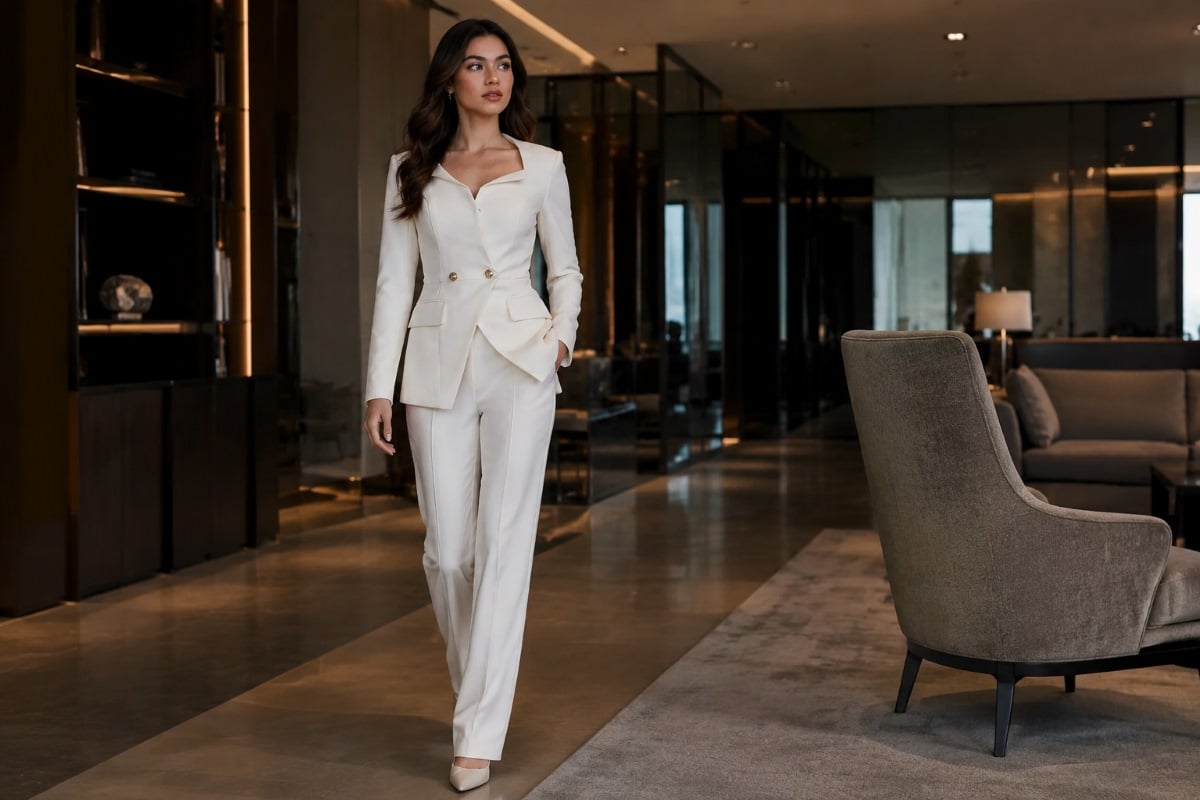
There is a persistent myth in formal wear that coverage and glamour pull in opposite directions, that a gown which covers the arms, the back, and the chest must somehow be less striking than one that reveals more skin. Anyone who has seen a beautifully constructed covered gown knows how wrong that assumption is. Coverage is not the absence of design. It is a different canvas for it, one where the drama comes from fabric, structure, embellishment, and silhouette rather than from exposure. For women who choose more coverage, whether for religious reasons, cultural expectations, a conservative venue, or simple personal preference, the goal is never to compromise. It is to find a modest formal gown that delivers full elegance while honoring the coverage they want. This guide explains what defines a covered evening dress, the four areas where coverage happens and the choices within each, why women choose covered styles, which silhouettes and fabrics work best, and how coverage can be every bit as glamorous as anything more revealing.
What defines a covered evening dress
A covered evening dress is a formal gown designed to provide fuller coverage of the body than a standard evening gown, achieved through deliberate choices in the neckline, the back, the shoulders, and the arms. The defining quality is that the gown covers rather than exposes these areas, while still delivering the elegance, structure, and design of formal evening wear.
The important thing to understand is that coverage is not a single feature but a combination of choices across four distinct areas. A gown might have a high neckline but bare arms, or long sleeves but an open back, and these would offer partial coverage. A fully covered gown addresses all four areas, creating a gown that is modest in the truest sense while remaining unmistakably formal and elegant. The styles in the covered evening gowns collection are designed with the same embellishment, fabric quality, and silhouette range as the rest of the formal collection, which is the whole point. Coverage does not mean fewer design options, it means the design works within a different set of boundaries.
The four areas of coverage and the choices within each
Understanding coverage means understanding the four areas where it happens. Each area offers its own range of choices, and knowing them helps you describe exactly what you want and recognize a genuinely covered gown when you see one.

The neckline
The neckline is where coverage is most immediately visible. A covered gown uses a higher neckline that sits at or above the collarbone rather than plunging. High necklines, jewel necklines that sit at the base of the neck, bateau or boat necklines that extend across the collarbone, and mock-neck or turtleneck styles all provide chest and collarbone coverage while still framing the face elegantly. The styles among high neck evening dresses show how a covered neckline can be a striking design feature rather than simply a coverage choice, often adorned with beadwork or lace that turns the neckline into built-in jewelry.
The back
The back is the area most often overlooked when people think about coverage, but an open or low back can make an otherwise covered gown far more revealing than intended. A covered gown uses a closed back, eliminating the cutouts and low dips that expose skin. Closed-back designs range from fully opaque fabric to covered buttons and modest keyholes that maintain coverage while adding visual interest. For a gown to read as genuinely covered, the back matters as much as the front.
The shoulders and arms
Sleeves are what most distinguish a covered gown from a standard one, providing coverage of the shoulders and arms in various lengths. A long sleeve evening gown offers full arm coverage from shoulder to wrist, cap sleeves and three-quarter sleeves provide partial coverage, and full-length sleeves in lace, illusion mesh, or solid fabric create the most complete coverage. The styles among long sleeve evening dresses show how sleeves can be a defining design element, whether in flowing chiffon, structured satin, or intricate beaded lace.
Understanding illusion fabric
One nuance worth knowing is the role of illusion fabric. Some covered styles use illusion netting that appears to show skin while actually providing coverage through a fine mesh fabric. This creates the visual softness of exposed skin with the actual coverage of fabric, which can be a useful middle ground for women who want coverage that does not read as heavy or severe. It is worth checking whether a gown uses true opaque coverage or illusion mesh, since the two read differently in person and in photographs and suit different needs.
Why women choose covered evening dresses
Women choose covered styles for a range of reasons, and understanding them helps clarify what matters most for any given gown. The reasons are varied and equally valid.
Religious observance is one of the most common reasons. Many faiths have guidelines around modesty in dress, and a covered evening dress allows a woman to attend formal events while honoring those guidelines, with coverage of the neckline, arms, and back meeting requirements that a standard gown would not. Cultural expectations are another, since some communities and family traditions value more modest formal dress, and a covered gown allows a woman to participate fully in formal occasions within those expectations. Conservative venues and events sometimes have their own dress codes, including certain houses of worship, formal religious ceremonies, and events with stated modesty requirements, where a covered gown is necessary rather than optional. Beyond external reasons, many women simply prefer coverage. Some feel more confident and comfortable with their arms, back, or chest covered, and that personal preference is reason enough. Coverage can also suit certain settings better, such as winter events where the warmth of sleeves is welcome. The broader point is that choosing coverage is a positive design choice, not a limitation, and our guide on evening dress style guide reinforces that sophistication never requires exposure.
Silhouettes that work beautifully with coverage
Coverage works across every silhouette, which is one of the reassuring things to understand. A covered gown is not limited to one shape, and the silhouette can be chosen for flattery and occasion just as with any gown.
An A-line covered gown flows gracefully from a modest bodice through a skirt that provides additional coverage below the waist, making it one of the most universally flattering and comfortable covered silhouettes. A column or sheath covered style creates sleek, sophisticated lines while maintaining full coverage through the torso and arms, suiting a modern, architectural aesthetic. A mermaid covered gown proves that modest and dramatic are not opposites, with the fitted silhouette emphasizing the figure while the coverage keeps the look elegant and refined. A ball gown with a covered bodice and sleeves delivers the most ceremonial covered look, suited to the most formal occasions. The principle is that coverage and silhouette are independent choices. You can have full coverage in any shape, which means a woman who wants coverage need not sacrifice the silhouette that flatters her most. For help thinking through the occasion, our piece on how to choose an evening dress for a night event applies directly to covered styles.
Fabrics that make covered gowns elegant
Fabric is especially important for covered gowns, since more of the body is covered and the fabric therefore does more of the visual and tactile work. The right fabric is what keeps a covered gown from feeling heavy or severe.
Lace is one of the most beautiful fabrics for covered styles, since it provides coverage while adding texture, dimension, and romance. Lace sleeves and lace necklines offer coverage that reads as intricate and elegant rather than plain, and when fully lined, lace maintains complete coverage while the pattern casts beautiful detail across the surface. The styles among lace formal dresses show how lace transforms coverage into a design feature. Beaded and embellished fabrics elevate covered gowns to the most formal level, since the embellishment provides the drama that exposure might otherwise supply, turning a high neckline or a long sleeve into a canvas for hand-applied crystal and beadwork. Crepe gives covered gowns a clean, modern, matte finish that suits contemporary covered styles. Satin provides structure and a polished sheen that reads as formal and elevated. Illusion mesh, as mentioned, offers coverage that appears lighter than solid fabric. The fabrics that work less well for covered styles are very heavy materials that can feel oppressive when they cover the full body, and very sheer fabrics without proper lining that defeat the purpose of coverage. The art of a great covered gown is choosing fabric that covers fully while still feeling light, elegant, and beautiful.
How coverage can be just as glamorous
The central message worth emphasizing is that a covered evening dress sacrifices nothing in glamour. The drama simply comes from different sources, and understanding those sources helps you choose a covered gown that feels every bit as striking as a more revealing one.
Embellishment becomes the focal point. A long sleeve covered in beadwork, a high neckline framed with crystal, or a fully embellished bodice creates drama through detail rather than exposure. Texture does enormous work, since lace, beading, and rich fabrics add visual interest that draws the eye across the gown. Silhouette carries the drama, with a fitted mermaid or a dramatic ball gown creating impact through shape. Color makes a statement, since a covered gown in a bold red, a deep jewel tone, or a striking metallic commands attention regardless of coverage. The interplay of opaque and illusion fabric creates sophisticated visual depth, with strategic mesh panels adding interest while maintaining coverage. Sleeve drama is its own design language, from dramatic bishop sleeves to elegant fitted lace, offering a design feature that bare arms cannot. None of this requires exposure. The most beautiful covered gowns prove that elegance comes from how a dress is designed and constructed, not from how much skin it reveals. For more on how sleeves in particular shape a formal look, our piece on sleeve choices for formal dresses explores the design possibilities in depth.
How covered compares to modest dressing
The terms covered and modest are often used interchangeably, and they overlap significantly, but it is worth understanding the slight distinction. Modest dressing is the broader concept, encompassing an overall approach to coverage and restraint in formal wear. A covered gown is the specific garment that delivers that coverage through the four areas of neckline, back, shoulders, and arms.
In practice, a covered gown is one of the primary ways to achieve a modest formal look, and the styles among modest formal gowns include many covered designs. The distinction matters mostly when you are shopping, since searching specifically for coverage of the arms, back, and neckline gives you the most precise results, while modest is a broader term that may include styles with partial coverage. If your priority is full coverage of all four areas, looking specifically for covered styles serves you best. If you want a generally modest look with some flexibility, the broader modest category opens up more options. Knowing which you want makes the search far more efficient.
Occasions where a covered gown is the right call
Knowing when a covered style is genuinely the best choice helps you build a wardrobe that serves your real calendar rather than guessing each time an invitation arrives. Certain occasions call for coverage either by requirement or by good judgment.
Religious ceremonies and services are among the clearest. A formal event held in a house of worship, a religious wedding, or a ceremony with stated modesty expectations calls for coverage of the shoulders, arms, and chest, and a covered gown meets these requirements without needing a shawl or cover-up improvised at the last minute. Conservative cultural celebrations similarly welcome covered styles, where the coverage aligns with the expectations of the community and the family hosting the event. Winter formal events are a practical case, since the warmth of long sleeves and fuller coverage is genuinely welcome in cold weather, and a covered gown in velvet or a heavier fabric suits a winter gala beautifully. Professional and corporate galas often suit a more covered look, where a polished, fully closed-back gown reads as appropriately sophisticated for an event attended by colleagues and clients. Daytime formal events also pair naturally with coverage, since fuller coverage often reads as more appropriate for daylight hours than a gown with significant exposure. Beyond these specific cases, any woman who simply feels more confident covered should choose coverage for any occasion, since comfort and confidence are the foundation of looking good in any gown. The point is that coverage is never a fallback. It is frequently the most appropriate and most elegant choice for the occasion at hand, and choosing it deliberately produces a far better result than treating it as a compromise.
Common questions when choosing a covered evening dress
What makes an evening dress covered?
A covered evening dress provides full coverage across four areas: the neckline sits at or above the collarbone, the back is closed rather than open, the shoulders and arms are covered by sleeves, and the overall design avoids cutouts or exposure. A gown covering all four areas reads as genuinely covered, while addressing only some offers partial coverage.
Why do women choose covered gowns?
Women choose covered styles for religious observance, cultural expectations, conservative venue dress codes, and personal preference. Many faiths have modesty guidelines, some communities value modest formal dress, certain venues require coverage, and many women simply feel more confident and comfortable with their arms, back, or chest covered. Coverage also suits winter events where sleeves add warmth.
Can a covered gown still be glamorous?
Absolutely. Covered gowns deliver glamour through embellishment, texture, silhouette, and color rather than exposure. A long sleeve covered in beadwork, a crystal-framed high neckline, a dramatic mermaid silhouette, or a bold jewel-tone color all create striking impact. The most beautiful covered gowns prove that elegance comes from design and construction, not from revealing skin.
What silhouettes work for covered gowns?
Coverage works across every silhouette. A-line covered gowns flow gracefully and flatter most figures, column and sheath styles create sleek modern lines, mermaid covered gowns prove modest can be dramatic, and ball gowns with covered bodices deliver the most ceremonial look. Coverage and silhouette are independent choices, so you can have full coverage in any shape.
What is the best fabric for a covered gown?
Lace is beautiful for coverage, adding texture and romance while concealing fully when lined. Beaded and embellished fabrics elevate covered gowns with drama through detail. Crepe gives a clean modern matte finish, and satin provides polished structure. Illusion mesh offers coverage that appears lighter than solid fabric. Very heavy materials and unlined sheer fabrics work less well.
What is the difference between covered and modest evening dresses?
Modest is the broader concept describing an overall approach to coverage and restraint, while a covered gown is the specific garment delivering coverage across the neckline, back, shoulders, and arms. A covered gown is one of the main ways to achieve a modest look. Searching specifically for covered styles gives the most precise results when full coverage is the priority.