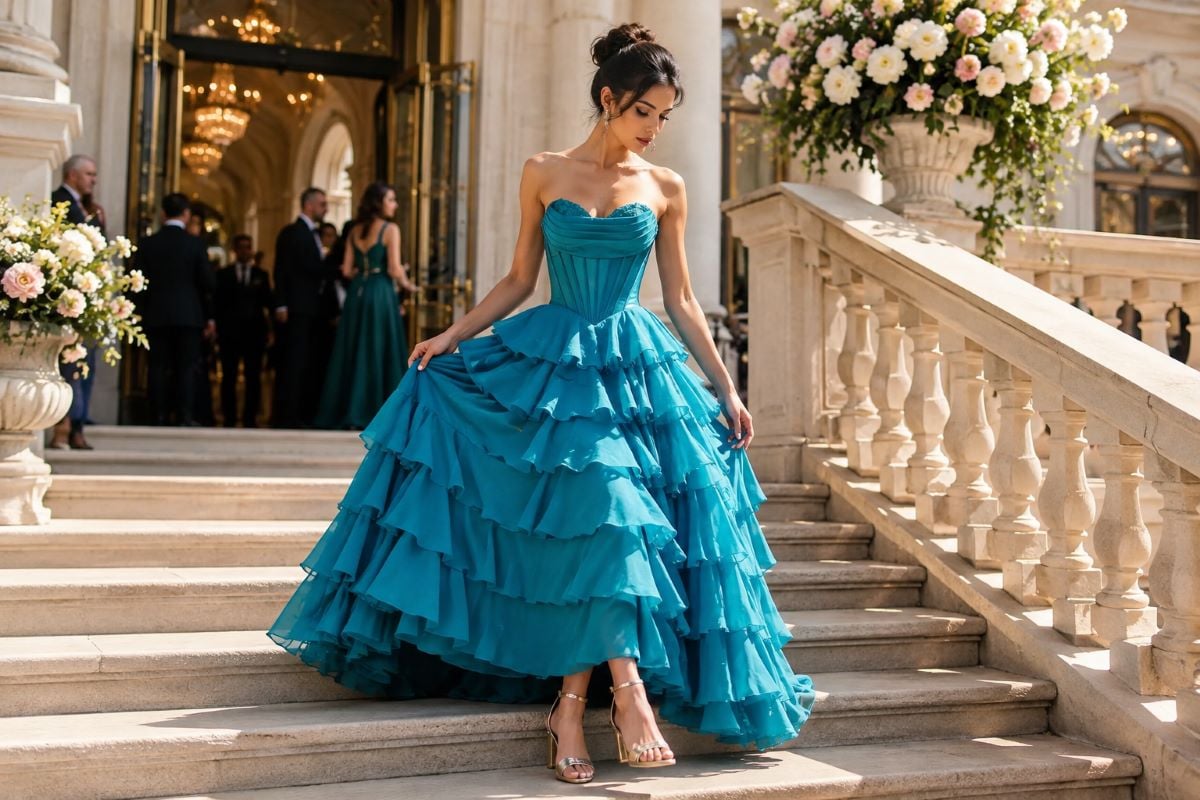

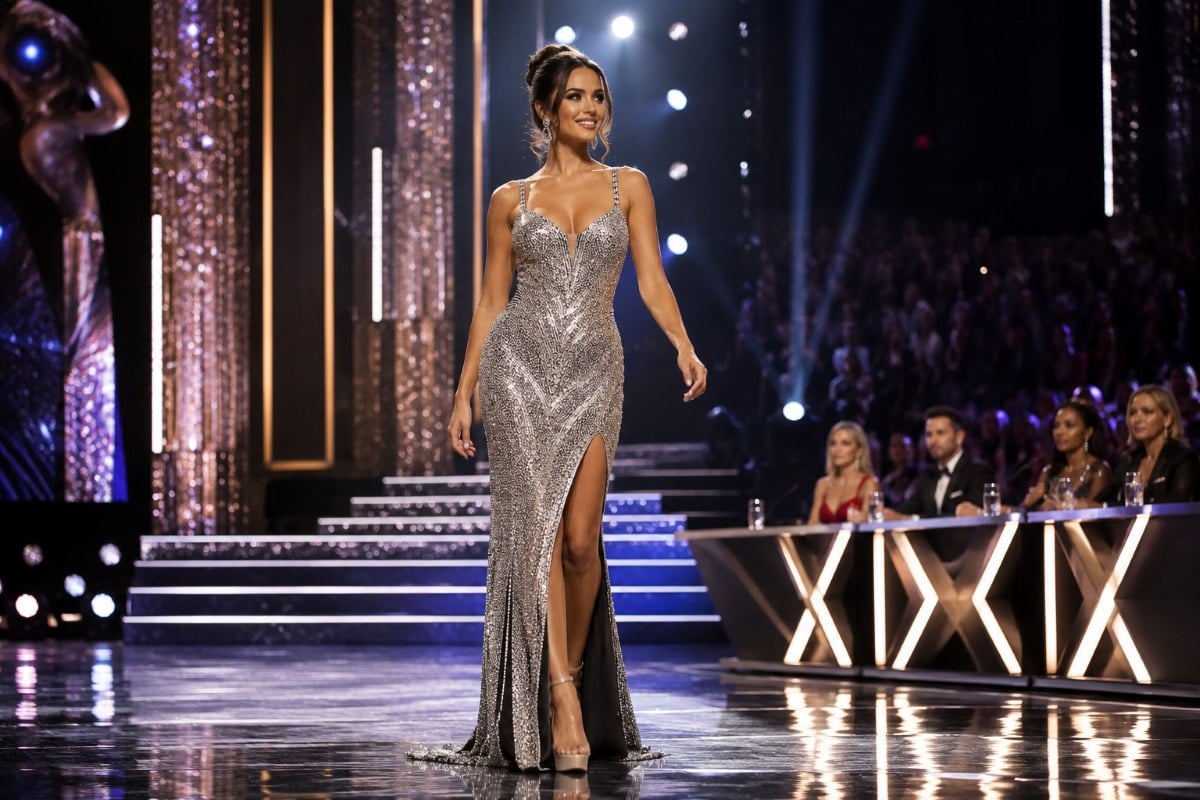
Every contestant who walks the evening gown phase knows that judges are scoring her, but very few understand exactly what those judges are actually looking at. Is it the gown itself? The walk? The poise? The face? The answer matters enormously, because a contestant who understands how judges score the evening gown phase can prepare deliberately for what is actually being evaluated, rather than guessing and hoping. The truth is that the evening gown competition is not a fashion show where the most expensive dress wins. It is a scored evaluation of a specific set of qualities, and the gown is only one part of it. Understanding how judges score evening gown pageant presentations is one of the most valuable pieces of preparation a contestant can have, and this guide breaks down exactly what judges evaluate, how the gown fits into the score, and how to prepare for what actually counts.
What the Evening Gown Phase Actually Measures
The first and most important thing to understand is that the evening gown competition is not judging the dress. It is judging the contestant, using the evening gown presentation as the vehicle. This is a distinction that changes everything about how a contestant should prepare.
Judges in the evening gown phase are evaluating a combination of poise, confidence, stage presence, grace of movement, overall presentation, and how well the entire look, gown included, comes together to project the contestant’s personal brand and readiness for the title. The gown is the frame, but the contestant is the picture. A stunning gown on a contestant with poor stage presence scores lower than a simpler gown on a contestant who commands the stage with confidence and grace.
This is why two contestants in similar gowns can score very differently, and why a contestant in a more modest gown sometimes beats one in a more elaborate dress. The evening gown phase rewards the complete package, and the gown is judged for how well it serves that package rather than for its price or drama in isolation. The full range of pageant gowns is designed with this understanding, that the gown’s job is to elevate the contestant, not to compete with her.
The Core Scoring Criteria
While exact scoring systems vary by pageant and by level, most evening gown evaluations assess a consistent set of qualities. Understanding each one lets a contestant prepare for what is actually being measured.
Poise and Confidence
Poise is arguably the single most important quality judges evaluate in the evening gown phase. It is the calm, composed, self-assured presence that says the contestant belongs on that stage and would represent the title with grace. Poise shows in how a contestant carries herself, her posture, her steady pace, her controlled movements, and the sense of ease she projects even under the pressure of competition. A contestant who appears nervous, rushed, or uncertain loses points here regardless of her gown.
Stage Presence and Command
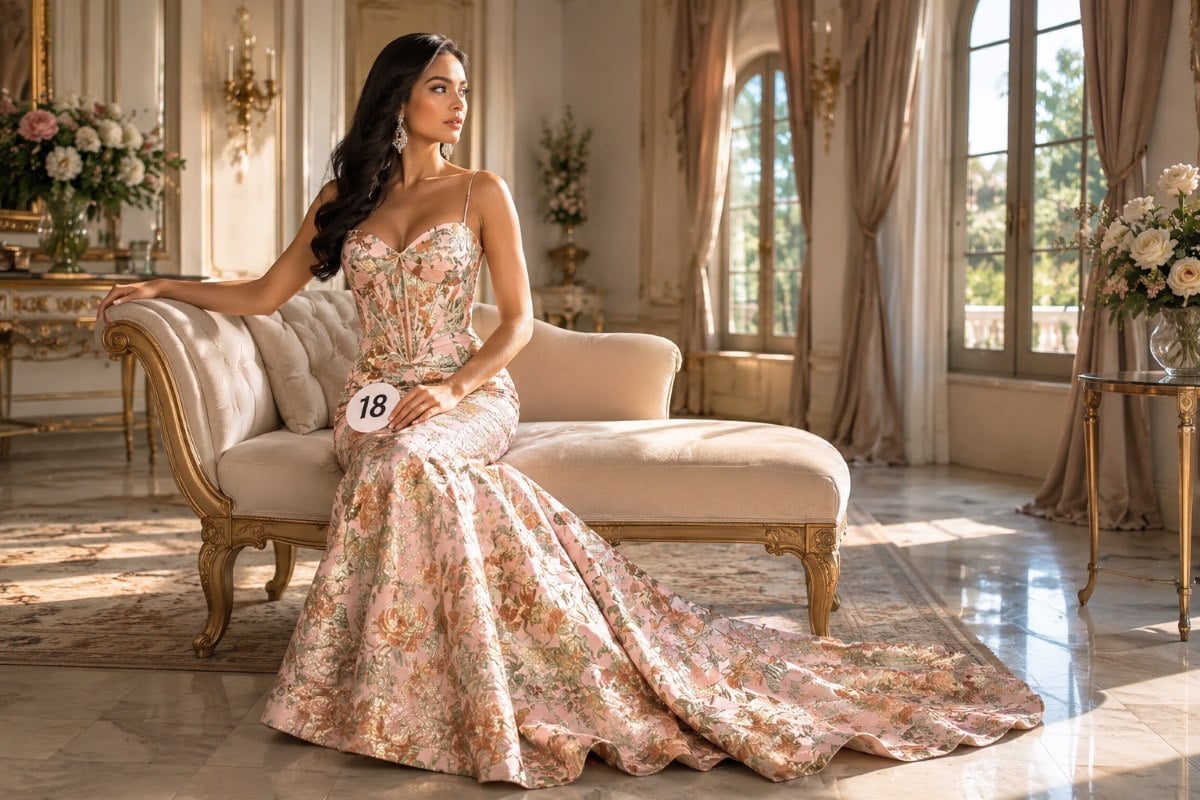
Stage presence is the quality of owning the stage, of drawing and holding the judges’ and audience’s attention through presence alone. It is related to poise but distinct: poise is composure, while stage presence is magnetism. A contestant with strong stage presence makes the judges sit up and pay attention the moment she steps out. This is partly natural and partly trained, and it is heavily influenced by confidence, eye contact, and the energy a contestant projects.
Walk and Movement
How a contestant walks, turns, and moves in her gown is directly scored. Judges evaluate the grace, control, and confidence of the walk, the smoothness of turns, and how naturally the contestant moves in a formal floor-length gown. A graceful, practiced walk reads as elegant and confident; a stiff, hesitant, or awkward walk undermines the whole presentation. This is one of the most trainable aspects of the evening gown phase, and the technique of moving beautifully in a gown is covered in this guide on how to pose in an evening gown, which applies directly to the pageant walk and posing.
Overall Presentation and Fit of the Gown
Here is where the gown itself enters the scoring, but in a specific way. Judges evaluate how well the gown fits the contestant, how well it suits her body and coloring, and how cohesively the entire look comes together, gown, hair, makeup, and accessories as a unified presentation. A gown that fits perfectly and flatters the contestant scores well; an ill-fitting gown, even an expensive one, does not. The gown is judged for how well it serves the contestant, not for how dramatic it is on its own. The principles of choosing a gown that genuinely flatters are covered in this guide on how to choose the perfect evening dress, which applies directly to selecting a competition gown that scores.
Grooming and the Total Look
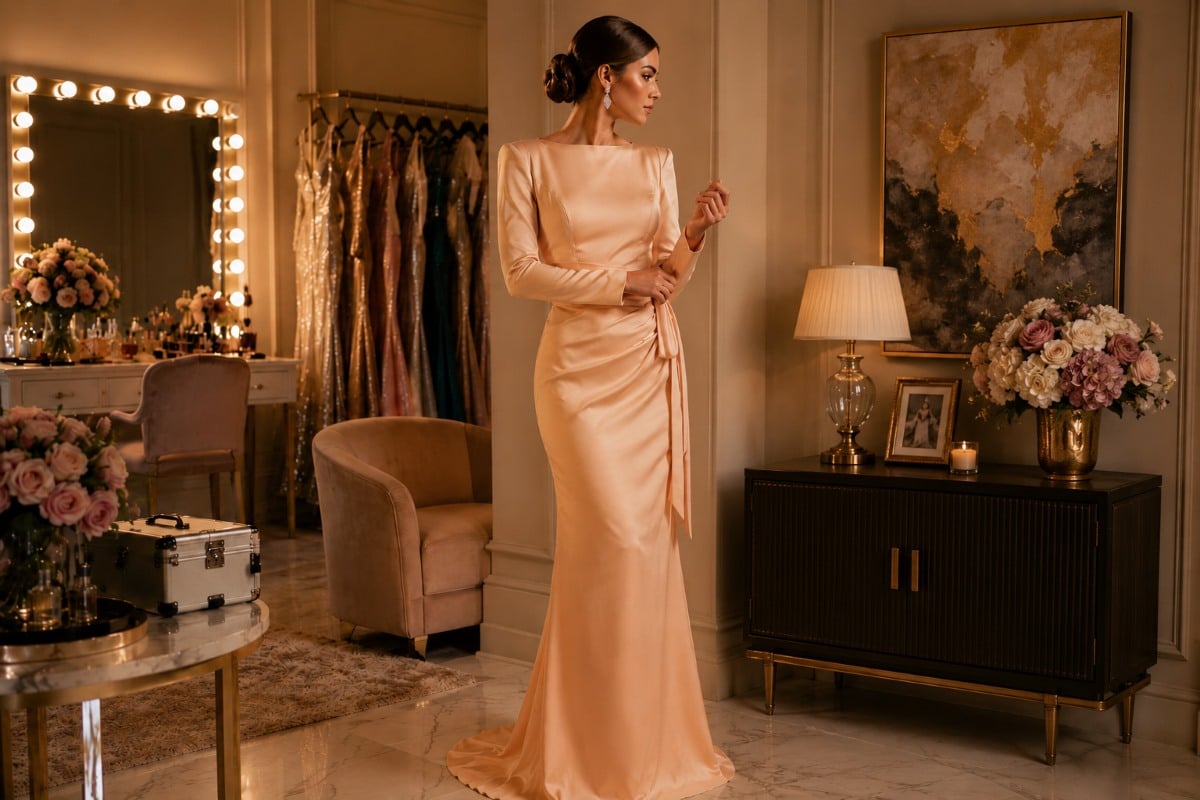
Judges evaluate the complete grooming picture: hair, makeup, skin, nails, and how polished and intentional the entire presentation appears. The total look should be cohesive and appropriate, with nothing out of place or distracting. This is the category where small details matter, a flawless, intentional total look reads as professional and title-ready, while distracting or mismatched elements pull the score down.
How Much the Gown Itself Counts
One of the most important and least understood facts about evening gown scoring is how much, or how little, the gown itself contributes to the score. Contestants often over-invest in the most dramatic, expensive gown possible, believing the dress wins the phase. The reality is more nuanced.
The gown is essential, but it functions as a tool to enhance the contestant’s score in the other categories, not as a category that wins on its own. A great gown helps a contestant project poise, move gracefully, and present a cohesive look, which is how it contributes to the score. A poorly chosen gown, even an expensive one, undermines those same qualities. The gown is judged through its effect on the total presentation, not as an isolated object of evaluation.
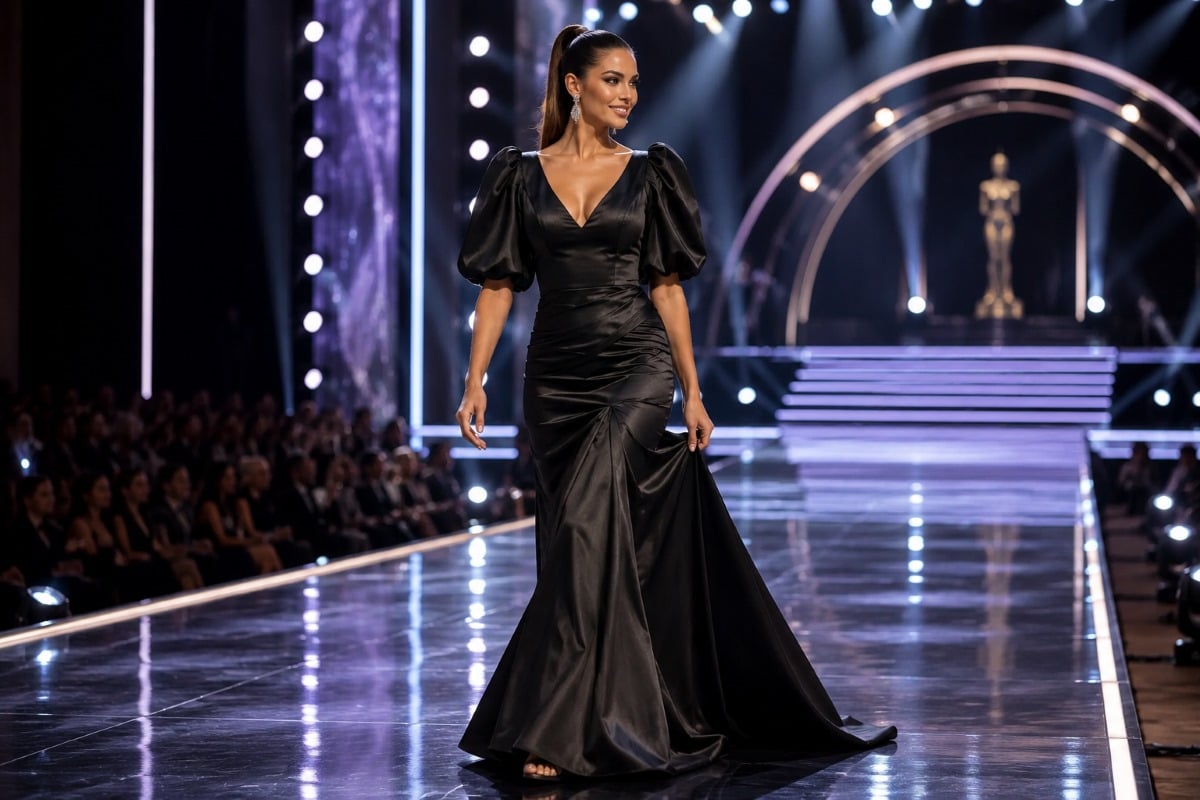
This means the goal is not the most expensive or most dramatic gown, but the gown that best serves the individual contestant: one that fits flawlessly, flatters her specific figure and coloring, allows her to move with confidence, and reads beautifully under stage lighting from the judges’ distance. A well-chosen gown at a moderate price that suits the contestant perfectly will outscore an expensive gown that fits poorly or overwhelms her. The styles among mermaid evening dresses and other competition silhouettes are designed to flatter and move with the contestant, which is exactly what scoring rewards.
How Silhouette Choice Influences the Score
The silhouette of the gown plays a specific role in scoring, because different shapes serve different contestants and different competition moments. The right silhouette enhances the contestant’s movement, presence, and the way the gown reads on stage, while the wrong one works against all three.
A fitted mermaid silhouette emphasizes the contestant’s figure and creates a dramatic, sculptural line that reads powerfully on stage, but it requires a confident, practiced walk because the fitted lower portion changes how a contestant moves. A ball gown creates maximum drama and a regal presence, commanding the stage with volume, and the styles among ball gown evening dresses show the kind of dramatic silhouette that creates an immediate, memorable impression from the judges’ distance. A column or A-line offers a cleaner, more modern line that suits contestants who want elegance and ease of movement over maximum drama.
The scoring principle is that the silhouette should serve the contestant’s strengths. A contestant with a graceful, practiced walk and the confidence to carry drama scores well in a mermaid or ball gown, while a contestant who wants clean elegance and effortless movement may score better in a streamlined silhouette. The best silhouette for scoring is the one that lets the individual contestant present her strongest, most confident self, which is the heart of how judges score evening gown pageant presentations.
How Stage Lighting and Distance Affect Scoring
A factor contestants often overlook is that judges evaluate the gown and the contestant from a specific distance and under specific lighting, which changes what scores well. A gown is not judged up close the way a dress at a dinner party would be; it is judged from the judges’ table and seen under bright stage lighting.
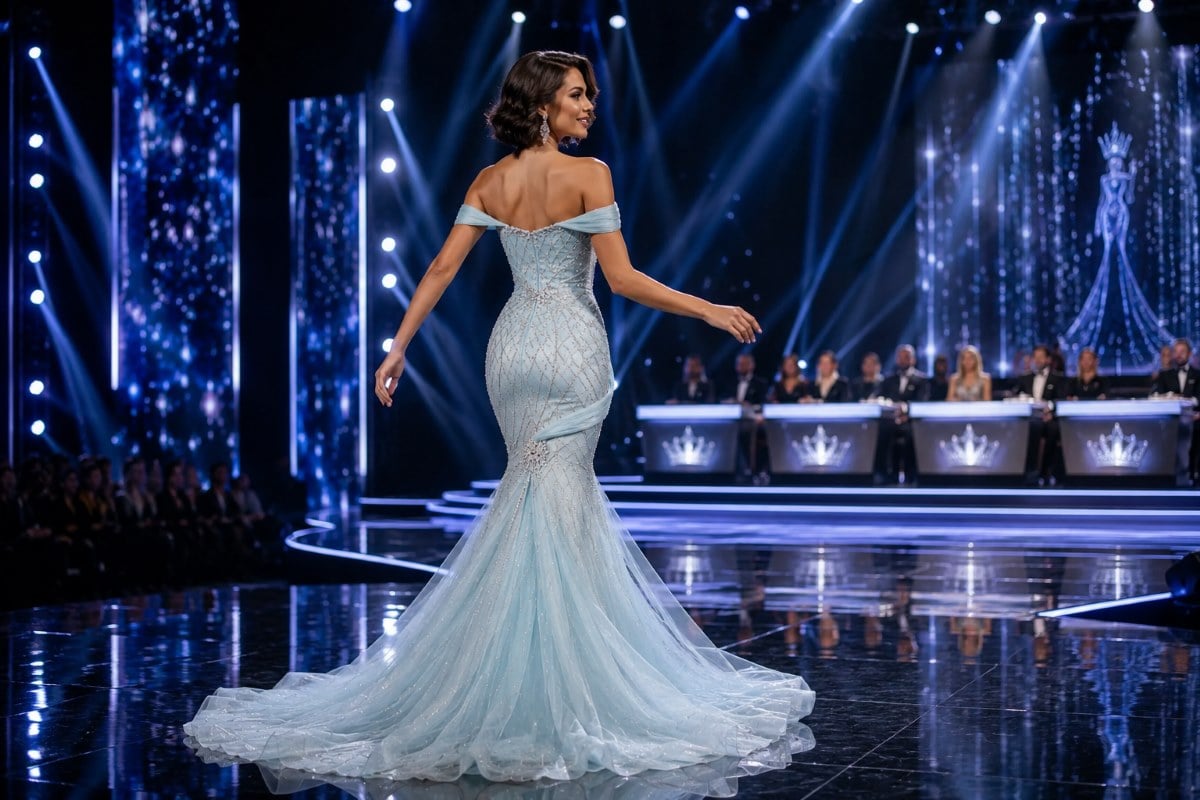
This affects scoring in concrete ways. A gown with subtle detail that reads beautifully up close may look plain from the judges’ distance, while a gown with embellishment designed to catch stage light reads as striking. Color is the first thing judges register from a distance, before silhouette or detail, so a color that flatters the contestant and reads well under stage lighting contributes immediately to the impression. A gown that photographs and reads well at competition distance is built differently from an ordinary formal dress, which is why competition-specific gowns matter.
Contestants competing at higher levels, where broadcast cameras are involved, face an additional layer: the gown must read well not just from the judges’ table but on camera, under broadcast lighting. This is part of why color, fit, and the way a gown catches light matter so much in scoring, and why the strategic choices covered in this guide on winning pageant dress trends focus so heavily on how a gown performs on stage rather than how it looks on a hanger.
The Role of Color in Scoring
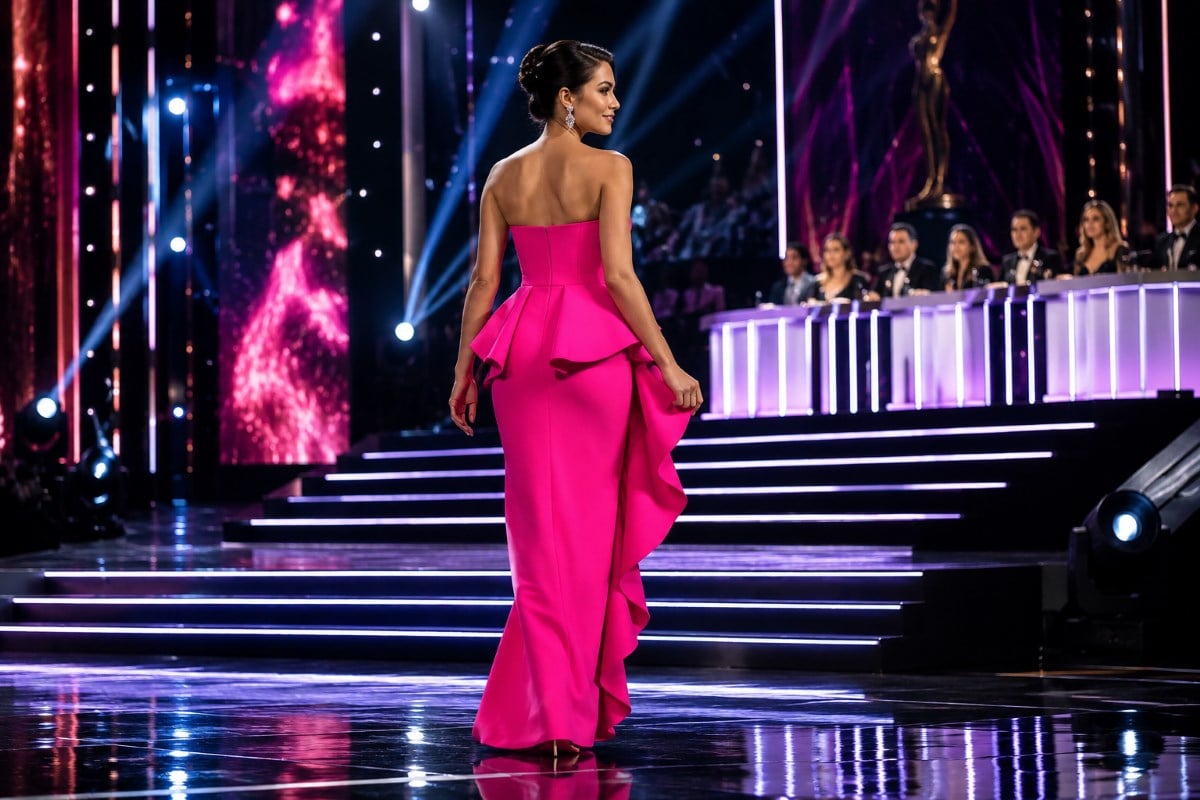
Because color is the first thing judges register, it plays an outsized role in the evening gown score, and it deserves specific attention. The right color creates an immediate positive impression before the judges have processed anything else; the wrong color creates an immediate disadvantage that the rest of the presentation has to overcome.
The most important principle is that the color must flatter the individual contestant’s skin tone and coloring, making her glow rather than washing her out. A color that suits one contestant beautifully can be wrong for another. Beyond personal flattery, the color should read well under stage lighting and stand out appropriately, neither disappearing into the stage nor clashing with it.
Classic, rich colors and clean whites and metallics all perform well in scoring when they suit the contestant, while the specific best choice depends entirely on the individual. The styles among black pageant dresses demonstrate how a strong, classic color can create dramatic stage presence and read powerfully from the judges’ distance, which is exactly the kind of immediate impression that contributes to a strong score.
How to Prepare for What Is Actually Scored
Understanding the scoring criteria points directly to how a contestant should prepare, and the priorities may be different from what a contestant assumes.
- Train your walk and posing relentlessly. Because the walk and movement are directly scored and highly trainable, practicing the walk, turns, and posing in your actual gown and shoes is one of the highest-return preparations you can do. A practiced walk reads as confident and graceful; an unpracticed one undermines everything.
- Build genuine poise and stage presence. Practice projecting calm confidence under pressure, holding eye contact, and owning the stage. Mock competitions, stage time, and coaching all build the poise that judges reward most heavily.
- Choose the gown that serves you, not the most expensive one. Prioritize flawless fit, flattering color, and ease of movement over drama or price. A gown that fits perfectly and lets you move confidently contributes far more to your score than an expensive gown that fights your body.
- Perfect the total look. Ensure hair, makeup, grooming, and accessories all come together cohesively. Small distracting details pull the score down, while a flawless, intentional total look reads as title-ready.
- Practice under realistic conditions. Rehearse in the gown, in the shoes, under bright light, from a distance, so you know how the whole presentation reads to the judges rather than just how it looks in a mirror up close.
The contestant who prepares for what is actually scored, poise, presence, walk, fit, and total presentation, rather than just buying the most dramatic gown, is the contestant who walks the evening gown phase with a real competitive advantage. The gown matters, but it matters as part of a complete, well-prepared presentation. For contestants also preparing for other phases, the polished, intentional approach reflected in the pageant interview dresses collection carries the same principle across the whole competition: every choice should serve the contestant’s complete presentation.
Frequently Asked Questions About Evening Gown Scoring
A few clear, common questions come up about how judges score evening gown pageant presentations, and the honest answers below cover what contestants most want to understand before they compete.
What do judges look for in the evening gown competition?
Judges evaluate poise, confidence, stage presence, grace of movement and walk, how well the gown fits and flatters the contestant, and how cohesively the total look comes together. The evening gown phase judges the contestant using the gown as the vehicle, not the dress in isolation. Poise and stage presence are typically the most heavily weighted qualities.
Does the most expensive gown win the evening gown phase?
No. The gown functions as a tool to enhance the contestant’s poise, movement, and presentation, not as a category that wins on its own. A well-fitting, flattering gown at a moderate price that lets the contestant move confidently will outscore an expensive gown that fits poorly or overwhelms her. The contestant, not the dress, is being judged.
How much does the gown itself count in the score?
The gown is essential but is scored through its effect on the total presentation rather than as an isolated object. It contributes by helping the contestant project poise, move gracefully, and present a cohesive look. A poorly chosen gown undermines those qualities, while a well-chosen one elevates them, which is how the gown influences the score.
How important is the walk in evening gown scoring?
Very important, and it is one of the most directly scored and trainable elements. Judges evaluate the grace, control, and confidence of the walk, the smoothness of turns, and how naturally the contestant moves in a floor-length gown. Relentless practice of the walk in the actual gown and shoes is one of the highest-return preparations a contestant can do.
Why does gown color matter so much in scoring?
Color is the first thing judges register when a contestant steps onto the stage, before silhouette or detail, so it creates the immediate first impression. The color must flatter the contestant’s coloring, making her glow, and read well under stage lighting. The right color creates an immediate advantage, while the wrong one creates a disadvantage the rest of the presentation must overcome.
How can I prepare for what judges actually score?
Train your walk and posing relentlessly, build genuine poise and stage presence through stage time and coaching, choose a gown that fits flawlessly and flatters you rather than the most expensive one, perfect your total look, and rehearse under realistic conditions of lighting and distance. Preparing for what is actually scored gives a real competitive advantage over simply buying a dramatic gown.
Competing on What Actually Counts
Understanding how judges score evening gown pageant presentations transforms how a contestant prepares, shifting the focus from buying the most dramatic gown to developing the poise, stage presence, graceful walk, and cohesive total look that judges actually reward. The gown remains essential, but it is judged for how well it serves the contestant, fitting flawlessly, flattering her coloring, and letting her move with confidence, rather than for its price or drama in isolation. Train relentlessly for the walk and presence, choose the gown that genuinely serves you, and prepare under realistic conditions, and you will walk the evening gown phase with a real, earned advantage. Jovani has spent more than forty years designing competition gowns engineered to flatter, move, and read beautifully under stage lighting, the qualities that help a well-prepared contestant score her best.