
A lace mother of the bride dress brings a romantic, timeless quality to a wedding that few other fabrics can match. Lace carries a sense of occasion in its very texture, with intricate patterns that read as elegant and feminine, add visual depth a flat fabric cannot, and photograph beautifully as the detail catches the light. For the mother of the bride, who wants to look polished and special while complementing rather than competing with the celebration, lace strikes an ideal balance of refinement and warmth. This guide goes deep on lace specifically: the types of lace and how each reads, the constructions from full lace to delicate accents, the colors and lining combinations that change the whole effect, how lace handles coverage and sleeves, and how to choose and style a lace gown so it flatters and suits the wedding.
Why lace suits the mother of the bride
Lace has remained a favorite for the mother of the bride across generations for reasons that go beyond tradition. The textured surface reads as sophisticated and considered, adding richness without the heaviness of dense embellishment, which suits a role that calls for elegance rather than spectacle. Lace also photographs wonderfully, with its detail creating a soft, dimensional impression in the family portraits that matter so much on a wedding day.
The fabric carries a sense of occasion that feels right for the significance of the role, special and refined rather than everyday. It also flatters quietly, since the pattern draws the eye gently and the texture adds interest that a smooth fabric lacks. The collection of lace mother of the bride dresses shows how the fabric translates across silhouettes, offering romantic texture within an elegant, age-appropriate frame.
The types of lace and how each reads
Lace is not a single fabric but a family of distinct patterns, and the type shapes the whole character of a gown. Understanding the differences helps a mother choose the lace that suits her taste and the formality of the wedding.
Delicate and fine laces
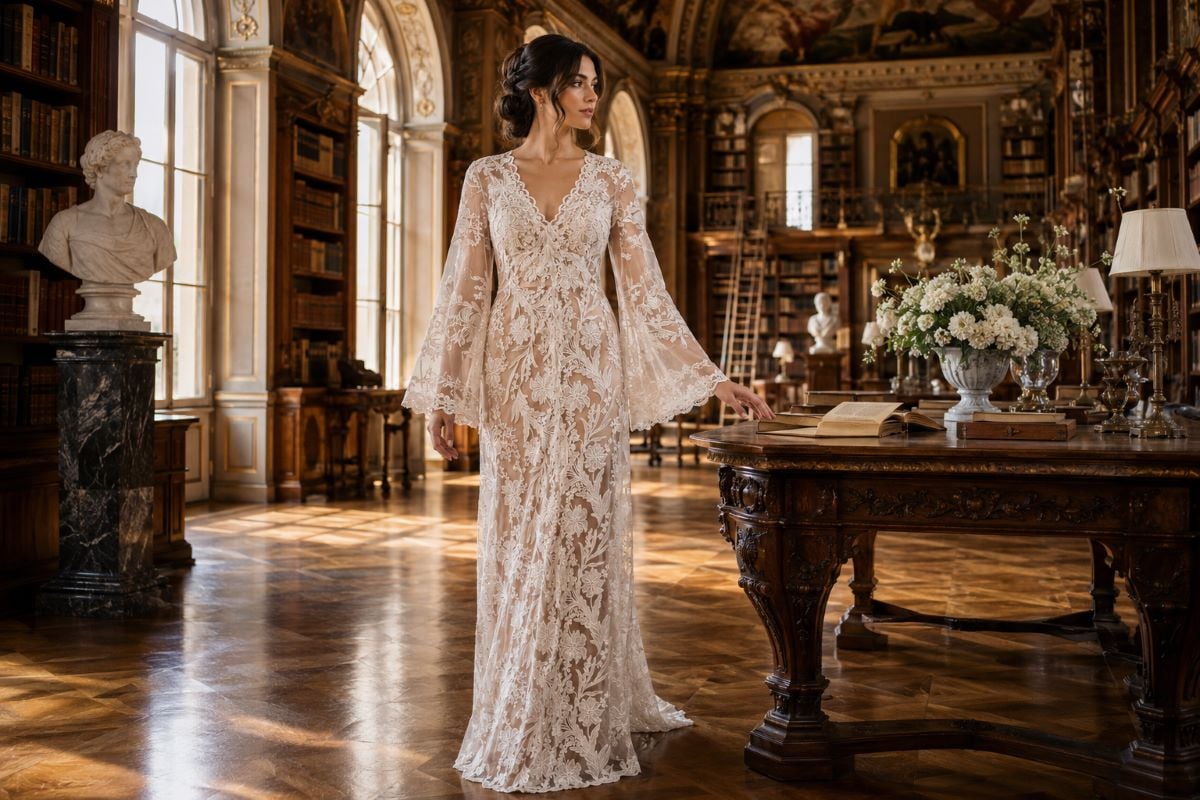
Chantilly lace offers fine, delicate patterns with a soft, romantic appeal, lying flat and blending smoothly into the silhouette for an understated, elegant effect. This is among the most refined lace types, reading as graceful rather than bold, which suits a mother who wants subtle texture without volume. A fine lace like Chantilly creates a soft, romantic impression that photographs beautifully and never overwhelms the wearer.
Bold and textured laces
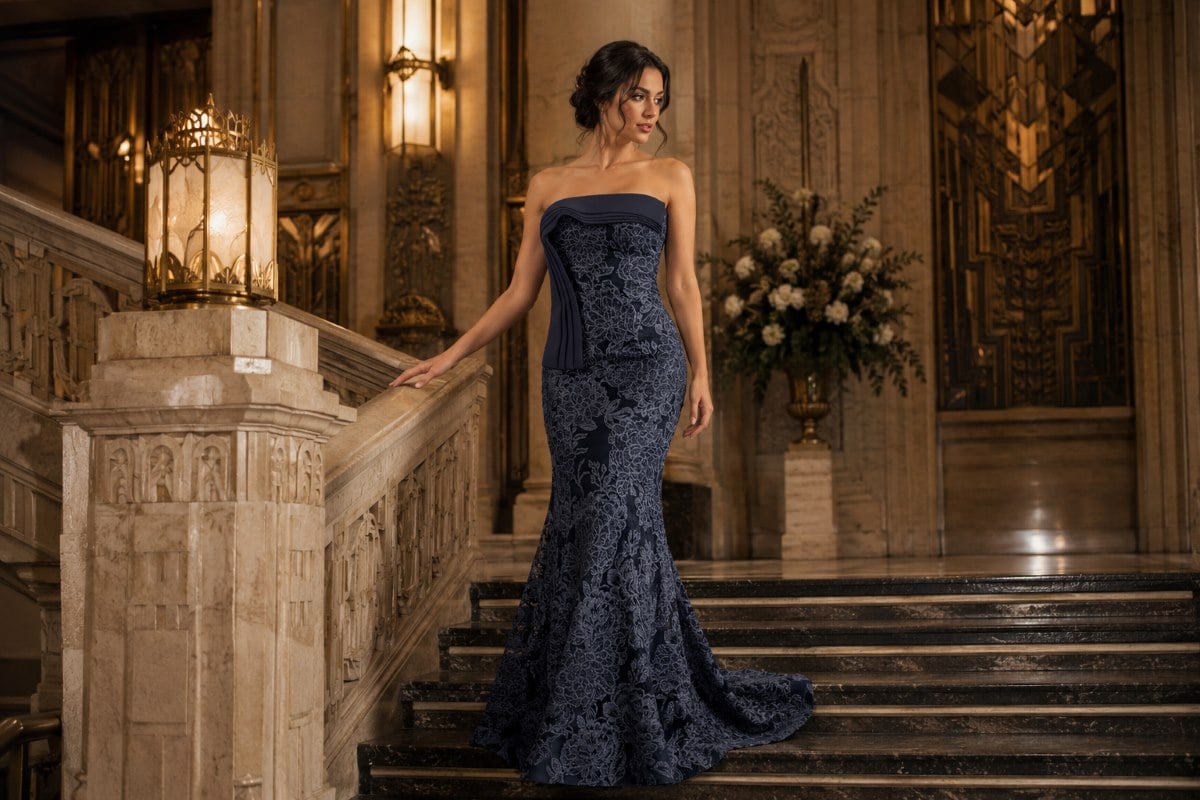
Other laces make a stronger statement, with larger, more defined patterns that add visual texture and a sense of presence. A bolder lace can add the impression of volume and reads as more dramatic, which suits a mother who wants her gown to have more visible detail. Guipure and heavier corded laces have a structured, dimensional quality, while floral appliqué laces create defined motifs that can be placed strategically across the gown. The choice between a delicate and a bold lace comes down to the look a mother wants and the formality of the celebration.
Lace constructions, from full lace to accents
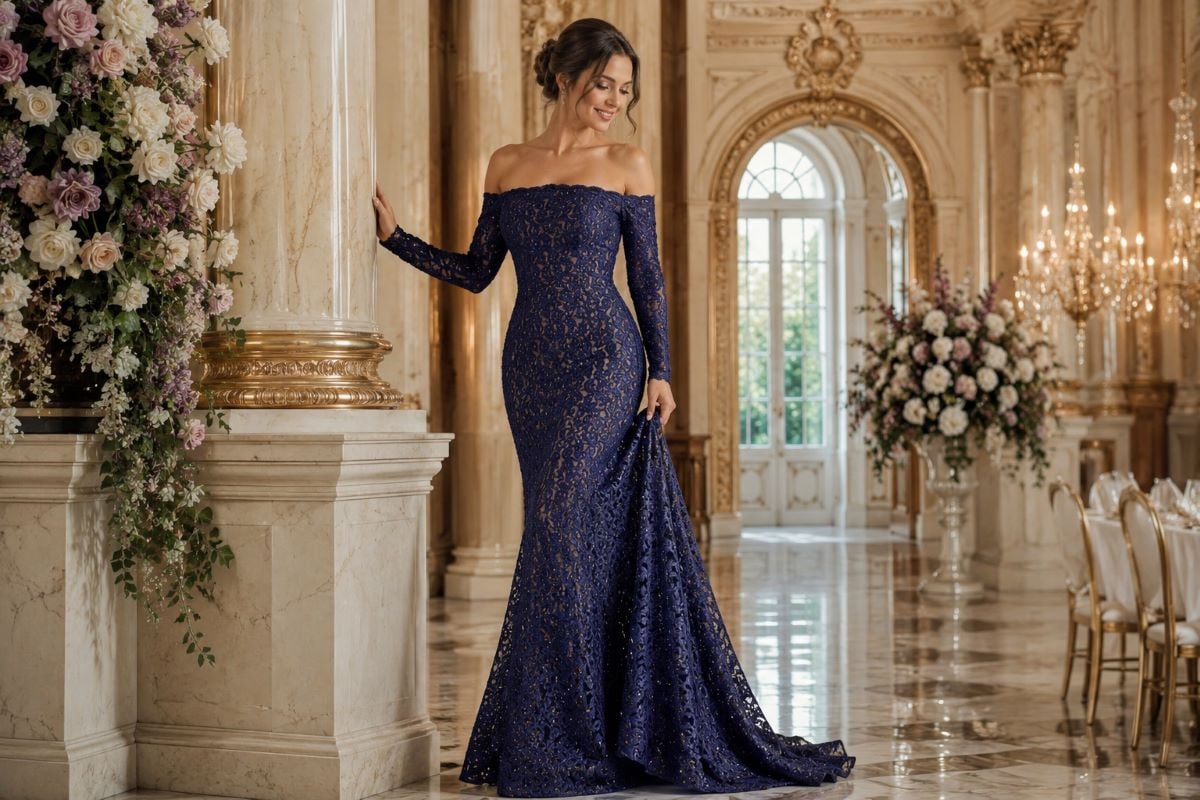
Beyond the pattern, the way lace is used on a gown changes its effect entirely, and there are several distinct constructions to consider. A full lace gown features lace throughout the entire dress, creating consistent texture from neckline to hem for a richly detailed, romantic look. This is the most lace-forward construction, suited to a mother who loves the fabric and wants it to define the gown.
A lace overlay layers lace over a solid lining, allowing the pattern to show while the lining underneath provides coverage and structure, which is a versatile and widely flattering approach. Lace-accented designs use lace strategically on the bodice, the sleeves, or the hemline while featuring other fabrics elsewhere, offering the romance of lace as a detail rather than the whole gown. Each construction creates a different level of texture and visual interest, so a mother can choose how prominent she wants the lace to be. The broader range of mom of the groom gowns shows how lace constructions sit alongside other fabric choices across silhouettes.
Lace across silhouettes
Lace adapts beautifully to the silhouettes a mother of the bride is most likely to consider, and the shape changes how the fabric reads. On an A-line, lace creates romantic elegance with comfortable movement as the fabric flows from the waist, which is a classic and widely flattering pairing. The styles among A-line mother of the bride dresses show how lace softens and enriches this universally flattering shape.
On a sheath or column, lace showcases its texture in sleek, sophisticated lines, reading as modern and refined. On a mermaid, lace delivers dramatic presence, with the pattern highlighting a sculpted silhouette for a mother who wants a statement. The same lace can read as soft and romantic on an A-line or as sleek and striking on a fitted shape, so considering the lace and the silhouette together leads to the most flattering result. Across all of these, lace adds a layer of texture and romance that enriches the silhouette without overwhelming it.
Lace color and lining combinations
One of lace’s most distinctive qualities is how dramatically its appearance changes with color and lining, which gives a mother real control over the effect. Lace shows differently depending on the color of the lace itself and the lining beneath it, so the same pattern can read in very different ways.
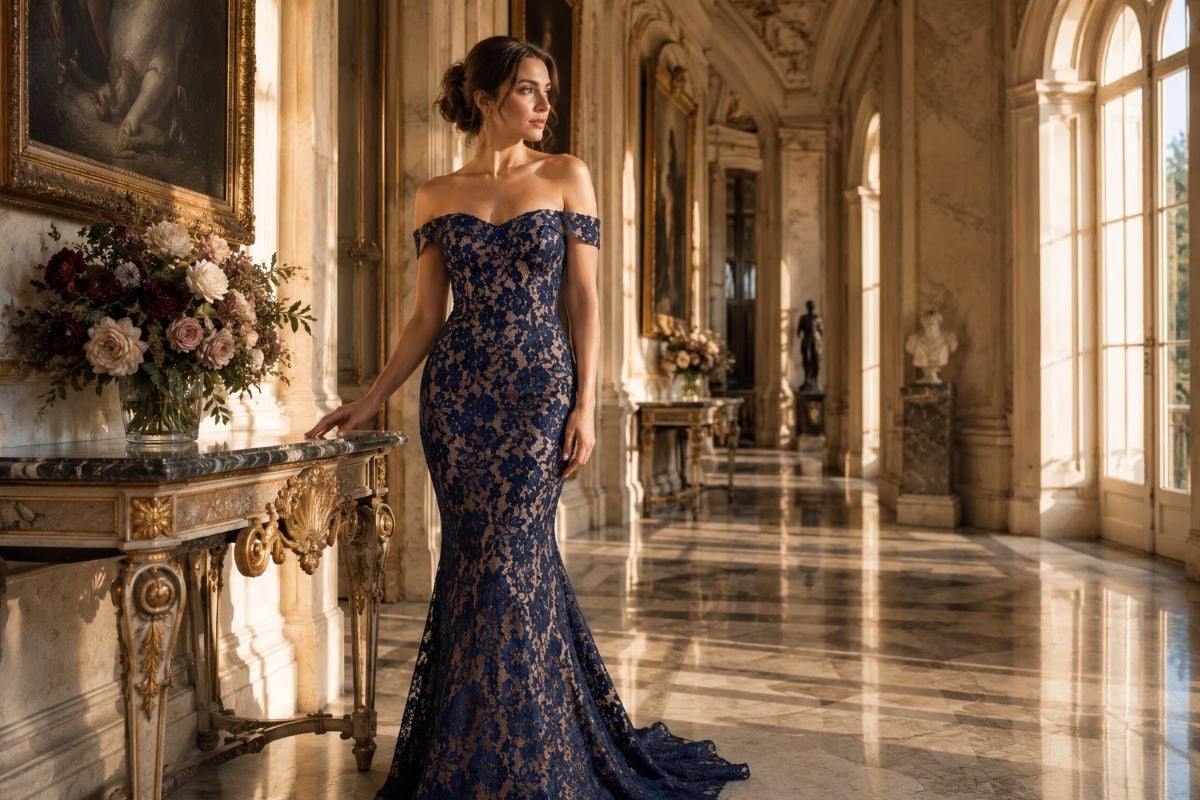
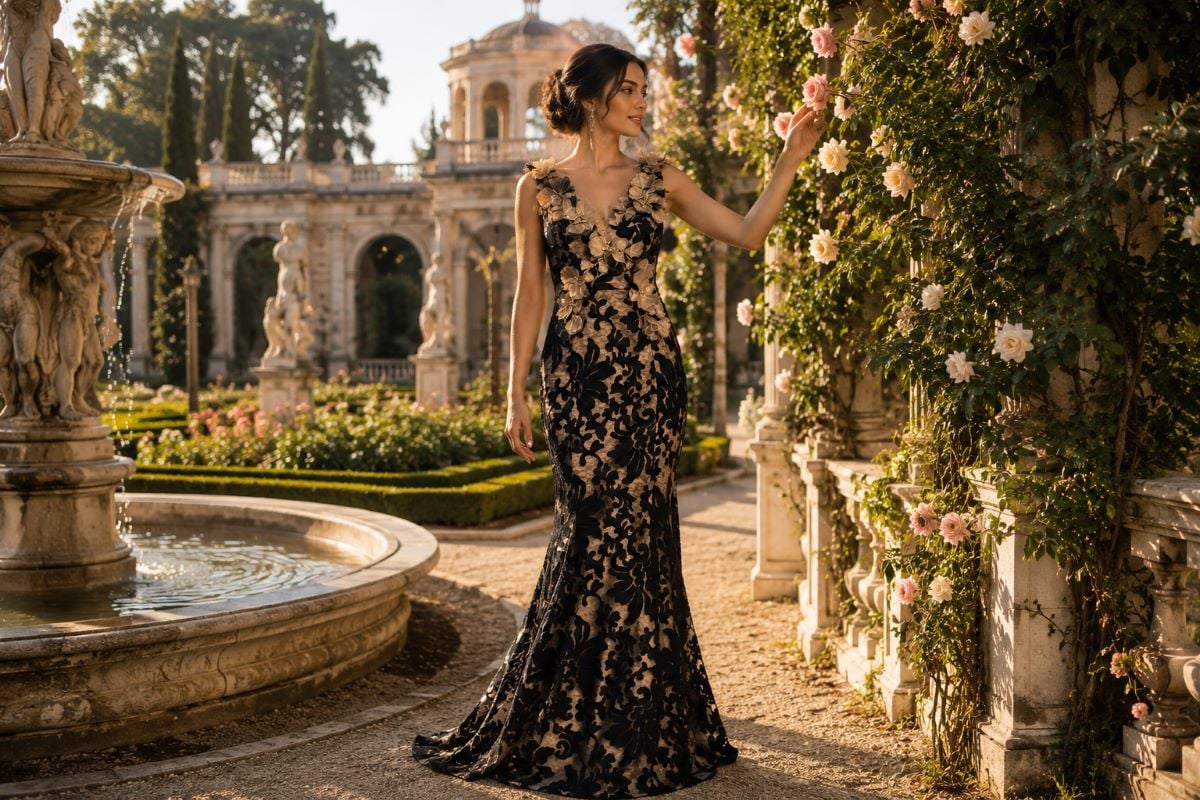
Black lace over a nude lining creates dramatic contrast, with the pattern standing out boldly against the skin-toned base for a sophisticated, modern effect. Lace in a soft nude or blush offers romantic warmth, while colored lace over a matching lining creates subtle, tonal texture and colored lace over a contrasting lining creates bold visual impact. Matching the lace to the lining reads as understated and elegant, while contrasting the two reads as striking and contemporary. This interplay of lace and lining is part of what makes the fabric so versatile, letting a mother choose between a subtle, tonal look and a bold, high-contrast one. For darker, more formal effects, a deeper lace color and a smaller pattern create smooth, elongated lines that flatter beautifully.
Lace, coverage, and sleeves
Lace is uniquely suited to providing coverage without heaviness, which makes it especially valuable for a mother who wants a more covered look. Lace sleeves provide arm coverage while maintaining a visual lightness that solid fabrics cannot achieve, since the pattern reads as delicate even where it covers.
Long lace sleeves offer full arm coverage with romantic texture, while illusion lace sleeves appear to show skin while providing actual coverage underneath, and three-quarter lace sleeves balance coverage with elegance. This makes lace a natural choice for a mother who wants coverage for personal comfort, for a formal venue, or for a religious ceremony, since lace delivers modesty while keeping the look current and feminine rather than heavy. The styles among modest mother of the bride dresses show how lace creates elegant coverage.
For coverage focused on the arms, lace sleeves are uniquely effective, and the range of long-sleeve mother of the bride dresses shows how lace adds full arm coverage without the visual weight a solid sleeve would carry.
Styling a lace mother of the bride dress
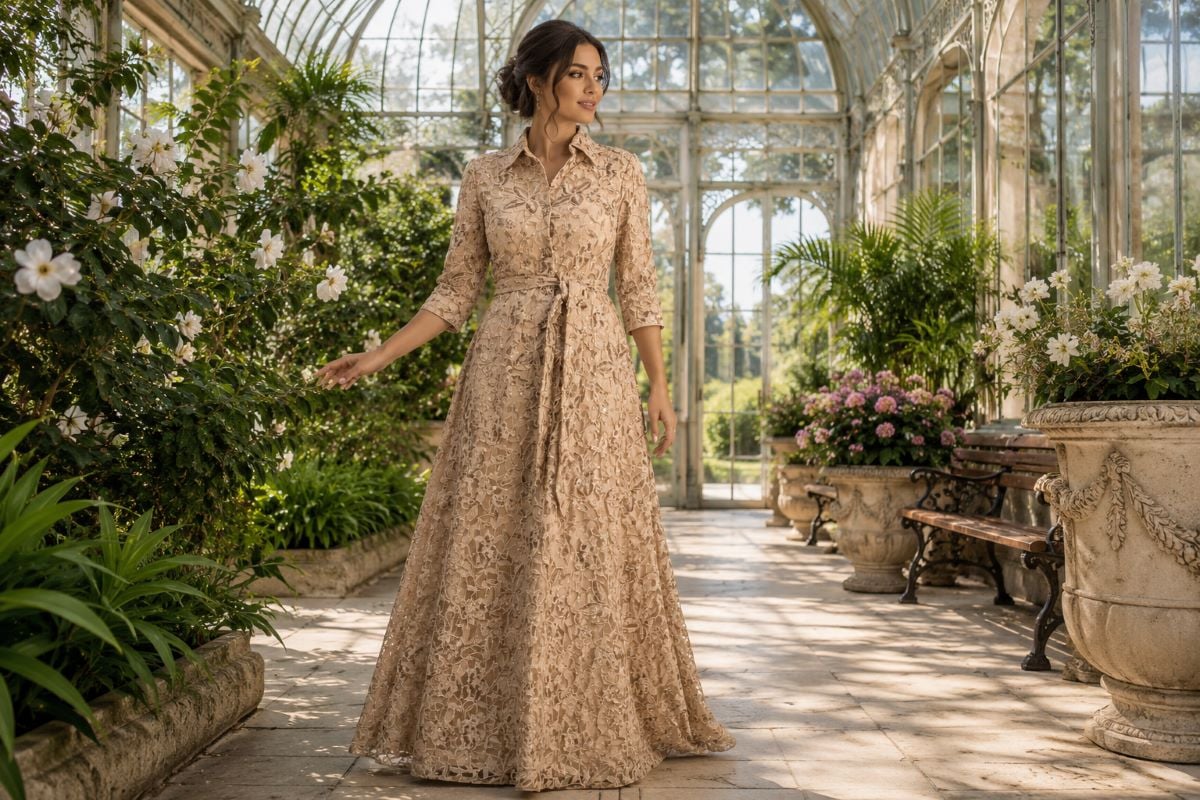
Styling a lace gown is about letting the texture lead, which guides the accessories and the overall look.
Jewelry and accessories
Because lace already provides visual texture, jewelry generally stays refined so it complements rather than competes with the pattern. A pair of elegant earrings and a delicate bracelet usually complete the look, while a heavily embellished necklace can clutter the detail of the lace. Metallic accessories in gold or silver pair beautifully with lace, and the metal can be chosen to suit the lace color and the wedding palette. The principle is balance, letting the lace stay the focus while the accessories provide a refined finish.
Coordinating with the wedding
A lace gown should complement the wedding’s formality, palette, and the bridal party without competing with the bride. Choosing a lace color that coordinates with the wedding palette, while clearly distinct from the bride’s gown, keeps the mother looking polished and appropriate. The formality of the lace and the gown should match the wedding, with a richly detailed full-lace gown suiting a formal celebration and a lace-accented dress suiting a more relaxed one. For the broader principles of choosing a gown that honors the couple and the occasion, the guide to what the mother of the bride should wear covers how to coordinate the look respectfully.
Choosing a quality lace gown
When choosing a lace mother of the bride dress, the quality of the lace and its construction make all the difference. First, examine the lace itself, since a quality lace has clean, well-defined pattern and a pleasing hand, while a cheap lace can look flat or scratchy. Second, check the lining and how the lace is applied over it, since proper lining provides coverage and structure and the lace should be smoothly and securely attached.
Third, confirm the fit and the way the lace sits on the body, since lace placement can be used to draw the eye to flattering areas, and a quality gown places the pattern thoughtfully. Because lace behaves differently over different backings, appliquéd over a structured corset for support or layered over fluid mesh for soft movement, it is worth seeing how a specific gown is constructed. The guide to the best mother of the bride dress fabrics covers how lace compares to other fabrics across body types.
Pairing a lace gown with a flattering neckline is the final piece, since the neckline frames the face and sets the tone. The overview of necklines for the mother of the bride helps match a lace gown to a neckline that suits the wearer. To see how Chantilly, appliqué, and corded laces translate across silhouettes and colors for your child’s wedding, explore the current styles through an authorized Jovani retailer.
Caring for a lace gown
Lace rewards a little care, since its delicate texture is exactly what makes it beautiful and exactly what needs protecting. After the wedding, a lace gown should be cleaned by a professional who handles delicate fabrics, since the fine threads and any appliqué can snag or distort under rough handling. Storing the gown in a breathable garment bag, away from direct light, keeps the lace from yellowing and protects the pattern from dust and wear.
Lace can catch on jewelry, zippers, and rough surfaces, so a mother wearing lace does well to be mindful through the day, particularly when hugging guests or moving through tight spaces. A small repair kit and a moment of care prevent a pulled thread from becoming a visible flaw. For a heavily beaded lace, storing the gown flat rather than hanging prevents the weight from stressing the delicate fabric over time. These small steps protect the romantic texture that makes lace special, keeping the gown beautiful well beyond the wedding day.
It is also worth knowing that lace has a long history in formal and bridal wear, which is part of why it carries such a sense of occasion. The fabric has signaled craftsmanship and refinement across generations, and choosing lace for the mother of the bride connects the wearer to that timeless tradition. This heritage is part of lace’s quiet appeal, since it reads as classic and considered rather than trend-driven, which suits the significance of the role and ensures the gown looks elegant in photographs that will be treasured for years.
Chosen with care for its type, construction, color, and fit, a lace mother of the bride dress offers a romantic, timeless elegance that suits the role beautifully, letting a mother look polished and special while honoring her child’s wedding day.
lace mother of the bride dress FAQs
Is lace a good choice for a mother of the bride dress?
Yes, lace is one of the most popular and flattering choices for the mother of the bride. Its textured surface reads as sophisticated and feminine, adds visual depth a flat fabric cannot, and photographs beautifully in family portraits. Lace carries a sense of occasion that suits the significance of the role, and it flatters quietly by drawing the eye gently. It also provides coverage without heaviness, which makes it ideal for a mother who wants a more covered, elegant look.
What type of lace is best for a mother of the bride dress?
It depends on the look you want. Chantilly lace offers fine, delicate patterns that lie flat and read as understated and romantic, suiting a mother who wants subtle texture. Bolder laces with larger patterns, like guipure or floral appliqué, add more visible detail and presence for a mother who wants a stronger statement. The choice comes down to your taste and the formality of the wedding, with delicate laces reading softer and bold laces reading more dramatic.
What is the difference between full lace and lace overlay?
A full lace gown features lace throughout the entire dress, creating consistent texture from neckline to hem for a richly detailed, romantic look. A lace overlay layers lace over a solid lining, allowing the pattern to show while the lining provides coverage and structure underneath. A full lace gown is the most lace-forward, while an overlay is versatile and widely flattering. Lace-accented designs use lace as a detail on the bodice or sleeves rather than throughout.
What color lace should the mother of the bride wear?
Lace color should coordinate with the wedding palette while staying clearly distinct from the bride’s gown. Lace shows differently depending on its color and the lining beneath it: black lace over a nude lining creates dramatic contrast, while nude or blush lace offers romantic warmth, and a deeper lace color with a smaller pattern creates smooth, elongated lines. Match the lace to the lining for a subtle, tonal look, or contrast them for a bolder, more contemporary effect.
Can a lace dress provide enough coverage for a religious ceremony?
Yes, lace is uniquely suited to providing coverage without heaviness, which makes it ideal for a religious or conservative ceremony. Lace sleeves provide arm coverage while keeping a visual lightness solid fabrics cannot, and long lace sleeves, illusion lace sleeves, or a higher lace neckline deliver modesty while keeping the look current and feminine. This is why lace is such a common choice for mothers who need covered shoulders and arms for a ceremony in a house of worship.
How should you style a lace mother of the bride dress?
Let the lace lead. Because lace already provides visual texture, keep jewelry refined so it complements rather than competes with the pattern, with elegant earrings and a delicate bracelet usually enough. Metallic accessories in gold or silver pair beautifully with lace. Choose a lace color that coordinates with the wedding palette while staying distinct from the bride, and match the formality of the lace to the wedding. The goal is to let the lace stay the focus while accessories provide a refined finish.