
The flower girl is one of the most charming roles in a wedding, and choosing her dress is a small, happy project of its own. A flower girl dress should look beautiful walking down the aisle, coordinate with the bridal party, and, just as importantly, let a young child move, sit, and play comfortably through a long celebration. The prettiest dress in the world is the wrong choice if it scratches, restricts, or has to be fussed with all day. This guide walks through what actually matters when choosing a flower girl dress: the silhouettes and lengths that suit young children, the fabrics that keep a child comfortable, how to coordinate with the wedding, how to handle sizing when children grow quickly, and how to involve the flower girl so she feels happy and proud in her dress.
What makes a good flower girl dress
A good flower girl dress balances beauty with comfort, since a young child needs to feel at ease to enjoy her role. The dress should look lovely in photographs and coordinate with the wedding, but it must also be soft, well-lined, and easy to move in, since a flower girl is often a young child who will be walking, sitting, and playing for hours.
The single most important quality is a smooth, comfortable lining, since a soft lining is what lets a child forget she is wearing a special dress and simply enjoy the day. Beyond comfort, a flower girl dress should be age-appropriate, with a sweet, youthful design that suits a child rather than a scaled-down adult gown. The styles among girls’ formal dresses show how a dress can be both pretty and genuinely comfortable for a young child, which is exactly the balance a flower girl dress needs.
Silhouettes and lengths that suit young children
The silhouette and length of a flower girl dress matter most for comfort and movement, which guides the choice for a young child. Understanding the options helps in picking a dress she can actually enjoy wearing.
The most comfortable silhouettes
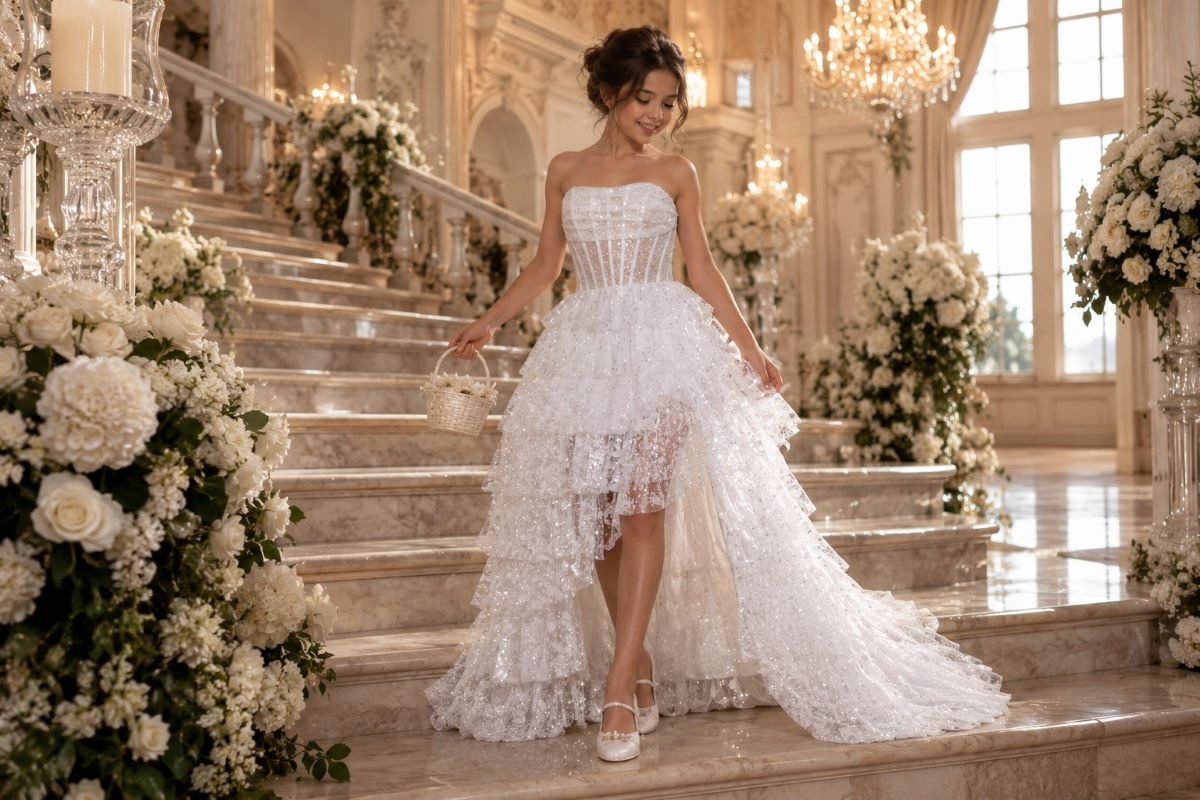
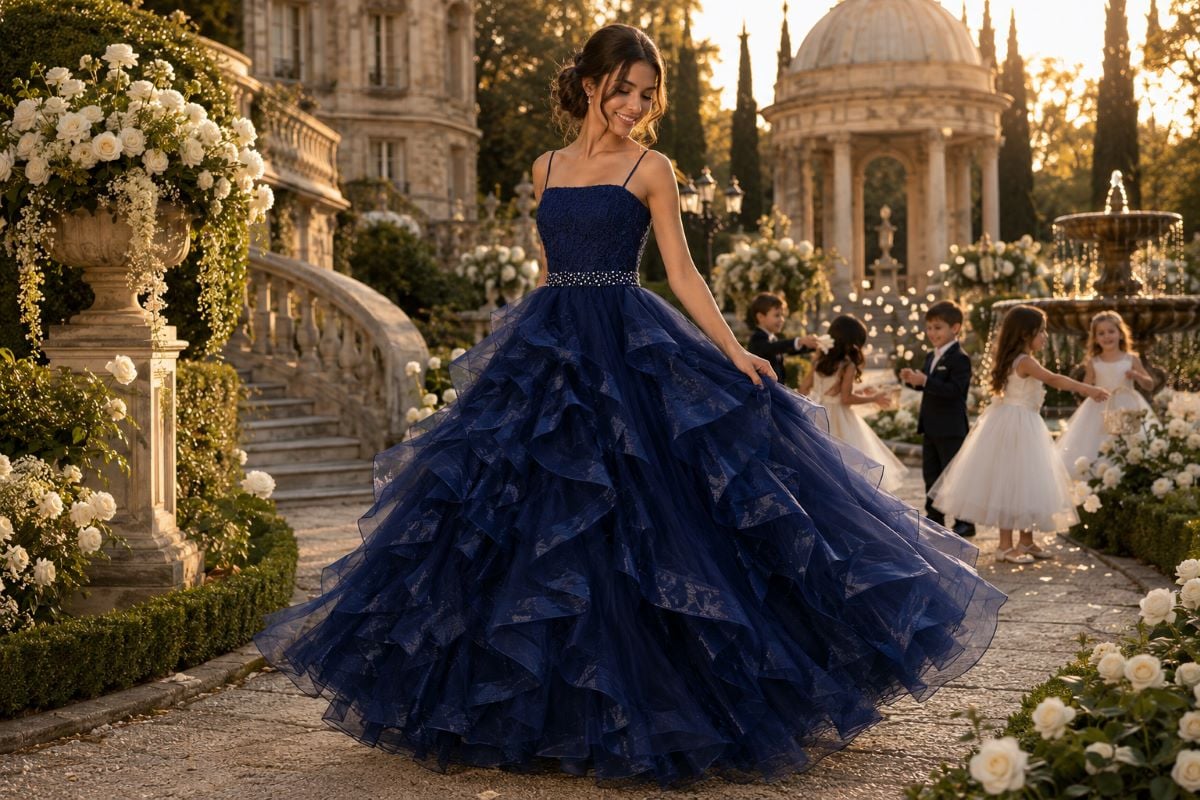
A full, twirly skirt is a classic flower girl choice for good reason, since the volume delights a young child and creates a sweet, princess-like look that photographs beautifully. A fit-and-flare or A-line shape, fitted gently through the bodice and flaring into a soft skirt, is comfortable and easy to move in, which suits an active young child. The key with any silhouette is that it skims rather than constricts, since a young child needs freedom to walk, sit, and play without a tight or stiff dress getting in the way.
Choosing the right length
For younger flower girls, a shorter length is often the most practical, since a knee-length or tea-length dress lets a small child walk and move freely without tripping on a long hem. A floor-length flower girl dress can look lovely for an older child or a formal wedding, but it requires more care to walk in, so the child’s age and the formality of the wedding both factor in. A shorter, softer dress is generally the safest choice for the youngest flower girls, since it prioritizes the freedom of movement a young child needs while still looking polished and sweet for the occasion.
Fabrics that keep a child comfortable
Fabric decides comfort and durability for a flower girl dress, which is why it deserves real attention. The right fabric is the one a child forgets she is wearing, while the wrong one can scratch, feel heavy, or restrict movement through a long day. Light, soft fabrics like chiffon and organza are excellent for a flower girl, since they are airy and move beautifully without ever feeling heavy, which suits a warm-weather wedding especially well.
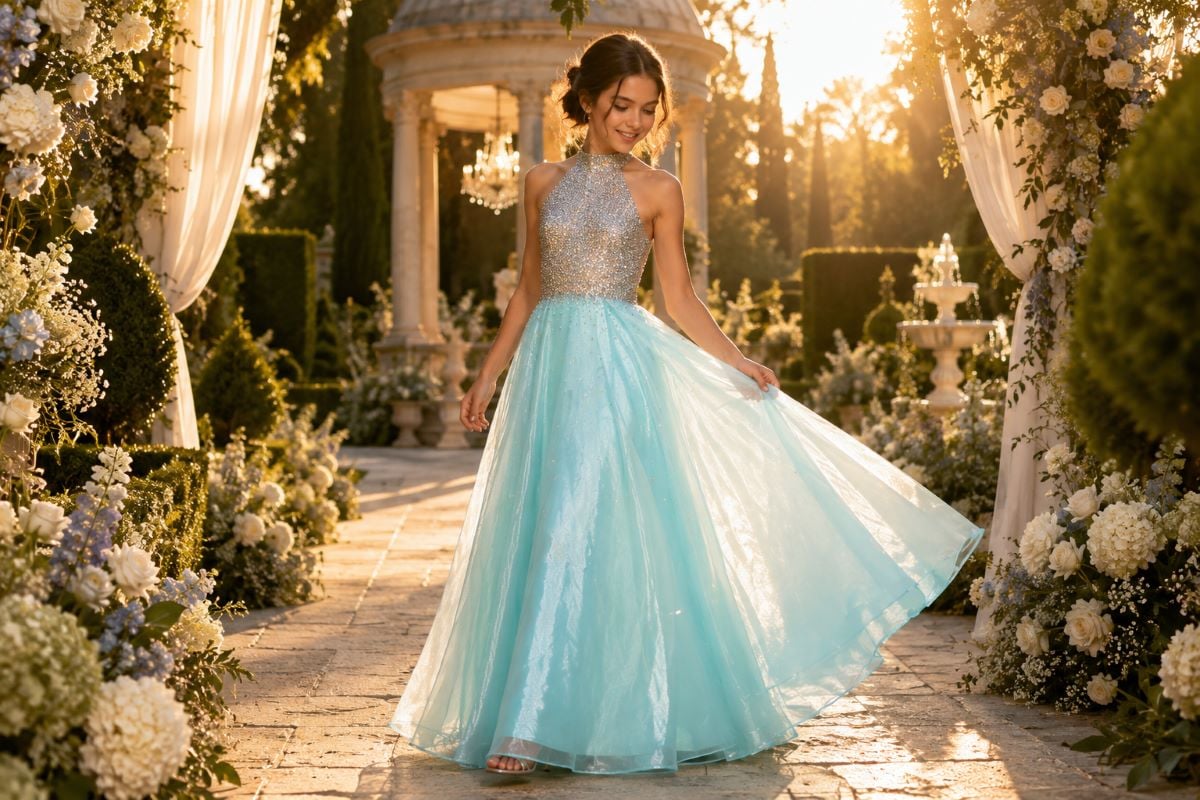
Soft tulle is a lovely choice for a full, twirly skirt that delights a young child, though it should always sit over a smooth lining so it does not scratch the legs. Satin offers a more polished look for an older flower girl, and lace adds a timeless, delicate texture. Whatever the fabric, a smooth lining is essential, since it is what keeps the dress comfortable against a child’s skin. Avoiding stiff, heavy fabrics that restrict movement is the guiding principle, since a young child needs to feel light and free to enjoy her day. The lace styles among lace formalwear show how delicate the fabric can look, which translates beautifully to a flower girl dress when properly lined.
Coordinating with the wedding
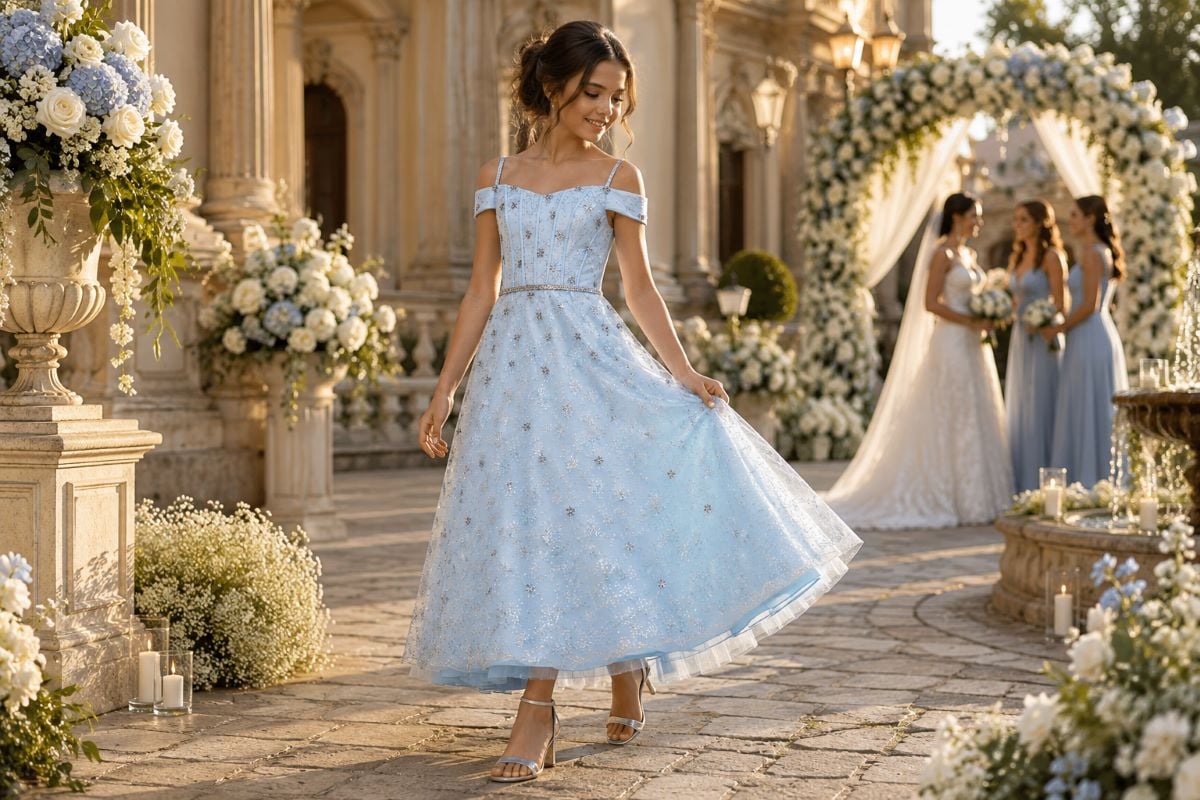
A flower girl dress should coordinate with the bridal party and the overall wedding, which helps the whole celebration feel cohesive. The most common approach is to match or complement the wedding’s color palette, with the flower girl dress echoing the bridesmaid colors or picking up an accent shade from the wedding. A classic flower girl look is ivory or white, sometimes with a sash or detail in the wedding’s accent color, which ties her to the bridal party beautifully.
Coordinating with the bride is worth a conversation, since the bride often has a vision for how the flower girl fits into the overall look. The flower girl dress should complement rather than compete with the wedding party, reading as a sweet, junior version of the celebration’s style. Because the flower girl is part of a larger wedding picture, thinking about how her dress relates to the bridesmaids, the bride, and the venue leads to the most cohesive result. For a sense of how a junior wedding role coordinates with the celebration, the guide to junior bridesmaid etiquette covers how younger members of the wedding party fit into the overall look.
Sizing and growth
Sizing a flower girl dress comes with a particular challenge, since young children grow quickly and a dress is often bought weeks or months before the wedding. This makes the timing and fit of a flower girl dress worth thinking about carefully, so the dress fits well on the day rather than at the time of purchase.
The safest approach is to buy the dress reasonably close to the wedding when possible, since a child’s measurements can change over a few months. When the dress must be bought further ahead, sizing slightly up and planning for minor alterations is often wiser than sizing exactly, since a dress can be taken in more easily than let out. A professional who handles formalwear can adjust the fit closer to the wedding, which is part of why building in a little time for alterations matters. The styles among Sweet 16 dresses show how an older girl’s formal dress is fitted, while a younger flower girl’s dress prioritizes room to move and grow. Getting the sizing right is what lets a flower girl feel comfortable and look polished on the day.
Involving the flower girl
Involving a flower girl in choosing her dress, within sensible limits, helps her feel happy and proud in her role. A young child who has a say in her dress, even a small one, tends to feel more excited and comfortable wearing it, which matters for a long day where she is part of the celebration.
A practical approach is to set the boundaries first, the wedding’s color, the appropriate level of formality, and a few suitable options, then give the child a real choice within them, such as the color or the feel of the skirt. Offering a shortlist of two or three suitable dresses gives a child ownership of the choice without an overwhelming, open-ended search that can tire a young child. This approach lets the flower girl feel involved and excited while keeping the final choice appropriate for the wedding. The styles among bat mitzvah dresses show how a young girl’s formal dress can feel special and personal, which is exactly the feeling a flower girl should have about her dress.
Caring for a flower girl dress
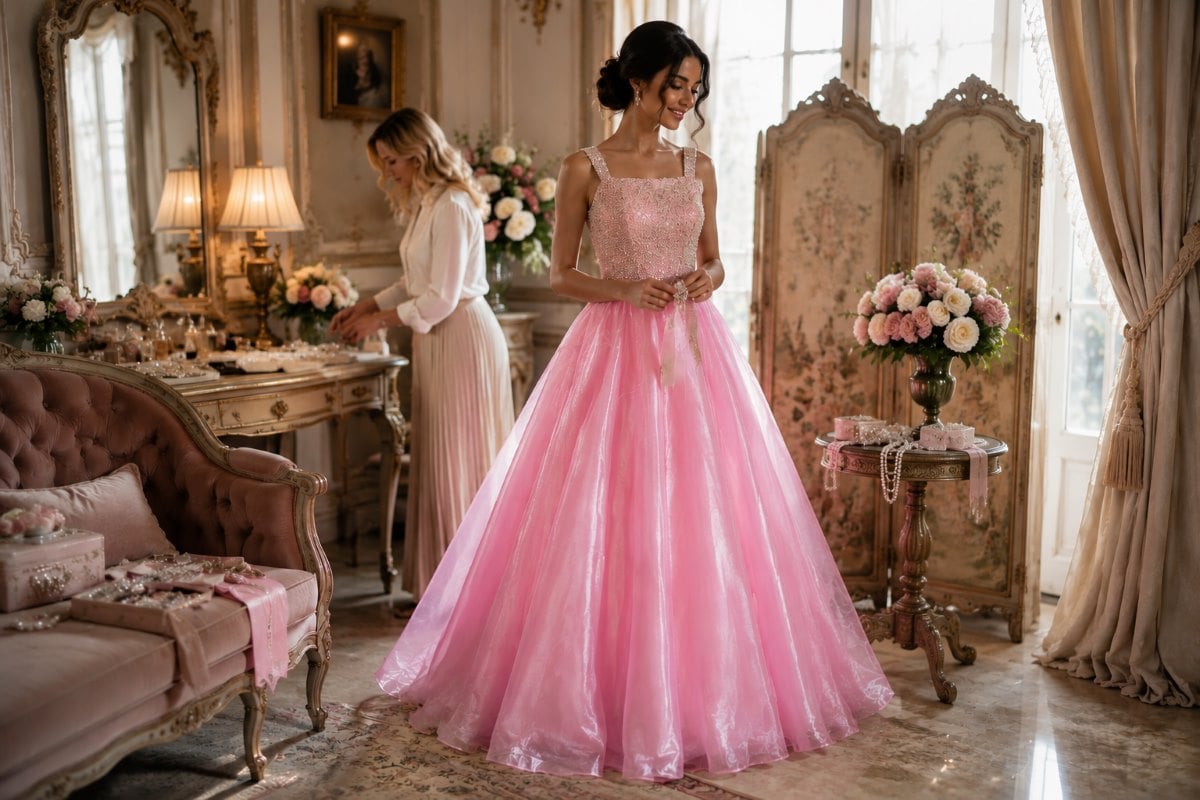
A flower girl dress often sits in a closet for weeks before the wedding and may be kept afterward, so a little care protects it and keeps it looking its best. Before the wedding, the dress should be stored hanging in a breathable garment bag, away from direct light, which keeps it fresh and prevents wrinkling or yellowing. A gentle steam closer to the day refreshes the fabric, though delicate fabrics should be handled carefully.
On the day itself, a small kit with a few practical items helps manage the realities of a young child in a special dress, since spills and tumbles are part of any celebration with children. After the wedding, having the dress professionally cleaned by someone who handles delicate fabrics preserves it, particularly if the family wants to keep it as a keepsake. These small steps protect the dress and keep it beautiful, whether for photographs on the day or as a memento afterward. The dressy styles among wedding gowns show the level of care formal wedding fabrics deserve, which applies to a flower girl dress as well.
Choosing a flower girl dress with confidence
Choosing a flower girl dress comes down to balancing how she looks with how she feels, since both matter for a young child on a long day. The dress should be beautiful and coordinate with the wedding, but it must also be soft, comfortable, and easy to move in, since a comfortable flower girl is a happy one. Prioritizing a smooth lining, an age-appropriate design, a comfortable silhouette and length, and a fit with a little room to grow leads to a dress that works beautifully on the day.
The general guide to formal dresses for girls and tweens covers the broader practical side of dressing a child for any occasion, while a flower girl dress focuses specifically on the wedding role. With comfort, coordination, and fit handled, a flower girl can simply enjoy her special part in the celebration. To see how soft fabrics, sweet silhouettes, and age-appropriate details come together in a girls’ formal dress for a wedding, explore the current styles through an authorized Jovani retailer.
Shoes, accessories, and finishing touches
Comfortable shoes she can move in
Shoes matter as much as the dress for a flower girl, since a young child will be walking, standing, and playing through a long celebration. Comfortable, secure shoes she can move in are far more important than formal, fussy ones, since uncomfortable shoes can quickly spoil a child’s day. A simple flat or a low, secure shoe in a coordinating color suits a flower girl beautifully, letting her walk down the aisle and play afterward without trouble. Breaking in new shoes a little before the wedding also helps, since stiff new shoes can rub during a long day on her feet, which is easy to prevent with a few wears beforehand.
Sweet, age-appropriate accessories
A few small accessories complete a flower girl look while keeping it age-appropriate and comfortable. A simple hair accessory, such as a small bow, a flower clip, or a delicate headband, suits a flower girl sweetly without being heavy or uncomfortable. A sash in the wedding’s accent color ties the dress to the celebration, and a small basket for petals is part of the classic flower girl role. The guiding principle is to keep accessories sweet, light, and comfortable, since anything heavy or fussy can bother a young child through a long day. The styles among charming formal dresses for girls show how sweet details complete a young girl’s look, which suits a flower girl beautifully.
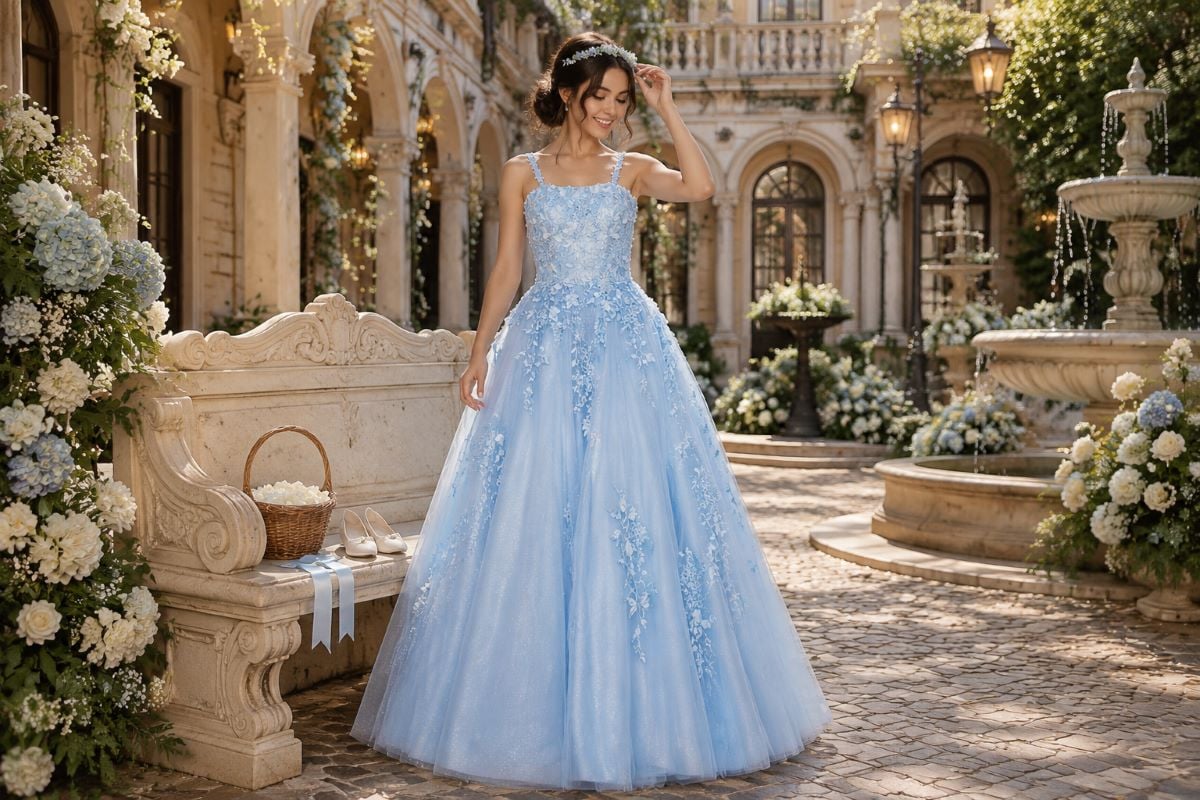
Frequently Asked Questions flower girl dress
What is a flower girl dress?
A flower girl dress is the dress worn by the flower girl in a wedding, typically a young child who walks down the aisle ahead of the bride, often scattering petals. The dress is usually a sweet, age-appropriate style that coordinates with the bridal party and the wedding’s colors, often in ivory, white, or an accent shade from the wedding. The most important qualities are that it looks lovely, coordinates with the celebration, and keeps a young child genuinely comfortable through a long day.
What length should a flower girl dress be?
For younger flower girls, a shorter length like knee-length or tea-length is often most practical, since it lets a small child walk and move freely without tripping on a long hem. A floor-length flower girl dress can look lovely for an older child or a formal wedding, but it requires more care to walk in. The child’s age and the formality of the wedding both factor in, with shorter, softer dresses generally being the safest choice for the youngest flower girls.
What fabric is best for a flower girl dress?
Light, soft fabrics are best for a flower girl dress, since comfort matters most for a young child. Chiffon and organza are airy and move beautifully without feeling heavy, which suits warm-weather weddings. Soft tulle is lovely for a full, twirly skirt, though it should sit over a smooth lining. Satin offers a polished look for an older child, and lace adds delicate texture. Whatever the fabric, a smooth lining is essential, and stiff, heavy fabrics that restrict movement are best avoided.
How do you coordinate a flower girl dress with the wedding?
A flower girl dress coordinates best when it echoes the wedding’s color palette, often matching or complementing the bridesmaid colors or picking up an accent shade. A classic look is ivory or white, sometimes with a sash or detail in the wedding’s accent color. It is worth coordinating with the bride, who often has a vision for how the flower girl fits the overall look. The dress should complement rather than compete with the wedding party, reading as a sweet, junior version of the celebration’s style.
When should you buy a flower girl dress?
Because young children grow quickly, it is often safest to buy a flower girl dress reasonably close to the wedding, since a child’s measurements can change over a few months. When the dress must be bought further ahead, sizing slightly up and planning for minor alterations is wiser than sizing exactly, since a dress can be taken in more easily than let out. Building in a little time for a professional to adjust the fit closer to the wedding helps ensure the dress fits well on the day.
How do you keep a flower girl comfortable on the day?
Keeping a flower girl comfortable starts with the dress itself: a smooth lining, a soft fabric, and a silhouette and length she can move in. Beyond the dress, a comfortable pair of shoes she can walk and play in matters, as does planning for the realities of a young child at a long celebration. Letting her have a say in her dress helps her feel happy wearing it, and keeping the day’s expectations age-appropriate, with room to be a child, keeps the experience enjoyable rather than overwhelming.