
Stepping into a beautifully tailored gown is a transformative experience. The right design instantly alters the way you carry yourself, encouraging a taller stance, a more deliberate stride, and an undeniable sense of confidence. However, knowing how to translate that real-life elegance into a static, two-dimensional photograph is an entirely different skill. When the cameras flash at a charity gala, a formal wedding, a prestigious pageant, or a red-carpet event, many women freeze, unsure of where to place their hands, how to angle their bodies, or how to interact with their garments.
Understanding how to pose in an evening gown is an essential tool that ensures your event photographs reflect the true sophistication of your look. Whether you are walking down a grand staircase, standing in front of a step-and-repeat banner, or capturing candid moments with friends, your posture and positioning determine how the fabric drapes, how the light catches the embellishments, and ultimately, how poised you appear.
When you wear exquisite formal gowns, the garments are crafted with precise structural integrity designed to flatter the human form. High-end design philosophy revolves around this synergy between the woman and the wardrobe. The gown provides the foundational support, but your pose is what brings the silhouette to life. Mastering the art of posing for event photos removes the anxiety of being photographed and allows you to remain fully present in the moment. By learning core techniques regarding weight distribution, arm placement, angles, and facial expressions, you can ensure that every photograph captures your absolute best, turning fleeting moments into timeless visual memories.
The Foundation of Flawless Formal Dress Photography
If you are wondering how to pose in an evening gown like a professional, remember that great photographs do not start with a forced smile or a sudden, rigid posture; they start from the ground up. The foundation of any successful pose relies entirely on your body mechanics—specifically your posture, your foot placement, and how you carry your core. In formal dress photography, your posture directly dictates how the fabric falls across your body. If you slouch, even the most impeccably tailored bodice will crease, gap, and lose its intended architectural shape. Building a strong physical foundation ensures that everything from the neckline to the hemline looks flawless.
Mastering Weight Distribution
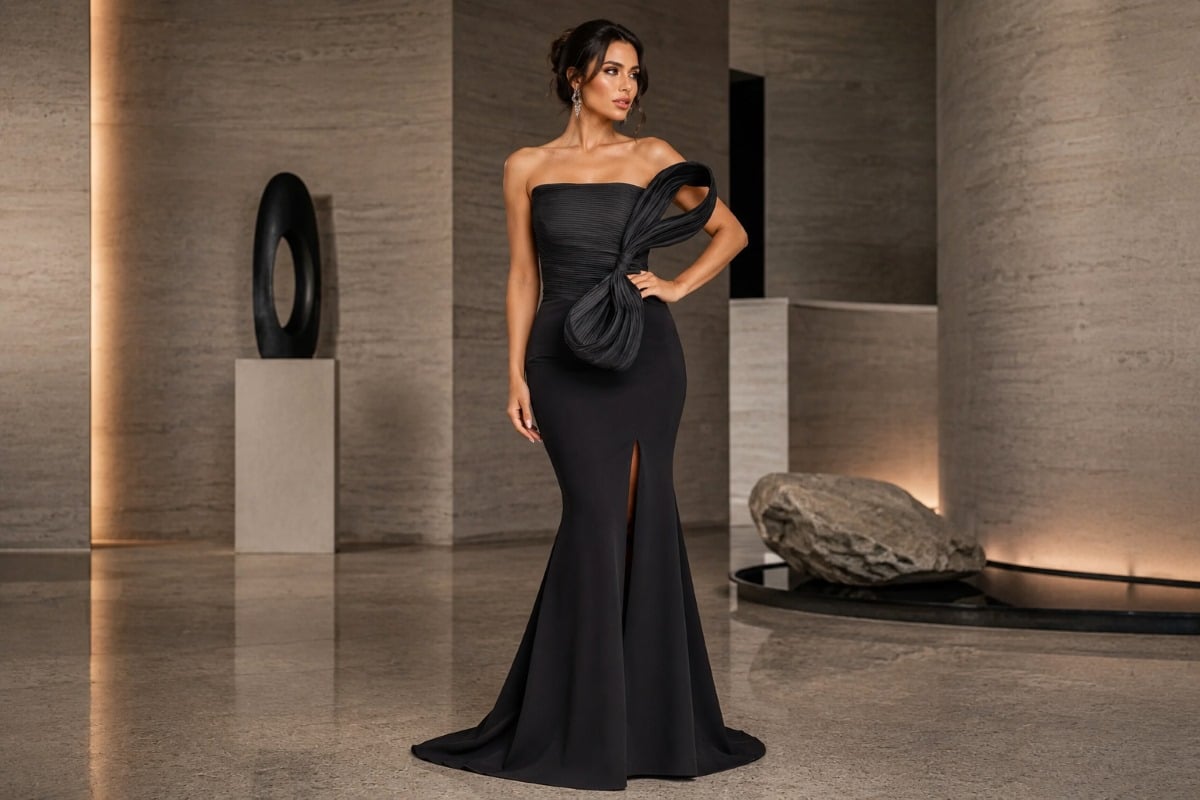
The most common mistake people make in front of a camera is standing with their weight distributed equally on both feet. This straight-on stance squares the shoulders and hips directly toward the lens, which visually flattens the body and makes the torso appear wider and less dynamic. It creates a blocky appearance that completely counteracts the delicate tailoring of formalwear. To instantly elevate your pose and create a more flattering silhouette, you must master the “70/30” weight distribution rule.
Shift your weight entirely onto your back foot. By placing about seventy percent (or more) of your body weight onto the leg furthest from the camera, you naturally drop your back hip and raise your front hip slightly. This subtle, mechanical shift creates an elegant curve through the torso and allows your front leg to relax completely. Because your front leg is carrying virtually no weight, you can easily bend the front knee slightly or point the toe forward, adding visual interest and creating a lengthening effect. Imagine your front foot is at 12 o’clock and your back foot is at 2 o’clock; this slight rotation slims the silhouette instantly and gives the gown natural movement.
Engaging the Core and Lengthening the Spine
Once your weight is properly distributed, your focus must move to your center. Engaging your core does not mean holding your breath or pulling your stomach in uncomfortably. Vacuuming your stomach often leads to raised, tense shoulders and a strained neck, which translates terribly on camera, making you look anxious or uncomfortable. Instead, imagine a string attached to the crown of your head gently pulling you upward toward the ceiling.
This mental imagery naturally elongates the spine, lifts the ribcage, and creates more physical space between your hips and your lower ribs. When your core is lightly engaged in this upward motion, your shoulders will naturally roll back and down, settling into a relaxed but highly structured position. This elongated posture is the secret to wearing high-end fashion beautifully; it allows the bodice of the gown to lay perfectly flat, smoothing out any unwanted wrinkles, and showcases the craftsmanship of the design exactly as the designer intended. Furthermore, an elongated spine instantly projects an aura of regal confidence.
Breathing Techniques for Relaxed Posture
Professional models often use a technique called “breathing through the pose.” Rather than holding your breath and tensing your muscles—which creates a rigid, mannequin-like appearance—maintain a slow, steady rhythm of breathing. Holding your breath cuts off oxygen circulation, which can cause you to look stiff and even flush your complexion. If you are doing a dedicated photoshoot, ask the photographer to count to three. Inhale on one and two, and exhale smoothly on three as the flash goes off. Exhaling relaxes the facial muscles, softens the mouth, and drops the shoulders, resulting in a much more authentic, relaxed, and editorial aesthetic.
Understanding Your Silhouette: Posing for Specific Gown Styles
Learning how to pose in an evening gown means acknowledging that no two dresses are exactly alike. The most striking formal dress photography occurs when the wearer understands the geometry of her specific garment and poses in a way that highlights its unique, defining features. What works perfectly for a sleek, minimalist dress will not necessarily work for a voluminous fairytale skirt. Tailoring your pose to the silhouette is the mark of true photographic elegance.
Mastering the Mermaid and Fitted Silhouettes
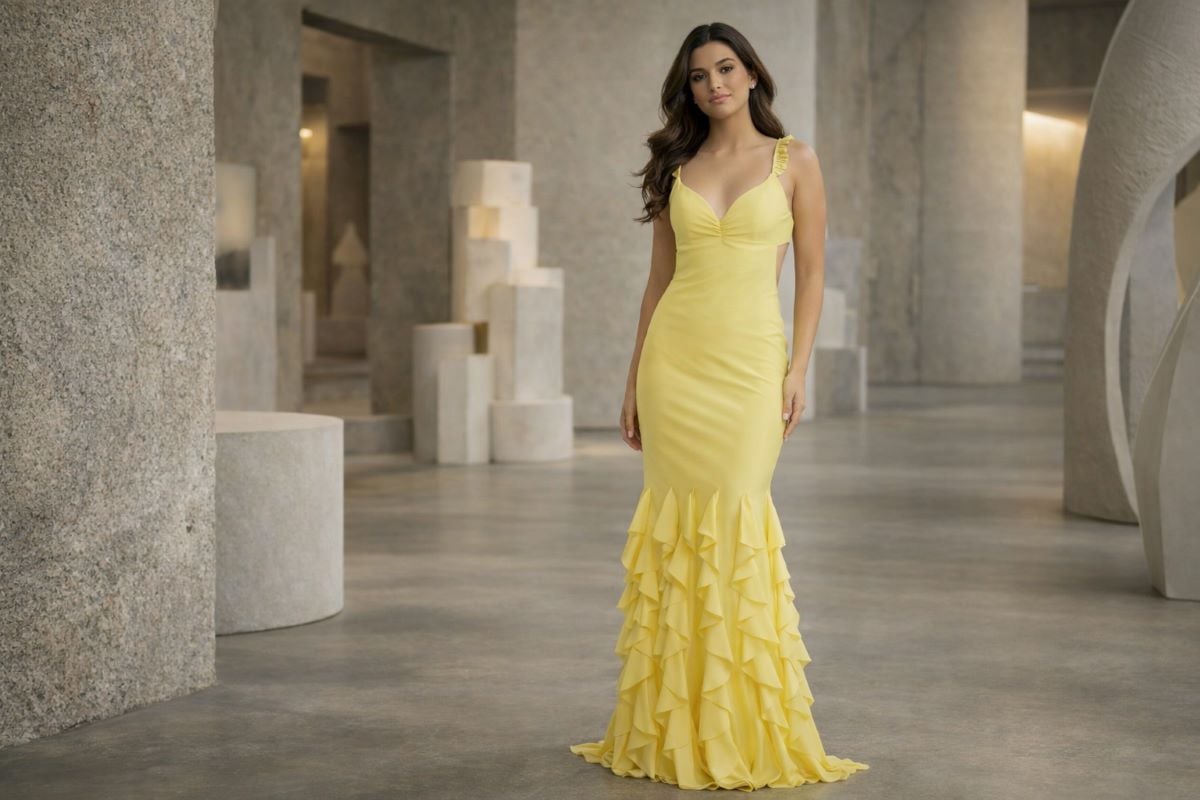
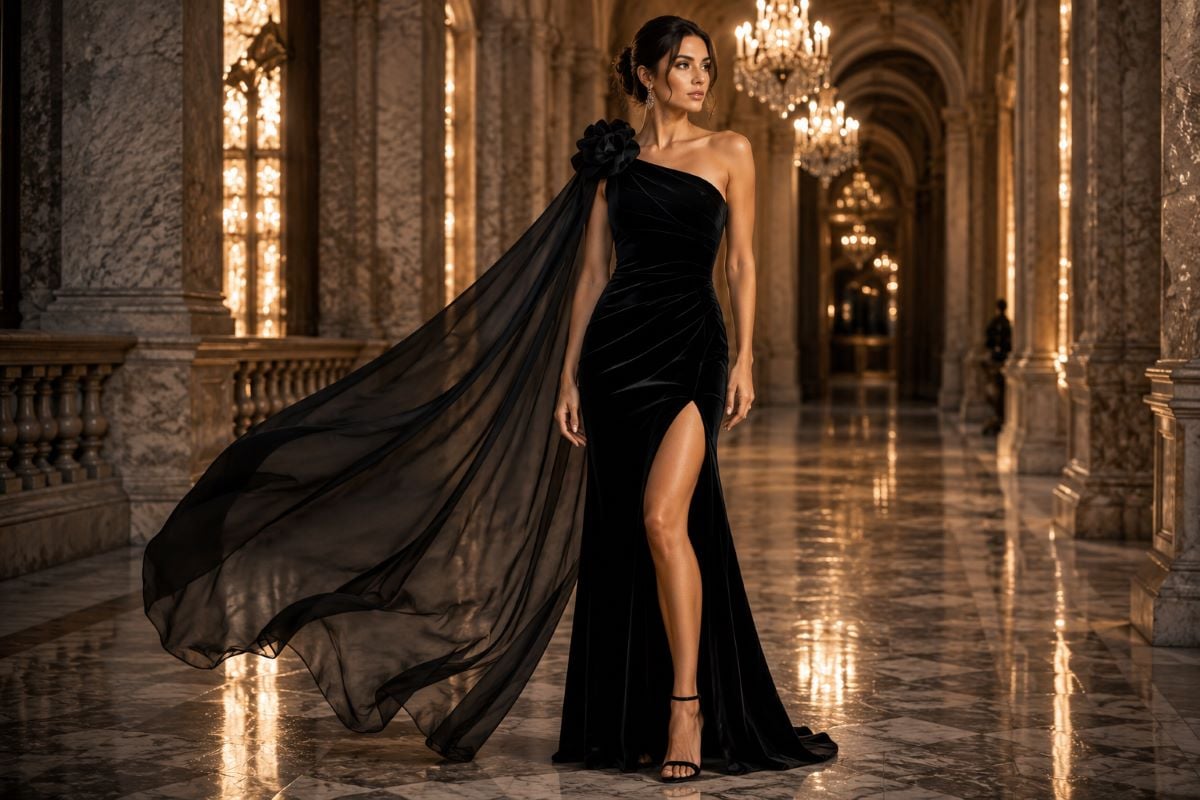
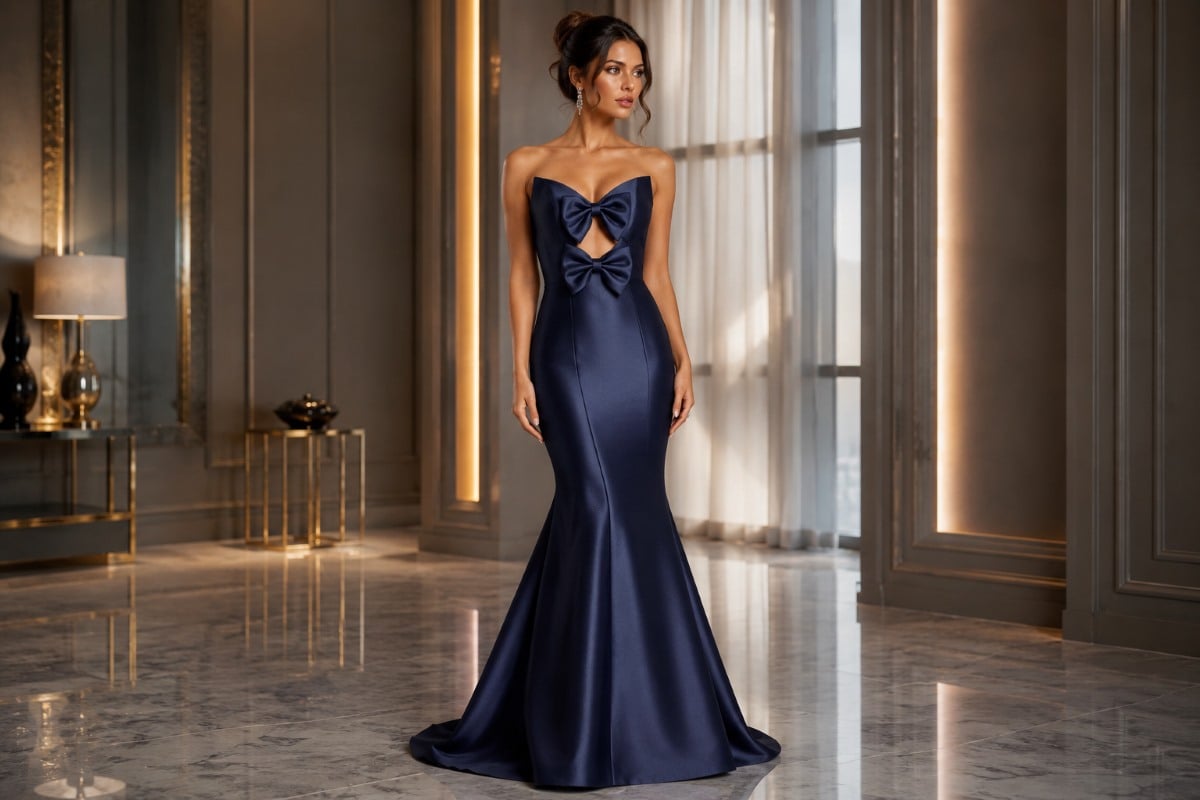
When you are wearing form-fitting formal wear, the primary goal is to emphasize the natural contours of your body. These silhouettes rely heavily on your body’s angles to create visual interest. This technique is especially crucial when considering posing in mermaid evening dresses. Because the mermaid style is characterized by a tightly fitted bodice that dramatically flares at or below the knee, your pose needs to showcase both the sleek upper half and the voluminous lower half simultaneously.
To achieve this, the classic “S-curve” is your best asset. Angle your body about forty-five degrees away from the camera. Cross your front foot over your back foot, shift your weight entirely to the back leg, and slightly twist your upper body back toward the lens. This torsion creates a beautiful, elongated S-shape that highlights the waist and hips. To emphasize the dramatic flare of the skirt, take a slightly wider stance with your front leg before popping the knee. This pushes the flared hemline outward, maximizing the hourglass shape of the gown. Avoid standing completely straight, as this can make a flared skirt look heavy and blocky, losing the dramatic flair that the designer intended.
Creating Movement with Fuller Skirts
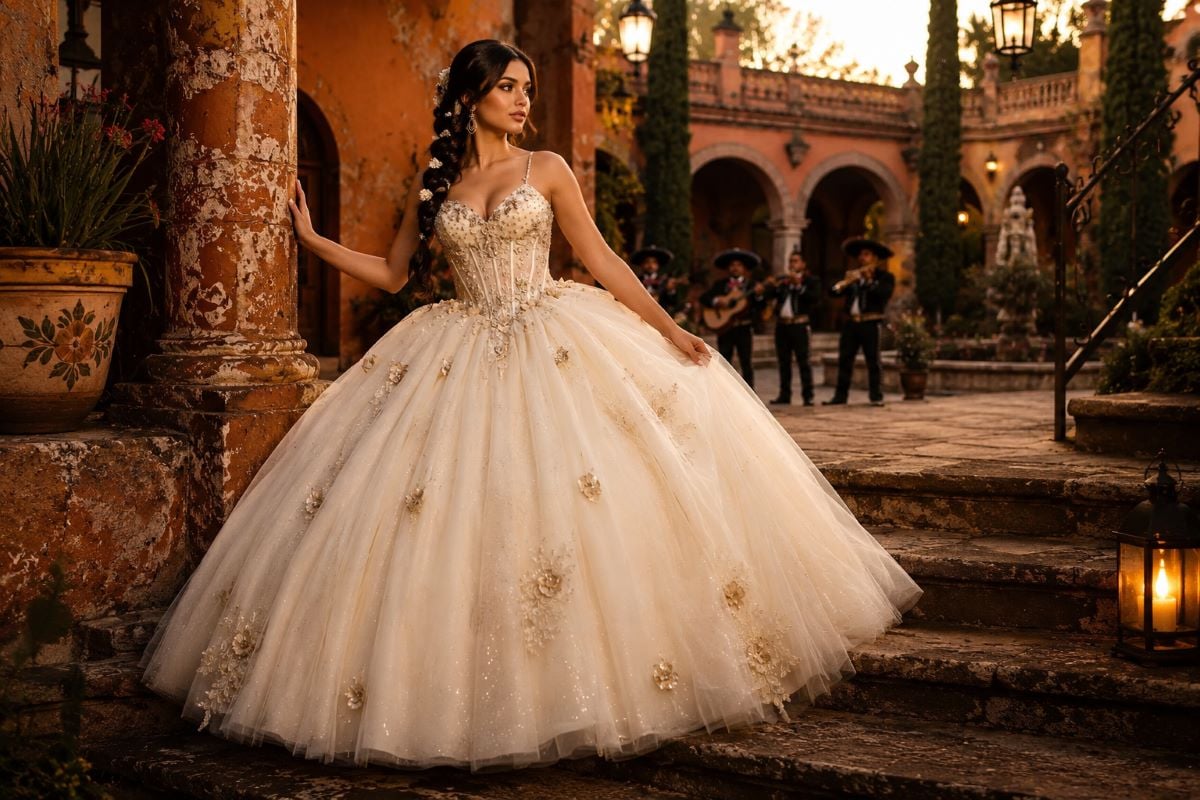
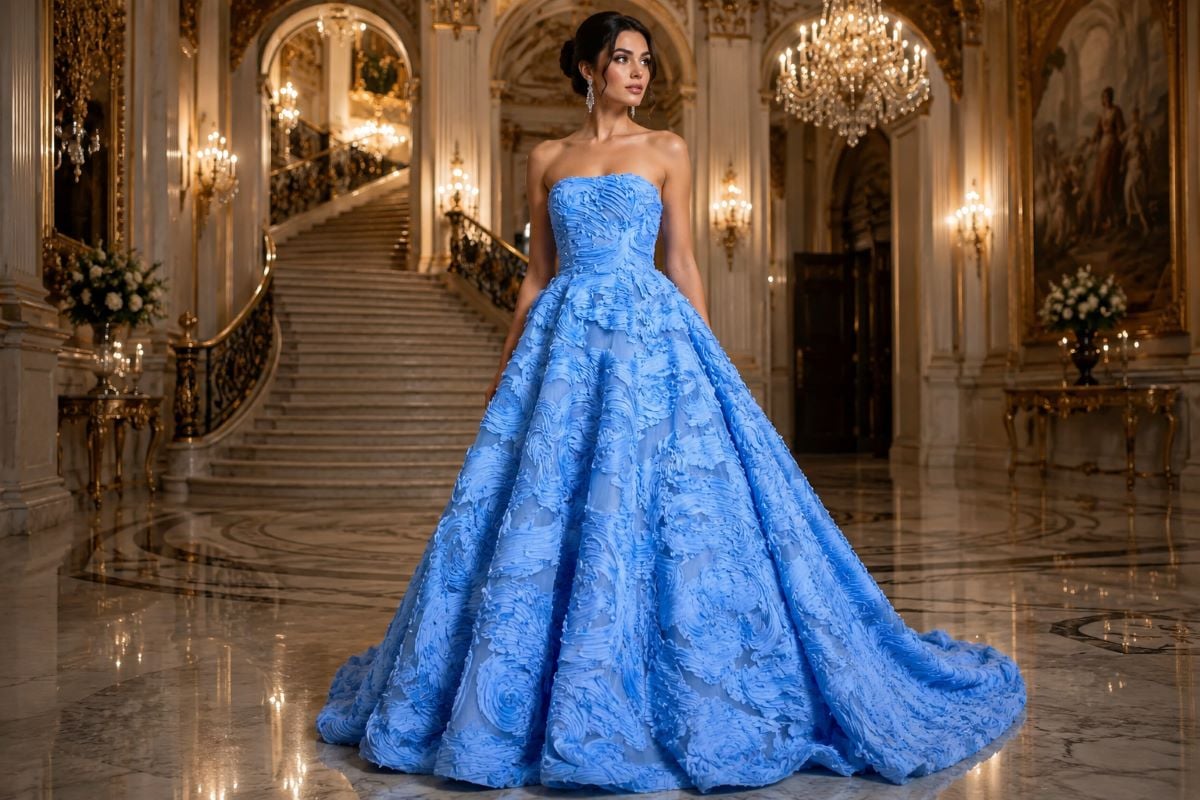
Navigating a camera while wearing a very full skirt requires a completely different approach. If you are wondering how to pose in a ball gown, the primary rule is to avoid letting the sheer volume of the fabric swallow your figure. Because ball gowns evening dresses inherently obscure the lower half of your body and the natural shape of your legs, you must create shape and definition using your upper body and your hands.
Never press your arms flat against your sides when wearing a voluminous skirt. Doing so makes your torso blend directly into the skirt, widening your overall silhouette and erasing your waistline. Instead, you must actively create “negative space” between your arms and your waistline. Place one hand lightly on your natural waist, or rest your fingertips elegantly on the top layer of the skirt, slightly lifting the fabric. This subtle lifting motion not only defines where your waistline begins but also brings attention to the texture and cascading layers of the gown. If the dress has pockets, utilize them. Placing your hands in the pockets of a full skirt pushes the fabric out slightly at the hips, adding a relaxed, incredibly modern edge to a highly traditional and formal silhouette.
Highlighting Necklines and Bodices
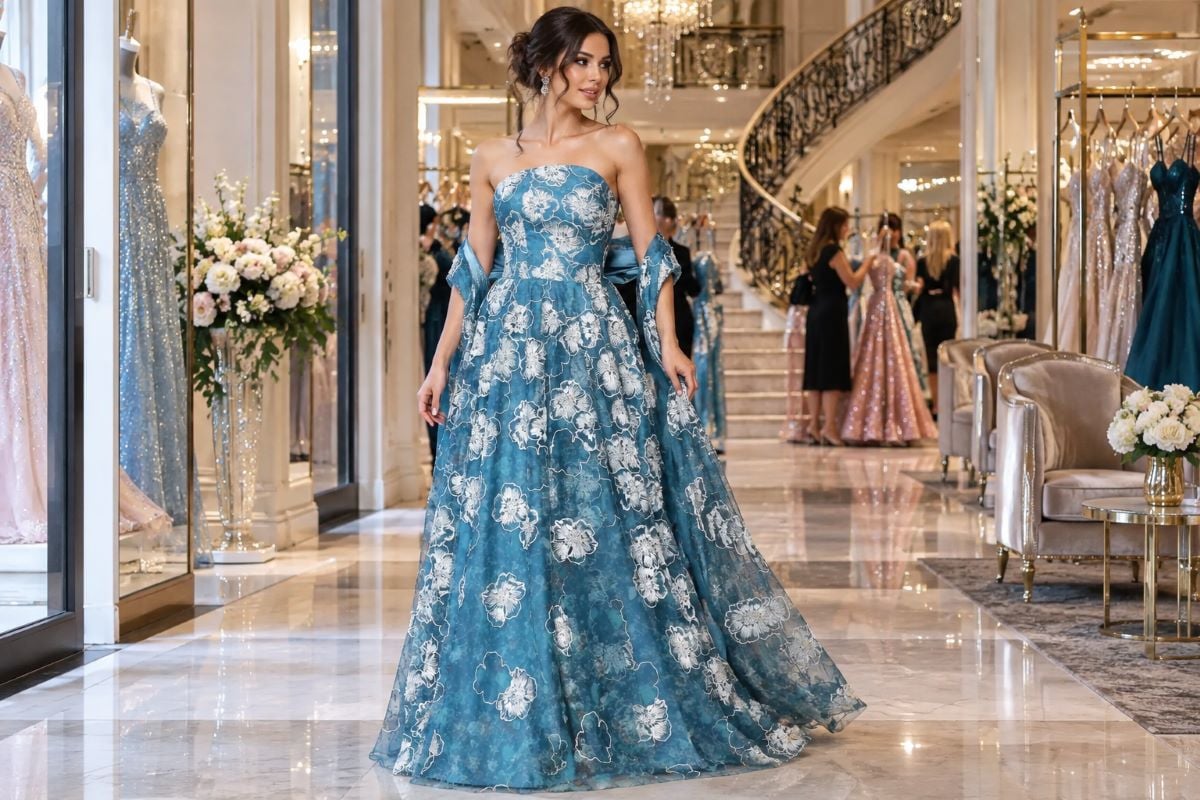
The upper half of your gown acts as the frame for your face, making it the undeniable focal point of portrait-style photographs. When wearing strapless formal gowns, the expanse of bare skin across the décolletage demands excellent, intentional shoulder posture. Pushing your shoulders back too forcefully can create a harsh, rigid appearance, while slouching will cause the neckline of the bodice to gap awkwardly away from your skin.
Aim for a relaxed, open chest. A wonderful trick for strapless gowns is to slightly bring your shoulder blades together in the back while dropping them down toward your waist. This gently accentuates the collarbones and creates a long, graceful neckline without looking strained. If your gown features an asymmetrical or one-shoulder design, always try to angle the covered shoulder slightly toward the camera. This highlights the architectural detail of the strap or sleeve while keeping the overall look perfectly balanced. For high-neck or halter designs, keep your chin slightly elevated to ensure the fabric does not visually shorten or crowd your neck.
Working with Embellishments and Heavy Fabrics
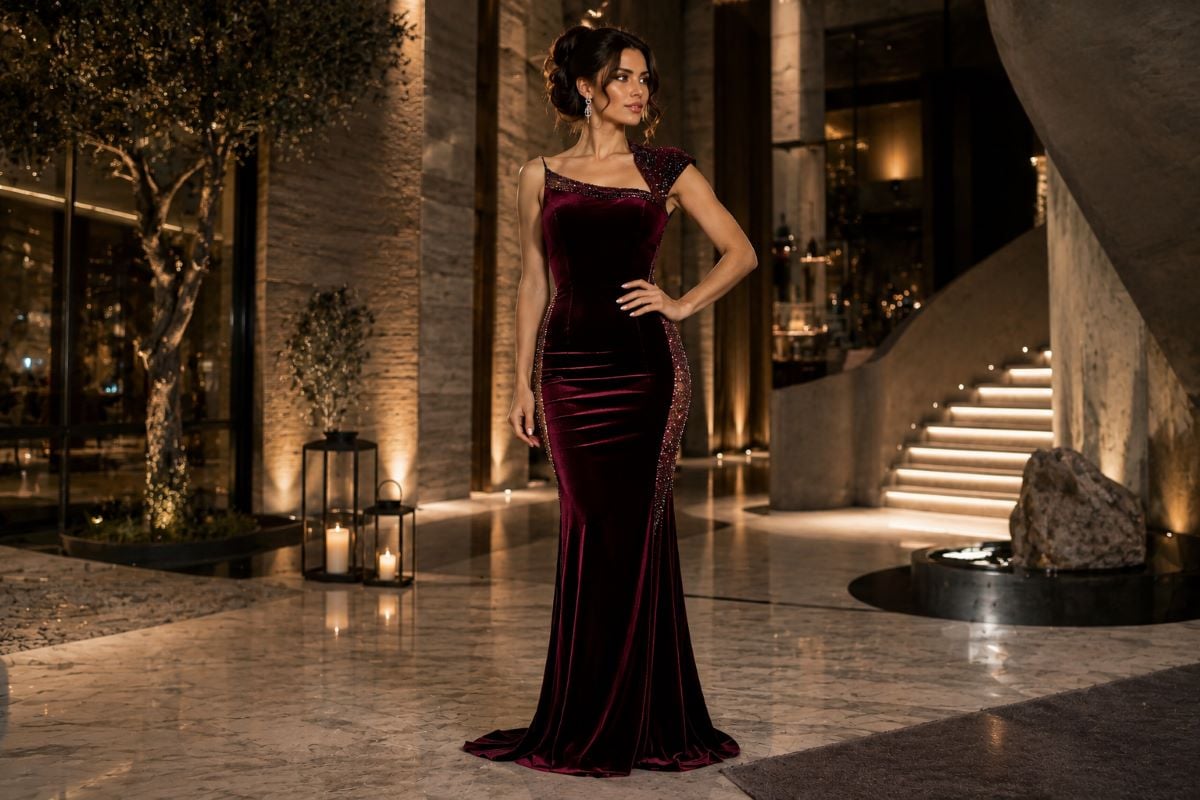
The specific fabric and hemline of your dress also dictate how you should interact with the camera lens. Heavily textured fabrics interact uniquely with camera flashes and professional lighting. When posing in beaded formal dresses, slight, continuous movements can create a stunning, dynamic photograph. Rather than standing perfectly still like a statue, try executing a slow, controlled twist of your torso just as the photo is being taken. The gentle, fluid motion will allow the light to hit the crystals, sequins, or intricate beadwork from multiple micro-angles, creating a dazzling, sparkling effect that looks incredibly glamorous and expensive on film.
Signature Red Carpet Poses for Any Formal Event
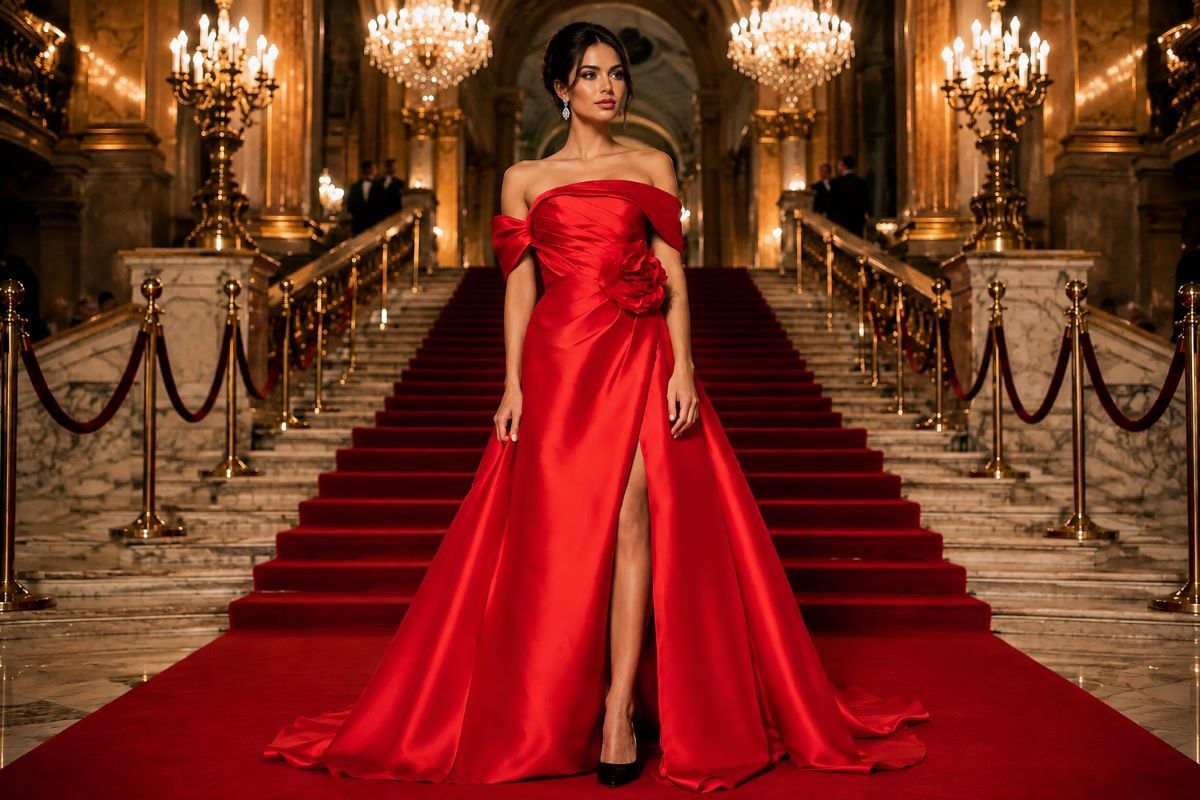
You do not need to be an A-list celebrity to utilize the posing techniques perfected on Hollywood’s biggest nights. Red carpet poses are specifically designed to look effortless and flattering from every conceivable angle while masking the chaos of a busy, crowded event. By adopting a few of these signature stances, you can ensure you are always camera-ready, regardless of the setting.
The Classic Over-the-Shoulder Look
If your gown features a daring open back, intricate back beadwork, an oversized bow, or a dramatic sweeping train, the over-the-shoulder pose is mandatory. To execute this properly, turn your back completely to the camera. Shift your weight onto the foot closest to the lens, pop the opposite knee slightly to create a soft curve in the hips, and then turn your upper body and head back over your front shoulder to look at the lens. Critically, you must drop the shoulder closest to the camera slightly so it does not rise up and obscure your jawline. This pose feels like a deep, somewhat unnatural twist in person, but it yields an incredibly sophisticated, editorial look that highlights the often-forgotten back details of a masterful gown.
The Angled Stance and the Hand-on-Hip Technique
The most universally flattering stance is the angled walk. Rather than standing completely statically, take a tiny step forward as if the camera just caught you mid-stride. This creates dynamic tension in the body, gives the gown beautiful movement, and naturally forces your posture into a flattering alignment.
When it comes to arm placement, the traditional “hand-on-hip” can sometimes look dated, prom-like, or overly aggressive if done incorrectly. For a modern, elegant update, do not place your hands flat on your waist with your fingers spread widely and your elbows jutting sharply outward. Instead, gently rest only the sides of your thumbs or your middle fingertips on your natural waist (the smallest part of your torso, usually just beneath the ribcage), and let your elbows fall back slightly rather than pointing straight out to the sides. This creates the necessary negative space to define your waistline without looking rigid. Alternatively, you can loosely clasp your hands together in front of your lower stomach, keeping your elbows slightly bent. This is a softer, highly regal pose that works beautifully for formal portraits and royal-inspired aesthetics.
Perfecting Your Facial Expressions and Angles
Knowing how to pose in an evening gown is not just about the body; it is equally about the face. Facial tension can easily ruin an otherwise perfect physical posture. The secret to learning how to look good in photos consistently lies in relaxing your facial muscles and deeply understanding your most flattering lighting angles.
Finding Your Most Flattering Lighting and Angle
Photography is entirely dependent on light. If you are attending an evening event, harsh overhead lighting can cast deep, dark shadows under your eyes, nose, and chin, making you look tired and aged. Whenever possible, position yourself facing the primary light source, whether that is a window during golden hour, a well-lit hallway, or a professional softbox setup.
Never face the camera completely straight on with your chin tilted back. This angle emphasizes the lower jaw and nostrils in an unflattering way. Instead, use the classic photographer’s trick: push your forehead slightly forward toward the lens (like a turtle peaking out of its shell), and tip your chin down just a fraction of an inch. While this feels slightly unnatural and awkward in person, on camera, it defines the jawline impeccably, eliminates the appearance of a double chin, and brings the focal point directly to your eyes.
The Art of the Natural Smile and the “Smize”
A frozen, wide smile held for too long can look strained, manic, or completely inauthentic. To achieve a genuine, relaxed expression, press your tongue lightly against the roof of your mouth, just behind your front teeth. This subtly tightens the muscles under your chin, smoothing the jawline, while naturally relaxing your jaw muscles.
If you want a softer, more high-fashion or editorial look, part your lips slightly and breathe softly through your mouth. This prevents your lips from looking pursed or tense and gives your face a calm, alluring expression. Furthermore, practice “smizing”—smiling with your eyes, a term popularized in high-fashion modeling. This involves a very slight squint of the lower eyelids, which conveys warmth and confidence even if your mouth is resting in a neutral position. If you prefer a big, joyful smile, try laughing softly right before the photo is taken; a genuine micro-expression of joy is always more photogenic than a smile held artificially for thirty seconds.
Evening Dress Photoshoot Ideas: Styling the Scene
If you are setting up a dedicated portrait session before your event begins, having a repertoire of evening dress photoshoot ideas will ensure your photo gallery is diverse, breathtaking, and worthy of publication. The physical environment you shoot in should complement the grandeur of the gown without overpowering the subject.
Utilizing Venue Architecture
Formal gowns look spectacular against grand architectural backdrops. Sweeping staircases are arguably one of the best props for formalwear. Sitting on a staircase allows you to cascade the skirt of your gown down the steps, showcasing the sheer volume and luxuriousness of the fabric. When posing on stairs, never sit squarely; always angle your legs to one side, cross your ankles elegantly, and consciously elongate your torso to avoid looking slumped.
Doorways, large stone columns, and arched windows also provide excellent framing devices. Leaning lightly against a column—using only a tiny fraction of your body weight so you maintain your posture—adds a touch of effortless nonchalance to a highly formal and structured look.
Action Shots and Candid Moments
Some of the most breathtaking photographs are the ones where the subject is completely ignoring the camera. Have your photographer capture you walking away, looking over your shoulder, adjusting an earring, or smoothing your skirt. Action shots, like spinning slowly to let a chiffon skirt catch the air, introduce an element of pure joy and dynamic movement into the frame. When executing motion shots, a vital pro tip is to move at exactly half your normal speed. This gives the camera’s sensor time to capture the flow of the fabric perfectly without blurring the image.
Posing with Partners and Groups
Formal events are rarely solitary experiences. Knowing how to pose elegantly with a date or a group of friends ensures that the entire party looks cohesive, polished, and ready to frame.
Couples Photography in Formal Wear
When posing with a partner, avoid the stiff, rigid “prom pose” where both people stand squarely facing the camera with arms draped heavily around waists. Instead, angle your bodies slightly inward toward each other to create a sense of intimacy and connection. The person wearing the gown should typically stand slightly in front, allowing the dress to take center stage without being obscured. Place one hand lightly on your partner’s chest or arm, and use your other hand to manage your skirt or hold a clutch. Ensure your weight is still shifted to your back foot to maintain your posture.
Group Shots with Friends
In group photos, coordination is key. Avoid standing in a straight, flat line, which looks like a sterile school class photo. Instead, create depth by having some people stand slightly forward and others slightly back. Stagger your heights if possible. To keep the photo dynamic, ensure everyone is shifting their weight to one side and creating negative space with their arms. Not everyone needs to have a hand on their hip; mix it up with clasped hands, holding evening bags, or resting a hand lightly on a friend’s arm.
Preparation: The Key to Confidence and Comfort
The ultimate secret to mastering how to pose in an evening gown is having absolute confidence in your garment’s fit. The most advanced posing techniques in the world will not save a photograph if you are physically uncomfortable, tugging at your clothing, or wincing in pain from your shoes. Confidence in front of the lens stems directly from knowing that your dress is an extension of yourself.
Why the Right Fit Makes All the Difference
A gown that is too tight will restrict your breathing and movement, causing you to stand rigidly, look distressed, and lose the ability to create dynamic angles. Conversely, a gown that is too loose will require constant adjusting, pulling your focus away from the camera and ruining candid, spontaneous moments. The foundation of a great photo starts long before the event by taking the time to find an evening dress that truly flatters your unique shape, coloring, and proportions. Investing in professional, high-quality alterations to hem the skirt to the exact height of your chosen shoes, or to take in the bodice for a glove-like fit, ensures that you won’t have to second-guess how the dress looks when you move.
Rehearsing Your Poses
Do not let the event be the very first time you pose in your gown. Put on your dress, your specific undergarments, and your exact event shoes, and stand in front of a well-lit, full-length mirror. Practice shifting your weight, finding your best angles, and determining which arm placements look best with the specific cut and fabric of your dress. Take a few test photos with your phone using a timer or a tripod. This brief, 15-minute rehearsal eliminates the guesswork, builds vital muscle memory, and allows you to easily slip into a flattering, sophisticated pose the exact moment you see a camera pointed your way in a crowded room.
FAQs About Posing in Formal Wear
1. How do I hide my stomach when posing in a tight evening gown?
The most effective way to flatten the appearance of the midsection is through posture and strategic angles, not by sucking in your stomach (which makes you look stiff and causes your shoulders to tense). Stand at a 45-degree angle to the camera, shift your weight entirely to your back leg, and engage your core by lifting your ribcage slightly upward. Placing a hand lightly on your natural waist (the narrowest part of your torso, usually just above the stomach) can also create a flattering visual break that draws the eye upward to your face.
2. Where should I look if I don’t want to stare directly into the camera lens?
If looking directly at the lens makes you feel stiff, self-conscious, or intimidated, look slightly above the photographer’s head or directly at one of their shoulders. This keeps your face open to the primary light source and gives you a soft, contemplative look. For candid-style editorial photos, look gently down at your own shoulder or off into the distance, keeping your chin slightly lowered and your neck elongated to avoid awkward shadows.
3. What should I do with my hands if my dress doesn’t have pockets?
Avoid letting your arms hang flat and lifelessly against your sides, which visually widens your silhouette. You can lightly clasp your hands together in front of you near your lower waist, hold an elegant clutch as a natural prop, or rest one hand lightly on your upper hip or natural waistline. The overall goal is to create angles with your elbows (referred to in photography as negative space) to define your waist and prevent your body from looking blocky.
4. How can I make myself look taller in formal photos?
Aside from wearing supportive, comfortable heels, the best way to appear taller is to manipulate the camera angle itself. Ask the person taking the photo to hold the camera slightly lower, at your chest or waist height, rather than shooting down at you from eye level. Additionally, maintaining impeccable, elongated posture and keeping your legs close together with one foot slightly in front of the other will create a long, unbroken vertical line that stretches your frame.
5. How do I pose if I am sitting down in my gown?
Sitting requires just as much posture awareness as standing. Never sit back against the chair; perch on the front third of the seat to keep your spine perfectly straight. Angle your knees together and off to one side (the classic “Duchess Slant”), and cross your ankles rather than your knees to keep your legs looking long and elegant. Let the fabric of your skirt drape naturally over the edge of the chair and the floor.
6. What is the best way to handle a gown with a long train during photos?
Do not let a train bunch up in a messy, chaotic pile around your ankles, as it disrupts the sweeping, intentional lines of the design. Before a photo, ask a friend or the photographer to carefully fan the train out behind you or sweep it dramatically to one side in a soft, unbroken arc. If you are moving, look back over your shoulder while the train trails behind you for a highly dramatic, motion-filled shot that highlights the garment’s luxury.
7. How can I avoid blinking during flash photography?
If you are prone to blinking or squinting when the flash goes off, close your eyes right before the photo is taken. Ask the photographer to count to three; keep your eyes closed on one and two, and open them naturally on three just as the picture is snapped. This ensures your eyes are wide, relaxed, and perfectly timed with the harsh light of the flash.
Ultimately, mastering how to pose in an evening gown elevates your entire event experience, ensuring your memories are captured with the exact same beauty, elegance, and grace that you bring to the room in person. When you understand your body, your lighting, and your silhouette, taking photos transforms from a stressful, anxiety-inducing obligation into a moment of genuine celebration and self-expression. Ready to find the perfect gown that makes you feel effortlessly photogenic and endlessly confident? Explore the complete Jovani collection to discover the designer dress that will make your next formal event absolutely unforgettable.