
The day you are hooded is unlike any graduation that came before it. A high school commencement and a college walk are milestones, but the doctoral hooding ceremony marks the end of a decade or more of study, and the room around you reflects that. The audience is older, the regalia is more elaborate, and the celebration afterward tends to be a dinner rather than a backyard barbecue. Choosing what to wear for this particular day deserves a different kind of thought than the dress you wore at twenty-two, and the considerations are specific enough that general graduation advice only takes you part of the way.
This guide is written for the doctoral candidate getting ready to be hooded. It covers what the hood actually is and how the ritual works, what shows when you are wearing the full doctoral regalia, how to choose a neckline and hem that cooperate with the gown rather than fighting it, what color does against academic colors, and how to dress for the more formal reception that usually follows. The aim is to help you feel composed and genuinely yourself during one of the most meaningful afternoons of your professional life.
What the doctoral hood actually is
The hood is the piece of regalia that distinguishes a doctoral graduate from everyone else in the procession. It is a long panel of fabric, lined in the colors of your institution and trimmed with velvet in a color that represents your field of study, that drapes down the back of the gown and falls below the shoulder blades. During the doctoral hooding ceremony, your advisor or a faculty member places this hood over your head and settles it across your shoulders, and that single gesture is the symbolic heart of the day. It is the moment the degree becomes real, performed in front of the people who guided you to it.
Because the hood lives on your back and shoulders, it changes what your dress needs to do up top. A heavy collar, a high mock neck, or anything bulky at the back of the neck competes with the hood as it is being placed and can keep it from sitting correctly. The doctoral gown itself is fuller and more structured than a bachelor’s robe, often made in a heavier fabric with velvet bars across the sleeves, so the whole ensemble carries more visual weight than a simpler graduation gown. What you wear underneath should work quietly within that architecture.
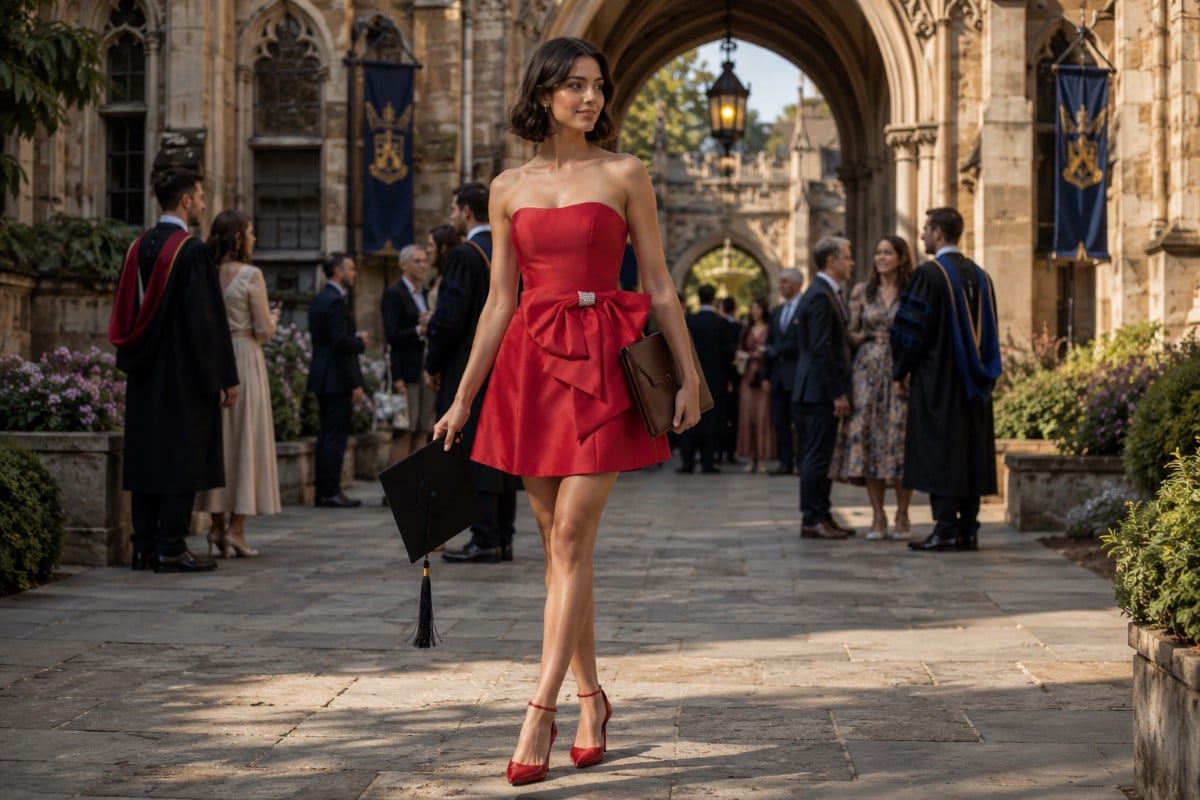
Why this graduation is different from the others
Most graduation guidance is written with a younger graduate in mind, which makes sense because most graduates are young. A doctoral candidate is usually an established adult, frequently a working professional, and often surrounded at the hooding by colleagues, mentors, and family who have watched the work happen over many years. That shifts the tone of what feels right. A look that reads as polished and grown-up suits the occasion better than something youthful or trend-driven, and the dress can lean toward the sophistication you would bring to a professional event rather than a school dance.
The reception that follows a doctoral hooding ceremony also tends to be more formal than a typical graduation celebration. Departments and families often mark the doctorate with a dinner at a nice restaurant, a faculty gathering, or an evening event, which means the dress you choose has to carry you from the ceremony into a setting where you may be photographed, congratulated, and seated for a meal among people whose regard matters to you. Thinking about both halves of the day before you shop saves you from owning a dress that only works for one of them.
What shows under doctoral regalia
While you are robed, only three parts of your dress are visible to the people watching: the neckline above the gown, the hem below it, and your shoes. Everything else is hidden. The single most useful habit when shopping for a doctoral hooding ceremony is to picture the dress with the gown on top and ask what those three visible elements are doing. The broad principles here are shared with any graduation, and our companion guide on what to look for in a graduation dress walks through the under-robe mechanics in full, so this guide focuses on the doctoral specifics that the general advice does not cover.
The neckline is where the doctoral context matters most. Because the hood sits across the back of the neck and the gown has its own V-shaped opening at the front, a dress neckline that stays below the gown’s collar keeps the whole upper body clean. A modest scoop, a soft V, a square neck, or a sweetheart cut all sit neatly beneath the regalia and leave the collarbone bare so the hood and gown take center stage. The styles in our range of trending necklines show how different cuts read on the upper body, which helps when you are picturing what will peek above a doctoral gown.
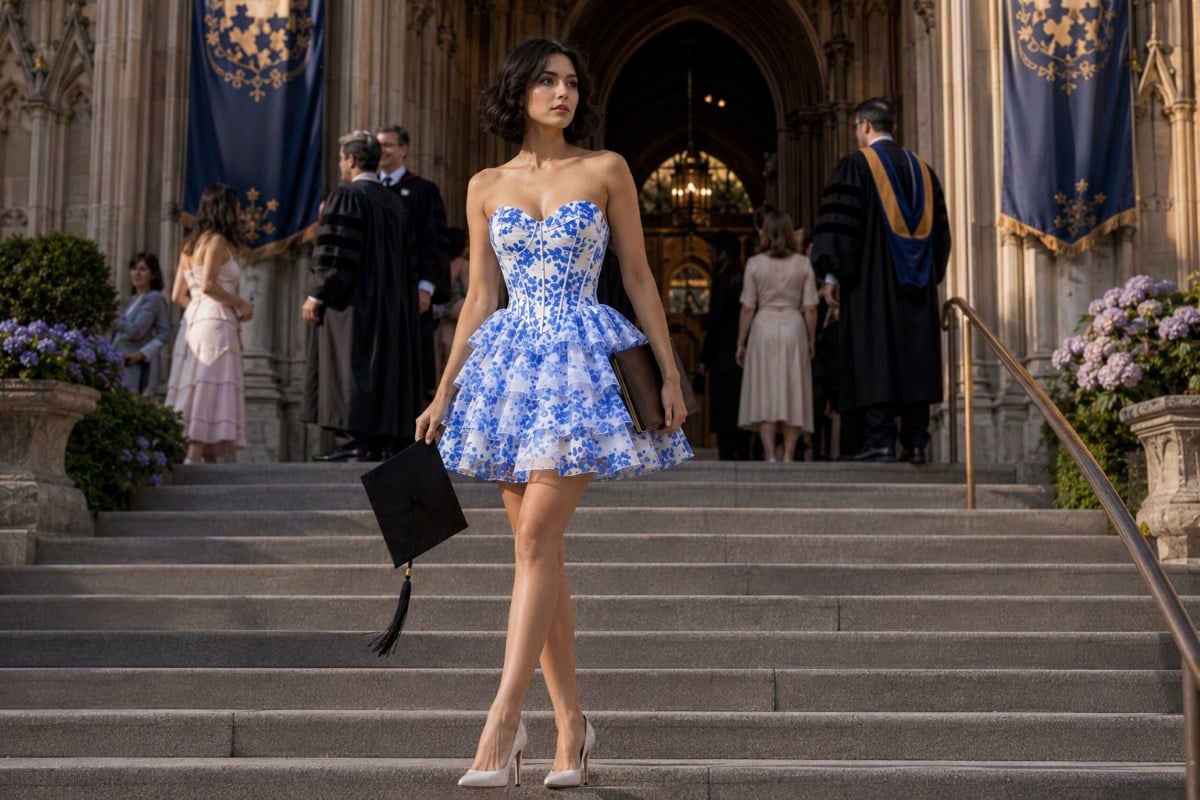
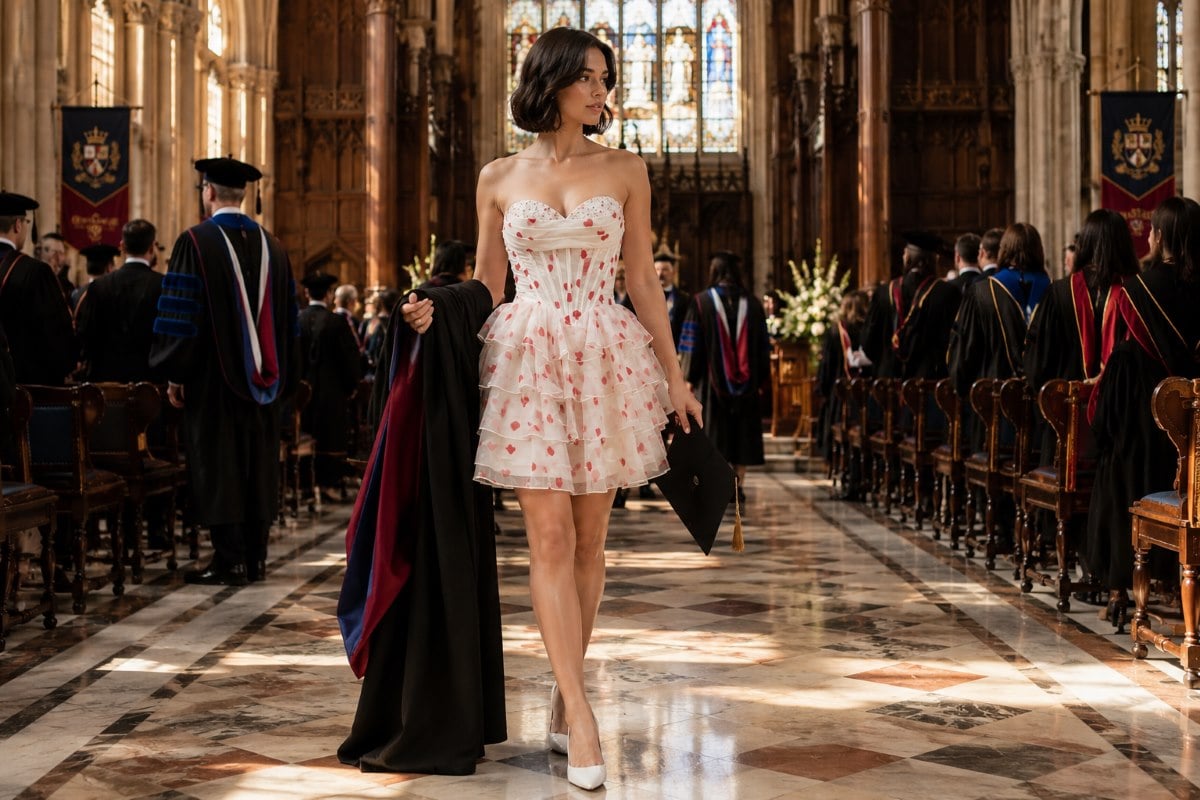
The hem is the second visible element, and the rule is the same one stylists have followed for years: your dress should end above the hem of your gown, not below it. A dress that drops past the regalia creates an uneven, layered line that photographs awkwardly from the audience. A knee-length dress or a tailored midi that stays hidden under the gown reads as deliberate and clean. You can browse knee-length options among our short and cocktail dresses to see lengths that disappear neatly beneath a robe while still standing on their own afterward.
Choosing color against academic regalia
Color is the one consideration a doctoral hooding shares with no ordinary formal event, because your dress color has to coexist with the gown and the hood. The doctoral gown is usually black, though some institutions use their own colors, and the hood adds a band of field-specific velvet and a lining in your school’s shades. Against a dark gown, a lighter dress color creates a soft contrast at the neckline and hem that adds a personal note to an otherwise uniform procession. Blush, champagne, ivory, pale gold, and gentle pastels all read cleanly against black regalia.
If your institution’s gown is a lighter color, the logic reverses, and a richer dress shade keeps the two from blending into an indistinct pale wash. Deep jewel tones hold their own against lighter academic colors and give the visible parts of your dress definition. Either way, the goal is a dress color that complements the regalia rather than clashing with the velvet trim of the hood, which is why it helps to know your field’s hood color before you commit to a shade.
Dressing for the reception after
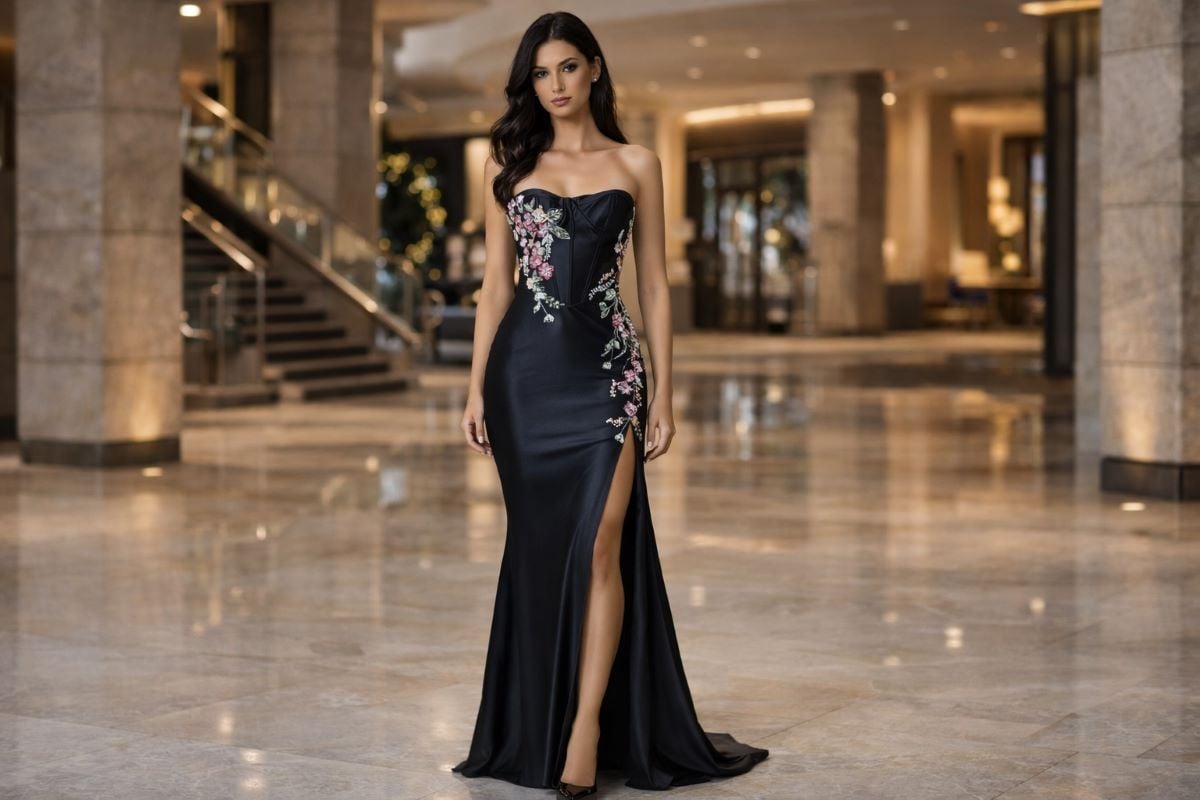
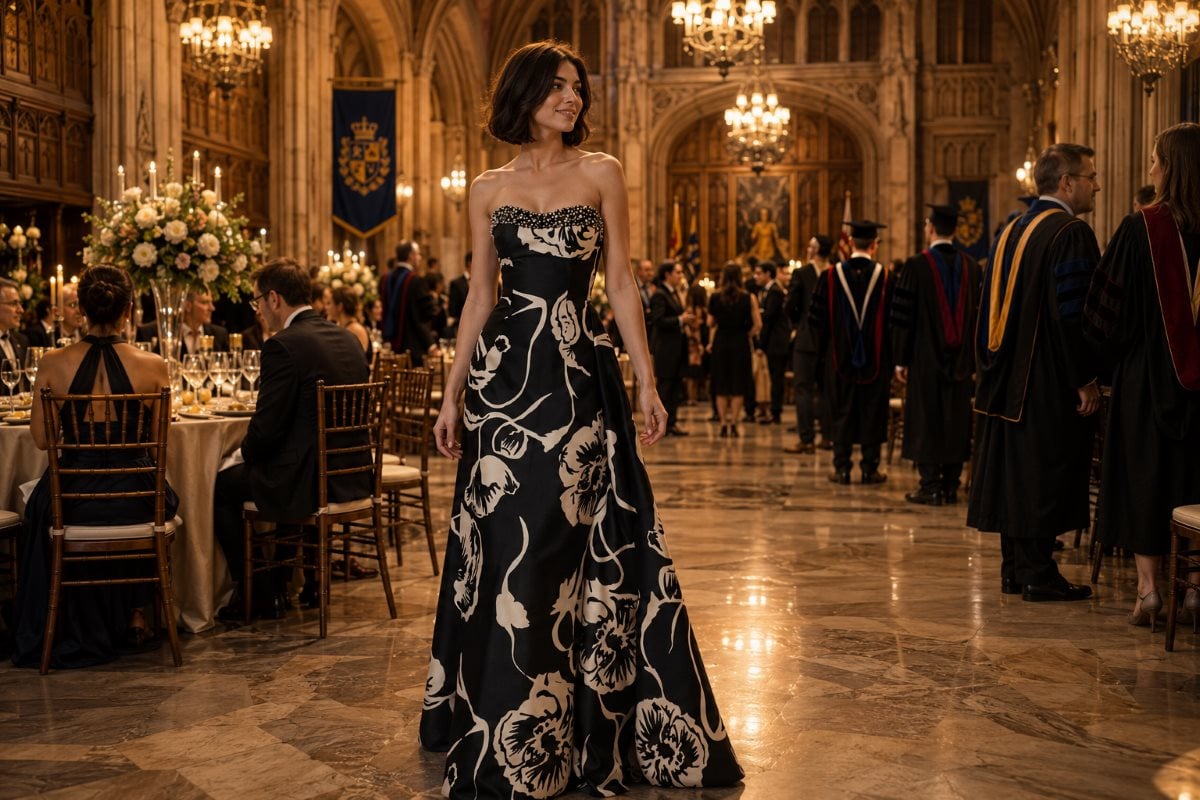
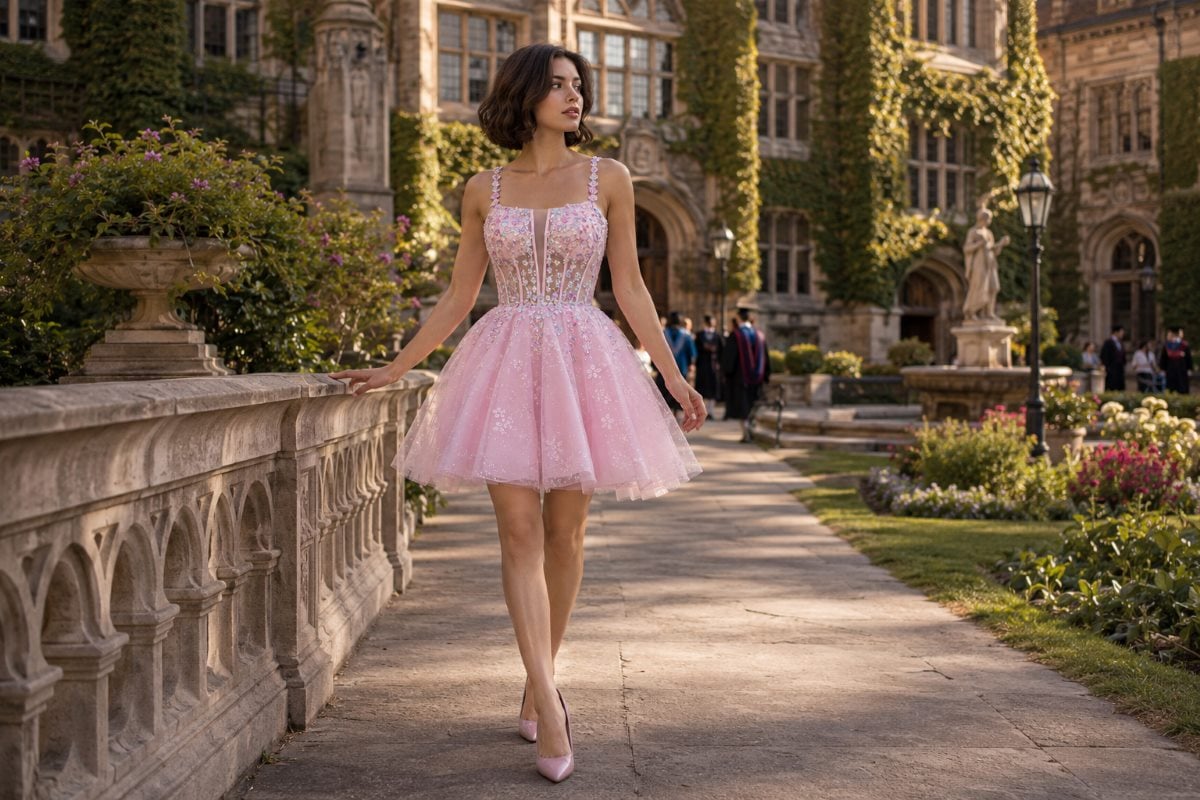
Once the gown comes off, the dress has to stand entirely on its own, and at a doctoral celebration that usually means a more formal setting than other graduations call for. This is where the second half of the day’s planning pays off. A dress that looked appropriately restrained under the regalia should also feel finished and grown-up at a faculty dinner or an evening gathering. Many doctoral graduates choose a dress with enough presence to carry a reception, which is why the polish of an evening style often suits the occasion better than something purely casual.
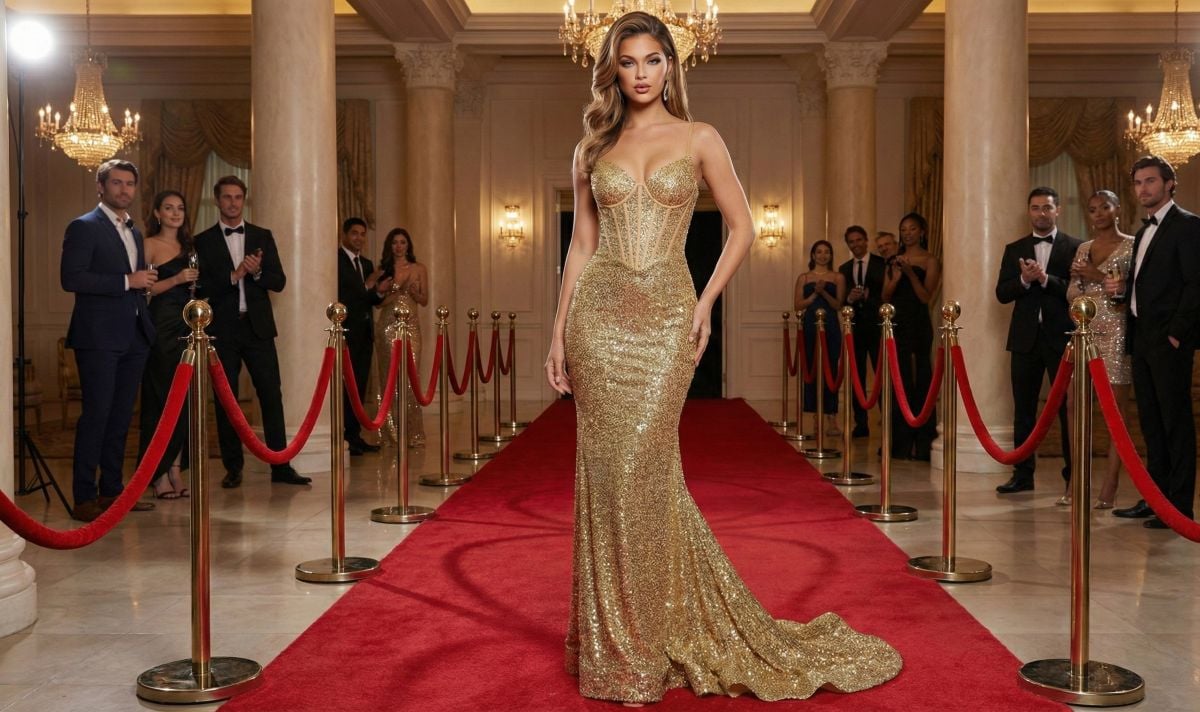
For a celebration that leans formal, the refinement of an evening gown reads as fitting for the significance of the day. A clean line, a quality fabric, and tailoring that holds its shape through a long evening all signal that the dress was chosen with intention. The same dress that stayed quietly beneath your gown at three in the afternoon can become the centerpiece of the dinner that honors your doctorate a few hours later.
Silhouettes that suit the day
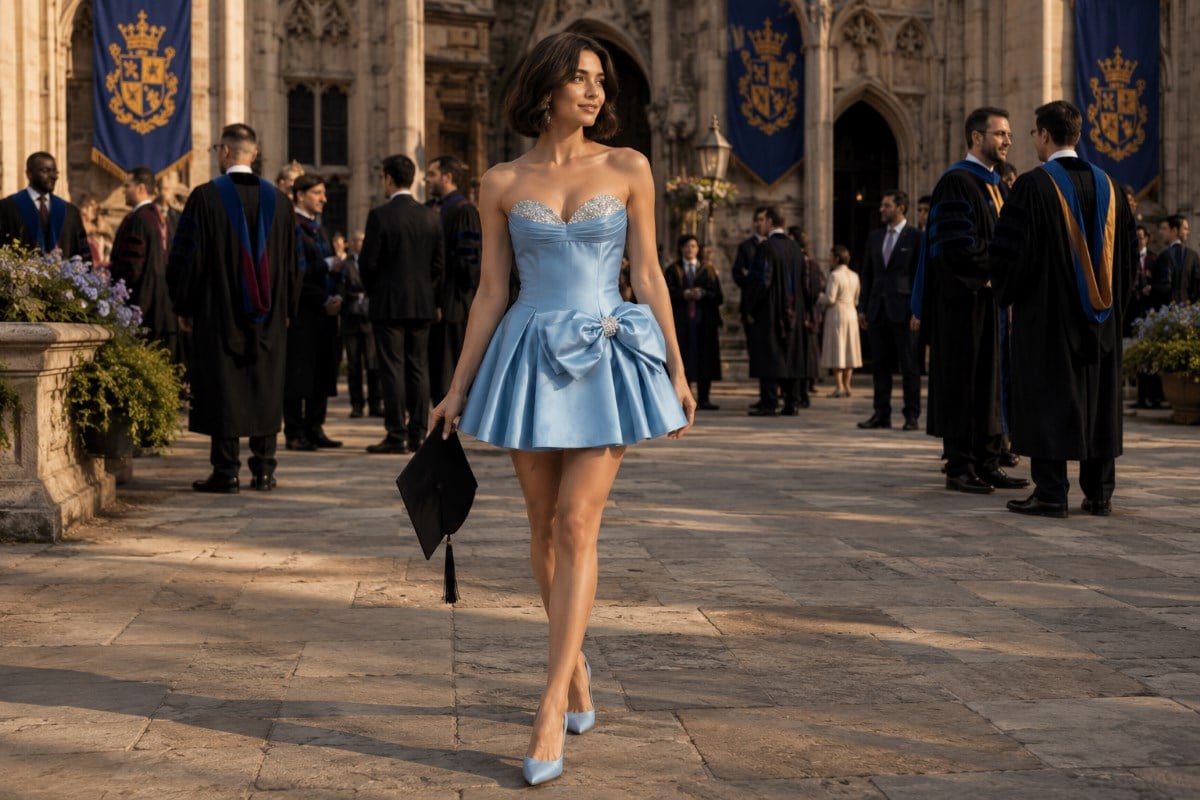
A handful of silhouettes work especially well for a doctoral hooding because they read as sophisticated, sit smoothly under a gown, and transition cleanly to a reception. A sheath skims the body in a clean vertical line that looks tailored and professional, and the cut stays smooth beneath regalia without adding bulk. The styles among our sheath silhouettes show how a column shape reads as polished and grown-up, which is exactly the register a doctoral celebration calls for.
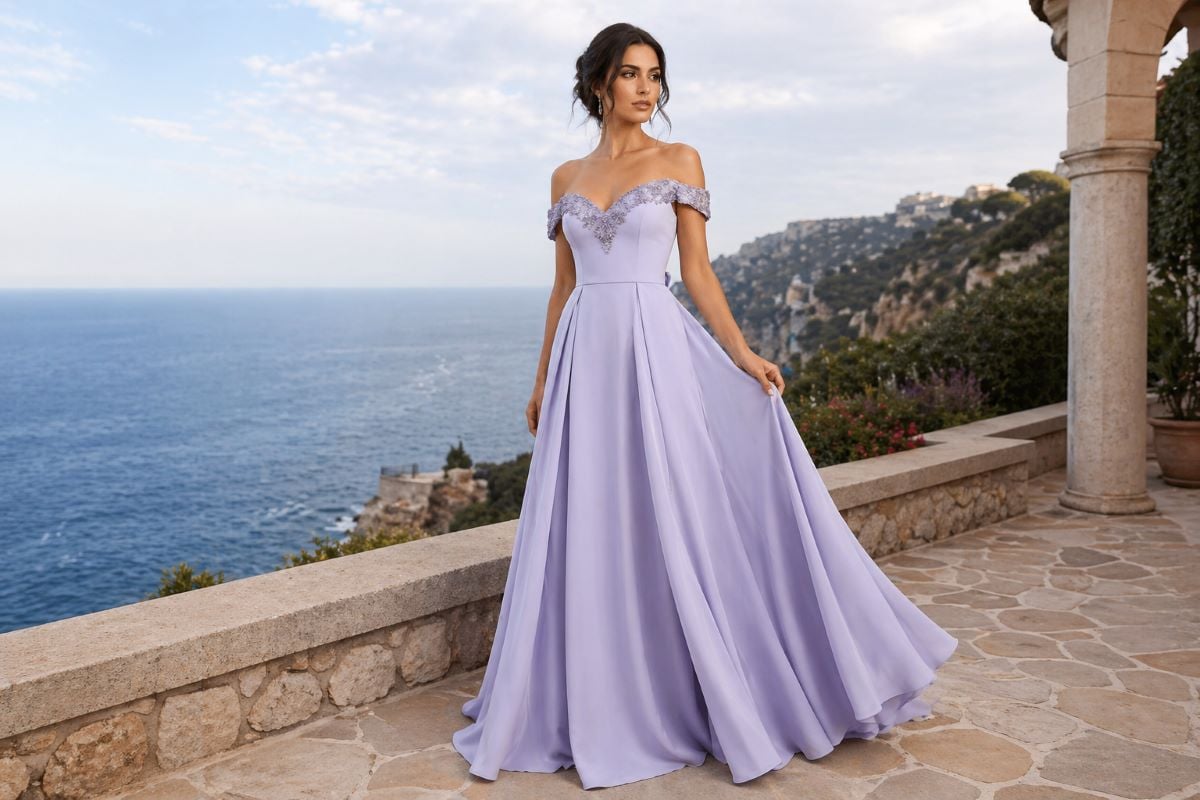
An A-line is the other reliable choice, defining the waist and falling gently from the hip in a shape that flatters nearly every figure and moves comfortably through a long day. The range of A-line evening dresses shows how the silhouette balances structure with ease, which matters when you are sitting through speeches, standing for the hooding, and then settling in for dinner.
For a graduate who wants a dress chosen specifically with the academic setting in mind, our broader collection of graduation dresses gathers styles that account for the realities of dressing around a gown. These are styles selected with the gown in mind, which takes some of the guesswork out of picturing how a dress will read once the regalia is on top.
It also helps to read advice written for the ceremony itself rather than for shopping in general, since the day has its own rhythm of procession, hooding, and reception. Our overview of graduation ceremony dresses covers what the ceremony portion of the day asks of a dress, which complements the doctoral specifics here and rounds out the picture before you commit to a style.
Fabric, comfort, and the practical realities
A hooding ceremony is a long event. You will be seated through a procession and speeches, you will stand and walk for the hooding itself, and you will spend the celebration afterward on your feet greeting people. Comfort is not a compromise here, it is part of choosing well. A fabric with a little structure holds its shape through hours of sitting and standing without wrinkling into a creased mess by the time photographs happen. Crepe, a smooth heavier weave, and quality stretch fabrics all stay composed across a full day in a way that lighter, looser materials do not.
The internal construction matters just as much as the outer fabric, and it is the part you cannot see on the hanger. A bodice with proper boning and lining stays in place while you move, which means you are not adjusting the dress every time you stand. Jovani builds support into its gowns with steel boning, smooth linings, and power mesh where a silhouette needs it, so the dress performs through the ceremony and the dinner rather than demanding attention. That hidden architecture is what separates a dress that feels effortless from one you fight all evening.
Shoes deserve a practical thought too. Many hooding ceremonies involve stairs onto a stage, and some take place in venues with uneven flooring or outdoor portions. A heel height you can genuinely walk in, a block heel, or a refined low shoe keeps you steady when you climb to be hooded and comfortable through the reception. Because the dress hem is hidden under the gown during the ceremony, your shoes are one of the few visible details, so they are worth choosing with the same care as the dress.
A note on quality and where Jovani fits
Jovani has designed formalwear since 1983, and the brand’s approach is rooted in construction rather than trend. Working from a studio in the New York garment district under design director Julie DuRocher, the house builds gowns with the kind of internal structure, steel boning, fine lining, and hand-applied detail, that holds up through long events and reads as genuinely formal in person. For a doctoral graduate who wants a dress that performs through a demanding day and looks composed in the photographs that will mark the achievement for decades, that emphasis on how a gown is made, not just how it looks on a screen, is exactly the point.
Frequently asked questions hooding ceremony dress
What neckline works best under doctoral regalia?
A neckline that sits below the collar of the gown keeps the upper body clean, since the hood drapes across the back of the neck and the gown has its own front opening. A modest scoop, a soft V, a square neck, or a sweetheart all sit neatly beneath the regalia and leave the collarbone bare. Avoid high collars, mock necks, and voluminous halters, which bunch against the gown’s neckline and can interfere with the hood as it is placed during the doctoral hooding ceremony.
Should my dress be shorter than my doctoral gown?
Yes. Your dress should end above the hem of your gown so the line stays clean from the audience’s view. A dress that falls below the regalia creates an uneven, layered look in photographs taken from a distance. A knee-length dress or a tailored midi that stays hidden under the gown is the most polished choice, and it still works on its own at the reception once the gown comes off.
What color should I wear with academic regalia?
Choose a dress color that complements your gown and hood rather than clashing with the velvet trim. Against a dark gown, lighter shades like blush, champagne, ivory, and pale gold create a soft contrast at the neckline and hem. If your institution uses a lighter gown, a richer jewel tone keeps the two from blending. Knowing your field’s hood color before you shop helps you pick a shade that sits well beside it.
How is dressing for a doctoral hooding different from a college graduation?
A doctoral candidate is usually an established adult, often a working professional, and the audience and celebration reflect that. The look can lean toward grown-up sophistication rather than youthful trend, and the reception after a doctoral hooding ceremony tends to be more formal, frequently a dinner or evening event. The regalia is also more elaborate, with a fuller gown and the back-draping hood, so the dress underneath should work quietly within that more substantial ensemble.
Can the same dress work for the ceremony and the reception?
It can, and choosing one dress for both is the practical approach most graduates take. The dress needs to stay quietly appropriate under the gown during the ceremony, then stand on its own at a celebration that often leans formal. A polished silhouette in a quality fabric, with a neckline and hem that cooperate with the regalia, carries both halves of the day. Picturing both settings before you shop ensures the dress performs in each.
What silhouette is most comfortable for a long ceremony?
A sheath or an A-line both balance a polished look with genuine comfort across a long day of sitting, standing for the hooding, and celebrating afterward. A fabric with some structure, like crepe or a heavier weave, holds its shape without wrinkling, and a bodice with proper boning and lining stays in place while you move. Comfort matters as much as appearance here, since the day involves hours of activity around the actual moment you are hooded.
Finding your dress
The doctoral hooding ceremony is the culmination of years of work, and the dress you wear to be hooded should feel as considered as the achievement it marks. With a neckline that cooperates with the gown, a hem that stays clean under the regalia, a color that complements the hood, and the polish to carry the celebration afterward, you can move through the day feeling composed and entirely yourself. When you are ready to find a gown built to perform from the ceremony into the evening, explore the collections and visit an authorized Jovani retailer to try styles in person.