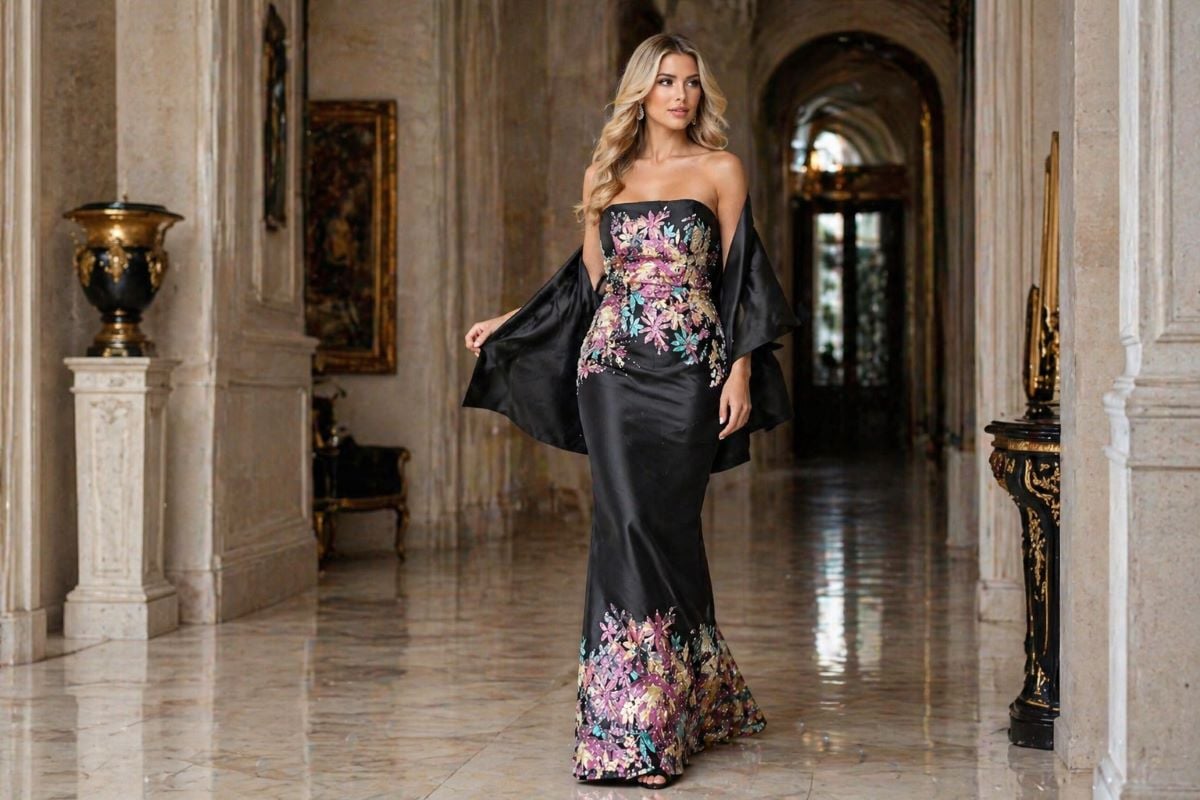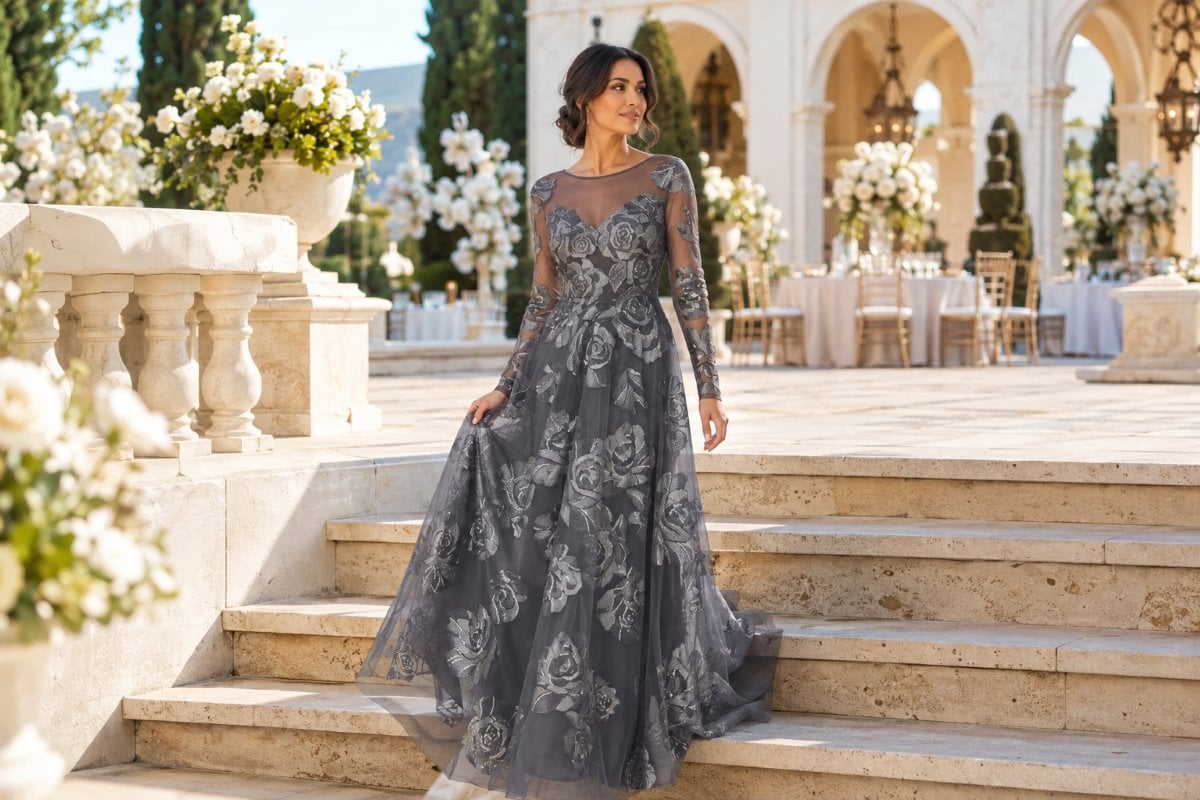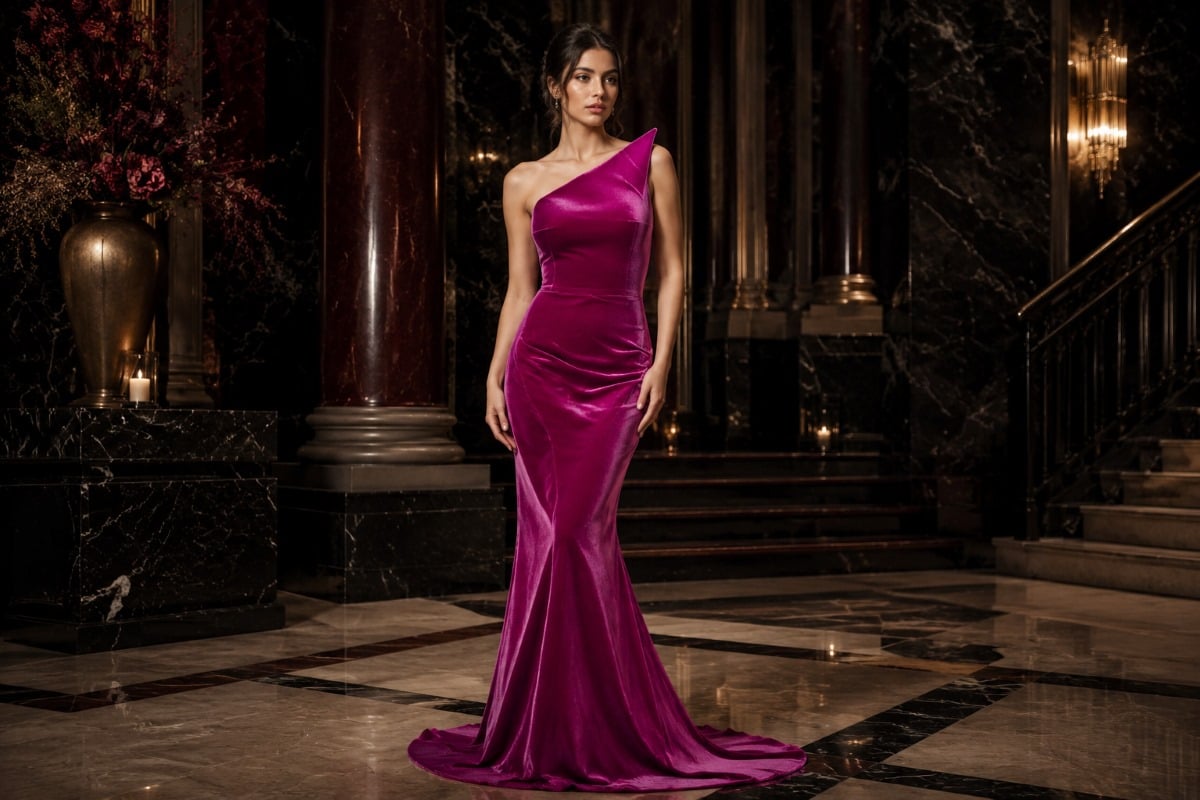

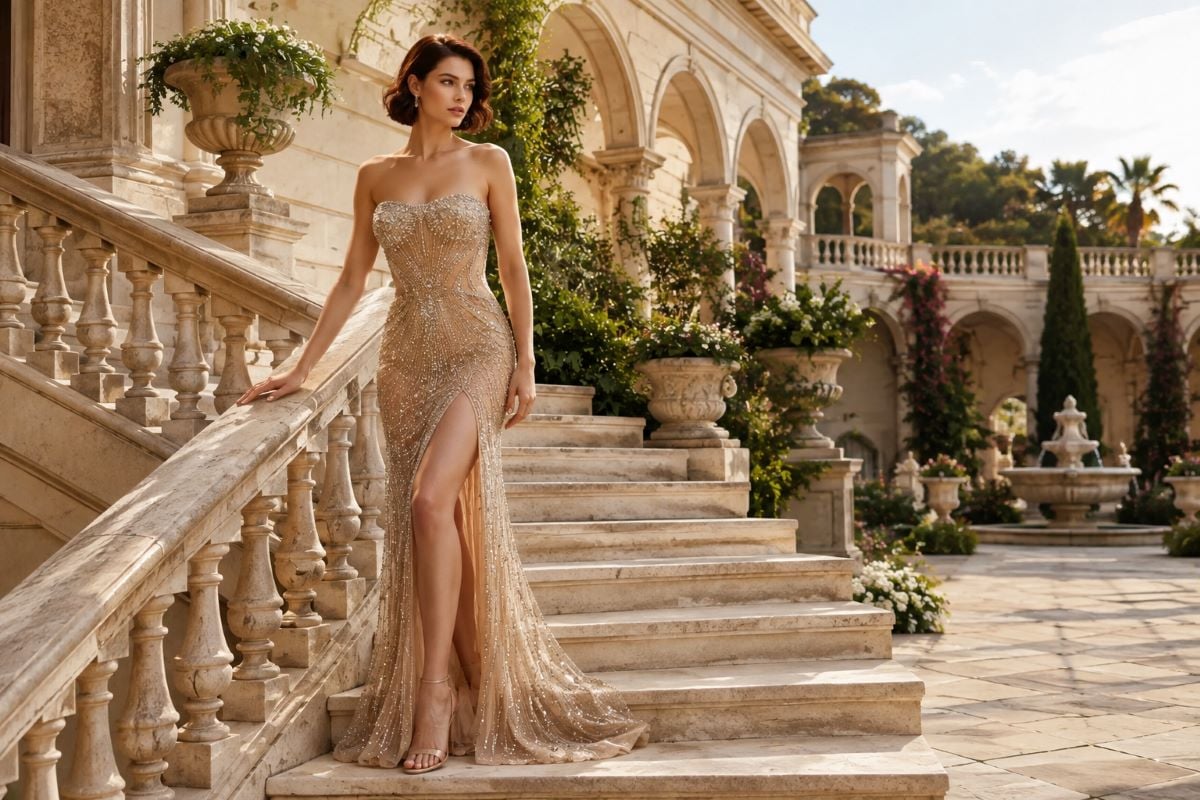
Champagne sits in an unusual position among formal colors. It is technically a neutral, pale enough to read as a soft beige from a distance, but it carries a warm golden cast that catches light the way a metallic does. That combination is why champagne appears so persistently in evening wear, bridal parties, and mother of the bride dressing: it has the calm of a neutral and the glow of a metal, and very few shades manage both. It also raises one question that no other neutral raises quite as sharply, which is whether it is too close to bridal to wear as a wedding guest. This guide covers what champagne actually is, how it differs from the neutrals around it, who it flatters, how it behaves under evening lighting, and where the wedding question genuinely applies.
What champagne actually is
Champagne is a pale golden neutral, warmer than ivory and lighter than gold, named after the color of the wine. The defining quality is that faint metallic warmth running through it, which is what stops it reading as a flat beige and gives it depth under light.
Placing it against its neighbors makes the boundaries clear. Ivory is a warm white with no gold in it, so it reads as bridal rather than as a color. Beige is a flat neutral with brown rather than gold in it, so it sits quieter and cooler. Nude describes any shade that relates to skin, which is a different concept entirely rather than a specific color. Gold is fully metallic and unmistakably a metal rather than a neutral.
Champagne sits between beige and gold, and the amount of gold in it varies considerably from one dress to the next. Some champagnes are almost ivory with a whisper of warmth; others are close to a pale gold. This variation matters more than the label, so the shade in front of you is what to judge. The styles among beige formal dresses show the quieter neutral that champagne sits just above.
Why champagne works so well in formalwear
There are three reasons champagne appears as often as it does, and they are worth understanding because they explain when it is the right choice.
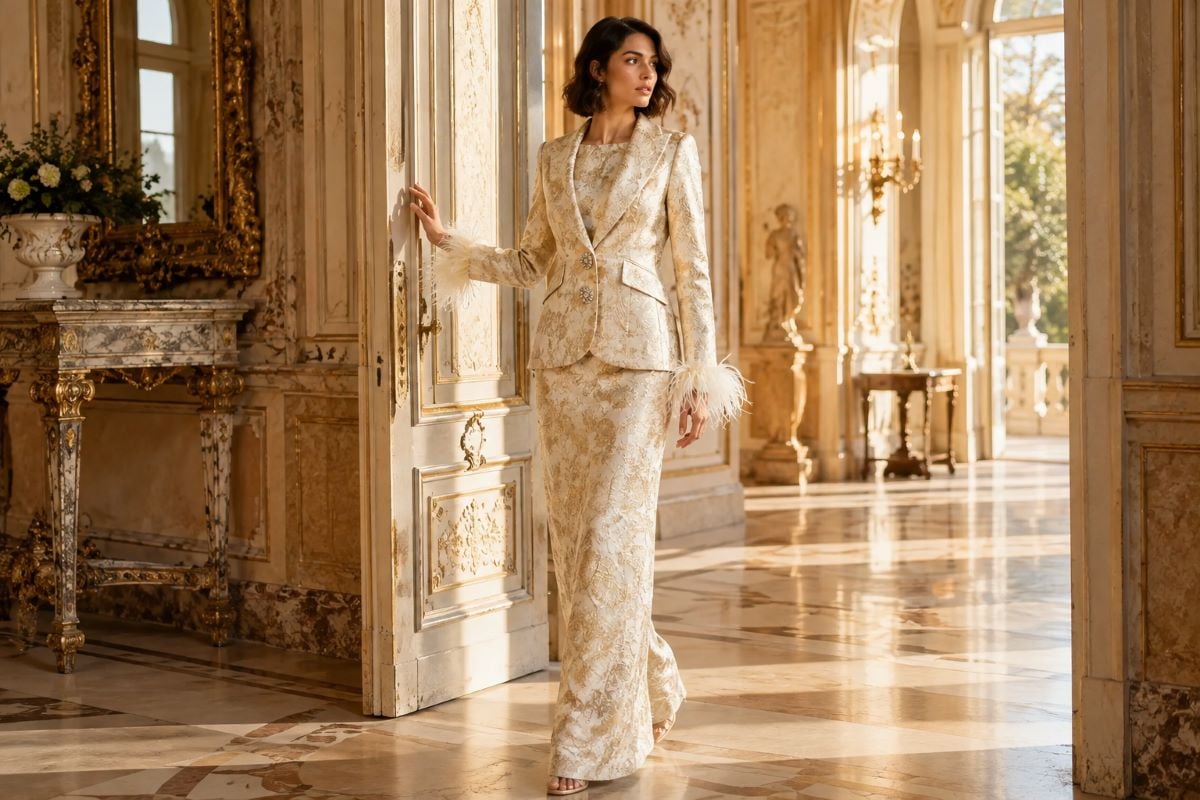
It photographs with warmth rather than washing out
Pale colors have a habit of losing definition in photographs, particularly under a flash, where a soft neutral can flatten into a pale patch. Champagne resists this because the gold content reflects light rather than absorbing it, so the fabric picks up highlights and shadows and retains dimension. This is a genuine practical advantage at a heavily photographed event and one of the main reasons the shade is so popular for formal occasions where pictures matter.
It behaves as a neutral for accessorizing
Because champagne is technically neutral, it accepts almost any accessory color without clashing. Gold reads as an obvious partner, silver works when the champagne leans cooler, and a strong accent color such as burgundy, navy, or emerald sits against it beautifully. This flexibility means a champagne dress can be styled in several completely different directions, which is not true of a saturated shade. The guidance on matching jewelry metals with dresses covers how to make that choice.
Who champagne suits
Champagne is a warm shade, and that shapes who it flatters most easily.
Warm undertones, showing as golden, peach, or yellow beneath the skin, sit naturally with champagne, since the dress and the complexion share a temperature. The effect is harmonious and the gold content tends to bring warmth to the face.
Cool undertones can wear champagne, but the choice of shade matters more. A champagne with a pinker or cooler cast works considerably better than a strongly golden one, which can look slightly at odds with pink-based skin.
Depth of complexion is the more important variable, and this is where champagne needs the most thought. Because it is a pale warm shade, it sits close in value to fair and light-medium skin, and on very fair complexions it can read as washed out with the dress and the wearer blending into one soft field. The fix is not to avoid the color but to add contrast some other way: beading, a darker lining showing through lace, a bolder lip, or a deeper accessory. On medium, olive, and deep complexions champagne creates natural contrast and tends to look really striking, since the pale warm shade sits clearly against the skin. The guide to the beige evening dress covers the same logic for the cooler neutral.
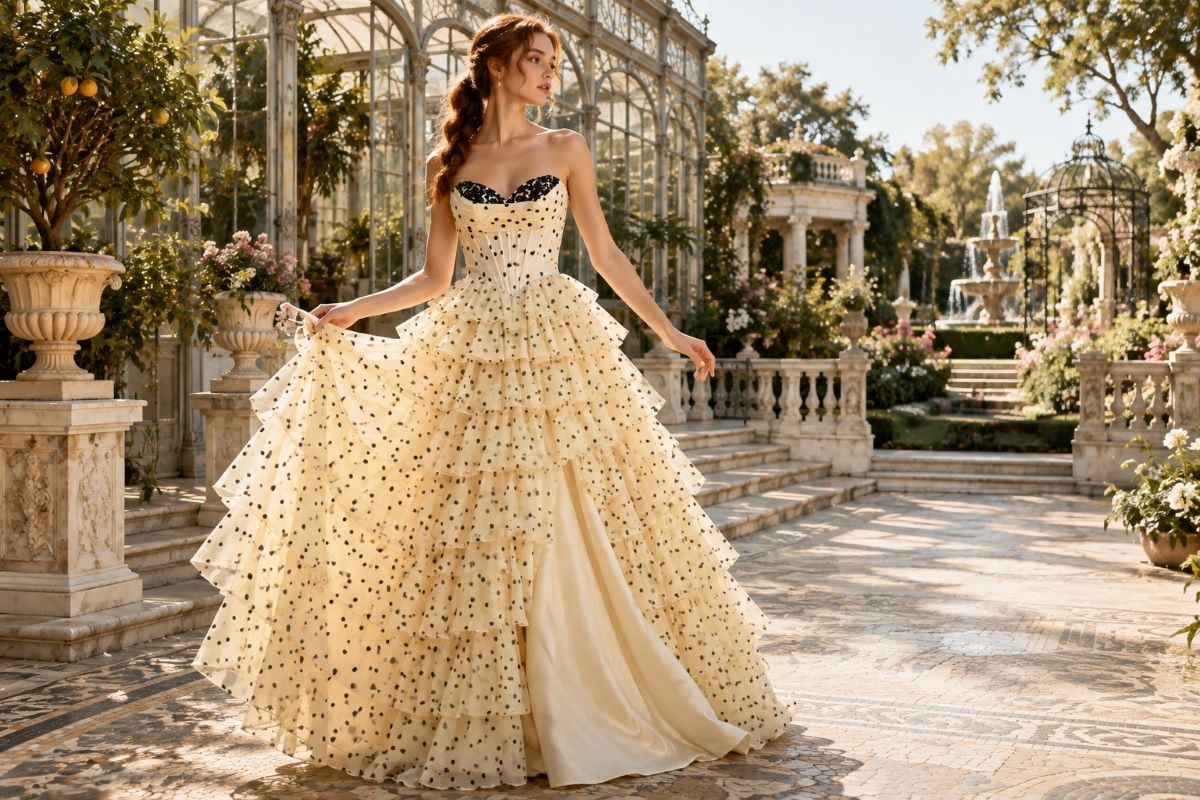
Texture solves the washed-out problem
The one genuine weakness of champagne is that it can sit too close in value to fair skin, and the fix is texture rather than a different color. Lace over a champagne lining creates pattern and shadow that separate the dress from the wearer. Beading catches light in points against a matte ground, adding dimension without introducing a second shade. Pleating and ruching create their own highlights and shadows. Even a pronounced weave gives the eye something to read. A completely flat champagne in a thin fabric is the hardest version to wear, and the easiest to improve.
The depth of the shade matters more than the label
Because champagne covers such a range, from nearly ivory to nearly pale gold, the single most useful thing you can do is judge the depth in front of you rather than trusting the description. Hold the fabric next to something plainly white and something plainly gold. Where it falls between those two tells you how it will photograph, whether it will read as a color or an off-white, and whether it is safe at a wedding. That comparison takes seconds and answers most of the questions people have about the shade.
The wedding guest question
This is the question that brings most people to champagne in the first place, and it deserves a direct answer rather than a hedge.
Champagne can absolutely be worn to a wedding, but it sits closer to the line than any other neutral, and the risk is real rather than theoretical. In a photograph, particularly a group shot or one taken against a light background, a pale champagne can read as ivory, and standing beside the bride that reads as a second white dress even if the difference is obvious in person.
The variables that decide it are the depth of the champagne and the amount of gold in it. A deeper champagne with clear golden warmth reads as a color and is entirely safe. A pale champagne with very little gold reads as ivory and is not. If you cannot tell which you have, photographing the dress next to something white will settle it in seconds.
Two further factors matter. If the bride’s dress is ivory rather than bright white, the margin narrows further. And some couples care about this a great deal while others do not, so if you know them well enough to ask, asking is faster than guessing. The broader conventions are set out in the guide to wedding guest dress etiquette, and the safe summary is that champagne is fine when it is clearly golden and questionable when it is nearly ivory.
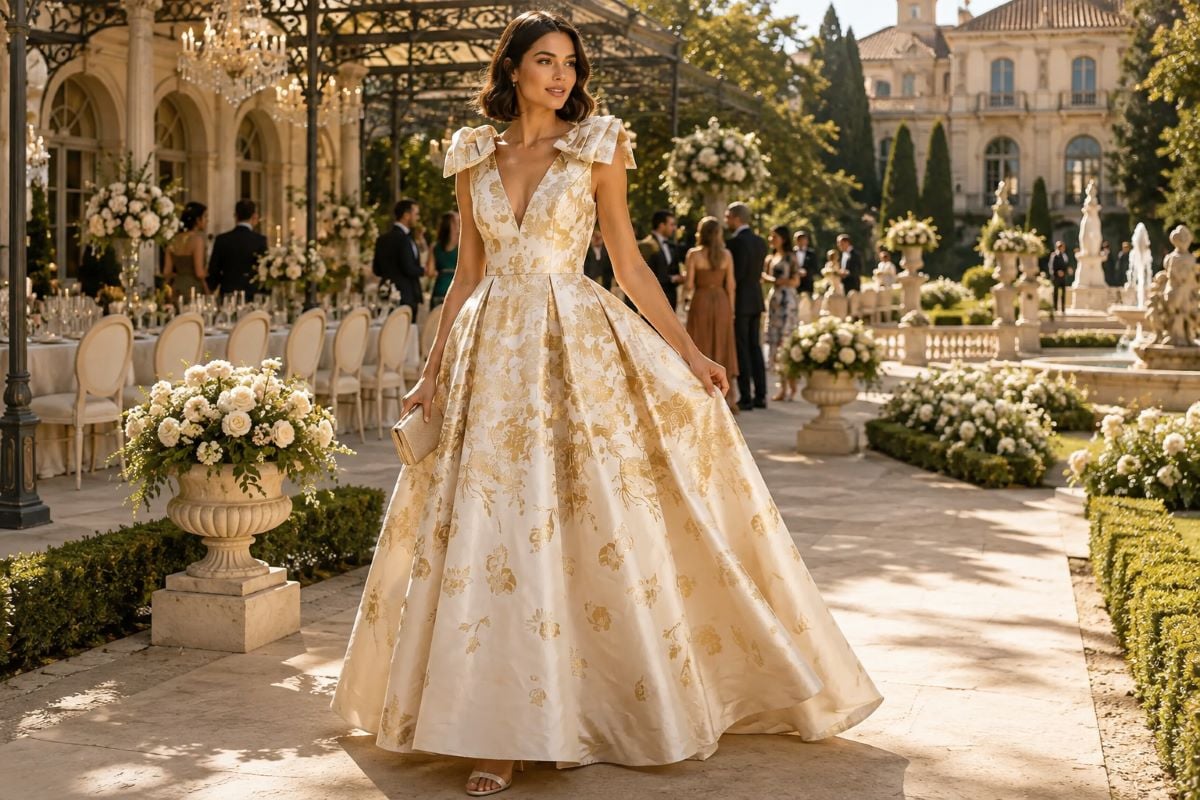
Where champagne excels
Setting the wedding guest caution aside, there are roles where champagne is close to ideal.
For the mother of the bride or groom, champagne is one of the most requested shades for good reason. It is formal, it photographs beautifully in family portraits, it coordinates with virtually any wedding palette, and it reads as celebratory without competing with anyone. The range of nude mother of the bride dresses includes the warm neutrals that suit the role.
For a black-tie or formal evening event, a champagne gown reads as luxurious in a way that a plain beige does not, and it offers an alternative to black that is still unmistakably formal.
For pre-wedding events where a bride wants to wear white, champagne is the shade that guests can wear alongside her without confusion, since the warmth distinguishes it. The styles built around the little white dress show the bridal side of that pairing, which is useful for seeing exactly how much distance champagne needs.
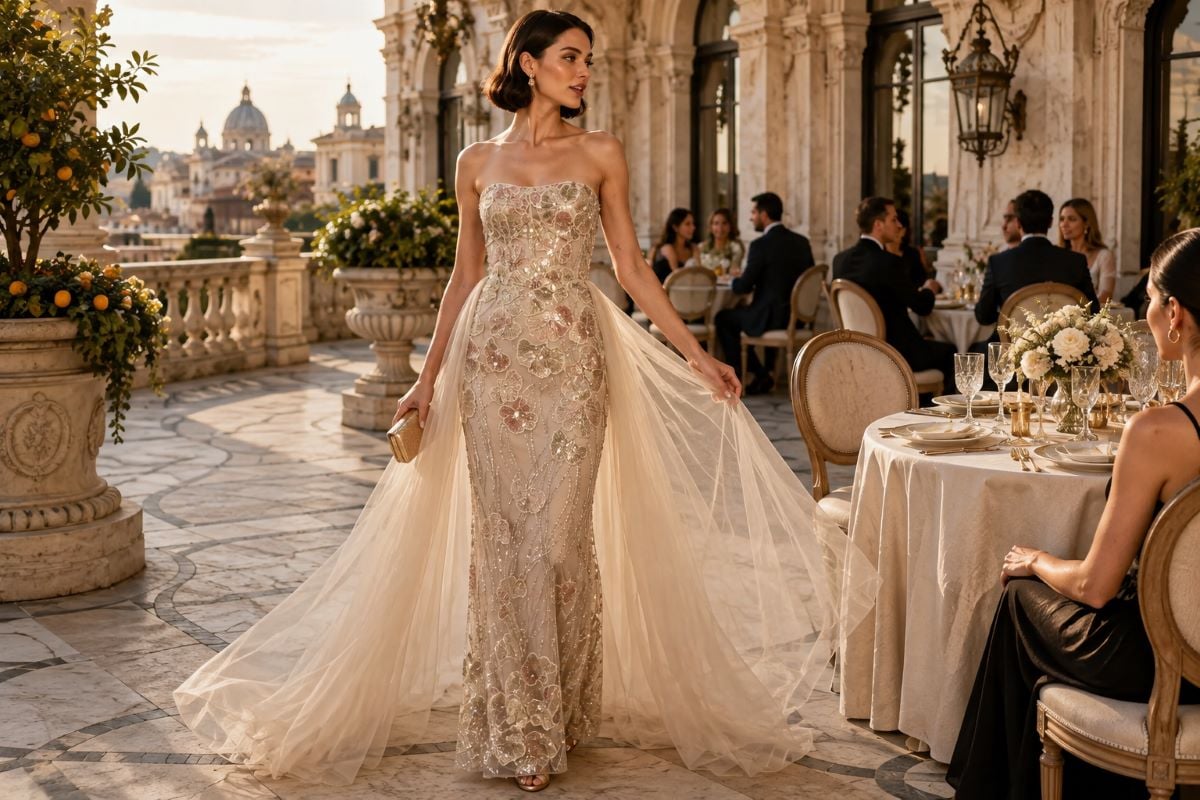
How fabric changes champagne
Because champagne depends on light for its character, fabric changes it more than it changes most shades.
Satin brings out the gold most strongly, since the sheen amplifies the metallic content and the dress reads as lustrous. This is the version that looks most like actual champagne.
Sequins and beading push it further toward metallic, and a fully beaded champagne gown reads closer to gold than to a neutral, which may be exactly what you want or may be more than you intended.
Chiffon and tulle lighten champagne considerably, so it becomes soft and romantic and reads much closer to ivory, which is useful to know if the wedding guest question applies to you. Crepe mutes the gold entirely and produces a matte, tailored champagne that behaves like a warm beige.
Lace over a champagne lining creates depth and pattern without adding a second color, which is one of the most effective ways to solve the washed-out problem on fair complexions. The gold styles among gold mother of the bride dresses show where the family goes when the metallic content increases.
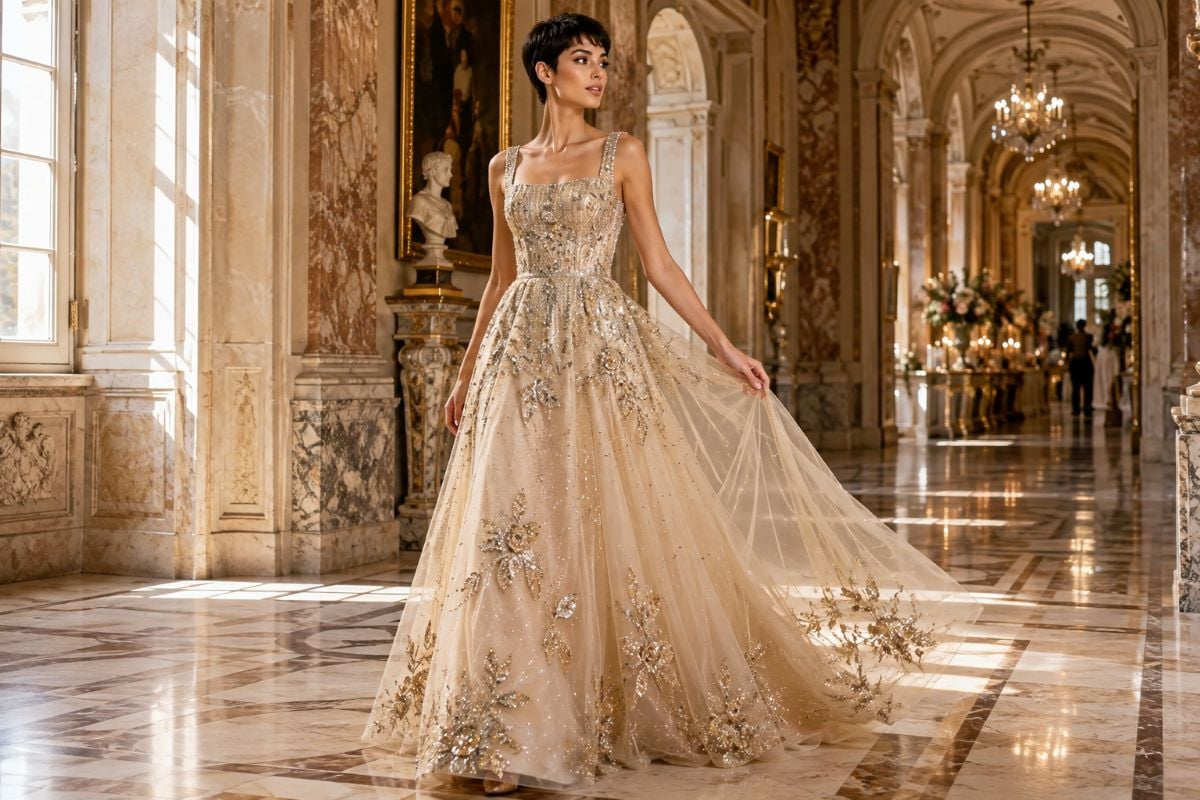
Styling a champagne dress
Champagne is a quiet ground, so styling is more open than with a saturated color, and there are three approaches that work reliably.
The tonal approach keeps everything in the champagne and gold family: a metallic gold shoe, a gold or champagne bag, and gold jewelry. This produces the most luxurious and cohesive result and reads as deliberately dressed.
The contrast approach adds one deeper color as an anchor, most often at the shoe or the bag. Burgundy, navy, emerald, and chocolate all sit beautifully against champagne, and a single deep accent gives the eye somewhere to rest without breaking the calm of the neutral.
The bare approach uses nude accessories matched to your own skin depth, which produces the longest line and the most understated result, letting the dress and its fabric carry everything.
Across all three, the discipline is the same: choose one direction rather than mixing them. A champagne dress with a gold shoe, a silver clutch, and a colored wrap loses the quiet quality that made the shade worth choosing. The wider range of formal dresses shows how neutrals sit among the stronger colors when you are deciding how much attention you want the dress to draw.
The one-minute test before you commit
Champagne is the only neutral where a single measurement decides almost everything else. Look at how much gold the shade actually contains, since that single variable decides whether it reads as a color or as an off-white, and it determines both how it photographs and whether it is safe at a wedding.
Check it against your own complexion in daylight, particularly if you are fair, because the washed-out risk is real and easy to see once you look for it. If the dress and your skin merge into one field, look for a version with beading, lace, or a deeper cast rather than abandoning the color.
Consider the fabric deliberately, since satin, sequins, chiffon, and crepe will take the same champagne to four visibly different places.
And if a wedding is involved, photograph the dress against something white before the day. That takes a minute and removes the only genuine risk the shade carries, and it is far easier than discovering the problem in the album afterwards. Handled with that small amount of care, champagne gives you the ease of a neutral with a glow that no other neutral offers, which is a rare combination and the reason the shade has never really gone out of use in formal design. To find the champagne that reads correctly against your own coloring, explore the current styles through an authorized Jovani retailer.
Champagne, From Ivory to Gold
What color is champagne exactly?
Champagne is a pale golden neutral, warmer than ivory and lighter than gold, named after the color of the wine. The defining quality is a faint metallic warmth running through it, which stops it reading as flat beige and gives it depth under light. The amount of gold varies considerably between dresses, so some champagnes are almost ivory with a whisper of warmth while others sit close to a pale gold, which is why judging the actual shade matters more than the label.
What is the difference between champagne, beige, and ivory?
Ivory is a warm white with no gold in it, which is why it reads as bridal rather than as a color. Beige is a flat neutral with brown rather than gold in it, so it sits quieter and cooler. Champagne sits between them, pale like ivory but carrying a golden cast that catches light the way a metallic does. Nude is a different concept altogether, describing any shade that relates to skin rather than one specific color.
Can you wear champagne to a wedding as a guest?
Usually yes, but it sits closer to the line than any other neutral. In photographs, especially group shots or images against a light background, a pale champagne can read as ivory, which beside the bride looks like a second white dress. A deeper champagne with clear golden warmth reads as a color and is entirely safe. If the bride’s dress is ivory rather than bright white the margin narrows further. Photographing the dress next to something white settles it quickly.
Does champagne suit fair skin?
It can, but it needs help. Because champagne is a pale warm shade, it sits close in value to fair and light-medium skin, so the dress and the wearer can blend into one soft field. The solution is to add contrast rather than avoid the color: beading, lace over a darker lining, a bolder lip, or a deeper accessory. On medium, olive, and deep complexions champagne creates natural contrast and tends to look particularly striking.
Which fabric shows champagne best?
Satin brings out the gold most strongly, since the sheen amplifies the metallic content and the dress reads as lustrous. Sequins and beading push it further toward metallic, closer to gold than to a neutral. Chiffon and tulle lighten it considerably so it reads much nearer to ivory, which matters if you are wearing it to a wedding. Crepe mutes the gold entirely and produces a matte champagne that behaves like a warm beige.
What jewelry and shoes go with champagne?
Gold is the obvious partner and produces the most cohesive, luxurious result, especially with a metallic gold shoe. Silver works when the champagne leans cooler. A single deep accent such as burgundy, navy, or emerald at the shoe or bag gives the eye somewhere to rest. Nude accessories matched to your own skin depth create the longest line. The one thing to avoid is mixing these approaches, since that loses the quiet quality that makes champagne appealing.