
Prom vs Evening Gowns: How to Choose for Your Event
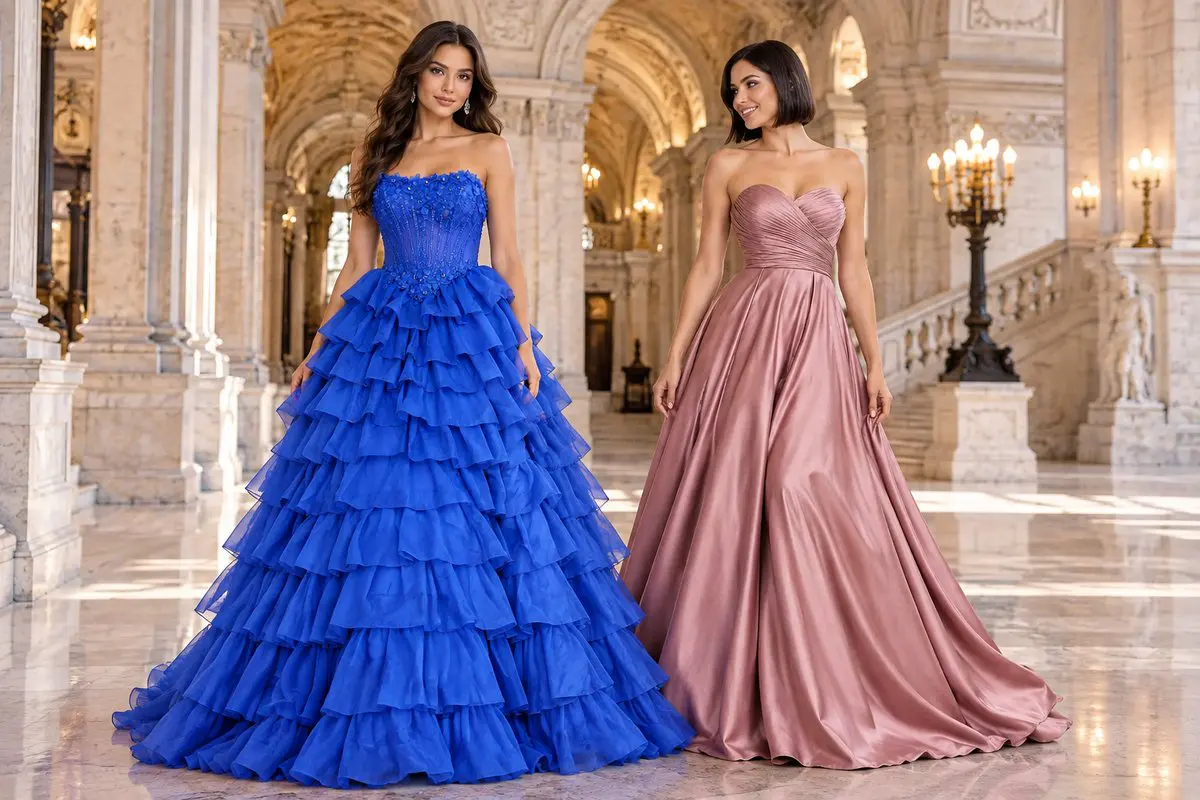
Prom vs evening gowns is a comparison of occasions, not two completely separate types of dress. Both can be long, fitted, colorful, or embellished. The real difference is whether the finished look meets the event's dress code and feels comfortable for the activities ahead.
You can wear a prom design to another formal occasion, or an evening gown to prom, when its styling and fit are appropriate. Start by checking what the invitation requires. Then compare the same details in both categories: neckline, skirt, finish, coverage, and movement.
Are Prom Dresses and Evening Gowns the Same?
Prom dresses and evening gowns overlap in shape and construction, but their collections serve different shopping needs. Prom is a school celebration with its own atmosphere and any dress rules set by organizers. Eveningwear spans weddings, galas, formal dinners, and other events with varied expectations.
Prom Dresses Are Designed Around a School Celebration
A prom gown can be a restrained satin column or a highly embellished ball gown. There is no rule that prom clothing must be bright, revealing, or heavily decorated. Jovani's prom outfit collection includes both clean designs and highly detailed formal looks.
The useful questions are practical. Can you dance, walk, and sit comfortably? Does the neckline follow the school's published rules? Do the shoes and hem work on the actual venue floor?
Evening Gowns Cover More Than One Dress Code
An evening dress is formalwear intended for an occasion where the invitation helps determine what is suitable. Some events favor full-length gowns, while others permit a carefully styled midi. Browse formal eveningwear to see how varied those silhouettes can be.
Age does not determine which category you may wear. A teenager can choose a restrained evening gown for prom, and an adult can wear a bold prom design to a gala.
Which Dress Code Should Guide Your Choice?
Follow the actual invitation rather than the category name on a product page. A long prom dress may satisfy a formal dress code, while a short evening style may not. Venue, host guidance, and the event schedule also matter.
For a fuller explanation of occasion requirements, Jovani's evening dress style guide breaks down formality, length, and fit. Use that guidance before deciding how much embellishment you want.
Prom and School Formal Events
At prom, follow any school rules about coverage, hemlines, and openings. After that, choose the silhouette and finish that reflect your preferences. A full skirt is one option, not a requirement for the occasion.
A ball gown can create volume for photographs, but its skirt may take more room on a crowded dance floor. A narrower gown may move more easily, provided the hips, slit, and hem allow a comfortable stride.
Black Tie, Galas, and Formal Weddings
A floor-length gown is a dependable starting point for a traditional black-tie invitation. For white tie, expectations are generally more formal still. Jovani's full-length formal gowns show options with different necklines and skirt shapes.
For black-tie optional or other less strict events, a refined shorter style may sometimes work. Check the host's guidance rather than treating every evening celebration as black tie. Wedding guests should also avoid bridal-looking outfits unless invited to wear them.
How Do the Silhouettes and Fabrics Compare?
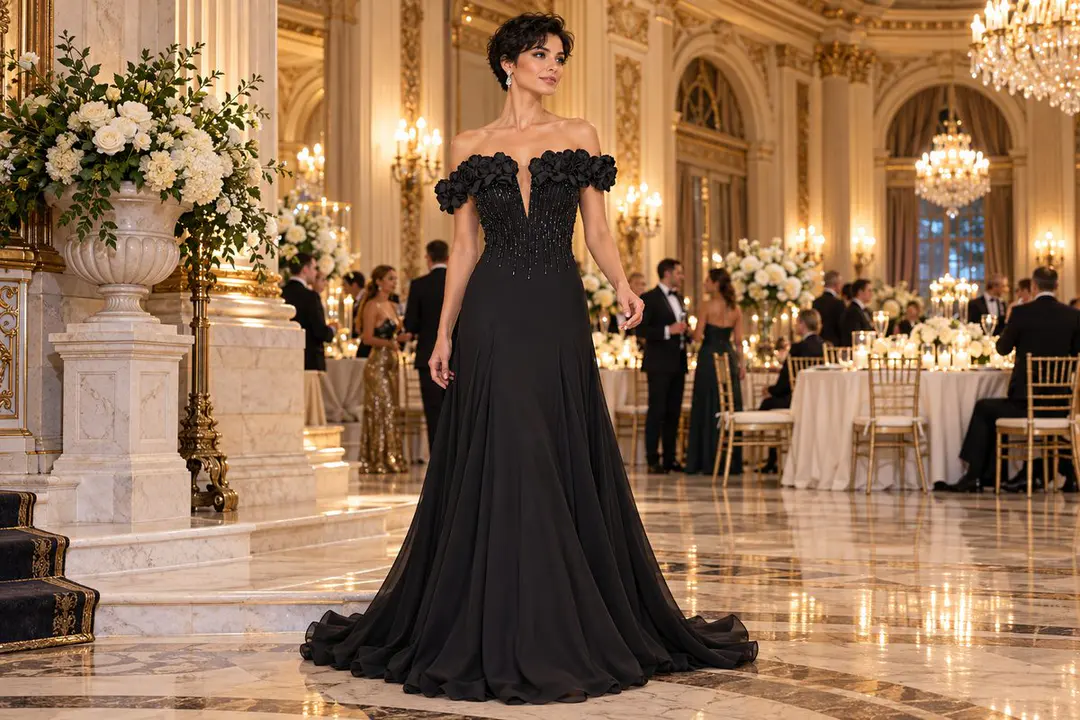
Silhouette and fabric do not belong exclusively to either category. A-line, mermaid, column, and ball gown designs appear across prom and evening collections. Their construction affects how each dress fits and moves more than its marketing label does.
A-Line, Mermaid, and Ball Gown Shapes
An A-line skirt widens gradually below the waist, offering space around the legs. Mermaid designs stay closer through the hips before flaring, while ball gowns use more pronounced volume. Compare A-line prom silhouettes with evening designs before choosing by category alone.
The starting point for a fitted gown is the hip measurement and where the flare begins. A fuller shape needs a different check: whether the skirt is manageable when you sit or pass between chairs.
Satin, Chiffon, Sequins, and Embellishment
Satin offers a smooth, light-reflecting surface, while layered chiffon typically creates softer movement. Sequins and crystals catch small points of light but can add weight. Material choice does not make a gown automatically suitable for one event.
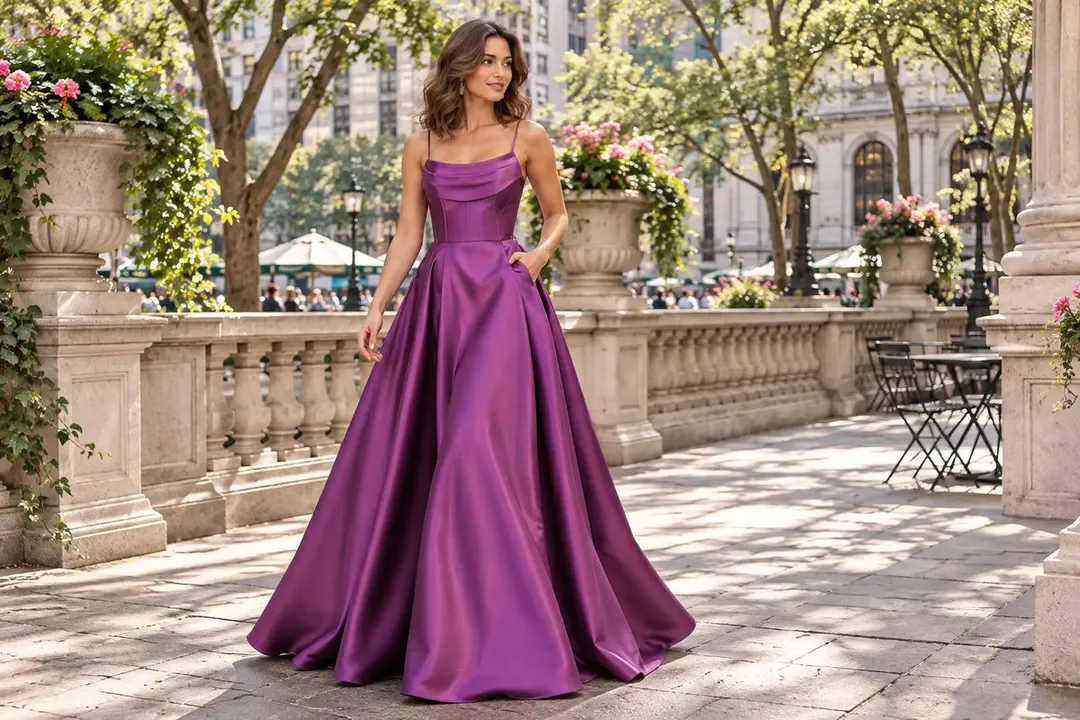
For example, satin prom designs can look understated with a clean bodice and simple lines. A heavily embellished evening gown can look more dramatic than a plain prom dress. Compare the complete garment, including its lining.
Can You Wear a Prom Gown to a Gala or Wedding?
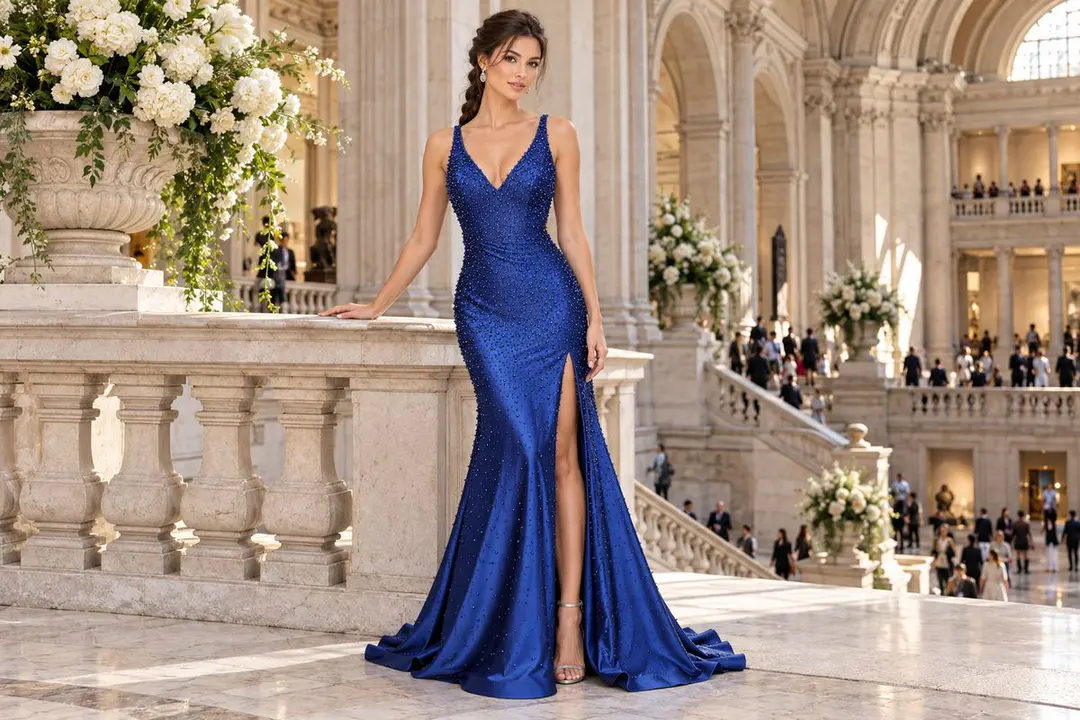
Yes, a prom gown can work at a gala or formal wedding if the dress code permits its length and details. Evaluate the actual design instead of assuming that a prom label makes it unsuitable. Coverage, fit, and the host's expectations are more reliable tests.
When the Crossover Works
A floor-length satin A-line, a polished column, or a carefully proportioned embellished dress can suit multiple occasions. Keep attention on the neckline, slit, transparency, and how the fabric reads in indoor lighting. Check that the outfit is appropriate for the host and venue.
For a closer look at event-specific choices, read Jovani's formal dress selection guide. It addresses occasion, proportion, and fabric without treating a collection label as a dress code.
When to Reconsider the Design
Avoid a gown that breaks explicit rules for coverage or length. At weddings, reconsider a white or distinctly bridal design unless the couple has requested it. A heavy train can also be impractical where the venue has stairs or a crowded floor.
These are garment-level concerns. They do not mean that sparkle is reserved for prom or that subdued colors are required for eveningwear.
What Can Jovani Dresses Tell You About the Difference?
Actual product specifications show how the categories overlap. Jovani style 53444 is a royal chiffon ball gown with a beaded corset, sweetheart neckline, and tiered ruffle skirt. Its lace-up back and floor-length shape make volume the central design feature.
Style 53331 takes another prom approach: an A-line satin gown with spaghetti straps, a corset bodice, and side pockets. Its published color options include emerald, plum, and sage. These two prom dresses create very different impressions without changing the occasion.
For an eveningwear comparison, Jovani style 49688 uses satin in a strapless A-line gown with a structured bodice and flowing skirt. Style 50212 instead combines chiffon, an off-the-shoulder design, floral appliqué, and a fitted waist. Both are floor length, yet their surface and movement differ.
Use these examples to build a shortlist, not to infer that every dress in a category has the same features. Check each product's current color, size, and construction details with an authorized retailer.
Test the Dress, Not Just the Product Category
A fitting is more informative than deciding between prom and evening labels in a search result. Try the gown with suitable undergarments and the heel height you expect to wear. Check the fit in front, side, and back views.
- Sit down fully and look for pulling at the waist and hips.
- Walk and turn to see whether the skirt catches or twists.
- Raise your arms to assess the bodice and shoulder coverage.
- Check the lining, embellishments, slit, and train for comfort.
- Ask which alterations are realistic before ordering.
A dress that needs constant adjustment is unlikely to feel better after several hours. Prioritize the silhouette you can move in rather than assuming one category provides superior comfort.
Finish the Look for the Specific Occasion
Shoes, jewelry, and a bag should support the garment's details and the event's formality. A highly embellished neckline may need little jewelry. A simple satin gown can carry a more noticeable accessory, provided the outfit still suits the invitation.
If the invitation names cocktail attire rather than a formal gown, compare the separate cocktail dress and evening gown guide. That is a length and dress-code question, distinct from comparing prom designs with eveningwear.
Ultimately, prom vs evening gowns is less about who may wear each label and more about matching the garment to the occasion. To compare Jovani designs in person, contact an authorized boutique through the Find a Store page.
Frequently Asked Questions
Can adults wear dresses sold as prom gowns?
Yes. Choose a prom gown if its length, coverage, and styling suit the occasion. The collection label is not an age restriction or a formalwear rule.
Are evening gowns always floor length?
No. Many formal evening gowns are full length, but eveningwear also includes midi styles. A traditional black-tie invitation generally makes a floor-length gown the clearer choice.
Is a sequin prom dress too flashy for a gala?
Not necessarily. Sequins can suit galas and formal celebrations when the design follows the dress code. Consider the event's setting and keep other accessories balanced.
Does satin make a dress more formal than chiffon?
No. Satin and chiffon describe different fabric constructions, not fixed levels of formality. Silhouette, lining, fit, finish, and the invitation determine the final impression.