
Evening Dress Silhouettes: Eight Shapes and How to Choose
Evening dress silhouettes describe the outline of a dress, especially how closely it follows the waist and hips and where the skirt widens. A-line, ball gown, mermaid, trumpet, fit and flare, sheath, column, and empire are eight useful shapes to recognize. Compare the flare point, skirt volume, and movement before deciding which one suits your event.
The same color can look entirely different in each cut. Start with the shape, then narrow the formal evening dresses you want to try by fabric, neckline, and length.
What Defines an Evening Dress Silhouette?
A silhouette is the outer shape of a garment, not its neckline, hem length, or decoration. Identify it by looking at the waist seam, how the fabric fits over the hips, and where the skirt begins to widen.
A slit does not turn a column into a mermaid, and a floor-length hem does not make every dress a ball gown. This distinction matters because a shape that looks similar in photographs may feel very different while sitting or walking.
Eight Evening Dress Silhouettes and Their Key Differences
Use these eight definitions to identify the cut before comparing details. The names describe construction, although retailers sometimes use overlapping labels for closely related styles.
1. A-Line: A Gradual Flare From the Waist
An A-line dress fits at the upper body and widens gradually below the waist, creating a soft triangular outline. The skirt usually clears the hips without a dramatic sweep, making movement easier than in a closely fitted cut.
Jovani lists a high-neck chiffon design with cape details, style 49743, among its A-line formal gowns. The light fabric illustrates how this shape can flow rather than stand away from the body.
2. Ball Gown: A Defined Waist and Full Skirt
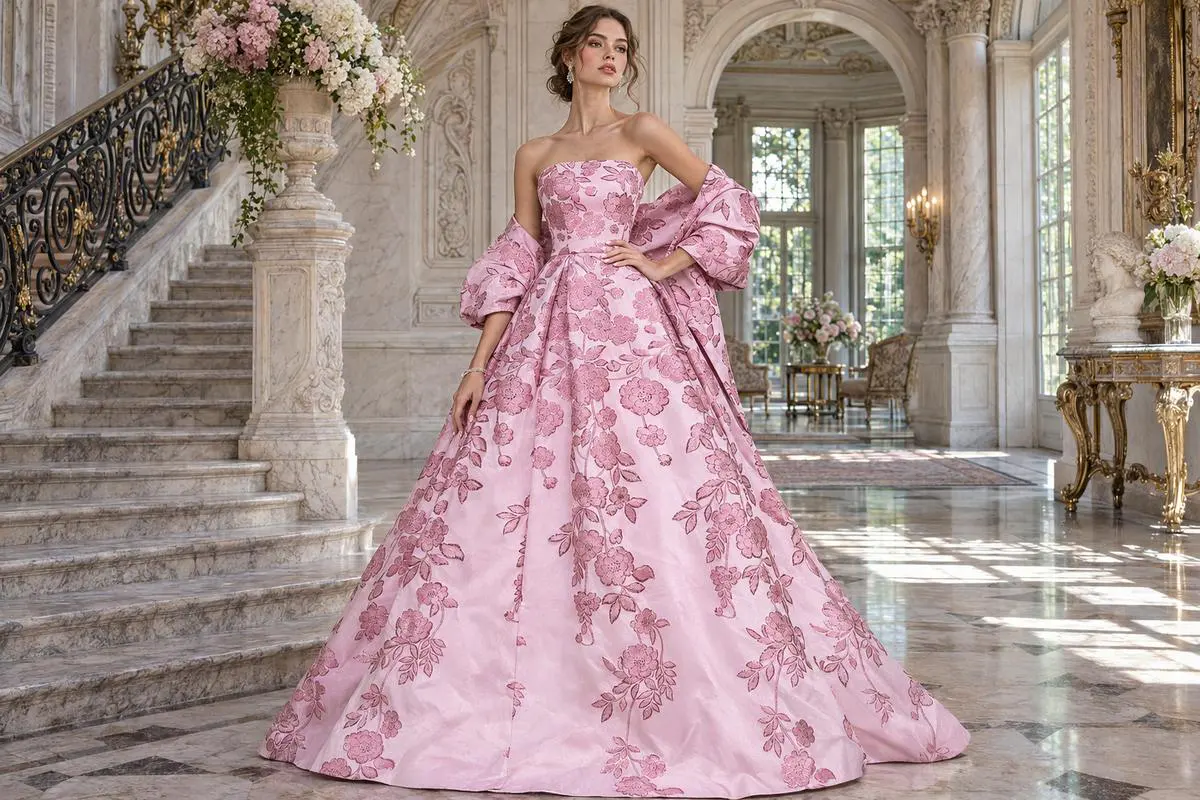
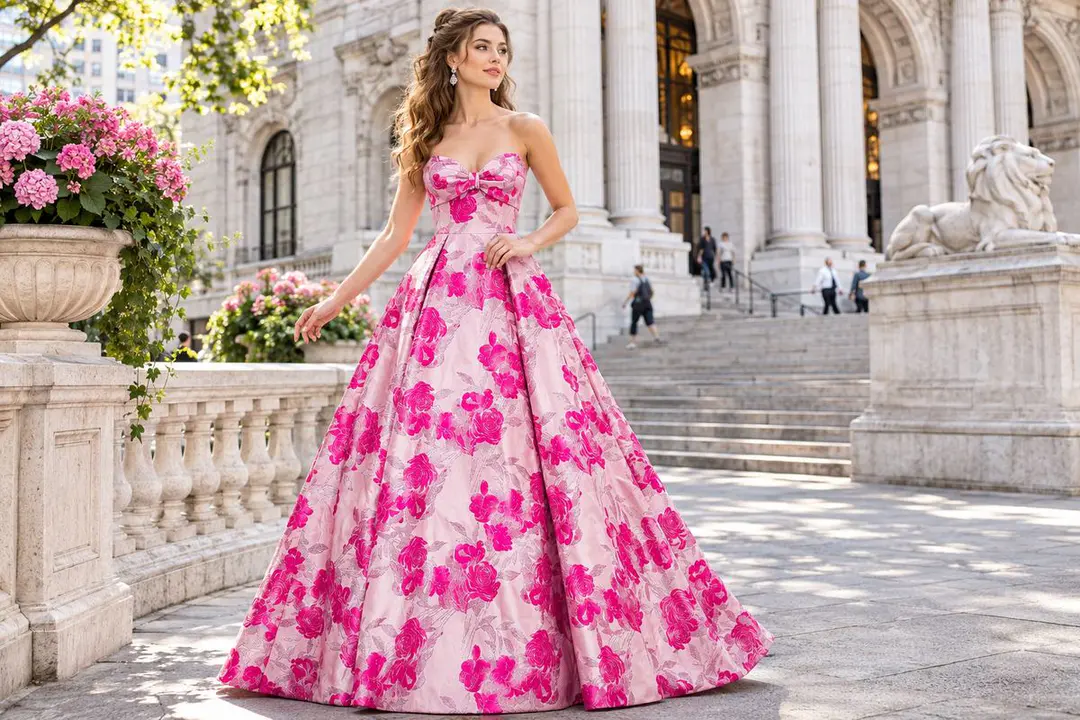
A ball gown has substantially more skirt volume than a standard A-line. Layers, pleats, and supportive fabric create width from the waist, while the bodice usually provides a clear upper-body shape.
Jovani style 54619 uses floral jacquard, a strapless structured bodice, and a floor-length full skirt. These design details make the construction visible in its full-skirt evening ball gowns collection.
3. Mermaid: Close Fitting With a Low Flare
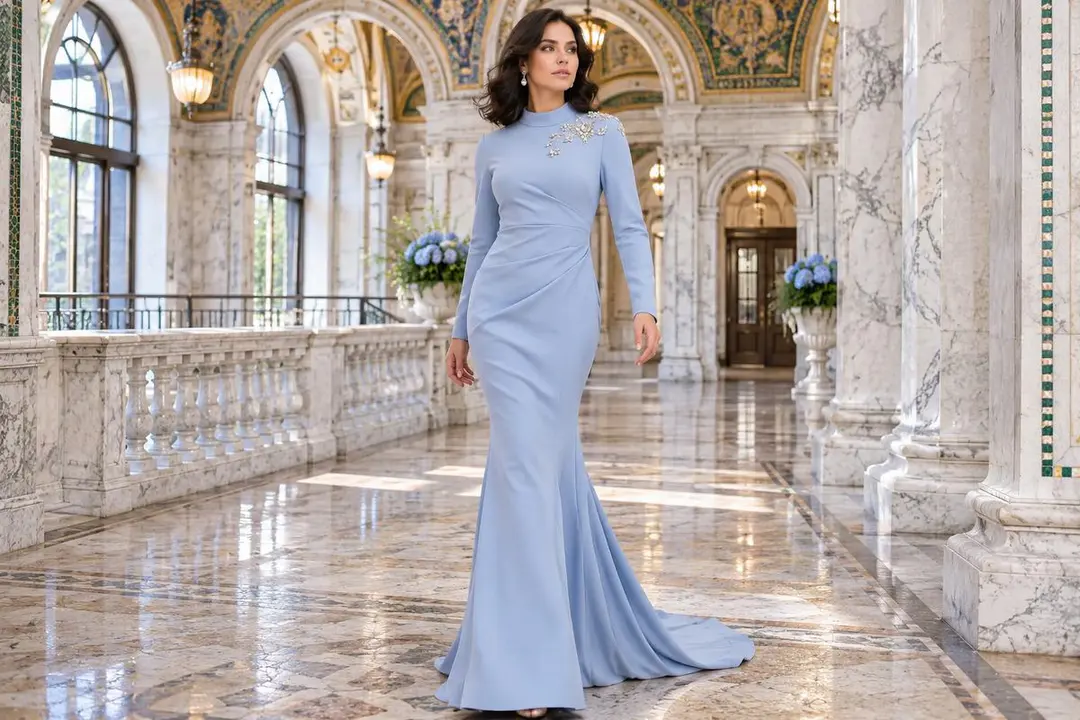
A mermaid gown follows the bust, waist, hips, and upper legs before opening near the knee. The long fitted section produces a sharp contrast with the wider hem and calls for accurate hip measurements.
Jovani style 51632 combines crepe, long fitted sleeves, and floral crystal beading in a floor-length mermaid design. See how the lower flare defines its outline among sculpted mermaid evening gowns.
4. Trumpet: A Flare Above the Knee
A trumpet dress stays fitted through the hips, then starts widening around mid-thigh. The earlier release normally gives the knees more room than a mermaid with a lower flare point.
The skirt still looks sculpted rather than loose. Check the flare against your own leg position, because changing that location often requires rebuilding the skirt rather than a simple hem adjustment.
5. Fit and Flare: Shape Above, Room Below
A fit and flare dress has a shaped upper body and a skirt that opens closer to the waist. Unlike a trumpet, it does not need to grip the hips before expanding. The exact release point varies by design.
This cut suits someone who wants a defined bodice without holding the skirt close through the thighs. Do not assume every product labeled fit and flare has the same amount of skirt volume.
6. Sheath: A Softly Contoured Straight Shape
A sheath follows the body without a large skirt flare. It often has subtle waist shaping and a narrow, relatively straight fall, although ease varies with the pattern and fabric.
A comfortable sheath should skim rather than strain across the hips. Look for clean seam lines when standing, then check whether the skirt remains comfortable when sitting.
7. Column: A Clean Vertical Line
A column is straighter from upper body toward hem than a softly shaped sheath. The uninterrupted line gives satin, crepe, or beaded fabric room to make an impact without a wide skirt.
Jovani lists column and sheath shapes in its couture evening gowns assortment. A column can look minimal, but its simple outline makes fabric pulling and uneven hems easier to notice.
8. Empire: A Raised Waist Seam
An empire silhouette begins opening below a seam set under the bust rather than at the natural waist. The fabric may fall softly through the midsection and hips instead of emphasizing their exact outline.
A raised seam changes the visual proportions of the dress, but it does not guarantee a loose fit everywhere. Check bust support, the position of the seam, and the way the skirt hangs.
What Is the Difference Between Mermaid, Trumpet and Fit and Flare?
The flare point is the decisive difference. Mermaid begins widening near the knee, trumpet around mid-thigh, and fit and flare generally opens nearer the waist. The longer the fitted section, the more carefully you should test walking and sitting.
- Mermaid: fitted through the thighs, followed by a distinct low flare.
- Trumpet: shaped through the hips, with the skirt releasing above the knee.
- Fit and flare: fitted through the upper body, with earlier space around the hips.
For a closer two-shape decision, the A-line versus mermaid comparison examines how volume changes movement and proportion. The broader definitions here help you identify the other alternatives.
If the two fitted shapes still look alike, the trumpet dress guide explains why the location of the flare matters more than the product label.
How Do You Choose a Silhouette for a Formal Event?
Choose by the dress code, the room, and how much movement the event requires. A ball gown needs space around the skirt, while an A-line or column is often easier to manage through narrow aisles and crowded tables.
For a gala with formal photographs, a mermaid or full-skirt gown creates a stronger outline. For a reception with frequent walking and dancing, consider an A-line, trumpet, or comfortably fitted straight shape.
No silhouette belongs to only one body type. Decide which areas you prefer fitted, where you need room, and what you want the dress to do during the evening.
How Does Fabric Change an Evening Dress Silhouette?
Fabric controls how strongly a cut holds its shape. Jacquard, brocade, and structured satin can maintain skirt width, while chiffon falls softly and responds to movement. Crepe varies from fluid to firm depending on its construction.
Compare Jovani 54619, with its floral jacquard ball-gown skirt, against style 51632, a crepe mermaid with fitted sleeves. Their fabrics reinforce different shapes without changing the basic definition of either silhouette.
Fit Checks That Matter More Than the Size Label
Try the gown in the shoes and undergarments you plan to wear. Focus on the fitted areas and the hem, rather than judging the shape from a front-facing photograph alone.
- Walk at a normal pace and climb a step, checking whether the knees can move freely.
- Sit fully and stand again without pulling the skirt into place.
- Turn sideways to inspect the waistline, hip seams, and beginning of the flare.
- Check the front hem and any train while wearing your planned heel height.
A beautiful outline cannot compensate for pulling seams or a sliding bodice. The evening gown fit issues guide covers warning signs to check before arranging alterations.
Keep Length and Neckline Separate From Silhouette
Length describes where the hem finishes, while silhouette describes the dress outline. A-line dresses can be midi or floor length, but the name still describes the gradual widening of the skirt.
Necklines and sleeves also change the balance without redefining the cut. A strapless ball gown can feel different from a high-neck design with the same full skirt. Compare those details after settling on the shape.
The right evening dress silhouette allows you to move comfortably while matching the occasion. Visit an authorized Jovani retailer to compare actual styles, fit, and fabric before making a final choice.
Frequently Asked Questions
Is a Sheath Dress the Same as a Column Dress?
No. A sheath usually follows the waist and hips more softly, while a column creates a straighter vertical line. Some retailers use the names loosely, so inspect the actual seams and fit.
Which Silhouette Gives the Most Freedom to Walk?
An A-line or an early-release fit and flare often gives more knee room than a tightly fitted mermaid. Fabric stretch, lining, and skirt width can still change the result.
Can a Mermaid Evening Gown Work for Black Tie?
Yes. A floor-length mermaid gown can suit black-tie occasions when its fabric and finish match the invitation. Check that the fitted section allows comfortable sitting and walking.
Is a High-Low Dress a Separate Silhouette?
No. High-low describes a hem that is shorter in front and longer behind. The dress can still have an A-line, fitted, or another underlying silhouette.