
Formal Dress Fit: How to Check the Bodice, Waist, and Hem

A formal dress fits correctly when the bodice stays secure, the waist sits in the intended position, and the skirt lets you move comfortably. You should be able to breathe, sit, and walk without pulling at the neckline or stepping on the hem. Use these checks before paying for alterations or deciding a dress is the wrong size.
How Should a Formal Dress Fit?
A good formal dress fit feels supportive, not restrictive. Start by looking at the garment from the front, side, and back. Then move, because a dress that looks balanced while standing may shift when you sit or reach. This matters especially for structured evening gowns, where the bodice carries much of the design.
The four key signs are simple: a neckline that stays put, smooth fabric across the torso, a waist seam in the intended place, and a hem that clears your shoes. Gentle shaping is normal. Deep horizontal pulling, exposed gaps, painful pressure, or a zipper under strain are reasons to reassess the fit.
Run the Four-Zone Formal Dress Fit Test
Check each area separately before blaming the size label. The issue may be one proportion, not the entire dress. Bring the undergarments and shoes you expect to wear at the event.
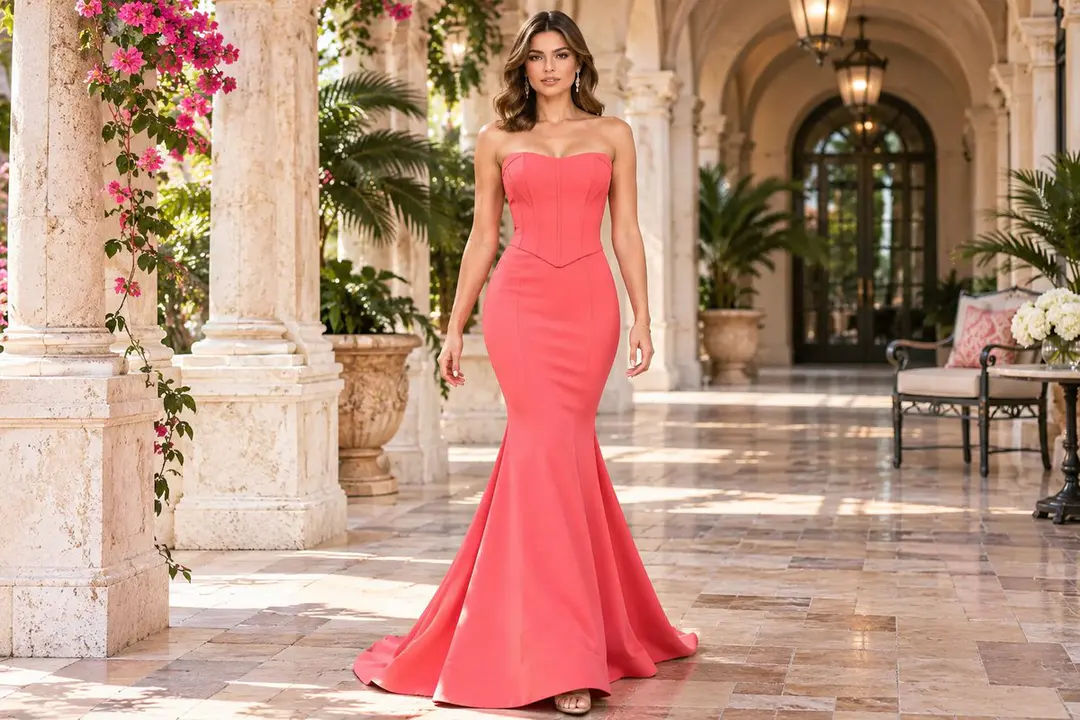
1. Bust and neckline
Lean forward slightly and raise your arms. A strapless neckline should stay in place without constant lifting. Gaping often means the upper bodice needs shaping; wrinkles that pull outward may signal too little room. This is especially useful when trying structured prom gowns with molded cups or boning.
2. Waist and hips
Find the dress's actual waist seam, which may differ from your natural waist in an empire or dropped-waist design. Sit on a chair and take a few steps. If the hip seams strain or the skirt twists, a fitted silhouette may need a different size or cut. An open, flowing skirt behaves differently.
3. Straps and closures
Straps should support the neckline without digging into your shoulders. A zipper should close smoothly while the dress is correctly positioned, not while someone forces the fabric together. If a closure pulls diagonally, ask a tailor to check the overall bodice balance before changing the zipper.
4. Hem and walking room
Put on your event shoes and walk across the room. You should not catch the front hem with every step. A floor-length dress may need hemming, while a short style needs a visually balanced stopping point. For shorter cocktail and party dresses, check how the hem sits both standing and seated.
Use Measurements Before Choosing a Different Size
Measure the fullest bust, natural waist, and fullest hips with a soft tape. Keep the tape level and stand naturally. Then consult the chart on the specific Jovani product page. Jovani states that its size guides are product-specific, so a familiar everyday size is not a reliable substitute.
The official Jovani chart lists bust, waist, and hip measurements, including sizes 00 through 24. Compare all three measurements rather than selecting a number from one area alone. Jovani's prom dress fit finder explains how to measure and why different silhouettes place different demands on those measurements.
If the bust fits one size while the hips require another, prioritize the part that cannot comfortably be adjusted. A tailor can assess seam allowance, but extra fabric is not guaranteed. Ask the authorized retailer about a different size before making permanent changes.
When Is Tailoring Better Than Exchanging the Dress?
Tailoring works best for localized problems on an otherwise comfortable dress. Exchanging is often more sensible when the closure is under strong tension, the waistline sits far from the intended position, or several areas require major reconstruction. The original structure and embellishments determine what is practical.
- Consider alterations for a long hem, slightly loose straps, or modest shaping at the waist.
- Ask about another size if the bodice compresses your ribs, the hips pull severely, or the zipper cannot close naturally.
- Consider a different silhouette if repeated changes would distort the neckline, seams, or skirt proportions.
A skilled alterations specialist can advise on seam allowances, boning, beadwork, and layered hems. Jovani's evening dress alterations guide covers those procedures in detail. Request a written estimate and confirm the schedule before authorizing any changes.
How Fabric and Construction Change the Fitting Decision
A fitted mermaid shape must accommodate the bust, waist, and hips, while A-line evening gowns give the skirt more room below the waist. Jovani style 49743, for example, combines a beaded high neckline, cape detail, and an A-line chiffon skirt. Its upper fit deserves closer inspection than its flowing lower half.
Jovani style 49438 is a strapless corset dress with a pleated full skirt, offered in colors including light blue and navy. Check the ribcage fit and neckline stability before measuring the hem. A lace-up closure provides different adjustability from a fixed zipper, as the guide to corset back construction explains.
For a closer fit, Jovani style 40060 uses beaded mesh, a sweetheart neckline, an open back, and a high slit. With this kind of shape, test walking and sitting before deciding whether a hip adjustment will help. You can compare that fit behavior with the more sculpted options in mermaid formal gowns.
Your Final Fitting Checklist
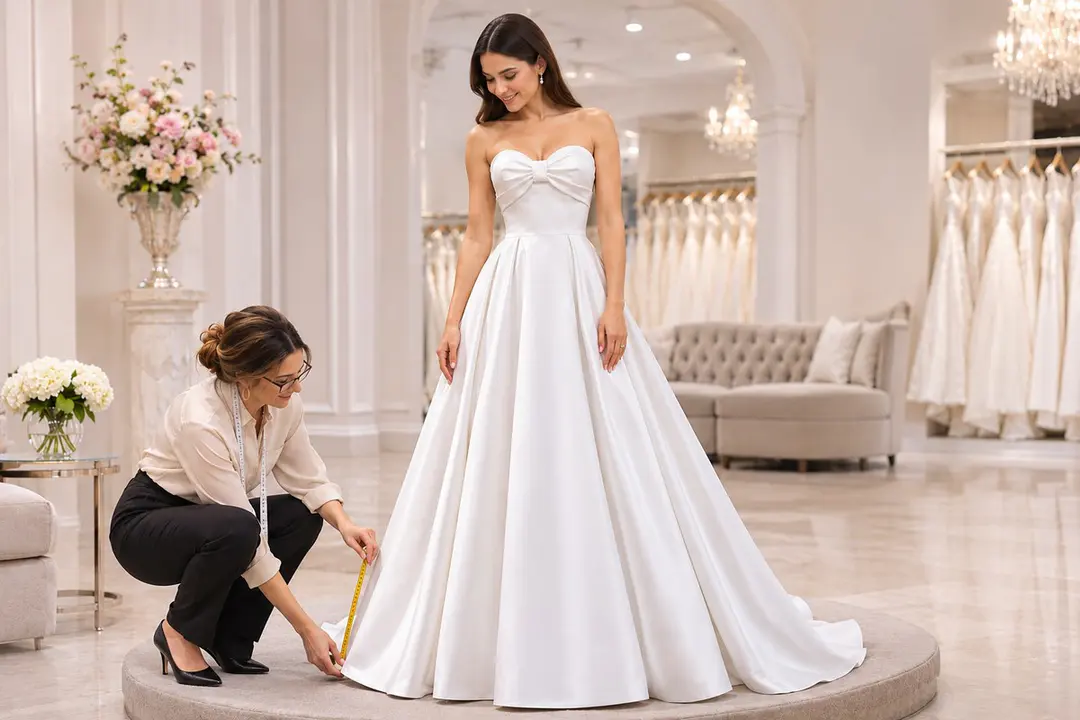
Schedule a final try-on after alterations, not just a pickup. Wear your intended shoes and undergarments, bring any accessories that affect the neckline, and ask the fitter to check the dress from the back as well as the front.
- Sit down, stand up, raise your arms, and walk at your usual pace.
- Check that closures lie flat and that straps or cups stay in position.
- Look for loose embellishments, twisted lining, and uneven layers near the hem.
- Ask how to hang, transport, and store the finished garment until the event.
Avoid home fixes that stretch fabric or alter seams without understanding the construction. If a final fitting reveals a problem, contact the retailer and tailor before wearing or modifying the dress further.
For an in-person fit check and help choosing the right style, use Jovani's authorized retailer locator to arrange a visit.
Frequently Asked Questions
Should a formal dress feel tight when you sit?
No. A formal dress can feel close-fitting, but you should be able to sit and breathe normally. If the waistband or hip area becomes painful, ask about a different size or silhouette.
Can a formal dress be let out if it is too small?
Sometimes. A tailor must inspect the seam allowance and construction first. Beading, boning, lining, and cutouts can limit how much additional room is possible.
Do you need to wear the same shoes for every fitting?
Yes, whenever hem length is being marked or checked. Changing heel height afterward can make a long gown drag or appear unexpectedly short.
Is it better to buy a larger formal dress and take it in?
Choose the size that accommodates your measurements without major strain. A slightly larger size may offer more tailoring options, but excess fabric and a misplaced waist can also create problems.