


A corset back solves a problem that a zipper cannot. A zipper closes at exactly one measurement, so a dress either fits or it does not, and the difference between those two states can be a few pounds either direction. A lace-up back is adjustable by design, which means the same dress can fit you comfortably across a range of measurements and can be tightened or loosened on the night itself. That is the practical reason lace-up closures have become so common on formal gowns, and it sits alongside the obvious visual one, since a laced back is a beautiful detail in its own right. This guide covers what a corset back actually is, how the modesty panel works, the sizing strategy that makes the most of an adjustable closure, how to lace one properly, and the honest limits worth knowing.
What a corset back is
A corset back is a closure system in which two edges of a dress are drawn together by lacing rather than joined by a zipper or buttons. Ribbon or cord passes through loops or grommets set along both sides of the opening, and pulling the lacing brings the edges closer together while loosening it lets them sit further apart.

The lacing replaces a zipper rather than decorating one
This is worth stating plainly because some dresses have decorative lacing over a zipper, which looks similar and behaves completely differently. On a true corset back, the lacing is the closure and does the structural work. That is what makes the fit adjustable, since changing the tension physically changes the circumference of the bodice. On a decorative version, the zipper sets the measurement and the lacing is trim. If adjustability is why you want a corset back, this is the first thing to check, and the simple test is whether the dress can be opened without touching the laces.
The modesty panel does more than you expect
Behind the lacing on almost every well-made corset back sits a panel of fabric, usually attached along one side and running the length of the opening. It is often called a modesty panel and it does three separate jobs. It covers the skin between the laced edges, so the dress reads as closed rather than open. It gives the lacing something to pull against, which keeps the tension even and stops the edges from digging in. And it hides the gap that appears whenever the dress is laced looser than its smallest setting, which is precisely what allows the same dress to fit across a range of sizes without looking wrong at either end. A corset back without a modesty panel is a different garment: more revealing, less forgiving, and far more dependent on being laced to a specific tightness.
Why an adjustable back changes how a dress fits
The value of a corset back is that it removes the precision a zipper demands. With a zippered bodice, the measurement at the moment of the final fitting is the measurement you are committed to. Any change between then and the event, in either direction, shows up as a dress that pulls or gapes. With lacing, that same change is absorbed by adjusting the tension.
This matters most in the situations where formal dresses are usually bought, which is weeks or months before they are worn. It also matters across a single evening, since a bodice that felt right when you dressed can feel tight after dinner, and a corset back can be eased slightly without anyone noticing. For anyone whose measurements fluctuate, for a teenager still growing between the purchase and the dance, or for anyone who simply does not want to think about it, adjustability is a genuine practical advantage rather than a marketing point.
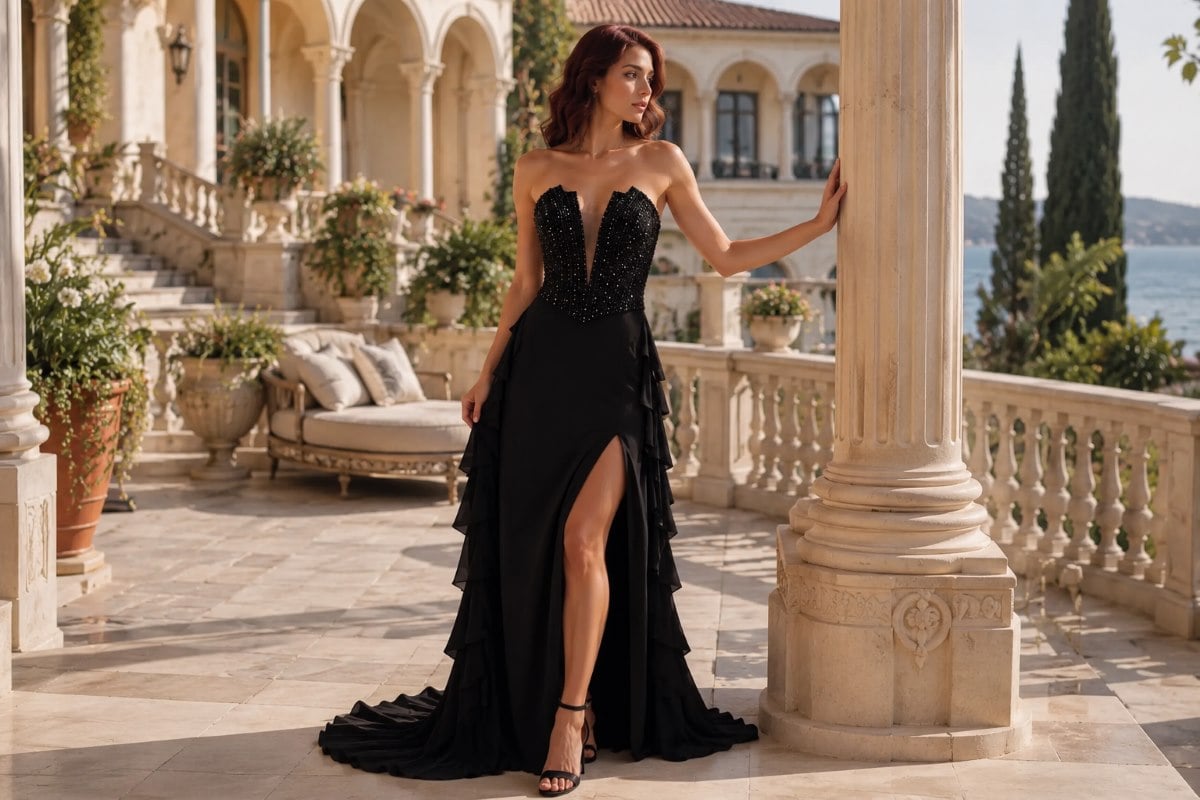
There is a structural benefit too. Because the lacing pulls the bodice inward along its whole length rather than at a single seam, a corset back distributes the closing force evenly and helps a fitted bodice sit smoothly against the body. Combined with internal boning, this is what lets a strapless gown stay in place through an evening without constant adjustment. The styles among corset prom dresses show how the closure works with a structured bodice.
Sizing strategy for a corset back
Here is the part that most shoppers get backwards. With a zippered dress, sizing up and taking it in is the safe move. With a corset back, the opposite is usually true, and fitting consultants recommend the smaller of two sizes rather than the larger.
The reason is asymmetry in what lacing can do. Loosening a corset back adds room easily, because the laces simply sit further apart and the modesty panel covers the difference. Tightening it has a hard limit, since once the laced edges meet there is nowhere further to go, and at that point the dress is simply too big and no amount of pulling will fix it. A dress laced almost fully closed still has room to be let out. A dress that is already at its tightest has none.
In practice this means choosing the size that fits your fullest measurement without needing to be laced completely shut, which leaves adjustment room in both directions. It also means a corset back can reduce the alteration bill, since letting out a bodice is one of the more difficult alterations and lacing does that job for free. The guidance in the article on prom dress alterations covers what else is worth adjusting once the back is handled.
How to lace a corset back properly
Lacing is straightforward once you know two things, and both of them change the result noticeably.

Direction changes where the tension sits
You can lace a corset back from the top down or from the bottom up, and the choice is not cosmetic. Lacing from the top downward puts the finishing tension near the waist and leaves the bow at the bottom, which many people find holds a snug fit through the ribcage longer over an evening. Lacing from the bottom upward puts the tension higher and leaves the bow at the top, which is easier to reach and adjust yourself but tends to loosen at the waist as the night goes on. Neither is wrong. If you plan to dance for hours and want the fit to hold, working downward is generally the more reliable choice, and if you expect to want small adjustments through the evening, working upward keeps the bow within reach.
Let the dress settle before the final tighten
The single most useful piece of practical advice about corset backs is not to lace to final tension immediately. Lace the dress loosely first, wear it for five or ten minutes, and only then draw it to its final setting. Fabric relaxes slightly with body warmth and movement, and a bodice laced tight while cold will feel looser within the hour. Doing it in two stages gets you a fit that holds. Work the tension gradually along the whole length rather than pulling hard at one end, since the loops are not designed to take a sharp yank and a ribbon under sudden strain can tear a loop out. And the fit should be secure rather than restrictive: if it interferes with breathing comfortably or sitting normally, it is too tight, not correctly laced.
A corset back is not the same as a corset bodice
These two terms get mixed up constantly, and they describe different things that often appear on the same dress. A corset back is a closure, meaning the lace-up system at the back of the garment. A corset bodice is a construction style, meaning a structured, boned bodice shaped to sculpt the torso, which may close with lacing, a zipper, or hooks.
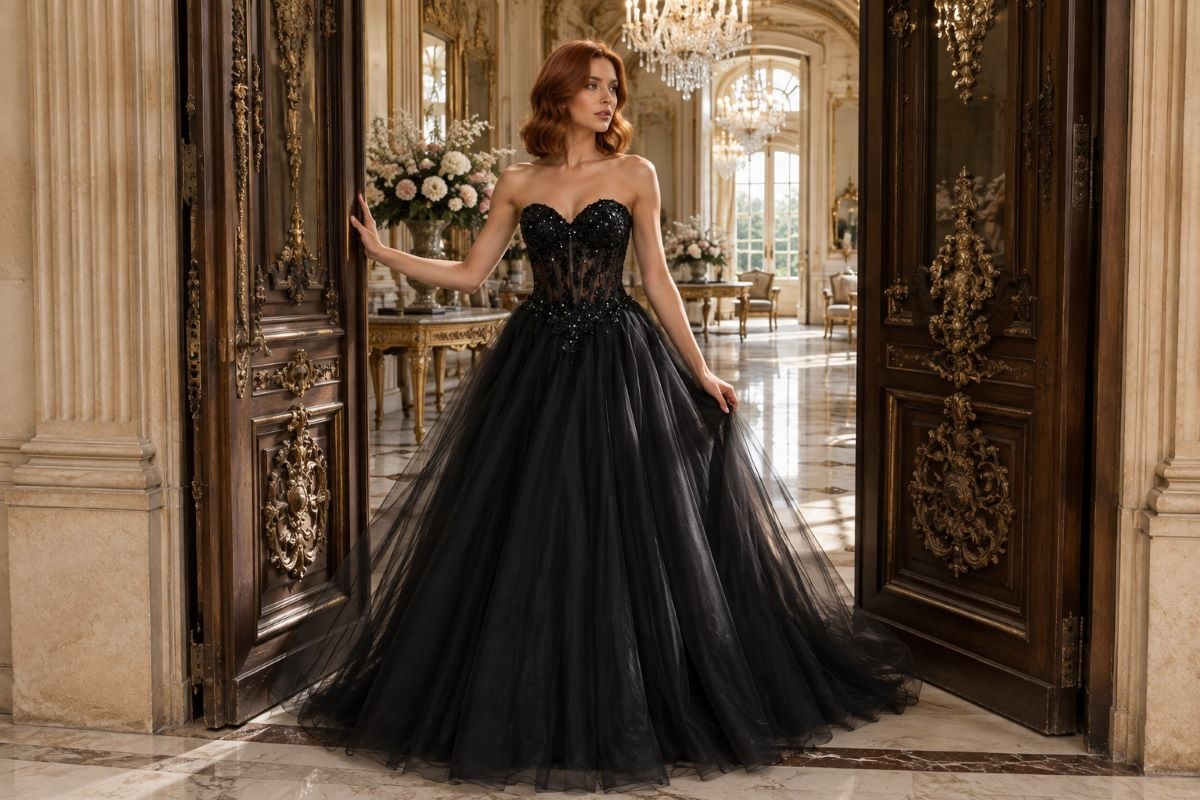
A dress can have one without the other. There are corset bodices that zip, and there are soft, unstructured bodices that happen to lace at the back. When they appear together, which is common in formal gowns, you get the sculpted shape of the boned construction plus the adjustability of the lacing, which is a genuinely useful combination for a long event. The overview of corset bodices covers the construction side of the pairing.
Knowing the difference matters when you shop, because a listing that says corset may mean either. If adjustable fit is your priority, look for the lacing specifically. If a sculpted shape is your priority, look at the internal structure instead. The broader picture in the piece on the corset prom dress trend covers how the look has developed.
The honest limits of a corset back
A corset back has real drawbacks and they are worth knowing before you rely on one. The first is that you almost certainly cannot lace it yourself. Reaching behind your own back to control tension evenly along a full bodice is close to impossible, so plan for someone to help you both getting into the dress and out of it. This is a genuine logistical point at an event where you may be getting ready alone.
The second is that the loops are not structural hardware. Ribbon or fabric loops are stitched into a seam and they will hold a normal working tension indefinitely, but they are not designed for force. Pulling hard to close a dress that is really too small is how loops tear out, and that repair is not quick.
The third is a fit limit in the other direction. Lacing adjusts the circumference of the bodice, but it does nothing for length, bust position, or strap placement. If the bodice is too long in the torso or the bust seams sit in the wrong place, a corset back will not rescue it, and those remain ordinary alterations. Lacing solves one dimension of fit rather than all of them.
Styling and what goes underneath
A laced back is a design feature, so it deserves to be seen. Wearing your hair up or swept to one side keeps the detail visible, and this is one of the few dress features where an updo changes how the garment reads from behind.
Underneath, the important consideration is the bra, since a corset back usually means an open or partially open back. Most well-constructed formal bodices with lacing have internal support built in, in which case no separate bra is needed and adding one only creates visible lines. If you do need extra support, look for an adhesive or low-back option rather than a standard band that will show across the lacing.
Jewelry follows the usual logic: if the back of the dress is the statement, keep the front simple and let the laced detail be seen when you turn. A necklace that sits high, or none at all, works better than a long pendant that competes. The styles among backless prom dresses show how open backs are constructed for support, which applies directly to a laced closure.
What separates a good lace-up from a bad one
A well-built lace-up back announces itself in four small details, and a poorly built one gives itself away in the same places. Confirm the lacing is the actual closure rather than trim over a zipper. Look for a modesty panel behind the lacing, since its presence is one of the clearest signs of a well-made corset back. Check the loops themselves, because evenly spaced, securely stitched loops in a fabric that matches the dress are a construction detail cheaper garments skip. And try the dress laced to a moderate tension rather than fully closed, so you can feel whether there is adjustment room in both directions.
A corset back suits a formal dress bought well in advance, a long event where comfort may shift, and anyone who would rather not stake the fit on a single measurement. It suits a structured gown particularly well, since the lacing and the internal boning work together. The range of corset homecoming dresses shows the closure working at a shorter length, where the same adjustability applies to a dress bought well before the dance.
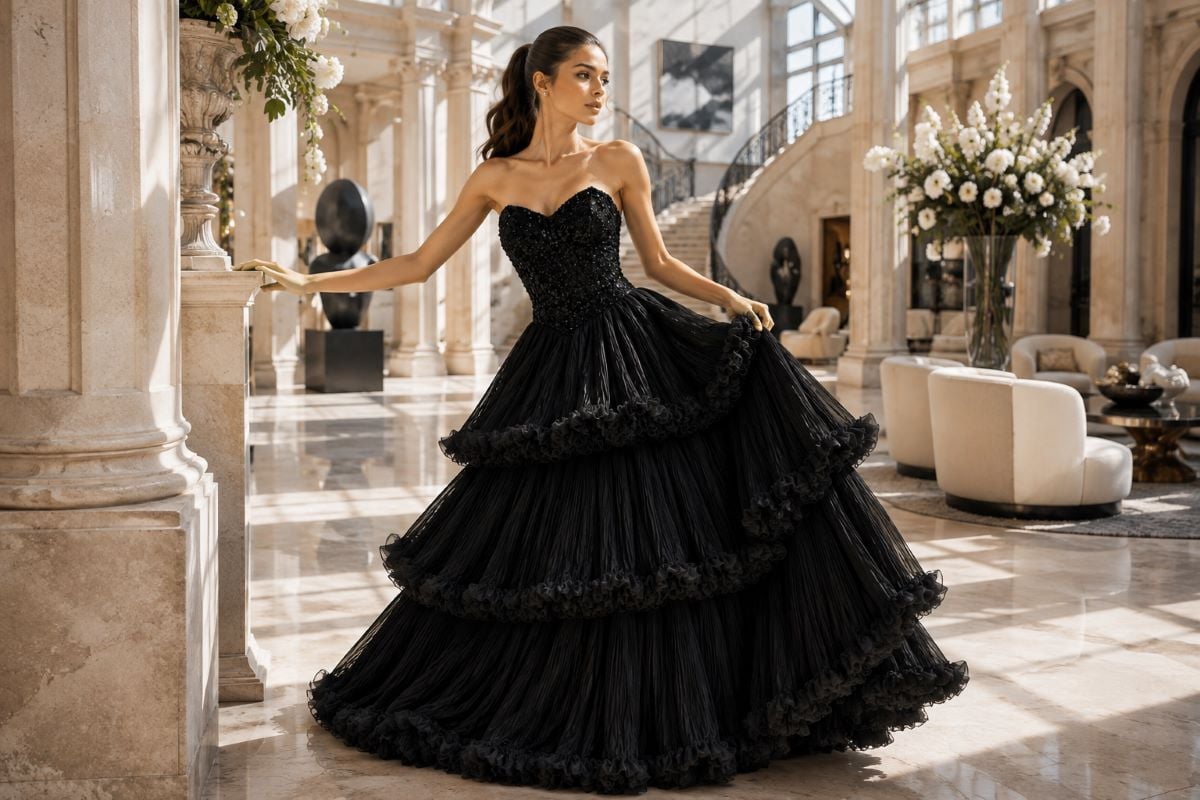
At the other end of the scale, a full ceremonial skirt puts more weight on the bodice, and an adjustable back handles that load evenly across a long celebration. The styles among quinceañera gowns show how the closure supports a fuller gown.
Handled properly, an adjustable back turns a formal dress from something that fits on one day into something that fits on the day it matters. The range of evening gowns shows how the closure appears across formal silhouettes. To see how lace-up backs are constructed across prom, evening, and occasion gowns, explore the current styles through an authorized Jovani retailer.
Lace-Up Backs, From Fitting Room to Final Bow
What is a corset back on a dress?
A corset back is a closure in which two edges of the dress are drawn together by lacing rather than joined by a zipper or buttons. Ribbon or cord passes through loops or grommets on both sides of the opening, so tightening the lacing reduces the circumference of the bodice and loosening it adds room. Behind the lacing sits a modesty panel that covers the skin, keeps tension even, and hides the gap when the dress is laced at a looser setting.
Should you size up or down for a corset back dress?
Generally down rather than up, which surprises people. Loosening a corset back adds room easily, since the laces sit further apart and the modesty panel covers the difference. Tightening has a hard limit, because once the laced edges meet there is nowhere further to go. So a dress laced nearly closed still has room to be let out, while one already at its tightest has none. Choose the size that fits without needing to be laced completely shut.
Should you lace a corset back from the top or the bottom?
Both work, and the choice changes where the tension settles. Lacing downward puts the finishing tension near the waist and leaves the bow at the bottom, which tends to hold a snug fit longer through an evening of movement. Lacing upward puts tension higher and leaves the bow within reach for small adjustments, but it can loosen at the waist over time. If you plan to dance for hours, working downward is usually more reliable.
Can you lace a corset back dress by yourself?
Realistically, no. Controlling tension evenly along a full bodice from behind your own back is close to impossible, so plan for someone to help you both into and out of the dress. This is worth thinking about in advance if you expect to be getting ready alone. It is one of the genuine practical drawbacks of an otherwise very forgiving closure, and it applies at the end of the night as much as the beginning.
What is the difference between a corset back and a corset bodice?
A corset back is a closure, meaning the lace-up system at the back of the dress. A corset bodice is a construction style, meaning a structured, boned bodice built to sculpt the torso, which might close with lacing, a zipper, or hooks. A dress can have either without the other. When they appear together you get the sculpted shape of boned construction plus adjustable fit, which is a useful combination for a long event.
What do you wear under a corset back dress?
Usually nothing extra, since most well-made formal bodices with lacing have internal support built in and adding a standard bra creates visible lines across an open or partially open back. If you need additional support, an adhesive or low-back option is the better choice. Wearing your hair up also helps, since a laced back is a design feature and keeping it visible is part of the point of choosing one.