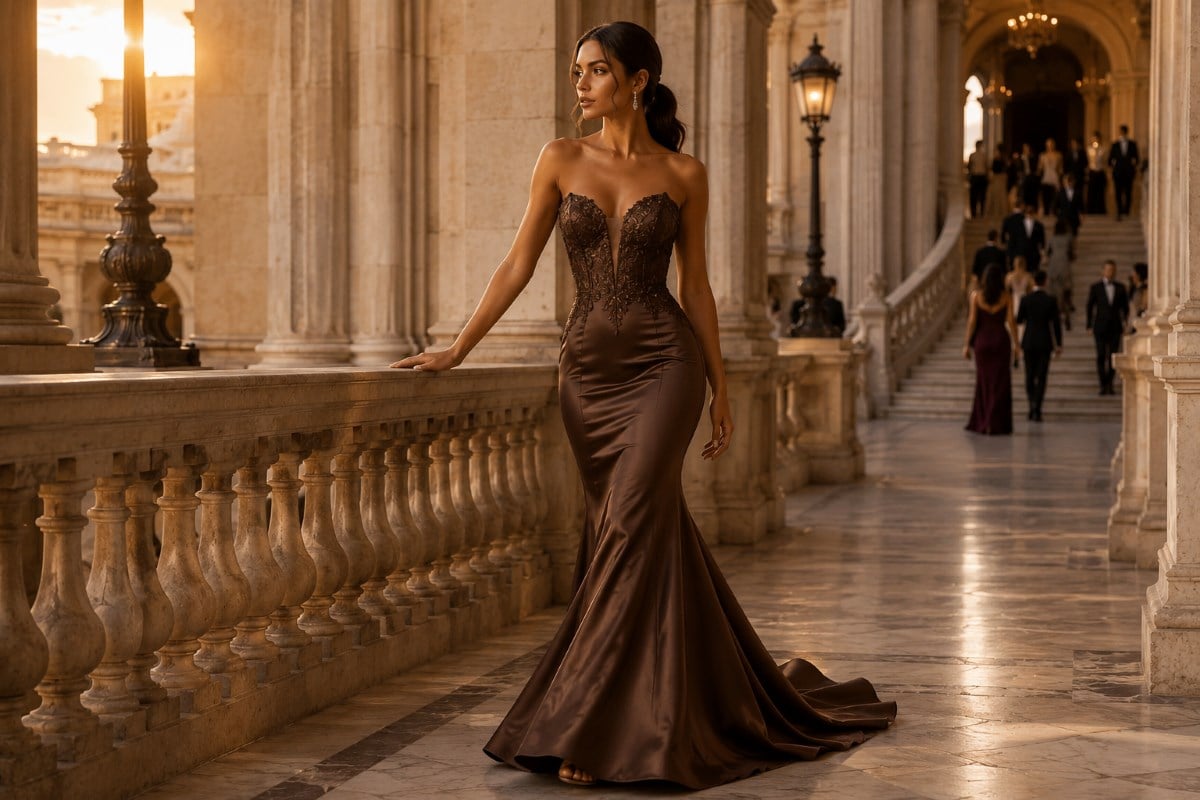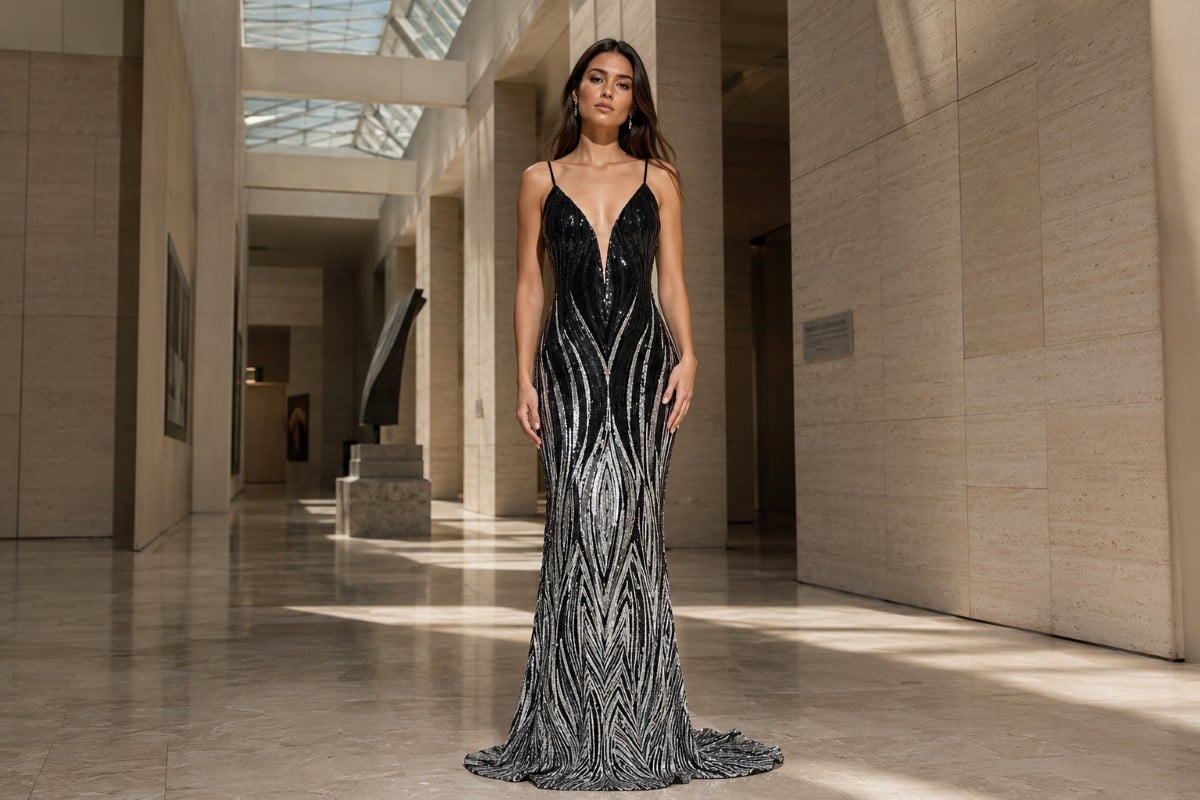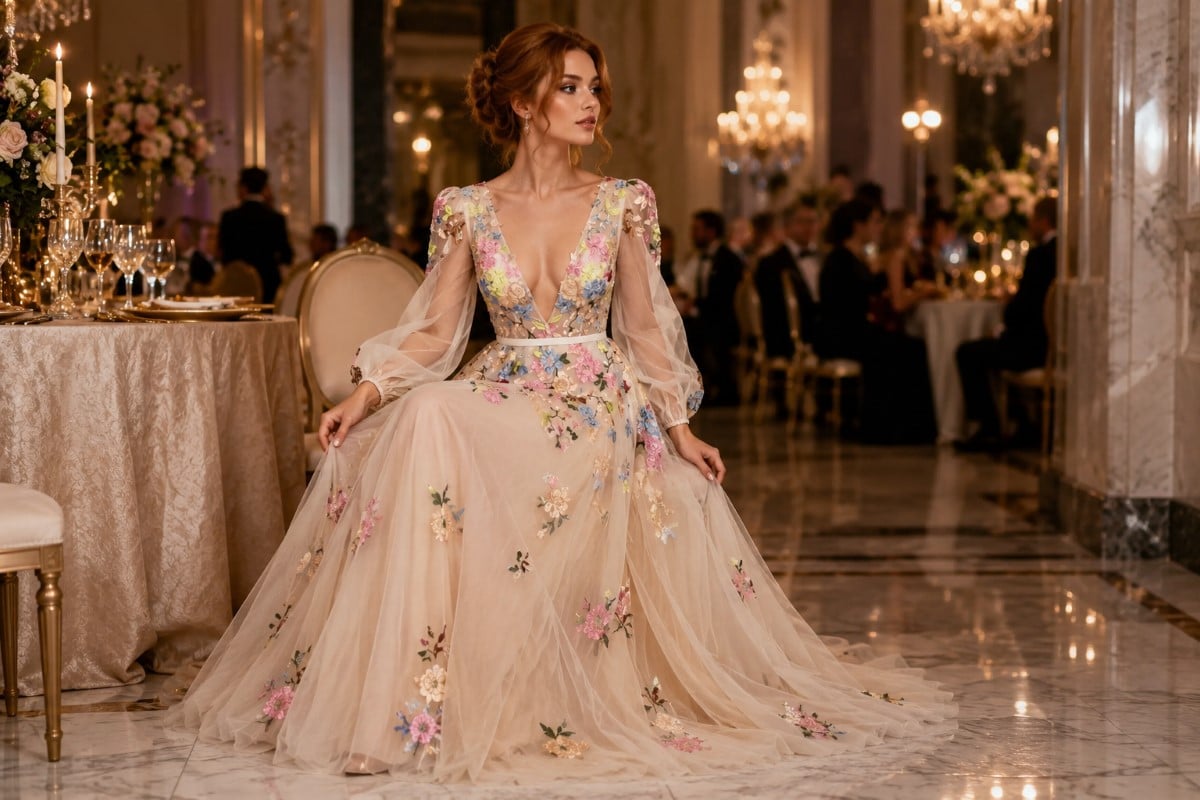

A debutante ball is one of the most distinctive formal events a young woman ever attends, with its own deep traditions, particular dress requirements, and quiet rituals that have endured for centuries. Yet for the young women being presented, and for the families helping them prepare, finding clear guidance on what to actually wear is surprisingly difficult. Most formal-dressing advice does not cover the specific etiquette of a debutante ball: the white gown, the long gloves, the curtsy, the formal presentation, the procession. This debutante ball dress guide covers all of it, with honest, practical advice on choosing the right gown, understanding the traditions behind the dress, and feeling exactly as confident on the night as the occasion deserves.
What a Debutante Ball Actually Is
A debutante ball, sometimes called a cotillion or a presentation ball, is a formal event at which young women are formally presented to society, traditionally between the ages of sixteen and eighteen. The tradition has its origins in the European aristocracy of the seventeenth and eighteenth centuries, when young women of marriageable age were presented at court. The American version, often associated with cities like New Orleans, Charleston, Dallas, Atlanta, and New York, evolved into a community celebration centered on family heritage, philanthropy, or service organizations, with the formal presentation itself still at the heart of the evening.
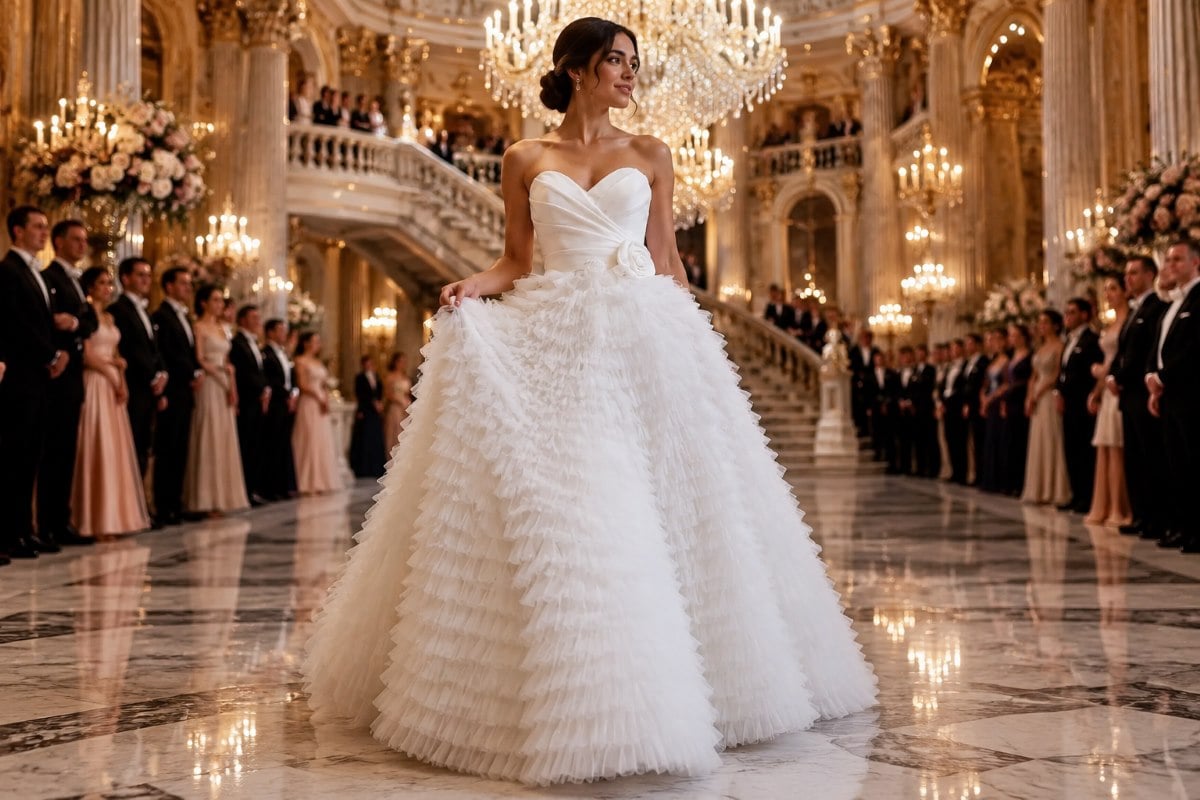
A modern debutante ball typically includes a formal procession of the debutantes in white gowns, an individual presentation of each young woman (often by her father or a family escort), a deep curtsy (sometimes called the Texas Dip or the Court Curtsy depending on the region), and a formal dance, usually beginning with the debutante and her father. The event also frequently includes escorts for each debutante, in formal white tie or black tie, and a wider community of family and supporters in formal attire.
The point of understanding all of this before shopping is that a debutante’s gown is not just a beautiful dress; it is the central visual element of a deeply traditional event. Choosing well means honoring both the formality of the occasion and the specific requirements that have been passed down through generations. The range of formal gowns includes silhouettes appropriate for this kind of formal presentation, but the principles below help you identify the ones that genuinely suit a debutante context.
The Traditional Rules of a Debutante Gown
Most debutante balls follow specific dress code requirements, which are usually communicated to the debutante’s family in advance by the sponsoring organization. The honest truth is that these requirements vary somewhat by region and by organization, but several core principles hold almost universally, and any practical debutante ball dress guide should start with them.
The Color Is White
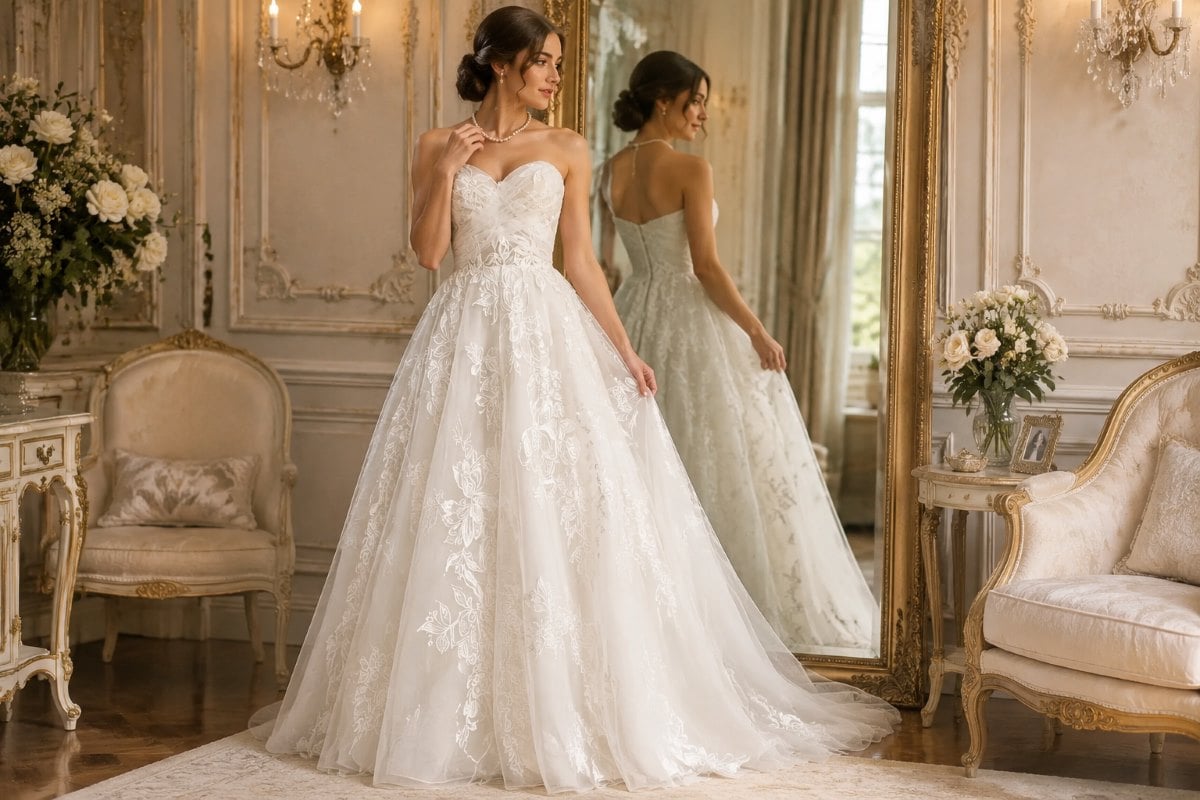
White is the traditional and almost universal color for a debutante gown. Ivory, eggshell, and very soft cream are sometimes permitted, but the gown should read as white in photographs and from across the ballroom. This is the single most important rule, and it carries real symbolic weight: the white gown represents the debutante’s formal presentation as a young woman of grace and refinement entering society. The white color is consistent across nearly every traditional debutante organization in the country, with subtle regional variations on the acceptable range of off-white tones.
The Silhouette Is a Ball Gown
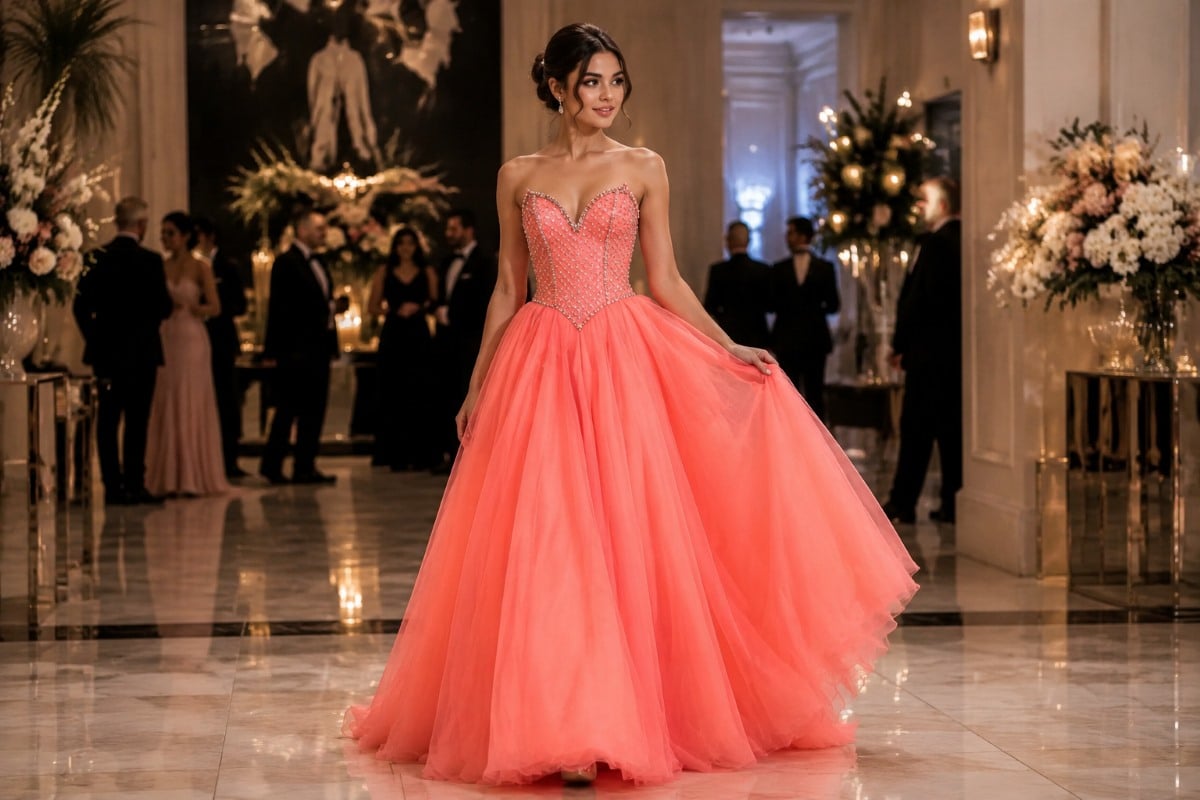
The traditional debutante silhouette is a full ball gown, with a fitted bodice and a voluminous skirt. This shape is required at most formal debutante balls because it suits the procession, the curtsy, and the dance that define the evening. The styles among ball gowns evening dresses show the classic shape, with full layered skirts and structured bodices that hold their form through hours of formal presentation. Some less traditional debutante events permit A-line or other silhouettes, but the ball gown remains the safest and most expected choice unless your organization specifies otherwise.
The Length Is Floor-Length
A debutante gown is always floor-length, never short, midi, or tea-length. The full length is essential for the formal procession and curtsy, and it photographs as appropriately significant for the occasion. The styles among long evening outfits all meet this requirement, though the silhouette must still be a ball gown rather than a column or sheath at most traditional debutante events.
The Neckline Is Modest
Debutante traditions favor modest necklines: a sweetheart, a portrait neckline, an off-the-shoulder cut with clear coverage, or a more covered scoop or V-neck. Deeply plunging necklines, strapless cuts with minimal support, or anything that reads as revealing is generally not appropriate. The dress should look refined and elegant from every angle, including during the deep curtsy when the bodice is the most visible part of the gown.
Sleeves and Shoulders Vary by Organization
Some debutante balls require sleeves or covered shoulders; others permit strapless or off-the-shoulder gowns as long as the rest of the dress is appropriately formal. Always check with the organizing committee or your sponsor for the specific requirements of your event. When in doubt, a gown with some shoulder coverage (capped sleeves, a portrait neckline, or short sleeves) is the safer choice for a more traditional ball.
The Long White Gloves
The long white gloves are nearly as iconic as the gown itself at a traditional debutante ball, and they have specific rules of their own that the gown should accommodate.
Most debutante events require opera-length gloves, which extend above the elbow and end at or near the bicep. These gloves are worn during the formal procession, the presentation, the curtsy, and the first dance. They are typically removed for dinner if dinner is part of the evening, then put back on for the rest of the formal portions.
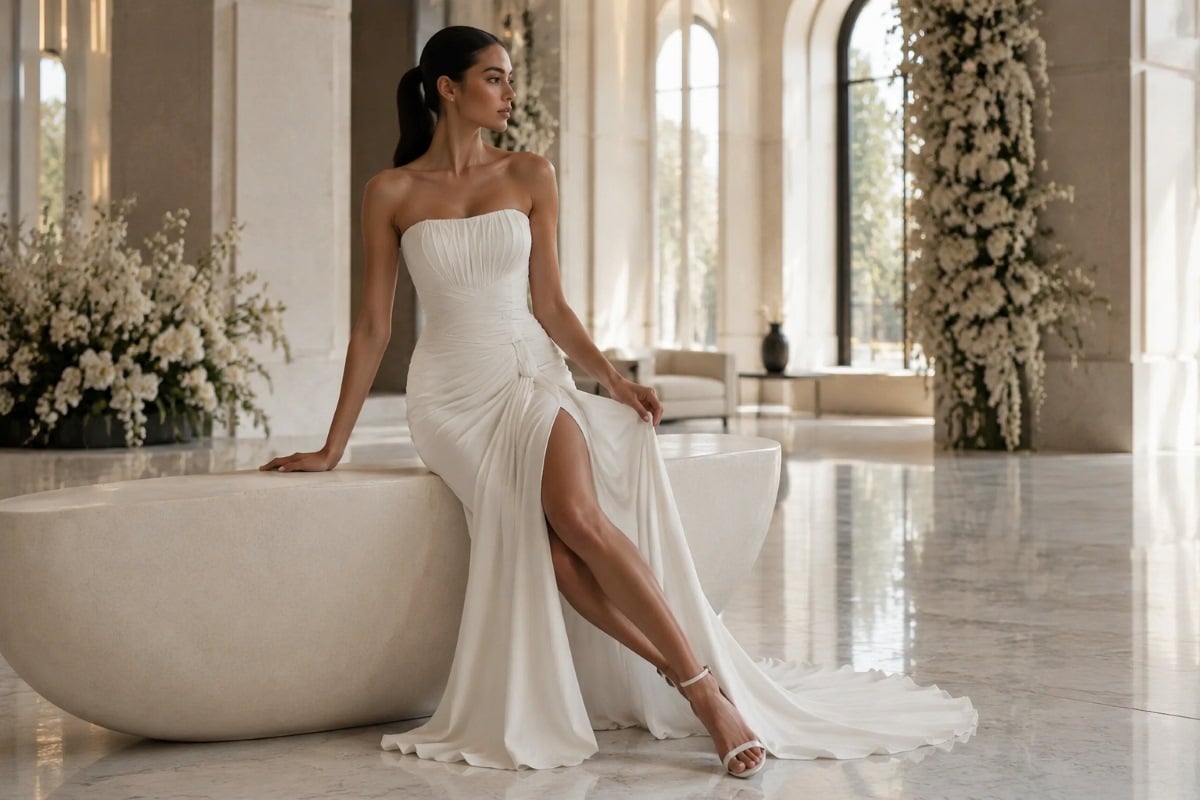
The practical implication for your gown is that the sleeve and arm choice must work with the gloves. If your gown has long sleeves, they cannot conflict with the gloves; this usually means either no sleeves on the gown (gloves alone) or very short cap sleeves that sit above where the glove ends. A strapless or off-the-shoulder gown is the most traditional pairing with opera gloves, because the bare arm shows the white glove cleanly from the gown to above the elbow.
The gloves themselves are usually pure white kid leather, satin, or a high-quality stretch fabric, with subtle elegance rather than decorative detail. Pearl buttons at the wrist are traditional. Match the white tone of the gloves carefully to the gown, since two different whites side by side can look mismatched in photographs.
Fabrics and Details That Work for a Debutante Ball
The right fabric for a debutante gown supports the silhouette through hours of presentation, curtsying, and dancing. A few specific choices consistently work well.
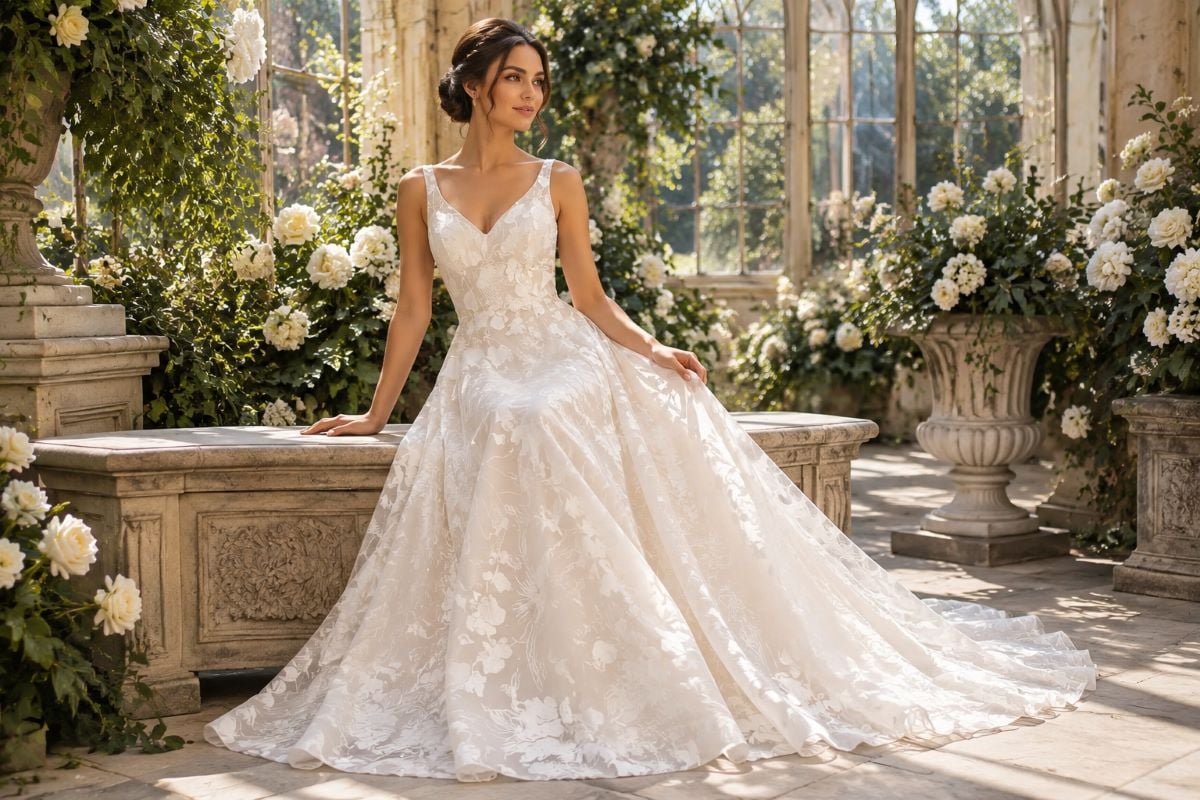
Tulle and organza are the traditional ball gown fabrics, creating soft, romantic volume that photographs as luminous and ethereal under formal ballroom lighting. A multi-layer tulle skirt is the classic debutante silhouette and remains the most photographically beautiful choice. Satin and Mikado provide more structured, polished bodice and skirt construction, often paired with a tulle underskirt for the ball-gown shape. Lace overlays on the bodice add intricate detail without compromising the silhouette, and a beautifully detailed lace bodice is one of the most timeless debutante choices.
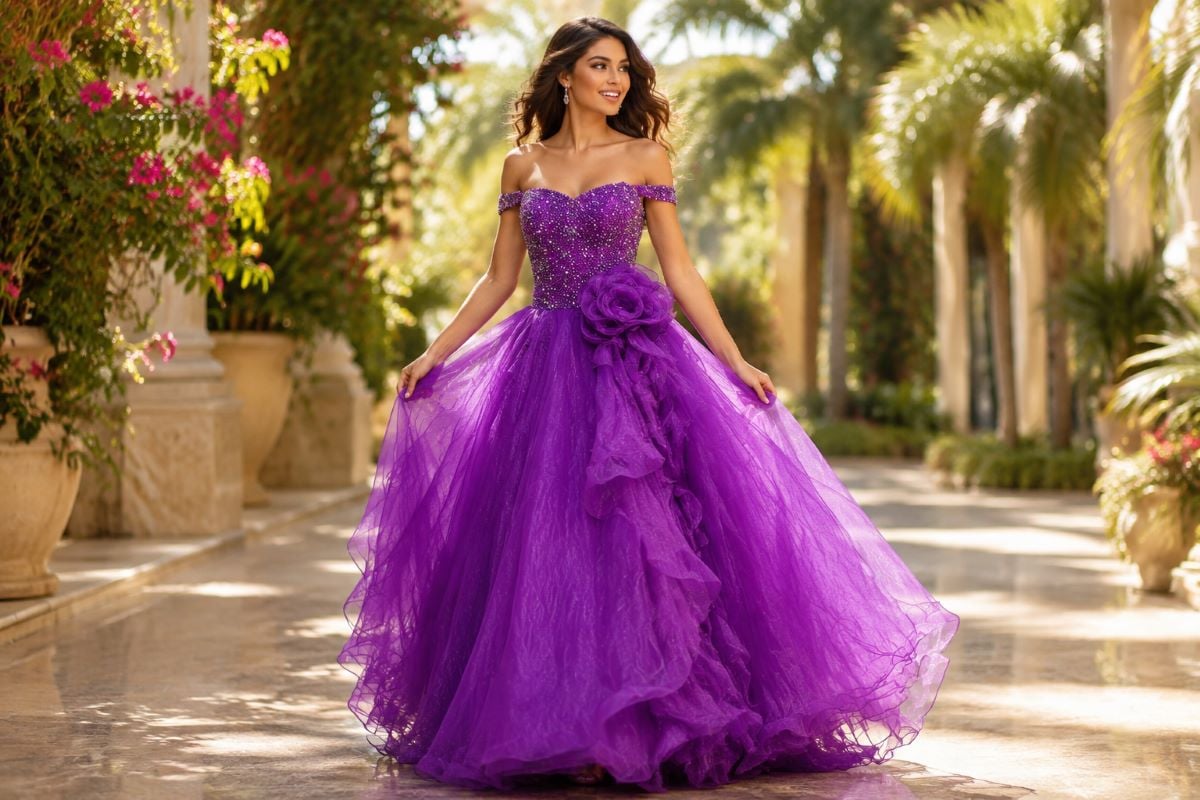
Embellishment should generally be restrained and elegant rather than dramatic. Subtle beading along the bodice, delicate embroidery, or pearl detailing all suit the traditional debutante aesthetic. Heavy sequins, bold metallics, or modern statement detailing can feel out of place at a deeply traditional event. The principle is timeless refinement rather than fashion-forward drama. For a broader sense of what makes a formal gown work at its most elegant, the guidance in this guide on how to choose the perfect evening dress applies especially well to the debutante context.
Accessories: Less Is More
The debutante tradition is built on a clear visual hierarchy, the gown and gloves first, accessories second. The overall look should read as refined and traditional, with accessories supporting the gown rather than competing.
Pearls are the traditional debutante jewelry choice, dating back to the European court origins of the tradition. A single strand of pearls at the neck, paired with pearl earrings, is the most timeless option. Some debutantes wear a delicate pearl bracelet over the glove. Avoid bold statement jewelry, large diamond pieces, or modern fashion-forward accessories at a traditional debutante ball; the look should feel quietly elegant rather than glamorous.
A small white or pearl-toned clutch handles essentials. Shoes are typically classic white or ivory pumps, sometimes silver or champagne, in a moderate heel that allows for the curtsy and a long evening of standing. Comfort matters more than glamour here, since a debutante stands and walks for hours during the formal portions of the night. The principles in how to accessorize an evening dress apply directly, with extra attention paid to keeping the look traditional rather than trendy.
For hair and headpieces, a soft updo or half-up style works beautifully. Some debutante traditions, especially the more historically traditional ones, include a small headpiece or even a feathered hair ornament, echoing the original European court rules. Check your organization’s customs for any specific hair requirements.
The Curtsy and Other Physical Realities
The single most distinctive moment of a debutante ball is the formal curtsy, performed at the presentation. In some regions this is a modest court curtsy; in others, like Texas, it is the famous Texas Dip, in which the debutante slowly lowers herself almost to the floor while keeping her head up and her gloved hands at her sides, then rises gracefully. Both versions require practice, and both require a gown that allows the movement.
This is a real consideration when choosing the dress. A heavily structured bodice with limited flexibility can make the curtsy feel restricted. A gown with a fitted natural-waist bodice usually works better than one that is fitted all the way through the hip. The skirt’s fullness actually helps here, since the volume can be arranged gracefully around you during the curtsy without restricting movement.
Practice the curtsy in your gown well before the event, ideally during a fitting. Make sure you can lower yourself comfortably, hold the position briefly, and rise without struggling. If the gown makes any of these difficult, the alteration can usually be addressed, but only if it is identified in advance. Many regional debutante traditions also include specific guidance for the curtsy itself, which the organizing committee or a debutante coach typically provides.
Walking in the gown matters as much as curtsying. The procession at a debutante ball is slow, dignified, and watched closely. Practice walking the kind of steady, even pace expected in a formal presentation, with your head up and your gloved hands held at the right position. The advice in how to walk in long prom dresses applies directly to a debutante procession, even though the context is different, since the technical skill of moving gracefully in a full-length gown is the same.
Coordinating With Your Escort and the Wider Event
Most debutante balls include male escorts for each debutante, dressed in white tie or black tie depending on the formality of the event. White tie is the most traditional, requiring a black tailcoat, white waistcoat, white bow tie, and formal trousers. Black tie is more common at less strictly traditional events, with a black tuxedo and bow tie.
The visual harmony between the debutante and her escort matters in photographs, so coordinate the formality of the gown with the formality required of the escort. A formal white ball gown with opera gloves pairs naturally with white tie, while a slightly less elaborate debutante gown may suit a black tie evening.
Beyond the escort, your family will also be present and dressed formally. Parents and grandparents typically wear formal evening attire, and the overall family group photographs together at multiple points during the evening. While they should not match the debutante, they should sit within a consistent visual register of refined formal wear.
Practical Day-Of Considerations
A debutante ball is a long evening with multiple distinct phases: hair and dressing, family photographs, the presentation, the procession, dinner if included, the first dance, and the general dancing that follows. A few practical realities make the day work.
- Start hair and makeup early. A traditional debutante updo takes time, and there is no margin for being late to the formal procession. Plan to be fully dressed and ready well before the time you actually need to leave.
- Get into the gown carefully. A full ball gown is harder to put on than a simpler dress, and you may need help. Plan for a parent or close friend to assist with closures, the train, and any final adjustments.
- Practice the entire sequence at home. Walking, curtsying, sitting briefly if needed, and rising back to standing should all feel natural before the night. A practice run in your gown with your shoes makes a real difference.
- Plan glove changes. If you will be removing your gloves for dinner, plan where you will keep them safe and how you will put them back on cleanly. Avoid setting them where they could be stained.
- Bring a small emergency kit. Safety pins, a small mirror, lipstick for touch-ups, and a stain pen handle the small surprises that come up during a long evening. A trusted parent or sponsor often holds this kit for you so you do not need to manage it during the formal portions.
These practical preparations matter as much as the gown itself. The debutante’s job during the formal portions of the evening is to appear composed and gracious, and that is far easier when the practical realities have been handled in advance.
The Less Traditional Modern Debutante Ball
Not every debutante ball follows the strictest historical traditions, and modern debutante events vary considerably in formality and dress requirements. Some contemporary organizations permit A-line or column silhouettes, soft ivory or pale champagne instead of pure white, more contemporary accessories, and less strict glove and curtsy requirements.
If your debutante ball is a more modern, less strictly traditional event, you have more flexibility in your gown choice while still maintaining the basic principles of white color, floor-length, and refined elegance. The selection of white evening dresses includes many styles that meet the white color requirement while offering different silhouettes and modern details suited to a contemporary debutante context.
The styles in the broader range of little white dress options show how white can read as bridal-adjacent or simply as elegant formal wear depending on the cut and detail, and the same principles apply to modern debutante gowns where the strict ball-gown silhouette is not enforced.
The most important rule, modern or traditional, is to follow the specific requirements of your sponsoring organization. Every debutante ball has its own customs, and asking the organizing committee or your sponsor for the specific dress code in advance is always the right first step.
The Emotional Reality of the Night
Beyond all the practical and stylistic considerations, the debutante ball is an emotional milestone, often the first time a young woman is formally celebrated in this kind of public, traditional way. The dress is part of how that emotional moment registers, both in real time and in photographs that will sit on a parent’s mantel for decades.
This is worth saying because it shapes how you approach the choice. A gown that is technically beautiful but does not make the debutante feel like herself is the wrong gown. A gown that meets every traditional requirement and also makes her feel as confident, graceful, and present as she actually is, that is the right gown. Trust the young woman’s voice in the decision, listen to what she responds to in the fitting room, and let the final choice reflect both the tradition of the event and the person who will be wearing the dress.
Frequently Asked Questions About Debutante Ball Dresses
A few clear, common questions come up about the debutante ball dress guide most families actually need, and the honest answers below cover the situations most often asked about during the months leading up to a formal presentation.
What color should a debutante wear?
White is the traditional and almost universal color for a debutante gown. Ivory, eggshell, and very soft cream are sometimes permitted by less strictly traditional organizations, but the gown should read as white in photographs and from across the ballroom. The white symbolizes the debutante’s formal presentation as a young woman of grace entering society.
What is the right silhouette for a debutante gown?
A full ball gown with a fitted bodice and voluminous skirt is the traditional and most expected silhouette. The shape suits the formal procession, the curtsy, and the dance that define the evening. Some modern debutante events permit A-line or other silhouettes, but the ball gown remains the safest choice unless your organization specifies otherwise.
Do I have to wear long white gloves?
At a traditional debutante ball, yes. Opera-length gloves extending above the elbow are nearly as iconic as the gown itself, worn during the procession, presentation, curtsy, and first dance. The sleeve choice on the gown must work with the gloves, which usually means strapless, off-the-shoulder, or cap-sleeve gowns rather than long-sleeved styles.
What shoes work best for a debutante ball?
Classic white or ivory pumps, sometimes silver or champagne, in a moderate heel are the traditional choice. Comfort matters more than glamour here, since a debutante stands and walks for hours during the formal portions of the night. A moderate heel allows for the curtsy and dancing without compromising the formal look.
Can I wear a strapless dress to a debutante ball?
It depends on your sponsoring organization. Some traditional events require sleeves or covered shoulders; others permit strapless or off-the-shoulder gowns as long as the rest of the dress is appropriately formal. Always check with the organizing committee for your event’s specific requirements before choosing a strapless gown.
How do I curtsy in a ball gown?
The exact curtsy varies by region, with the Texas Dip being the most famous version (a slow, deep lowering almost to the floor). All versions require practice in your actual gown. A fitted natural-waist bodice usually allows the movement more easily than one fitted all the way through the hip. Practice in the gown well before the event, ideally during a fitting.
Honoring the Tradition With the Right Gown
A debutante ball is one of the few remaining formal events in American life where centuries-old tradition still shapes every detail, from the white gown to the long gloves to the curtsy at presentation. Choosing well means understanding those traditions and honoring them, while also choosing a gown that makes the young woman wearing it feel as composed and confident as the occasion deserves. Use this debutante ball dress guide as a starting point, then check the specific requirements of your sponsoring organization, and trust the debutante’s own voice when she stands in front of the mirror. The gown that meets the tradition and feels right to her is the gown that will photograph beautifully for decades. Jovani has spent more than forty years designing formal collections with the ball gown silhouettes, white and ivory fabrics, and traditional construction that work beautifully for debutante balls and other ceremonial formal events.