
The Prom Corsage and Boutonniere Guide: Choosing Flowers That Match Your Dress
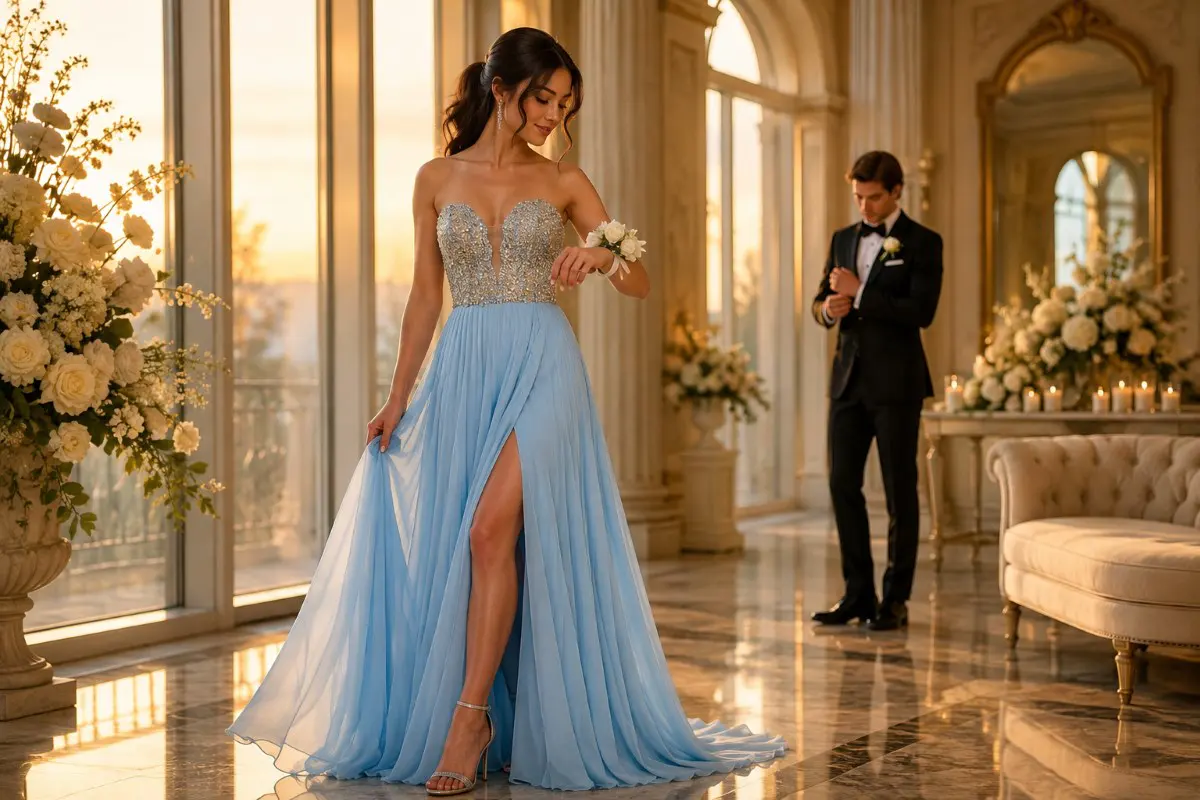
You have found the dress. The shoes are sorted, the hair plan is set, and then a smaller question arrives that catches many people off guard: what about the flowers. The prom corsage and boutonniere are a tradition that goes back generations, a small exchange of flowers between you and your date that marks the night as something special. They are also one of the few elements people leave to the last minute and then improvise, which is how you end up with a bright orange corsage clashing against a deep blue gown. It does not have to be that way. Choosing flowers that genuinely match your dress is simple once you understand a few principles of color, size, and style. This guide walks through everything: what a corsage and boutonniere actually are, how to match the flowers to your dress color and design, which styles last the night, and how to coordinate your date’s flowers so the two of you look like you planned it together.
What is a prom corsage?
What is the difference between a corsage and a boutonniere? Size and placement rather than type of flower. A corsage is a small arrangement of two or three blooms with greenery, worn on the wrist or pinned to the left side of the dress. A boutonniere is a single flower with a small accent, pinned to the left lapel over the heart with the stem pointing down. Traditionally the date buys the corsage and the other person buys the boutonniere, though plenty of couples now split the cost or skip the exchange entirely.
Start with the basics, since the tradition is easy to get slightly wrong. A corsage is a small arrangement of flowers worn by one person, traditionally given to the girl. It is most often worn on the wrist, though it can also be pinned to the dress. A boutonniere is a single flower or small cluster worn by the other person, traditionally the guy, pinned to the lapel of a jacket.
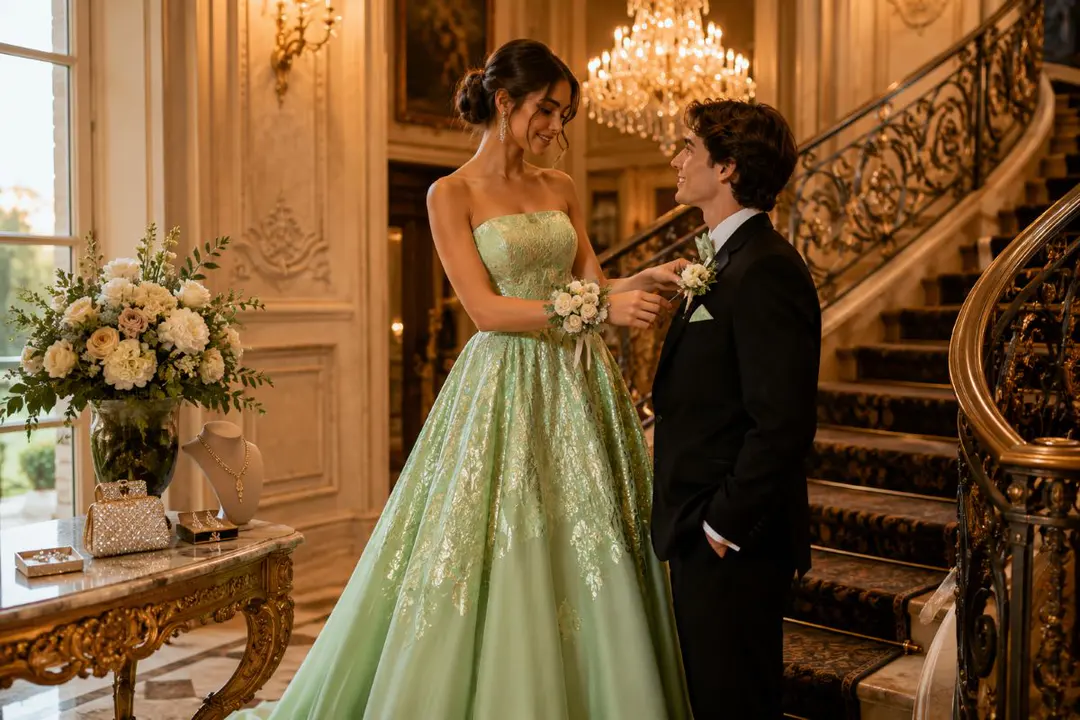
The exchange is part of prom etiquette, a customary way to show appreciation for your date for the evening. By tradition, one person pins the boutonniere to their date’s lapel and the other places the corsage on the girl’s wrist, usually the left, or the right if she is left-handed so it stays out of the way. The specifics matter less than the spirit, which is a small, thoughtful gesture between two people sharing the night. If you want the full picture of prom-night customs, our guide to prom dance etiquette covers the traditions around the exchange in more detail. What this guide focuses on is the part that trips people up most, which is choosing flowers that actually look right with the dress.
The golden rule: coordinate, do not match exactly
Here is the single principle that solves most flower decisions. The corsage should coordinate with your dress, not match it in a literal, identical way. A flower in the exact same shade as your gown tends to disappear against it, while a wildly contrasting color fights with it. The sweet spot is harmony, a flower that clearly belongs with the dress without trying to be the dress.
This matters because the corsage sits right against your gown all night and appears in nearly every photograph, so a clash is impossible to hide. The good news is that coordinating is easy once you think in terms of a few reliable approaches. You can match the flower to an accent in the dress rather than the main color, choose a neutral white or cream that works with almost anything, or pick a complementary tone that flatters the gown. Each of these reads as intentional. Whatever you choose for prom , the goal is a corsage that looks like part of a planned look rather than an afterthought grabbed on the way out the door. The same logic of enhancing rather than overpowering the dress applies to all your accessories, as our guide on choosing prom dress accessories explains.
Matching flowers to your dress color
Color is the first and most important decision, and the right approach depends on the color of your gown. Here is how to think about it by dress color.
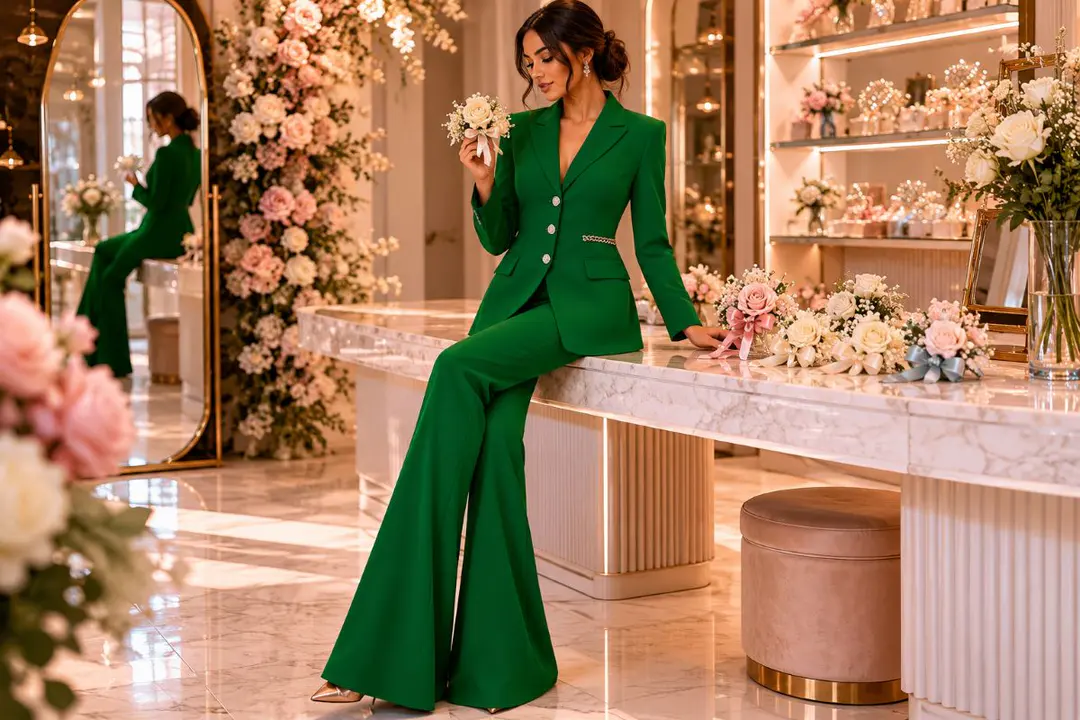
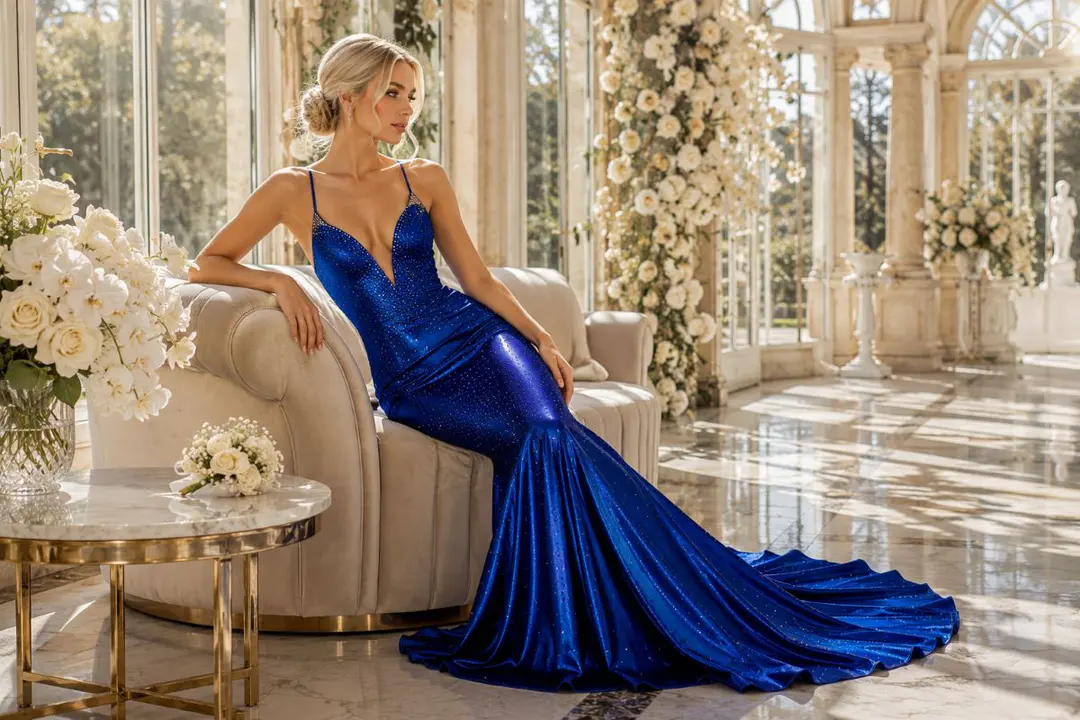
Bold colors like red, royal, or emerald. A strong dress color is best paired with a neutral or softer flower so the two do not compete. White, cream, or blush flowers look elegant against a vivid gown. With a red prom dresses look, for example, white roses or soft blush blooms read as classic and let the dress stay the star. Blue and jewel tones. Blue gowns pair beautifully with white, silver-touched, or soft yellow flowers, which provide a gentle contrast. Avoid trying to match the exact blue, since dyed blue flowers rarely match a fabric shade and can look artificial. For a blue prom dresses gown, white or cream flowers are a reliable, elegant choice. White, ivory, and silver. A pale or neutral gown is the most flexible canvas of all, since almost any flower color works against it. This is your chance to add a pop of color through the flowers if you want one, or to keep it tonal and soft. A white prom dresses look pairs with everything from blush roses to deep burgundy blooms. Pastels like blush, lavender, or sage. Soft gowns suit soft flowers in a slightly deeper or complementary tone, so the corsage has enough presence to be seen without overwhelming the gentle palette. Black or deep neutrals. A dramatic dark gown is flattered by a bold or bright flower that stands out against it, or by crisp white for a classic contrast.
The reliable shortcut, if you are unsure, is white or cream flowers. They coordinate with virtually every dress color, never clash, and always look elegant. When in doubt, neutral blooms are the safe and classic answer.
When your dress has a print or embellishment
A patterned or heavily embellished gown calls for a slightly different approach, since the dress is already doing visual work and the flowers should support rather than add to the busyness.
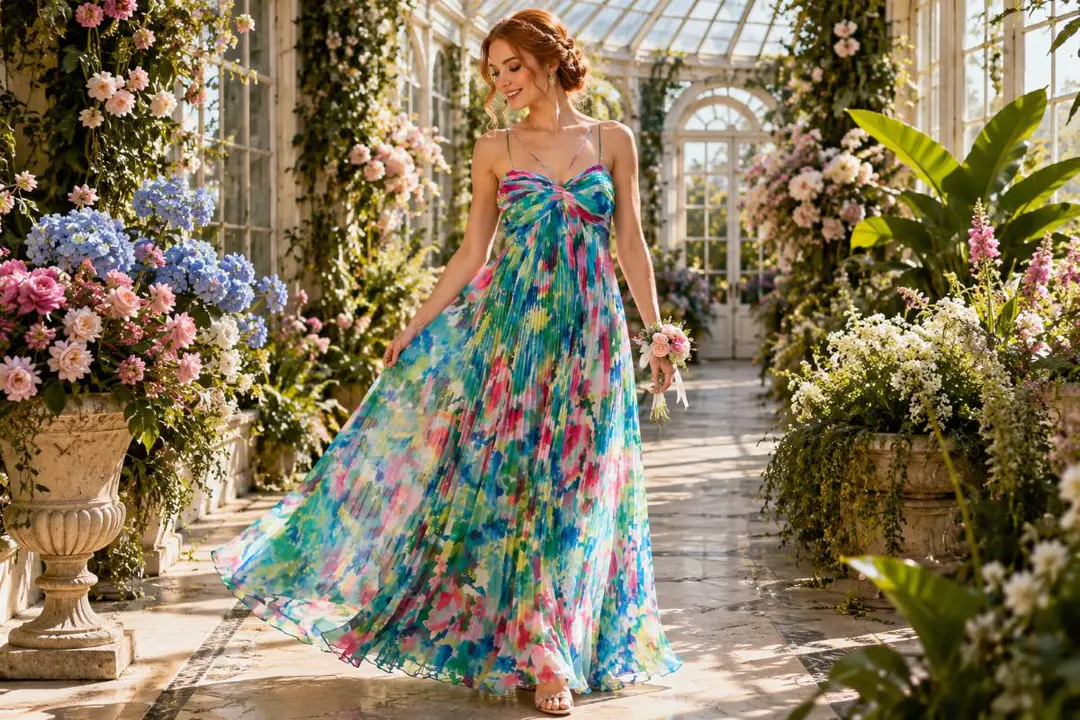
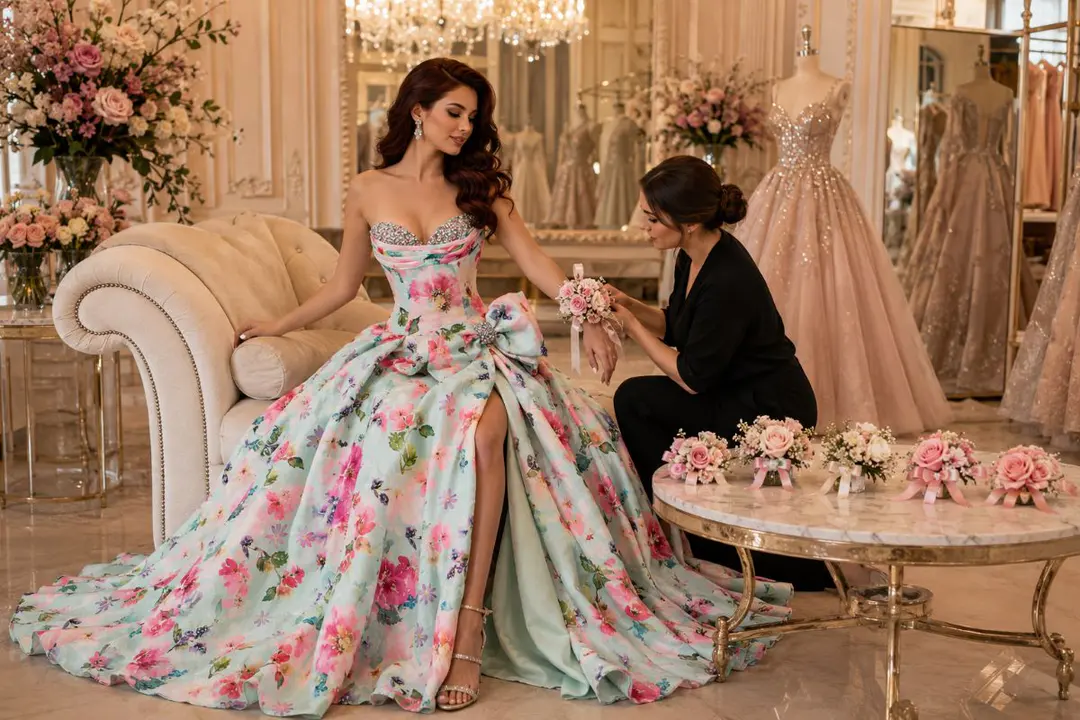
For a floral or multicolor print, pull one color from the print and match the flowers to that single accent shade. This ties the corsage to the dress in a way that looks deliberate and pulls the whole look together. With a print prom dresses gown, choosing a flower in one of the print’s tones is far more effective than trying to match the overall pattern. For a heavily beaded or sequined gown, keep the corsage simple and let the dress shine, since an elaborate flower arrangement competing with dense embellishment can look cluttered. A clean, single-bloom corsage is the better partner for a dress that already sparkles. The principle in both cases is the same: when the dress is detailed, the flowers should be simple, and when the dress is simple, the flowers can carry a little more.
Choosing the right corsage style
Beyond color, the style and construction of the corsage affect how it looks and how it survives the night. A few practical choices make a real difference.
The first decision is wrist versus pin-on. A wrist corsage is by far the most popular for prom, since it is easy to wear, shows beautifully in photos, and does not risk damaging the dress fabric. A pin-on corsage attaches to the dress and can be lovely, but it requires a fabric sturdy enough to hold a pin, so it is less suited to delicate or beaded gowns. For most prom dresses, the wrist corsage is the practical and stylish choice.
The second consideration is size and proportion. The corsage should suit your frame and your gown rather than overwhelm either. A petite frame or a delicate dress is better served by a smaller, more refined corsage, while a fuller gown can carry a slightly larger arrangement. The third is the flowers themselves. Hardy flowers like roses, orchids, and spray roses hold up far better through a long night of dancing than delicate blooms that wilt or bruise quickly. Ask your florist which flowers last, since a corsage needs to survive hours of movement and warmth. A well-chosen corsage still looks fresh in the last photo of the night, not just the first.
Coordinating the corsage and boutonniere together
The corsage and boutonniere are a pair, and they look best when they are clearly connected. Coordinating the two is a small detail that makes a big difference in photos.
The simplest approach is to have both made from the same or complementary flowers, so they read as a matched set. The boutonniere is essentially a smaller, simpler echo of the corsage, usually a single bloom that picks up the corsage’s main flower or color. A common and effective plan is to match the boutonniere to the corsage, and to tie the corsage to the dress, so everything connects in a chain. If your date is wearing a tie, pocket square, or accent color, the flowers can pick that up too, linking both outfits. The goal is for the two of you to look intentionally coordinated rather than like two separate flower choices that happened to show up on the same night. Ordering both from the same florist at the same time is the easiest way to guarantee they match, and it lets you plan the colors against your dress in one conversation. Bring a photo or a fabric swatch of your gown to that conversation, since describing a color rarely captures the actual shade.
Fitting the flowers into your whole prom look
The corsage does not exist in isolation. It sits alongside your jewelry, your hair, and your clutch, and the looks that come together best treat all of these as one coordinated picture rather than separate decisions made on different days.
The key is balance. If your corsage is large or colorful, keep your jewelry more restrained so the two do not compete on the same wrist and hand. If your jewelry is the statement, a simpler corsage keeps the look clean. The wrist is a particularly busy zone, since a wrist corsage, a bracelet, and a watch can quickly crowd each other, so it often works best to leave the corsage wrist mostly free of other pieces and let it stand on its own. Hair is another point of connection, since a small flower echoing the corsage tucked into an updo can tie the look together beautifully, though it should match or complement the corsage rather than introduce a third flower color. For the full picture of balancing every element so nothing overpowers the dress, our guide to jewelry to wear with a prom dress is a useful companion. Thinking about the flowers at the same time as the rest of the accessories, rather than as a last-minute addition, is what makes the whole look feel considered from head to wrist.
Practical tips for ordering and wearing
A few final practical points make the whole flower experience smoother, so nothing is left to chance on the night.
Order in advance. Place your order with a florist one to two weeks before prom, since good florists get busy during prom season and last-minute orders limit your choices. Bring a reference. Share a photo of your dress, and ideally your date’s outfit, so the florist can match the flowers accurately to the real colors. Confirm the wrist band. For a wrist corsage, choose a comfortable, secure band, often elastic or ribbon, that fits well and stays in place through dancing. Plan the pickup and storage. Collect the flowers the day before or the morning of, and keep them refrigerated until you leave, since cool storage keeps them fresh. Handle with care. Pin the boutonniere through the lapel from behind so the pin is hidden, and place the corsage gently to avoid crushing the blooms. Keep it as a memory. Many people dry or press their corsage afterward to keep as a small keepsake of the night.
A note on flower choices and meaning
Beyond color and durability, the specific flower you choose can add a small personal layer if you want it to. Many people pick blooms simply because they look right, which is perfectly fine, but a little intention can make the corsage feel more meaningful.
Roses are the most popular and reliable prom flower, since they are hardy, come in nearly every color, and read as classic and romantic. Orchids are elegant and modern, hold up exceptionally well through a long night, and suit a sleek, contemporary look. Spray roses and ranunculus give a softer, more textured arrangement. Calla lilies read as sophisticated and architectural for a more grown-up look. If you want the flower to carry a little sentiment, you might choose a bloom that is a favorite of yours or that connects to something shared with your date, though there is no need to overthink it. The most important qualities remain practical: a flower that matches your dress, suits the season, and lasts the night. A florist can guide you toward blooms that meet all three while fitting the color and style you have in mind, which is one more reason to have that conversation a week or two ahead rather than the day before.
Who buys the corsage and boutonniere
Who buys the corsage and boutonniere for prom is the question that causes the most last minute confusion, and the traditional answer is simple. The person being asked to prom receives the corsage, and their date buys it. The boutonniere works the other way round.
In practice that tradition has loosened considerably. Plenty of couples split the cost, friend groups buy for each other, and people going alone or with a group often skip the exchange entirely. Who gets the corsage and boutonniere for prom is worth agreeing between you rather than assuming, since the awkwardness comes from one person arriving with flowers and the other not.
Whoever buys it needs the dress color before ordering, so send a photograph rather than describing the shade. A corsage ordered from a verbal description of burgundy arrives in a red that does not match.
What the flowers are called and which side they go on
What are the prom flowers called depends on which one you mean. What is a corsage for prom in plain terms: it is the arrangement worn on the wrist or pinned to the dress. The single bloom worn on a lapel is a boutonniere. What are the flowers called for prom comes up constantly because the two words are unfamiliar to most people until the week of the event.
The difference between corsage and boutonniere is size and placement rather than type of flower. A corsage is a small arrangement of two or three blooms with greenery. A boutonniere is usually a single flower with a small accent.
What side does the boutonniere and corsage go on is the other detail worth knowing. A boutonniere is pinned to the left lapel, over the heart, with the stem pointing down. A pin-on corsage goes on the left side of the dress in the same position. A wrist corsage goes on whichever wrist is not dominant, so the arrangement does not get knocked while eating or dancing.
Corsage or bouquet for prom
Corsage or bouquet for prom is a genuine choice and the answer is usually the corsage, for practical reasons rather than tradition. A bouquet has to be held or put down all evening, and it ends up on a table for the second half of the night.
A corsage stays attached, which matters across four hours of photographs, dinner and dancing. If you want the look of a bouquet, a small nosegay carried only for photographs and then left with a parent is the compromise most people land on.
Prom Corsage and Boutonniere Questions
How do I match a corsage to my prom dress?
Coordinate rather than match exactly. Choose flowers that harmonize with your gown instead of copying its precise shade, which tends to disappear against the dress. Match the flowers to an accent color in the dress, pick a neutral white or cream that works with anything, or choose a complementary tone that flatters the gown.
What color flowers go with a red or bold-colored dress?
A bold dress color is best paired with neutral or softer flowers so the two do not compete. White, cream, or blush blooms look elegant and classic against a vivid gown like red or emerald, and they let the dress remain the focal point while still completing the look.
Should I get a wrist corsage or a pin-on corsage?
A wrist corsage is the most popular and practical choice for prom, since it is easy to wear, photographs well, and does not risk damaging the dress. A pin-on corsage can be lovely but needs a fabric sturdy enough to hold a pin, so it is less suited to delicate or heavily beaded gowns.
What flowers last the longest for a prom corsage?
Hardy flowers such as roses, orchids, and spray roses hold up best through a long night of dancing and warmth, while very delicate blooms can wilt or bruise quickly. Ask your florist which flowers are most durable, and keep the corsage refrigerated until you leave so it stays fresh.
How far in advance should I order prom flowers?
Order one to two weeks before prom, since florists get busy during prom season and last-minute orders limit your options. Bring a photo or fabric swatch of your dress, and ideally your date’s outfit, so the florist can coordinate the corsage and boutonniere accurately to the real colors.
How do I coordinate the corsage with the boutonniere?
Have both made from the same or complementary flowers so they read as a matched set, with the boutonniere a smaller echo of the corsage. Tie the corsage to your dress and the boutonniere to the corsage, so everything connects. Ordering both from the same florist at once is the easiest way to ensure they match.
When you have your gown chosen and are ready to plan the flowers around it, browse the full range of prom dresses for Prom through an authorized Jovani retailer.