
Teal is the color people struggle to name and then find unexpectedly flattering. It sits precisely between blue and green, which means it does not behave quite like either, and that in-between quality is exactly why it works. It has the depth and reliability of a blue with the freshness of a green, and because it is genuinely uncommon in formalwear, a teal dress registers in a room without needing to be loud about it. The complication is that teal, turquoise, aqua, and peacock all get used interchangeably and they are not the same shade. This guide covers what separates them, who each one flatters, how teal behaves under evening lighting, which fabrics change it most, and what to wear with a color that has no obvious partner.
What teal actually is
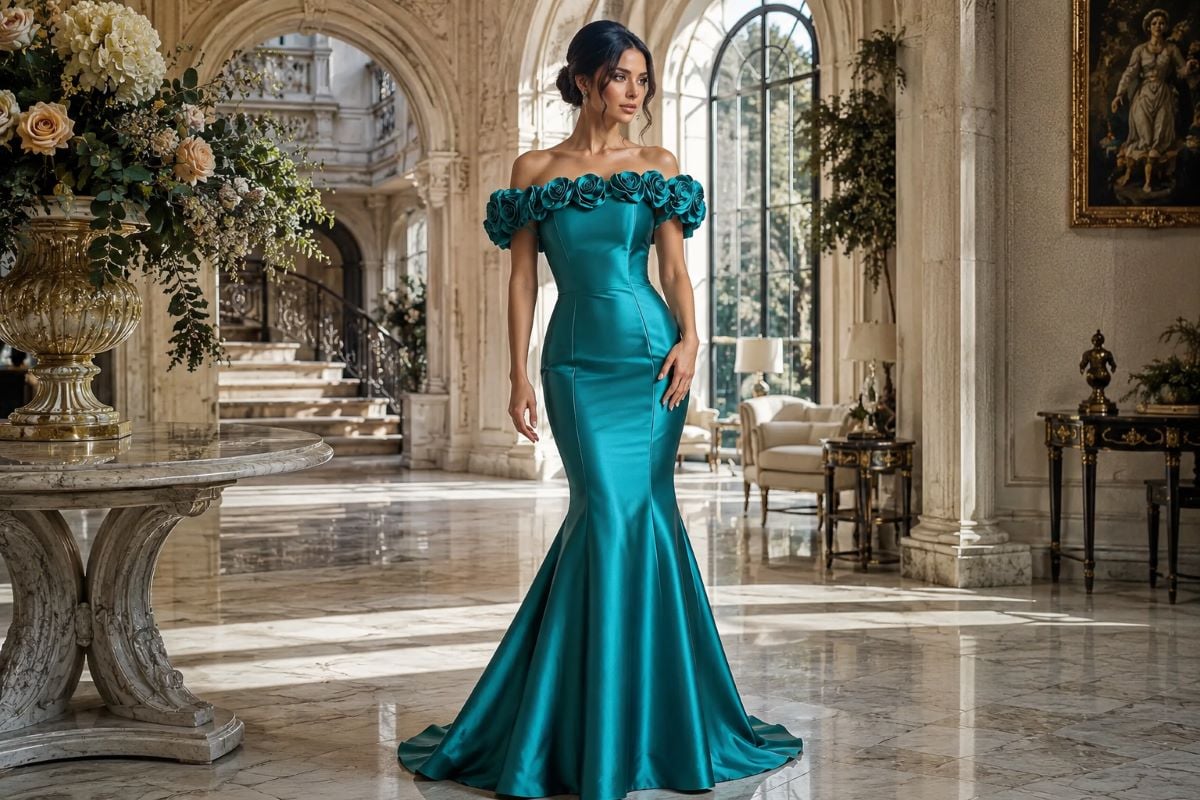
Teal is a deep blue-green, named after the plumage stripe on the common teal duck. The defining quality is balance: enough blue to read as cool and grounded, enough green to read as fresh rather than somber. It is darker and more muted than turquoise and considerably deeper than aqua.
The family around it is worth learning, since the labels get used loosely. Turquoise is brighter and leans further toward green, with a lighter, more tropical quality. Aqua is paler still and reads as soft rather than saturated. Peacock is deeper than teal and pushes back toward blue, with a jewel-tone richness. Emerald sits fully on the green side and cobalt fully on the blue side, so teal is the true midpoint of that stretch.
The practical consequence is that a dress described as teal might be any of these, so the shade in front of you matters more than the word on the label. The green styles among green evening dresses show one side of the family that teal borders.
The other side is just as useful for placing the shade, since seeing where blue stops tells you how much blue a given teal actually contains. The blue evening dresses show that boundary.
Why teal flatters so reliably
Teal has a reputation for suiting almost everyone, and unlike most such claims there is a straightforward explanation behind it.
The blue-green balance neutralizes redness
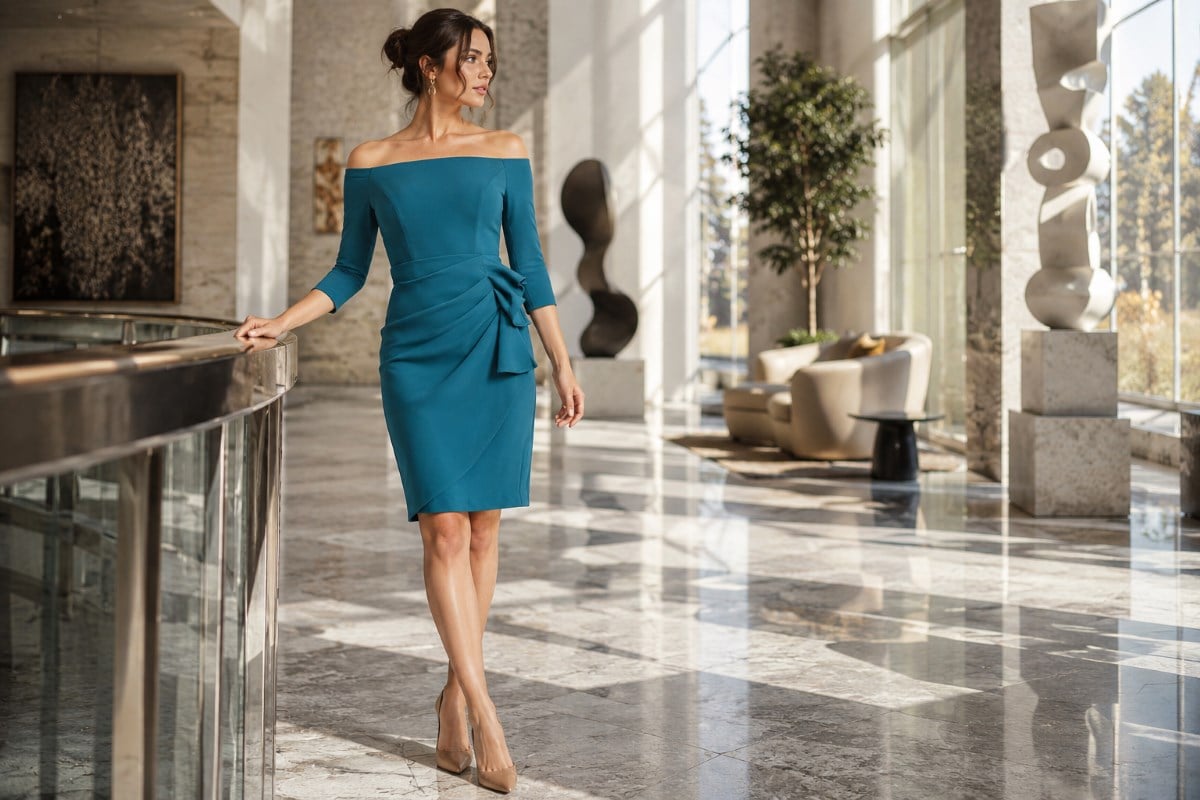
Every complexion carries some red in it, and colors sitting opposite red on the color wheel tend to make skin look clearer and more even rather than flushed. Both blue-greens and greens do this, and teal does it while also providing the depth that a lighter green lacks. The result is a color that calms the skin rather than competing with it, which is why people who find bright colors difficult often get on well with teal.
Depth provides contrast without severity
Because teal is saturated and mid-to-deep rather than bright, it works on the same principle as navy and burgundy: dark enough to give contrast against fair skin, harmonious against medium and olive skin, and rich against deep skin. Unlike navy, it does not read as conservative, and unlike emerald it does not commit fully to being a statement color. That middle position is what makes it so widely wearable. The guide to choosing an evening dress color for your skin tone covers how depth and undertone interact.
Matching teal to your coloring
Because teal contains both blue and green, it is less demanding about undertone than most saturated colors, but the balance still matters.
Cool undertones, showing as pink or blue beneath the skin, suit the bluer end of the family: true teal, peacock, and deeper petrol shades. These sit in the same temperature family and read as harmonious.
Warm undertones, showing as golden or peach, generally do better with the greener end: a teal with more green in it, or turquoise, where the warmth of the green content bridges the gap. A very blue teal can look slightly cold against strongly warm coloring, though the effect is mild compared with what a true cobalt would do.
Neutral undertones can wear the entire range, which makes the choice about effect rather than suitability.
Depth of complexion is the more useful variable. Deeper complexions carry bright turquoise and saturated teal beautifully, and the contrast is striking. Medium and olive skin suits the whole family and often looks best in true teal. Fair complexions usually do best either in a deep peacock for contrast or in a lighter aqua, avoiding the mid-brights that can sit close to the skin’s own value. The guide to the best dress colors for your skin tone covers identifying your undertone.
Teal under evening lighting
Teal is more sensitive to light than most colors, and this is the single most useful thing to know before buying one.
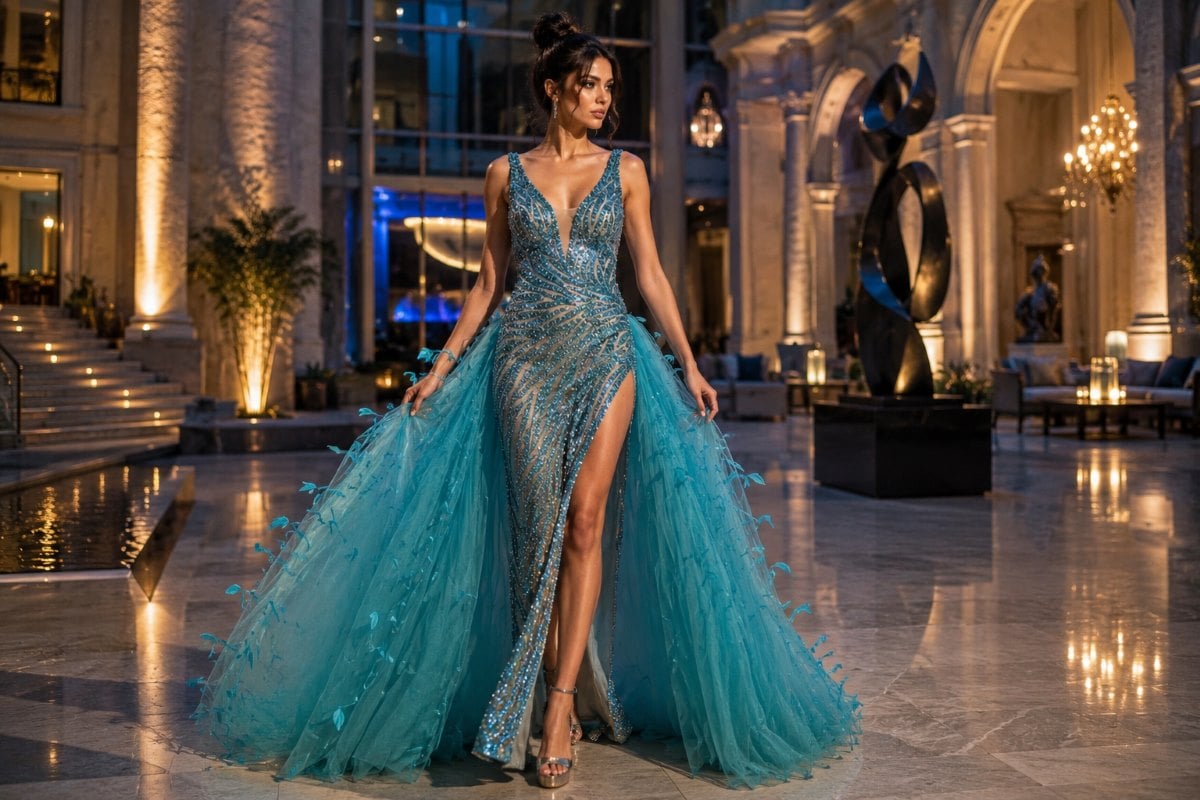
Warm venue lighting pushes colors toward yellow and red, and because teal contains green, adding yellow shifts it further green. A teal that looked balanced in daylight can read noticeably greener under warm reception lighting, sometimes closer to emerald than to blue.
Cool or white lighting does the reverse and lets teal show its blue content, which is closer to how the shade appears on a screen or in daylight.
This is not a flaw, but it means you should know which direction you want it to drift. If you want teal to stay clearly blue-green under warm light, choose one that reads slightly blue in daylight, since it will move toward the middle rather than past it. If you like the green reading, a balanced teal will get there on its own.
The shades that hold up most consistently are the deeper ones, peacock and petrol, since they have enough pigment to keep their identity when the light shifts. The treatment of classic and trendy evening dress colors covers how the less common shades sit among the reliable ones.
Neckline changes how strongly the color registers
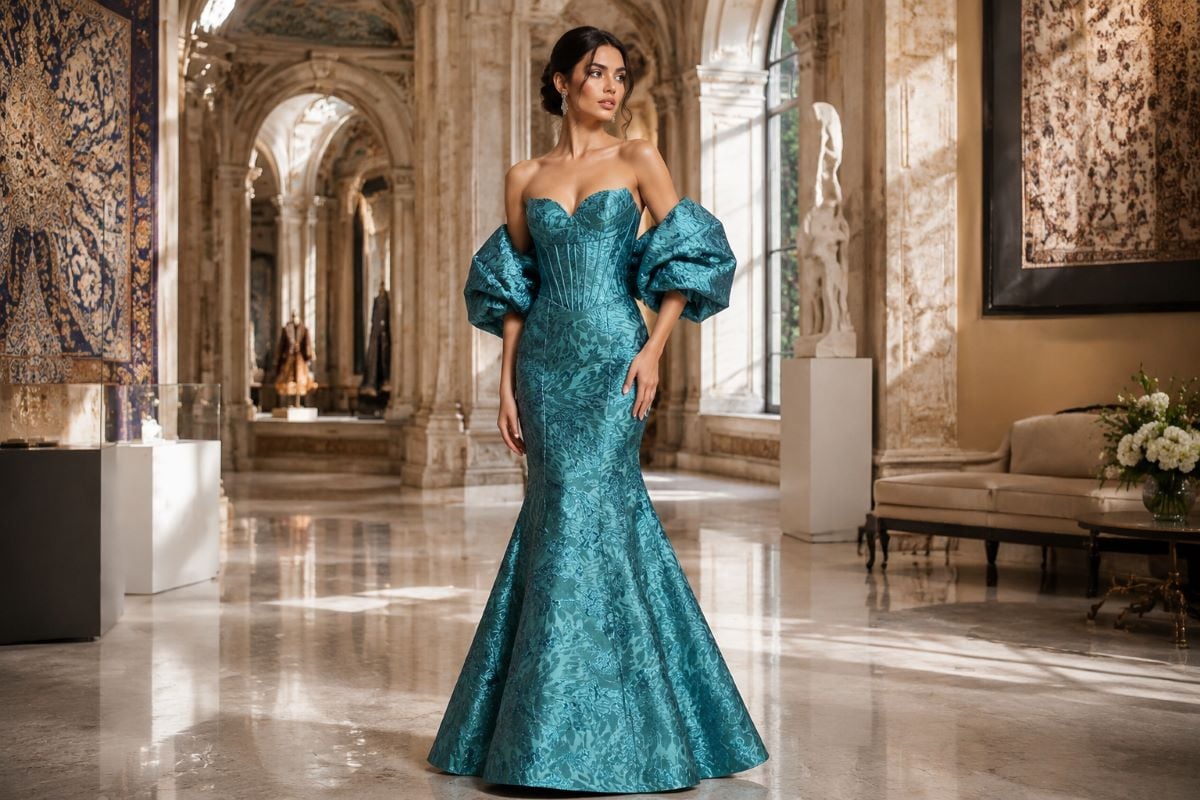
Where the teal meets your skin affects how much the color does for your complexion. A high or halter neckline brings the shade right up to the jaw, which maximises the calming effect on redness and works best when the blue-green balance really suits you. A strapless or wide neckline leaves a large area of bare skin above the dress, which separates the color from the face and softens its impact considerably. If a teal seems almost right against your face, adjusting the neckline is often a more effective change than adjusting the shade.
Teal reads differently at different depths of color
The same blue-green balance produces quite different dresses depending on how dark it is. A pale aqua reads as soft, fresh, and daytime-appropriate, closer to a pastel than to a statement. A mid teal reads as balanced and versatile, which is the version that suits the widest range of occasions. A deep peacock or petrol reads as a jewel tone and behaves much like navy or emerald, formal and rich. Deciding which depth you want narrows the field faster than deciding exactly how much green you want in it.
How fabric changes teal
Fabric shifts teal considerably, and it is the easiest lever to pull if a shade appeals but does not feel right.
Satin saturates teal and gives it a jewel-like intensity, which is the version that reads most obviously as a statement and photographs most vividly. Velvet deepens it further and absorbs light, producing a rich, almost historic quality that suits a formal evening.
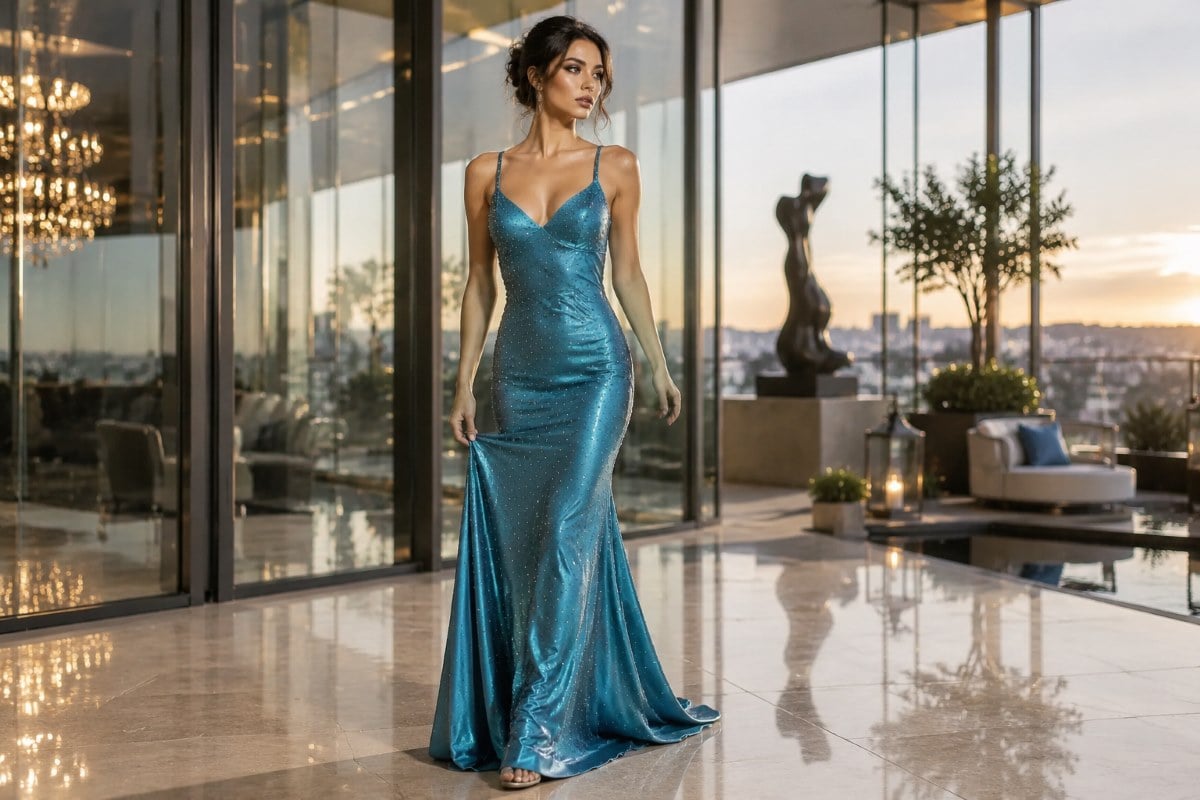
Sequins amplify teal and throw blue-green light around a room, which suits a celebration and reads as considerably bolder than the same shade in a matte fabric.
Chiffon and tulle lighten teal significantly, so a strong swatch becomes soft and airy in layers and reads much closer to aqua. Crepe mutes it into something modern and understated, which is the version that reads most like a wearable neutral.
Beading changes the reading again: gold beading over teal warms it noticeably and creates a rich contrast, while silver or crystal keeps it crisp and cool. The green styles among green prom dresses show where the family sits once the blue drops out.
Comparing that against the opposite boundary is the quickest way to judge a specific teal. The blue prom dresses show the same range with the green removed.
Where teal works
Teal suits a wide range of occasions, and its uncommonness is part of the appeal in each.
For a wedding guest, teal is an excellent choice. It is clearly not bridal, it is celebratory without competing, and it is far less likely to match the bridal party than the sage, dusty blue, and navy that dominate current wedding palettes. If anything, the risk runs the other way, since teal has become popular for bridesmaids at some weddings, so a quick check on the couple’s colors is worthwhile.
For the mother of the bride or groom, teal reads as formal and distinctive without being severe, and it photographs well in family portraits where several people are wearing neutrals.
For prom or a formal dance, teal stands apart from the black, red, and pink that fill most of those rooms, and the deeper versions read as sophisticated rather than youthful.
For a cocktail party or a gala, a teal dress in satin or velvet reads as a considered choice rather than a default one. The range of cocktail and party dresses shows how the shade behaves at a semi-formal length.
Teal has one effect that almost no other dress color produces, which is useful to know if it applies to you. Because blue and green eyes contain both blue and green in varying proportions, a teal near the face can visibly shift how they read, pulling hazel eyes greener and making blue eyes look more saturated. Brown eyes are unaffected, and the effect is subtle rather than dramatic, but it is real and it is the reason people with changeable eye color often report that teal ‘does something’ they cannot quite name. If your eyes sit anywhere between blue and green, this is a small argument for trying the color near your face rather than judging it on a hanger.
What to wear with teal
Teal is one of the harder colors to accessorize, precisely because it does not belong clearly to either the warm or cool camp, so it is worth being deliberate.
Gold is the strongest partner and the one that most reliably looks intentional. Warm metal against a cool blue-green creates a rich contrast, and gold jewelry with a teal dress is one of the more striking combinations in formalwear. Silver works and reads as crisper and cooler, particularly with the bluer teals, though it is the quieter option.
For shoes, metallic gold, a nude matched to your own skin depth, and a shoe matched to the dress are the three that work. Black is acceptable with a deep peacock but tends to look heavy against a brighter teal, and it flattens the color rather than supporting it.
If you want a second color, teal pairs beautifully with coral, blush, cream, and copper, all of which sit opposite it and create warmth. What generally does not work is pairing teal with another cool color of similar depth, since the two compete without contrasting. Keep jewelry to one focal point, and if the dress is sequinned or beaded, keep it minimal.
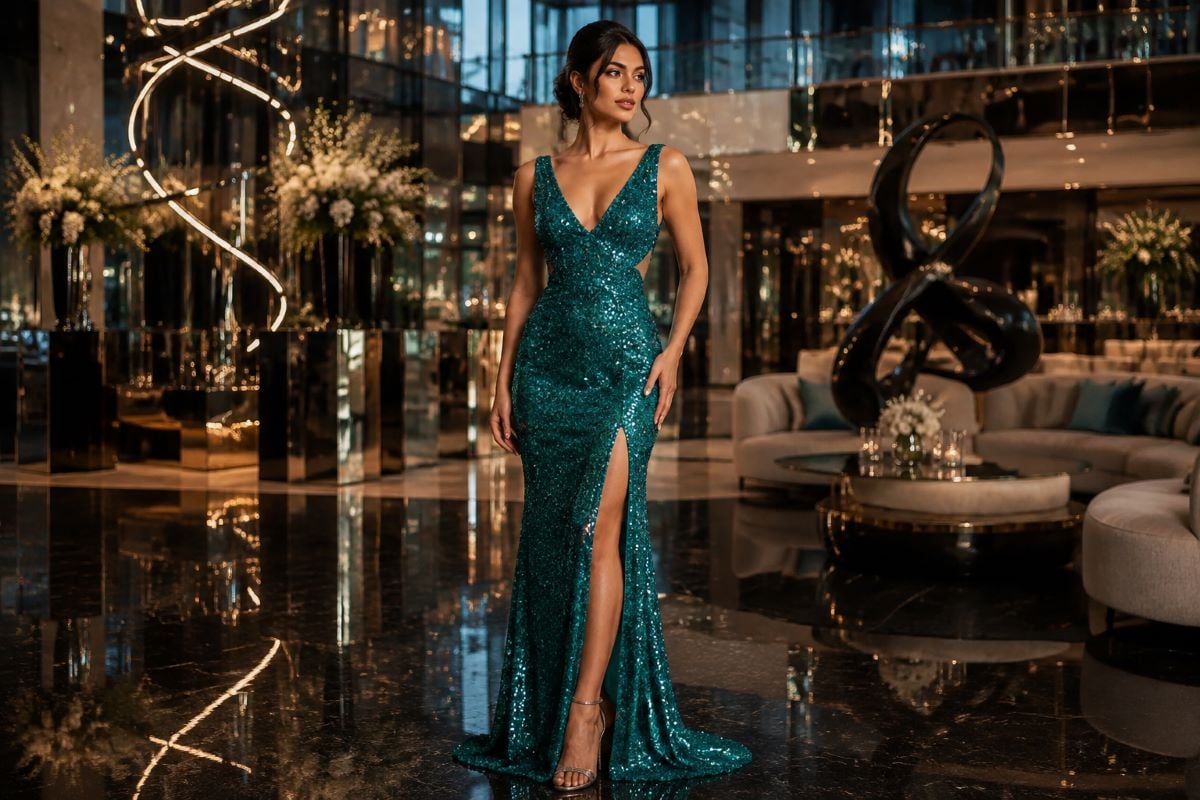
Reading the blue-green balance
Everything about a teal dress follows from one question: how much blue is actually in it? Look at how the shade splits between blue and green in daylight, since that determines both which undertones it suits and which direction it will move under warm lighting. A teal that reads slightly blue in daylight will land in the middle under a warm room; one that already reads green will go further green.
Consider fabric as a second lever, because satin, velvet, chiffon, and crepe will take the same teal to four visibly different places, and changing the fabric is often more effective than changing the shade.
And hold it against your face rather than judging it on the hanger, since teal’s calming effect on the complexion happens at the neckline and that relationship is what you are actually assessing.
Teal rewards this because it is one of the few colors that is uncommon in formalwear while also being flattering, and those two qualities rarely appear together. Chosen in the right balance and the right fabric, it gives you a dress that stands out for being unexpected rather than for being loud. To find the teal that reads correctly against your own coloring, explore the current styles through an authorized Jovani retailer.
Teal, Turquoise, and Everything Between
What color is teal exactly?
Teal is a deep blue-green, named after the plumage stripe on the common teal duck. The defining quality is balance: enough blue to read as cool and grounded, enough green to read as fresh rather than somber. It is darker and more muted than turquoise, which is brighter and leans greener, and considerably deeper than aqua, which is paler and softer. Peacock sits deeper than teal and pushes back toward blue.
Does teal suit most skin tones?
It suits an unusually wide range, and the reason is technical. Every complexion carries some red, and colors sitting opposite red on the wheel make skin look clearer rather than flushed. Teal does this while also providing depth that a lighter green lacks. Cool undertones suit the bluer teals and peacock, warm undertones do better with the greener end or turquoise, and neutral undertones can wear the whole family comfortably.
Does teal change color under lighting?
More than most shades, and it is worth anticipating. Warm venue lighting pushes colors toward yellow, and because teal contains green, adding yellow shifts it further green, so a balanced teal can read closer to emerald under warm reception lighting. Cool or white light lets the blue content show. If you want it to stay clearly blue-green, choose one that reads slightly blue in daylight, since it will move toward the middle rather than past it.
Can you wear teal to a wedding as a guest?
Yes, and it is a strong choice. Teal is clearly not bridal, it is celebratory without competing for attention, and it is far less likely to clash with a bridal party than sage, dusty blue, or navy, all of which dominate current wedding palettes. The one thing worth checking is that teal has become popular for bridesmaids at some weddings, so a quick look at the couple’s colors settles it before you commit.
Should you wear gold or silver with teal?
Gold is the stronger partner and the one that most reliably looks intentional, since warm metal against a cool blue-green creates a really rich contrast. Silver works and reads as crisper and cooler, particularly with the bluer teals, but it is the quieter option. For shoes, metallic gold, a nude matched to your skin depth, or a shade matched to the dress all work, while black tends to flatten a brighter teal.
What colors go well with a teal dress?
Teal pairs beautifully with warm colors that sit opposite it: coral, blush, cream, and copper all create contrast and warmth against the cool blue-green. Gold accessories work on the same principle. What generally does not work is pairing teal with another cool color of similar depth, such as navy or forest green, since the two compete without contrasting and the combination reads as muddy rather than considered.