
How to Make a Black Dress Look Expensive on a Budget

A black dress looks more expensive when its fit is deliberate, its fabric is well maintained, and its accessories work together. You do not need a new wardrobe or a pile of jewelry. Start by checking the neckline and hem, remove visible wrinkles and lint, then choose one detail to emphasize. These changes make the biggest difference before a dinner, cocktail party, or formal event.
What Makes a Black Dress Look More Refined?
A refined black dress has a clean outline, a surface that suits the lighting, and no distracting fit problems. Price alone does not determine those qualities. Look at the garment from the front, side, and back before deciding what to change.
The best starting point is the shape you already own. Jovani's little black dress designs range from smooth fitted styles to textured minis. Compare how the bodice, seams, and hem create structure without depending on extra accessories.
Three things are worth checking first: whether the neckline sits securely, whether the skirt moves without pulling, and whether the fabric looks smooth in daylight. Fixing these problems is usually more effective than adding decoration.
Fix the Fit Before Adding Anything
A cleaner fit is often the most noticeable improvement. A dress that twists at the waist or gaps at the bust can interrupt even a simple silhouette. Pinpoint the problem before considering a new belt or jacket.
Check the neckline and waist in motion
Stand, sit, and raise your arms while wearing the undergarments intended for the event. Watch for sliding straps, a rolling neckline, and horizontal pulling around the waist. A tailor may be able to shorten straps or refine a seam, depending on the construction.
Jovani style 47796 provides a useful example of deliberate shape. Its strapless sweetheart neckline, fitted stretch satin body, and sculpted rose hem already create a focal point. Adding a belt would compete with that construction instead of improving it.
Set the hem with your actual shoes
Wear the shoes you plan to use when checking length. For a mini, make sure the hem stays comfortable while sitting. For a long dress, check that the skirt clears the floor safely when walking.
Do not assume every change is simple. Heavily embellished edges, elaborate linings, and built-in structure can make alterations more involved. Ask a qualified alterations specialist which adjustments are realistic before purchasing or modifying a dress.
Which Black Dress Fabrics Look More Expensive?
Matte crepe, velvet, satin, and sequined fabrics can all look refined when their finish suits the design. The important distinction is how the material handles light, wrinkles, and movement, not whether it shines.

Matte surfaces make construction visible
Crepe gives seams and draping a relatively quiet surface. Jovani style 46992 combines a crepe mini silhouette with gold beading at its high neckline, a tiered hem, and beaded pockets. Because the embellishment is placed deliberately, more jewelry is unnecessary.
Compare short black party dresses by surface rather than price. Notice whether the fabric stretches over the hips, whether the lining stays flat, and whether the finish looks consistent around the seams.
Shiny surfaces need careful styling
Satin reflects light and can emphasize both attractive draping and unwanted creases. Sequins create more visible reflection, so a clean shoe and restrained jewelry often balance them better than another sparkly accessory.
Jovani's satin party dresses show why weight and structure matter alongside sheen. Check a design from multiple angles before assuming that every satin surface behaves alike.
For a closer comparison of matte and reflective finishes, read the guide to black cocktail dress textures. Notice how a fabric changes under lighting instead of judging it by color alone.
How Can You Improve a Black Dress the Same Day?
You can improve a black dress the same day by removing lint, treating wrinkles according to its care label, checking the lining, and cleaning the shoes. These adjustments make the entire outfit look more intentional without new purchases.
- Use a fabric-safe lint brush, especially around the skirt and side seams where dust becomes visible against black.
- Follow the care label before steaming or pressing. Test an inconspicuous area first and avoid direct heat on delicate embellishments.
- Check for loose threads, twisted lining, visible undergarments, and closures that do not lie flat.
- Clean the shoes and inspect the bag's corners, straps, and fastenings before leaving.
Hold the dress near a window after preparing it. If the fabric looks patchy, flattened, or overly shiny in certain areas, a professional cleaner may be safer than more home treatment. Good care protects the garment as well as its appearance.
Build One Clear Accessory Focus
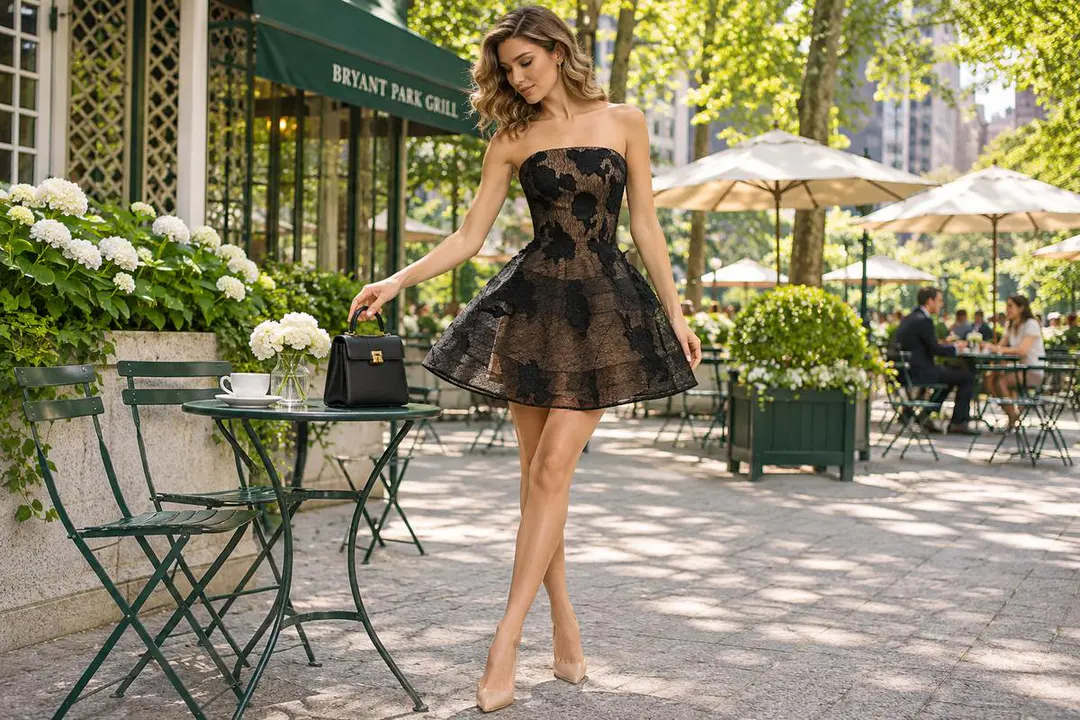
Choose one noticeable accessory and let the rest support it. A bold earring works with an open neckline, while a high-neck dress may need only a small cuff or a simple clutch. Jewelry should not compete with existing beadwork.
If you already own a black dress, the guide to styling a little black dress offers broader pairing ideas. This article focuses specifically on changes that make the outfit look polished rather than assembling multiple different looks.
A small structured bag usually holds its shape better than an overfilled soft pouch. For shoes, inspect the heel tips and upper material, then choose a finish that complements the dress. Neither metallic hardware nor expensive gemstones are requirements.
Match the Finish to the Event
A polished outfit also has to meet the invitation's dress code. Short dresses can suit many cocktail parties and evening celebrations, but a strictly black-tie event generally calls for a floor-length gown.
For a reception or semi-formal dinner, browse cocktail and party dresses that combine secure bodices with a length appropriate for the setting. Check how each silhouette moves before choosing.
For galas, compare formal black gowns before treating a short dress as interchangeable with full-length formalwear. A refined finish still needs to respect the occasion.
The cocktail attire guide gives broader dress-code context. Keep its purpose separate from this checklist: an expensive-looking finish cannot turn an otherwise unsuitable hemline into the right formality level.
Check the Full Outfit Under Real Lighting
Before leaving, stand under both daylight and artificial light. Take a quick front and side photograph, then walk across the room. Dark fabrics can hide details in one setting and reveal shine, pulling, or transparent areas in another.
Look for one clear focal point rather than several unrelated statements. Jovani style 51675, for example, combines an embellished black surface with lace at the hem. Its existing contrast gives the outfit texture without needing a second decorative layer.
Once the dress is comfortable, clean, and suited to the occasion, stop adjusting it. If you want to compare silhouettes or check fit with a specialist, use Jovani's Find a Store directory to visit an authorized retailer.

Frequently Asked Questions
Can a simple black dress look expensive without jewelry?
Yes. A dress with a secure neckline, a smooth hem, and clean fabric can look polished without jewelry. Prioritize fit, fabric care, and well-maintained shoes before adding a decorative item.
Does matte black look more expensive than satin?
Choose matte crepe when you want a restrained surface that emphasizes seams and shape. Choose satin when its shine and drape are part of the design. Neither finish guarantees a better result.
What shoes make a black dress look more expensive?
Clean, well-kept pumps or simple evening sandals are reliable options. Match their formality to the occasion and make sure they are comfortable enough to walk in without changing your posture.
What if I cannot afford alterations before an event?
Start with a wrinkle and lint check, correct undergarments, and shoes that suit the existing hem. Avoid using belts or clips to disguise major fit problems that could become uncomfortable during the event.