
There is a quiet kind of glamour that does not announce itself. It walks into a room and earns attention through restraint rather than volume, through fabric and silhouette rather than color. That is what a beige evening dress delivers when it is chosen well. The shade has shifted in the last few seasons from being seen as safe or background to being recognized as one of the most sophisticated color choices in formal wear. Where black says elegant and red says confident, beige says deliberate, and in a room full of more obvious colors that is its own kind of statement. This guide walks through everything: the different shades within the beige family and what each one does, how to match the right shade to your skin tone, the fabrics that make beige look luxurious rather than washed-out, which silhouettes flatter the shade most, and how to style a beige gown so the color reads as refined rather than plain.
Why beige has become a sophisticated formal choice
For years, beige sat in the background of formal palettes. Black, jewel tones, and metallics commanded attention while beige was treated as a fallback. That has shifted significantly, and the reason is connected to the broader rise of what fashion has come to call quiet luxury, where understated quality matters more than bold display.
Beige photographs beautifully under both natural and indoor lighting, picking up warmth in skin and creating a polished, considered look in event photography. It also reads as intentional in a sea of more predictable color choices, since fewer women choose beige than black or jewel tones, and a beige gown stands out precisely because it does not try to. The shade also rewards excellent construction. Beige is unforgiving of poor tailoring and cheap fabric, since the neutral color does not distract from flaws the way a bold color can. That makes a well-made beige gown read as quietly luxurious in a way few other colors achieve. For the broader thinking about restrained formal elegance, our piece on quiet luxury evening dresses walks through how minimal color and maximum construction work together, and beige sits squarely in that conversation.
The different shades within the beige family
Beige is not one color but a family of related neutral shades, and each one creates a different effect. Knowing the differences helps you describe what you want and recognize the right tone when you see it.
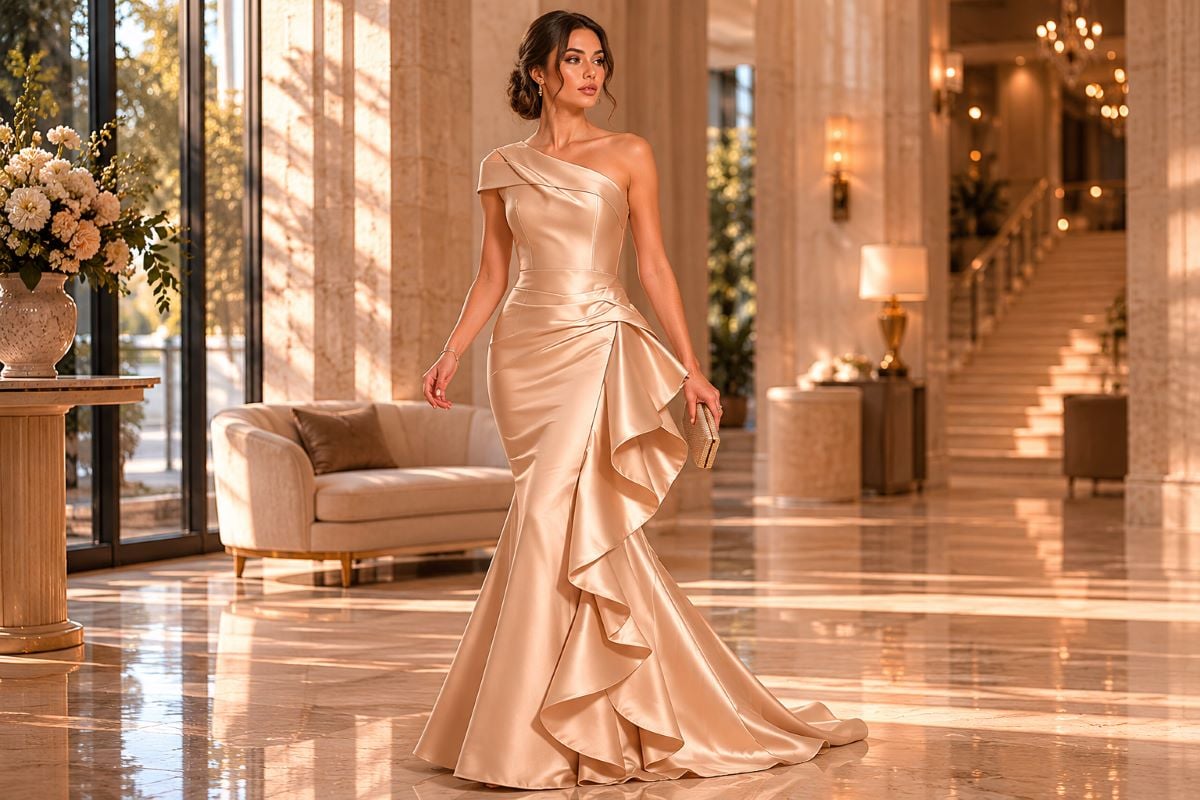
- Champagne. The warmest and most luminous of the family, with a subtle golden undertone that catches light. Champagne suits the most formal evening events and pairs effortlessly with metallic accessories.
- Cream. Closer to ivory, slightly warm and soft. Cream reads as elegant and timeless, suiting refined formal occasions and women who want a near-white shade without the boldness of pure white.
- Sand. A clean, slightly cooler beige with a hint of warmth. Sand sits in the most universally flattering middle of the family, working across many skin tones and seasons.
- Tan. Warmer and slightly deeper than sand, with a soft brown undertone. Tan reads as natural and effortless, suiting both spring formal events and autumn galas.
- Taupe. Cooler and more grey-leaning, with a sophisticated muted quality. Taupe is the most fashion-forward of the family, suiting modern, editorial-feeling looks.
- Nude. The most barely-there shade, designed to read close to skin. Nude is the shade most often seen in illusion gowns where the fabric blends with the complexion.
- Oat and mushroom. Softer, more muted neutrals that have grown in popularity in recent seasons, leaning into the quiet luxury aesthetic with their understated, almost natural quality.
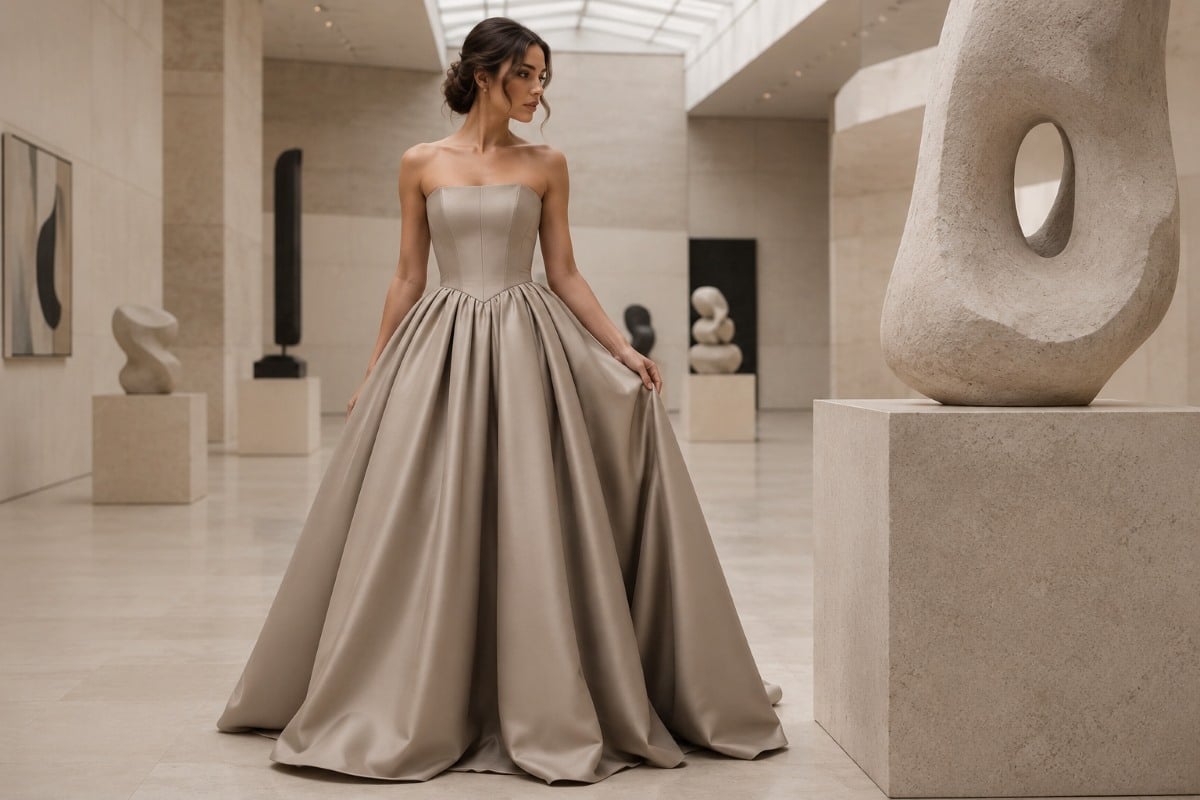
The first question when shopping for a beige gown is which shade family suits both your skin tone and the occasion, since the same silhouette in champagne versus taupe creates entirely different moods. The styles in the beige formal dresses collection include the full range, which is the easiest way to see how each shade behaves in person.
Matching beige to your skin tone
This is where many women feel uncertain, since beige has a reputation for either washing out the wearer or blending with skin and disappearing. The truth is that beige works on every complexion, but the right shade for one tone is different from the right shade for another, and the principle of contrast matters more here than with most colors.
For fair skin with cool undertones, taupe, mushroom, and cooler grey-beige shades flatter best, since they create gentle contrast against the skin without overwhelming. Avoid very pale champagne or cream that can blend into very fair skin and wash you out. For fair skin with warm undertones, soft champagne, cream, and warm sand work beautifully, since the warmth in the shade aligns with the warmth in the skin while still providing enough contrast to read as a distinct color. For medium skin, the range opens up considerably. Champagne, sand, tan, and taupe all glow against medium tones, and the choice becomes more about the event and the season. For olive skin, taupe, oat, mushroom, and cooler beige shades flatter particularly well, since these more muted tones complement the natural depth and warmth of the complexion. For deep skin tones, the richest and warmest beiges shine. Champagne, deep tan, and warm sand all create stunning warmth against deep skin, and these shades photograph particularly beautifully under event lighting. The broader principle is contrast. Beige needs enough contrast against your skin to read as a distinct color rather than disappearing into the complexion, which is why the right shade matters disproportionately with this family. For a fuller treatment of the topic, our piece on evening dress color for your skin tone applies the same logic across the full palette.
Fabrics that make beige look luxurious
The fabric of a beige gown matters more than with almost any other color, because beige offers nowhere to hide. There is no saturated color to draw the eye away from poor construction, no embellishment to distract from a flat fabric. The fabric carries the entire impression.
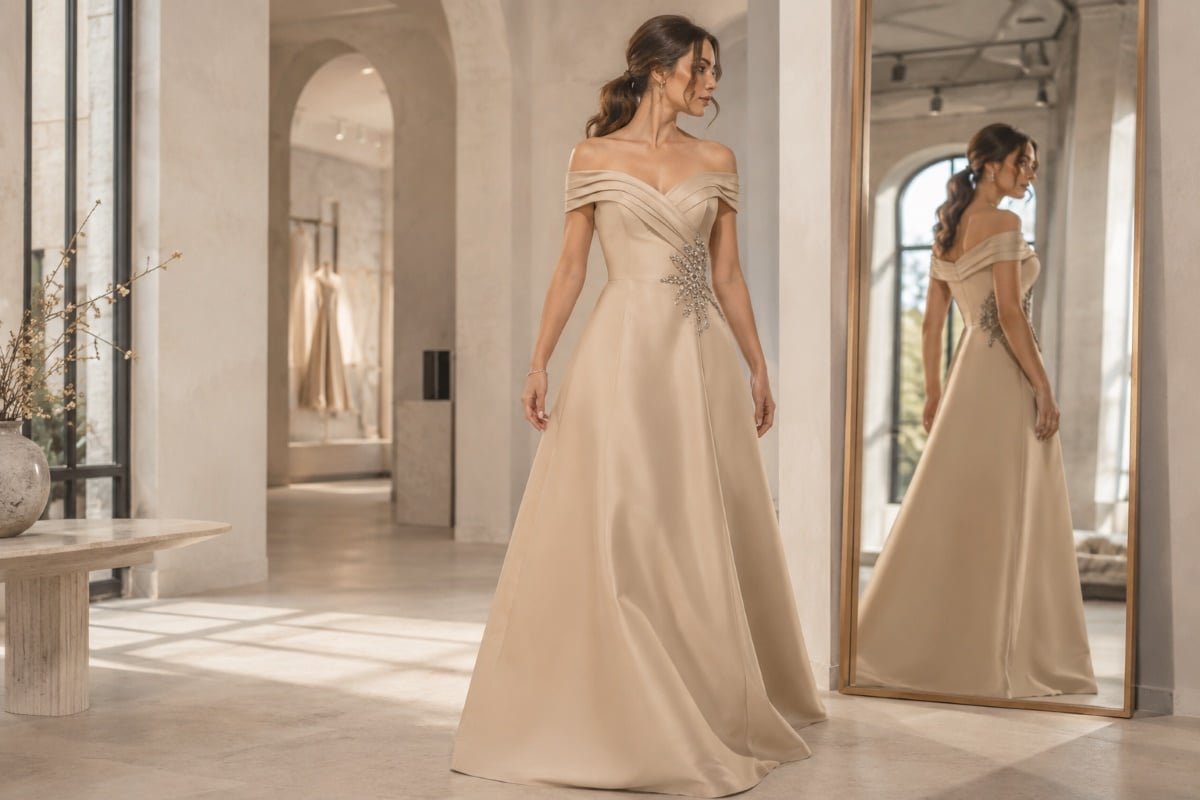
Satin in beige creates depth and luminosity, since the smooth finish reflects light and turns a flat color into one with movement. A champagne or cream satin gown reads as the most polished and formal version of the shade, suiting black-tie and red-carpet events. Beaded beige gowns are arguably the most spectacular application of the color, since the neutral tone lets the embellishment do the work without competing. The hand-applied crystal and beadwork on a beige base creates a gown that photographs as exceptionally elevated, and the styles among beaded evening dresses in champagne and sand show how the combination of restrained color and intricate detail produces some of the most coveted looks in formal wear. Lace in beige creates texture and dimension that prevents the color from reading flat, with the pattern of the lace casting subtle shadow across the surface, and the styles among lace evening gowns in beige bring romantic depth to the shade. Crepe in beige gives a matte, modern finish that suits more contemporary versions of the color, especially taupe and oat. Tulle and chiffon in soft beige create ethereal, romantic effects suited to garden weddings and softer formal events.
The fabrics that handle beige less well are cheap synthetic satins, which can read as plastic or off-color in this neutral family, and heavy plain weaves that absorb light rather than reflect it. Beige is the color where fabric quality shows itself most quickly, which is why a well-made beige gown looks expensive immediately and a cheap one looks dated fast.
Silhouettes that flatter a beige gown
Beige interacts with silhouette in interesting ways, since the restrained color lets the shape of the gown do more visual work than it would in a saturated tone. The silhouette becomes the statement when the color does not compete for attention.
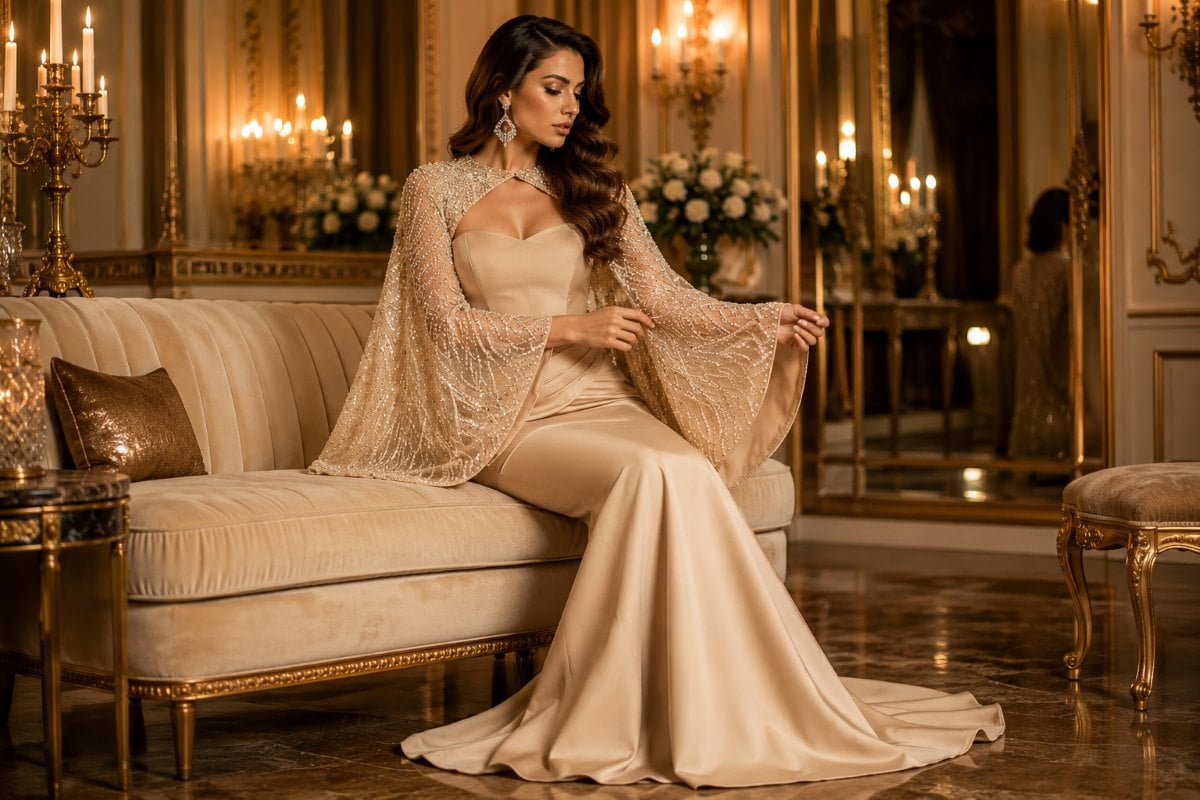
A column or sheath in beige reads as sleek, architectural, and modern, with the clean vertical line emphasized rather than obscured by color. This silhouette in champagne or sand suits the most editorial and red-carpet looks. A mermaid silhouette in beige creates dramatic, sculpted presence with the curves of the body emphasized by the way the neutral color falls along the fitted shape. The styles among mermaid formal dresses in champagne and taupe show how the shape and the color reinforce each other. An A-line in beige reads as romantic and timeless, suiting weddings, galas, and traditional formal events particularly well. A ball gown in beige delivers the most ceremonial impression, with the volume of the skirt and the restrained color combining into a quietly grand entrance suited to the most formal occasions. The styles in black tie dresses in beige show how the color rises to the most demanding dress codes when paired with the right silhouette.
What works less well is heavy bold embellishment in clashing colors on top of a beige base, since the contrast can break the cohesive quality that makes beige work in the first place. The cleanest application of beige uses tonal embellishment, with crystal, pearl, or matching beadwork enhancing rather than fighting the color.
When beige works best
Beige is more occasion-versatile than many women expect, but certain settings particularly suit the color. Reading the occasion correctly is what makes the choice feel intentional.
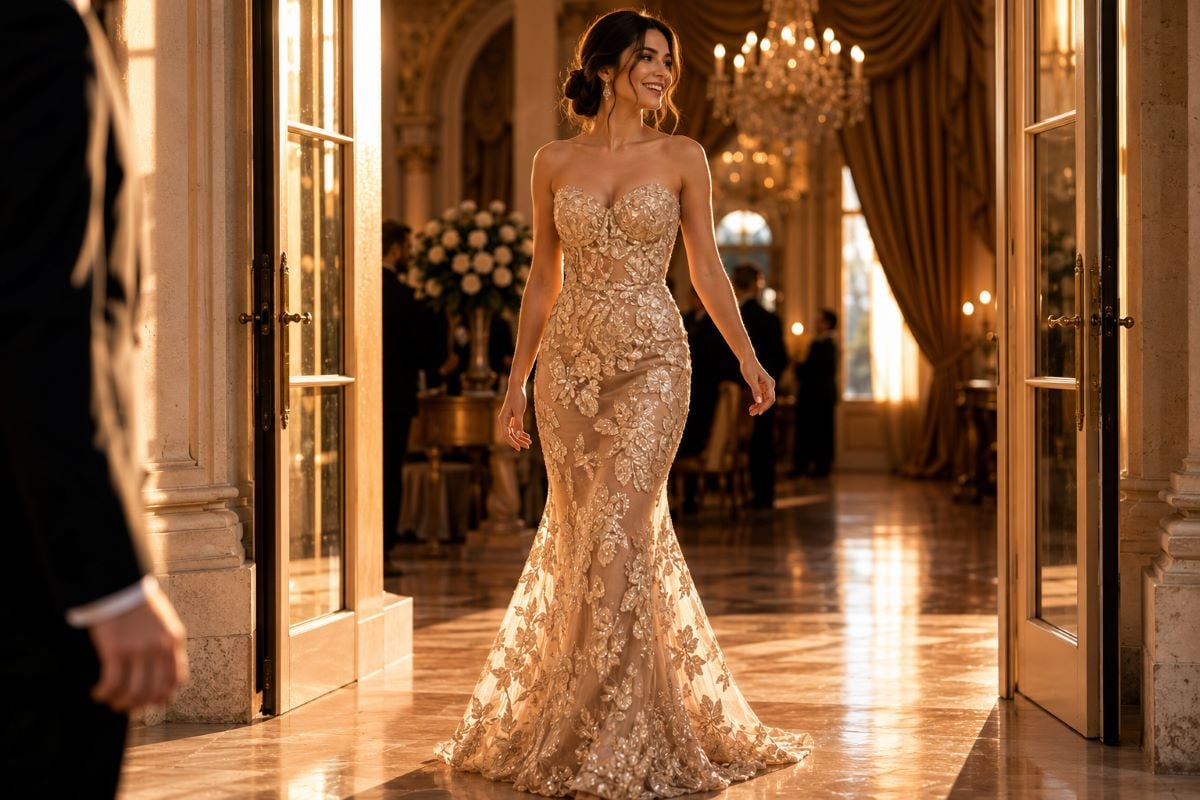
Black-tie galas and formal evening events welcome beige beautifully, especially in champagne or beaded variations, since the restrained color reads as elegant and intentional in the most formal settings. Charity dinners, opera, and refined formal events suit beige particularly well, since the color carries quiet confidence that fits the polished tone of these occasions. Wedding guest formal events welcome beige in non-bridal shades like deep champagne, tan, taupe, and mushroom, though pale cream and very light beige should be avoided since they can read too close to bridal in photographs. Daytime and outdoor formal events suit lighter beiges like sand, oat, and soft champagne, which work beautifully under natural light. Where beige works slightly less well is at very vibrant, themed, or celebratory events where bold color is part of the energy, since beige can feel restrained when the room calls for something more expressive. The broader question of when to choose restraint versus boldness is covered in our piece on classic vs trendy evening dress colors.
Styling a beige evening dress
Beige rewards thoughtful styling more than almost any color, since the restrained gown gives the accessories real visual room to make the look complete. This is where many women either underdress and let the look go flat, or overdress and break the cohesion of the neutral palette.
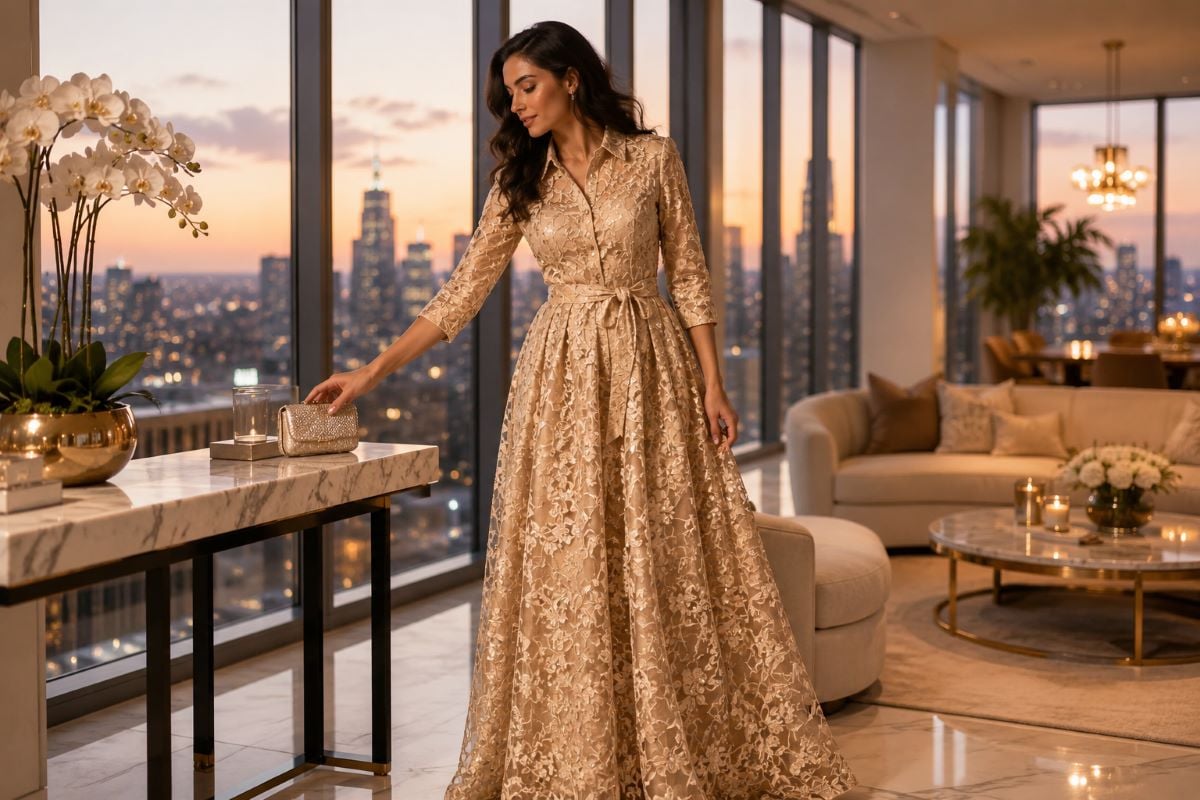
For accessories, metallic tones work beautifully with beige. Gold is the most natural pairing for warmer shades like champagne, cream, and tan, since it shares the warm undertone. Silver and platinum create modern contrast for cooler shades like taupe and mushroom. Rose gold is a versatile middle option that flatters most beiges. Crystal and clear stones pair effortlessly across all beige shades, and pearls offer an especially refined match for cream and champagne. Avoid heavy colored jewelry that competes with the gown, since the whole impression depends on cohesion. For shoes, nude in a shade matching your skin is the most lengthening choice, since it creates an uninterrupted line. Gold or silver metallic shoes also pair effortlessly. For hair, a polished updo or sleek wave both work beautifully, since the gown is already understated and elaborate styling can compete. For makeup, beige rewards a slightly more defined eye and a soft, refined lip, since very neutral makeup against a neutral gown can wash the whole look out. A warm bronze eye, a soft pink or rose lip, and a touch of glow create the depth the look needs. The overall principle is that beige is a foundation, and styling completes the picture rather than fighting it.
Common mistakes to avoid
A few recurring errors can undermine an otherwise beautiful beige gown. Knowing them helps you avoid them.
- Choosing a shade that blends with your skin. Beige works only when there is enough contrast between the gown and your complexion. A pale cream against very fair skin or a deep tan against medium-tan skin can disappear into the body and wash out the look.
- Cheap synthetic fabric in a neutral shade. Beige is the color most likely to expose poor fabric quality. Cheap satin reads as plastic, cheap lace reads as costume, and cheap embellishment looks dated fast. Invest in quality fabric.
- Wearing pale cream or ivory to a wedding. Very light beiges can photograph close to bridal white, particularly in indoor lighting. If attending a wedding, choose deep champagne, tan, taupe, or mushroom rather than pale cream.
- Under-styling the look. A neutral gown with neutral accessories, neutral makeup, and neutral hair can read as washed out rather than refined. Add at least one element of definition through accessories or makeup.
- Over-mixing neutrals. Wearing champagne with grey-taupe with silver with mushroom can become muddled rather than cohesive. Keep the neutral palette tight, with one or two related shades plus a single contrast element.
Frequently asked questions about beige evening dresses
What is the difference between beige, nude, and champagne?
Beige is the umbrella term for warm neutral shades. Nude is the specific shade designed to read close to skin, often used in illusion fabrics that blend with the body. Champagne is a warmer beige with golden undertones that catches light, making it the most luminous and formal variation in the family.
Which skin tones look best in beige?
Beige works on every skin tone when matched to the right shade. Cool fair skin works best with taupe and mushroom, warm fair skin with champagne and cream, medium skin with most beiges, olive skin with taupe and oat, and deep skin with champagne and deep tan. The key is enough contrast between the gown and the complexion.
Can I wear beige to a wedding as a guest?
Yes, with care about the shade. Deep champagne, tan, taupe, and mushroom all read as clearly non-bridal and suit wedding guest formality. Avoid pale cream and very light beige, since these can photograph close to white in indoor or candlelit settings.
What fabric is best for a beige evening gown?
Satin gives beige luminosity and depth, suiting the most formal occasions. Beaded beige is arguably the most spectacular version, since the neutral base lets embellishment shine. Lace adds texture that prevents the color from reading flat. Crepe offers a matte modern finish. Avoid cheap synthetic satin, which is unforgiving in this color family.
What accessories work best with a beige gown?
Gold pairs naturally with warmer beiges like champagne and cream. Silver and platinum suit cooler beiges like taupe and mushroom. Rose gold works across most shades. Crystal, clear stones, and pearls all pair effortlessly. Keep colored jewelry minimal so it does not break the cohesion of the neutral palette.
Is beige appropriate for a black-tie event?
Absolutely. Champagne and beaded beige gowns are among the most elevated choices for black-tie galas, charity events, and red-carpet occasions. The restrained color reads as quietly sophisticated, allowing intricate construction and embellishment to command attention without competing.
When you are ready to find a gown that proves restraint can be the most powerful kind of glamour, browse the latest neutral styles through an authorized Jovani retailer.