
How to Read a Girls’ Dress Size Chart for Formalwear
Use a girls’ dress size chart for the specific dress, not your child’s age or the label on her favorite outfit. Measure her chest, waist, and hips, then compare those numbers with the chart. If she’s between girls’ and juniors’ sizes, check both charts with the same measurements before choosing what to try on.
What Does a Girls’ Dress Size Chart Tell You?
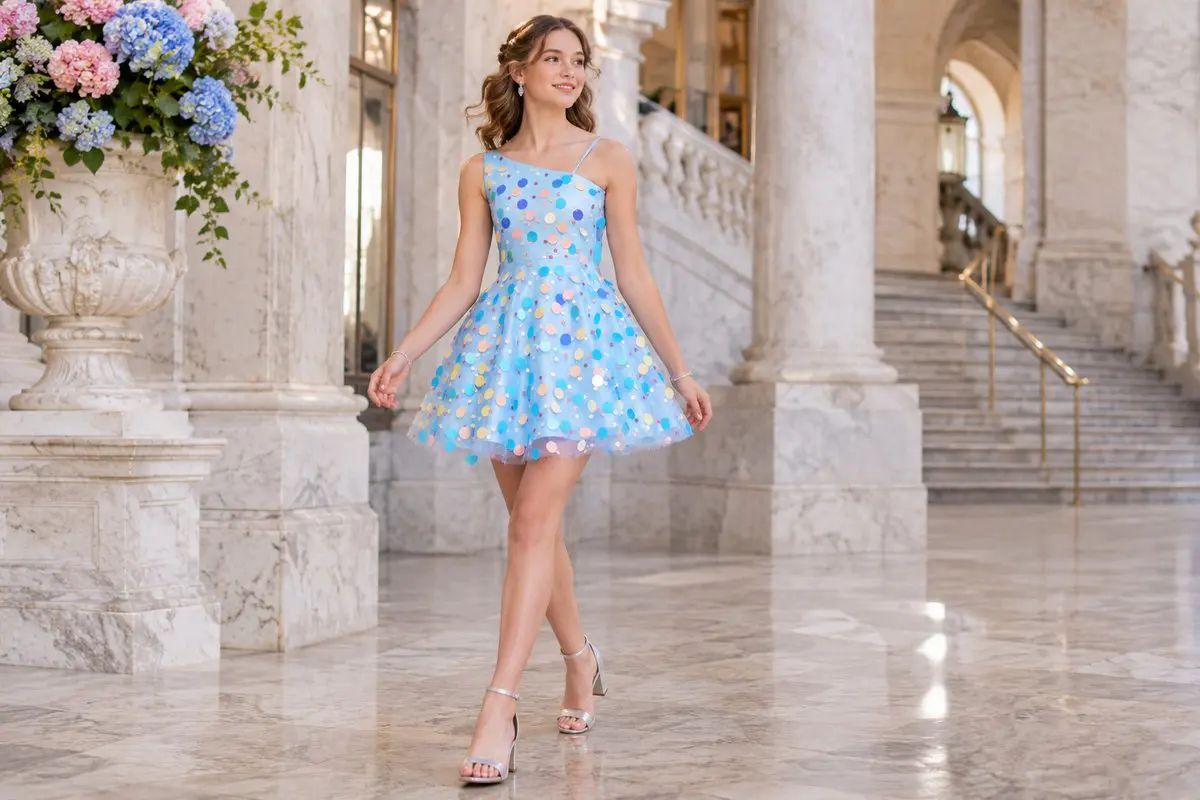
A girls’ dress size chart matches measurements to a label, but that label only means something within the right size range. For example, Jovani’s K38147, a short one-shoulder tulle dress, lists sizes 4, 6, 8, 10, 12, and 14. Use the chart for the exact style when comparing girls’ dresses (opens in new tab), even if two dresses show the same size options.
Look for a note that says whether the numbers describe the body or the finished dress. A body chart helps you select a row, while finished measurements tell you how much room the dress itself has. If the chart does not specify which it uses, ask before relying on it.
How to Measure for a Formal Dress
Take four measurements with a soft tape over the undergarments she’ll wear with the dress. Let her stand and breathe normally, and keep the tape level for measurements that go around the body. It should touch without pressing into the skin.
- Measure the chest around the fullest part, keeping the tape level across her back.
- Find the natural waist by asking her to bend gently to one side. Measure at the crease once she stands straight.
- Measure around the fullest part of the hips with her feet together.
- Record height if the chart asks for it. For a listed dress length, check where the brand starts measuring before you place the tape.
If the chart gives shoulder-to-hem length, measure from the top of the shoulder and see where that number lands. A parent comparing Bat Mitzvah dresses (opens in new tab), for example, can check the actual hem against any guidance from the family or congregation. The same dress can hit at the knee on one wearer and above it on another.
If you’re measuring a dress she already owns, choose one that fits and has a hem length she likes. The parent’s guide to girls’ formal dresses (opens in new tab) covers the decisions that come before sizing, such as choosing a dress that suits the occasion.
What If Her Measurements Fall in Different Sizes?
Start with the row that fits the areas the dress holds closest. A dress with a set waist needs enough room there even if the chest matches a smaller row. A flared skirt usually gives more room at the hips, but check the lining if the skirt looks fuller than it feels.
For example, imagine a chart places a 28-inch chest in size 8 and a 25-inch waist in size 10. Try the 10 first if the dress has a fixed waist. If it gaps at the chest, compare another cut rather than forcing either size to work. These numbers are an example, not Jovani measurements.
For a Fitted Bodice or Waist
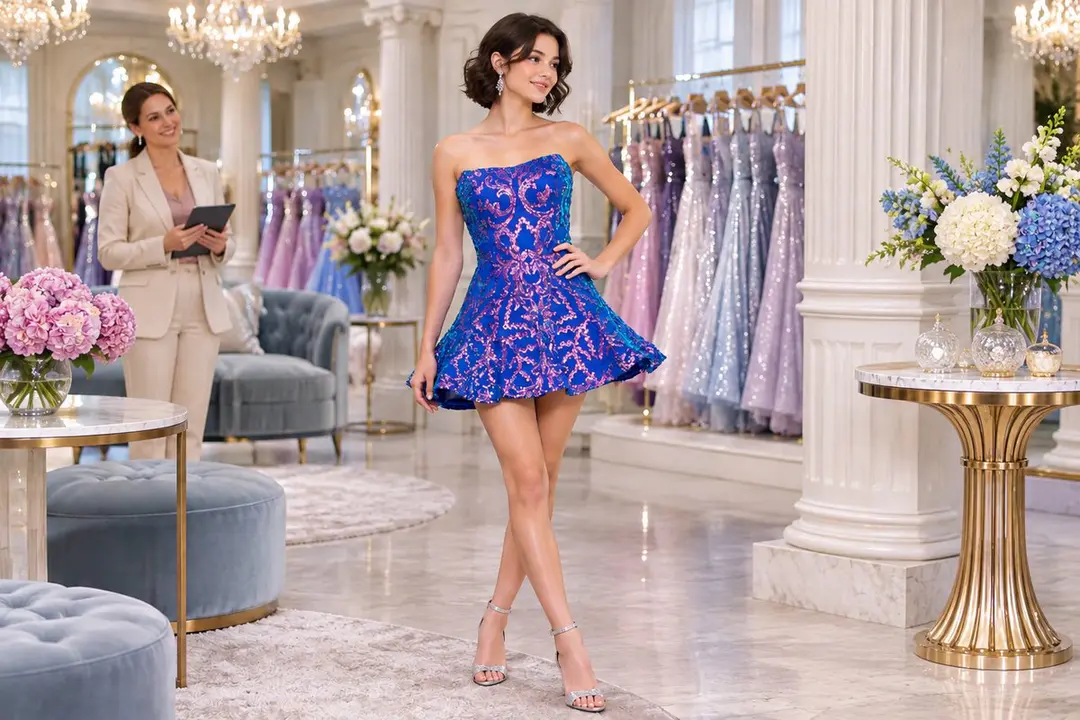
Use the larger of two chart rows as a try-on starting point if the smaller row would be tight at a fitted seam. On Jovani K44214, a short strapless sequin dress, check that the top stays put without pinching or gaping. If the larger size won’t stay in place, try a different cut before counting on alterations.
For a Fuller Skirt or Layered Hem
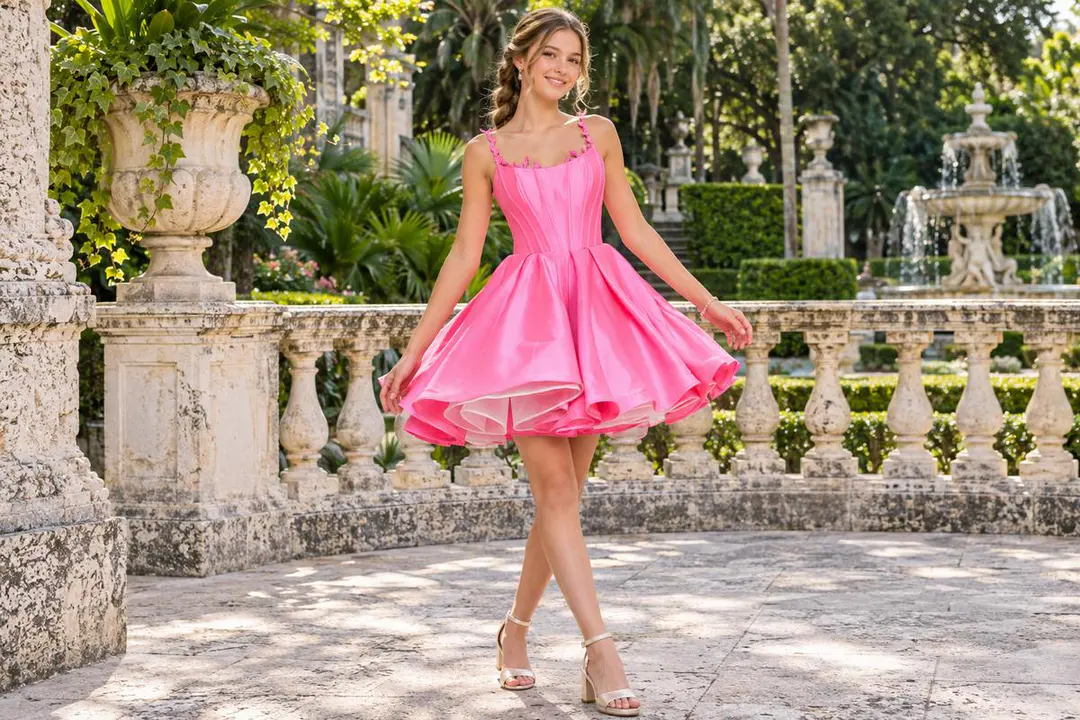
Check where the waist seam lands and whether she can sit and take a full step. Jovani K44210 is a sleeveless satin fit-and-flare dress with a tiered skirt. When comparing party dresses for a sweet sixteen (opens in new tab), check where the hem sits while she’s seated. Ask about hemming if several layers need adjusting.
If she’s near the top of a chart range and the party is months away, choose a style with room to adjust. The girls’ party dress guide (opens in new tab) explains how ties and elastic panels can give a dress more flexibility without sizing up too far.
When Should You Compare Girls’ and Juniors’ Sizes?
Compare both ranges when a dress fits through the waist but the shoulders or skirt length don’t work. There is no dependable conversion from girls’ 14 to a juniors’ number. Start with the same chest, waist, and hip measurements on both charts.
On Jovani, junior prom dresses describes (opens in new tab) styles for high school juniors, so the collection name does not tell you which sizing system a dress uses. Check the chart on the style you’re considering. If it gives body measurements but no dress length, ask for the shoulder-to-hem measurement in that size.
What to Bring to the Fitting
Bring the measurements, the ceremony or party shoes, and the event date. If she’s trying on dresses for homecoming (opens in new tab), check that the hem works on stairs and the straps stay in place when she raises her arms.
If the event is months away, the formal dress guide for 11-year-olds (opens in new tab) explains when to remeasure and why it can help to leave the hem until closer to the date.
Bring your shortlist to an authorized Jovani retailer (opens in new tab) and ask which chart applies to each style. If any column labels are unclear or her measurements span two rows, confirm the entries before ordering.
Frequently Asked Questions
Is a Girls’ Size 10 for a 10-Year-Old?
Not necessarily. Use the age label to narrow your browsing, then check the chest and waist on the specific chart. A dress marked 10 can fit differently across brands or cuts.
What Does 10/12 Mean on a Dress Label?
It’s one combined size label, not two separate versions of the dress. Look up its measurement range rather than assuming it will fit everyone who usually wears either size.
Does a Flat Waist Measurement Match a Body Waist Measurement?
No. A flat width is measured across the garment, while a body waist measurement goes all the way around. Ask whether the listed number is a flat width or a full circumference before comparing.
Can I Measure Over a Sweater if the Event Is in Winter?
No. For a body size chart, measure over light undergarments, not over a sweater. If she’ll wear a separate layer, take it to the fitting and check that it sits comfortably over the dress.