
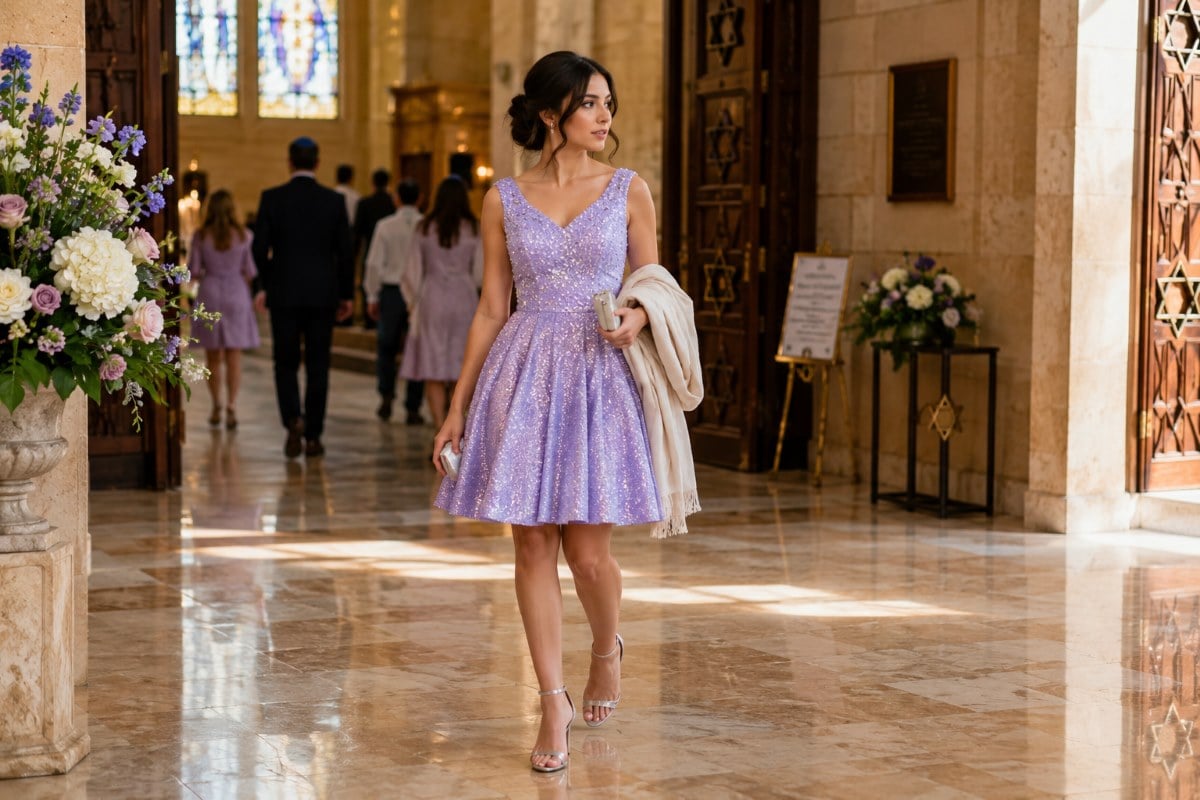
Being invited to a bat mitzvah is an honor, and it also raises a practical question that many guests feel unsure about: what is actually appropriate to wear to the synagogue service itself. The ceremony is a religious occasion held in a house of worship, with its own expectations around modesty and respect, and those expectations are different from the party that often follows. Understanding the bat mitzvah ceremony dress code matters because dressing appropriately is a way of showing respect for the family, the faith, and the significance of the day for the young woman being celebrated. This guide explains what the synagogue service typically expects, the modesty guidelines that commonly apply, how customs vary across different Jewish communities, the question of head coverings, and how to choose an outfit that is both respectful and beautiful. The goal is to walk into the service confident that you are dressed correctly and considerately.
Understanding the two parts of a bat mitzvah
The first thing to understand is that a bat mitzvah usually involves two distinct events with two different dress expectations, and confusing them is the most common mistake guests make. Knowing the difference is the foundation of dressing correctly.
The synagogue service is the religious ceremony, held in a house of worship, where the bat mitzvah girl reads from the Torah and is formally recognized in her faith community. This is the more formal and more modest of the two events, governed by the customs of the synagogue and the family’s level of observance. The reception or party follows the service, often later the same day or that evening, and is a celebration that can range from a lunch to an elaborate evening event. The party usually allows more relaxed and festive dressing than the service. This guide focuses on what to wear to a bat mitzvah service, since that is where guests feel most uncertain and where getting the dress code right matters most. A useful rule is to dress for the synagogue first, since you can often adjust or change for the party afterward, but you cannot undo being underdressed or inappropriately dressed during the religious ceremony itself.
What the synagogue service typically expects
The synagogue dress code for women calls for respectful, modest, and elegant attire appropriate for a religious setting. The bat mitzvah ceremony dress code varies by community, but certain expectations are widely shared, and meeting them keeps you comfortably within the bounds of what is appropriate.
Modest coverage is the central principle. For women, this generally means covering the shoulders, avoiding very low necklines, and choosing a hemline that is not too short, typically at or below the knee. The overall look should be elegant and considered rather than revealing or casual. A dress, a skirt and blouse, or a tailored outfit all work well, and the styling should read as respectful of the religious setting. For the bat mitzvah girl herself, the styles among the bat mitzvah gowns collection are designed with exactly this balance of celebration and age-appropriate coverage in mind. Color is generally flexible, though guests usually avoid anything too flashy or attention-grabbing, since the focus belongs on the bat mitzvah girl and the religious occasion rather than on any guest. Soft, sophisticated, and refined colors suit the setting well. The level of formality is usually semi-formal to formal, similar to what you might wear to a daytime wedding, though the modesty expectation is often stronger than at a typical wedding. The styles among modest formal dresses illustrate the level of elegant coverage that suits a synagogue service, and the same principles apply to choosing a guest outfit.

The modesty guidelines in detail
Modesty is the defining feature of the bat mitzvah ceremony dress code, and understanding the specific guidelines helps you choose with confidence rather than guessing. The guidelines center on coverage in a few key areas.
- Shoulders. Covered shoulders are widely expected in a synagogue. A dress with sleeves, whether long, three-quarter, or cap, is the safest choice. If a dress is sleeveless, a wrap, shrug, or jacket over it provides the coverage the setting expects.
- Necklines. A modest neckline that sits at or near the collarbone is appropriate. Very low or plunging necklines are not suited to a religious service. A higher neckline reads as respectful and elegant, and for an evening reception that follows, the more elevated styles among black tie outfits can suit a formal celebration while still being chosen with coverage in mind.
- Hemlines. A hemline at or below the knee is the general expectation. Very short hemlines are not appropriate for the synagogue, though they may be fine for the party afterward. Midi and longer lengths are reliably respectful.
- Back and overall coverage. An open or very low back is generally too revealing for a synagogue service. A closed back and an overall sense of coverage keep the look appropriate.
- Fabric and fit. Very tight or very sheer fabrics read as less modest. A dress with some structure and a fit that is elegant rather than clinging suits the setting best.
The styles among long sleeve evening dresses and high neck formal gowns show how modest coverage can be genuinely elegant rather than plain, with sleeves and higher necklines serving as design features in their own right. For the fullest coverage, the styles among covered evening dresses address all the key areas at once.
How customs vary across communities
One of the most important things to understand is that Jewish communities vary significantly in their level of observance, and the dress expectations vary accordingly. What is expected at one synagogue may be more or less strict than at another, so reading the specific community matters.
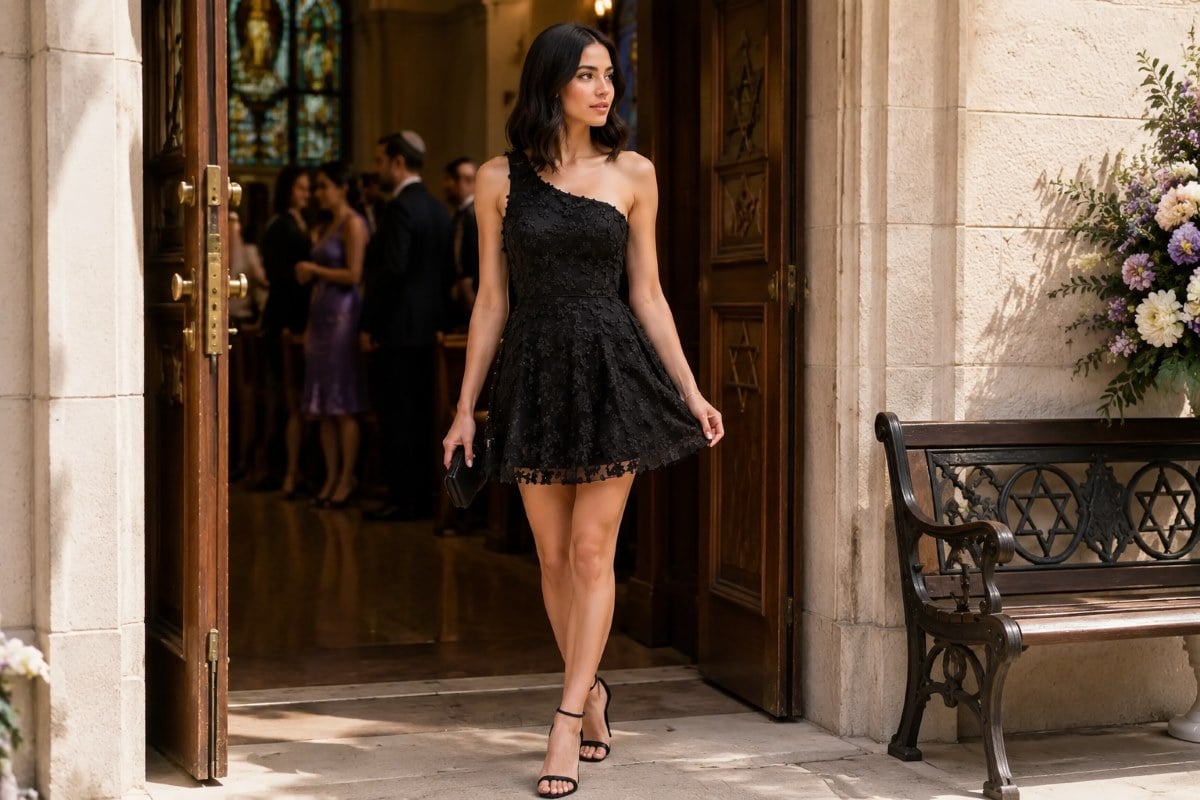
Orthodox synagogues generally have the most modest expectations. Women are typically expected to cover their shoulders and knees, sleeves are often expected to reach at least the elbow, and necklines should be high. In some Orthodox communities, married women cover their hair. Trousers on women may be less common, with skirts and dresses preferred. Conservative synagogues usually expect modest, respectful attire but tend to be somewhat less strict than Orthodox settings, with covered shoulders and modest hemlines generally expected. Reform and Reconstructionist synagogues are typically the most flexible, where modest and respectful attire is appreciated but the specific rules are often more relaxed. When you are unsure which applies, the safest approach is to dress more modestly rather than less, since being slightly more covered is never inappropriate while being underdressed can be. If you know the family, it is entirely appropriate to ask them directly what the synagogue expects, and most families appreciate the consideration. When you do not know, defaulting to covered shoulders, a knee-length or longer hemline, and a modest neckline keeps you appropriate across nearly any community.
The question of head coverings
Head coverings are one of the areas guests most often wonder about, and the custom varies by community and by the role of the guest. Understanding the basics helps you prepare.
In many synagogues, men are expected to wear a kippah, also called a yarmulke, a small head covering, and these are usually provided at the entrance for guests who do not have their own. For women, the head covering custom varies more. In Orthodox and some Conservative synagogues, married women may cover their hair, sometimes with a hat or a head covering, while in Reform settings this is generally not expected of guests. As a female guest, you are usually not required to cover your hair unless you are part of the family or the community observes this custom broadly. If you are unsure, bringing a light scarf gives you the option to cover your head or shoulders if the setting calls for it, which is a simple way to be prepared without committing in advance. Some synagogues provide guidance at the entrance, and observing what other guests do is also a reliable cue. When in doubt, a respectful default is to have a scarf available and to follow the lead of the family and the community.
Choosing an outfit that is respectful and beautiful
Dressing modestly for a synagogue service does not mean dressing plainly. The goal is an outfit that honors the religious setting while still feeling elegant and put-together, and there are many beautiful ways to achieve that. Modesty and style are not opposites.
A modest bat mitzvah dress in a midi or knee-length cut with sleeves is one of the most reliable and elegant choices, suiting nearly any synagogue. A dress with a higher neckline and three-quarter or long sleeves reads as both respectful and sophisticated. A skirt and elegant blouse combination offers another polished option, with the separates allowing easy adjustment of coverage. For cooler synagogues or added coverage, a tailored jacket, an elegant wrap, or a structured cape over a dress adds both warmth and modesty while looking intentional. The styles among long sleeve mom of the bride dresses offer particularly elegant covered options that suit a synagogue service beautifully, since these designs are built around sophisticated coverage. For the broader question of decoding event dress codes, our guide on wedding guest dress codes explained covers related principles that translate to religious occasions. The fabric and detailing can still be beautiful, with elegant lace, refined beading, and quality fabrics all suiting the setting. The point is that you can be fully appropriate for a religious service and still look wonderful, since modest dressing done well reads as elegant, considered, and respectful all at once.
Practical tips for the day
A few practical considerations make following the bat mitzvah ceremony dress code easier and ensure you are comfortable and appropriate throughout. Planning for them removes the last of the uncertainty.
Bring a layer. A wrap, shrug, or jacket gives you flexibility to add coverage in the synagogue and remove it for the party, and it handles the temperature differences between a cool synagogue and a warm reception. Plan for the transition. If you are attending both the service and the party, consider an outfit that works for both, or plan a simple change between them, since the service is more modest and the party more festive. Choose comfortable shoes, since a service involves periods of standing and sitting, and the day is often long. Avoid anything that reads as costume or attention-grabbing, since the focus belongs on the bat mitzvah girl. When you genuinely do not know the community’s expectations, err toward more coverage, and remember that asking the family is always appropriate and usually appreciated. Walking in dressed thoughtfully is a quiet gesture of respect that the family will notice and value.
Common mistakes guests make and how to avoid them
A few recurring errors trip up guests who are unfamiliar with synagogue settings. Knowing them in advance lets you sidestep the most common sources of discomfort or unintended disrespect.
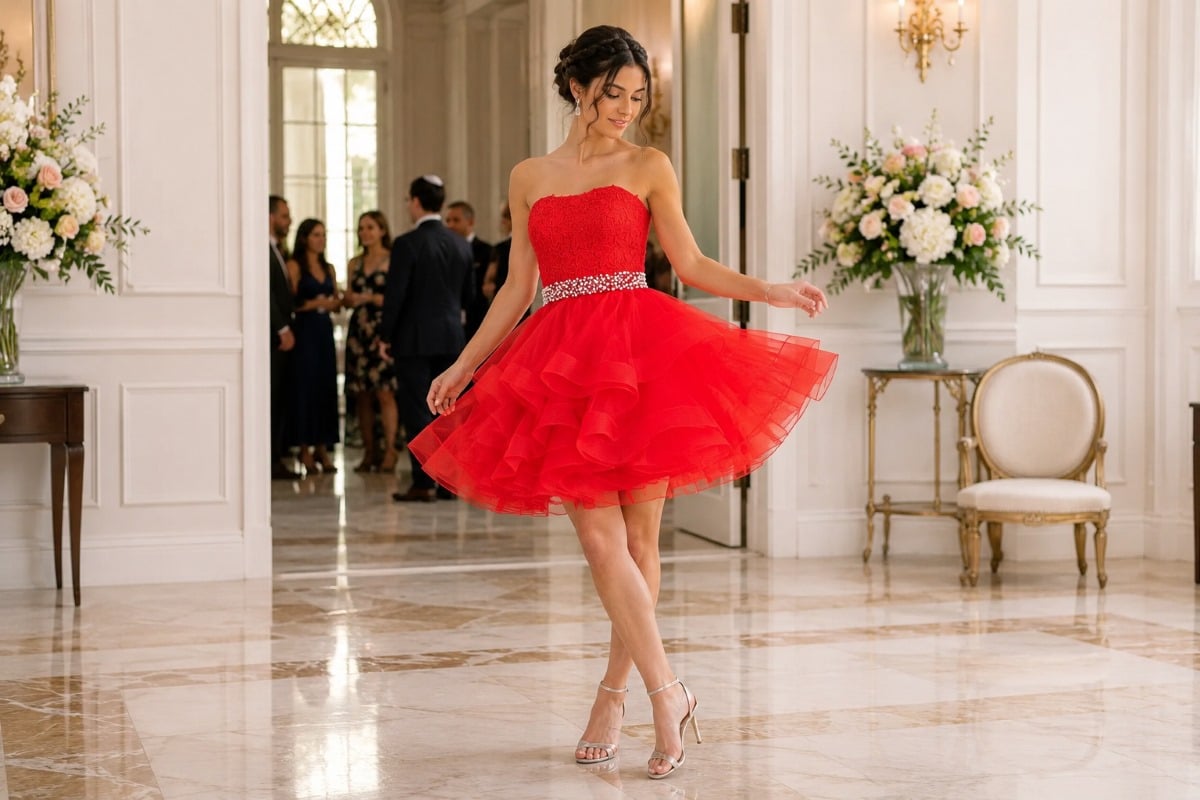
- Dressing for the party instead of the service. The single most common mistake is arriving at the synagogue in something chosen for the festive reception, such as a short or sparkly cocktail dress. Dress for the more modest service first, then adjust for the party.
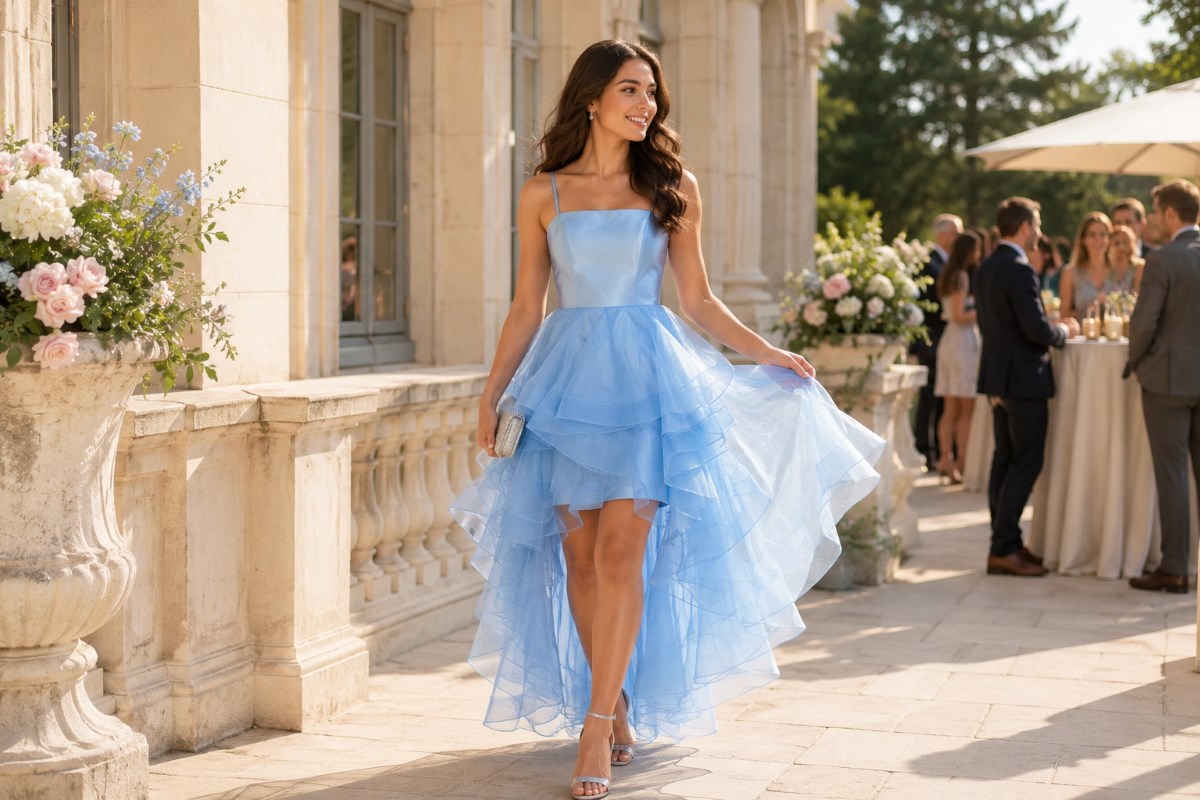
- Leaving shoulders bare. A sleeveless or strappy dress without a covering is inappropriate for most synagogues. Always bring a wrap or jacket if your dress does not have sleeves, even if you think the setting may be relaxed.
- Choosing a hemline that is too short. A hemline well above the knee reads as out of place in a religious setting. When in doubt, choose a longer length, since a midi or below-knee hem is always safe.
- Assuming all synagogues are the same. An outfit appropriate for a Reform synagogue may be too relaxed for an Orthodox one. Find out which community is hosting, and when unsure, default to more coverage.
- Wearing something attention-grabbing. A very bold, flashy, or revealing outfit pulls focus from the bat mitzvah girl and the religious occasion. Understated elegance is always the more respectful choice.
- Not asking when uncertain. Many guests guess rather than ask, then feel uncomfortable on the day. Reaching out to the family to ask what the synagogue expects is appropriate and appreciated.
Avoiding these mistakes comes down to a single principle: when you are unsure, lean toward more modesty and more formality rather than less. It is far better to be slightly more covered than the setting required than to feel underdressed during a meaningful religious ceremony. A thoughtful, modest, elegant outfit is always the right call, and it lets you focus on celebrating the young woman and supporting her family rather than worrying about your clothes.
FAQs about bat mitzvah ceremony dress code
What should a woman wear to a bat mitzvah ceremony?
A modest, elegant outfit appropriate for a religious setting. This generally means covered shoulders, a neckline at or near the collarbone, and a hemline at or below the knee. A midi dress with sleeves, or a skirt and elegant blouse, both work well. The formality is usually semi-formal to formal, similar to a daytime wedding but with stronger modesty expectations.
Do I need to cover my shoulders at a synagogue?
In most synagogues, yes. Covered shoulders are widely expected, especially in Orthodox and Conservative settings. A dress with sleeves is the safest choice, and if your dress is sleeveless, a wrap, shrug, or jacket provides the coverage the setting expects. Reform synagogues tend to be more flexible, but covered shoulders are never inappropriate.
How short can my dress be for a bat mitzvah service?
A hemline at or below the knee is the general expectation for the synagogue service. Very short hemlines are not appropriate for a religious setting, though they may be fine for the party afterward. Midi and longer lengths are reliably respectful across nearly all communities.
Do women need to cover their hair at a bat mitzvah?
It varies by community. In Orthodox and some Conservative synagogues, married women may cover their hair, while in Reform settings this is generally not expected of guests. As a female guest who is not part of the family, you usually do not need to cover your hair, but bringing a light scarf gives you the option if the setting calls for it.
What colors are appropriate for a bat mitzvah ceremony?
Color is generally flexible, though guests usually avoid anything too flashy or attention-grabbing, since the focus belongs on the bat mitzvah girl. Soft, sophisticated, and refined colors suit the religious setting well. There is no strict color rule, but understated elegance is more appropriate than bold, statement-making shades.
How do I know how strict the dress code will be?
It depends on the community, with Orthodox synagogues the most modest, Conservative somewhat less strict, and Reform the most flexible. When unsure, dress more modestly rather than less, since being more covered is never inappropriate. It is entirely acceptable to ask the family directly what the synagogue expects, and most appreciate the consideration.