
Red dress accessories go wrong more often than any other pairing, because the dress already does most of the work.
Knowing how to accessorize a red dress is mostly a lesson in restraint. The instinct is to add more, and the result is a look where three things compete and none of them wins. The better approach is subtraction: choose one metal, one point of interest, and let the dress carry the rest.
This guide answers what accessories to wear with a red dress, which colors actually work, how the shade of your dress changes the answer, what shoes to pair with it, and the combinations worth skipping.
What accessories go with a red dress?
What color accessories go with a red dress? Four options do almost all the work. Gold suits warm reds such as scarlet, tomato and rust, and it adds richness without competing. Silver suits blue-based reds such as cherry, crimson and true red, and it reads cooler and more modern. Black grounds any red and is the most formal choice, particularly for evening. A shade close to your own skin tone in shoes and bag disappears entirely and lets the dress take everything. The red dress what color accessories question really has four answers, and a second bright color is not one of them, since red is already the loudest thing in the room.

Your shade of red decides the metal
Choosing accessories for red gown shades starts with the red itself, and this is the step most guides skip entirely. Reds split into warm and cool, and the metal that flatters one will look slightly off against the other.
| Shade of red | Leans | Best metal | Also works |
|---|---|---|---|
| Scarlet and tomato | Warm, orange based | Gold, bronze, copper | A tone close to your skin |
| True red | Balanced | Gold or silver, both work | Black, white gold |
| Cherry and crimson | Cool, blue based | Silver, white gold, platinum | Black, pearl |
| Burgundy and wine | Deep and warm | Gold, antique gold | Deep bronze, black |
| Rust and brick | Warm and muted | Copper, bronze | Tortoiseshell, cream |
A red dress with silver accessories works when the shade is blue based, and a red dress and silver accessories pairing fails on a warm scarlet for the same reason. If you cannot tell which way your dress leans, hold a gold item and a silver item against the fabric in daylight. One of them will look like it belongs and the other will look like it was borrowed. That test is faster and more reliable than any chart.
The other rule for accessories to wear with a red dress is to pick one metal and stay with it. Mixed metals can work in everyday styling, but against a strong red gown they add a second thing for the eye to sort out, and the look reads unplanned rather than deliberate.
Black accessories with a red dress
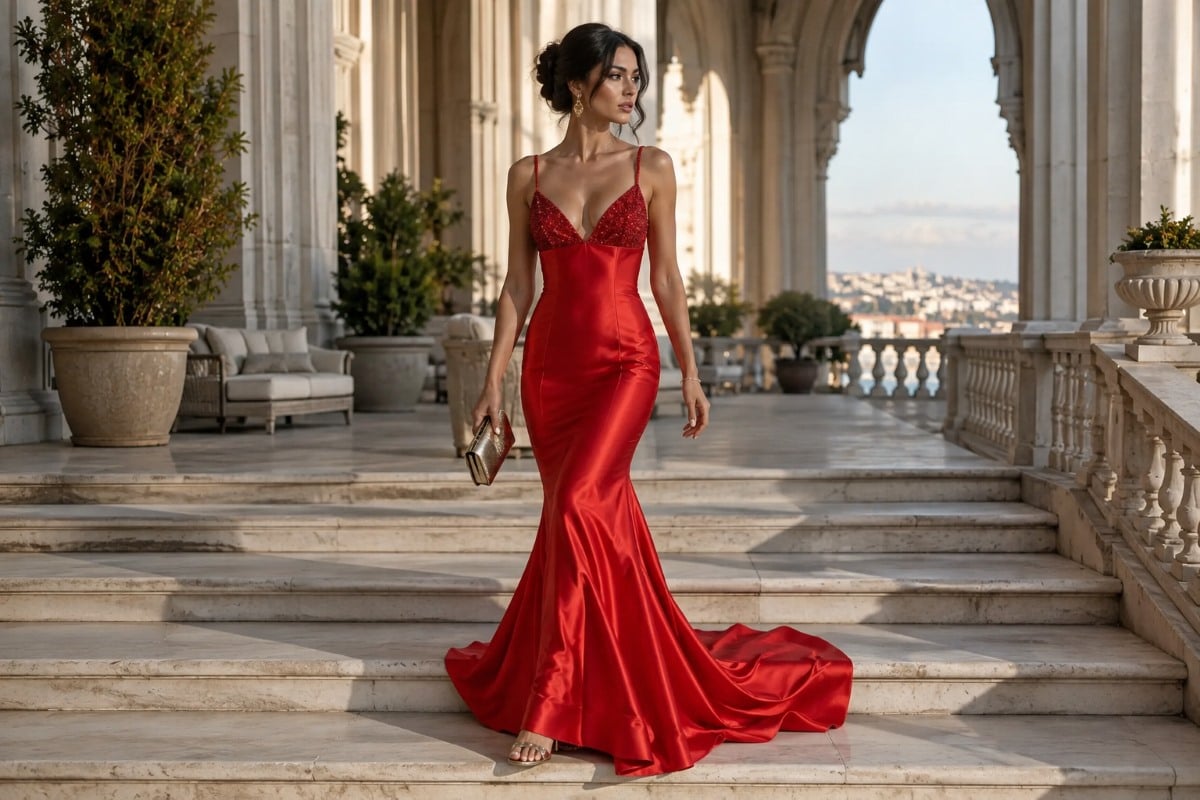
Black accessories for red dress looks are the most reliable pairing and the most formal, which is why it suits an evening event better than any other choice. It grounds the red, stops the look tipping into costume, and works regardless of whether your shade leans warm or cool.
Red dress black accessories earn their place at the feet and in the hand. A black heel with a red gown is quietly correct in a way a red heel almost never is, and a small black clutch does the same job. A black wrap or a fine lace shawl adds coverage without introducing another color to coordinate.
Where black needs care is jewelry. Black stones against a red dress can read heavy, particularly in photographs where the contrast is sharper than it looks in person. If you want black in the jewelry, keep it small and let the metal do the work.
The logic reverses cleanly, so red accessories for a black dress work for the same reason, and accessories for red and black dress combinations follow one rule: let whichever color dominates the gown stay dominant.
Red and black dress accessories are a classic pairing, and they appear constantly in black and red gowns because black behaves as a neutral rather than a competing color.
Shoes for a red prom dress
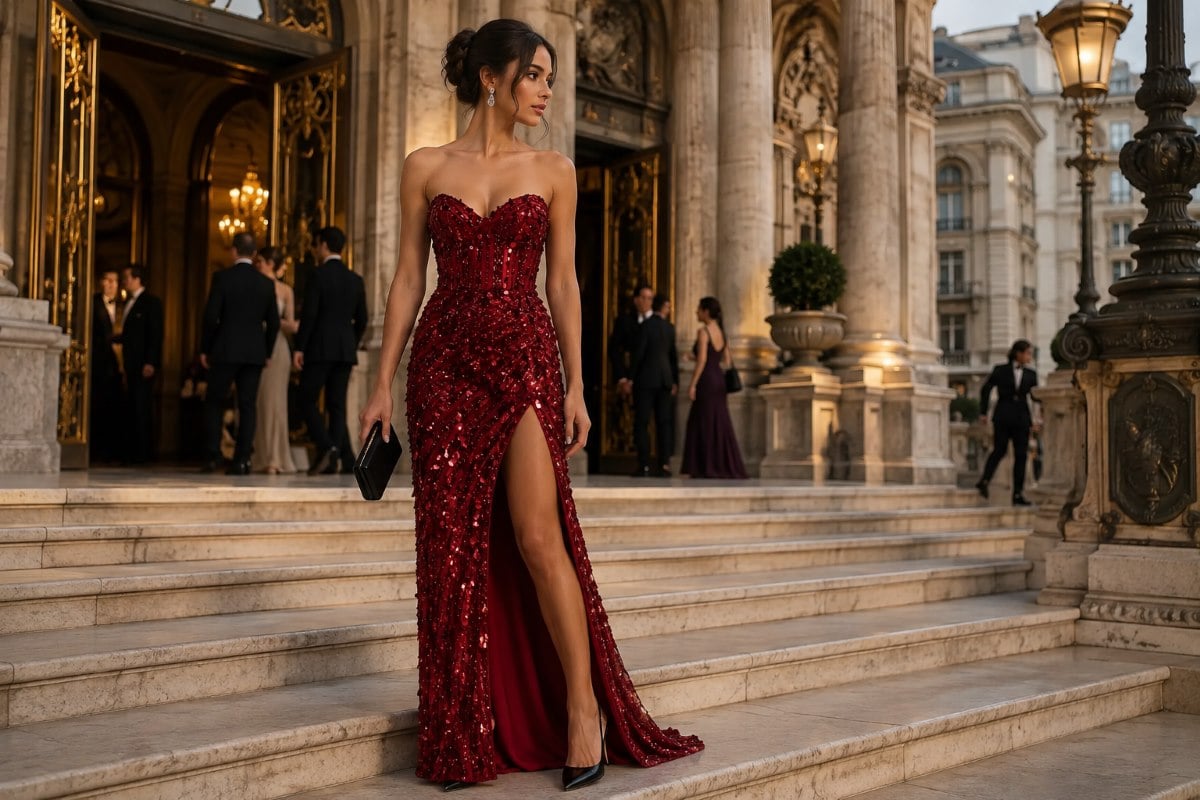
Prom shoes red dress pairings are where most people overthink, and red prom dress shoes chosen to match the gown exactly almost never work. Matching the shoe exactly to the dress almost never works, because dye lots differ and reds vary enormously, so a shoe one shade off reads as a mistake rather than a match.
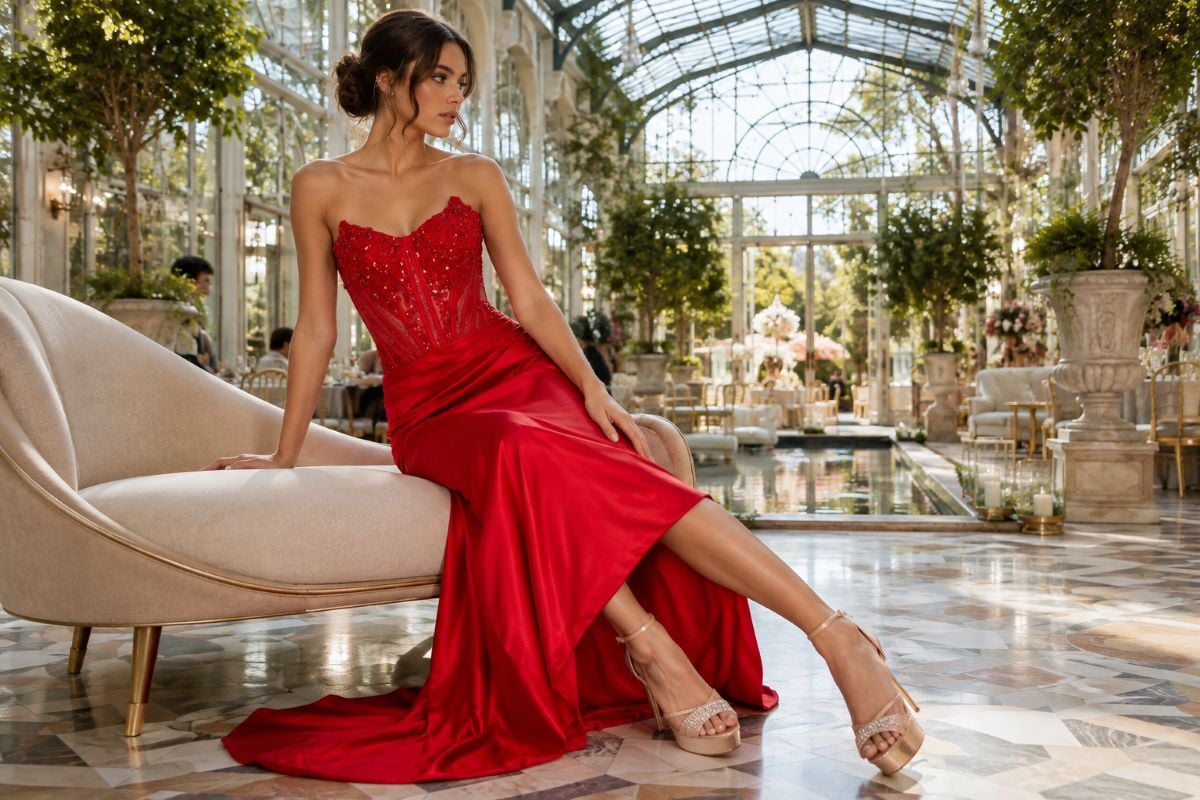
A red prom dress and shoes that contrast is the better plan, and three options work. A heel close to your own skin tone gives the longest leg line and disappears against the dress. Black is the formal answer and the safest for an evening event. Metallic in gold or silver, chosen to match your metal decision, adds light without adding a color.
If you genuinely want a red shoe, go a clear step darker rather than trying to match. A burgundy or wine heel with a bright red gown reads as intentional, whereas a near match reads as a failed one. The same applies to a floor length gown where only a sliver of shoe shows, which is the one case where the shoe matters least and comfort should decide.
Jewelry, and how much is too much
Red dress what accessories and how many is the question behind most of these searches, and what color accessories with red dress looks matters less than the count, and the answer is one statement piece rather than three. A red gown is already the focal point, so the jewelry has a supporting role rather than a starring one.
Pick the piece based on the neckline. A strapless or sweetheart cut leaves the collarbone open, so a necklace works well there. A high neckline or a halter fills that space already, so earrings become the statement instead and a necklace competes. A deep V works with either, but not both at once.
Diamonds, crystals and clear stones are the safest choice with red, because they add light without introducing a color. Pearls work particularly well with deeper reds and read more grown up than sparkle. Ruby and garnet look logical on paper but often disappear against the dress, since a red stone on a red background has nothing to contrast with.
If your gown already carries heavy embellishment, as many beaded gowns do, drop the necklace entirely. The bodice is doing that job and adding to it creates noise rather than shine.

Bags, wraps and the finishing pieces
A clutch should be small. A red gown is a full look already, and an oversized bag interrupts the line as well as being impractical for a night of dancing. Metallic, black or a tone close to your skin all work, and the same one-metal rule applies.
Wraps are worth planning rather than grabbing at the last minute. A fine black shawl, a matched bolero or a sheer cape all give coverage for a ceremony or a cool venue without changing the outfit. What does not work is a wrap in a different red, which is the single most common mistake with this color.
For hair and makeup, one strong element is enough. A red lip with a red dress is a bigger commitment than it looks and needs the shades to be in the same family, so a nude or berry lip with a defined eye is the easier route. Keep the hair simple, since a red gown with elaborate hair and full jewelry reads as three ideas at once.
What to skip with red
A second bright color is the main one. Cobalt, emerald or bright pink against red creates two focal points, and neither wins. If you want color, keep it deep and muted, so navy, charcoal or forest green rather than anything saturated.
Mixed metals are the second, for the reason above. Near-match reds are the third, whether that is a shoe, a bag or a wrap in a slightly different shade.
The last is over-accessorizing generally. Statement earrings, a bold necklace, a cuff and a decorated bag together will always look busier than the sum of the pieces, particularly with a satin gown that already reflects a great deal of light. Choose one and let the rest be quiet.
Red Dress Accessory Questions
What color accessories go with a red dress?
Gold suits warm reds such as scarlet and rust, while silver suits blue-based reds such as cherry and crimson. Black works with any shade and is the most formal option. A tone close to your own skin disappears and lets the dress lead. A second bright color rarely works, since red is already the loudest element.
Should you wear gold or silver with a red dress?
It depends on which way your red leans. Hold a gold item and a silver item against the fabric in daylight, and one will look like it belongs while the other looks borrowed. Warm reds take gold, cool reds take silver, and true red works with either. Pick one metal and stay with it.
Do black accessories work with a red dress?
Yes, and black is the most reliable and most formal pairing. It grounds the red and works whether your shade leans warm or cool. Black shoes and a small black clutch are the strongest use of it. Black stones in jewelry need more care, since they can read heavy in photographs.
What shoes go with a red prom dress?
A heel close to your own skin tone gives the longest leg line and disappears against the dress. Black is the formal choice for an evening event. Metallic in your chosen metal adds light without a color to coordinate. Avoid trying to match the shoe to the dress exactly, since reds vary too much.
Can you wear red jewelry with a red dress?
It rarely works as well as expected. Ruby and garnet look logical but often disappear, because a red stone against a red background has nothing to contrast with. Clear stones, crystals or pearls add light without introducing a competing color, and they photograph considerably better.
What accessories to wear with red dress looks that already sparkle?
One statement piece is the working limit. Choose it based on the neckline: a necklace for a strapless or sweetheart cut, earrings for a halter or high neck. If the gown already carries heavy beading, skip the necklace entirely, since the bodice is already doing that job.
Seeing the pairing in person
Red is the hardest color to judge from a screen, because warm and cool reds photograph almost identically and behave completely differently against metal. Bring a gold item and a silver item to your fitting and hold both against the fabric.
Accessories on red dress fabric read differently in person, so try the gown on rather than judging on a hanger, at an authorized Jovani retailer, since the shade reads differently against your own skin tone than it does on a rail.