
Pageant Dress Size Guide: Measurements, Fit and Body Shape

A reliable pageant dress size guide starts with your bust, waist, and hip measurements, not your everyday dress size. Compare those numbers with the chart for the specific gown. Then check whether its bodice stays secure and its skirt allows a natural stage walk. Body shape helps narrow silhouettes, but fit decides the purchase.
Start with the competition rules and compare pageant gowns (opens in new tab) that meet the required length and coverage. Keep the shoes and undergarments you will use on stage nearby. These details change how the dress sits and moves during a fitting.
What Measurements Do You Need for a Pageant Dress?
Measure your bust, natural waist, hips, and intended gown length before choosing a pageant dress size. Use a flexible tape, stand naturally, and ask someone to help keep the tape level. Record the numbers in inches so you can compare them directly with the product chart.
- Bust: measure around the fullest part of your chest, with the tape level across your back.
- Waist: measure at your natural waist without pulling the tape into your skin.
- Hips: measure around the fullest part of your hips while standing with your feet together.
- Length: measure from the shoulder to the desired hem in the shoes you intend to wear.
Repeat a measurement when the tape slips or twists. Wear the foundation garments you expect to use with the gown, because padding and support can change the fit. Contestants comparing extended-size formal gowns (opens in new tab) should use the same measurement process rather than relying on a separate body-shape rule.
How Do You Read a Pageant Dress Size Chart?
Find the gown’s product-specific chart and compare all three body measurements, not just one. Jovani publishes bust, waist, and hip dimensions in its size guide. For example, its listed size 8 measurements are 36 inches at the bust, 29.5 at the waist, and 39.5 at the hips.
A chart is a starting point, not a guarantee that every silhouette will feel identical. A fitted skirt may need more hip room than a full skirt. If your numbers span several sizes, ask the retailer which measurement controls the fit for that construction before ordering.
Jovani’s pageant wardrobe planning guide (opens in new tab) separates the needs of evening gown, interview, and fun fashion rounds. Check the rules for the actual round first. A size that works for one outfit does not determine the right size for another design.
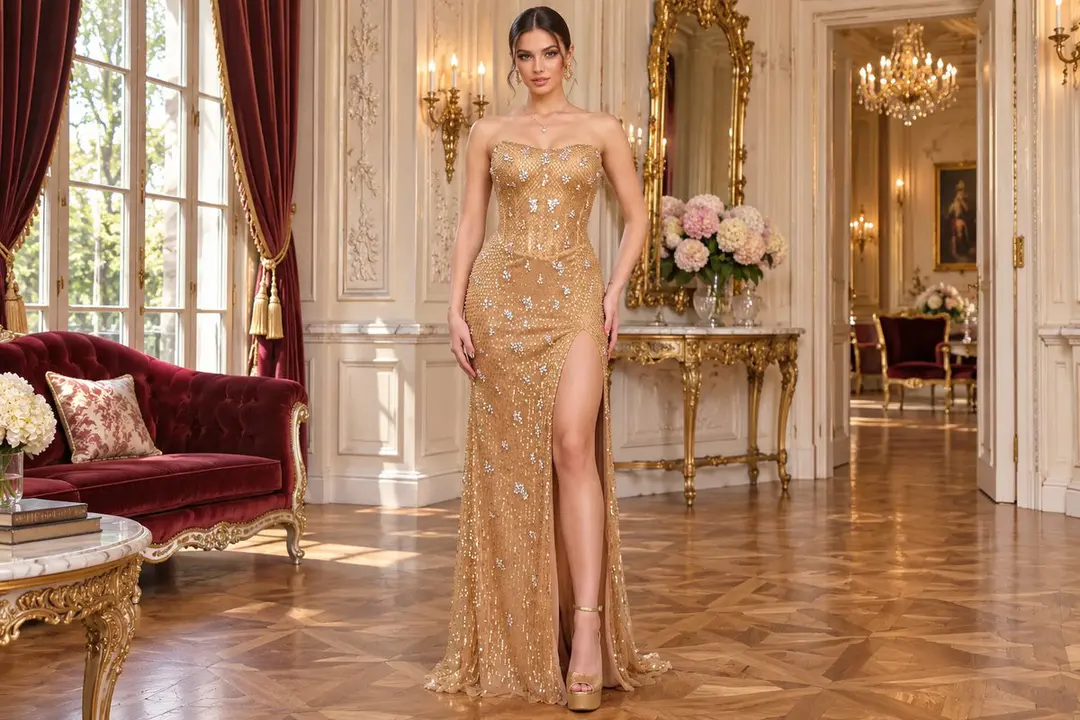
Which Pageant Dress Silhouette Suits Your Proportions?
Choose a pageant silhouette by how it fits your shoulders, bust, waist, and hips, rather than by a flattering-body-type label alone. A fitted gown traces more of your shape, while a fuller skirt leaves space below the waist. Neither approach is automatically better.
Sheath and mermaid gowns need precise hip fit
A sheath creates a straighter line, while a mermaid gown stays close through the hips before flaring lower down. Compare mermaid formal gowns (opens in new tab) with other fitted designs, then sit and walk to check the hip seams. A gown that limits a normal step is not the right fit.
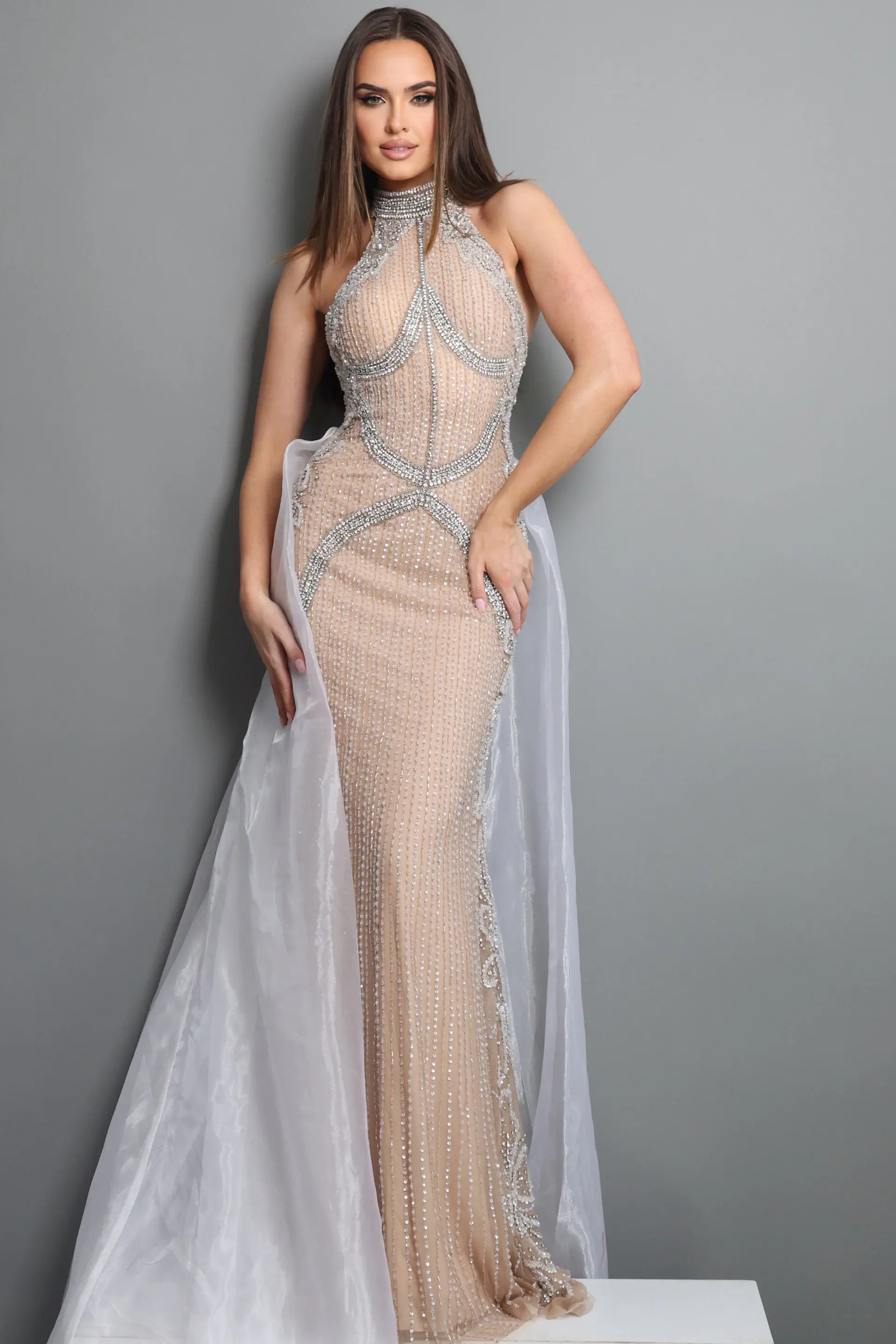
Jovani's Halter Beaded Overskirt Sheath Dress combines a halter neckline, a sheath base, and a beaded overskirt. The nude and silver design illustrates why the inner dress and the outer layer must both move comfortably. Check how the overskirt settles after turning.
A-line gowns provide more skirt room
An A-line gown fits through the upper body and opens gradually below the waist. It can simplify hip fitting because the skirt does not trace every curve. Compare A-line evening gowns (opens in new tab) if you want more leg room, but still check the bodice and waist carefully.
How Should a Pageant Gown Fit on Stage?
A pageant gown should stay secure at the neckline, sit smoothly at the waist, and permit a controlled walk and turn. Watch for slipping straps, pulling seams, or a hem that catches your shoes. Those are fit signals, not problems to ignore for the sake of the label.
Practice the routine at a normal pace with your competition shoes. Step up once, turn in both directions, and stand in a relaxed pose. Jovani’s pageant gown alterations guide (opens in new tab) covers technical tailoring after a gown is chosen; the initial fitting should first reveal which size and shape are workable.
- Check that the neckline stays in place when you breathe and raise your arms slightly.
- Walk without shortening your normal stride to accommodate a narrow skirt.
- Turn and stop to see whether the fabric settles without twisting.
- Inspect the front hem in the shoes you plan to wear on stage.
How Do You Compare Two Gowns During a Fitting?
Compare two possible sizes or silhouettes under the same conditions. Wear the same shoes and undergarments, and check the neckline, waist, hips, and hem in that order. Take front, side, and back photos only if the retailer permits them. Record what feels secure rather than trusting a single mirror view.
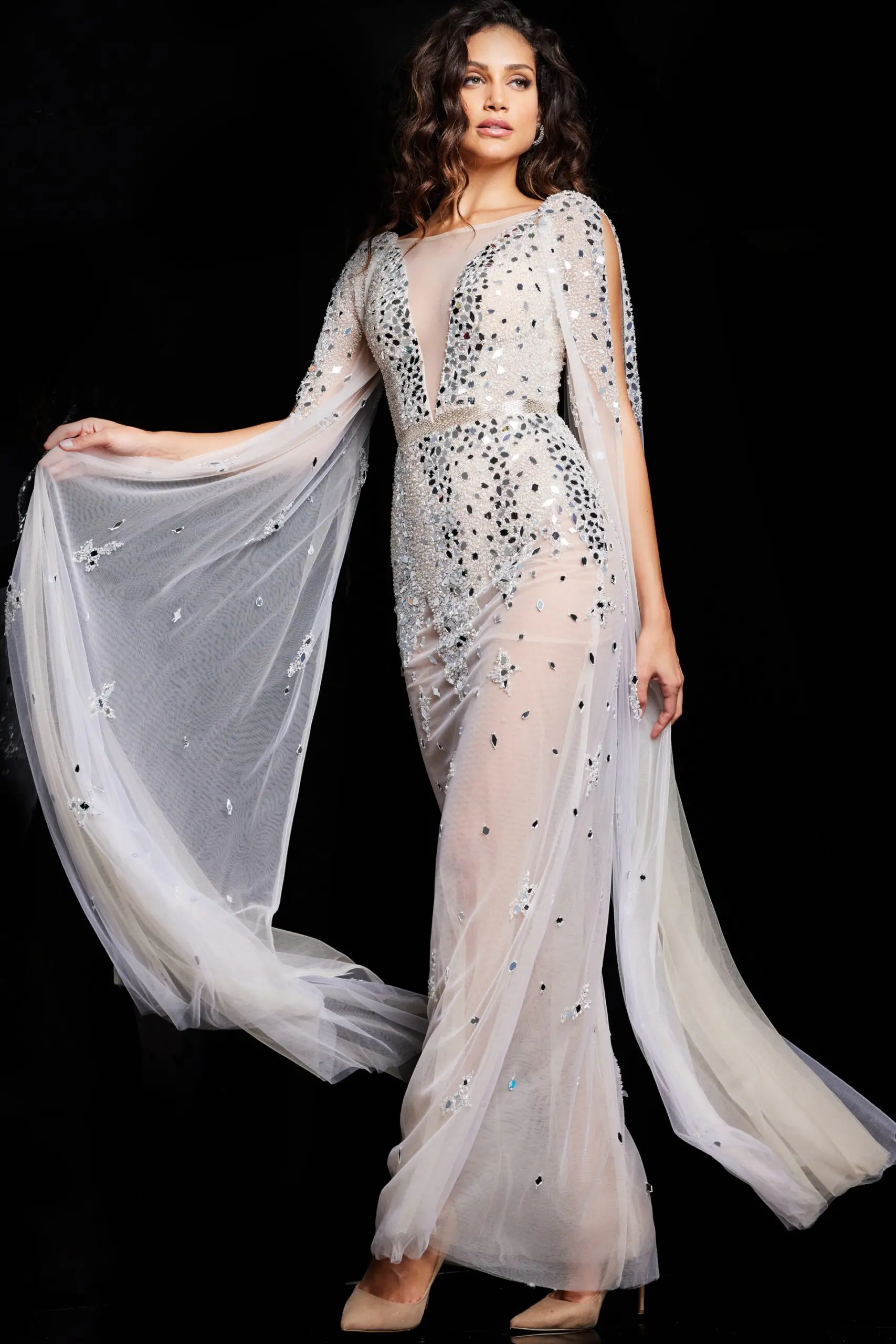
Jovani's Off White Embellished Illusion Pageant Dress has a fitted, fit-and-flare shape, an illusion V-neckline, and long cape-style sleeves. Its beaded surface and open back make the bodice and shoulder fit especially important. Try a full turn to see whether the sleeves move freely.
Silhouette trends can inform your shortlist, but they should not overrule comfort. Jovani’s pageant dress trend guide (opens in new tab) discusses stage silhouettes and fabric structure. Use those ideas to compare design choices only after the basic size and movement checks are satisfactory.
Does Fit Change Between Pageant Rounds?
Yes. An evening gown must support an extended walk and formal presentation, while interview attire must remain comfortable when seated. The event handbook determines what each round requires. Do not assume a floor-length look belongs in every segment of the competition.
For an evening gown round, inspect the hem and stride in the shoes you will wear. For other formal segments, evening dresses (opens in new tab) can provide useful silhouette comparisons when the rules allow them. Always confirm the specific gown’s construction and measurements before choosing a size.
What to Do When Two Sizes Are Close
When your measurements fall between sizes, compare the garment’s most fitted area and ask what alterations are feasible. A retailer may be able to adjust a waist or hem, but heavy beadwork and complex seams can limit changes. Do not assume every gown can be enlarged or shortened without altering its design.
Bring your measurements, competition rules, and planned shoes to an authorized Jovani retailer (opens in new tab). Compare the two sizes in person, ask about alterations before committing, and choose the gown that stays secure without restricting your presentation.
Frequently Asked Questions
Do pageant dress sizes match everyday clothing sizes?
No single conversion is reliable. Measure your bust, waist, and hips and compare them with the size chart for the particular pageant dress. Try the gown on before making the final decision.
Should you size up if your pageant measurements fall between sizes?
Choose the size that fits the most restrictive part of the gown, then ask a retailer about alterations. A larger size may be practical for fitted hips, but the bodice must also remain secure.
How long should a pageant evening gown be?
A pageant evening gown should suit the event rules and clear your shoes during a normal stage walk. Check the hem with your exact competition footwear, then discuss adjustments with a tailor.
Can any body shape wear a fitted pageant gown?
Yes, if the specific design fits comfortably and meets the competition requirements. Compare fitted and fuller silhouettes on your own measurements, and use movement rather than a body-shape category to make the final choice.