
Pageant Hairstyles: How to Match Your Hair to Your Gown
The best pageant hairstyles frame your face, keep important gown details visible, and stay secure through the evening gown walk. A polished updo suits detailed halters, while controlled waves can balance an open neckline. Choose the hairstyle after the dress, then test both together under bright light.
Pageant hair has a different job from an ordinary party style. Judges see your entire presentation at a distance, while cameras capture close details. Your chosen look also needs to survive turns, quick changes, and a long competition day.
What Pageant Hairstyles Work Best With an Evening Gown?
Three reliable options are a smooth low bun, soft side-swept waves, and a secured half-up style. A bun exposes the neckline. Waves soften a clean bodice. Half-up hair combines visible length with an open face. The right choice depends on the details of your pageant gown, not a single competition trend.
Start with the neckline, then check the back of the dress and where its embellishment sits. The goal is to keep the most distinctive feature visible without creating a hairstyle that demands constant attention.
Match Pageant Hairstyles to the Dress Neckline
For competition, necklines offer the clearest guide to hair placement. Before choosing an elaborate finish, identify what the judges should see from the front and during your turn.
Halter and High-Neck Gowns
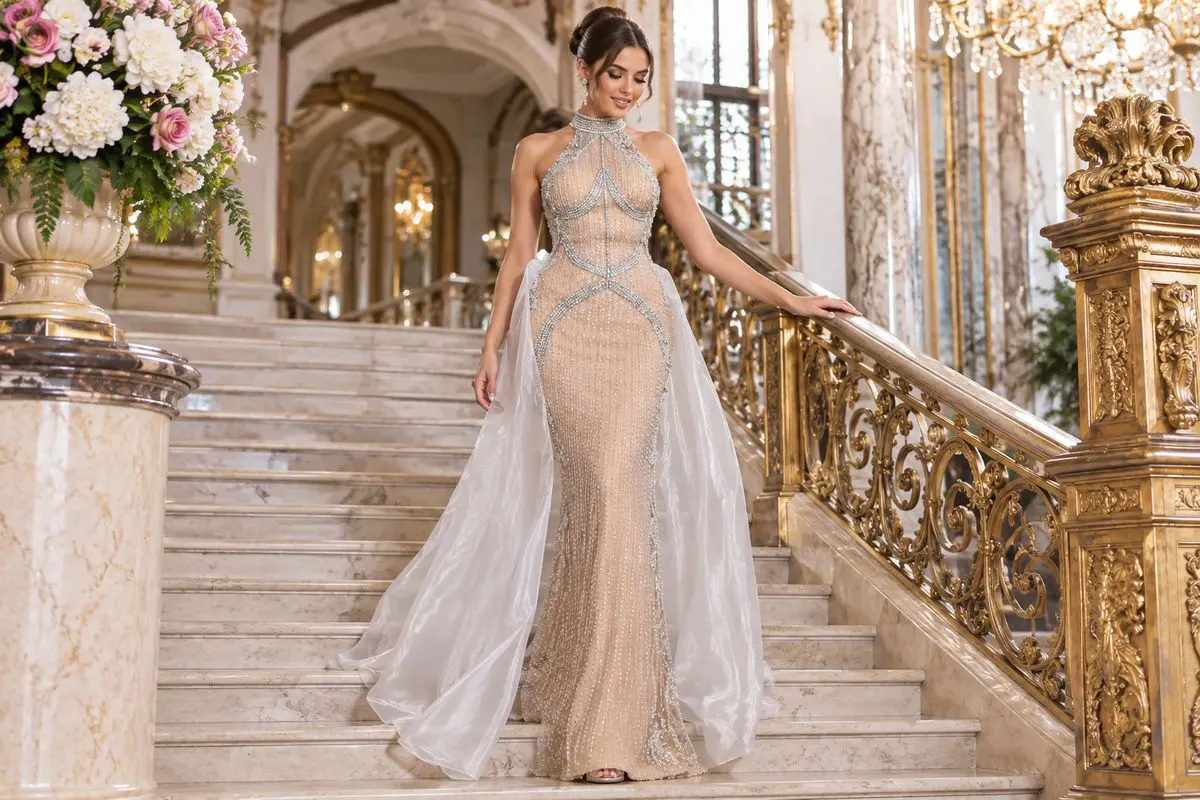
A sleek updo or high ponytail keeps a halter collar visible and reduces friction against the neckline. Jovani style 49005 is a nude-and-silver beaded sheath with a halter neck and overskirt. Its details are easier to appreciate when hair stays above the collar.
The same principle applies to halter evening gowns. Keep the hair secure enough that it does not slide across beadwork as you turn. A low bun can also work when it sits clear of the dress closure.
Strapless and Sweetheart Gowns
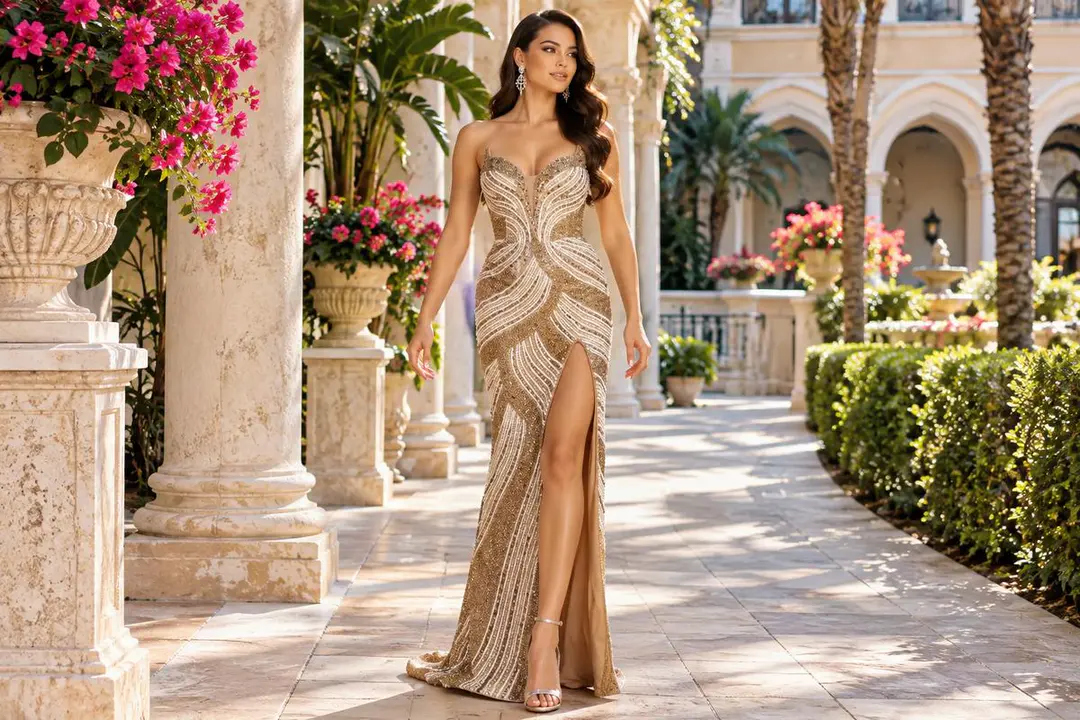
A strapless pageant gown gives you more freedom: choose side-swept waves, a half-up style, or a polished bun. Jovani style 49452 has a strapless sweetheart neckline, a fitted column shape, and linear beading. Waves can soften that clean outline without covering the bodice.
Compare the look from both sides. A hair section placed across the chest may conceal beading, while a controlled side part can preserve the same softness with a clearer view.
One-Shoulder and Off-the-Shoulder Designs
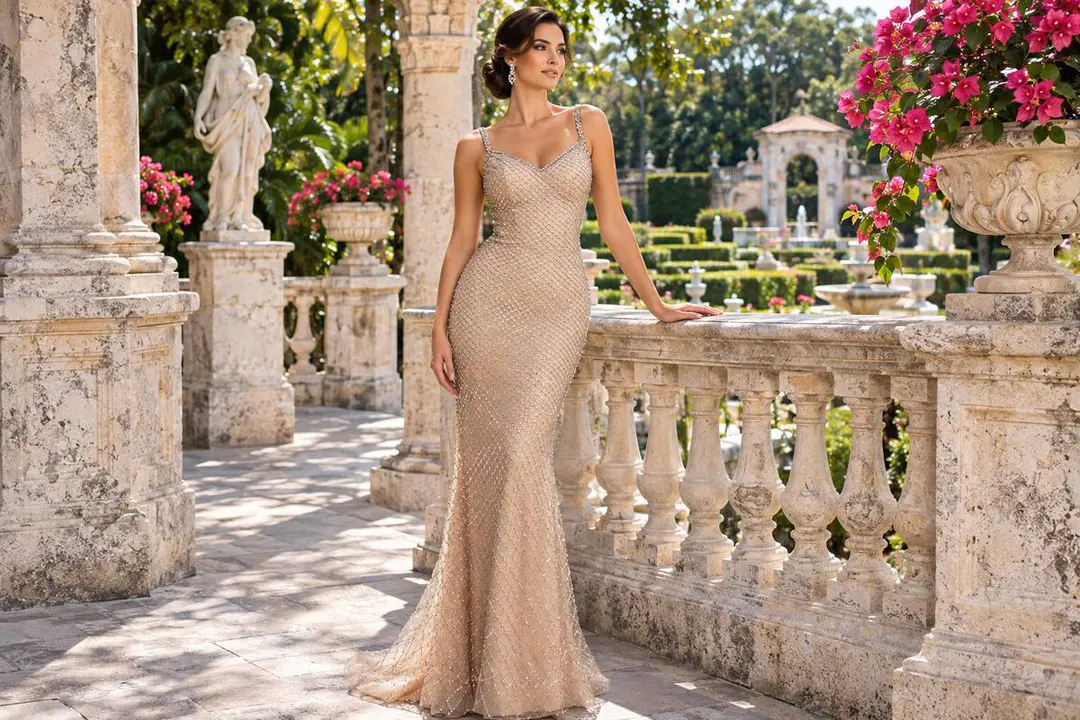
Move the bulk of your hair away from a statement shoulder. A side part, asymmetric low bun, or hair swept behind the opposite shoulder keeps the design readable. Jovani style 48137 uses beaded mesh, a sweetheart neckline, and an off-the-shoulder mermaid shape.
With mermaid formal gowns, also check the full silhouette in motion. Hair should support the long visual line rather than hide the neckline or compete with the skirt.
Pageant Hairstyle Ideas for Different Hair Lengths
Beautiful competition hair does not require extra length. The best result uses your natural texture and a shape you can maintain during the event.
Short Hair and Bobs
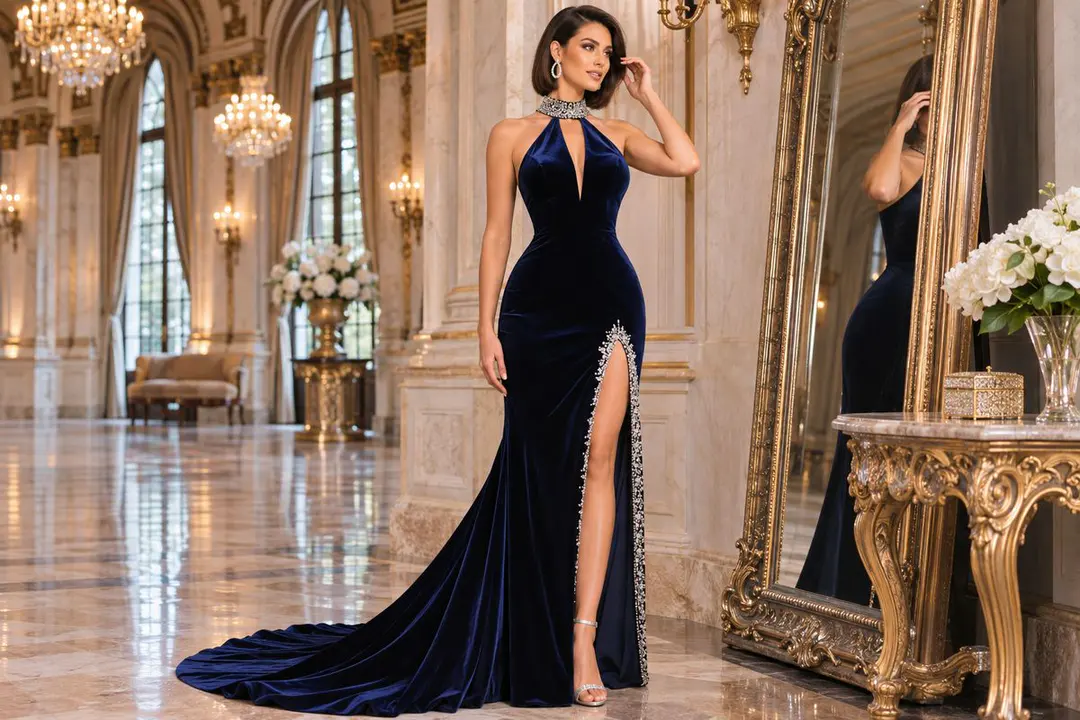
For pageant hairstyles for short hair, try a defined side part, smooth tucked sides, or a textured bob that stays off the face. A small accessory can add definition, but keep clips secure and away from dress straps. Practice a full turn to catch sections that move into your eyes.
Long Hair and Natural Texture
Long hair pageant hairstyles can include brushed waves, a low ponytail, or a half-up arrangement. For curls and coils, preserve their shape with products suited to your own texture. A pinned crown can keep volume while making the face visible. Extensions are optional, not a requirement for a polished result.
When Are Pageant Updos Better Than Wearing Hair Down?
Pageant updos are usually easier when the gown has a decorated collar, complex shoulder detail, or an open back you want to show. Wearing hair down works well with simpler necklines, provided it stays controlled during movement. For more general event pairings, Jovani’s formal gown hairstyle guide covers proportions beyond competition.
A beauty pageant updo does not need to be tight or severe. Try a low chignon with a soft part, or a textured bun secured at the nape. Use pins that match the hair and make sure no attachment scratches the gown.
The Stage Test: Make Your Hairstyle Last Through the Walk
Test pageant hairstyles while wearing the real gown, not just in a salon chair. Stage lights, quick turns, and garment changes expose problems that a mirror selfie may miss. Run through these checks before competition day:
- Walk the full routine, turn in both directions, and repeat a short speaking introduction.
- Check the front, side, and back in strong indoor light; record a short video from farther away.
- Raise your arms and touch the collar lightly to see whether hair catches on beading or fastenings.
- Use the same accessories and hair products you plan to wear on stage; note when the style loses shape.
If hair covers your face or slips onto a detailed shoulder, simplify the style. A secure result lets you focus on posture, timing, and the judges rather than making adjustments.
Plan Hair Changes Between Pageant Rounds
Your interview and evening gown may need different styling, but a complete reset is not always practical. A low ponytail can become a bun, and half-up waves can be secured into a simple updo. Use the exact changeover time in your event schedule to decide whether a switch is realistic.
Keep the look appropriate for each segment. The structured pageant interview dresses often work with hair that stays away from the face while you speak. For headshot-specific choices, Jovani’s pageant portrait styling guide covers what the camera sees up close.
Final Styling Details That Matter on Camera
The goal is controlled shape, not the greatest possible amount of hairspray. Test shine and flyaway control under bright light. Too many sparkling clips can compete with a beaded neckline, while a clean hairline can give a detailed dress room to stand out.
For a softer gown, gentle waves can provide enough texture. With structured evening gowns, a sleek finish creates a clear line. Jovani’s pageant dress trend guide explains how neckline and embellishment shape the overall presentation.
Review your pageant system’s rules, particularly for younger divisions. Choose a hairstyle that feels natural for the contestant and can be recreated reliably, rather than forcing an adult look onto a child.
Once you know how the gown and hair will work together, use Jovani’s authorized retailer locator to arrange a fitting and check the silhouette in person.
Frequently Asked Questions
Can you wear your hair down for a pageant?
Yes. Controlled waves or natural curls can work with an open neckline, especially when the hair stays away from the face and does not cover the gown. Test the placement during turns and walking.
Which pageant hairstyle works with a crown?
Choose a style with a stable top section, such as a smooth half-up look or a low bun. Ask how the crown will be secured, and test the placement with the actual headpiece when possible.
How early should you do a trial pageant hairstyle?
Schedule one full trial before the competition, with enough time to change the design or practice it again. Bring the dress, accessories, and event schedule so the test reflects the actual day.
Are easy pageant hairstyles acceptable for major competitions?
Yes. A secure ponytail, defined bob, or neat low bun can look polished on stage. Fit with the gown, movement, and the contestant’s confidence matter more than how many styling steps are involved.