
Couture vs Custom Dresses: How Fit, Design and Cost Differ
Couture describes a dress’s design and construction standard. Custom describes work created or changed for one person. A couture label does not guarantee an individually drafted pattern, and a custom commission is not automatically haute couture. A couture vs custom dress decision should start with fit, design control, and the services included.
Couture vs Custom Dress: What Actually Changes?
The main distinction is the purchase process, not how impressive the finished gown looks. A style from a couture dress collection (opens in new tab) already has an established design. A custom dressmaker may begin with your measurements and develop a design specifically for you.
- Couture collection dress: A designer-developed style offered in a defined range, sometimes with intricate finishing and limited production.
- Custom dress: A garment created or substantially adapted for one buyer, with the agreed changes documented before production.
- Altered dress: An existing garment adjusted by a tailor. Better fit alone does not make the original design a custom commission.
Haute couture has a more specific meaning connected to recognized fashion houses in France. The difference between haute couture and ready-to-wear (opens in new tab) is a separate question from whether an independent dressmaker can create your requested design.
How Do the Design and Fitting Processes Differ?
A collection gown lets you inspect an established silhouette before committing. A custom commission can offer greater involvement, but it also requires clear approvals and a realistic fitting schedule.
Selecting a designer couture style
With structured couture gowns (opens in new tab), study the internal bodice, neckline, and skirt before discussing alterations. Ask the retailer which details can change without disturbing the support or decoration. Changes to a beaded corset may involve more work than a simple hem.
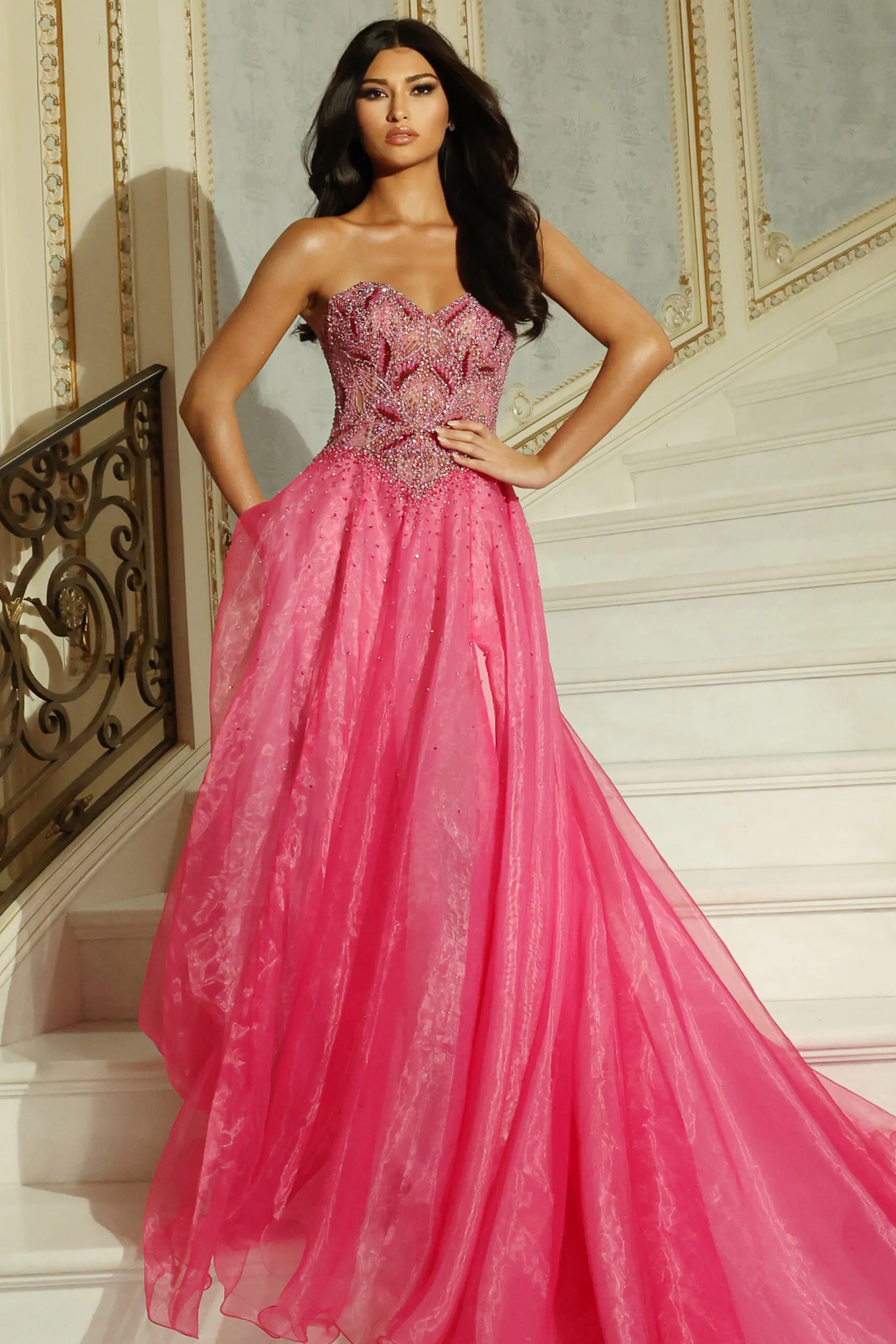
Jovani’s Beaded Bodice Gown With Flowing Organza Skirt has a fitted corset top, beaded embroidery, and a floor-length A-line silhouette. These details show what a buyer can evaluate in an existing design before requesting any alteration.
Commissioning a dress for one client
For a fully custom dress, the maker may start with a sketch, fabric samples, and individual measurements. The agreement should identify who approves the pattern, how many fittings are included, and what happens if a design detail changes.
Ask whether the dressmaker will create a new pattern or modify an existing one. Those approaches can produce different results, even when both are described as custom.
Which Option Gives You More Control Over Fit and Details?
Custom construction usually allows more decisions before the garment is sewn. A couture collection style offers a known silhouette with alterations limited by its seams, fabric, and internal structure. Neither route guarantees a better fit without careful measurements and fittings.
For example, many couture evening gowns (opens in new tab) include beading or layered materials that influence where a seam can move. Ask the boutique to identify alteration boundaries before ordering. A trained specialist can explain which changes preserve the original design.
Brides have a related but narrower decision because trains, veils, and ceremony fittings add requirements. Jovani’s guide to bridal couture and custom design (opens in new tab) addresses those wedding-specific considerations. This comparison focuses on formal dresses across occasions.
What Are You Paying for With Couture or Custom?
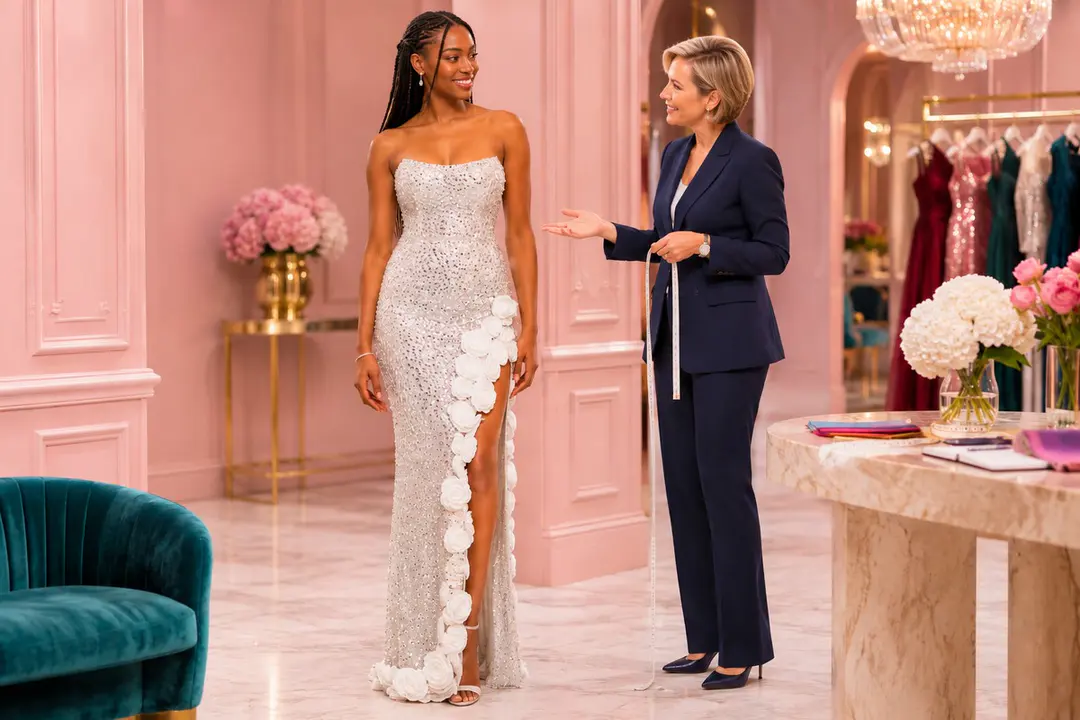
For a couture collection style, the quoted price reflects the established design and materials used in that garment. A custom quote may also include sketching, pattern work, fittings, and revisions. Compare the complete service rather than the label.
A buyer considering formal gowns (opens in new tab) should request written details about size availability, alterations, deposits, and final delivery. A lower starting quote is not necessarily the lower final cost if major adjustments are excluded.
Construction also matters after the event. Jovani’s guide to assessing gown construction (opens in new tab) explains details worth inspecting, including seam allowances and the interior finish. Those qualities can be useful in either a collection dress or a custom garment.
Should You Choose a Couture Collection Dress or Custom Work?
Choose an established couture design when you like the existing silhouette, can try a sample, and want clearer visual evidence of the result. Consider a custom commission when a specific cut or combination of features is unavailable and your schedule supports development fittings.
If a neckline is your deciding factor, compare available one-shoulder couture dresses (opens in new tab) before commissioning a new pattern. Trying an existing shape can reveal whether you need a different design or only a small alteration.
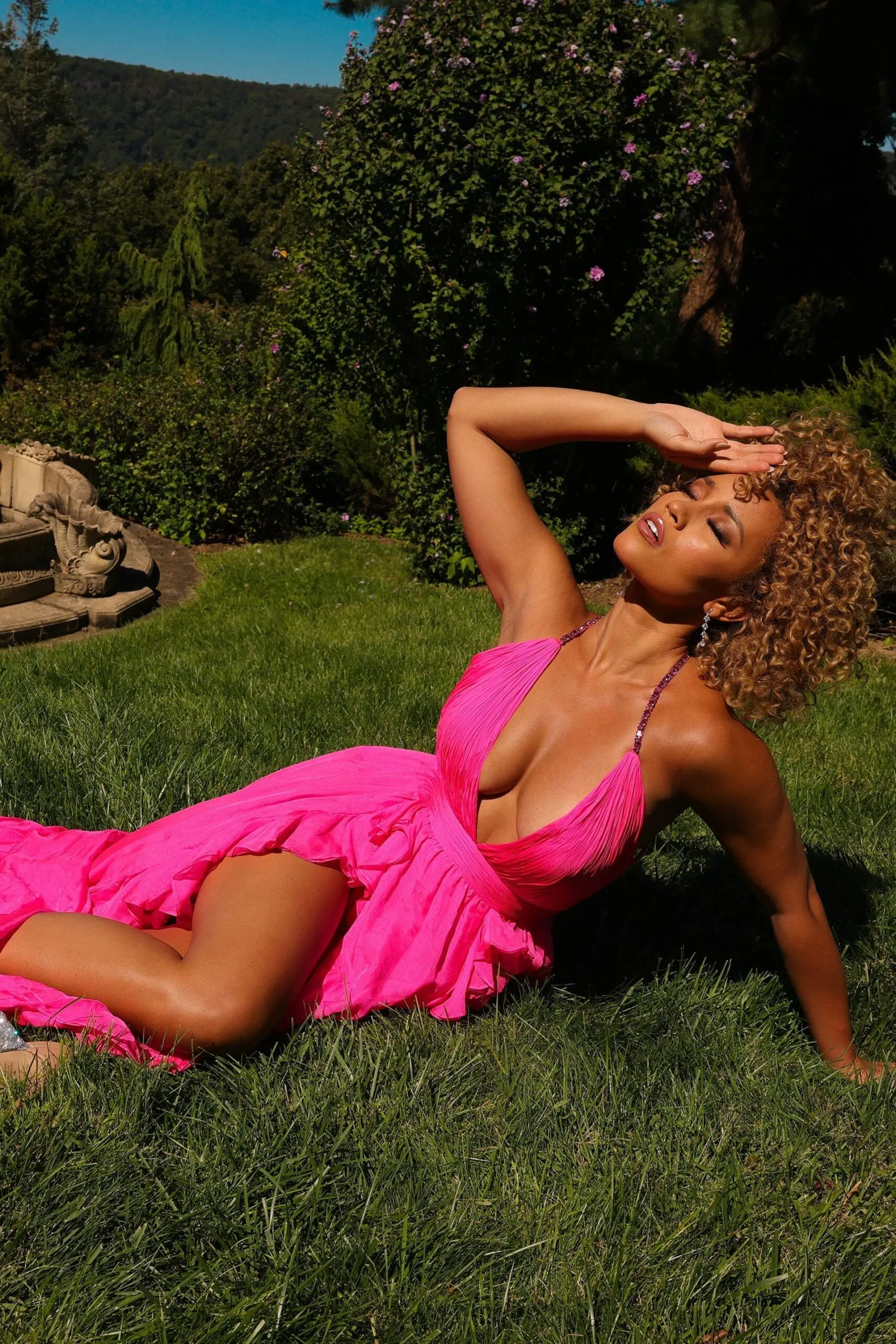
Jovani’s Hot Pink Silk Chiffon Maxi Couture Gown has silk chiffon, a pleated finish, and a floor-length silhouette with a high slit. Its published details make the fabric and movement easier to assess before deciding whether a custom alternative is necessary.
What Should You Ask Before Paying a Deposit?
Request answers in writing so the production method, included services, and approval points are clear. These questions matter more than whether the invoice uses the word couture.
- Is this an existing design, an adjusted pattern, or a new design?
- Which measurements and fitting appointments are included?
- Can the fabric, color, neckline, and length change?
- What happens if the first fitting reveals a major issue?
- What is the final price, and what are the cancellation terms?
For a commission, ask to see examples of comparable completed work. For a collection style, inspect an actual dress and confirm the specific color and size through an authorized retailer.
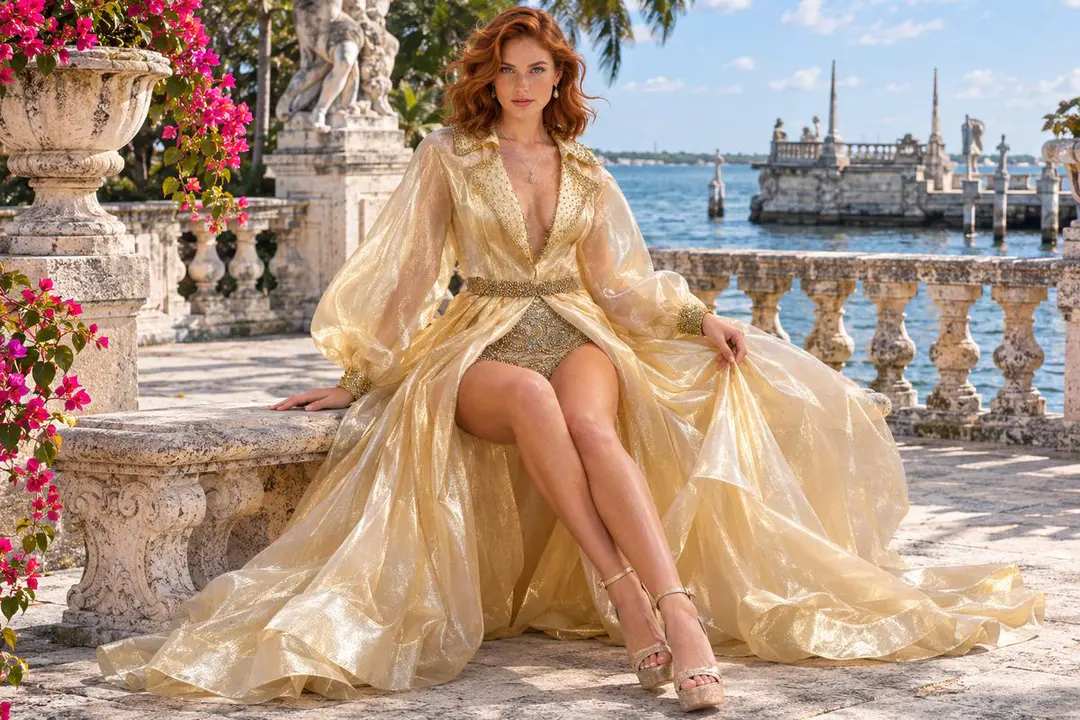
Plan Alterations Without Confusing Them With Custom Design
An alteration changes a completed or established garment. Custom design starts earlier, when individual design or pattern choices shape the garment itself. A tailored couture dress may fit beautifully without being a one-off commission.
Ask the specialist to check movement, sitting comfort, hem clearance, and the fastening before approving the final fit. Confirm the delivery and alteration schedule with the retailer rather than relying on a generic timeline.
To compare Jovani styles in person and discuss available sizing or alterations, use the official store locator (opens in new tab) to contact an authorized retailer.
Frequently Asked Questions
Is a custom dress always more expensive than couture?
No. Cost depends on the materials, pattern work, construction, and fittings included. Request an itemized total for both options before comparing.
Does a custom dress have to be sewn entirely by hand?
No. Custom describes how the garment is developed for the client. Hand sewing and machine construction may both appear in the finished dress.
Can a couture collection gown be altered after purchase?
Yes, many collection gowns can be altered. The safe range of changes depends on the fabric, beadwork, seams, and internal support.
Is made-to-measure the same as custom design?
No. Made-to-measure may adapt an existing pattern to measurements. Custom design can involve original choices about the garment’s pattern or appearance. Ask the maker to define the service.