
The fashion industry is governed by a highly specific, historically rich lexicon that is frequently misunderstood or misapplied by the general public. Walk into any high-end boutique or scroll through luxury fashion retailers online, and you will inevitably encounter words that carry immense weight in the design world. Among the most widely circulated and consistently misused terms is “couture.” In contemporary marketing, the word is often slapped onto everything from mass-produced t-shirts to fast-fashion prom dresses as a linguistic shortcut for “expensive” or “fashionable.” However, in the strict, traditional sense of the word, this usage is entirely incorrect. When searching for the perfect couture evening gown, many shoppers incorrectly assume they are simply looking for a high-quality designer dress off the rack, completely unaware of the rigid, legally binding definitions that separate true high fashion from standardized retail production.
To navigate the luxury fashion landscape with confidence, especially when investing in formalwear for a significant event, it is crucial to understand the fundamental dichotomy of the fashion production system. This system is divided into two primary pillars: Haute Couture (custom, hand-crafted high fashion) and Prêt-à-Porter (ready-to-wear). Understanding the profound differences between these two methodologies—in terms of construction, legal definition, accessibility, and craftsmanship—will transform the way you view garment construction, allowing you to appreciate the artistry behind the garments you choose to wear to your most important life events.
The True, Legal Definition of Haute Couture
To understand the misuse of the word, we must first look to its origins. The term “Haute Couture” is French, translating literally to “high sewing” or “high dressmaking.” Unlike in the United States or the United Kingdom, where the term can be freely used as a marketing buzzword, in France, “Haute Couture” is a legally protected designation. It is fiercely guarded by the French Ministry of Industry and regulated by the Fédération de la Haute Couture et de la Mode (formerly the Chambre Syndicale de la Haute Couture), a governing body originally established in 1868.
The Strict Requirements of the Syndicate
A fashion house cannot simply declare its clothing to be haute couture. To earn the right to use this designation, a brand (referred to as a Maison) must undergo a rigorous evaluation process and adhere to a strict set of rules updated in 1945. These rules mandate that the design house must create made-to-order garments for private clients, requiring one or more fittings. The house must maintain a workshop (atelier) in Paris that employs at least fifteen full-time staff members. Furthermore, the atelier must employ at least twenty full-time technical workers. Finally, the house must present a collection of at least fifty original designs—comprising both day and evening garments—to the public every fashion season (twice a year, in January and July).
The Two Ateliers: Flou and Tailleur
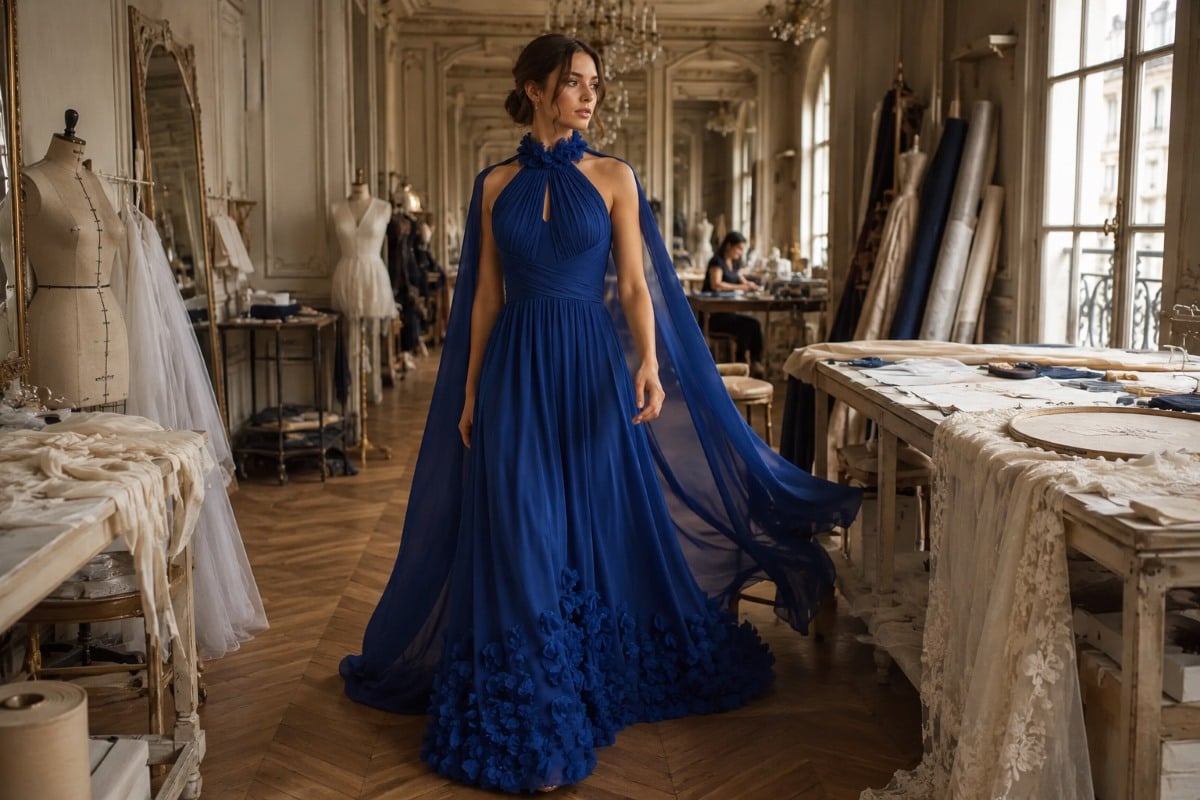
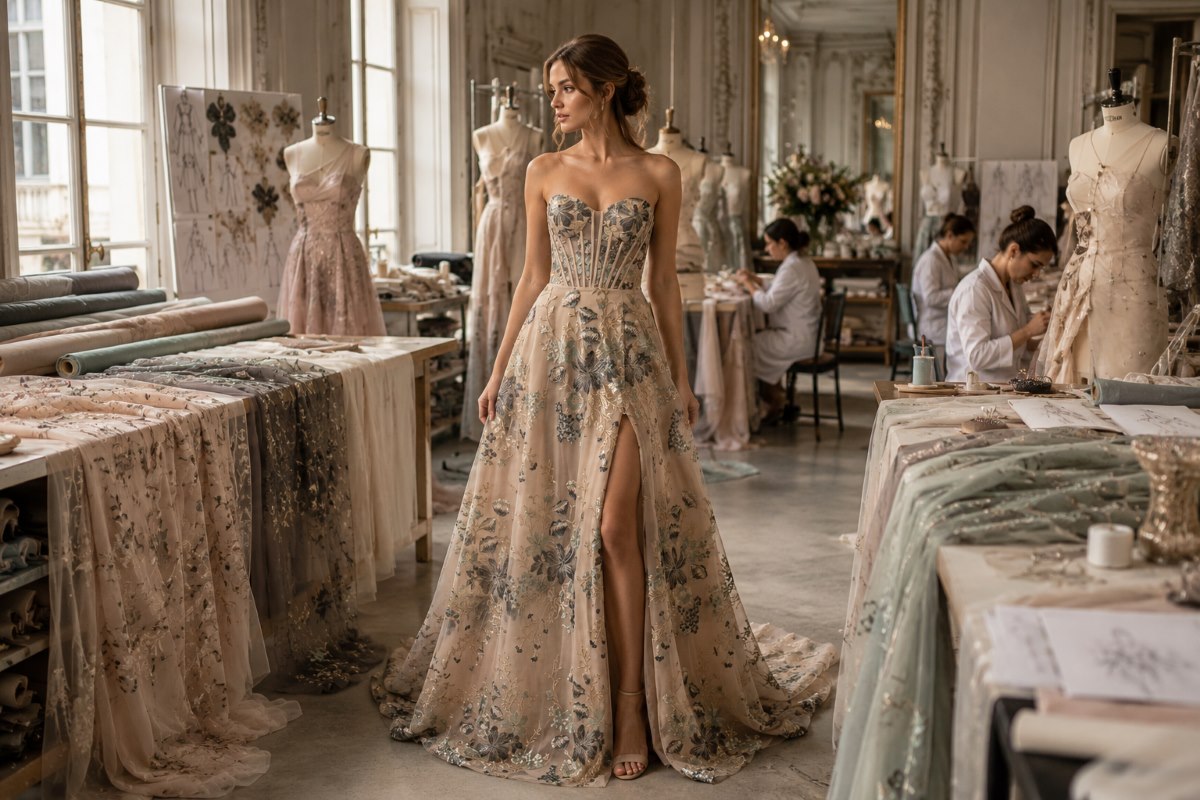
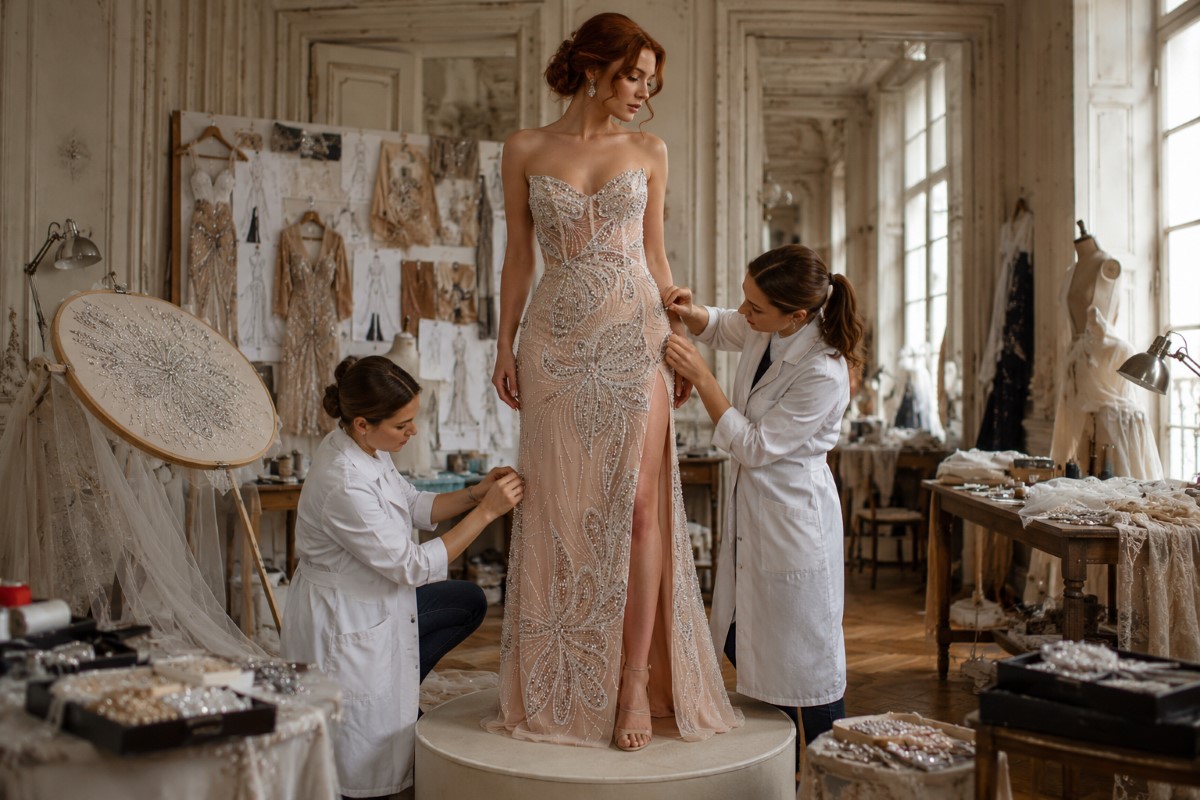
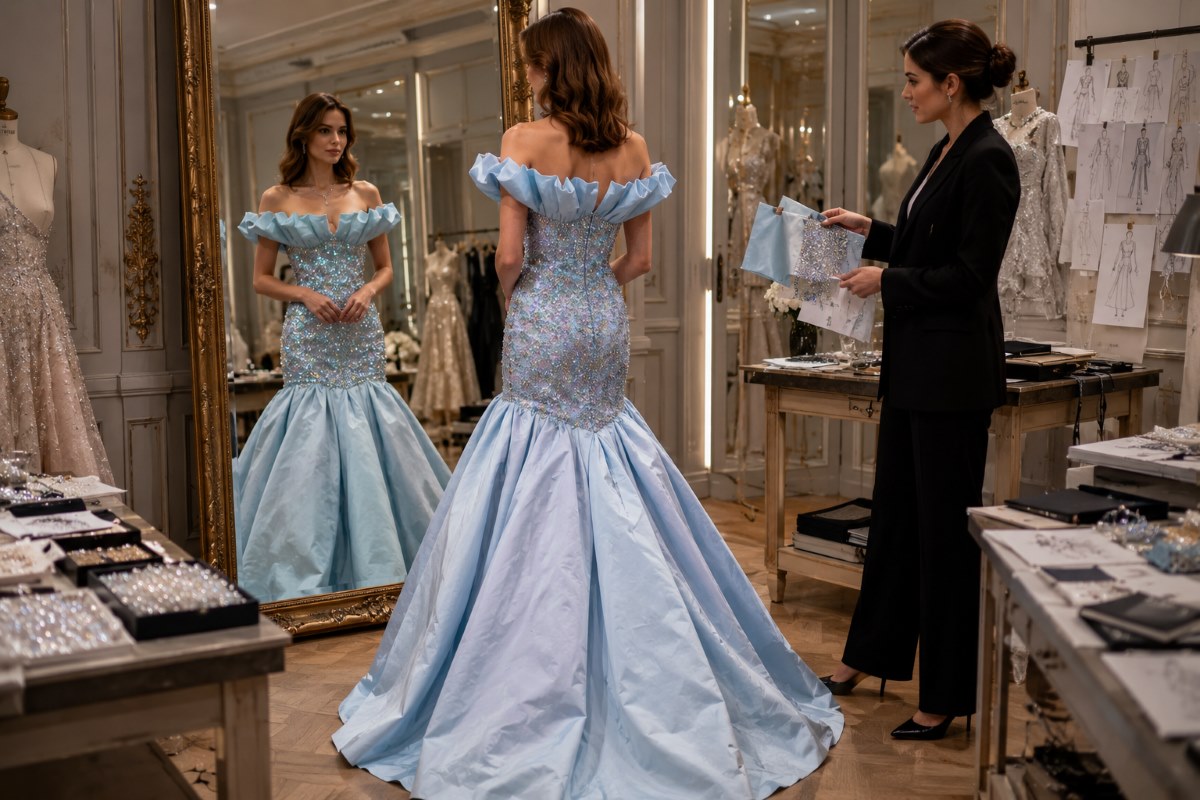
Inside a genuine Parisian couture house, the work is strictly divided into two distinct workshops. The atelier tailleur handles the tailoring—the structured, architectural garments like suits, coats, and heavy jackets. The atelier flou (the “soft” workshop) is responsible for the fluid, draping garments. This is where a breathtaking couture evening gown is born. The artisans in the atelier flou work with delicate silks, chiffons, tulles, and organzas, manipulating the fabric on dress forms to create sweeping, romantic silhouettes. The specialization is so intense that a worker in the tailleur workshop would rarely, if ever, cross over to work on soft, flowing couture gowns, and vice versa.
The “Petites Mains” and Master Craftsmanship
The true magic of this art form lies in the hands of the petites mains (literally “little hands”). These are the highly skilled seamstresses and artisans who execute the designer’s vision. A single, intricately embroidered couture evening gown can require upwards of eight hundred hours of continuous hand labor to complete. Every single aspect of the garment is done by hand. The seams are hand-stitched, the hems are hand-rolled, and the intricate beadwork is applied using a specialized tambour embroidery technique, bead by individual bead. This is precisely why genuine beaded formal dresses require such an extraordinary time commitment. There are no industrial sewing machines rapidly churning out seams; the process is a painstaking dedication to perfection.
Understanding Ready-to-Wear
If Haute Couture represents the inaccessible pinnacle of fashion artistry, Ready-to-Wear (Prêt-à-Porter) is the engine that drives the global fashion economy. The concept of ready-to-wear emerged prominently in the post-World War II era, rapidly expanding in the 1960s when visionary designers like Yves Saint Laurent realized that relying solely on a few dozen wealthy private clients was not a sustainable business model. They sought to democratize fashion, bringing high-end design to a broader audience.
The Core Concept of Prêt-à-Porter
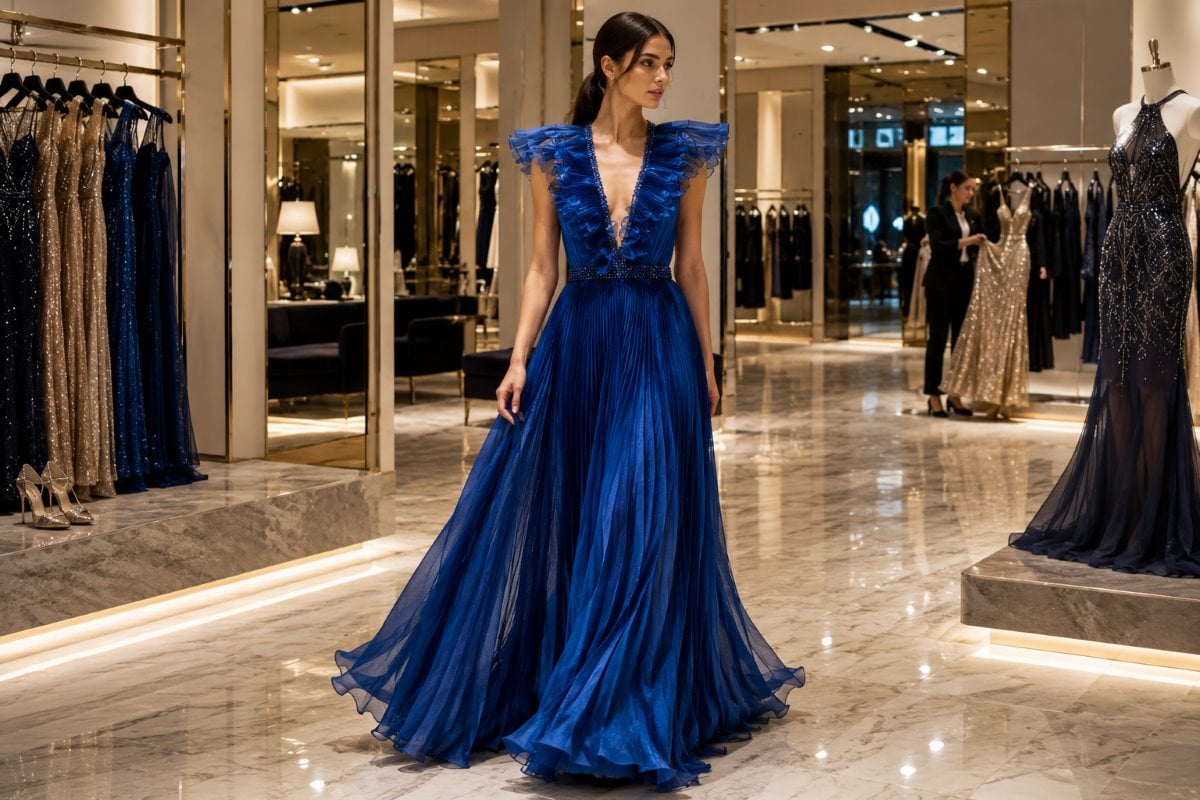
Ready-to-wear is exactly what the name implies: clothing that is manufactured in standard sizes (such as size 2, 4, 6, 8) and is ready to be worn immediately after purchase, with only minor alterations required by the customer. Unlike custom garments, these pieces are not made to fit one specific individual’s unique body shape. Instead, they are designed using a standardized sizing block—a mathematical average of body proportions.
The Spectrum of Ready-to-Wear Quality
It is incredibly important to note that “ready-to-wear” is not synonymous with low quality or fast fashion. The prêt-à-porter category spans a massive spectrum. At the lower end, you have fast fashion: garments produced by the thousands in overseas factories using cheap, synthetic materials and exploitative labor practices to ensure the lowest possible retail price. At the high end, you have luxury designer ready-to-wear. Major global fashion houses—the same ones that show in Paris—produce luxury ready-to-wear lines. These garments utilize magnificent fabrics, excellent factory tailoring, and sophisticated design, but they are still produced in multiples and sized according to a standardized chart. If you are comparing luxury vs simple evening dresses, the elevated construction quality of designer ready-to-wear immediately sets it apart. When you purchase a stunning garment from a high-end department store or a luxury brand’s boutique, you are purchasing luxury ready-to-wear.
The Fundamental Differences: A Side-by-Side Analysis
To truly grasp the distinction between these two realms of the fashion industry, we must break down the differences across four critical categories: sizing, construction, exclusivity, and economics.
1. Sizing and The Fitting Process
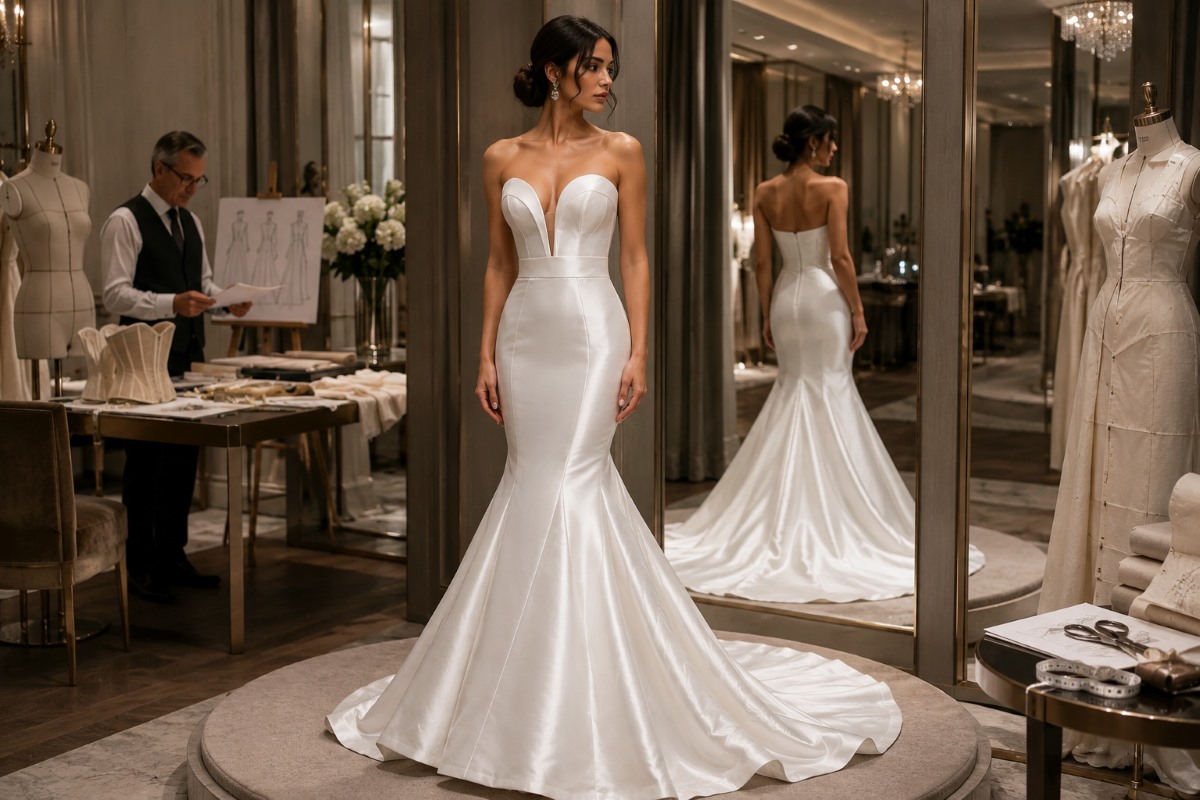
The most glaring difference lies in the fit. When a client commissions a custom piece in Paris, the house takes dozens of precise measurements. They then create a wooden dress form—a literal body double of the client—padded to match their exact posture, shoulder slope, and asymmetry. The dress is built on this dummy. The client will fly in for a “toile” fitting (a prototype made of cheap cotton muslin) to check the architecture of the dress, followed by several more fittings in the actual fabric before the dress is finalized. Conversely, a ready-to-wear dress relies on the customer fitting into a pre-determined mold. If a woman’s proportions deviate from the standard size chart—perhaps she has a larger bust but narrow hips—she must purchase the size that accommodates her largest measurement and hire a local tailor to take in the rest of the garment.
2. Internal Construction and Technique
The structural foundation of a couture evening gown is built from the inside out, utilizing internal corsetry, hand-basted interfacings, and meticulously hidden seams that ensure the dress moves beautifully with the body without losing its shape. The inside of a true custom gown is often as beautiful and cleanly finished as the outside. In ready-to-wear, even at the luxury level, time is money. Factories rely on modern technology to speed up production. Seams are finished using serger machines, invisible zippers are inserted using specialized presser feet, and internal structures are often fused using heat rather than hand-stitched. While high-quality ready-to-wear is highly durable and beautifully constructed, it fundamentally relies on machine assistance.
3. Exclusivity and Rarity
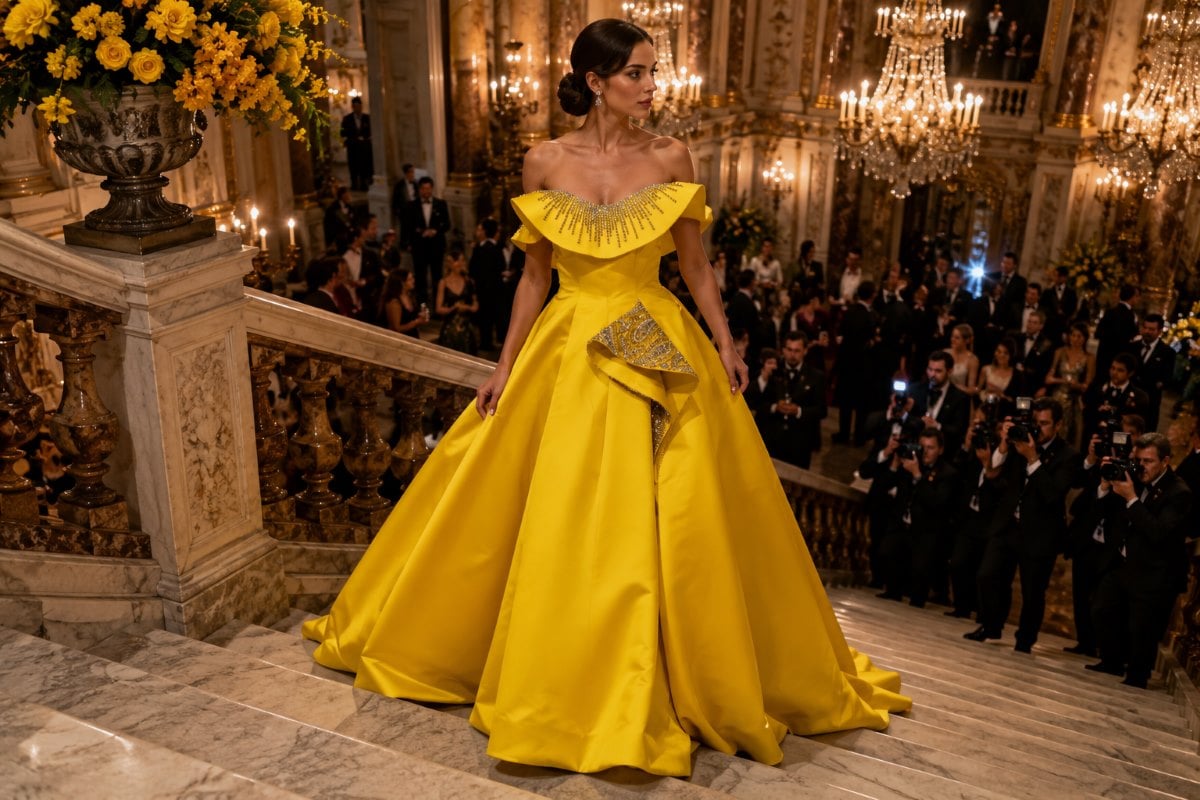
True Parisian custom fashion guarantees unparalleled exclusivity. Many houses have unwritten rules that they will only sell one specific design to one client per continent, ensuring that a client will never suffer the embarrassment of arriving at a royal gala or a major red carpet event wearing the exact same dress as another guest. Ready-to-wear, by its very nature, is produced in multiples. A luxury brand might produce fifty iterations of a specific gown and distribute them to boutiques worldwide. While it is still rare compared to fast fashion, the possibility of encountering someone in the same dress exists.
4. The Economics and Price Point
The financial disparity between the two systems is staggering. Because of the astronomical amount of highly skilled human labor involved, a custom Parisian day suit might start at thirty thousand dollars, while a heavily embroidered custom ballgown can easily exceed two hundred thousand dollars. These astronomical prices are the reality of paying for hundreds of hours of expert artisan labor in a major European capital. In stark contrast, a magnificent luxury ready-to-wear gown from a top-tier designer might cost anywhere from one thousand to ten thousand dollars. While still a significant investment, ready-to-wear benefits from economies of scale. By producing multiple garments from the same pattern and utilizing machine assistance, brands can offer extraordinary designs at a fraction of the custom price.
The Middle Ground: Demi-Couture and Made-to-Order
As the fashion industry has evolved, a gray area has emerged between the strict regulations of Paris and standard off-the-rack sizing. This space is often referred to as “demi-couture” or high-end made-to-order. In this model, a designer presents a collection, but instead of producing the dresses in bulk for retail stores, they only produce a dress when a customer places an order.
The customer can often request minor modifications—such as raising a neckline, adding sleeves, or changing the color of the fabric. The garment is then constructed using a mix of machine sewing for the main seams and hand-finishing for the delicate details. While this process does not meet the legal French definition of Haute Couture, it offers a highly personalized, luxurious experience that bridges the gap between mass production and full custom design.
Choosing the Right Option for Your Event
For the vast majority of consumers, true Parisian custom clothing is neither financially feasible nor practically necessary. The evolution of luxury ready-to-wear has reached such phenomenal heights that you can secure a breathtaking, red-carpet-worthy look without the six-month waitlist and the six-figure price tag.
If you are attending a highly prestigious event—such as a major charity gala, a sophisticated black-tie wedding, or competing in a high-level pageant—your primary goal should be securing a garment that features superior fabric quality and impeccable tailoring. Exploring dedicated collections of formal gowns from established design houses provides access to luxurious silks, rich velvets, and complex beadwork. When making your selection, pay close attention to the fit. Purchasing a high-quality ready-to-wear gown and allocating a portion of your budget to a highly skilled local tailor to perfect the hem and take in the waist will result in a look that closely mimics the bespoke fit of custom garments.
The Jovani Approach: Bringing High-Fashion to You
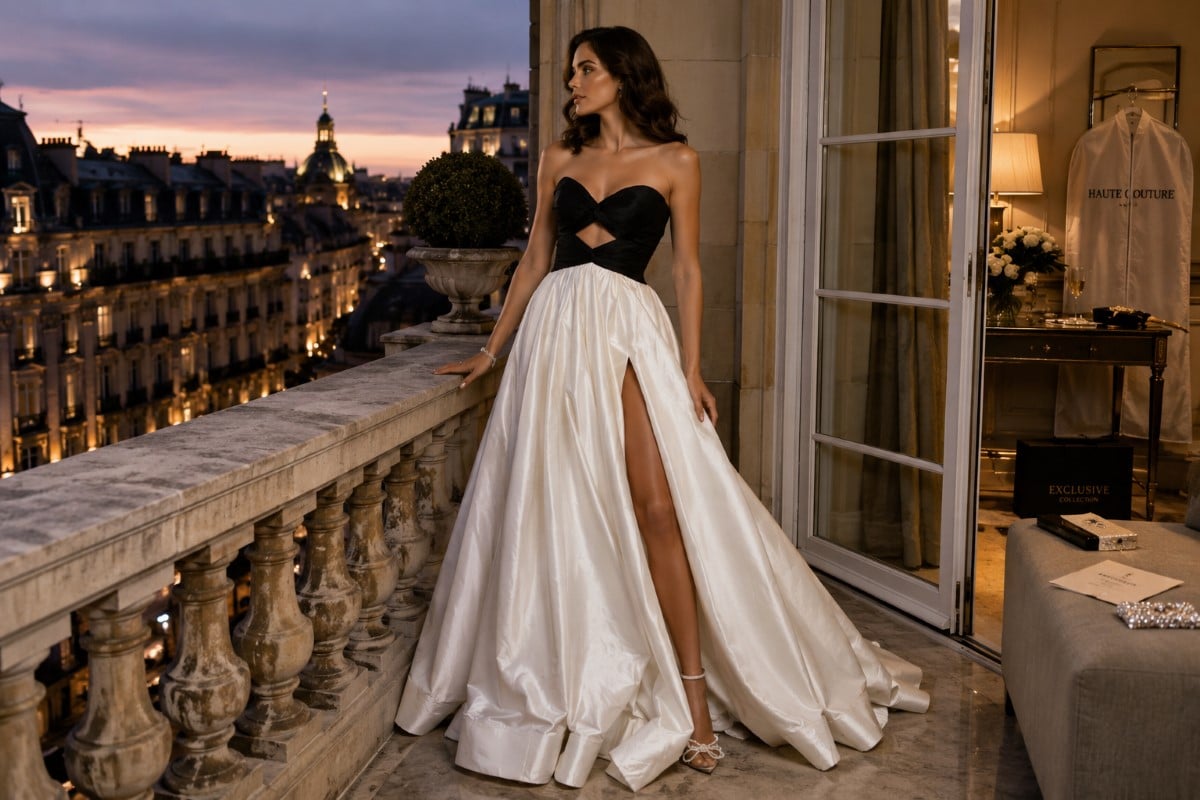
Jovani understands that the modern woman desires the aesthetic brilliance and intricate detailing of the Paris runways, combined with the accessibility and reliable sizing of luxury ready-to-wear. By studying high-fashion techniques and sourcing premium materials from around the globe, Jovani bridges the gap between the runway and your wardrobe.
When you explore Jovani’s extensive line of couture dresses, you are not simply looking at standard retail garments; you are looking at ready-to-wear masterpieces inspired by the highest echelons of fashion design. Jovani utilizes advanced construction techniques, including built-in corsetry for flawless support, meticulously graded patterns for exceptional fit across all sizes, and intensive hand-applied embellishments. Whether you are seeking a sleek, minimalist crepe design or diving into the spectacular world of beaded evening dresses featuring thousands of light-catching crystals, the focus remains on premium quality.
Every woman deserves to feel as though she is wearing a meticulously crafted couture evening gown, without the necessity of flying to Paris for six fittings. This philosophy extends beyond adult formalwear; the same dedication to quality construction and trend-setting design is evident in their collections of luxury prom dresses, ensuring that younger generations can also experience the transformative power of a brilliantly engineered garment. If you are struggling to decide between a highly embellished look and a more understated aesthetic, comparing different styles carefully can help clarify your personal style for your upcoming event.
Couture evening gown FAQs
Is a custom-made dress from a local tailor considered haute couture?
No. While a dress made by a local seamstress or tailor is “custom” or “bespoke,” it cannot legally or technically be called haute couture unless it is produced by an accredited design house in Paris that meets all the strict regulations of the Fédération de la Haute Couture et de la Mode.
What is the average price of a couture evening gown?
True Parisian custom gowns are staggeringly expensive. A relatively simple day dress might start at $20,000 to $30,000, while a heavily beaded or complex evening gown can easily range from $100,000 to over $300,000, depending on the materials and the hundreds of hours of hand labor required.
Why are some ready-to-wear dresses so expensive?
Luxury ready-to-wear commands higher prices because of the quality of the raw materials (such as pure silk, French lace, and high-grade crystals), the complexity of the design, the ethical manufacturing processes, and the brand’s heritage. You are paying for superior design and longevity, even if the dress is produced in standard sizes.
Can I alter a ready-to-wear dress to look custom?
Absolutely. The secret to making ready-to-wear look incredibly expensive and custom-made is highly skilled tailoring. Buying a dress that fits your largest measurement perfectly and having a professional tailor nip in the waist, adjust the straps, and perfect the hemline will give you a flawless, bespoke silhouette.
What does Prêt-à-Porter mean?
Prêt-à-Porter is the French term for “ready-to-wear.” It refers to designer clothing sold in standardized sizes and finished conditions, ready to be worn directly from the store rack, in contrast to custom-made garments.
The Evolution of Elegance
The distinction between the legally protected, hand-crafted world of Parisian high fashion and the democratized, standardized world of ready-to-wear is a fascinating study in the evolution of art and commerce. While true Haute Couture remains a rarified art form accessible only to a select few, the trickle-down effect of these high-fashion techniques has dramatically elevated the quality of global fashion. By understanding what “couture” actually means, you gain a deeper appreciation for the meticulous construction, premium fabrics, and design ingenuity that go into creating luxury ready-to-wear, allowing you to select garments that truly honor the significance of your most memorable occasions.