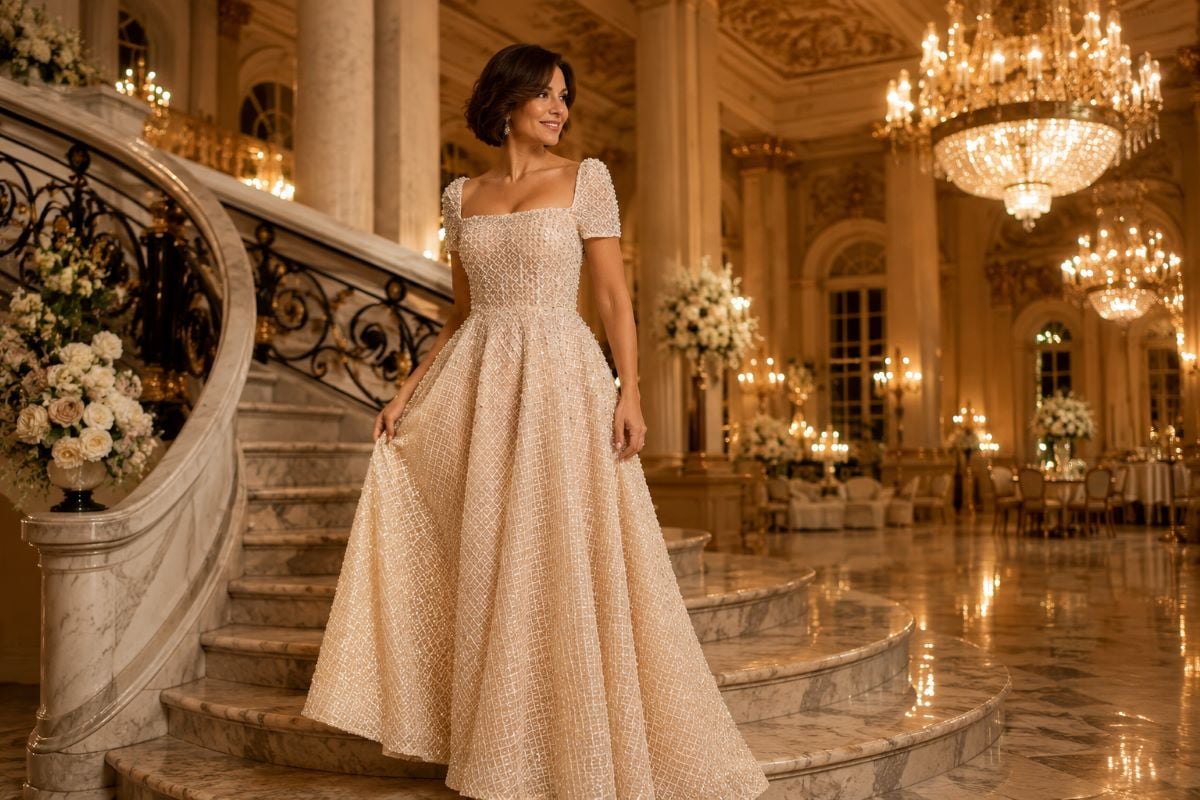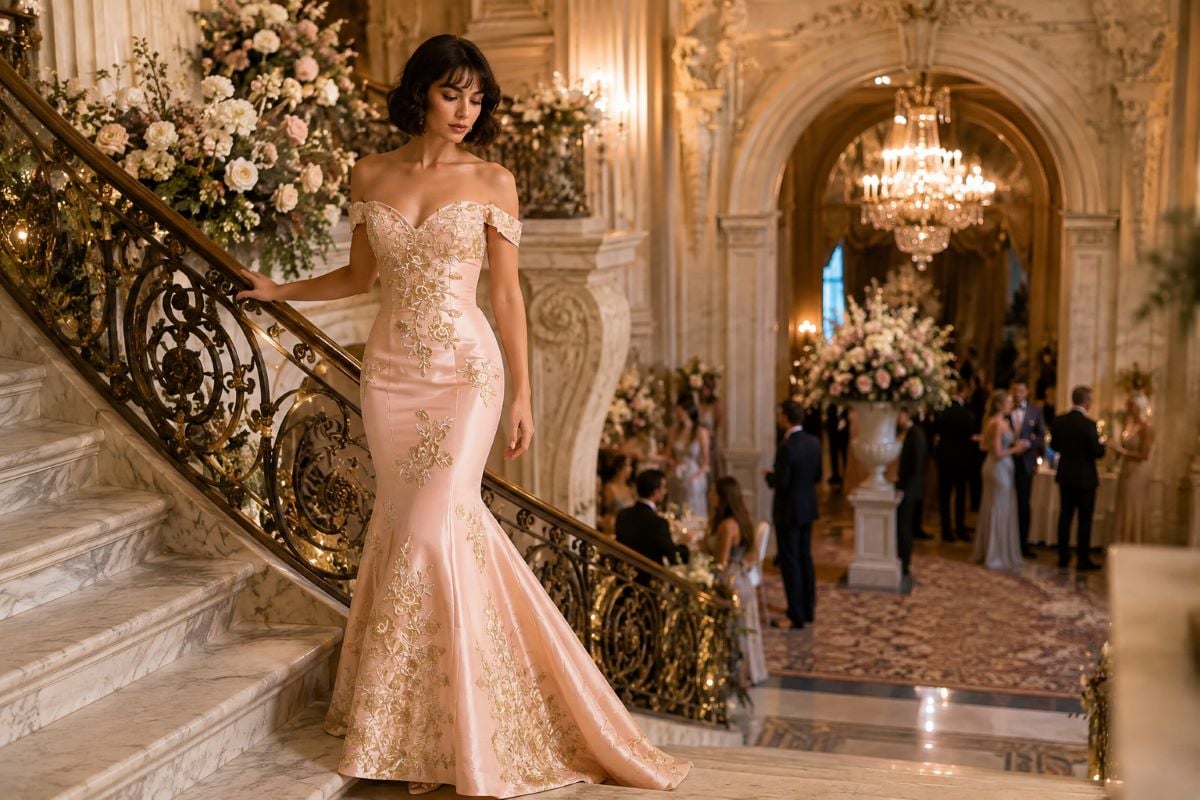

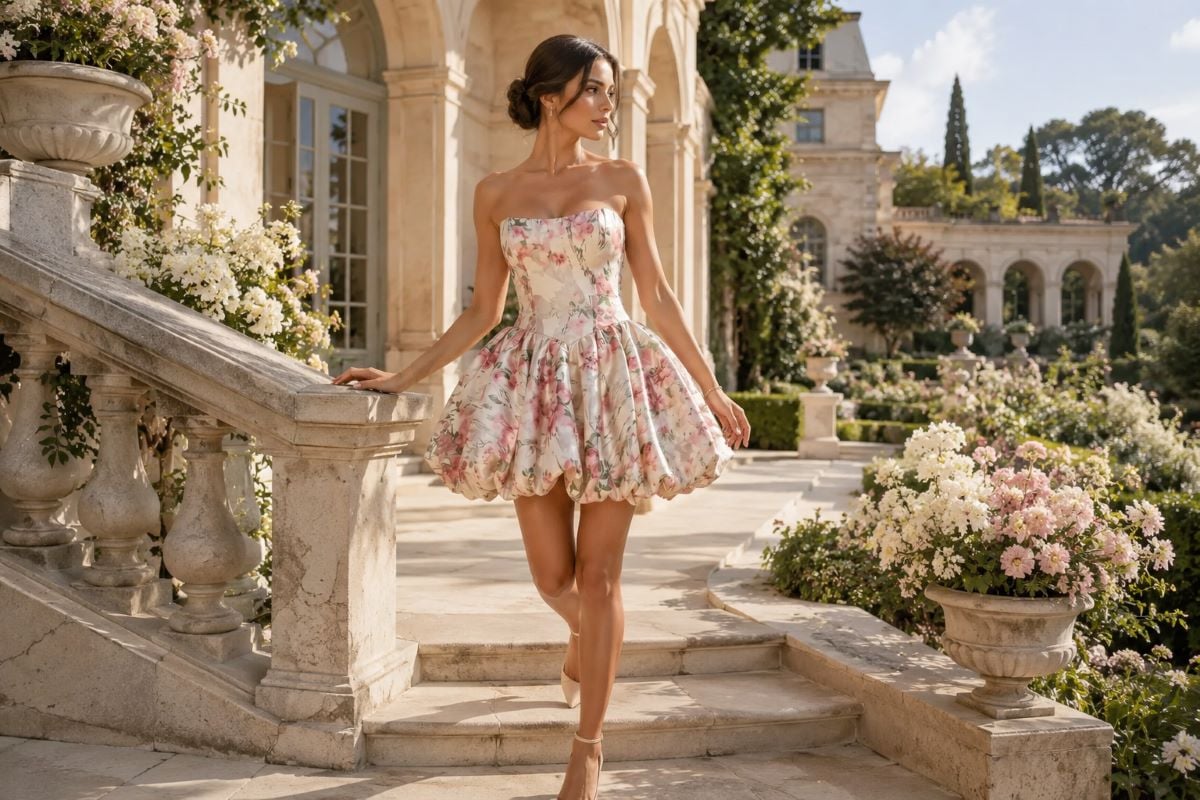
Quick answer: In standard dictionary usage, a fit-and-flare garment is fitted through the waist and flares at or below the hips. Retail labels are sometimes used more broadly for dresses with a close-fitting upper section and a visibly wider skirt, so inspect the actual transition point rather than treating a visible natural-waist seam as mandatory.
The silhouette combines a defined bodice with room to walk, sit, and dance. However, the label alone cannot tell you whether a dress will fit well, feel comfortable, or match an invitation. Use this guide to compare fit-and-flare cocktail dresses by proportion, fabric, construction, length, and dress code rather than assuming every style behaves the same way.
What Does Fit-and-Flare Mean?
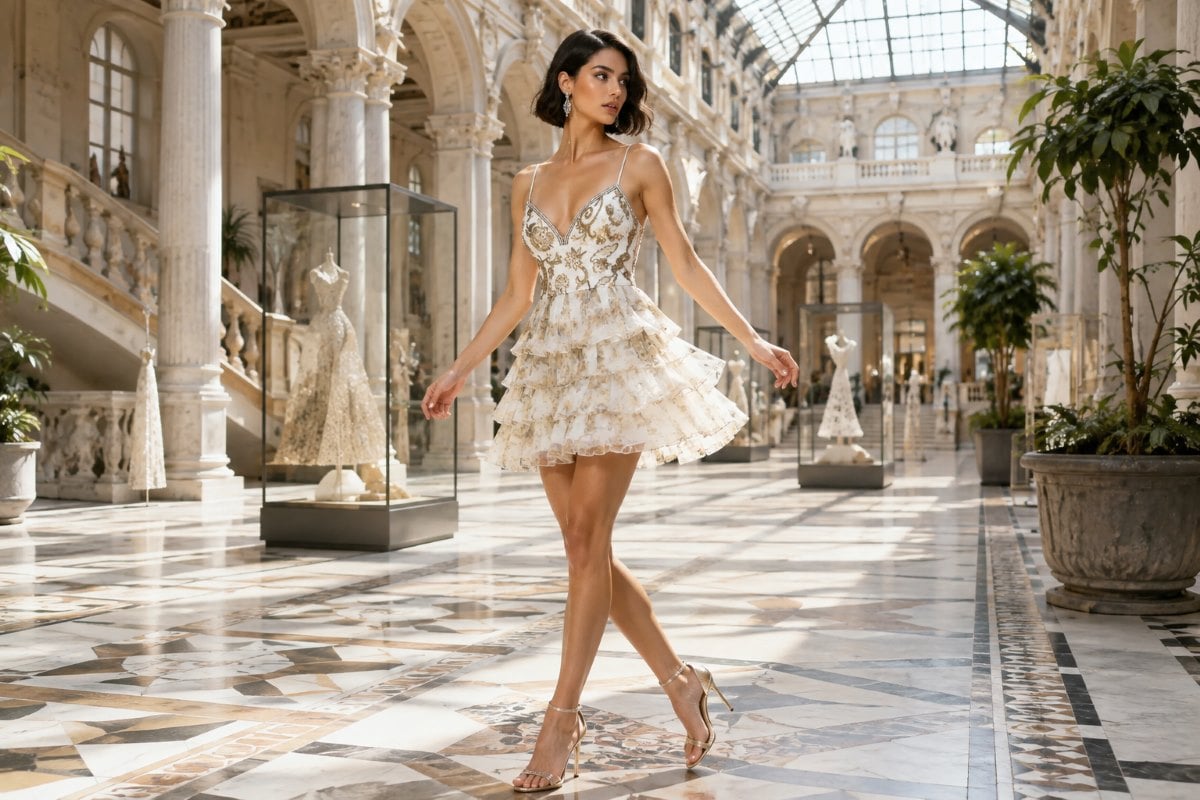
In the broadest sense, a fit-and-flare dress has two visual zones: a closer-fitting upper section and a skirt that opens away from the body. The transition may occur at the natural waist, near the high hip, or slightly lower, depending on the design. Product labels may also overlap with A-line. The skirt may be circular, pleated, gathered, paneled, layered, or supported by an underskirt.
Shopping terminology is not perfectly standardized. One brand may call a dress fit-and-flare because it has a clear waist seam and full skirt, while another may use the same term for a shaped A-line dress that widens gradually. Product tags can also use both labels at once. Instead of relying on the name, inspect where the garment stays close, where it begins to widen, how much volume the skirt has, and whether the product description mentions internal structure or stretch. Where the cocktail category itself begins and ends is covered in our guide to what makes a dress a cocktail dress.
Fit-and-Flare vs. A-Line, Skater, and Sheath Dresses
These categories overlap, but standard definitions provide a useful baseline. Merriam-Webster describes an A-line garment as close-fitting at the top and flared at the bottom. Retail descriptions may still apply more than one label to the same dress, so treat the table as a shopping guide rather than a rigid construction standard.
| Silhouette | Typical shape | What to inspect | Common effect |
|---|---|---|---|
| Fit-and-flare | Closer through the bodice or torso, then visibly wider through the skirt | Transition point, waist placement, skirt volume, and internal support | Defined upper shape with movement below |
| A-line | Gradually widens toward the hem | Whether the waist is strongly shaped or the line remains continuous | Cleaner triangular outline with variable fullness |
| Skater | Fitted upper section with a short, often circle-like skirt | Hem length, fullness, fabric weight, and how much the skirt lifts in motion | Compact, energetic movement |
| Sheath or bodycon | Stays relatively close through the hips and upper legs | Stretch, lining, seam tension, slit placement, and sitting comfort | Longer, closer-to-the-body line |
The most useful comparison is not whether one silhouette is more flattering than another. It is whether the dress creates the proportion, coverage, and movement you want. Product photography and labels can help you narrow the options, but the actual garment should make the final decision. Comparing the silhouette against its neighbors inside the full short cocktail dresses collection makes those differences visible side by side.
How Should a Fit-and-Flare Cocktail Dress Fit?
A successful fit should feel secure through the bodice without depending on excessive tightness. The skirt should have enough room for the movement the design promises. Check the dress from the front, side, and back, then repeat the check while moving.
- Shoulders and neckline: Straps should stay in place, a strapless bodice should remain secure without constant pulling, and the neckline should not gape when you sit or lean forward.
- Bust and bodice: Look for smooth support without compressed cups, empty space, diagonal pulling, or boning that digs into the body.
- Waist or transition point: The point where the dress begins to flare should look intentional on your torso. It does not have to sit at the narrowest part of your waist, but it should not buckle, ride up, or create pressure.
- Side seams and zipper: Seams should hang in their intended position. A zipper should close smoothly and lie flat rather than forming a ridge or pulling the fabric into horizontal lines.
- Skirt: Walk, turn, sit, climb a few steps, and take several dance movements. Check that the hem, lining, and underskirt stay controlled and that the skirt does not reveal more than you expect.
Wear the planned bra or shapewear and the event shoes during the final fitting. A different undergarment can change the bodice fit, while heel height can change both the hem and how the skirt hangs.
How Fabric Changes the Flare
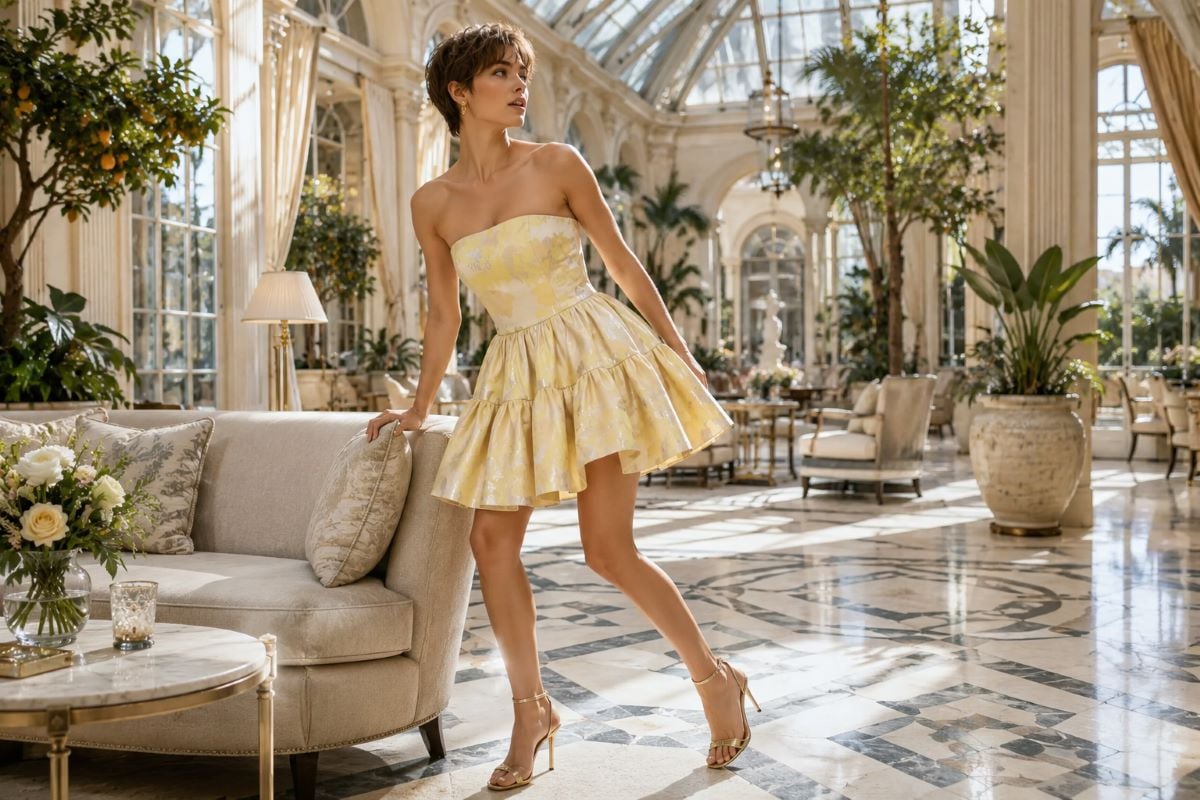
Fabric names are helpful, but weight, lining, layers, and internal construction matter just as much. Two dresses listed as satin or crepe may behave very differently; the structured end of the satin cocktail dresses range shows how far fabric weight alone changes the same silhouette.
| Fabric or construction | Likely behavior | Questions to ask |
|---|---|---|
| Mikado, taffeta, brocade, or substantial satin | Can hold larger folds or a more architectural skirt | Is the volume built into the fabric, supported by lining, or created by an underskirt? |
| Chiffon or georgette | Usually creates softer movement and less rigid volume | How many layers are used, and is the lining opaque and comfortable? |
| Tulle or organza | Can create light-looking volume, depending on stiffness and layer count | Do the layers feel scratchy, catch on embellishment, or lift too high when you turn? |
| Crepe, jersey, scuba, or stretch woven fabric | May range from fluid to sculpted depending on weight and stretch | Does it recover after sitting, and does the lining move with the outer fabric? |
| Sequins, crystals, or beadwork | Adds surface texture and may add significant weight | Does the embellishment rub under the arms, catch on hair, or pull the skirt downward? |
Structured fabric does not automatically mean uncomfortable, and fluid fabric does not guarantee ease. Try the finished dress for at least several minutes. The bodice, lining, closures, and understructure often affect comfort more than the outer fabric name. If embellishment is the direction, the sequin cocktail dresses range shows how beadwork weight sits on a flared skirt.
Is a Fit-and-Flare Dress Flattering?
No body type is required for this silhouette. A fit-and-flare dress may appeal to you if you want visible waist or torso definition with more space through the skirt. It may be less suitable when you prefer an uninterrupted column, minimal skirt volume, or a close fit through the hips.
Avoid rigid body-type rules altogether, whether they assign short hems to petite shoppers, restrictions to curvier shoppers, or mandatory curves to straighter figures. Height and body shape do not determine one correct dress. Proportion depends on the specific bodice length, flare point, skirt width, neckline, and hem. Try more than one variation and compare full-length photos as well as the mirror. The same honest lens applied to the neighboring shape sits in our guide to whether a-line cocktail dresses flatter everyone.
Match the Dress to the Invitation and Venue
A fit-and-flare silhouette can work for many cocktail and semi-formal events, but it is not automatically appropriate simply because of its shape. Read the invitation first, then adjust for the host, time, venue, ceremony, and local customs. For wedding invitations specifically, the wedding guest dresses collection gathers the styles built for that setting.
- Cocktail or semi-formal wedding: Short, knee-length, and midi versions can work. Follow the couple’s instructions, avoid a bridal-looking white or near-white dress unless specifically requested, and confirm any ceremony-specific coverage expectations.
- Work or corporate celebration: Check the employer’s culture and venue. A more covered neckline, secure hem, controlled cutouts, and moderate embellishment may be more practical than a club-oriented style.
- Outdoor event: Consider wind, grass, gravel, temperature, and walking distance. Test lightweight skirts in motion and select shoes that remain stable on the surface.
- Black tie or black-tie optional: A floor-length evening gown is the safest choice when the host expects maximum formality. The Emily Post Institute’s black-tie guidance also allows a dressy cocktail dress in some black-tie and black-tie-optional settings, so read the invitation carefully and ask the host when the standard is unclear.
If the event language is vague, ask the host or organizer rather than relying on a single internet dress-code rule. The host’s instructions always take priority over general style advice. And once the answer comes back floor length, the search moves from cocktail styles into the evening dresses collection proper.
Choose the Length by Movement and Dress Code
- Mini or short: Check the hem while sitting, walking, raising your arms, and turning. A full skirt can lift more than a straight skirt, especially outdoors or during dancing.
- Knee length: Often easy to adapt across cocktail settings, but the exact placement should still work with your proportions and shoes.
- Midi: Offers more coverage and can look more formal. Flats, low heels, block heels, and higher heels can all work; choose by comfort, hem clearance, and venue rather than height rules.
- Floor length: Once the skirt reaches the floor, the garment usually functions more like an evening gown than a conventional cocktail dress. Check the invitation before moving into that level of formality.
How to Style a Fit-and-Flare Cocktail Dress
Because the skirt already creates shape, styling works best when each added element has a purpose. There is no rule that a full skirt requires a narrow heel or that chunky shoes are always wrong.
- Shoes: Choose a secure pair that suits the surface and lets you walk naturally. Pumps, sandals, block heels, slingbacks, refined flats, and dressy low heels can all work.
- Jewelry: Let an embellished neckline remain visible. A simple dress can carry a stronger earring, bracelet, or necklace, but not every outfit needs a statement piece.
- Bag: A small bag is convenient for an event, but it should still hold essentials securely. Check whether rough hardware catches the skirt or beading.
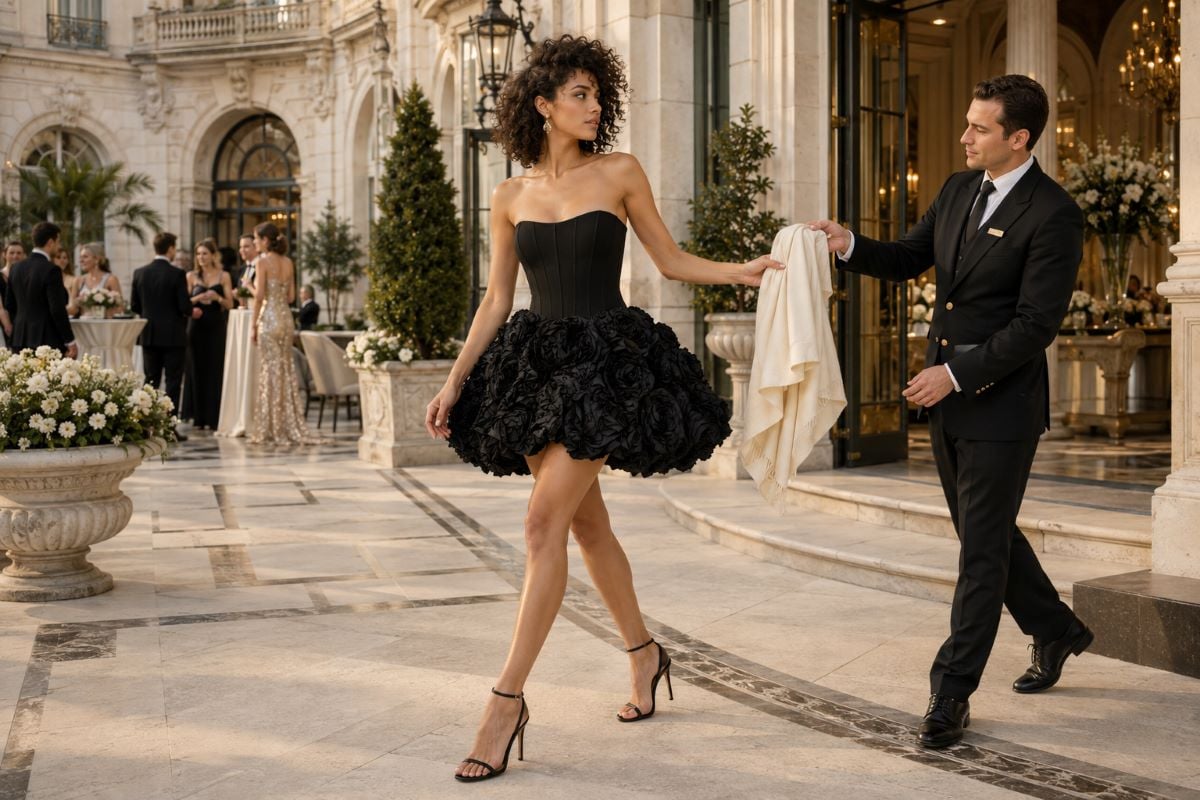
- Outer layer: A wrap, jacket, or coat should work with the skirt volume and the ceremony’s coverage requirements. Try it over the dress rather than estimating.
Sizing and Alterations: What to Plan Before Ordering
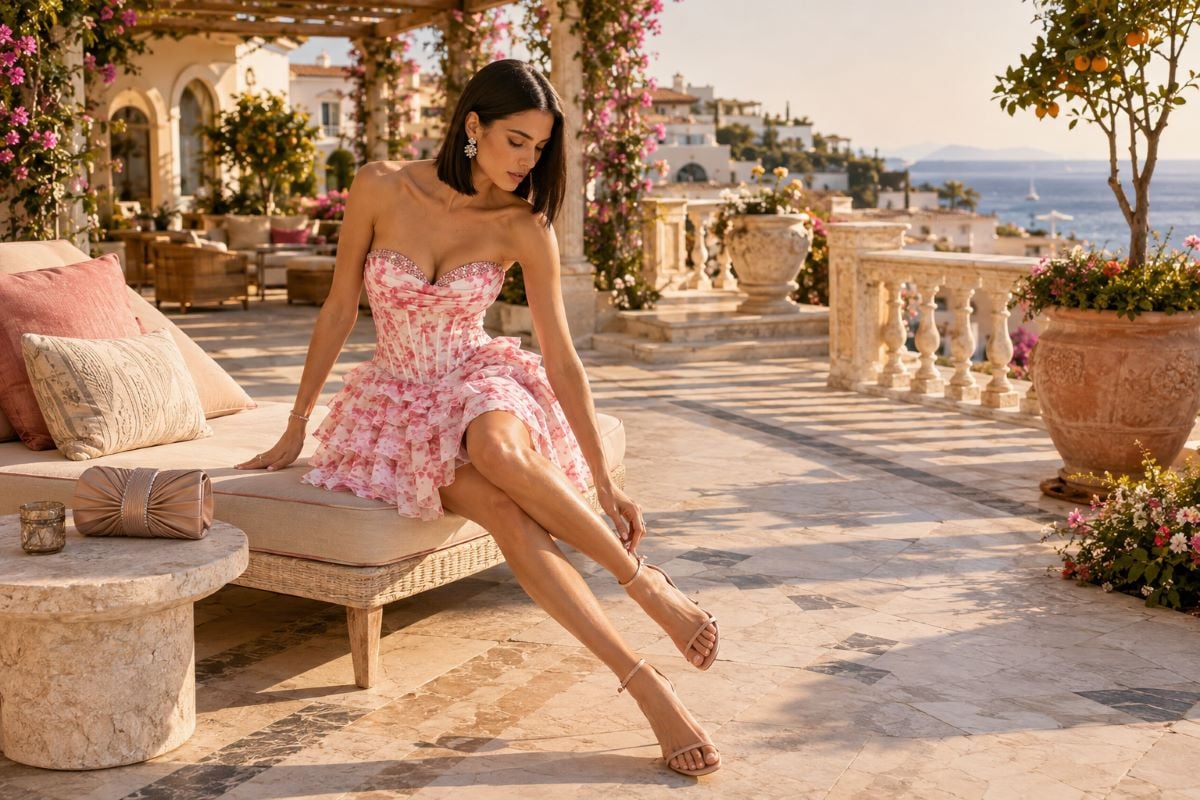
Do not select a size from your everyday clothing alone. Jovani states that its guides are specific to the product, so compare current bust, waist, and hip measurements with the relevant Jovani size chart and ask the retailer how the exact style is constructed.
Fit-and-flare does not automatically make alterations simple. Boning, built-in cups, corset panels, beading, lace placement, pockets, multiple skirt layers, and a defined waist seam can all affect what a tailor can change. Before buying a dress that needs significant work, ask an alterations professional whether the bodice length, transition point, neckline, and hem can be adjusted without changing the design. Do not assume a tight dress can be let out; seam allowance varies by garment.
Leave time for more than one fitting and bring the final shoes and undergarments. At the last appointment, repeat the full movement test rather than checking only how the dress looks while standing.
Fit-and-Flare Cocktail Dress Checklist
- Confirm the event’s exact dress code, venue, and ceremony requirements.
- Identify where the dress is fitted and where the flare begins.
- Check bodice security, seam position, zipper tension, lining, and skirt control.
- Test sitting, stairs, walking, turning, and dancing.
- Review the actual product size guide and return policy before ordering.
- Ask about alteration limits when the dress includes boning, cups, beading, or layered skirts.
- Try the final shoes, undergarments, bag, and outer layer with the dress.
Fit-and-Flare Cocktail Dress FAQ
Is a fit-and-flare dress the same as an A-line dress?
Sometimes the terms overlap. Fit-and-flare usually suggests a more obvious fitted section and a stronger change into the skirt, while A-line often describes a gradual widening toward the hem. Retail labels are not standardized, so use the photos, measurements, and construction details of the actual dress.
What body types can wear a fit-and-flare dress?
Any body type can wear one. The better question is whether you like the dress’s transition point, skirt volume, neckline, and overall proportion on your body. Try multiple versions rather than following a body-shape rule.
Can I wear a fit-and-flare cocktail dress to a wedding?
Yes, when it matches the stated dress code and venue. Avoid bridal-looking white or near-white unless the couple requests it, and follow any religious or cultural guidance supplied by the hosts.
Which fabric holds a fit-and-flare skirt best?
Substantial fabrics such as mikado, taffeta, brocade, and some satins can hold defined folds, but internal construction and layers may be equally important. Inspect the finished garment rather than choosing from the fabric name alone.
Can I wear flats with a fit-and-flare cocktail dress?
Yes. A refined flat or low heel can work when it suits the event and clears the hem. Comfort, walking surface, and the complete proportion matter more than a rule that requires high heels.
Can the waist of a fit-and-flare dress be altered?
Often, but not always. The answer depends on seam allowance, boning, cups, closures, pockets, embellishment, and where the skirt is attached. Ask a qualified alterations professional to inspect the specific dress before relying on a major change.
The best fit-and-flare cocktail dress is not the one that promises to flatter everyone. It is the one that fits your torso securely, gives you the movement and coverage you need, and matches the occasion. Compare structured and fluid versions in person, then use an authorized Jovani retailer to confirm sizing, availability, and alteration needs before the event.