
The wedding after party dress is the newest member of the bridal wardrobe, and the most misunderstood, because it keeps getting confused with the reception dress it usually follows. They are different garments doing different jobs. This guide draws the line between the wedding’s three possible looks, helps the bride choose the one that ends the night, gives guests their own answer, and covers the logistics of actually making the change.
Three Looks, Three Jobs
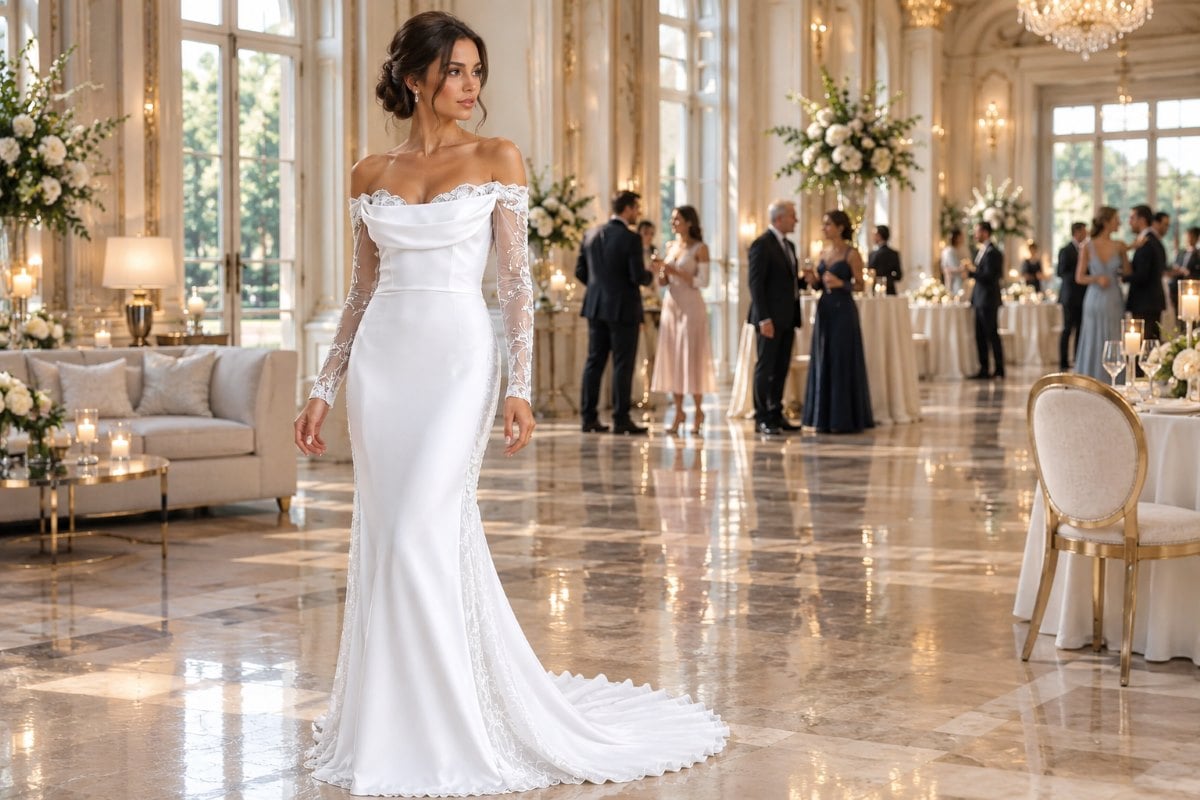
Modern weddings can involve up to three outfits for the bride. The ceremony gown carries the aisle and the portraits. The reception dress, if there is one, takes over for dinner and the first dances, staying bridal but freeing her from the train. Search calls the last one an after wedding party dress, a second look, or act three; the job is identical.
The after party dress closes the show at the late-night venue, the hotel bar, or the dance floor after midnight, and its only obligations are movement and joy. Nobody needs all three; the point of naming them is choosing which moments deserve their own look on your budget of money and attention.
Choosing the Wedding After Party Dress
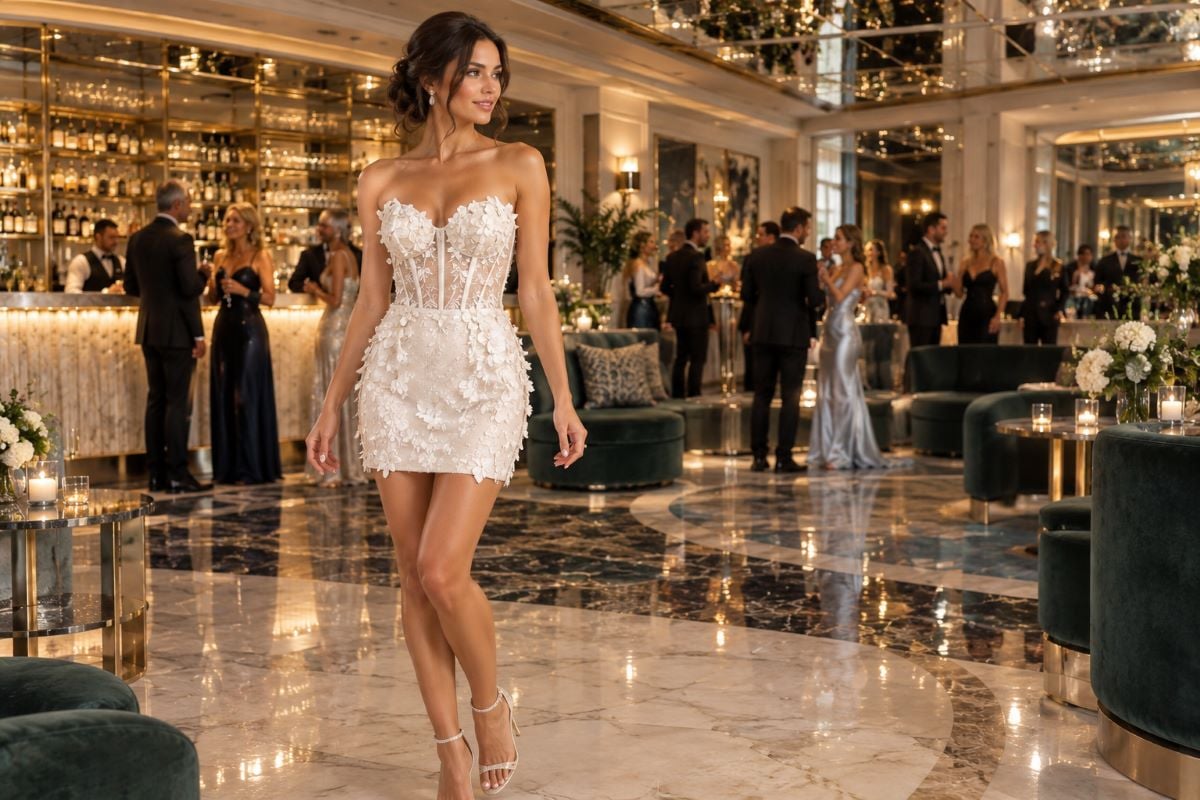
The winning wedding after party dress is the inverse of the ceremony gown: short where the gown was long, light where it was structured, and playful where it was solemn. That inversion is the entire theory of the bride after party outfit. Most brides stay in the white family for the last look of the night, and the little white dress category exists for exactly this moment: minis, slips, and sparkle-covered shorts that read unmistakably bridal at half the weight.
The current direction leans celebratory: corset bodices, pearl and crystal detail, drop-waist minis, feathers at the hem, and allover shine. If her style is more sleek than sparkly, a clean satin slip or a sharp white two-piece does the same job in a quieter voice. Either way the entire wedding after party outfit obeys one rule: she can dance in it without thinking about it.
If You Only Change Once
Plenty of brides skip the three-act structure and make one change that covers dinner through last call. That single second look lives in the wedding reception gowns range: still clearly bridal, built for movement, and formal enough for the toasts it will stand through. Choose it when the wedding has one continuous venue, and save the true after party mini for weddings where the late-night crowd moves somewhere new.
A useful middle path is the short bridal gown, which splits the difference between ceremony formality and after party freedom. The short wedding dresses range works as a reception change, an after party look, and later as the courthouse or anniversary dress, which makes it the highest-mileage white dress a bride can buy.
The Logistics of the Change
The swap succeeds or fails on planning. Change after the formal exit or once the main dance floor opens, never before the toasts, and give the job ten minutes with one helper who knows the gown’s buttons and bustle. Hair comes down or up into something easier, jewelry lightens, and the shoes turn honest: flats, low blocks, or clean sneakers, because the after party is the leg of the night nobody performs through pain. Brides who want to dance hard in the main gown first should read our wedding dress for dancing guide, then let the change be the encore rather than the escape.
What Guests Wear to the After Party
For guests wondering what to wear to a wedding after party, the brief is simple: downshift one step from the reception and keep the bride’s spotlight intact. A dark or jewel-tone party dress that can handle a crowded floor is the whole assignment, and shine is welcome on everyone once the formalities end, which is when sequin short cocktail dresses come into their own.
Skip white and near-white even after midnight, since the bride may be wearing it herself, and the full etiquette of staying clearly on the guest side of the line lives in our guide on how to not look like the bride.
Guests attending a wedding whose invitation already promises a late venue can simply plan one outfit that survives both, and the main wedding guest gowns range is built for exactly that double shift, formal enough for vows and mobile enough for two in the morning.
One Wardrobe, Whole Wedding Week
The after party look also does not have to live alone. Brides building a full wedding-week wardrobe can run one white thread through all of it, from the shower to the rehearsal to the last dance, and our roundup of pre-wedding little white dresses shows how the earlier events set up the finale, often sharing hangers with it.
Dress the Last Hour Like It Matters
The wedding after party dress earns its place because the last hour is the one everyone remembers loosest and happiest, and it deserves better than a gown built for an aisle. Name your three acts, give the finale a look that moves, hand guests their one-step-down rule, and plan the ten-minute change like any other part of the timeline. Try the second-look candidates in person at an authorized Jovani retailer near you, and dance the decision before you make it.
After Party Dress FAQ
What is a wedding after party dress?
A short, movement-first dress the bride changes into for the late-night portion of the wedding, usually white, lighter and more playful than both the ceremony gown and the reception dress it may follow.
What is the difference between a reception dress and an after party dress?
The reception dress is a bridal second look for dinner and first dances, still formal. The after party dress is the third act: shorter, lighter, and built purely for dancing once the formalities end. Many brides choose only one of the two.
What should a guest wear to a wedding after party?
One step down from the reception: a dark or jewel-tone party dress that handles a dance floor, with sparkle welcome once the formal events end. Keep avoiding white and near-white, since the bride may still be wearing it.
When does the bride change into the after party dress?
After the formal exit or once the open dance floor begins, never before the toasts. Plan about ten minutes with one helper who knows the gown’s fastenings, and switch to flats or low heels at the same time.