
How to Not Look Like the Bride: The Wedding Guest Mistakes That Cross the Line
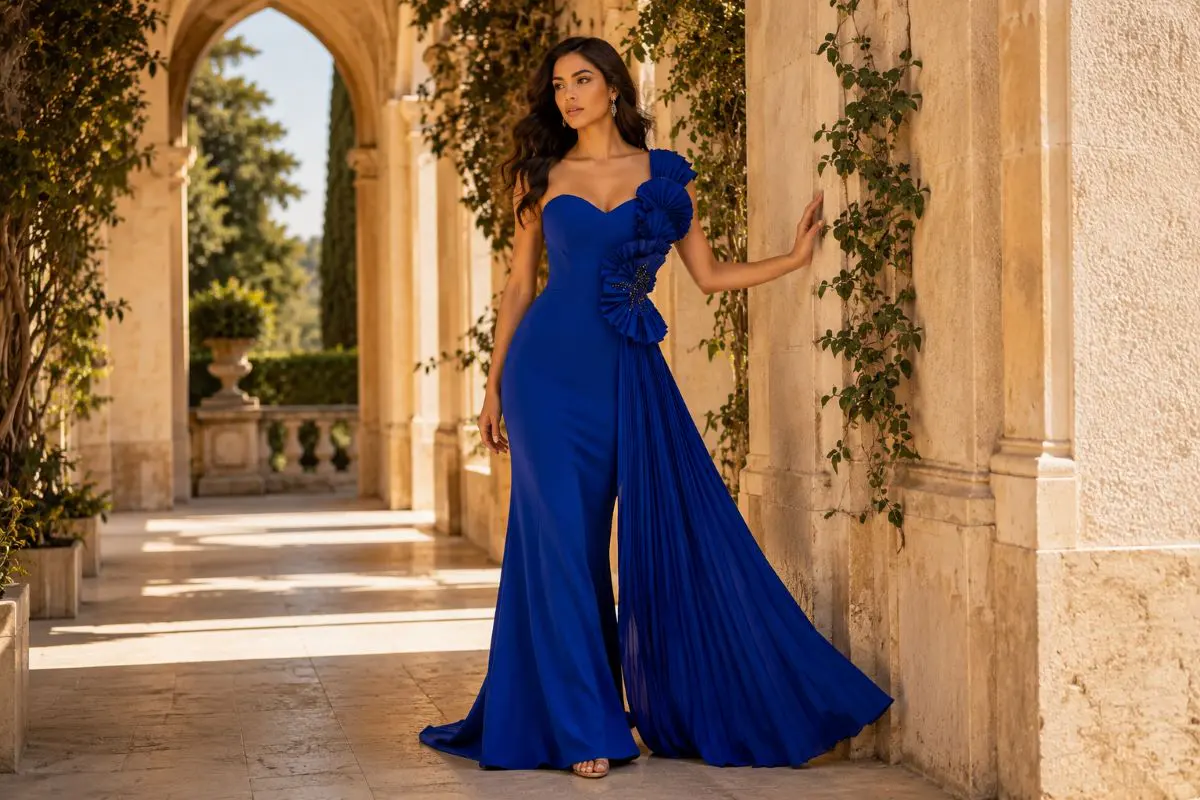
Every wedding guest knows the basic rule: do not wear white. What far fewer women realize is that white is only the most obvious way to accidentally look bridal. A guest can avoid white entirely and still pull focus from the couple through the wrong silhouette, an overly bridal detail, a too-pale color, or a dress that is simply more of a statement than the occasion invites. The goal of a guest outfit is to look beautiful while clearly reading as a guest, not as a second bride. This guide explains how to not look like the bride in every sense, covering color, shape, detail, and the genuine gray areas, so you can dress with confidence and let the couple have their day.
Why This Is About More Than Just White
The instinct to avoid white is correct, but it is incomplete. A wedding guest stands out as bridal whenever her outfit borrows the visual language that belongs to the bride, and color is only one part of that language. Silhouette, fabric, embellishment, length, and even certain details all carry bridal associations, and any of them can quietly cross the line.
Think of it this way. A bride is typically recognizable by a combination of signals: a pale or white gown, often a long and dramatic silhouette, frequently lace or heavy beadwork, sometimes a veil or veil-like detail. A guest does not become bridal by matching all of those at once. She can drift into bridal territory by matching just two or three. A long, pale, lace gown is not white, but it reads as a wedding dress from across a room. Understanding how to not look like the bride means learning to recognize each of these signals so you can keep your own outfit clearly in guest territory.
None of this should make dressing for a wedding feel stressful. The range of wedding guest gowns is enormous, and the vast majority of beautiful options are completely safe. The point is simply to be aware, so the one or two genuine risks are easy to sidestep.
The Color Rule, and the Honest Gray Areas
Color is the first and most important consideration, and while the headline rule is simple, the real-world edges are where guests get caught out.
The Colors That Are Always Off-Limits
White, ivory, and cream belong to the bride, full stop. This applies at every event surrounding the wedding, not only the ceremony. The bride may choose to wear white to her shower, her rehearsal dinner, and her after-party, and those shades stay reserved for her throughout. There is no version of a wedding where a guest in a white dress is a safe choice.
The Genuine Gray Zone
The harder question is the near-whites: champagne, blush, pale gold, light beige, soft nude, pale grey. These are not automatically forbidden, but they require honest judgment. A warm champagne or a soft blush can be perfectly appropriate when the dress is clearly non-bridal in shape and the shade is genuinely warm rather than a disguised off-white.
There is a simple, reliable test. Hold the fabric next to a sheet of plain white paper in natural daylight. If the two look distinctly different, the color is safe. If they look similar, the color is too close to white and should be left for another occasion. When a pale shade passes the paper test but still feels borderline, the safest move is simply to choose a more definite color instead. The risk is never worth the worry on the day itself.
The Easiest Safe Choices
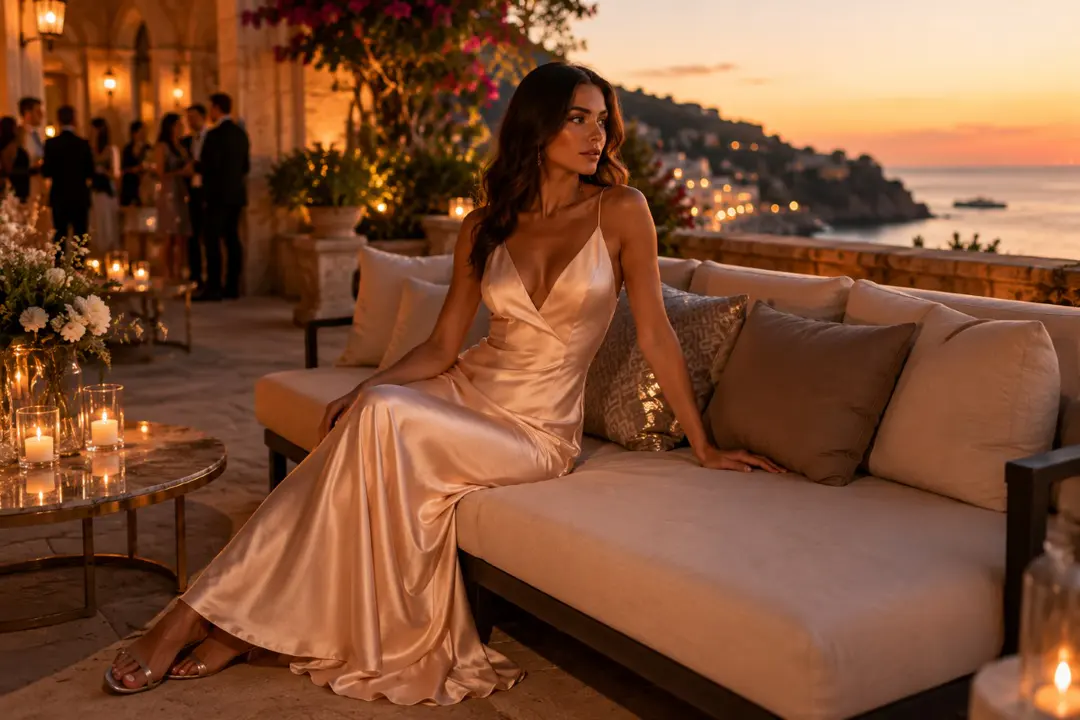
If you want to remove all doubt, choose a color with genuine depth and saturation. A rich jewel tone, a deep or bright shade, or a confident classic all read instantly as a guest. The range of blue formal gowns offers shades from soft sky to deep navy that are flattering and completely unambiguous, and blue is one of the most universally safe wedding guest colors there is.
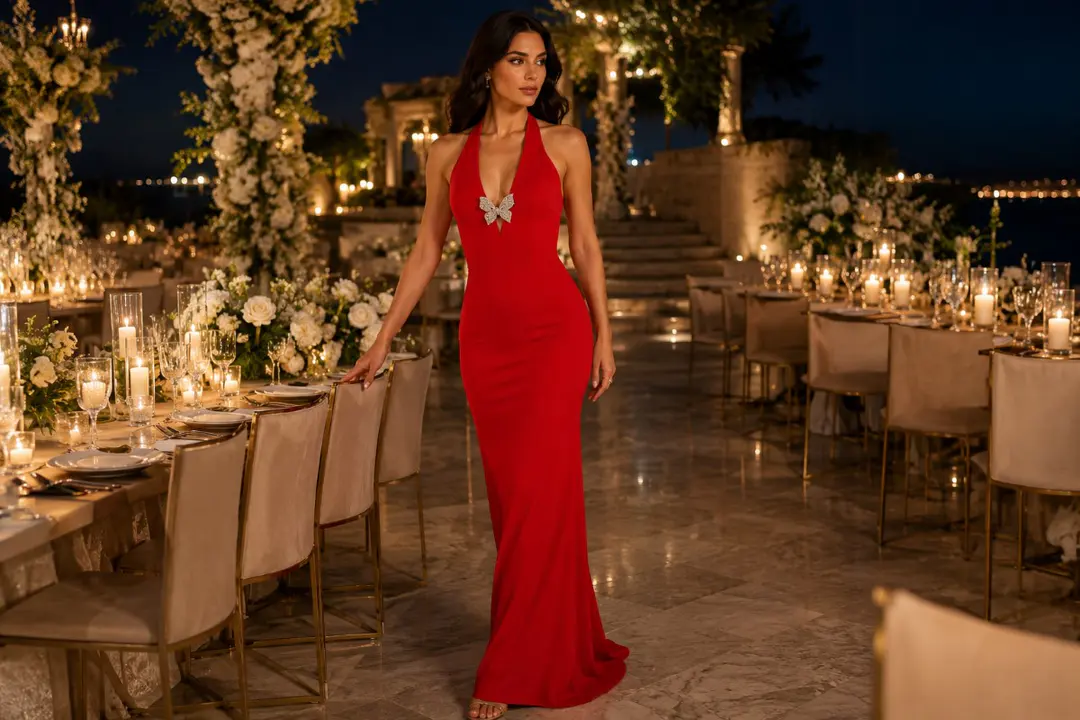
A striking red formal dresses shade is bold and celebratory, and as long as the wedding is not one where red carries a specific cultural meaning for the couple, it is a clear, non-bridal choice that photographs with real impact.
The deep, natural tones of green evening dresses, from sage to emerald, are equally safe and very current. With any genuinely saturated color, the bridal question simply never arises, which is what makes a definite shade the most relaxing choice of all.
Silhouette: The Signal Most Guests Forget
Color gets all the attention, but silhouette is the signal guests most often overlook. A dress can be a perfectly acceptable color and still read as bridal because of its shape.
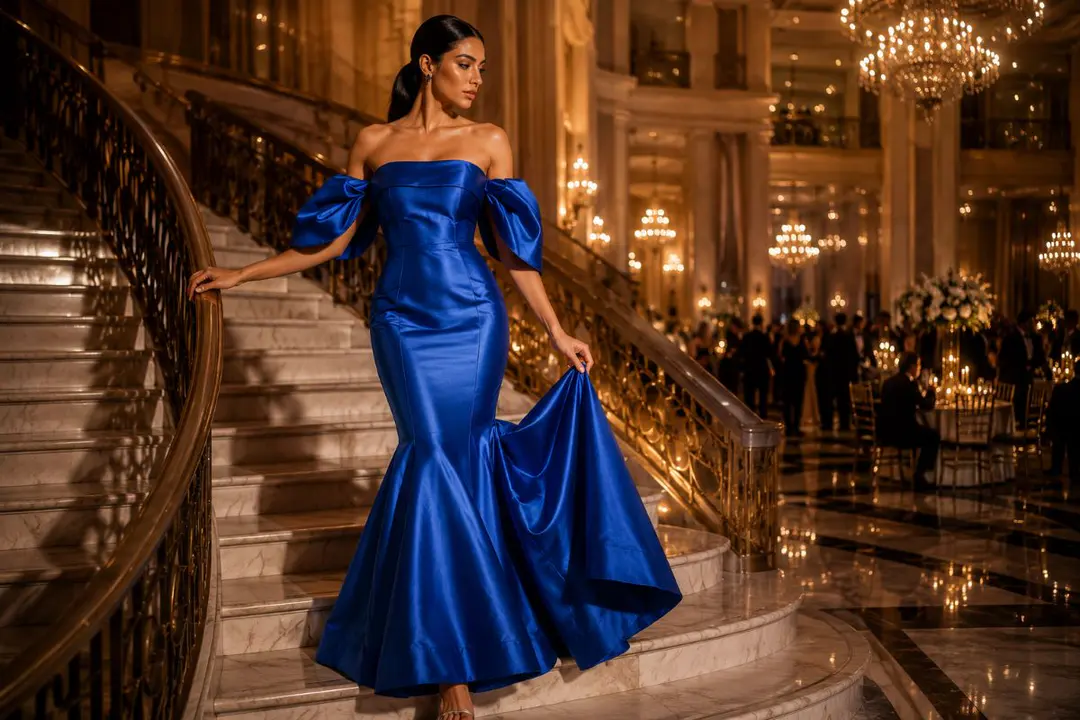
The silhouette most associated with a bride is the large, dramatic ball gown, a fitted bodice with a full, voluminous skirt. A guest in a huge, sweeping ball gown, even in a color, can look like a bridal-party figure rather than a guest, simply because the scale of the dress competes with the bride's own gown. This does not mean a guest cannot wear a full skirt, but the most reliable guest silhouettes are the ones that look elegant without that bridal grandeur. An A-line, a sheath, a fitted column, or a mermaid all read clearly as a guest dress. They are flattering and formal without borrowing the bride's scale.
The same logic applies to anything that mimics bridal construction. A dramatic train, an enormous skirt, or a cathedral-length sweep are bridal hallmarks, and a guest is wise to leave them to the bride. The principle is not to dress plainly, it is to look like a beautifully dressed guest rather than a member of the wedding party. For a fuller sense of which shapes strike that balance, the guidance in this piece on how to look classy as a wedding guest is a useful companion.
Bridal Details That Quietly Cross the Line
Beyond color and silhouette, certain specific details carry such strong bridal associations that they can make an outfit read as wedding-adjacent even when everything else is fine.
Lace, and How Much Is Too Much
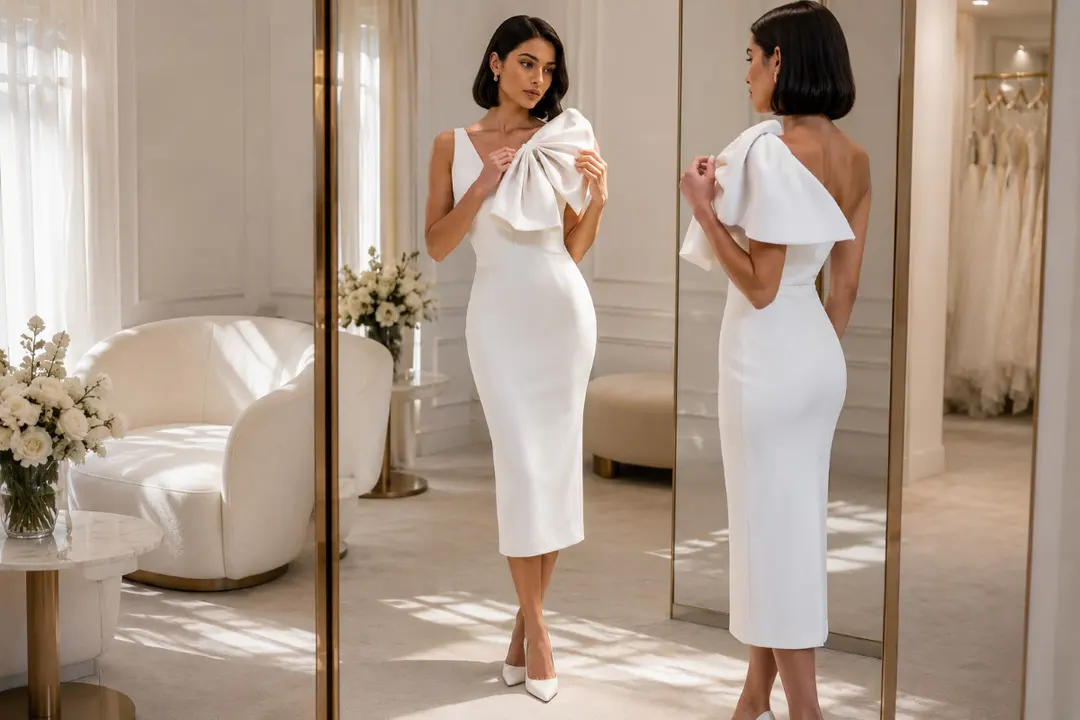
Lace is a beautiful fabric and not inherently bridal, a small lace detail or a lace accent on a colored dress is completely fine. The issue is an all-over lace gown, particularly in a pale color. A full white or ivory lace dress is unmistakably bridal, and even a pale lace gown in a near-white tone edges into that territory. If you love lace, wear it in a clear color, or as a detail rather than the entire dress.
Veil-Like and Ceremonial Details
Anything that echoes a veil or a bridal headpiece should be avoided. A long, sheer cape or an elaborate sheer overlay can read as veil-like, and ornate hair pieces that resemble a bridal headdress send the wrong signal. A guest's hair accessories should be clearly decorative rather than ceremonial.
Excessive Embellishment and Flashiness
A wedding is not the place for the most attention-grabbing dress a woman owns. A fully sequined, intensely sparkling, or heavily beaded gown can pull focus simply by being the loudest thing in the room, which is the bride's privilege, not a guest's. This is especially true at daytime and family-oriented events. A guest can absolutely wear something with sparkle or beading, but the most reliable choice is a dress where elegance, not sheer flash, is doing the work.
Length and Formality: Matching the Couple, Not Outdoing Them
Length is less about bridal association and more about reading the occasion correctly, but getting it wrong can still make a guest stand out in an unwanted way.
The length of the dress should match the formality the couple has set. A floor-length gown is right for a black-tie or formal evening wedding, and at that level of event a long dress is expected rather than showy. A cocktail or midi length suits a semi-formal celebration, and a shorter style fits a relaxed or daytime wedding. The mistake is wearing a dramatic floor-length gown to a casual afternoon wedding, where it can look like the guest is dressed for a grander event than the couple planned, or, conversely, wearing something too casual to a formal wedding, which reads as not having made the effort.
The guiding idea is to match the couple's chosen level of formality, not to exceed it. A guest who dresses exactly to the occasion looks polished and considered. A guest who dresses well beyond it, even beautifully, risks looking as though she is competing rather than celebrating. When an invitation's dress code is unclear, the breakdown in wedding guest dress codes explained is the clearest way to decode what each term actually asks for.
Reading the Specific Wedding You Are Attending
The general rules above hold almost everywhere, but every wedding has its own context, and a thoughtful guest reads that context before finalizing a choice. Two weddings can be the same level of formality and still call for slightly different judgment.
The setting is the first clue. A grand ballroom wedding, an outdoor garden ceremony, and a relaxed beach celebration each create a different baseline, and a dress that looks perfectly judged at one can look like too much, or too little, at another. A dramatic gown at a barefoot beach wedding stands out for the wrong reasons, while the same gown is exactly right in a ballroom.
Culture and tradition are the second clue, and they genuinely matter. In some traditions, colors that are entirely safe at a typical Western wedding carry specific meaning and are best avoided, while in others, white is worn by guests rather than reserved for the bride. Red, in particular, holds deep significance in several cultures and may be the bride's color rather than a free choice for guests. If you are attending a wedding outside your own cultural background, a little research, or a quick question to someone close to the couple, prevents an honest mistake.
The couple themselves are the final clue. Some couples are relaxed and would never give a guest's outfit a second thought. Others care a great deal about the look of their day. The invitation, the wedding website, and any guidance the couple has shared all tell you how closely they are thinking about these things. When a couple has clearly put effort into a specific aesthetic, meeting that effort respectfully is part of being a good guest. Reading the wedding, not just the rulebook, is what separates a guest who is technically correct from one who is genuinely considerate.
It Is Not Only the Dress
Looking like a guest rather than a bride is also about the whole presence, not just the gown. A few final considerations complete the picture.
- Mind all-white accessories. A colored dress paired with white shoes, a white bag, and a white wrap can still create an overall white impression. Keep the accessory palette in mind alongside the dress.
- Keep hair and headpieces non-bridal. Elaborate updos with veil-like adornment or floral crowns can echo a bridal look. Simple, polished styling keeps you clearly in guest territory.
- Avoid bridal-party matching. If you happen to know the bridesmaids' colors, do not wear that exact shade, or you risk looking like part of the lineup rather than an independent guest.
- Let your behavior match your outfit. Looking like a guest is partly about not seeking the spotlight. A considerate guest celebrates the couple rather than staging her own moment, and that ease shows.
- When in doubt, ask. If you are genuinely unsure whether a choice is appropriate, a quick, friendly question to someone close to the couple is far better than guessing.
These small things complete the impression. A guest who has thought about her color, her silhouette, her details, and her accessories has done everything needed to look beautiful without ever risking the bride's spotlight.

Dressing Beautifully Without Crossing the Line
None of this is meant to make a guest play small. You should absolutely look wonderful at a wedding, and there is enormous room to express your style. The point of understanding how to not look like the bride is simply to channel that style into choices that celebrate the couple rather than compete with them. A confident color, a clearly non-bridal silhouette, tasteful detail, and a length that matches the occasion will always read as a beautifully dressed guest.
A black gown, for instance, is timeless and entirely appropriate for most formal weddings, and the range of black evening dresses is one of the safest and most elegant directions a guest can take.
For broader inspiration on building the look, the guide to wedding guest outfit ideas covers seasonal and venue-based options in depth, so you can refine the rest of the outfit once the color and silhouette are settled.
About Not Looking Like the Bride FAQ's
Can I wear a blush or champagne dress to a wedding?
Sometimes, but with caution. A warm blush or champagne can work if the dress is clearly non-bridal in shape and the shade is genuinely warm rather than a disguised off-white. Use the paper test: hold the fabric next to plain white paper in daylight, and if they look similar, the color is too close to wear.
Is it only the color white that I need to avoid?
No. White, ivory, and cream are the clearest rule, but silhouette and detail matter too. A long, pale, all-lace gown can read as bridal even though it is not white. Avoiding a bridal look means watching color, shape, embellishment, and veil-like details together.
Can a wedding guest wear a ball gown?
It is better to avoid a large, dramatic ball gown. That voluminous silhouette is strongly associated with brides, and its scale can compete with the bride's own gown. An A-line, sheath, fitted column, or mermaid reads clearly as a guest dress while still looking formal and elegant.
Is lace off-limits for a wedding guest?
Not at all. A lace detail or a lace accent on a colored dress is completely fine. The thing to avoid is an all-over lace gown in a pale or near-white color, since a full pale lace dress reads as bridal. Wear lace in a clear color or as an accent rather than the whole dress.
Can I wear a long dress to a wedding as a guest?
Yes, when the formality calls for it. A floor-length gown is expected at a black-tie or formal evening wedding and does not look showy there. The mistake is wearing a dramatic floor-length gown to a casual daytime wedding. Match the length to the couple's chosen level of formality.
What is the safest color for a wedding guest?
A color with genuine depth and saturation removes all doubt. Rich jewel tones, deep blues, a confident red, or natural greens all read instantly as a guest. Black is also timeless and appropriate for most formal weddings. With a saturated color, the bridal question never arises.
Celebrating the Couple in Style
Dressing as a wedding guest is a small act of respect. The couple has invited you to share one of the most important days of their lives, and the simplest way to honor that is to look beautiful while letting them be the unmistakable center of it. Knowing how to not look like the bride is really just knowing the signals to sidestep: keep away from white and its near-shades, choose a clearly non-bridal silhouette, leave lace gowns and veil-like details to the bride, and match the couple's formality rather than exceeding it. Do that, and you are free to wear color, style, and confidence without a second thought. Jovani has spent more than forty years designing gowns for both brides and the women who celebrate them, with a range wide enough that looking like a guest never means looking like less.
When you are ready to find a dress that celebrates the couple while flattering you completely, explore the full wedding guest collection through an authorized Jovani retailer.