
Not every bride wants a floor-length gown, and the short wedding dress has become a genuine first choice rather than a compromise. It carries every bit of bridal feeling, the white or ivory, the beautiful fabric, the unmistakable sense of occasion, in a length that moves more freely and suits a far wider range of weddings than tradition once allowed. For a courthouse ceremony, a beach elopement, a relaxed garden celebration, or a reception where you want to dance without managing a train, a shorter hem can be exactly right. This guide covers what counts as a short wedding dress, why the style has grown so quickly, when it is the right call, and how to choose and wear one so it reads as unmistakably bridal rather than simply like a white party dress.
Choosing a shorter hemline is partly about the wedding you are having and partly about how you want to feel and move through the day, because length changes both the look and the practicality of a gown more than almost any other single decision. A bride marrying at city hall has different needs than one planning a livelier reception look, and the sections below cover what genuinely matters across all of those situations so you can decide with real confidence rather than defaulting to floor length out of habit.
What counts as a short wedding dress
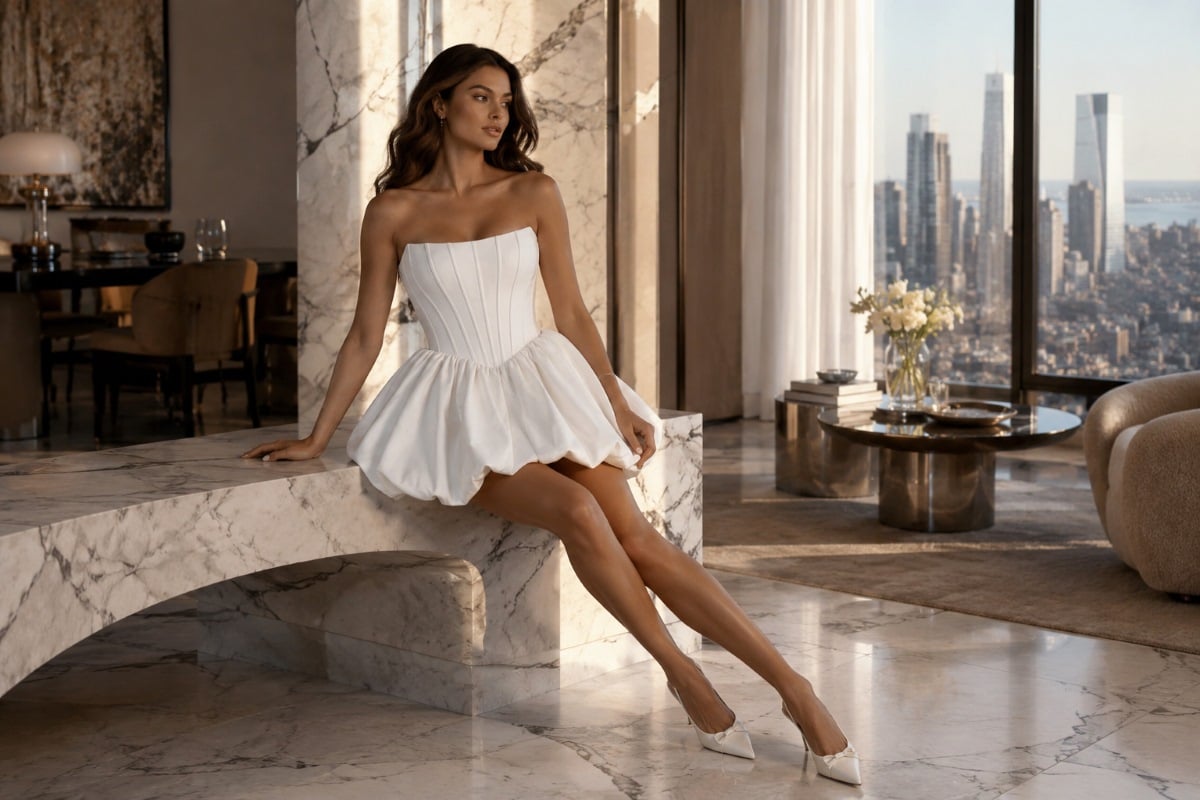
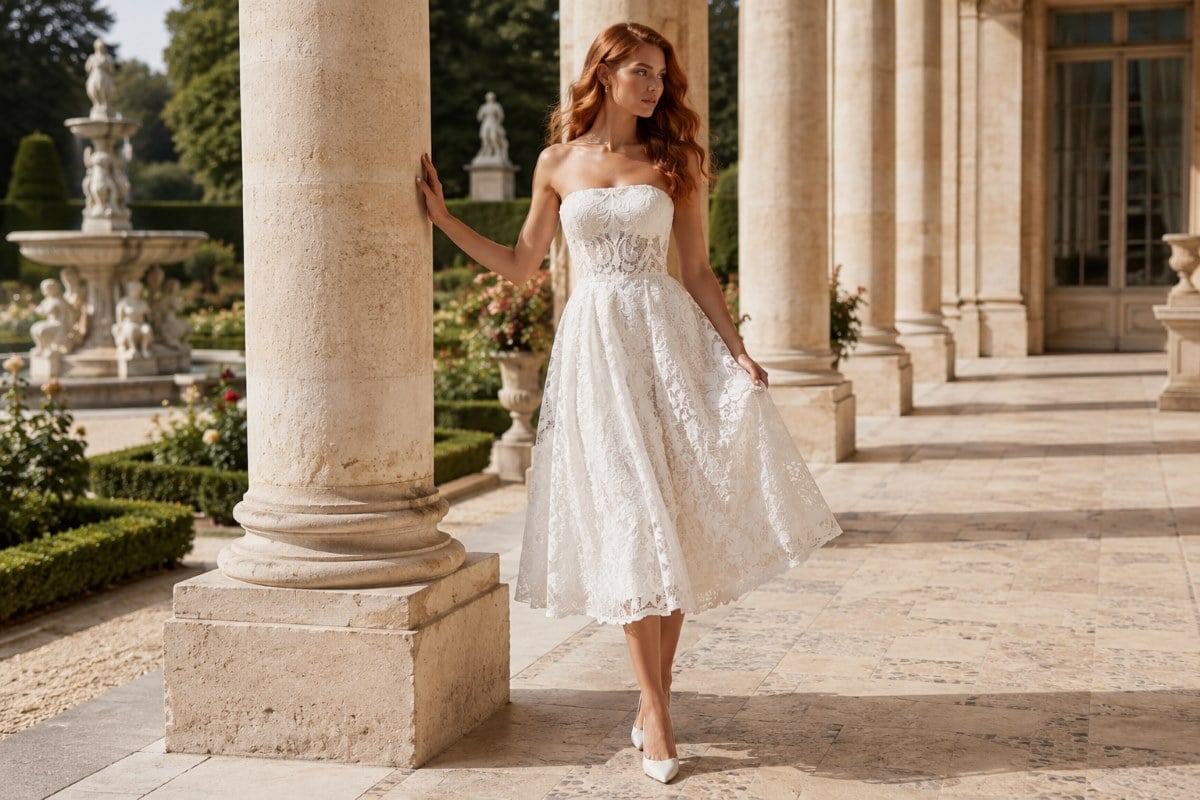
A short wedding dress is simply a bridal gown with a hemline above the floor, and the category covers a few distinct lengths that each read quite differently. A mini falls at or above the knee and is the most playful and modern of the group, well suited to parties and high-energy celebrations. A knee-length dress sits right at the knee for a classic, balanced look that suits a great many occasions and figures. A tea-length gown falls between the knee and the ankle, the most vintage and formal of the short lengths, with a retro elegance that photographs beautifully and feels especially right for a 1950s-inspired or garden celebration.
Within the broader range of designer wedding gowns, these shorter lengths give brides options that a traditional floor-length gown cannot, particularly for daytime ceremonies, outdoor settings, and celebrations that move between several locations. The length you choose sets the tone before any other detail, so it is worth deciding early whether you want the formality of tea length, the balance of knee length, or the energy of a mini.
Why short wedding dresses have grown so popular
Weddings themselves have changed, and the rise of the shorter gown follows directly from that. A modern celebration is often a multi-part event, a ceremony followed by photographs, dinner, and hours of dancing, and a single floor-length gown does not always serve every part of that day equally well. A shorter hem offers freedom of movement that a long skirt and train cannot, letting a bride walk over grass or sand, climb into a car, and dance without lifting fabric. The styles among short wedding gowns reflect how designers now treat the short gown as a deliberate category rather than an afterthought, with the same quality of construction and fabric as their floor-length counterparts.
There is also a cultural shift toward individuality in bridal fashion. A shorter gown reads as fashion-forward and a little unexpected, which appeals to brides who want their look to feel personal rather than purely traditional. For an intimate or modern wedding, a short dress can feel more authentically you than a sweeping gown chosen mainly because it is what a bride is supposed to wear, and that sense of personal choice is a large part of why the style keeps growing.
It also helps to know that a shorter bridal hem is not a modern invention, which gives the choice a reassuring sense of history rather than passing novelty. Short wedding dresses had their own moment in the 1920s, when dropped-waist styles brought hemlines up, and again in the 1960s, when knee-length and mini bridal looks matched the spirit of the decade. Audrey Hepburn and Brigitte Bardot both married in short dresses, and those images still influence brides drawn to a tea-length or knee-length gown today. Knowing this lineage can settle the worry that a short dress is too unconventional, since the style sits within a long bridal tradition rather than breaking from it. A shorter gown today simply revives an idea that has come and gone for a century, which is part of why it feels both fresh and familiar at once.
When a short wedding dress is the right choice
The clearest case for a short gown is a wedding whose setting and tone simply suit it. A city hall or courthouse ceremony, with its understated and often quick proceedings, pairs naturally with a shorter hem, and the guidance in this look at courthouse wedding dresses shows how a short gown can feel polished and intentional for a civil ceremony rather than underdressed.
A beach or destination wedding makes a similar case for practical reasons. Sand, heat, and uneven ground all argue against a long, heavy skirt, and a short gown in a light fabric stays comfortable and photographs cleanly in bright coastal light without dragging or collecting sand at the hem. For a relaxed garden or backyard celebration, the same logic applies, and a shorter dress matches the easy spirit of the setting better than formal floor length would.
Many brides also choose a short gown specifically for the reception, changing out of a floor-length ceremony dress into something easier to dance in, and this reception look has become a tradition of its own, covered in detail in this guide to the second wedding dress.
If you want a dedicated change for the dancing hours, the styles in the wedding reception dresses range are built with movement in mind while keeping the bridal feeling intact.
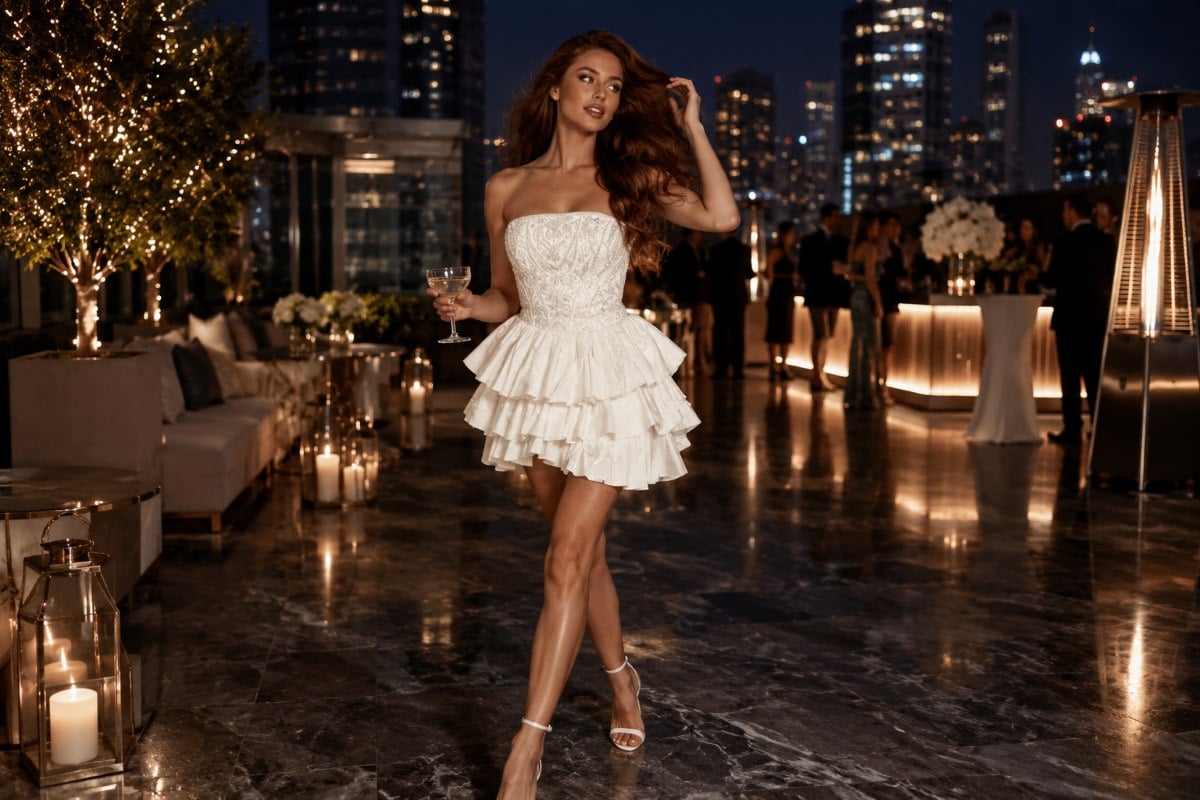
Finally, the short white dress has become a staple of the wider bridal journey beyond the wedding day itself. From the engagement party to the bridal shower to the rehearsal dinner, a shorter gown lets a bride wear white across all the events leading up to the day, an idea explored fully in this guide to little white dresses for pre-wedding events.
Silhouettes that work in a shorter length
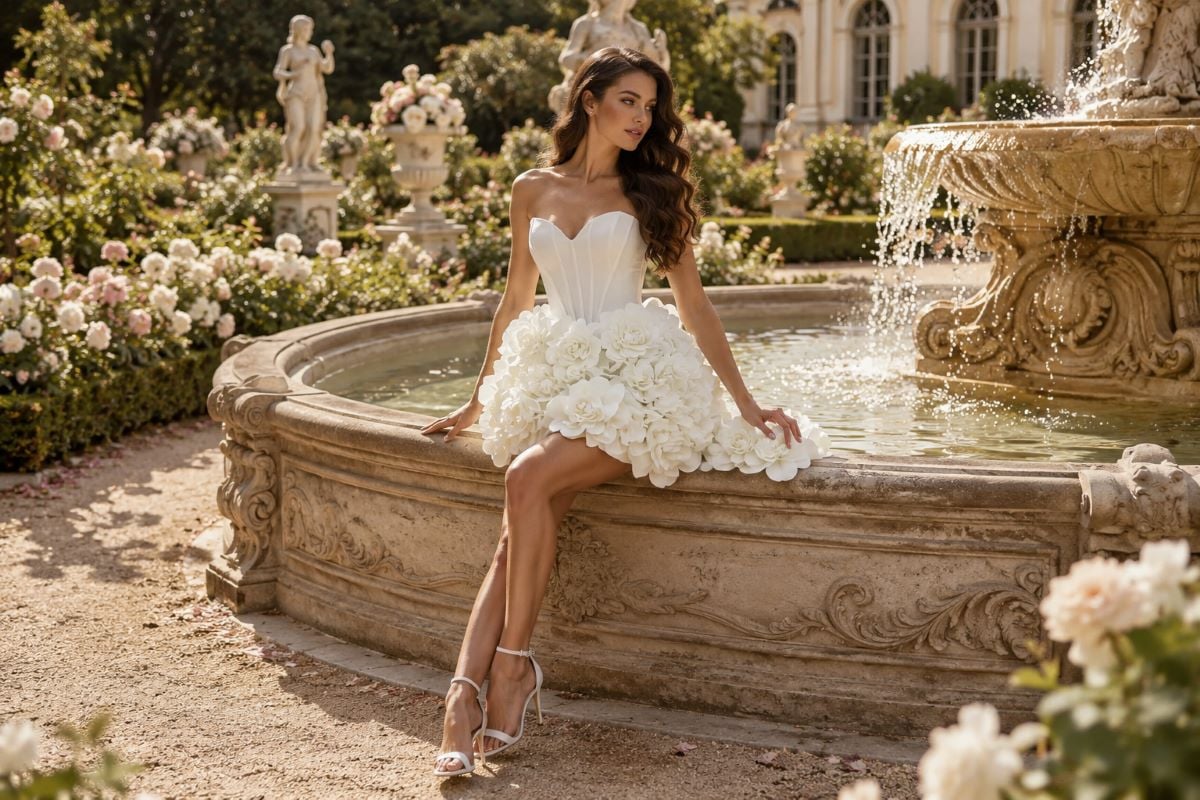
Not every silhouette translates equally well to a short hem, and knowing which shapes suit the length helps you choose well. A fit-and-flare or A-line shape works beautifully short, with a fitted bodice and a skirt that flares gently from the waist, creating a balanced, flattering line that suits most figures and reads as clearly bridal. A clean sheath or shift in a short length feels modern and minimalist, ideal for a city or courthouse wedding where sleek simplicity is the goal.
For a more playful look, a fuller skirt at a short length brings a youthful, retro charm, particularly at tea length where the volume echoes vintage styling. The one shape that rarely works short is the dramatic full ball gown, since its volume is built around a long, sweeping line, so brides drawn to that level of drama are usually better served by floor length. The right short silhouette balances the proportions of your frame, and a defined waist generally helps a shorter gown read as elegant rather than casual.
Choosing the right length for your own frame is mostly a question of proportion and what you want to highlight. A knee-length hem tends to flatter the widest range of figures because it falls at a naturally slim point of the leg, while a tea-length hem elongates a petite frame when paired with a heel, and a mini suits a bride who feels confident showing more leg. Heel height interacts with all of this, since the same dress reads quite differently with a flat sandal than with a tall heel, so it helps to try a gown in the shoe height you actually plan to wear. The goal is a hemline that feels balanced on you rather than one chosen purely by trend, and trying two or three lengths in front of the mirror usually makes the right one obvious within minutes.
Fabrics and details for a short bridal look
Because a short gown shows less fabric, the quality of that fabric and the details on it carry extra weight in keeping the look refined. Structured fabrics like mikado, satin, and crepe hold a clean shape and read as polished and intentional, which is exactly what keeps a short dress feeling bridal rather than like an ordinary white dress. Lace adds romance and a heirloom quality that signals wedding rather than party, and beading or embellishment catches light and brings a sense of occasion to a shorter silhouette.
Texture and detail are what separate a true short wedding dress from a plain white frock, so it is worth choosing a gown where the fabric and finishing do real work. A short dress in a flat, thin fabric with no detail can read as casual, while the same length in a structured fabric with thoughtful lace or beadwork reads as unmistakably bridal. The casual end of the spectrum has its place too, and the breathable, effortless styles among casual wedding dresses show how a relaxed short gown can still feel special for an informal celebration.
Color and coverage are worth a thought too, since a short gown gives you room to play with both. Classic white and ivory read as the most traditionally bridal, while soft blush, champagne, or a hint of color can feel modern and personal on a shorter dress, particularly for a second look or a less formal celebration. Coverage on top balances the shorter hem, so a bride who wants the legs on show might choose a higher neckline or sleeves to keep the overall look composed, while a strapless or sleeveless short gown reads as more playful. Sleeves in lace or illusion fabric also add a bridal, considered quality that keeps a short dress from feeling like ordinary daywear, and they make the gown work across a wider range of venues and seasons than bare arms alone.

How to style a short wedding dress
Styling is where a short gown earns its bridal credentials, since the accessories signal wedding as clearly as the dress does. A veil worn with a short dress creates an immediate bridal feeling and bridges the gap between a shorter hem and the sense of occasion, with a birdcage or fingertip veil suiting the length particularly well. Bridal shoes also become more visible with a shorter hem, so this is the moment to choose footwear you love, whether that is a classic heel, an embellished flat, or a statement shoe that becomes part of the look.
Jewelry, a hair piece, or fresh flowers in the hair all reinforce the bridal feeling, and a short gown gives you room to lean into these finishing touches more than a heavily detailed long gown might. The shorter white dress has become such a recognized part of bridal style that the little white dresses range now spans everything from the engagement party to the wedding itself, which makes finding the right level of formality for your specific moment far easier.
When floor-length still makes more sense
Honesty matters more than enthusiasm for any one length. A short gown is not the right call for every wedding, and a formal evening celebration, a grand ballroom, a cathedral ceremony, or a black-tie event generally asks for the drama and formality of floor length. If your wedding is traditional and formal, a short dress may read as underdressed no matter how beautiful it is, and you may simply feel more like a bride in a long gown. There is also the matter of personal vision. Some brides have always pictured themselves in a sweeping gown, and no amount of practicality should talk them out of the dress they have dreamed of. The short wedding dress is a wonderful choice for the right wedding and the right bride, and recognizing when floor length serves you better is part of choosing well rather than a mark against the shorter style.
Frequently asked questions
Is a short wedding dress appropriate for the ceremony, or only the reception?
A short wedding dress is entirely appropriate for the ceremony, especially for civil, courthouse, beach, garden, and other less formal weddings. The length suits the setting and the tone rather than being limited to the reception. For a very formal or religious ceremony, floor length is often expected, but for the many weddings that are relaxed or modern, a short gown works beautifully for the vows themselves.
What length is most flattering for a short wedding dress?
The most flattering length depends on your proportions and the look you want. Knee length suits the widest range of figures and reads as classic and balanced. Tea length is elegant and forgiving and leans vintage and formal. A mini is the most modern and playful and shows the most leg, so it suits brides who feel confident in a shorter hem. Trying each length helps you see which balances your frame best.
How do I keep a short wedding dress from looking too casual?
The fabric, the construction, and the styling do the work. A short gown in a structured fabric like mikado or satin, with lace or beading and a defined waist, reads as bridal, while a thin flat fabric with no detail reads as casual. Add a veil, bridal shoes, and a hair piece, and the same dress immediately signals wedding rather than ordinary party wear.
Can I wear a veil with a short wedding dress?
Yes, and a veil is one of the most effective ways to make a short gown feel bridal. A birdcage veil suits a retro or tea-length look, while a fingertip or longer veil creates a striking contrast against a shorter hem. The veil bridges the gap between a non-traditional length and the sense of occasion, so it is well worth considering even with a short dress.
Are short wedding dresses suitable for a beach wedding?
Short wedding dresses are an excellent choice for a beach wedding. A shorter hem in a light fabric stays comfortable in heat, moves easily on sand, and avoids the dragging and soiling that a long skirt suffers on a beach. Choose a breathable fabric and a manageable silhouette, and a short gown will photograph cleanly in bright coastal light while keeping you comfortable through the day.
How far in advance should I order a short wedding dress?
Plan a similar timeline to any bridal gown, ideally several months ahead to allow for ordering and alterations, though a short dress sometimes needs less hemming work than a floor-length gown with a train. Beginning the search early keeps the process calm and leaves room for fittings, which matters even for a shorter gown since a precise fit at the bodice is what makes it read as elegant.