
Junior Bridesmaid Dress Etiquette: What's Appropriate by Age
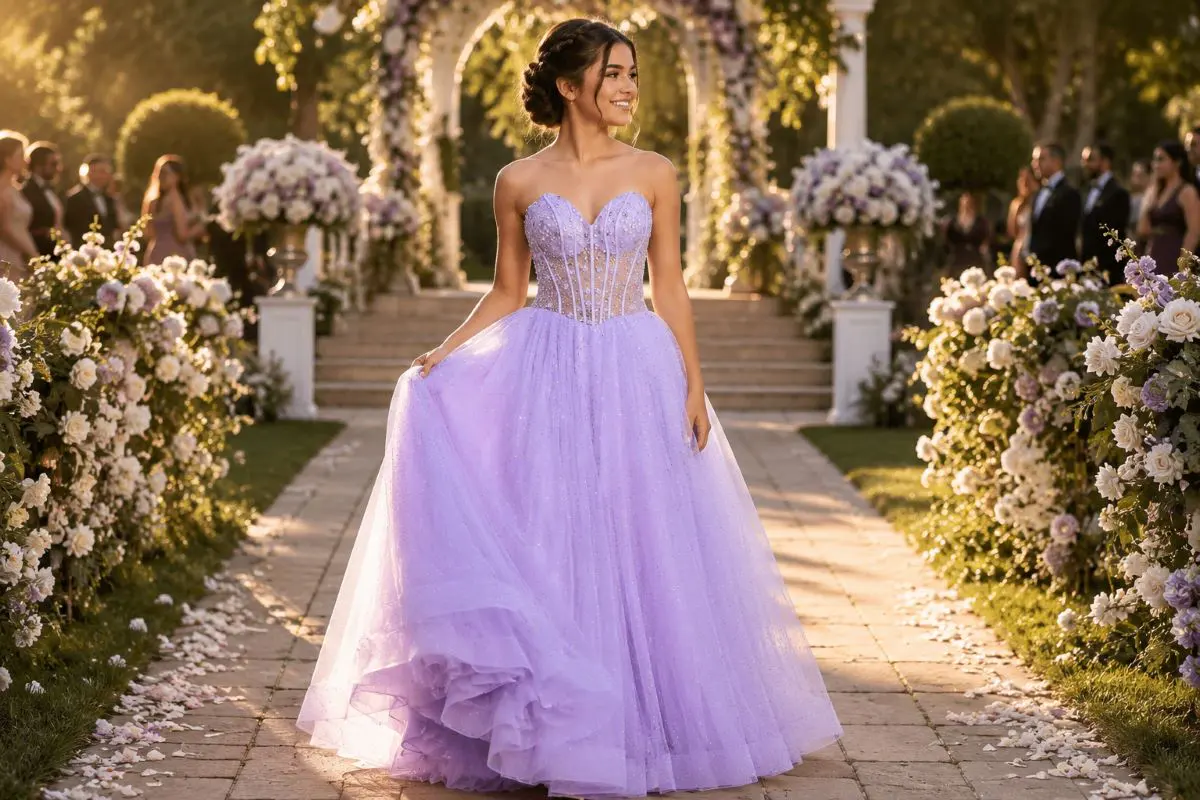
Being asked to be a junior bridesmaid is a meaningful honor for a young girl, and choosing what she wears is a decision that deserves real thought from the bride and her parents. The junior bridesmaid sits in her own special place in the wedding party, older than a flower girl but younger than the adult bridesmaids, and the dress should reflect that in-between role with grace. The wrong choice tries to make a young girl look adult, which photographs poorly and feels uncomfortable for everyone. The right choice honors her age while making her feel beautifully included. This guide walks through junior bridesmaid dress etiquette, with honest, age-by-age advice that keeps the focus where it belongs: on a young girl who feels lovely and confident on a meaningful day.
What a Junior Bridesmaid Is
A junior bridesmaid is a young girl, typically between the ages of eight and sixteen, who is part of the bridal party but stands in her own role. She is too old for the flower girl tradition, which usually goes to girls under seven, and too young for the responsibilities of an adult bridesmaid. The junior bridesmaid position lets a bride include a beloved younger sister, niece, cousin, or family friend in a way that matches where she actually is in life.
The role is a celebrated one. A junior bridesmaid walks in the processional, often stands with the bridal party during the ceremony, and is present in the formal photographs. She may help with small, age-appropriate tasks, but she is not expected to take on the heavier duties an adult bridesmaid handles. The point of having a junior bridesmaid is recognition, the bride is publicly placing a young girl among the people closest to her, and the dress should make her feel exactly that important without trying to make her look older than she is. The selection of girls dresses is specifically designed with that balance in mind: dresses that feel celebratory and bridal-party-worthy while remaining genuinely appropriate for a young girl.
Junior Bridesmaid vs Flower Girl vs Adult Bridesmaid
Understanding where the junior bridesmaid sits between these three roles is the foundation of getting her dress right. A flower girl is usually three to seven years old. She scatters petals, often holds a small basket, and wears something distinctly child-like, a shorter dress, often with a sash or bow, in a fabric that lets her move and play. She is treated as a small, cherished child in the ceremony.
An adult bridesmaid wears a more sophisticated, often floor-length gown chosen by the bride, in a style suited to a grown woman. She handles real responsibility in the lead-up to the wedding and on the day itself.
The junior bridesmaid sits between them, and her dress should reflect that. It is more elevated than a flower girl's dress, because she is older, but it must never imitate an adult bridesmaid's gown literally, because she is still a child. Junior bridesmaid dress etiquette draws this distinction clearly: the dress should look like it belongs in the bridal party, but it should also look like it belongs on a girl her age, not a small woman.
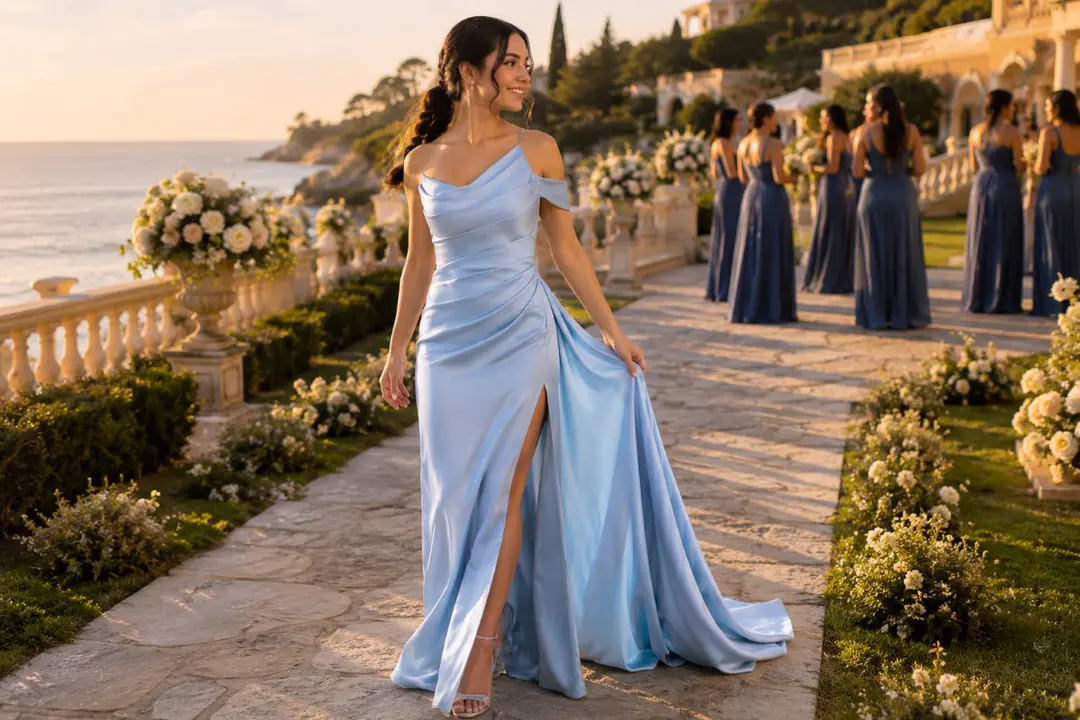
The Foundation Rule: Age-Appropriate Always Wins
Before any age-specific advice, one principle holds across every junior bridesmaid choice. The dress must be age-appropriate, full stop. This means:
- No strapless dresses for younger juniors. A strapless gown is an adult style, and on a girl who is still growing it looks ill-fitting and uncomfortable. Straps, sleeves, or a covered neckline are the right choice for younger juniors.
- No deeply plunging or low-cut necklines. A junior bridesmaid dress should have a modest, child-appropriate neckline at every age.
- No body-clinging or form-fitting styles. A junior bridesmaid is a young girl, and her dress should skim rather than cling, with room for her to breathe, move, and grow comfortable in it.
- No high slits or short, revealing hemlines. Length should be modest and dignified, suited to a child in a ceremony.
- Real comfort is non-negotiable. She will wear this dress for many hours, through a ceremony, photographs, and a reception. It must let her move, sit, and behave like a child.
These are not suggestions, they are the floor. Any choice that fails these tests is the wrong choice regardless of how beautiful the dress is on someone else. A junior bridesmaid dress should be unmistakably elegant and unmistakably appropriate for a young girl at the same time, and the two ideas do not conflict.
Junior Bridesmaid Dress Etiquette by Age Group
Within the eight-to-sixteen range, a girl of eight and a girl of fifteen are in completely different places. Sensible junior bridesmaid dress etiquette treats them differently, with the dress maturing gently alongside the girl.
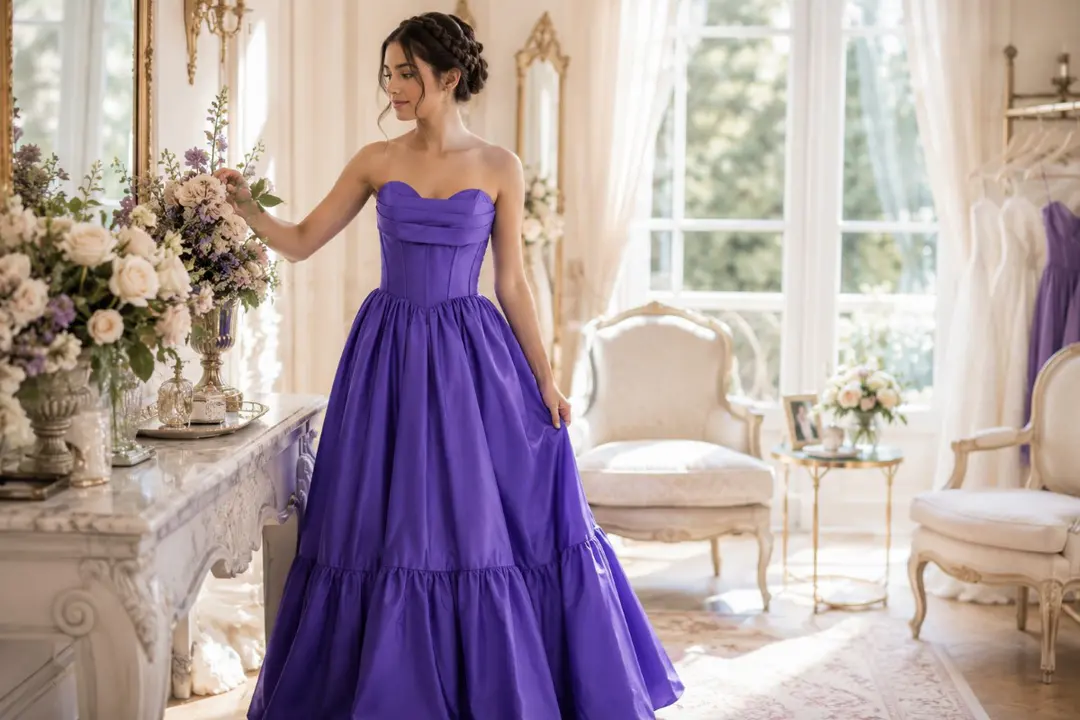
Ages 8 to 10: Still Mostly Child
At this age, a junior bridesmaid is still very much a child, and the dress should reflect that. The best choices are tea-length or just-below-the-knee styles, with a defined waistline, modest covered neckline, and either straps or short sleeves. A soft tulle or chiffon skirt with a little gentle fullness photographs beautifully and lets her move freely. Avoid anything strapless, anything floor-length and adult-like, and any heavy or restrictive fabric. The styling cues should echo a sophisticated flower girl rather than a small adult, refined and pretty rather than grown-up.
Ages 11 to 13: The In-Between Years
This is the most delicate age group, because a girl this age is between childhood and adolescence and is often very aware of how she looks. The dress should feel a little more grown-up than the eight-to-ten range, but still firmly age-appropriate. A midi-length or below-the-knee dress is ideal, with a refined neckline (a modest sweetheart, scoop, or V-neck that is genuinely modest), comfortable straps or sleeves, and a silhouette that skims rather than clings. An A-line is the most flattering and forgiving shape for this age, since growing bodies change quickly and the dress should accommodate that gracefully. Avoid any explicitly adult cut: strapless, plunging, body-conscious, or short.
Ages 14 to 16: Edging Toward Young Adult
An older junior bridesmaid can wear a more elevated dress, and floor-length is appropriate at this age if the bride wishes, especially for a formal evening wedding. The style can lean closer to the adult bridesmaids' aesthetic while staying clearly age-appropriate: covered straps or sleeves, a modest neckline, and a silhouette that flatters without revealing. An A-line is still the safest choice, since it suits a teen body without clinging. Even at this age, the rules against strapless, plunging, high-slit, or form-fitting styles remain. A confident teenager can look beautifully grown-up in a dress that is also entirely appropriate for her age.
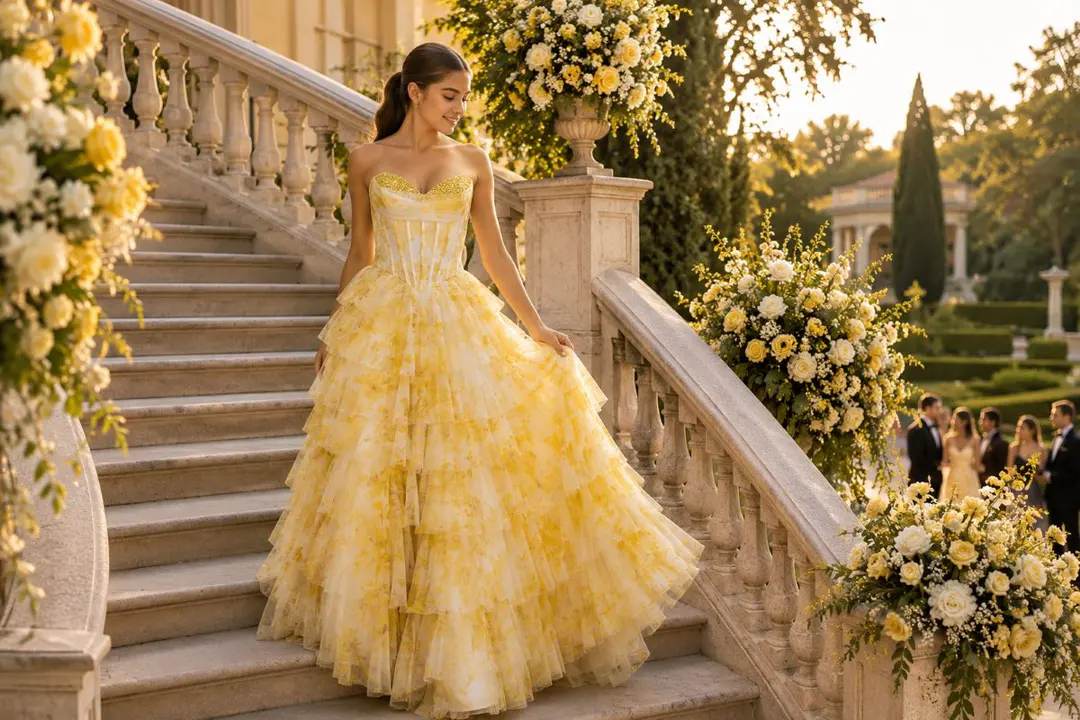
Coordinating With the Adult Bridesmaids
The visual question many brides face is how the junior bridesmaid relates to the adult bridesmaids in photographs. There are two reliable approaches, and both work well.
The Echo Approach
The most common choice is to dress the junior bridesmaid in the same color as the adult bridesmaids, but in a more age-appropriate style. So if the adult bridesmaids wear a long dusty blue gown with a sweetheart neckline, the junior bridesmaid wears a shorter or differently styled dusty blue dress with straps and a modest neckline. The shared color visually links her to the bridal party in every photograph while the different cut keeps the dress right for her age. This is the gold standard for most weddings, and it works whether the adult bridesmaids' dresses come from a bridesmaid line or are selected from a broader range like wedding guest gowns in a coordinated shade.
The Complementary Approach
The alternative is to dress the junior bridesmaid in a complementary shade rather than the exact color, often a slightly lighter or softer version of the bridal party color. A pastel version of the bridesmaids' deeper shade is a popular choice, and it gives a soft, age-appropriate feeling that distinguishes the junior bridesmaid as her own role rather than blending her into the adult lineup. Either approach is correct; the choice depends on the bride's preference and the wedding's overall aesthetic.
One Practical Note
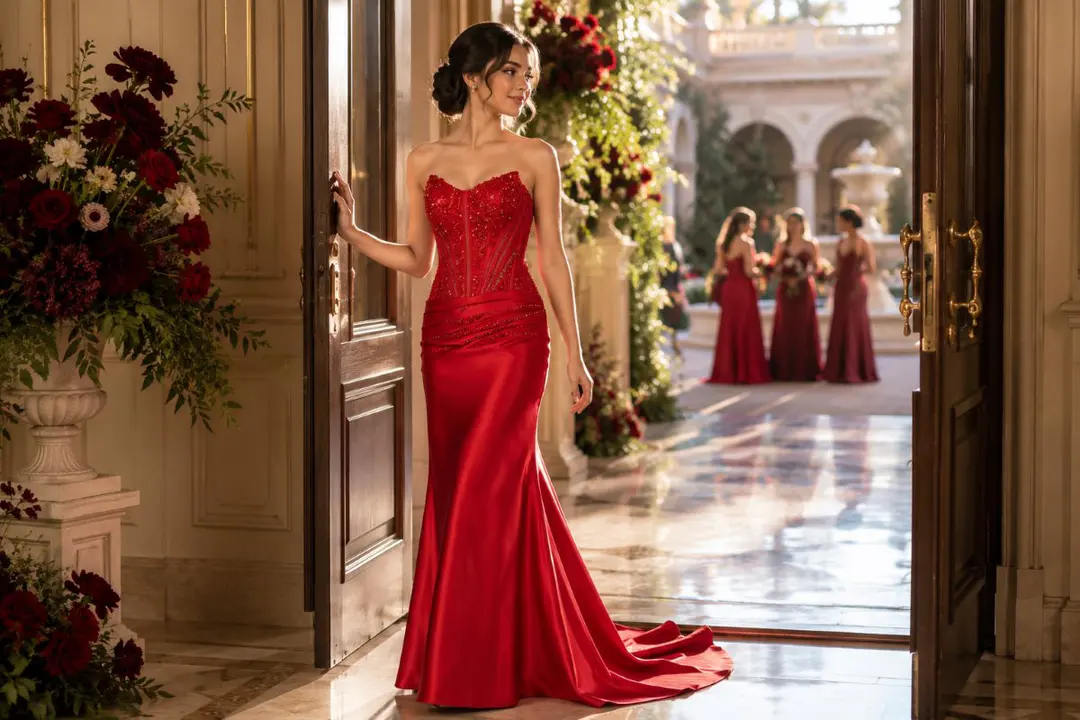
Whatever the color, the dress fabric should ideally match or coordinate with the adult bridesmaids' fabric, so the junior bridesmaid does not look out of place in photographs. A satin junior dress paired with chiffon adult bridesmaid gowns can feel mismatched, while consistent fabric ties everyone together visually. The breakdown of bridal-party coordination in the dama dresses guide covers the same principle in a different cultural context, and the visual logic of coordinating a younger member with an older court applies just as well here.
Fabrics and Silhouettes That Work Best
Fabric and silhouette choices for a junior bridesmaid are practical decisions as much as aesthetic ones, because a young girl will wear the dress for hours and needs to feel comfortable in it.
The most reliable fabrics are soft, breathable, and forgiving. Chiffon is light, flowy, and moves beautifully in photographs, which makes it a favorite for younger juniors. Tulle adds gentle volume without weight and reads as romantic and age-appropriate. Soft satin in a fully lined dress provides a more polished, refined finish for older juniors. Lace is also lovely, and the styles in the range of lace wedding dresses show how delicate lace photographs beautifully alongside a bride, giving brides an idea of how to coordinate a junior bridesmaid's lace detailing with the wedding's broader textures. Avoid heavy, structured fabrics like Mikado or heavily beaded gowns; they are made for adult formal events and feel costume-like on a young girl.
For silhouettes, the A-line is the universal answer for junior bridesmaids of every age. It defines the natural waist gently, flares softly to the hem, and works on every body type, including the changing proportions of a growing girl. The styles among A-line wedding gowns demonstrate exactly why this silhouette dominates wedding party styling: it is universally flattering and never tries too hard. Avoid mermaid, sheath, or bodycon silhouettes for a junior bridesmaid at any age. They are designed to show off an adult body in ways that have no place on a child or teen.
The Parents' Role in the Decision
A junior bridesmaid is a minor, and her parents are the decision-makers alongside the bride. This is worth saying directly, because it shapes the whole process. The bride sets the color, the formality, and the overall direction. The parents have the final say on what their daughter actually wears, and they should feel empowered to speak up if a proposed dress is not age-appropriate.
A few honest principles for parents:
- Trust your judgment. If something feels too old, too revealing, or too uncomfortable for your daughter, it is. You know her better than anyone, and a polite, kind conversation with the bride is always appropriate.
- Prioritize how she feels in the dress. A young girl who feels self-conscious in her dress will not enjoy the day. Try styles on together and pay attention to her comfort, not just the bride's vision.
- Plan for growth. Junior bridesmaids ordered months ahead may grow between fitting and wedding day. Allow room for alterations and buy a slightly looser fit rather than too snug.
- Bring her to fittings. She should try the dress on, walk in it, and sit in it before the day. This also helps her feel part of the process rather than dressed by adults.
- Watch the comfort signals. If she is constantly adjusting the dress, tugging at it, or saying it feels strange, the fit is wrong. Comfort is not optional for a child wearing formalwear for hours.
The advice on broader fittings and timing in wedding dress shopping tips applies to the junior bridesmaid's process too, and parents are well-served by starting early enough that there is time for proper fittings without pressure.
Hair, Shoes, and Accessories: Keep It Simple
The same age-appropriate principle that governs the dress applies to everything else. A junior bridesmaid's accessories should be lovely and modest, never glamorous in an adult sense.
Hair is best worn in a style that suits her natural look, half-up, a soft updo, or simply brushed and pretty with a delicate clip. Heavy adult-style updos and intricate hair pieces feel out of place. Jewelry should be small and simple: a delicate necklace or a single pair of small earrings is plenty. Avoid heavy statement jewelry. Makeup, if any at all, should be the lightest touch, age-appropriate, and decided in conversation with her parents, never insisted on by a bride. The same principle holds for shoes: comfortable, low-heeled or flat, easy to walk and stand in. The broader principles around dressing young girls for formal occasions in this guide to charming girls formal dresses reinforce how restraint and age-appropriateness are the entire foundation of dressing a young girl well.
How the Junior Bridesmaid Fits the Wider Wedding Picture
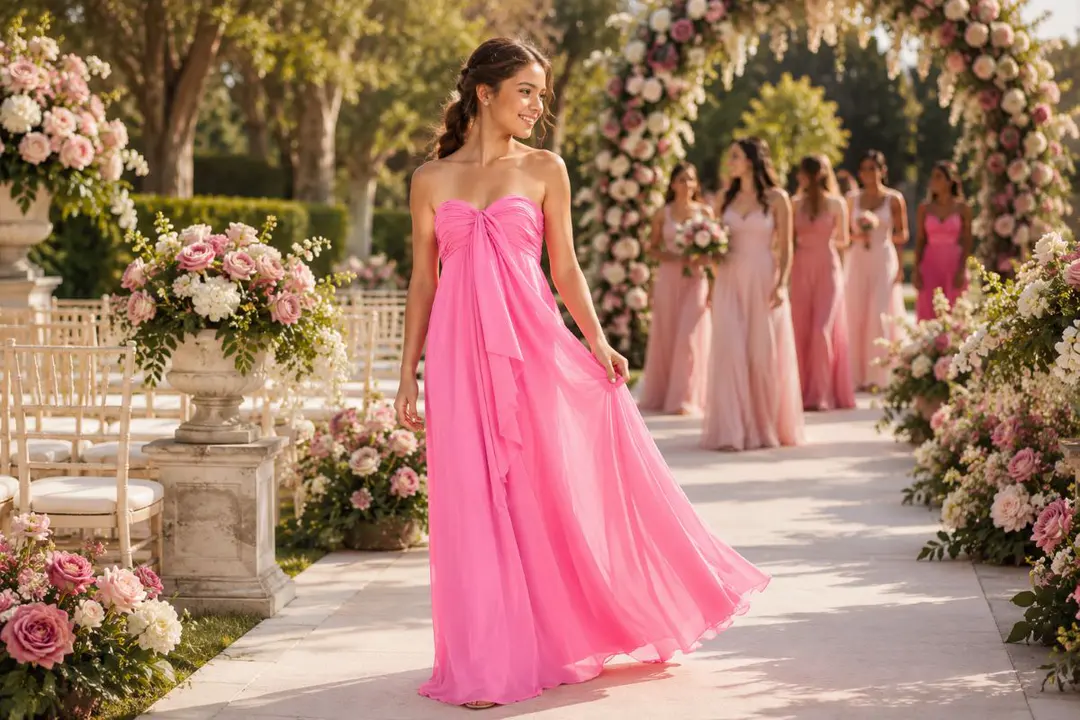
The junior bridesmaid is a visual bridge in the wedding party, between the flower girl on one end and the adult bridesmaids on the other, and the photographs make this clearer than anything else. When her dress is age-appropriate and well-coordinated, the whole bridal party reads as harmonious and intentional. When her dress is either too child-like or too grown-up, the visual rhythm of the party breaks. This is why both the bride's coordination and the parents' judgment matter so much: the choice does not live in isolation, it sits inside the wider wedding aesthetic.
It is also worth saying that a beautifully dressed junior bridesmaid often becomes a small star of the photographs in her own right, not by competing with the bride or the adult party, but by being unmistakably herself, a young girl in a wedding. The selection of wedding gowns includes styles where coordinating a junior bridesmaid is straightforward, and a thoughtful bride who chooses with her young family member in mind almost always ends up with one of the sweetest photographs of the day.
Frequently Asked Questions About Junior Bridesmaid Dress Etiquette
What age is a junior bridesmaid?
A junior bridesmaid is typically between eight and sixteen years old. Younger than that, the role is usually flower girl. Older, and she would be invited as a full adult bridesmaid. The range gives a bride a way to include a beloved younger sister, niece, cousin, or family friend in a manner that matches where she is in life.
Can a junior bridesmaid wear the same dress as the adult bridesmaids?
No, and she should not. The adult bridesmaid style is designed for an adult woman, often with cuts and details that are not appropriate for a young girl. The right approach is for the junior bridesmaid to wear the same color as the adult bridesmaids in an age-appropriate style, which visually links her to the party while keeping the dress right for her age.
Should a junior bridesmaid's dress be long or short?
Length depends on her age and the formality of the wedding. For ages eight to ten, tea-length or just-below-the-knee is most appropriate. For eleven to thirteen, midi or below-the-knee works well. For fourteen to sixteen, floor-length is appropriate for a formal wedding if the bride wishes. The dress should never be revealingly short or feature high slits at any age.
Is a strapless dress ever appropriate for a junior bridesmaid?
For younger juniors, no. Strapless is an adult style and looks ill-fitting and uncomfortable on a girl who is still growing. Straps, sleeves, or a covered neckline are the right choice. For older juniors approaching sixteen at a formal wedding, a thoughtfully chosen modest neckline with proper support may be acceptable, but plain straps or sleeves remain the safer, more age-appropriate choice.
Who pays for the junior bridesmaid's dress?
Customs vary. Some families have the bride's family or the bride herself cover the dress as a gesture of inclusion, while others ask the junior bridesmaid's family to cover it. Whatever the arrangement, it should be made clear from the very beginning so everyone can plan, and the conversation should be handled kindly between the bride and the girl's parents.
What should a junior bridesmaid wear if she does not want sleeves?
A dress with thicker, supportive straps is a comfortable middle ground that suits every age in the junior range. A modest scoop, square, or sweetheart neckline with straps reads as age-appropriate and gives her some freedom from sleeves without crossing into strapless territory.
Honoring a Young Girl's Place in the Wedding
Choosing well for a junior bridesmaid is ultimately an act of care. Sound junior bridesmaid dress etiquette comes down to a few clear principles: keep the dress age-appropriate, coordinate with the bridal party through color rather than literal style, choose comfortable fabrics and a forgiving A-line silhouette, dress her to her actual age rather than to look older, and let her parents have the final word. Do that, and the young girl honored with the role gets to feel exactly as cherished and important as she should, while the photographs capture a bridal party that looks as harmonious as the family it represents. Jovani has spent more than forty years designing formal styles for every age, including the in-between years where age-appropriate elegance matters most.
When you are ready to find the dress that honors a junior bridesmaid's place in the celebration, explore the full girls and bridal collections through an authorized Jovani retailer.