
Yes, a guest can wear black to many contemporary weddings. Black is not automatically disrespectful, funereal, too formal, or limited to evening events. The invitation, the stated dress code, the couple’s preferences, the ceremony’s cultural or religious context, and the complete design of the outfit matter more than the color alone. When any of those signals are unclear, ask rather than treating a general fashion rule as permission for every wedding.
This guide explains when a black wedding guest dress is a straightforward choice, when to check with the couple, and how to evaluate formality, fit, coverage, lighting, weather, footwear, and alterations before buying. Make the decision first, then compare the current range of black wedding guest dresses when you are ready to shop.
Is It Appropriate to Wear Black to a Wedding?
For many modern U.S. weddings, yes. Black now appears in wedding guest outfits, bridesmaid palettes, formal eveningwear, and even couple-requested dress codes. However, acceptance is contextual rather than universal. The most reliable starting point is the invitation and wedding website, followed by any instructions from the couple.
Established etiquette guidance advises guests to use the invitation and the time of the wedding as their first clues, while also considering the nature of the service, the couple’s culture or religion, and local custom. Contemporary etiquette coverage likewise treats black as acceptable at modern weddings while emphasizing the dress code, location, venue, season, and cultural traditions. Those principles are more dependable than rules such as “black is always safe” or “black is never appropriate during the day.”
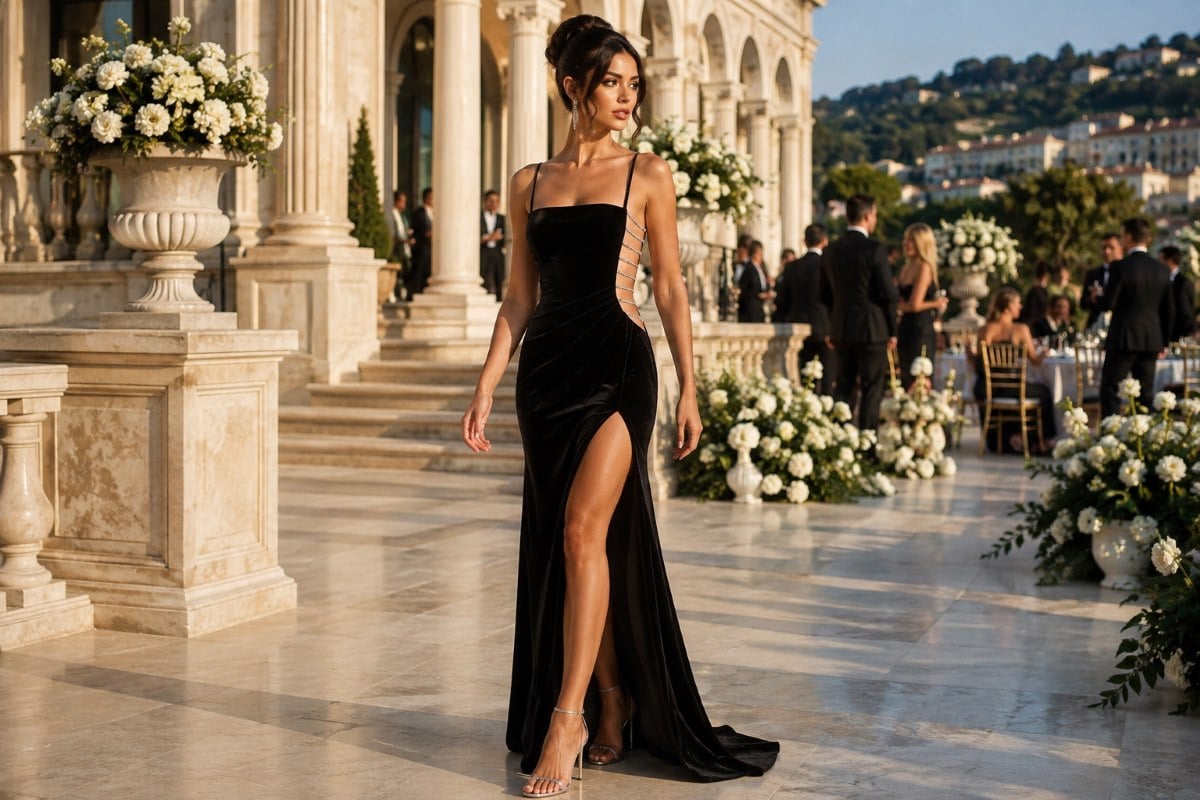
Black can be elegant, minimal, dramatic, relaxed, festive, or severe depending on the garment and styling. A fluid black midi, a beaded mini, a tailored jumpsuit, and a floor-length velvet gown do not communicate the same level of formality simply because they share a color.
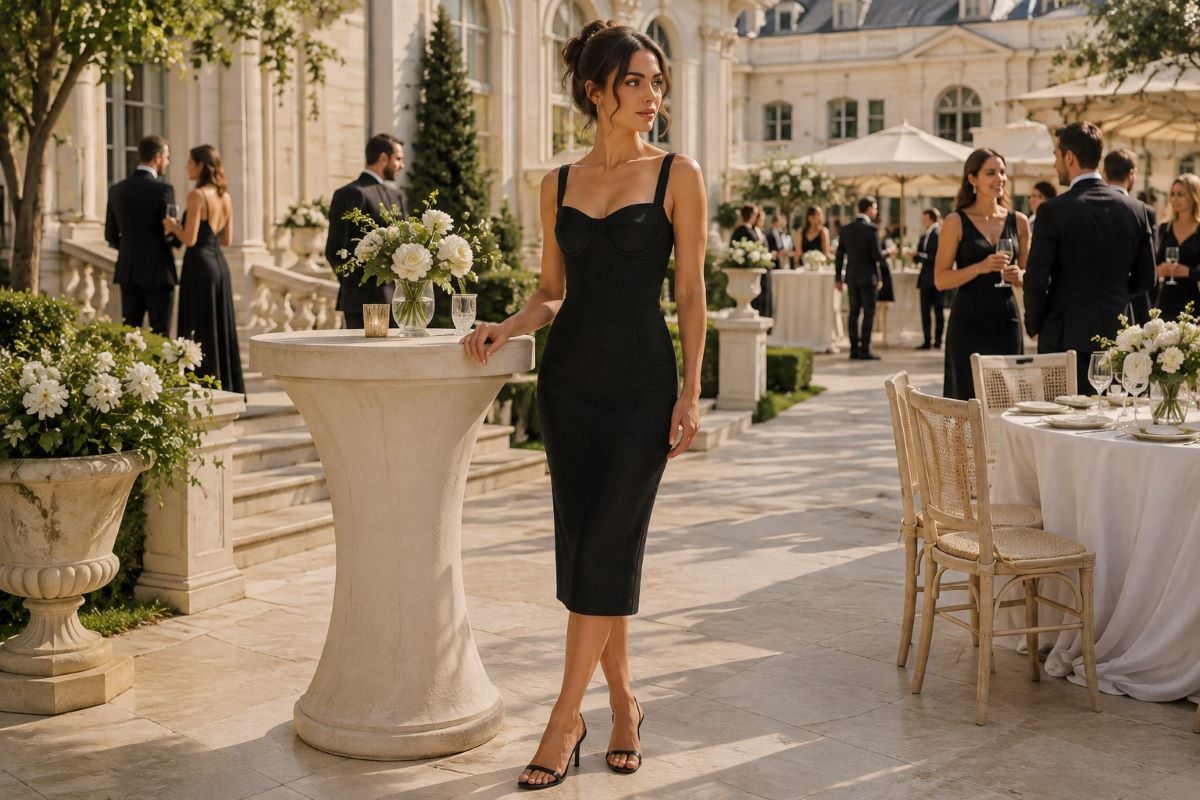
When Should You Check Before Wearing Black?
Ask the couple, a close family member, or someone in the wedding party when the invitation does not answer a material question. A brief check is especially useful in the following situations:
- The invitation requests a palette or theme. “Bold tropical,” “garden colors,” “all white,” “pastels,” or a named color scheme may make black inconsistent with the host’s plan even when black would otherwise be acceptable.
- The couple has reserved black for a specific group. Some weddings assign colors to attendants, immediate family, vendors, or all guests. Follow the stated plan rather than assuming neutral colors are exempt.
- The ceremony has cultural or religious expectations you do not know. Meanings attached to colors, coverage, headwear, footwear, and modesty vary among families and communities. Avoid broad claims about an entire culture; ask about this event.
- The wedding website gives conflicting signals. A formal dress code paired with a bright theme, a religious ceremony followed by a nightclub reception, or multiple events with different requirements may call for separate looks or an adaptable layer.
- Your dress could be mistaken for the couple’s look. Black bridalwear exists. If you know the person getting married is wearing black or has reserved a particular silhouette, confirm before choosing a similar dramatic gown.
The wider question of how to avoid competing with the bride applies to silhouette and drama, not only to white. A daytime, beach, barn, garden, or destination wedding does not automatically ban black. Those details affect fabric, footwear, hem length, sun exposure, and practicality, but the hosts still set the dress expectations.
Match the Complete Outfit to the Dress Code
Color does not determine formality. Length, silhouette, fabric, construction, embellishment, neckline, coverage, footwear, and accessories all contribute. Use the following table as a starting point, not as a substitute for the invitation.
| Dress code | Practical starting point | What to confirm |
|---|---|---|
| Black tie | A formal evening gown is the most traditional and lowest-risk choice; a highly dressy cocktail dress or the dressiest little black dress may also be accepted | Host wording, venue, local custom, garment formality, and whether a shorter style truly reads as eveningwear |
| Black-tie optional or formal | A gown, dressy midi or cocktail dress, refined jumpsuit, or dressy separates | Whether the hosts expect guests to lean toward black tie and whether the ceremony has coverage requirements |
| Cocktail | A polished cocktail dress, midi, elevated mini, jumpsuit, or coordinated separates | Hem movement, degree of exposure, fabric quality, and whether the outfit looks celebratory rather than like routine workwear |
| Semi-formal | A cocktail or afternoon dress, dressy jumpsuit, or polished separates | Time of day, venue, local custom, and whether the styling is too casual or too formal for the event |
| Dressy casual or casual | A simpler dress or separates in a comfortable, event-appropriate construction | Terrain, weather, footwear, and whether a formal gown would be impractical or overdressed |
If the wording on the invitation is doing more work than you expected, a plain-language breakdown of what each wedding dress code actually asks for will settle most of the ambiguity before you shop.
Black Tie
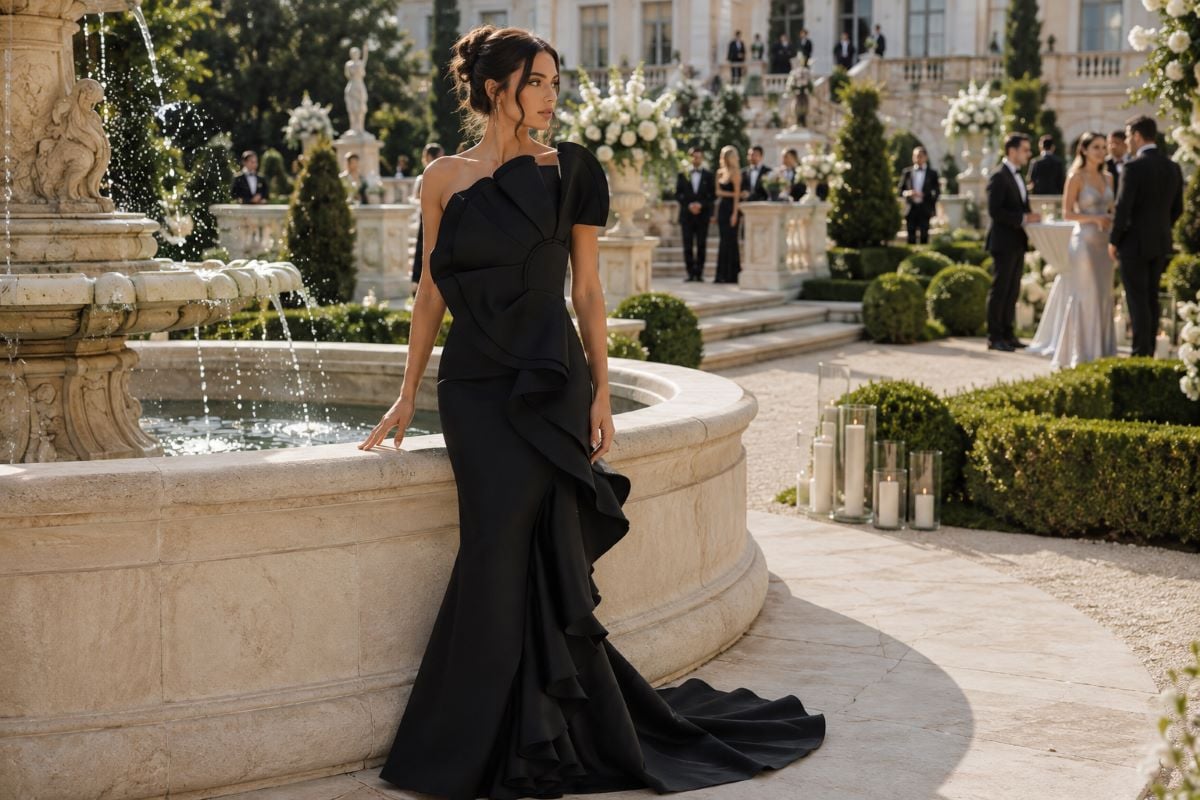
A floor-length gown remains the most traditional, easily understood choice for black tie. However, the claim that black tie requires floor length in every case is too absolute. Widely used etiquette guides include a formal evening gown, a dressy cocktail dress, and the dressiest little black dress among women’s options. Host expectations and local custom still matter, so choose a gown when you want the least ambiguous interpretation.
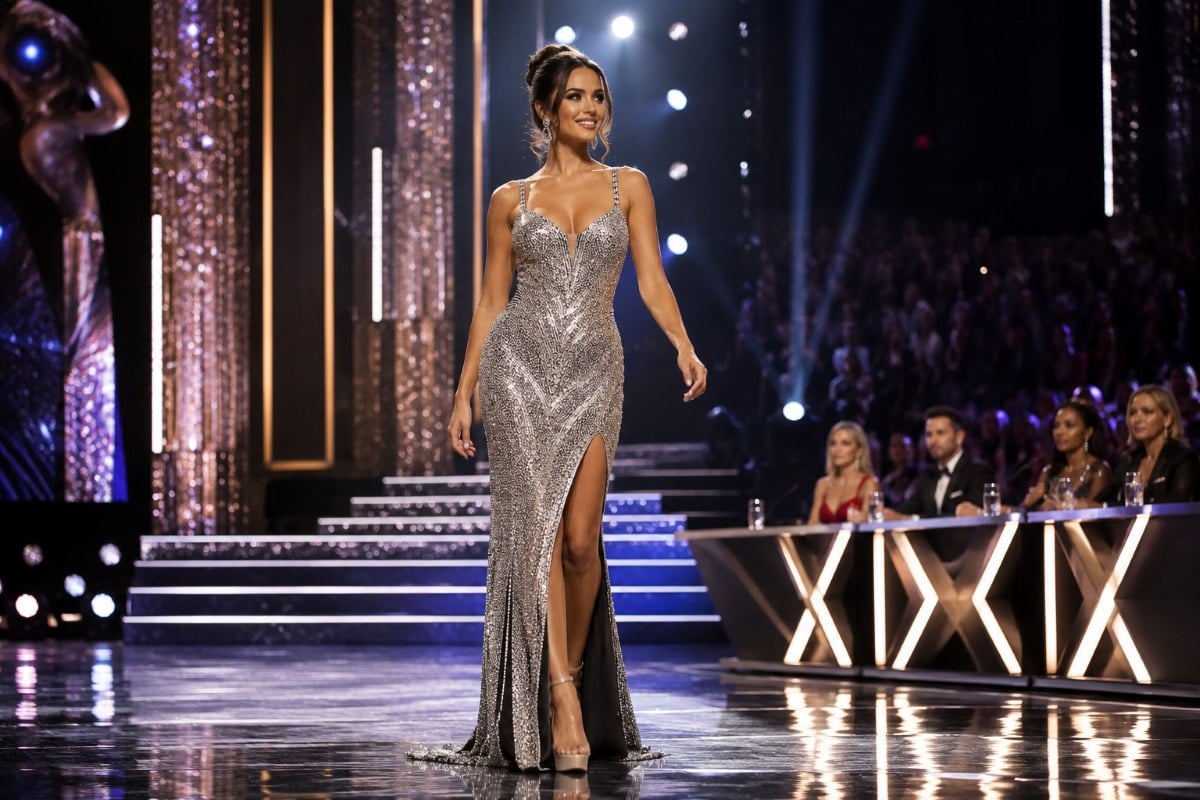
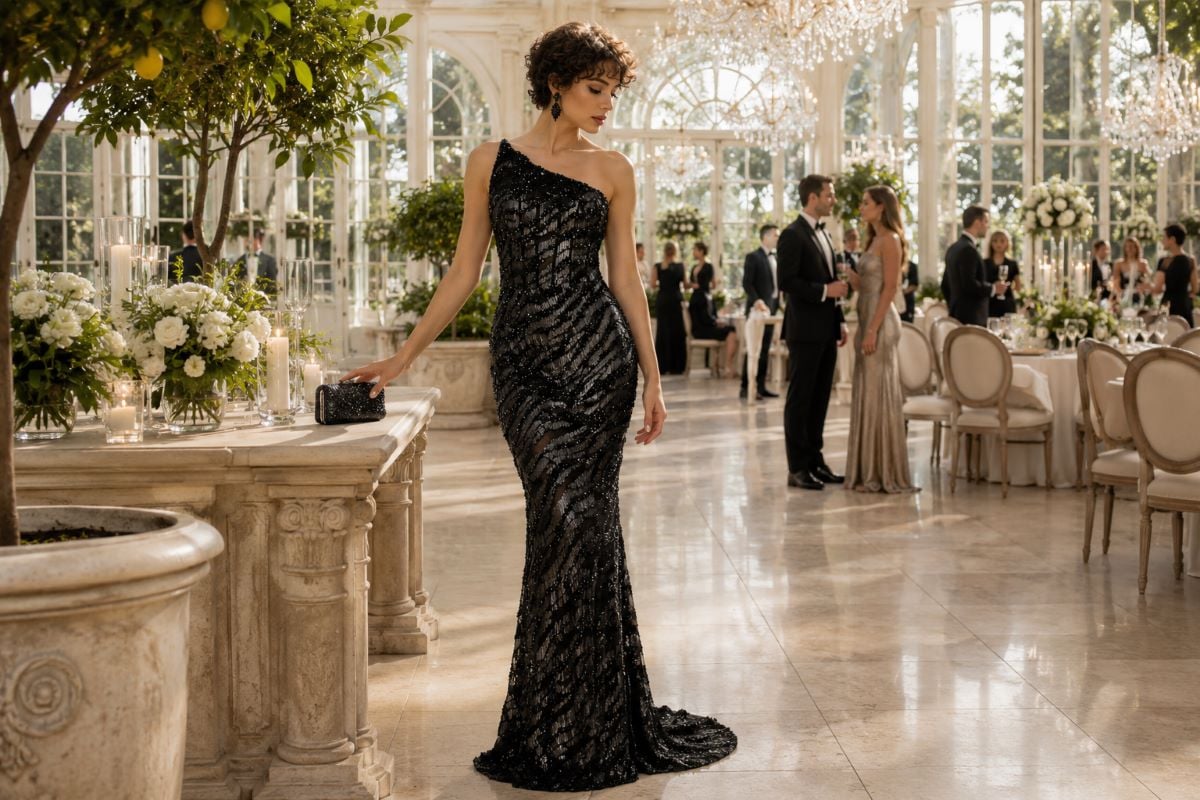
For a black-tie wedding, evaluate the dress as eveningwear. Look at the quality of the finish, how the bodice holds its shape, whether the lining remains smooth, whether the hem works with the venue, and whether cutouts, transparency, or a high slit suit the ceremony as well as the reception. Comparing black tie dresses is a useful way to see the construction level these events expect, but category placement does not replace a fitting.
Black-Tie Optional and Formal
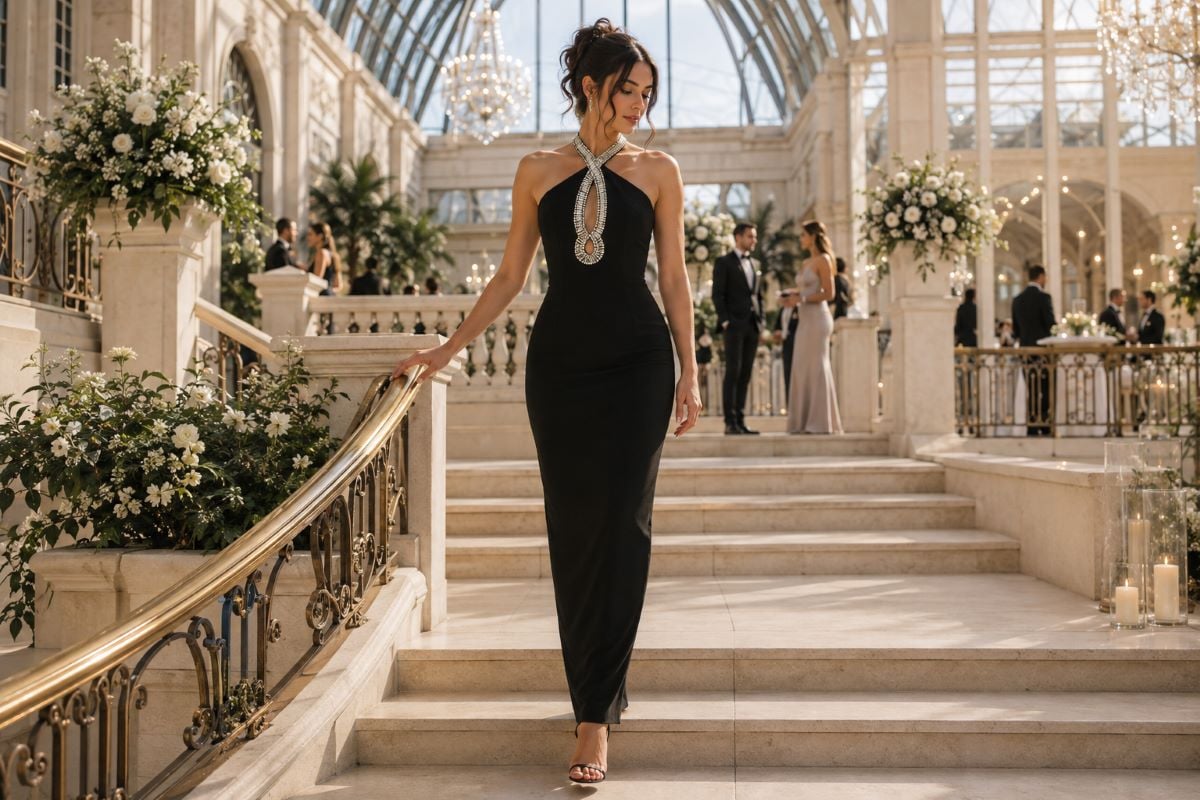
These codes allow more range. A long gown, refined midi, or highly dressy cocktail dress may work. Instead of asking whether black is formal enough, ask whether the complete outfit is polished enough for the host’s version of formal. A simple black dress can be lifted by its cut and construction; a heavily embellished dress can still be wrong if the fit, coverage, or length conflicts with the ceremony. Looking through black evening dresses shows how much variation exists inside one color at this level.
Cocktail and Semi-Formal
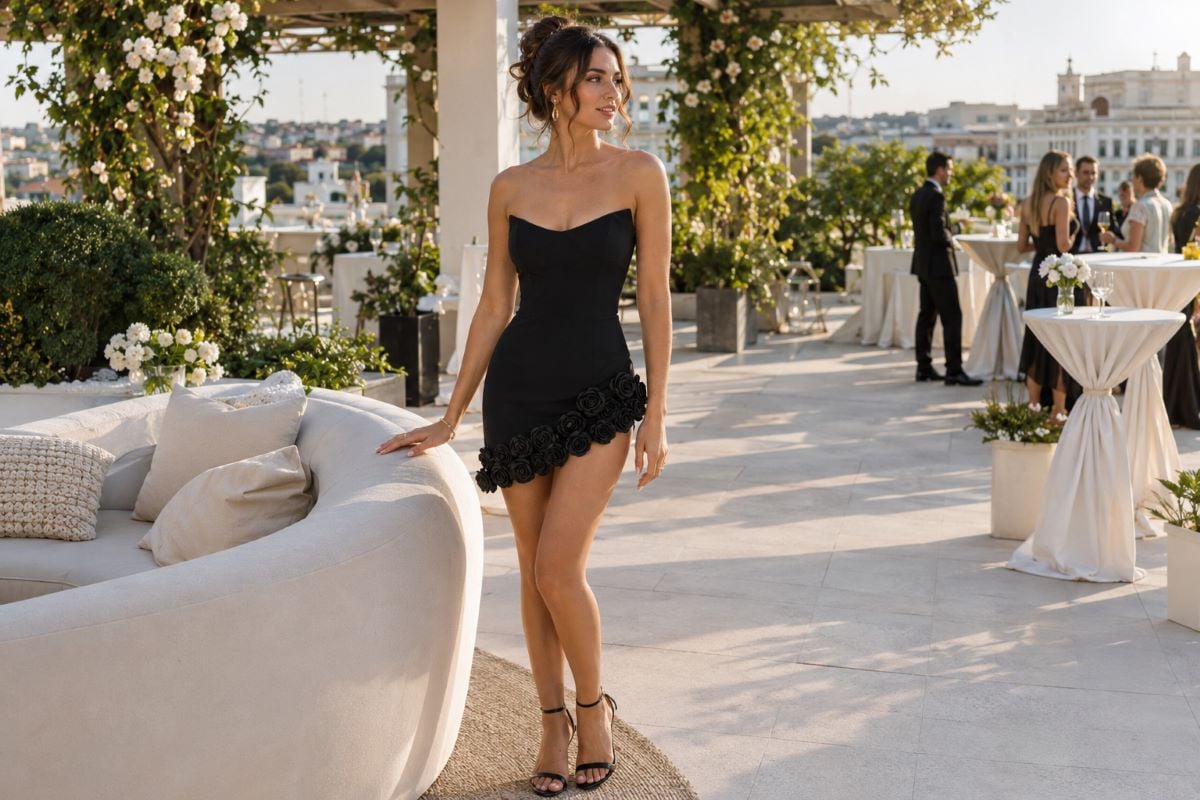
Black is a practical color for cocktail and semi-formal weddings because it appears in many silhouettes and fabrics. A black cocktail dress can be minimal, textured, embellished, fitted, or full-skirted. The important distinction is between occasionwear and an outfit that reads as ordinary office, club, or daytime clothing in that specific setting.
Do not rely on a fixed rule such as “knee length is always appropriate” or “a mini is never appropriate.” Proportion, movement, exposure while sitting, the ceremony setting, and the host’s stated formality matter. Test the actual dress from every angle.
Daytime, Outdoor, and Destination Weddings
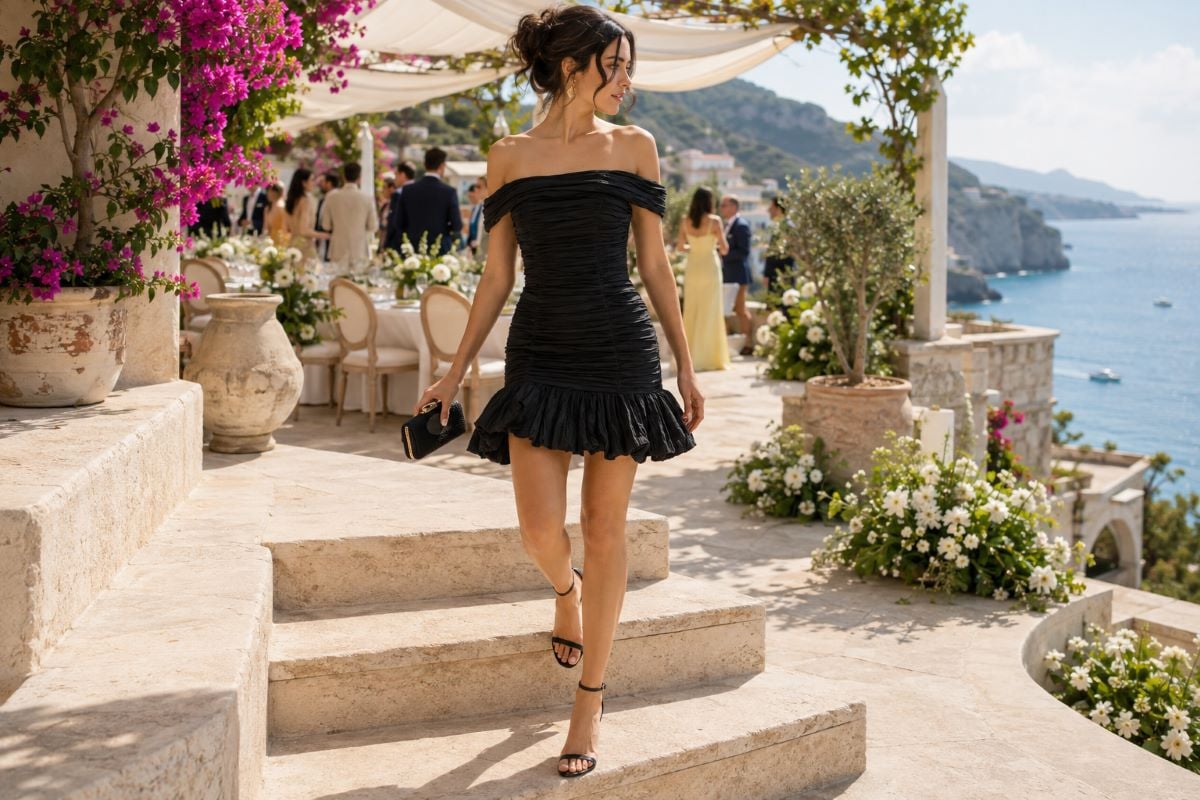
Black is not automatically too heavy for daytime. A lightweight, simply constructed black dress may be more practical than a pale, heavily lined gown, and many short wedding guest dresses handle heat and uneven ground better than a full-length style. Conversely, a dark dress with dense lining, long sleeves, a structured bodice, and multiple layers may be uncomfortable in direct sun or high humidity. Judge the complete garment and expected conditions.
For grass, sand, gravel, decking, or historic flooring, check the hem and shoes. For travel, consider how the dress packs, what the care label permits, and whether you will have access to the right alterations or garment-care service at the destination.
How to Evaluate the Specific Black Dress
1. Check the Whole Design, Not Just the Color
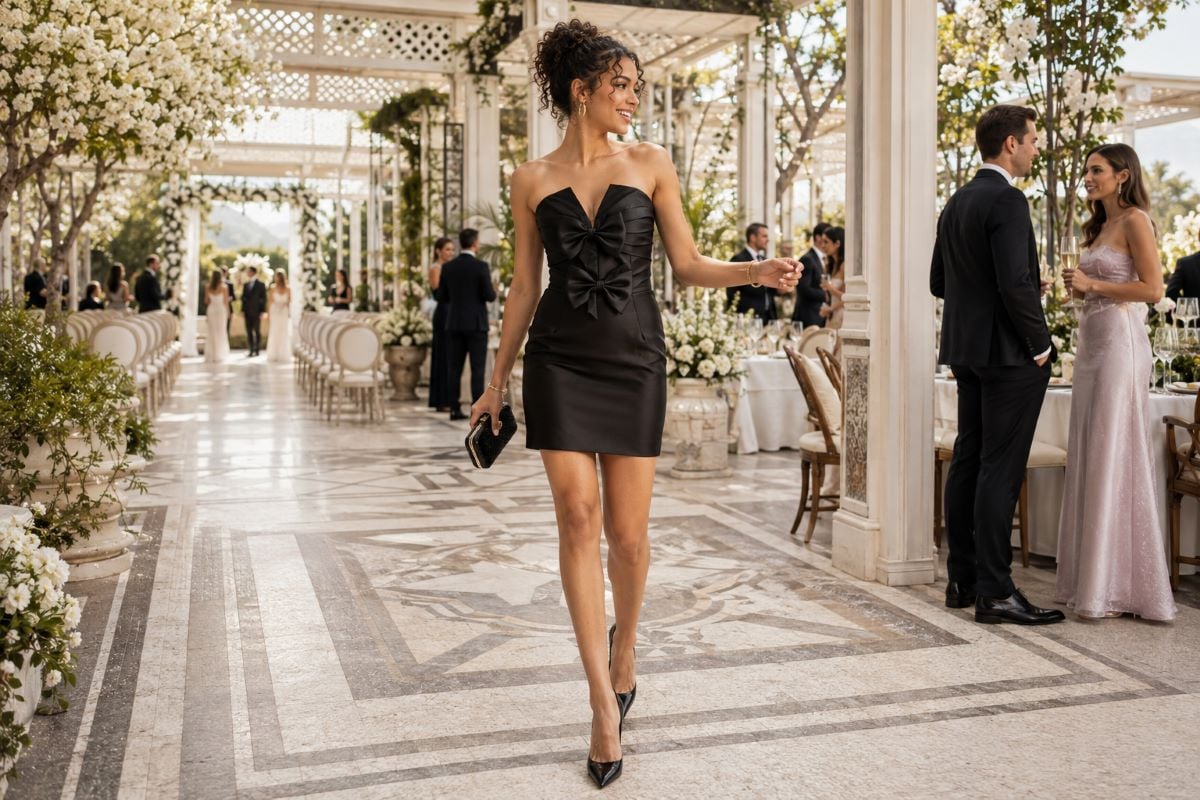
Black does not neutralize a train, plunging neckline, sheer panel, corset, cutout, bodycon fit, large bow, sequins, feathers, or sculptural skirt. Decide whether those details suit the ceremony, reception, your role, and the stated dress code. A design can be appropriate in black, inappropriate in black, or appropriate only with an added layer for part of the event.
2. Test Fit and Movement
A wedding guest outfit may be worn through transportation, a ceremony, photographs, dinner, stairs, greetings, and dancing. During the fitting:
- Walk at normal speed and take several turns.
- Sit in a chair similar to ceremony or dining seating.
- Raise both arms, reach forward, and hug someone.
- Climb a few steps and check whether the hem enters your shoes.
- Lean and bend as you would while speaking to seated guests or using a handbag.
- Dance briefly and confirm that the neckline, straps, slit, lining, and undergarments stay where intended.
- Practice using the restroom if the skirt, train, sleeves, or closure are complicated.
Do not buy a smaller size to make a neckline, waist, or strapless bodice feel more secure. Compression is not the same as correct support and can create pulling, seam strain, restricted breathing, or closure failure. Use current measurements and the size guide published for that exact style.
3. Check Coverage in Event Lighting
Black fabric may appear opaque in a fitting room but reveal lining boundaries, mesh, undergarments, or stretched areas under daylight, stage light, or flash. Take standing and seated photographs from the front, side, and back with and without flash. Check the slit while walking and sitting, not only while standing still.
If the ceremony requires covered shoulders, a higher neckline, or another form of modesty, confirm whether sheer mesh counts as coverage in that setting. An illusion panel creates a visual boundary but may remain transparent.
4. Inspect the Surface
Black can make lint, deodorant, makeup, dust, loose threads, and some seam irregularities more noticeable. Satin, sequins, velvet, lace, tulle, and matte crepe also respond differently to light. Review the dress in the lighting you expect to encounter and carry only garment-safe products approved for the fabric and finish.
Does a Black Wedding Guest Outfit Have to Look “Festive”?
No single accessory formula separates a wedding outfit from a funeral outfit. An all-black look can be deliberate and celebratory; a colorful outfit can still be too casual or unsuitable for the dress code. Context, construction, grooming, fit, and the overall impression matter more than adding a required metallic shoe or jewel-tone clutch.
If you want more visual contrast, you can introduce it through texture, jewelry, shoes, a bag, a wrap, makeup, or hair accessories. If you prefer monochrome, combine finishes or shapes only when they suit your taste. Matte black shoes, black hosiery, and a black bag are not an etiquette violation. They simply create a different visual effect from metallic or colorful accessories, and the classic pieces in the little black dress edit show how far a single color can range in tone.
Choose Fabric and Finish for the Actual Event
| Fabric or finish | Possible visual effect | Practical checks |
|---|---|---|
| Matte crepe or scuba | Clean, minimal, or tailored | Seam smoothness, stretch at the hips and seat, lining, recovery, and whether the weight suits the temperature |
| Satin | Continuous sheen that changes with light and movement | Flash photography, seam puckering, water or pressure marks, snag risk, lining, and care instructions |
| Velvet | Depth and directional pile | Crush marks, lint, pressure from sitting, venue temperature, and the care label |
| Lace or tulle | Texture, transparency, layering, or dimension | Lining coverage, skin irritation, snags, exposed edges, and whether accessories catch |
| Sequins, beads, or crystals | Point-by-point reflection and surface detail | Weight, missing pieces, abrasion under the arms, snagging, lining, and whether embellishment affects alterations |
These are tendencies, not guarantees. Fiber, weight, finish, pattern, lining, embellishment, and construction can make two dresses with the same fabric label behave differently.
Photography and Lighting
Do not choose black solely because someone claims it always photographs well, and do not reject it because someone says details disappear. Cameras, exposure, flash, venue lighting, fabric reflectance, skin tone, background, and editing all affect the result.
- Take photos in daylight, warm indoor light, and a darker room with flash.
- Record a short video while walking and turning.
- Check whether a shiny surface creates highlights you like.
- Confirm that matte areas retain visible shape rather than merging into one dark block.
- Look for lint, wrinkles, seam puckering, lining edges, and transparency.
- Photograph the full outfit with the intended shoes, bag, jewelry, and wrap.
Shoes, Outerwear, and Accessories
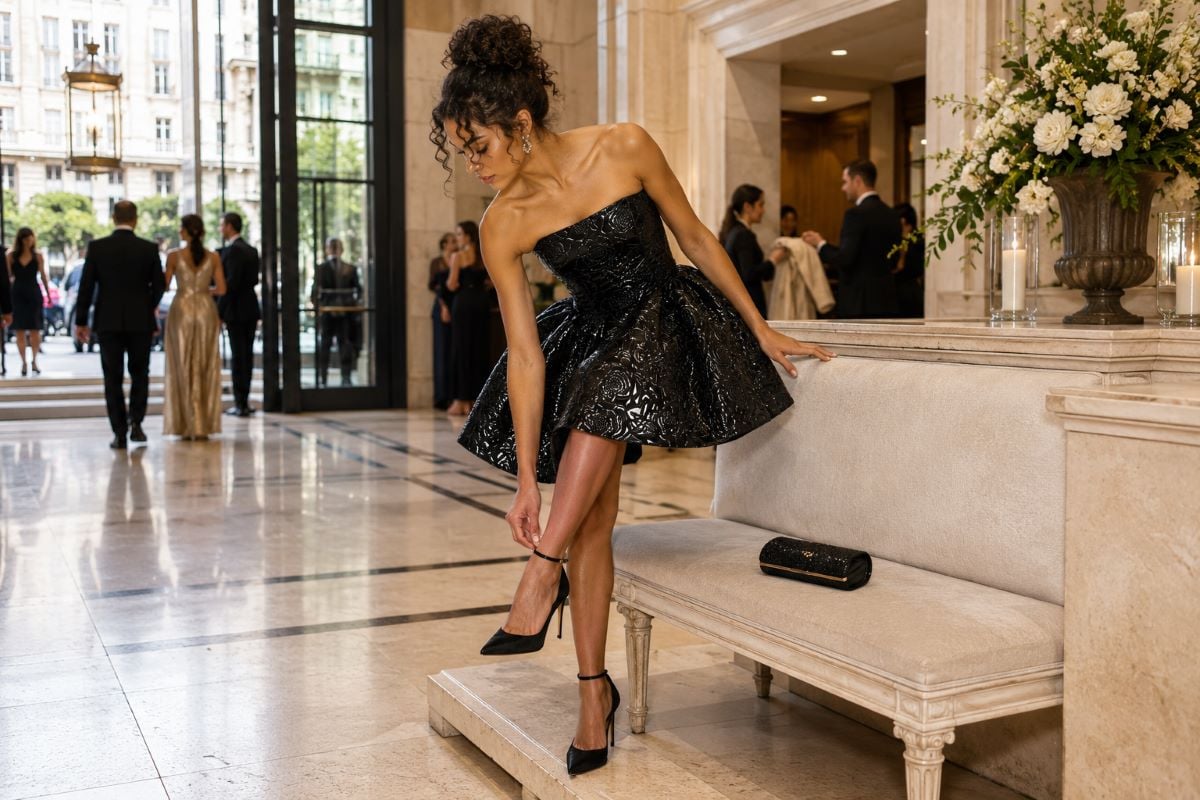
There is no required shoe color or heel height for a black wedding guest dress. Choose footwear that works with the hem, terrain, standing time, and your mobility. Put on the final shoes before approving the hem. Changing from a high heel to a flat shoe can lower the dress enough to create a tripping risk.
Try outerwear over the complete outfit. A coat, shawl, wrap, or jacket should allow the sleeves and bodice to sit correctly. Check whether hooks, zippers, beading, rough trim, or a textured bag can catch lace, tulle, satin, or embellishment. For a religious ceremony, an appropriate wrap may provide coverage, but confirm that it stays in place when standing and sitting.
Alterations and Timing
Many black wedding guest dresses can be altered, but the method and cost depend on the exact construction. Before buying a dress that needs work, ask an alterations professional about:
- the number of lining and outer layers;
- boning, cups, waist stays, corsetry, and closures;
- beading, lace motifs, sequins, appliques, or trim crossing the seams;
- slits, trains, high-low hems, horsehair braid, scallops, or border designs;
- whether changing the neckline or strap position affects support;
- whether the fabric shows old stitch marks or pressing impressions;
- the final shoe height and hem clearance;
- the realistic fitting schedule before the wedding.
Do not assume every hem is simple or every bodice can be reduced by the same amount. Obtain a garment-specific assessment and price before relying on alterations to solve a major fit issue.
Black Wedding Guest Dress Checklist
- Read the invitation and wedding website for dress code, palette, and event-specific instructions.
- Ask about cultural, religious, or family expectations when they are not clear.
- Confirm that the complete design, not just the color, matches the event’s formality.
- Use current body measurements and the exact product size guide.
- Walk, sit, reach, climb stairs, turn, lean, and dance in the dress.
- Check coverage and transparency in daylight, indoor light, and flash photography.
- Try the planned undergarments, shoes, outerwear, jewelry, and bag.
- Inspect the fabric for lint, snags, loose embellishment, seam strain, and lining problems.
- Get an alteration assessment before buying when substantial changes are needed.
- Read the care label and plan transportation, storage, and cleaning for the exact garment.
Black Wedding Guest Dress FAQ
Is it disrespectful to wear black to a wedding?
Not by default. Black is accepted at many contemporary weddings. It becomes the wrong choice when it conflicts with the couple’s stated palette, event instructions, or known cultural or family expectations. Ask when the context is unclear.
Can I wear black to a daytime or summer wedding?
Yes, when it fits the dress code and the couple’s plan. Comfort depends on the complete garment, including fabric weight, lining, sleeves, fit, layers, sun exposure, humidity, and venue climate control, rather than on the color alone.
Can I wear a short black dress to a black-tie wedding?
Possibly. Etiquette guides include a dressy cocktail dress and the dressiest little black dress among black-tie options, although a floor-length evening gown remains the most traditional and least ambiguous choice. Follow the host’s wording and local custom.
Do I need colorful or metallic accessories with a black dress?
No. Color and shine are styling options, not etiquette requirements. Choose accessories that suit the dress, the event, and your preferences, and make sure they do not snag or damage the garment.
Can the mother of the bride or groom wear black?
There is no universal ban based on role. The mothers should coordinate with the couple and with each other when the wedding has a planned palette or when black could be interpreted in a way the family does not intend.
Can I wear black to a cultural or religious wedding?
Do not assume one rule applies across an entire religion, nationality, or community. Ask the couple or a knowledgeable family contact about color meanings, coverage, headwear, footwear, and ceremony requirements for that specific wedding.
What if the invitation says festive, garden party, or tropical?
Use the description as an instruction about the hosts’ desired mood. Black may still work in some designs, but it can conflict with a clearly requested bright or themed palette. When the wording is ambiguous, ask before purchasing.
Black can be a confident wedding guest choice when it respects the invitation and the complete outfit passes the tests for formality, coverage, fit, movement, weather, and care.
Shortlist a few styles online, then try them through an authorized Jovani retailer so you can evaluate the actual construction in person.