
What to Wear to a Black Tie Optional Wedding as a Guest
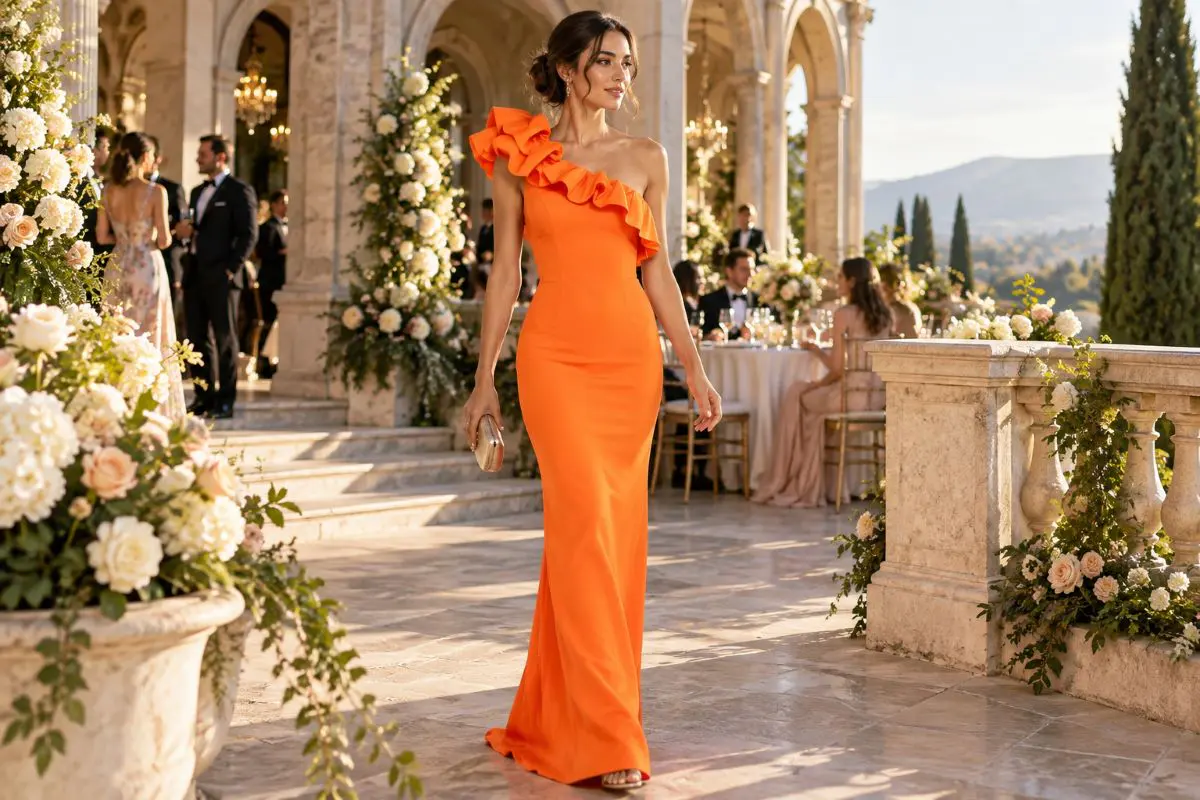
Black tie optional is the dress code that fills group chats with screenshots of the invitation and one question: how formal is this, really? The short answer is that the couple is dressing formal and inviting you to meet them near that level, with some room to breathe. This guide decodes the wording, settles the gown-versus-cocktail debate, and walks through black tie optional wedding guest dresses that work for any venue on the invite.
Use it alongside your own read of the couple. A ballroom wedding at seven in the evening and a vineyard wedding at four in the afternoon can carry the same dress code and call for different wedding guest dresses in formal and modern styles, and the details below tell you which way to lean.
What Does Black Tie Optional Mean?
The black tie optional dress code means the wedding party and hosts will be in tuxedos and floor-length gowns, and guests may either match that formality or step one polished notch below it. For women, that translates in practice to a gown or a structured midi.
It is an invitation to dress up, not a pass to dress down. The comparison below shows where it sits among the other codes.
The black tie optional meaning stays fixed even when the wording shifts. You may also see "black tie preferred," "black tie encouraged," or "black tie invited" on invitations. All three decode the same way as optional: formal is the target, and slightly less formal is accepted. If the invitation drops the qualifier and simply says black tie, treat it as a full black tie wedding and plan on a gown.
Black Tie vs. Black Tie Optional vs. Formal vs. Cocktail
Here is how the four codes compare for women, in one place.
| Dress code | What it signals | Hem length for women | Fabric feel |
|---|---|---|---|
| Black tie | The most formal evening standard | Floor length | Satin, silk, beaded chiffon, structured crepe |
| Black tie optional | Formal target with guest flexibility | Floor length preferred; polished midi accepted | Same formal fabrics, no casual textures |
| Formal / formal attire | Dressy without the tuxedo expectation | Floor length or refined midi | Crepe, satin, structured jersey |
| Cocktail | Party formality | Knee to midi | More freedom in texture and print |
Gown or Cocktail Length? A Simple Decision Rule
For women, black tie optional comes down to one hem decision, and style sites genuinely disagree on it. Some insist every hem must reach the ankle, while others wave through any dressy midi. Both camps are half right, so use three signals instead of one flat rule.
Start with the hour, since an evening reception leans gown while a daytime or outdoor celebration gives a refined midi more room. Then weigh the venue, because ballroom and museum settings read more formal than garden or vineyard settings. Finally, read the couple, and if their wedding website, planner, or family photos telegraph high formality, believe them.
When the signals split, or you simply cannot tell, go long. At a black tie optional wedding no one has ever been wrong in a floor-length gown, while a short dress can miss. If you land on midi, pick a structured one, since fitted midi evening dresses in heavy satin or crepe hold the formality that a floaty day dress cannot.
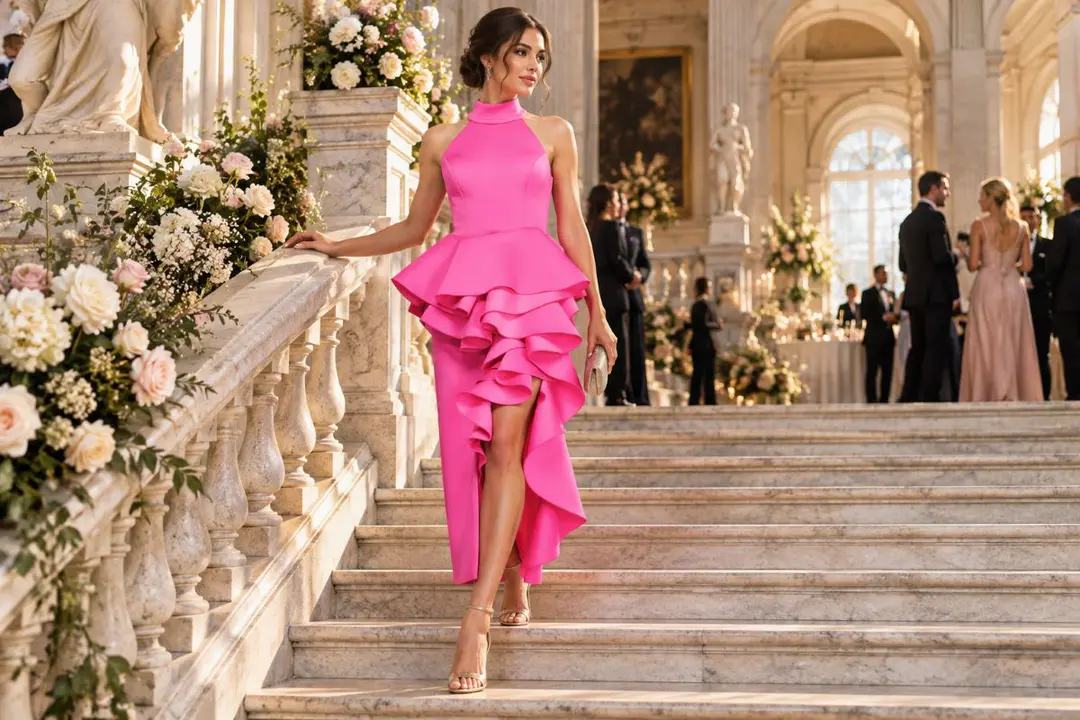
Black Tie Optional Wedding Guest Dresses That Always Work
The safest lane is the formal end of the range. Floor-length designer black tie dresses remove every ounce of doubt, and they photograph beautifully next to a wedding party in gowns and tuxedos.
Construction is what separates formal from merely long. Look for a defined waist, lining with real weight, and clean seams; details like boning through the bodice or hand-set beadwork signal evening from across the room. That construction focus is the standard Jovani's New York design studio has worked to for more than four decades, and it is why gowns built this way carry a black tie optional room without effort from you.
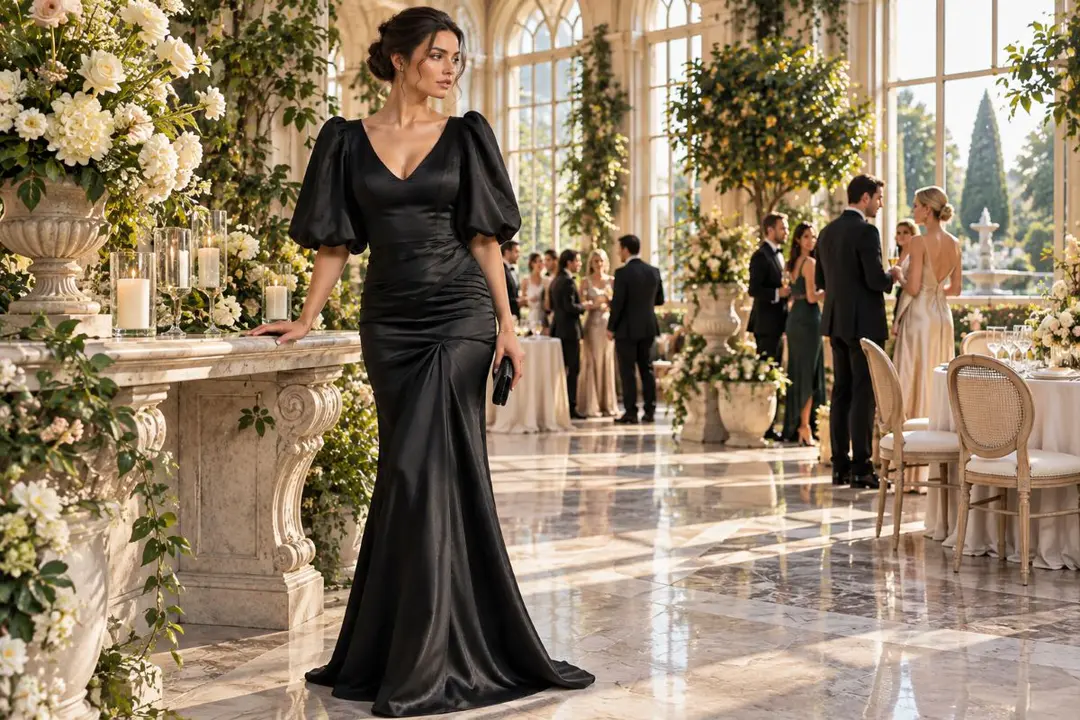
On color, the code gives you more freedom than strict black tie. Black, navy, and charcoal always work, and deep jewel tones like emerald, burgundy, and sapphire are the sweet spot for fall and winter dates. For spring and daytime receptions, richer pastels and metallics work as long as the fabric stays formal. The two standing rules are the usual ones: skip white and ivory, and skip anything that competes with the couple's moment.
The same palette serves the mothers of the couple, who appear in nearly every formal portrait. Floor-length navy mother of the bride dresses keep them level with the wedding party without competing with it.
Beyond the Gown: Jumpsuits and Dressy Separates
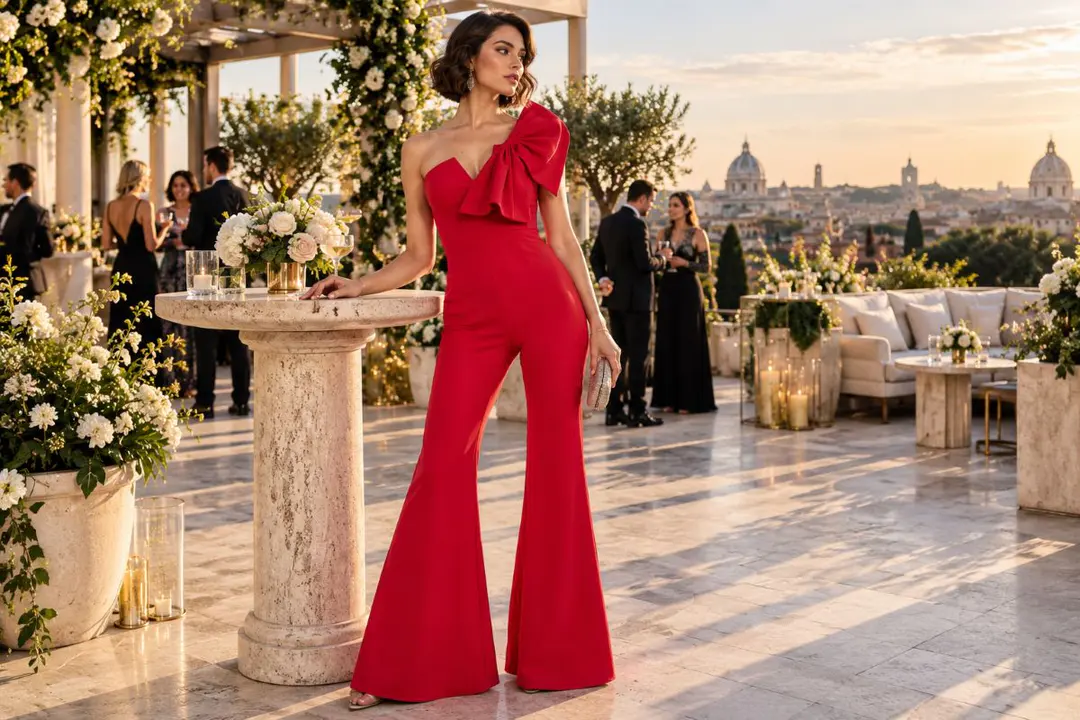
A tailored one-piece is now a fully accepted answer to this dress code, and many hosts love the modern read. The test is fabric and cut: wide-leg jumpsuits in crepe or satin with a structured bodice sit comfortably at black tie optional, while a casual knit one-piece does not. Finish with heels, fine jewelry, and a small clutch so the whole look reads evening.
What Not to Wear
The word optional trips people into underdressing, so keep these off the shortlist. Sundresses, linen, denim, and unlined cotton read daytime no matter how you accessorize them. Anything above the knee sits closer to standard cocktail attire than to this code. Sneakers, flat sandals, and oversized totes undercut a formal dress instantly. And loud novelty prints pull focus in every photo they enter. Skip white and ivory too, even in a formal cut, because a floor-length gown in those shades can echo the bride's own look, especially if she has chosen one of the structured corset wedding dresses.
Dress the Code, Skip the Doubt
Read black tie optional as formal with a small safety margin, not as a coin flip. Read the venue and the hour first, and what to wear to a black tie optional wedding stops being a debate: choose black tie optional wedding guest dresses from the formal end first, let venue and hour decide between gown and structured midi, and keep fabrics unmistakably evening. Do that and you will be dressed right in every photo, whichever way the rest of the guest list leans. To try the options on before the big date, visit an authorized Jovani retailer near you.
Black Tie Optional FAQ
These answers cover what guests ask most once the invitation says black tie optional.
What does black tie optional mean for a woman?
It means the hosts are dressing formal and you are invited to match them or come one polished step below. A floor-length gown is always right, and a structured, formal midi is accepted at most celebrations.
Can I wear a short dress to a black tie optional wedding?
Above-the-knee dresses are a risk because they read as cocktail rather than formal. If you want a shorter hem, stop at a structured midi in a formal fabric like satin or crepe, and save minis for a different party.
Can you wear black to a black tie optional wedding?
Yes. Black is a classic choice for evening weddings and fits this dress code perfectly. Save concern for white, ivory, and anything close enough to compete with the couple.
Is a jumpsuit okay for black tie optional?
Yes, if it is built like eveningwear. A wide-leg jumpsuit in crepe or satin with a tailored bodice, styled with heels and fine jewelry, meets the code. Casual knit or daytime one-pieces do not.
What should I wear to a black tie optional summer wedding?
Keep the formality and lighten the fabric. A floor-length gown in chiffon or georgette, or a structured midi in lightweight crepe, works well when it is fully lined so it stays opaque in daylight. Choose a jewel tone or a rich pastel rather than anything close to white.
What should you not wear to a black tie optional wedding?
Skip sundresses, linen, denim, unlined cotton, above-the-knee hems, sneakers, flat sandals, and loud novelty prints. The code allows flexibility in formality, not in polish.