
Reading a size chart for formal dresses surprises almost everyone the first time, because prom dress sizes rarely behave the way everyday clothing sizes do. The number on a formal gown rarely matches the number in your jeans, and it is normal for your bust to land on one size while your hips land on another. That is not a problem with your body or with the dress. Formalwear is cut to measurements rather than to a general clothing size, and once you know how to read a chart the whole thing becomes straightforward.
This guide covers how to take the three measurements that matter, how to read a prom dress size chart, when to size up, how silhouette changes the answer, and what alterations can and cannot fix.
What size prom dress should you order?
How do you work out your prom dress size? Measure your bust, waist and hips with a soft tape, then compare all three to the brand’s chart and order the size that matches your largest measurement. Do not average them and do not use your usual clothing size. A dress can be taken in almost anywhere, but letting one out is limited by how much fabric is in the seams, so the larger size is nearly always the safer choice when you fall between two.
The Jovani prom dress size chart
Every brand cuts to its own patterns, so a chart from one designer will not transfer to another. Jovani dress sizes are built to the measurements below, taken from the official chart, and this doubles as a prom dress fitting chart when you are checking a gown against your own numbers.
| Size | Bust (in) | Waist (in) | Hips (in) |
|---|---|---|---|
| 00 | 30.5 | 24 | 34.5 |
| 0 | 32 | 25.5 | 36 |
| 2 | 33 | 26.5 | 36.5 |
| 4 | 34 | 27.5 | 37.5 |
| 6 | 35 | 28.5 | 38.5 |
| 8 | 36 | 29.5 | 39.5 |
| 10 | 37 | 30.5 | 40.5 |
| 12 | 38.5 | 31.5 | 41.5 |
| 14 | 40 | 33.5 | 43.5 |
| 16 | 42 | 35 | 46 |
| 18 | 44 | 37 | 48 |
| 20 | 46 | 39.5 | 50 |
| 22 | 48.5 | 42 | 52 |
| 24 | 51 | 45 | 54 |
Jovani dress sizing works by measurement, not by the size you usually wear, which is the single most common mistake with prom dress size charts. Find the row your largest measurement falls into and start there. The Jovani dress size chart is the only one that applies to these gowns, since another label will not transfer. The full Jovani size chart also carries the measuring diagram if you want it alongside a tape.
How to measure for a prom dress
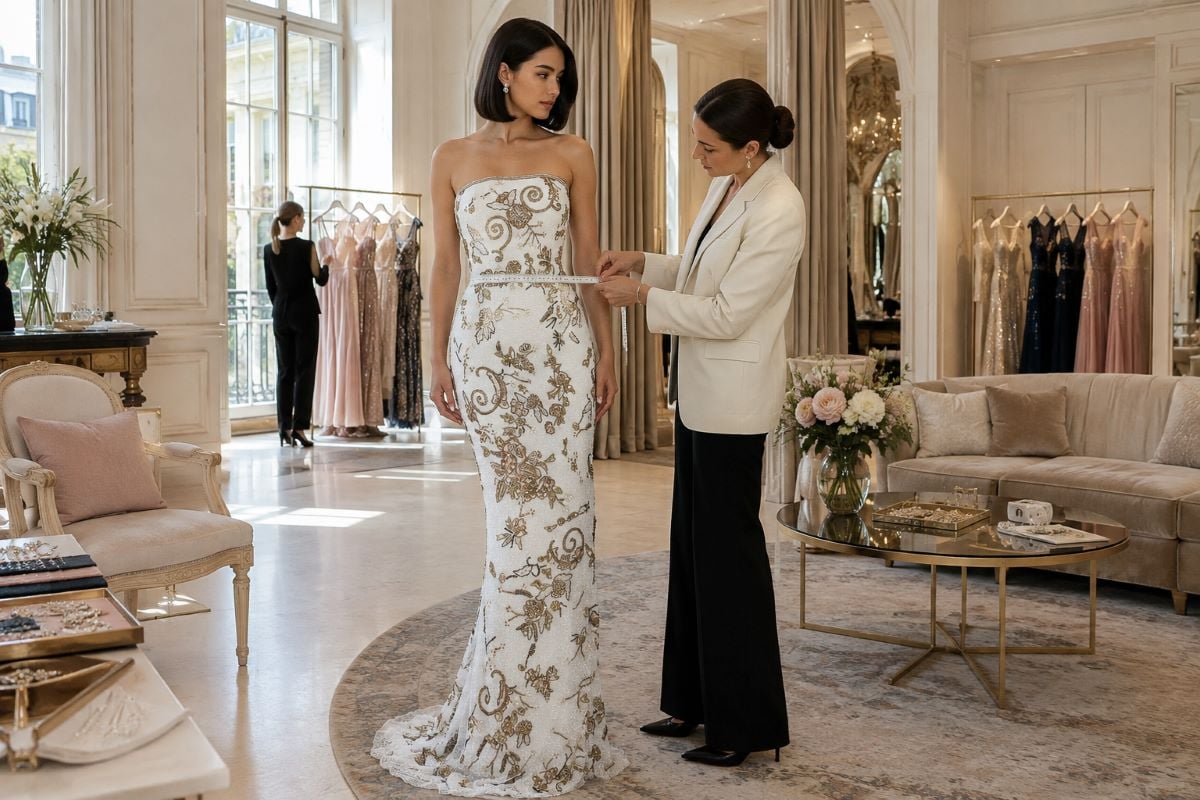
Prom dresses size to three numbers and nothing else, so guessing any of them wastes a fitting appointment. Use a soft tape measure, wear a thin top or the bra you plan to wear with the gown, and ask someone to help if you can, since measuring your own back accurately is difficult.
For the bust, run the tape around the fullest part of the chest and keep it level across the back. It should sit firm but not tight, because pulling it in gives you a number that no dress will match. For the waist, bend gently to one side and find the natural crease where your body folds, which usually sits a little above the navel. That crease is your true waist, not the line where your jeans sit.
For the hips, stand with your feet together and measure around the fullest part of the hips and seat. This point is often lower than people expect, so take the measurement twice and use the larger reading. Write all three down and keep them on your phone, because you will need them in every store you visit.
Should you size up or size down?
Between two sizes, the larger one is almost always the right answer in formalwear, and the reason is mechanical rather than cautious. A tailor can take a dress in at the side seams with straightforward work. Letting one out depends entirely on how much fabric was left in the seam allowance, and on a fitted gown that is often very little.
A gown that is too small also fails in visible ways. The zip pulls and strains, the bust gapes or spills, and the whole dress rides up when you sit or dance. None of that is fixable on the night.
The narrow exceptions are a very stretchy fabric such as jersey, or a gap of less than half an inch when you already know you prefer a close fit. Even then, the test is simple. You should be able to zip the dress, sit down properly, and take a full breath without effort.
Silhouette changes which measurement matters
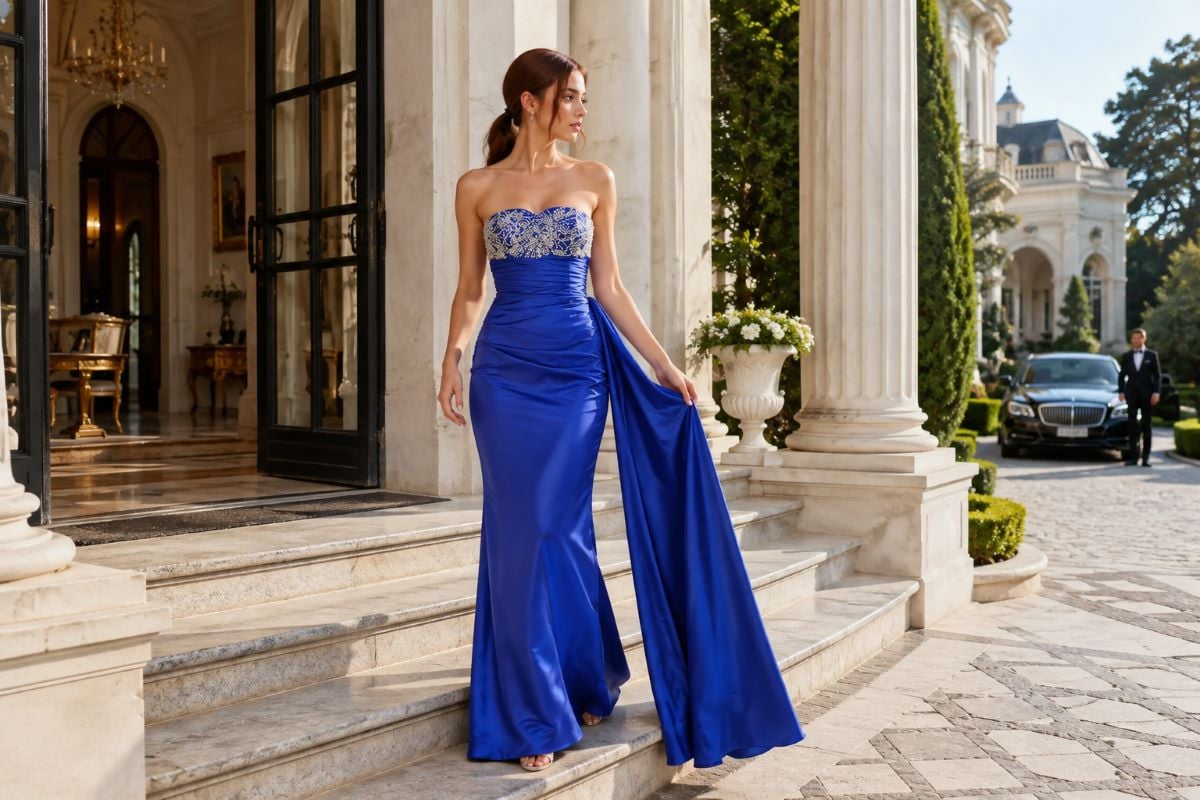
Not every gown is sized by the same number, and knowing which measurement drives your choice saves a lot of guessing.
| Silhouette | Size to this measurement | How forgiving it is |
|---|---|---|
| A line and ball gown | Bust and waist | Very forgiving through the hip and stomach |
| Mermaid and trumpet | Hips, then tailor upward | Least forgiving of any shape |
| Column and sheath | Largest of the three | Forgiving nowhere, needs precise fit |
| Fitted short or bodycon | Hips and waist | Low, and stretch fabric decides the rest |
| Full skirt short styles | Waist | High below the waist, low above it |
| Two piece | Each piece separately | The most flexible option available |
The two piece row is worth noticing if your measurements sit far apart, since the top and skirt can be different sizes without any alteration at all. Matching the silhouette to your proportions matters as much as matching the number to your measurements.
Sizing when your measurements sit far apart
Plenty of people measure a size six at the bust and a size ten at the hip, and that spread is normal rather than a problem. Order to the larger number every time.
What changes with a wider spread is how much alteration you should expect and budget for. Taking in a bodice by one size is routine work. Taking it in by three is more involved and can alter how the seams and any beading sit, so it is worth asking the store what a specific gown will need before you commit rather than after.
A corset or lace-up back solves much of this on its own, since it gives several inches of adjustment built into the design. If you are choosing between two gowns and your measurements are uneven, the one with a lace-up back will need less work.
Extended sizes follow the same chart and the same logic, and the plus size prom dresses selection is cut to the same measurements listed above.
How long should a prom dress be?
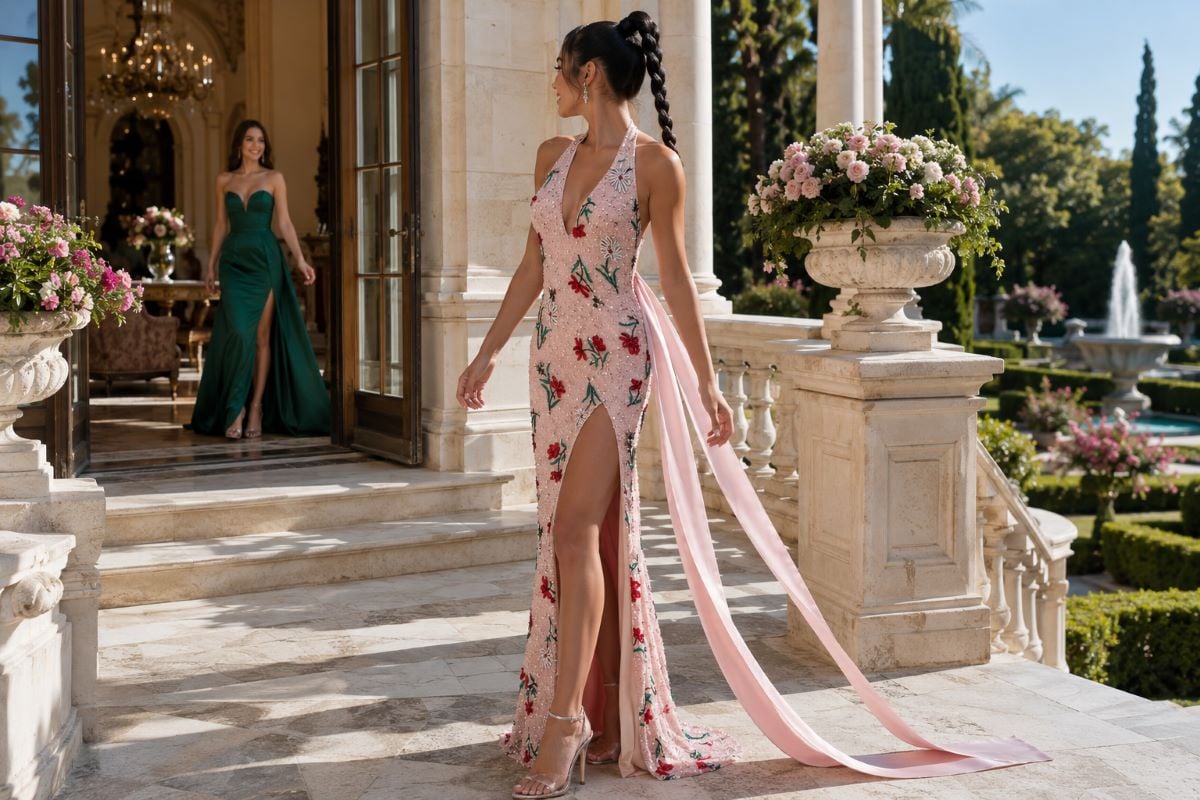
Length on a floor length gown is set from the shoes, which is why the hem is almost always the last alteration done. A floor-length gown should clear the ground by a small margin at the front and just brush it at the back, measured in the exact shoes you plan to wear rather than a similar pair.
Does a prom dress have to be long? No, there is no rule requiring it. Short and midi styles are both fully appropriate for prom, and the choice comes down to your school’s expectations, the venue and how much you plan to dance. What causes trouble is buying a floor-length gown and then changing your shoe height afterwards, since half an inch shows clearly on a long hem. Short and midi lengths are equally correct for prom, so the decision rests on your school, the venue and how much you plan to dance.
What alterations can and cannot fix
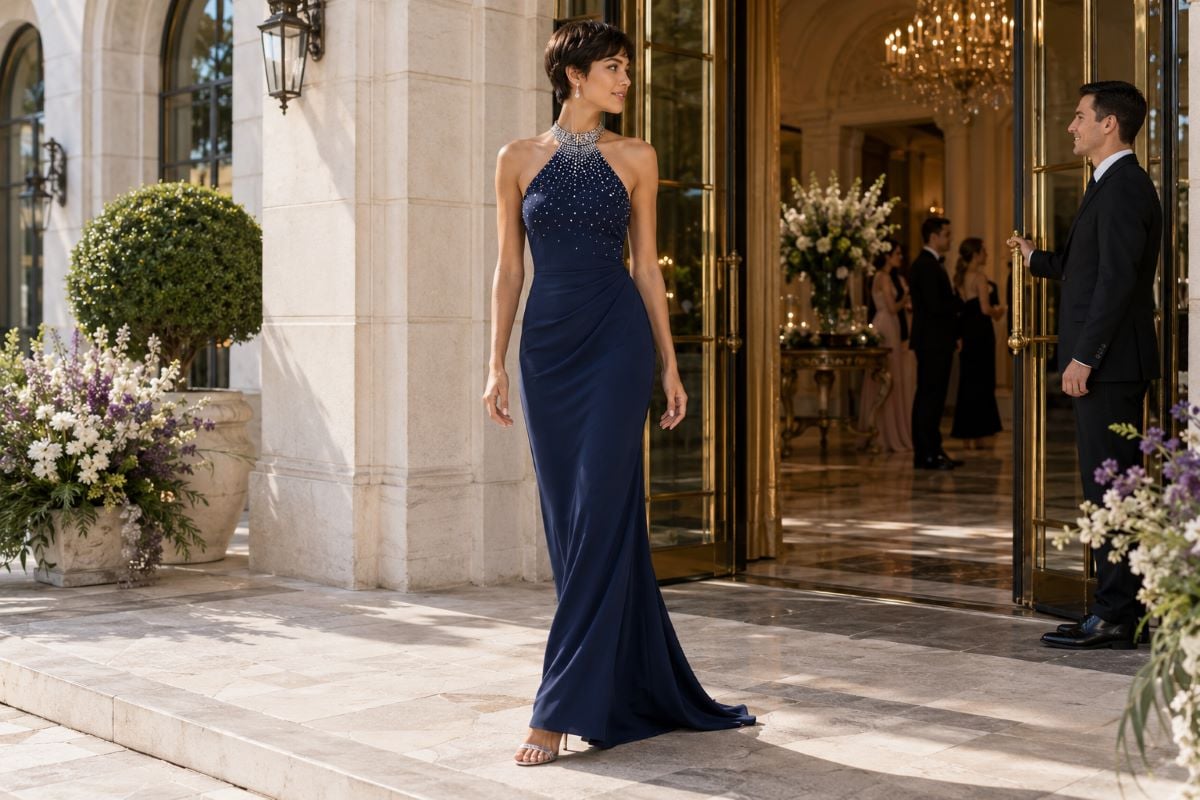
Understanding the limits before you order prevents the most expensive mistakes. Taking in the sides, shortening the hem, adjusting straps and adding a bust cup or padding are all routine. Adding a modesty panel, taking in a waist by a size or two, and shortening straps are equally standard.
What cannot be fixed is a bodice that is too tight across the shoulders or back, because there is no fabric to release. Lengthening a dress is usually impossible without a visible join. Heavily beaded seams are slow and costly to alter, since the beading has to be removed by hand and resewn afterwards. And a gown two or more sizes too large often needs so much reconstruction that the proportions never sit right.
Budget for alterations from the start rather than treating them as an unexpected extra, since nearly every formal gown needs some. Our guide to prom dress alterations covers what each change typically involves.
When to order so the timing works
Order three to four months before the event if the gown has heavy beading, lace or a boned bodice, because that alteration work is slower and often needs more than one fitting. A simpler satin, crepe or jersey style can be handled in eight to twelve weeks.
Leaving it later narrows you to whatever is already in stock in your size, which is the one situation where sizing genuinely becomes a problem. Confirm the lead time with the store before placing the order rather than after.
Prom Dress Sizing Questions
Why is my prom dress size bigger than my normal size?
Formal gowns are cut to bust, waist and hip measurements rather than to general clothing sizing, and they are built more like tailored clothing than casual wear. It is common to take a number or two above your usual size, and it reflects the pattern the gown was cut to rather than anything about your body.
What if my bust and hips are different sizes?
Order the size that matches your largest measurement and have the rest taken in. This is the standard approach and formal gowns are made with alterations in mind. A corset or lace-up back reduces the work considerably, since it builds several inches of adjustment into the design itself.
How do I measure myself for a prom dress?
Use a soft tape and measure three points. Bust goes around the fullest part of the chest with the tape level across the back. Waist goes around the natural crease where your body folds when you bend sideways, usually above the navel. Hips go around the fullest part of the hips and seat with your feet together.
Is it better to size up or size down in a prom dress?
Size up in almost every case. A tailor can take a dress in at the seams easily, while letting one out depends on how much fabric was left in the seam allowance, which on a fitted gown is often very little. The exceptions are stretch fabrics such as jersey, or a gap under half an inch when you prefer a close fit.
How much do prom dress alterations cost and how long do they take?
Costs vary by region and by how much work a gown needs, so ask for a quote at the fitting rather than assuming. Timing matters more than price. Allow three to four months for a beaded or boned gown, since that work is slower and often needs more than one fitting, and eight to twelve weeks for a simpler style.
How long should a prom dress be?
A floor-length gown should clear the ground slightly at the front and just brush it at the back, measured in the exact shoes you will wear. Short and midi lengths are equally appropriate for prom, so the choice depends on your school, the venue and how much you plan to dance rather than on any rule.
Getting measured properly before you order
Self-measurement gets you close, but a prom fitting confirms it and catches the things a tape cannot, such as how a bodice sits on your torso length or whether a strap position works on your shoulders.
Take your three measurements with you and book a fitting at an authorized Jovani retailer, where the size can be confirmed against the actual gown and any alteration work quoted before you commit.