
The Mother of the Bride in Pants: Jumpsuits and Suits, Done Right
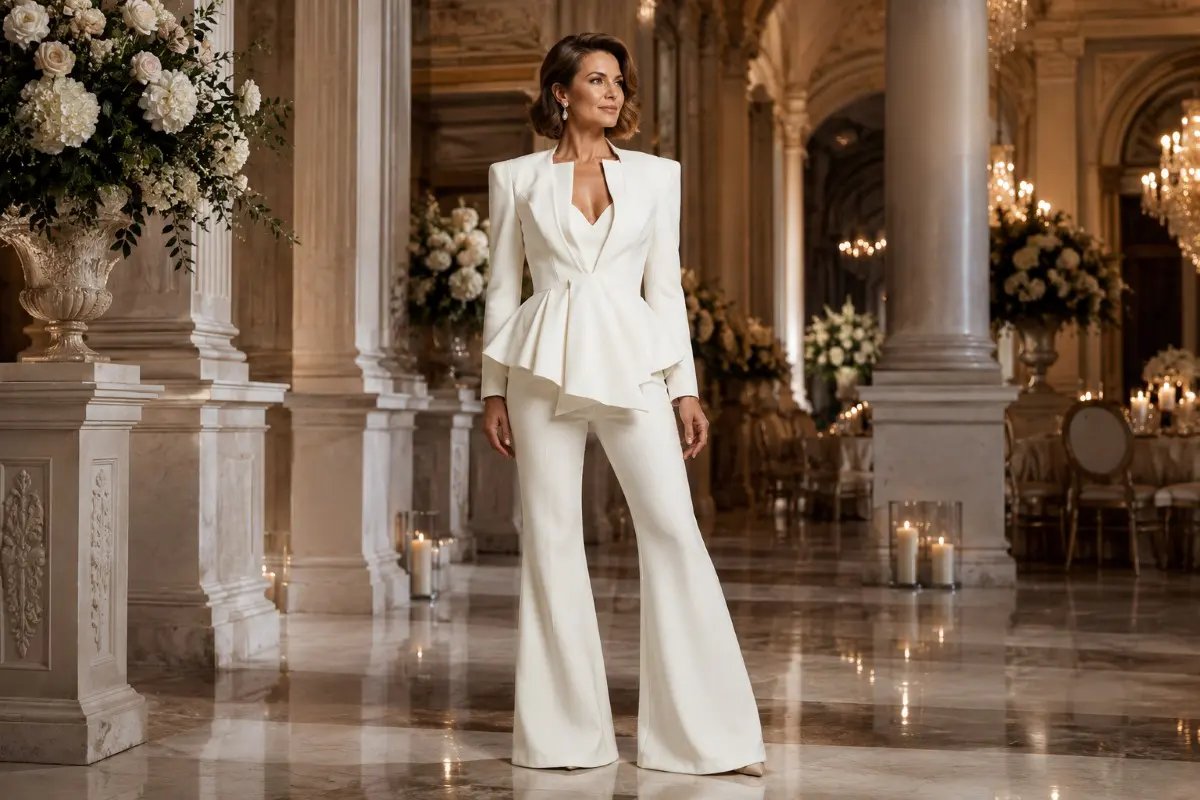
Somewhere between the third gown that needed shapewear and the fourth that needed a stole, a growing number of mothers ask the quietly radical question: who decided this day requires a dress? The answer is nobody, anymore. Mother of the bride jumpsuits and pantsuits have moved from bold exception to established option, worn at formal city weddings and garden celebrations alike, and the mothers choosing them report the same three reasons: comfort across a twelve-hour day, a look that matches how they actually dress, and photographs where they recognize themselves. This guide covers when pants are the right call, how to make them read unmistakably formal, and the fit rules that are different from a gown's.
When Mother of the Bride Jumpsuits Win the Day
The case is practical before it is stylistic. A mother's wedding day involves stairs, dance floors, garden gravel, long dinners, and several hundred hugs, and a well-cut jumpsuit or suit handles all of it without a hem to manage. Cold venues and windy outdoor ceremonies favor pants outright. So does personal identity: a mother who has worn tailoring her whole life often looks more like herself, and more at ease, in an evening suit than in her first gown in a decade, and at ease is exactly what the photographs remember. The honest counterweight is tradition: at the most conservative, formal-gown-expected celebrations, and in families where the mothers' gowns are part of the picture, a dress may still be the smoother social choice, which is one conversation with the couple, not a rule. If the answer comes back open, the jumpsuits collection and the tailored side of the wardrobe are both in play.
The Formality Proof: Fabric and Tailoring
What separates a wedding jumpsuit from a weekend one is exactly what separates a gown from a sundress: fabric weight, structure, and finish. Evening crepe with body, satin-backed fabrics, velvet for winter, beading or a metallic thread for black-tie, these carry formality in pants precisely as they do in skirts. Cut does the rest: a wide, fluid leg reads gown-adjacent and moves like one, a structured shoulder reads ceremonial, and a defined waist keeps the line elegant in photos. The same logic governs the two-piece route, where an evening jacket over tailored trousers builds the most formal version of the look, and the range of women's suits shows how far occasion tailoring has come from office associations. The test is simple: if the fabric would pass at the wedding as a gown, it passes as pants.
The same standard is what lets a jumpsuit clear even the highest bar, argued in full in our guide to when a jumpsuit meets a black-tie wedding.
Jumpsuit, Pantsuit, or Dress: Choosing Your Version
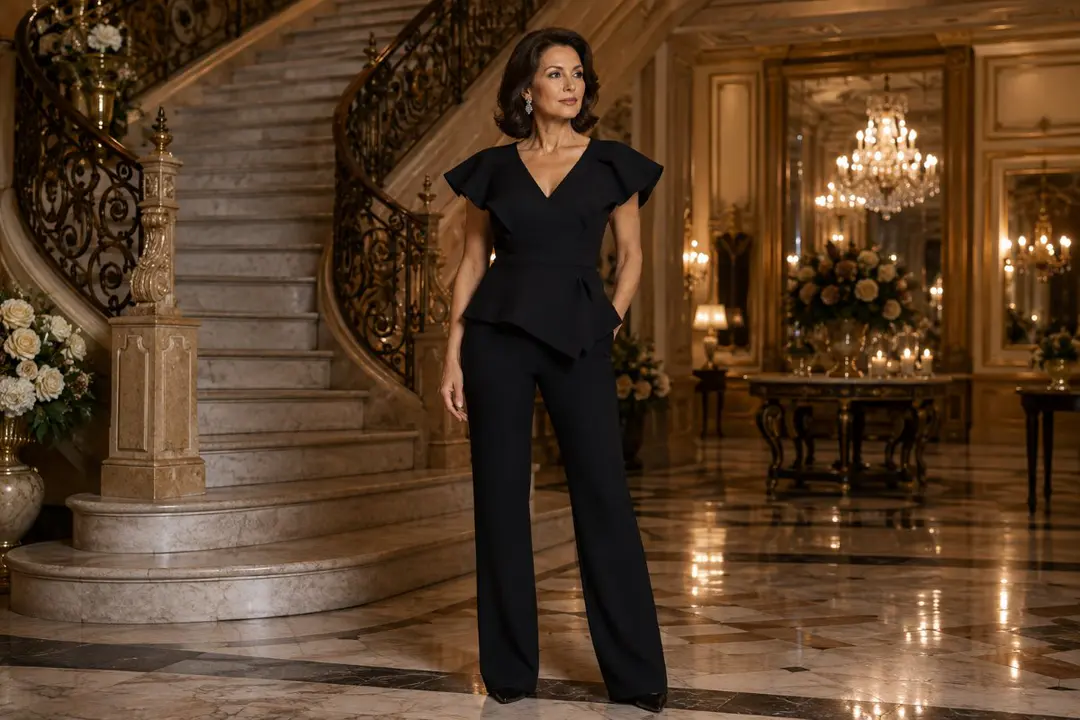
The three options solve slightly different days. A jumpsuit is one considered piece, sleek in photos and closest to a gown in silhouette, the strongest pick for modern venues and evening receptions. A pantsuit separates the investment, jacket on for the ceremony, off for the dance floor, and offers the most rewear afterward. And the classic gown remains the right answer for the mother who simply loves one, with the full mother of the bride gowns collection holding that lane.
There is also a fourth path between them: coordinated separates with a skirt, covered in our guide to the two-piece mother of the bride look, which shares the fit advantages of separates while keeping a skirt line. Choosing among them is a taste and venue decision, not a rank of formality, because all four reach black tie in the right fabric.
Fit Rules That Are Different From a Gown's
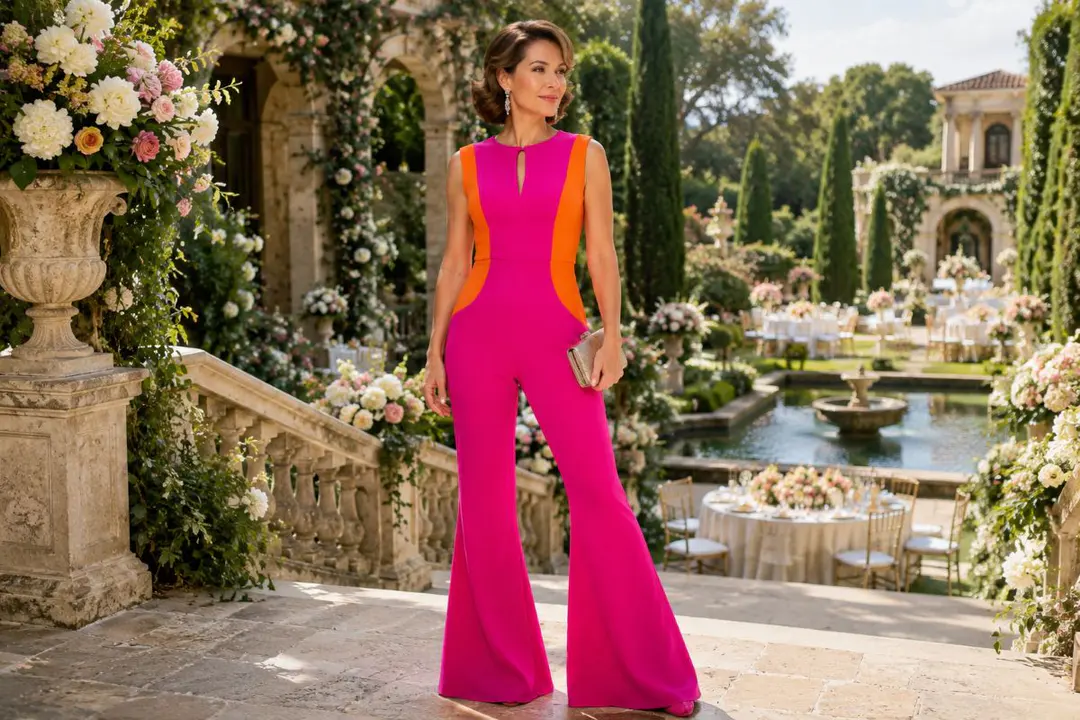
Pants change the fitting checklist, and three measurements matter most. First, torso length on a jumpsuit: unlike a dress, a jumpsuit must fit your rise, and one cut too short pulls at the shoulders while too long bunches at the waist. Try jumpsuits on seated as well as standing, since sitting is where torso fit shows. Second, hem with shoes: decide the wedding-day heel first, then hem the pants to skim the shoe's vamp with a wide leg or break cleanly with a straight one, because a pant hem is less forgiving than a gown hem about changing footwear later. Third, the practical detail every experienced jumpsuit wearer mentions: check the bathroom logistics in the fitting room, favoring styles with genuine stretch, a wrap element, or a well-placed zipper, since a twelve-hour celebration makes this the least glamorous, most real fit criterion of all. Sizing follows the mothers' system, order by measurements against the chart and fit the largest one first; the full method is in the sizing guide for mothers' formalwear, and it applies to pants unchanged.
Extended sizes carry every advantage of the category, with the structure engineered in exactly as the plus size mother of the bride dresses range builds it.
Styling Pants So They Read Wedding
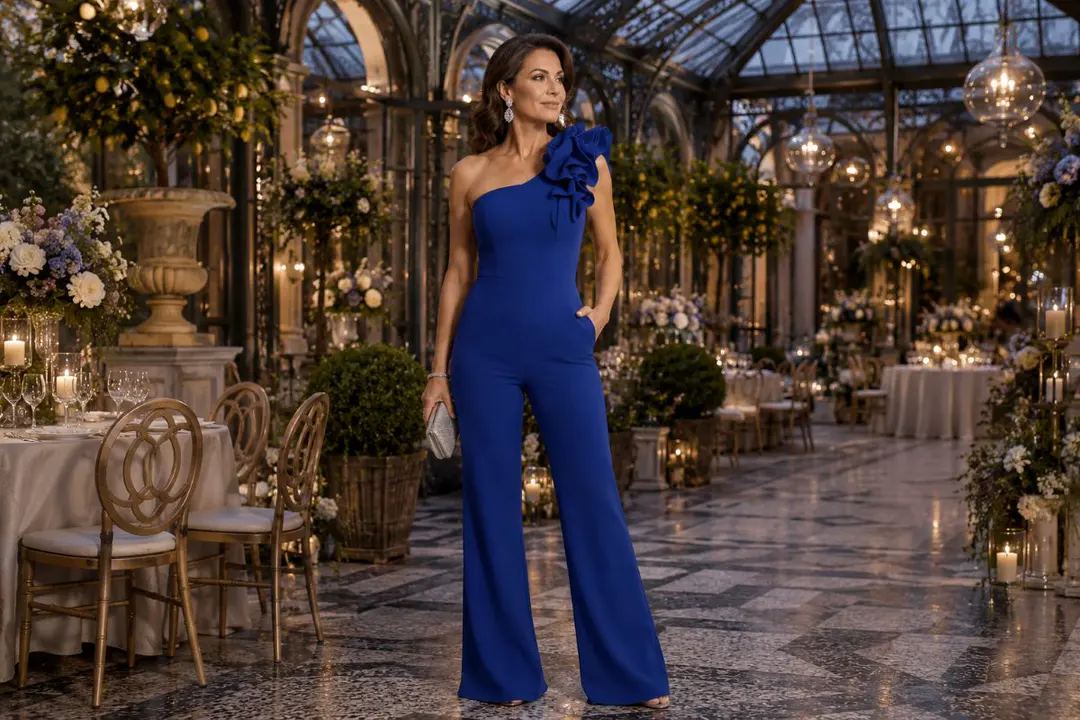
The styling brief is one line: everything above the shoulders and below the hem should say celebration. Statement earrings do more work with a jumpsuit than with any gown, since the clean neckline hands them the stage. A metallic heel or an embellished sandal signals evening instantly, where a plain black office pump is the one accessory most likely to drag the look toward workwear. A wrap, a beaded clutch, soft hair, and a corsage if the family does them, and the outfit reads unambiguously wedding. Coordinate the color with the wedding palette exactly as a gown would, deep jewel tones, navy, champagne, and black all translate beautifully to pants, and give the mother of the groom the same courtesy call every color choice deserves. One timing note closes the loop: tailoring on trousers and jumpsuits is precise work, so build in the same runway a gown gets, mapped in the alterations timeline for the mother of the bride.
Frequently Asked Questions
Is it appropriate for the mother of the bride to wear a jumpsuit?
Yes, at most modern weddings a formal jumpsuit is an established, elegant choice. Confirm the couple is comfortable, choose an evening fabric with real structure, and style it with occasion accessories so it reads celebration rather than tailoring.
Can a jumpsuit work for a black-tie wedding?
It can, in full length, in a true evening fabric, crepe with weight, satin, velvet, or beadwork, with a wide fluid leg. The version that falls short is light fabric in a casual cut. At the most traditional black-tie celebrations, a gown remains the lower-risk read of the room.
What shoes go with a mother of the bride jumpsuit?
A heel with presence, metallic, satin, or embellished, hemmed to precisely that shoe. A wide leg wants the hem skimming the vamp; a straight leg wants a clean break. The one pairing to skip is a plain office pump, which pulls the whole look toward workwear.
Are pantsuits comfortable for a long wedding day?
They are the comfort champions of the category: no hem to manage, warmth for cold venues, and easy movement from ceremony through last dance. Prioritize stretch in the fabric, a fitted-not-tight waist, and shoes broken in before the day.
How should a jumpsuit fit through the torso?
Snug enough that the waist sits at your waist, long enough that nothing pulls at the shoulders when you sit. Always test seated: a jumpsuit that fits standing but tugs sitting needs the next torso length or a tailor's adjustment at the shoulder or waist seam.
Trousers at the Head Table
Mother of the bride jumpsuits and pantsuits earn their place the same way every great option in this category does: evening fabric, precise fit, and styling that says celebration. Meet those three and pants deliver something gowns sometimes cannot, a mother who is completely herself, completely comfortable, and completely dressed for the day, from the processional to the send-off. To feel the difference between a fluid jumpsuit and a structured suit in person, try both at an authorized Jovani retailer with your wedding-day shoes in hand.