
How to Clean and Preserve Your Quinceañera Gown

The music has stopped, the last guests have driven home, and the gown that took months of searching to find is now draped across a chair in a quiet room. It carried you through the mass, the waltz, the toasts, and hours on the dance floor, and it still looks beautiful. The problem is that a quinceañera gown does not stay that way on its own. What you do in the next few days, before the dress ever sees a closet, decides whether it ages into a treasured keepsake or quietly yellows and creases beyond saving. This guide walks through exactly how to preserve a quinceañera dress the right way, from the first hours after the party to the long-term storage that keeps it looking like the night you wore it.
Why the First Few Days After Your Quinceañera Matter Most
A quinceañera gown is one of the most heavily constructed garments most young women will ever own. Designer pieces, like the structured quinceanera dresses Jovani has built since 1983, carry layers of tulle, internal boning, stiff interlining, and often thousands of hand-set crystals or beads. All of that detail is what makes the dress photograph like a dream, and it is also what makes it vulnerable once the celebration ends.
It helps to remember why the gown is worth this effort. A quince dress is not a single-night outfit in the way a casual party dress is. It is the visual centerpiece of a milestone, often chosen with the same care that goes into a traditional quinceañera dress guide, and many families want it kept as an heirloom for decades. Treating the post-party care as seriously as the shopping is what makes that possible.
The real danger is not the stain you can see. It is the one you cannot. Champagne, clear soda, white wine, sweat, and even the residue from a celebratory toast can soak into a light fabric and dry completely invisible. Sugar and body oils oxidize slowly, and weeks or months later they surface as yellow or brown patches that no amount of late cleaning will fully lift. A gown that looked spotless when you hung it up can develop permanent marks while it sits untouched. That is why proper quinceañera dress care is a race against time, and the clock starts the moment the party ends.

What to Do With the Gown in the First 48 Hours
You will be tired, and the dress will probably be the last thing you want to think about. Spend twenty quiet minutes on it anyway. These first steps cost nothing and prevent the most common forms of damage.

Take It Off the Hanger and Let It Breathe
A beaded or crystal-covered gown is heavy, and hanging it for days lets gravity slowly stretch the bodice, shoulders, and straps while stressing the seams. Take the dress down and lay it flat over a clean bed or a sheet on a clean floor. If your gown has a removable hoop skirt or crinoline, the structural underlayer explained in our breakdown of what goes under a quinceañera dress, take it out so both layers can air separately. Before you put anything away, let the dress air out for a few hours in a dry, well-ventilated room. This releases trapped body heat and moisture from a long night of dancing, which matters because that moisture is what mildew and odor feed on.
Write Down Every Spill While the Memory Is Fresh
Walk the dress under good light and look closely at the hem, the underarms, the bodice, and anywhere a drink could have reached. Make a simple written list of what you find and, if you can remember, what caused it. A note like "small soda splash on left hip, sweat at underarms, makeup on neckline" is genuinely valuable, because a professional cleaner treats a sugar stain very differently from an oil-based makeup stain. Handing over that list turns guesswork into targeted treatment.
Resist the Urge to Spot Clean Everything Yourself
This is the hardest rule to follow and the most important. Rubbing a stain with water, club soda, or a household cleaner can set it permanently, spread it into a wider ring, or strip the finish off nearby beads and sequins. Many embellishments on a formal gown are glued or heat-set, and they do not survive scrubbing. Always handle the dress with freshly washed hands, since skin oils transfer onto delicate fabric, and leave real stain removal to a specialist. The only safe home step is blotting a fresh, wet spill very gently with a clean white cloth, pressing straight down, never rubbing.

How to Preserve a Quinceañera Dress Begins With the Right Cleaning
No preservation method works on a dirty gown. Storing a dress with invisible sugar or oil in the fabric simply seals the damage inside the box. So the first real step in how to preserve a quinceañera dress is a proper, thorough clean, done soon after the event and done correctly.
Why Standard Dry Cleaning Can Do Damage
A neighborhood dry cleaner that handles everyday suits and work clothes is rarely the right choice for a couture-level gown. Standard dry cleaning solvents can be harsh on the fragile tulle and organza common in formal gowns, can dull or loosen crystals and sequins, and can leave glue-set stones cloudy. Our guide on caring for delicate evening dress fabrics explains why those textiles need a gentler approach than a conveyor-belt cleaning gives. High-volume machine processing also tumbles a delicate dress in ways that snag beadwork, and the structured construction that makes a Jovani gown hold its shape, the steel boning and hand-sewn detailing, needs more careful handling.
What to Ask a Specialist Cleaner
Look for a cleaner who specifically advertises gown, bridal, or heirloom cleaning, and ask direct questions before you hand anything over. A good specialist will hand-clean and spot-treat the dress individually rather than running it through a standard machine cycle. When you call, ask whether they:
- Inspect and document every stain before cleaning, and treat each one based on its cause.
- Hand-treat delicate areas and protect beads, crystals, lace, and embroidery during the process.
- Have experience with heavily embellished formal gowns, not only plain wedding dresses.
- Can explain, honestly, which stains they expect to remove fully and which may only lighten.
That last point matters. A trustworthy cleaner will tell you the truth, that some oxidized or older stains may never lift completely. It is far better to hear that upfront than to expect a miracle. Clean a quinceañera gown promptly and you give the specialist the best possible chance of returning it to near-original condition.
The Hidden Stains That Show Up Months Later
It is worth understanding why speed matters so much, because this is the single point most families miss. Many of the substances at a celebration are clear or pale when wet and leave no visible mark once dry. Sparkling cider, lemon-lime soda, white wine, perspiration, and hairspray overspray all fall into this category.
The sugars and proteins in those substances do not stay invisible. Exposed to air, light, and time, they oxidize and caramelize, slowly turning yellow and then brown. A gown stored uncleaned can look flawless going into the box and come out a year later with patches that were never visible on the night of the party. Once a stain has oxidized, it has chemically bonded with the fibers, and even an expert may not be able to fully reverse it. Cleaning the dress quickly, ideally within a couple of weeks, removes those substances before they ever have the chance to set. This is also why a gown should never be sealed away in a plastic bag, which traps humidity against the fabric and accelerates yellowing.
Professional Preservation or Careful Home Storage
Once the gown is clean, you have a genuine choice to make, and it is worth being clear-eyed about the tradeoffs rather than assuming the most expensive route is automatically best.
What Professional Preservation Includes
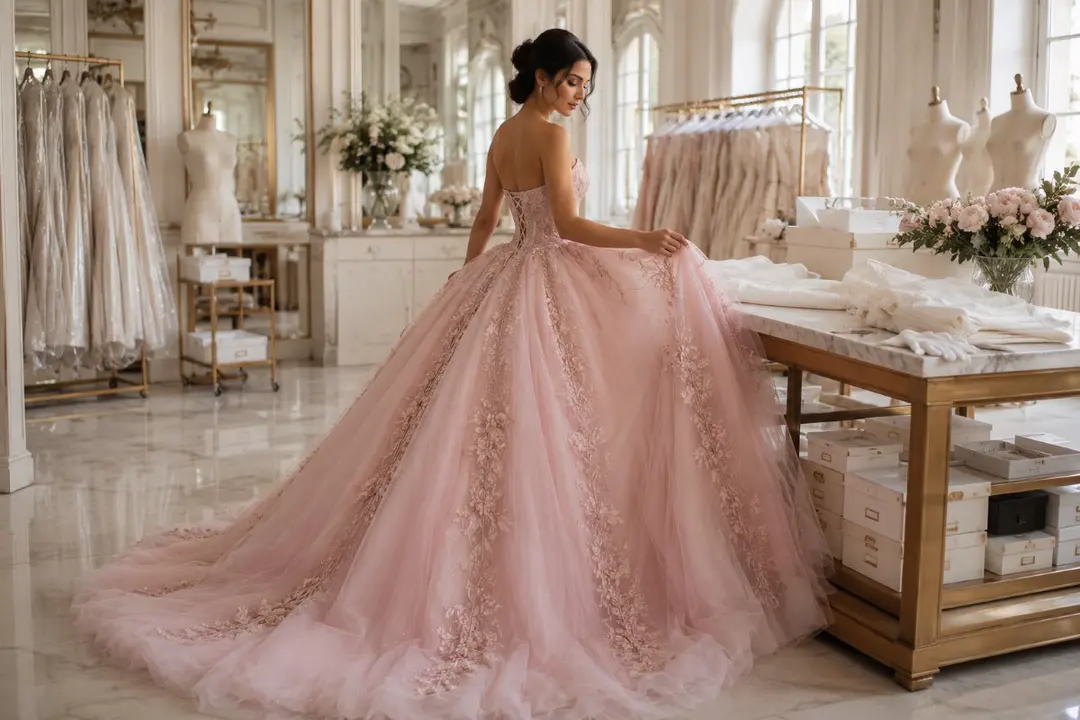
A professional preservation service cleans the gown, then packs it with acid-free materials inside a sealed archival box designed to limit exposure to air, light, and humidity. The advantage is a controlled, museum-style environment and, often, a guarantee. The honest tradeoff is cost, and the fact that a sealed box is meant to stay sealed. If you open it to look at the dress, you generally break the controlled seal and may need it repackaged. This route suits families who want the gown kept untouched for the long term, and some even look ahead to wearing a quinceañera dress as a wedding dress one day, which makes careful preservation now especially worthwhile.
A Realistic Do-It-Yourself Storage Setup
Careful home storage is far less expensive and lets you take the dress out and enjoy it whenever you like, which many families genuinely prefer. The tradeoff is that it depends entirely on your discipline: the right materials, the right location, and an honest yearly check. Done properly, home storage protects a gown very well. Done casually, with the dress shoved in a plastic garment bag in a hot attic, it guarantees damage. Neither path makes a gown last forever with zero attention, so choose the one that matches how involved you actually want to be.
How to Store a Quinceañera Dress So It Truly Lasts
If you are handling storage yourself, the details below are what separate a gown that survives beautifully from one that yellows and creases. Storing a quinceañera dress correctly comes down to three things: the right materials, the right folding, and the right location.
Choosing the Box and the Right Materials
The enemy of stored fabric is acid. Ordinary cardboard boxes and regular tissue paper contain acids that slowly migrate into fabric and cause yellowing and brittleness. Everything that touches the gown long-term should be acid-free. You will want:
- An acid-free, lignin-free storage box large enough to hold the gown with as few folds as possible.
- Plenty of acid-free, unbuffered tissue paper to cushion folds and fill out the bodice and sleeves.
- No plastic. Plastic bags and vacuum seals trap moisture and off-gas chemicals that yellow fabric, and they stop the dress from breathing.
If you would rather hang the gown than box it, only do so short-term, and use a breathable cloth garment bag, never plastic. Remember that hanging a heavy, beaded gown for long periods stresses the seams and stretches the fabric, so a box laid flat is the safer long-term home for a structured quince dress.
Folding a Full Skirt Without Setting Permanent Creases
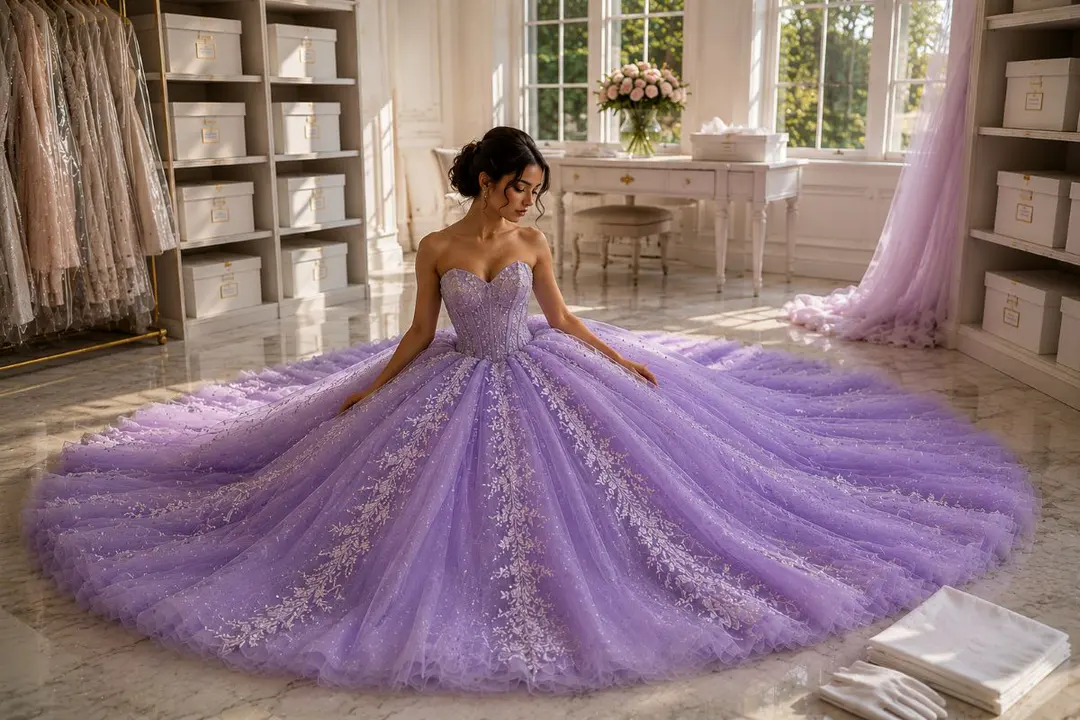
A quinceañera skirt has enormous volume, and the goal is to fold it with the fewest creases possible and to keep any crease from becoming permanent. Choose a box that needs the least folding for your particular gown. As you fold, lay sheets of acid-free tissue along every fold line, because the tissue cushions the crease and stops a hard line from setting into the fabric. Gently crumple more tissue to fill the bodice, the sleeves, and any hollow areas so the dress holds a soft shape rather than collapsing flat. Pack a structured hoop or crinoline separately if it can be removed, since its rigid frame can dent softer layers.
The Best Place to Keep the Box
Where you keep the box matters as much as the box itself. Fabric needs a stable environment, which rules out the two places people most often choose. Avoid attics, where summer heat and temperature swings are extreme, and avoid basements, where humidity invites mildew. Both also attract insects that eat natural fibers. The ideal spot is a cool, dry, dark interior space with a steady temperature, such as the top shelf of a bedroom closet on an inside wall. These same location rules apply to any formal gown, and our guide on how to store a prom dress follows the same logic. Keep the box off the floor and away from direct sunlight, which fades color over time.
The Once-a-Year Check That Keeps a Gown Alive
Preservation is not entirely a one-time task. If you are storing the gown yourself, plan to take it out once a year, perhaps on the anniversary of your celebration, for a short inspection. Wash your hands first, then unpack the dress on a clean surface and look it over for any stain you may have missed, any sign of yellowing, and any evidence of insects.
While it is out, refold it along slightly different lines than before, so that no single crease is pressed into the same spot year after year. Replace the acid-free tissue with fresh sheets, since old tissue gradually absorbs moisture and loses its protective quality. This yearly ritual takes under an hour, catches small problems before they become permanent, and gives you a lovely reason to relive the day.
If You Would Rather Repurpose Than Preserve
Boxing a gown away as an untouched keepsake is the traditional choice, but it is not the only one, and preserving and repurposing are genuinely an either-or decision. Once a dress is altered, it can no longer be kept intact as the original gown you wore. Some young women would rather have a second wear than a sealed box, often by shortening the length and reducing the volume, and our guide to turning a quinceañera dress into a prom look covers what is realistic for that kind of change.
Others keep the gown whole so it can pass to a younger sister or be reworked years later. Whichever route you choose, the work still starts with a proper clean so the fabric is in its best condition before a seamstress begins, and our overview of quinceañera dress alterations explains what your specific gown can structurally handle.
FAQs About Quinceañera Gown Preservation
How soon after the party should I get my quinceañera dress cleaned?
As soon as you reasonably can, ideally within one to two weeks. Clear stains from soda, cider, sweat, and other sugary substances are invisible when dry but oxidize over time and turn yellow or brown. Cleaning promptly removes them before they set permanently into the fabric.
Can I use a regular dry cleaner for a quinceañera gown?
It is risky. Standard dry cleaning solvents and machine processing can be harsh on tulle, loosen or cloud crystals and sequins, and snag beadwork. Choose a cleaner who specifically handles gown, bridal, or heirloom garments and who hand-treats each dress individually.
Why should I never store my gown in a plastic bag?
Plastic traps humidity against the fabric and off-gasses chemicals that cause yellowing, and it stops the dress from breathing. Trapped moisture also encourages mildew. Long-term storage should always use an acid-free box with acid-free tissue, or, for the short term, a breathable cloth garment bag.
What does acid-free actually mean, and why does it matter?
Ordinary cardboard and tissue paper contain acids that slowly migrate into fabric, causing it to yellow and grow brittle. Acid-free, lignin-free materials are chemically neutral, so they protect the gown over many years instead of quietly damaging it.
Is it better to hang my quinceañera dress or store it in a box?
For long-term keeping, a box is safer. A heavily beaded quince gown is heavy, and hanging it for months stretches the fabric and stresses the seams and straps. Lay it flat in an acid-free box with tissue cushioning every fold, and reserve hanging for short periods only.
Do I really need to check the dress every year?
If you are storing it yourself, yes. An annual check lets you catch a missed stain, yellowing, or insect activity early, while it is still fixable. Refolding along new lines each year also prevents a permanent crease from forming in one spot.
Keeping the Memory in Perfect Condition
Your quinceañera gown is more than fabric and crystals. It is the centerpiece of a milestone that only happens once, and with the right care it can stay as striking as it was on your big day for decades. The plan is simple to remember: air the dress out and note every stain in the first 48 hours, have it professionally cleaned within a couple of weeks, and store it flat in acid-free materials in a cool, dry, dark place. Follow that, add a short yearly check, and you have done everything that knowing how to preserve a quinceañera dress truly requires. Jovani has spent more than forty years designing gowns built for the most important moments in a woman's life, and a gown made with that level of craftsmanship deserves to be protected with the same intention.
Planning ahead for the big day? See our quinceañera dress timeline for when to shop, fit, and alter.