
Prom Dress Train Guide: Types, Detachable Trains, and How to Manage Them

A train is the part of a prom dress that turns heads as you walk in and, if you have not thought it through, the part that you spend half the night worried about stepping on. That sweep of fabric trailing behind a gown is one of the most dramatic, elegant features a dress can have, but it also comes with real practical questions almost no one explains before prom night. How long should it be? Will you be able to dance in it? Can it come off for the after-party? What happens when someone steps on it? This prom dress train guide answers all of it: the types of trains, how to choose the right length for your night, how a detachable or bustled train solves the dance-floor problem, and how to manage a train gracefully from the grand entrance to the last song.
What a Train Actually Is
A train is the extra length of fabric that extends beyond the hem at the back of a gown, trailing along the floor behind you as you walk. Trains range from a few inches of gentle sweep to dramatic lengths of several feet, and they appear most often on formal floor-length gowns where the drama suits the occasion.
The appeal of a train is pure elegance and drama. A train creates a sense of occasion, photographs beautifully as you move, and adds a formal, almost bridal sophistication to a prom gown. It is the feature that makes an entrance feel like an entrance. The tradeoff, which this guide is honest about throughout, is that a train requires more thought and more management than a simple floor-length hem. The styles among long prom gowns include many gowns with trains of varying lengths, and understanding the types below helps you choose one that delivers the drama without becoming a burden.
One thing to know immediately: not all trains are created equal, and the length you choose has a direct effect on how manageable your night will be. A short sweep train is barely noticeable to wear; a long dramatic train is a genuine commitment. The sections below break down the options so you can match the train to the kind of night you actually want.
The Types of Trains, From Subtle to Dramatic
Trains are categorized by length, and any useful prom dress train guide starts here, because knowing the differences helps you choose how much drama you want and how much management you are willing to take on.
The Sweep Train
The sweep train is the shortest and most manageable, extending just a few inches beyond the hem and barely brushing the floor behind you. It adds a touch of elegance and a hint of drama without any real practical burden. A sweep train is the easiest to walk and dance in, rarely gets stepped on, and suits anyone who wants a little extra grace without committing to managing a long train all night. For most prom-goers who want the look of a train without the hassle, the sweep is the sweet spot.
The Court Train
The court train extends a bit further than a sweep, typically a foot or so beyond the hem, creating a more noticeable trail while staying relatively manageable. It is a middle-ground choice, more dramatic than a sweep but far easier to handle than a long train. A court train photographs beautifully and creates a real sense of occasion without making the whole night about managing fabric.

The Chapel and Cathedral Trains
These are the dramatic trains, more often associated with bridal gowns but occasionally appearing on the most formal prom dresses. A chapel train extends several feet behind the gown, while a cathedral train is the longest and most dramatic of all, sweeping far behind the wearer. These trains make a spectacular entrance and create unforgettable photographs, but they are a serious commitment: they require bustling for dancing, careful management throughout the night, and an awareness of where the fabric is at all times. For a prom, a chapel or cathedral train is a bold, high-drama choice best suited to someone who wants maximum impact and is prepared to manage it.

Where Trains Appear on Different Silhouettes
Trains pair differently with different prom silhouettes, and the combination changes both the look and the practicality.
On a mermaid silhouette, a train flows out from the dramatic flare at the knee, extending the sculptural line of the dress and creating an unmistakably glamorous, red-carpet effect. The styles among mermaid prom dresses often include trains that complete the dramatic silhouette, and the combination of a fitted body and a flowing train is one of the most striking looks in formal wear.
On a ball gown, a train extends the volume of the full skirt into a sweeping trail, creating a fairytale, princess-like effect at its most dramatic. The styles among ball gown prom dresses with trains deliver the most romantic, grand entrance possible, though the combination of a full skirt and a long train is the most fabric to manage of any option.
On an A-line or column silhouette, a train adds elegance without the volume of a ball gown, creating a sleek, sophisticated trail that suits a more modern aesthetic. These silhouettes with a sweep or court train offer drama in a more streamlined, manageable package.
The Detachable Train: Drama and Practicality Together
If there is one innovation that solves the central problem of prom trains, it is the detachable train, and it deserves its own section because it genuinely changes what is possible.
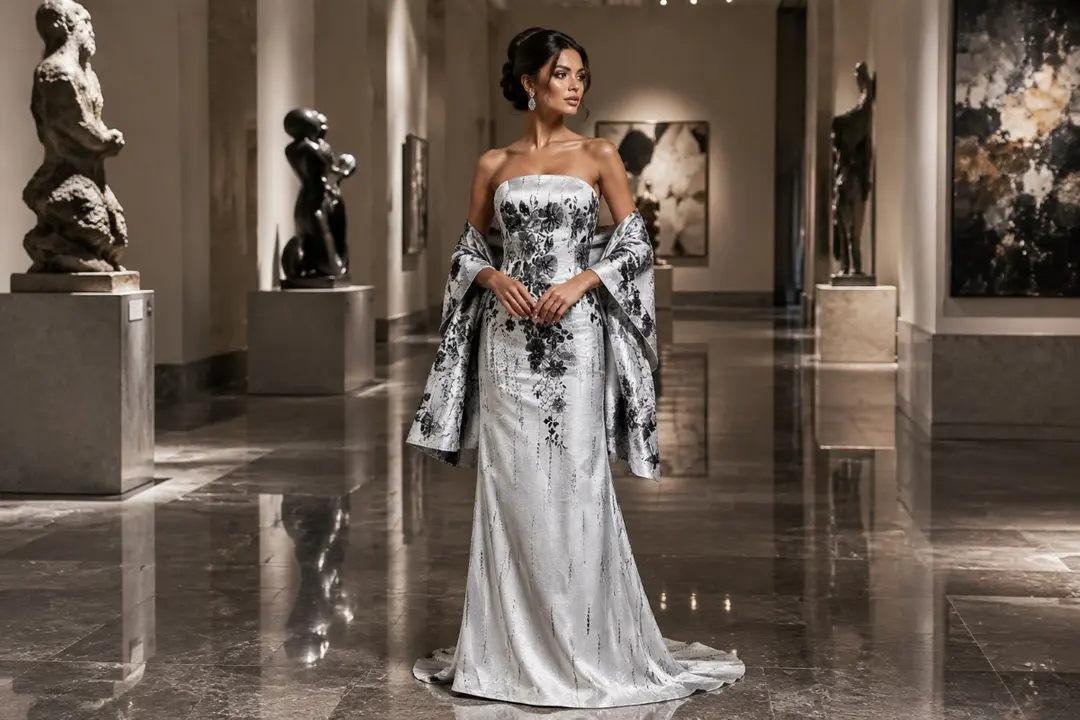
A detachable train attaches to the dress, often at the waist, shoulders, or with hidden hooks, for the grand entrance, the photographs, and the formal portions of the evening, then unclips and comes off entirely for dancing and the rest of the night. This gives you the best of both worlds: the full dramatic train for your entrance and your photos, and a clean, manageable dress for the dance floor.
The detachable train has become increasingly popular precisely because it removes the central tradeoff. You no longer have to choose between the drama of a train and the freedom to dance. You get the dramatic, photographed entrance, then you remove the train and dance unencumbered for the rest of the night. For anyone who loves the look of a dramatic train but worries about managing it all evening, a detachable train is the answer. Some of these designs work similarly to a removable overskirt, a concept also found among two piece prom dresses and convertible styles, where one gown effectively becomes two looks across the night.

The Bustle: Lifting a Train for Dancing
For a train that does not detach, the traditional solution is the bustle, a technique borrowed directly from bridal gowns that lifts and secures the train up off the floor so you can move freely.
A bustle works by fastening the train up to the back of the gown, using hooks, buttons, ribbons, or loops sewn in for the purpose, transforming the trailing train into a gathered, decorative detail at the back of the dress. Once bustled, you can walk and dance without the train dragging or getting stepped on, while the gathered fabric often creates an attractive draped effect of its own.
The important practical point: most prom dresses with trains do not come with a built-in bustle the way bridal gowns often do. If you choose a gown with a train you plan to bustle, you will likely need a seamstress to add the bustle points. This is a straightforward alteration for a professional, but it needs to be done in advance, not discovered on prom night. The broader process of getting a gown adjusted to fit and function perfectly is covered in this guide on prom dress alterations, which explains what a seamstress can and cannot do with a formal gown.
How to Walk and Move in a Train
Walking gracefully in a train is a real skill, and a few techniques make the difference between gliding elegantly and shuffling nervously.
The fundamental technique is to take smaller, smoother steps and let the train follow you naturally rather than trying to manage it with every step. A train is designed to trail, so walking forward at a steady, even pace lets it sweep behind you the way it is meant to. Rushing or taking large steps is what causes the fabric to bunch or trip you.
For turning, the trick is to pause, turn your body, and let the train settle before continuing, rather than spinning quickly and wrapping the train around your legs. A small kick-turn, gently kicking the train out of the way as you pivot, is a technique many experienced gown-wearers use to redirect a train smoothly. The full technique of moving gracefully in a long gown is covered in this guide on how to walk in long prom dresses, and every principle there applies doubly to a gown with a train.
Practice is the single most valuable thing you can do. Walking, turning, sitting, and standing in your gown with its train before prom night, ideally in the shoes you will wear, builds the muscle memory that lets you move confidently on the night itself. A train that feels awkward the first time becomes natural with a little practice.
Managing a Train Through the Whole Night
A prom night with a train has distinct phases, and a few practical strategies keep the train from becoming a problem at any of them.
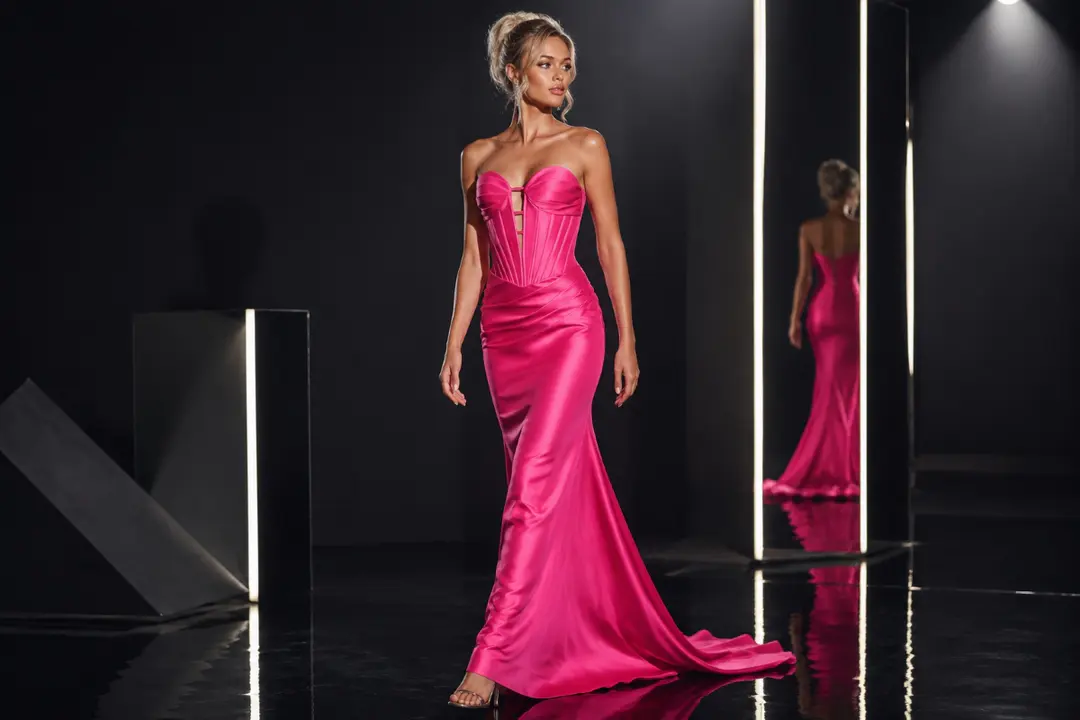
- The entrance and photos. This is the train’s moment. Let it trail fully, walk slowly and deliberately, and arrange it for photographs, spreading a dramatic train behind you for the most striking shots. This is what the train is for.
- Getting seated for dinner. Before sitting, sweep the train to one side or gather it gently so it is not under the chair or in the aisle. A train left trailing under a dinner table gets stepped on and dragged through whatever is on the floor.
- The transition to dancing. This is when you detach the train (if detachable) or bustle it (if not). Plan this moment in advance so you are not figuring it out in the middle of the dance floor. If you have a detachable train, decide where you will safely store it once removed.
- On the dance floor. With the train detached or bustled, you can move freely. If for some reason the train is still down, be conscious of where it is, especially around other dancers who cannot see it and may step on it.
- Watch for stepping hazards. The most common train mishap is someone else stepping on it, which can pull the dress or, in the worst case, cause damage. In crowded areas, gather the train or keep it close until you are in open space.
The single best preparation for a train is having a plan for each phase before the night begins. A train is only a problem when it surprises you; when you know exactly how you will handle the entrance, the dinner, and the dance-floor transition, it becomes the dramatic feature it is meant to be rather than a worry.
Choosing Whether a Train Is Right for You
Not every prom-goer wants a train, and being honest about whether it suits your night helps you decide with confidence.
A train is a wonderful choice if you want a dramatic, formal, grand-entrance look, if photographs matter to you, and if you are at a formal venue where the elegance suits the setting. A detachable train in particular is ideal if you want that drama for your entrance and photos but also want to dance freely, since it removes the central tradeoff entirely. The styles across the full range of prom dresses include trained gowns at every level of drama, from subtle sweep to dramatic cathedral.
A train may not be the right choice if your prom is at a more casual or crowded venue where managing fabric is impractical, if you want to spend the whole night dancing without any management, or if you simply prefer a clean, fuss-free look. A floor-length gown without a train delivers full elegance with zero management, and there is no shame in choosing the simpler option.
Prom Dress Train Questions
A few clear, common questions come up about the prom dress train guide most people actually need, and the honest answers below cover what comes up most often when choosing and managing a trained gown.
What is the most manageable type of train for prom?
The sweep train is the most manageable, extending just a few inches beyond the hem and barely brushing the floor. It adds elegance and a hint of drama without any real burden, is easy to walk and dance in, and rarely gets stepped on. For most prom-goers who want the look of a train without the hassle, the sweep is ideal.
Can you dance in a dress with a train?
Yes, with the right approach. A detachable train comes off entirely for dancing, giving you a clean dress on the dance floor. A train that does not detach can be bustled, lifted and fastened up off the floor, so you can move freely. A short sweep train is manageable enough to dance in without either, while a long train should be detached or bustled for comfortable dancing.
What is a detachable train?
A detachable train attaches to the dress for the grand entrance, photographs, and formal portions of the evening, then unclips and comes off entirely for dancing and the rest of the night. It gives you the full drama of a train for your entrance and photos plus a clean, manageable dress for the dance floor, removing the central tradeoff of trained gowns.
What is bustling and do prom dresses come with it?
Bustling is a technique that lifts and fastens a train up to the back of the gown so you can walk and dance without it dragging. Unlike bridal gowns, most prom dresses with trains do not come with a built-in bustle, so if you plan to bustle your train, you will likely need a seamstress to add the bustle points in advance of prom night.
How long should a prom dress train be?
It depends on the drama you want and the management you are willing to take on. A sweep train (a few inches) is subtle and easy. A court train (about a foot) is more noticeable but still manageable. Chapel and cathedral trains (several feet) are dramatic but require bustling or detaching for dancing and careful management all night. Most prom-goers are happiest with a sweep or court train.
What happens if someone steps on my train?
The most common train mishap is someone stepping on it, which can pull the dress or, in a worst case, cause damage at a seam. To prevent this, gather or keep the train close in crowded areas, detach or bustle it before dancing, and be aware of where it is around other people who cannot see it. A well-managed train rarely gets stepped on.
The Drama of a Train, Without the Worry
A train is one of the most dramatic and elegant features a prom dress can have, and with a little planning it delivers all of that drama without becoming a burden. Use this prom dress train guide to choose the right length for your night, lean toward a detachable train if you want the entrance drama and the freedom to dance, plan to bustle a non-detachable train in advance, and have a clear plan for managing the train through each phase of the evening. Do that, and the train becomes exactly what it is meant to be: the feature that makes your entrance unforgettable and your photographs spectacular, while leaving you free to enjoy every moment of the night. Jovani has spent more than forty years designing prom gowns with sweep, court, and detachable trains built with the quality construction that makes the drama effortless.
When you are ready to find trained prom gowns that deliver the drama your prom night deserves, explore the full prom collection through an authorized Jovani retailer.